Showing posts with label fear. Show all posts
Showing posts with label fear. Show all posts
Friday, December 14, 2012
Updated: What I'm Telling My Kid About the Connecticut Shootings

 |
| Photo courtesy Reuters. |
I am a mental health professional, a former principal and teacher, and an expert in responding to school traumas. But today, more than anything, I am a mom. Like moms and dads and other human beings today, my feelings about the shootings in Connecticut are complex and painful.
I came home tonight wanting to hug my child, and struggling with what to say. I offer my words here (followed by some description of how he responded and why I said what I did) not because they are the only or even the best way to approach this horrible incident with children, but because they are a way, and we have to start somewhere.
Here's what I said:
I need to tell you about something that happened today. It's kind of scary, but I think you're probably going to hear about it so I wanted to tell you so you can understand it and ask questions if you want.
Today something really scary happened in a school in Connecticut. There was a teacher there, I think she taught 1st grade, and she had a grownup son who had a very bad sickness in his brain. His brain was making him think very weird things. And he decided he wanted to kill his mom. But unfortunately, when he went to kill his mom, he went to her classroom where she was teaching, and after he killed her he also killed a bunch of the kids. It was very sad and everybody is talking about it and very sad and scared.Every kid and every parent is different, and every conversation like this happens in a specific context. In our case, my son is 7 years old. He and I have had very recent conversations about mental illness in the context of the work I do as a clinician in Community Mental Health, and the terminology "sickness in the brain" is how we've described that. Another kid might need a different or more thorough explanation.
Of course, my son did have a few things to say:
- Where's Connecticut?
- Was the sickness like a concussion, or like people who don't know what day it is or think things are true that aren't?
- I don't want to talk about it.
So, why did I choose these particular things to tell my son? There is method to my madness:
I need to tell you about something that happened today. It's kind of scary, but I think you're probably going to hear about it so I wanted to tell you so you can understand it and ask questions if you want.
Kids need to know it's OK to be scared, and that you can be scared and still function and be in control. As adults, we model this and open the door to talk about emotions. Also, this opener tells him that his understanding and processing is important, in general and to me.
There was a teacher there, I think she taught 1st grade, and she had a grownup son who had a very bad sickness in his brain. His brain was making him think very weird things. And he decided he wanted to kill his mom.
This begins to point out how unusual and out of the ordinary this incident is. Kids don't know, as adults do, that this kind of violence is rare. But they do have a sense that a very bad brain disease and thinking weird things is rare. Also, the focus in this description is not on the children as targets. By giving the shootings some background and context, my son is less likely to think of this and think, "the bad guys are coming for me."
It was very sad and everybody is talking about it and very sad and scared.
Here, again, the door is open to the idea that everyone -- not just kids -- has feelings about things like this. Scared and sad are OK, as is talking about it. Telling him about this is not specifically to make him talk or to make him scared, but to include him. He is important.
I don't know what questions or comments my son will make in the days and weeks ahead. I know if he has something to say, he'll say it. We talk about these things at my house. Hard as it is, that's how it should be.
More guidance on talking to children about violence and trauma is available here.
Update: Since I wrote this yesterday, we have learned that the shooter's mother died before the shootings at the school, and was not a current teacher. My son hasn't asked about the details today, so I haven't had occasion to correct what I said yesterday, and I'm not going to unless he brings the topic up. If I had it to do over again, I would still say largely the same things, except adding that after he killed his mom, he went to the school where he used to go when he was little to kill people. Note that I would not say he went to kill kids. We don't know that, first of all, and second of all it adds an emphasis that is unnecessarily scary.


Wednesday, October 12, 2011
Why Terrorism is Like Mosquitoes

There's an old wives' tail that goes something like this: Male mosquitoes buzz, but don't bite. Females bite, but don't buzz. So it's when you don't hear anything that you should worry.*
I was reminded of this yesterday, when news broke of the failed plot, allegedly by Iran, to recruit members of a Mexican drug cartel to assassinate the Syrian ambassador to the United States by bombing an undetermined location in Washington, DC. The media has been making the obvious comparisons to a spy novel or Hollywood script.
The plot seems amateurish. The evil Iranians we all fear can certainly do better than this, can't they? In the Middle East, the story has been met with outright disbelief.
In the sage of another highly publicized failed plot, the "underwear bomber" pled guilty in Detroit today. Apparently what he wanted more than anything was the chance to make a public statement about why he did it, and so he did.
Both of these plots should, from one perspective, terrify me. Not only do I live in the Detroit area, I've taken Flight 253 from Amsterdam. I have family in Washington, DC. These plots represent plots against people and places I care about.
And yet, I'm not terrified. To me, these plots seem like the male mosquitoes. They're the ones that we notice, but not the ones that are dangerous. They make the noise, but they don't bite.
I'm not worried about these. If this is the best the terrorists can come up with, I think we're OK. What scares me isn't the ones we know about. It's the ones we don't. Remember, it's the silent, female mosquitoes that bite.
* Like many pieces of "common knowledge," this turns out not to be true. While it is only the females that bite, the buzz is the sound of beating wings and comes from both males and females.

Thursday, September 29, 2011
Did the Onion Cross the Line?

The Onion, if you're not familiar, is a "news" outlet that puts out a printed newspaper, a TV show and a website absolutely chock full of fake news. Typical headlines are things like, "Historians Politely Remind Nation To Check What's Happened In Past Before Making Any Big Decisions" and "Syracuse Leaves Big East For Woman Named 'Misti'." The Onion, in my humble opinion, varies between mildly amusing and downright hilarious, and occasionally it hits the nail on the head with its headlines in ways that make you say, "What's sad is, that's almost true."
From time to time, the Onion gets in trouble because someone doesn't realize they're kidding. There is, in fact, an entire blog devoted to people taking the Onion literally on Facebook, often with hilarious results. Many years ago, when the Onion published a story saying that Congress was threatening to leave Washington unless they got a new Capitol building with sky boxes, it got picked up by the official media in China and reported as factual evidence of the failures of capitalism.
Today there was another such Onion incident. The Onion ran an article on its website with the headline, "Congress Takes Group of Schoolchildren Hostage." The tagline was, "'We need $12 trillion or all these kids die.'" This was accompanied by a doctored photo of John Boehner with a gun to the head of a little girl.
The Onion then began sending tweets, the first of which read, "BREAKING: Witnesses reporting screams and gunfire heard inside Capitol building." This got retweeted enough times and alarmed enough people that the phones at the Capitol Police Department started ringing off the hook. They actually began an investigation, because by this point, although they knew the story was false, they couldn't figure out where it had started.
So the question is, is this just another case of people not getting an Onion joke, or did the Onion actually do something wrong here? I think it's the latter, but apparently for a different reason than most commentators out there.
My take is this: the Onion is funny because they manage to run stories that relate to reality in some way but are just off the wall enough that if you're paying attention you know they can't be true. In this instance, the notion that Congress is "holding the country hostage" is not a new one, but no one really thinking about it would believe that John Boehner actually was threatening little children with a firearm. You may or may not like the politics of this story, and you may or may not think it was funny, but it was clearly intended as a joke. Most of the comments out there about this mess suggest that such a story by itself, or with the picture, crosses the line of decency. I actually think that is not the problem
The problem is that, when the Onion started tweeting, they did something crucially different than what they did in the original story. That first tweet had absolutely nothing in it that would even hint that it was supposed to be a joke. There wasn't anything about how Congress, as a whole, was taking hostages. That's the part we knew was false. All it said was that there was gunfire and screams at the Capitol. That was purely believable, and because of that it wasn't funny.
You might argue that anyone who knows anything about the Onion should have known it wasn't true anyway, and you would have a point. However, not everyone knows the Onion, and once people started retweeting and the original author was lost in the stream, people seeing this tweet had no way to know that it wasn't real. The Onion lost control of the joke. In hindsight, at least, that seems pretty predictable.
The Onion's sin here wasn't making fun of violence at the Capitol. It was joking in a way that did not insure that everyone would at least have a chance to be in on the joke. I hope the folks over at the Onion learned a lesson, because I'd hate to feel like I can't read it anymore. It's pretty funny.
This post was updated on September 30 at 11:09 PM.

Friday, September 23, 2011
Try Explaining This One to Your Kids

There was a car bombing in Monroe, Michigan on Tuesday.
How many of you just went back and read that again to make sure you had read it correctly? I sure did when I saw the headline. Monroe, Michigan, population 20,700 and change, had a car bombing. A local lawyer, aged 42, and his sons, 11 and 13, were driving to football practice around 5:30 when a pipe bomb placed under the passenger seat went off, injuring all three of them. The boys are still in the hospital. The dad has been released.
At moments like this, I usually flip automatically into what I like to call "Law and Order" mode. Who are the most likely suspects? I'm thinking someone on the other side of a case. Turns out this guy handled divorces, so that makes it even juicier. Someone got screwed in a divorce, decides to kill the lawyer. We haven't even finished the opening credits, and the Quarterback has solved the case.
Of course, if this were a "Law and Order" episode, the very fact that the case was solved so quickly would indicate with certainty that we've got the wrong guy. There's a whole 40 minutes of TV to fill, after all, so it's either that or some big constitutional issue in how I conducted the investigation.
But I digress, which is easy to do, because this story just doesn't seem real. This is not something that happens in real life. I've written often about how trauma messes up our ideas of what is likely vs. what is possible. But this wasn't even on my possible list. There are places in the world where this happens. Southeast Michigan is not one of them.
The Catholic school that the boys attend held a prayer service for them yesterday. There are also excerpts from a letter from the Principal to parents, and it looks like he did a pretty good job. But this raises the question, how exactly would you explain this to one of the boys' classmates in such a way that was honest but didn't scare them? This is not one of the many types of horrible events that I have a fairly stock way of explaining to kids -- and remember, that's allegedly one of my areas of expertise.
So let's go with general rules of thumb:
Tell the truth, the whole truth, but not all the details unless asked: Your friend is in the hospital. He got very hurt in an accident, but it looks like he's going to be OK.
If they're going to hear it anyway, let them hear it from you: There was an explosion in the car he and his dad and brother were riding in. The police think someone put an explosive device under one of the seats.
Separate what is known from what is not known, and that people are working on it: The police are investigating and they've even called investigators from the federal government. They don't know who did this or why, but they have some good leads and they're trying their best to find out.
Normalize the feeling, educate about the probabilities: This is a pretty scary thing. And one of the reasons it's so scary and such a big deal is because it's incredibly unusual. I've never heard of something like this happening. So even though it really scares me, I also know it's really unlikely to happen again.
Is this going to be enough to make them feel completely safe? No. It probably doesn't make you feel completely safe either. But you have to start somewhere, and then just live with the fact that it's going to feel scary for a while, and it will get better.

Saturday, September 17, 2011
No Time to Think: Nevada Air Show Crash

Yesterday, a small plane participating in the National Championship Air Races in Reno, Nevada, crashed into the box seats of spectators. Three people were killed on the scene, including the pilot. More than 50 were injured, many of them critically.
The still pictures of this crash are the sort that make me think, "That would be a really amazing shot if I didn't contemplate what's happening in it." The one displayed here, which is from the Associated Press (click here or on the picture to see a larger version), is particularly jarring for a number of reasons. First is the realization that it must have been taken literally the moment of the crash. This is not the aftermath, this is the event. Given how horrifying this must have been to watch, I admire the photographer, Ward Howes, for how clear and steady it is. If he was holding his camera, he wasn't shaking. If it was on a tripod, he managed not to knock into it in the excitement.
The other thing that I notice in this picture, and which I found somewhat disturbing, is that people are just standing there. From this angle, it does not appear that anyone at all is running away. How is that possible? If a plane were headed straight for you, wouldn't you run?
There are two major reasons that no one is running in this picture. The first has to do with visual perspective. It is very hard to judge where an object traveling in your general direction at high speed is going to land. Some people are much better at this than others, as evidenced by the fact that, at a baseball game, a foul ball hit pretty much anywhere into my side of the stands will make me duck, while other people don't even move unless it's coming within two rows of them.
If you look up and see the plane headed in your general direction, you may want to run. However, unless you're really good at figuring out where the plane will land, it's hard to know which way to run, or even if you should run at all. Clearly you'd rather be a mile away, but that's not an option. And while running ten feet to either side might save your life, it might also mean running directly into the path of the plane.
The second reason has to do with our natural reactions to an immediate threat. While most of us are familiar with the "fight or flight" response, you may not know that "freeze" is also a natural, involuntary reaction to danger. Evolutionarily this makes some sense. If you can get a predator not to notice you, your chances of survival are actually much greater than if you try to fight it or run from it.
People who experience this natural "freeze" reaction often feel horrible after the event. They say things like, "I just stood there. Why didn't I try to help? Why didn't I try to get away?" The answer is, they could no more avoid freezing than they could avoid their heart rate going up. It was not in their conscious control.
If you watch the video of this crash, you can see that no one had much time to move. By the time it registered with the spectators that the crash was occurring, it was pretty much over. Couple that with trying to figure out where it was going to land and the freeze response, as well as the fact that the crash was somewhat further away than you might think looking at this picture, and you get a photograph that captures what all of us feel in considering this tragedy -- stunned horror and complete helplessness.

Saturday, September 10, 2011
Why 9-11?

So, are you feeling like dog poop yet? Sick of the coverage? Want to talk about something -- anything else? Welcome to the 10th anniversary of 9-11, and to being a human who has experienced trauma. If you didn't read what I had to say yesterday about getting through this in a healthy way, I highly suggest it -- that one was more important than what I've got to say today.
What is it about 9-11 that holds such power over us? More Americans have died, after all, in Iraq and Afghanistan than did during that one day. There have been other big, national events -- Pearl Harbor, the Kennedy assassination, the Oklahoma City bombing -- that got our attention when they happened but don't seem to affect us quite the same way. Why?
First of all, I think there is an argument to be made that each of these events affected our society significantly. Certainly the Kennedy assassination did. While I won't put all of the '60s on that event, it was a catalyst. Each generation seems to have their "big thing," and 9-11 was ours.
But something does separate the September 11th attacks in our consciousness. If it wasn't worse, it was different. It is different.
PTSD is unusual in its diagnoses because, unlike most disorders, the cause is part of the diagnosis. You can be diagnosed with depression, for example, without having something obvious causing your depression. But in PTSD, there are particular criteria the trauma has to meet.
First, the person must have witnessed an event that they sincerely believed had the possibility to threaten the life or physical integrity of or cause serious injury to themselves or others. September 11th? Check.
Second, the person must have responded, at the time, with feelings of intense fear, horror or helplessness. September 11th? Check.
Of course, the Kennedy assassination, for those who saw it or saw the footage, met those same criteria. But there is one key difference.
On September 11, 2001, we as a country all witnessed an event that killed over 3,000 people. But more than that, we experienced an event that we sincerely believed had the possibility of killing us. We didn't just have intense horror or helplessness. We had intense fear. We don't like to admit it, and maybe it seems a little silly looking back, but the simple fact that someone was out there targeting Americans simply for being Americans, coupled with the idea that regular folks went off to regular jobs and never came back, was and is really scary.
My daughter was 3 years old on 9-11. She didn't know what was going on, but slowly, over the following weeks, she asked questions about the things she noticed -- flags in windows, singing the "Bless America" song (as she called it). We answered the questions she asked and nothing more. But she knew it was bad. After one such conversation where I had to reassure her of her own safety as I tucked her in, I remember coming out of her room and saying, "The good news is, our daughter now feels perfectly safe. Now who's going to tuck me in and make me feel safe?"
The real truth is, no one is. We can't go back to thinking it can't happen. All we can do is acknowledge that it's there and it's scary, and remind ourselves that it's still really, really, really unlikely that any one of us will become a victim of a terrorist attack. If we can channel our inner toddler, maybe that will be enough.

Friday, September 9, 2011
Turn Into the Wind: Dealing With the 9-11 Anniversary and its Hype
All week I've been writing about how American society matches the symptom profile for Post Traumatic Stress Disorder. This morning, I took the first of those pieces to my writer's group, a small circle of women writers who share and respond to each other's work every Friday mornings. I knew it was not my best work, and I wanted feedback.
As usual, the group was very helpful, but one of their reactions caught me by surprise. Members felt that my writing was distressing (not in terms of quality, but in terms of topic), and that I needed to give information on how to deal with that distress. So I'm taking a detour from the exploration of PTSD in a post 9-11 society to help all you Quarterbackers out there as we head into the 10th anniversary of the attacks.
Perhaps the most important thing you should know is that, if you're feeling blah this week, or sad, or anxious, or irritable, or having trouble sleeping, or anything else that makes you feel "off," even if you do not consciously connect those feelings to this anniversary, you're normal. Anniversaries are very powerful, and quite often people who don't even realize that it is an anniversary have negative reactions nonetheless. This isn't helped by the terrorism alert for New York and Washington. What might be somewhat distressing anyway only feels magnified given the time of year.
You also aren't crazy if you are sick and tired of the anniversary coverage (although chances are you aren't reading this, so I may be wasting my breath). The extra coverage is draining because it prevents us from getting away from the intense memories and the feelings they evoke.
Whichever of these two groups you most identify with, you're normal. Don't waste one minute worrying that your reaction is too much or not enough or inappropriate, any more than you would criticize yourself for feeling pain when you stub your toe. You couldn't control those feelings if you wanted to, so don't bother trying.
But what can you do? If the coverage or the date or the blogging about our messed-up society is bothering you, what is the solution? You may not like the answer, because here's what it isn't. Turning off the TV, avoiding reading my blog, doing something completely non-9-11 related on Sunday and generally trying to get your mind off it may feel good for the moment, but it is a quick fix for a longer term problem. That's because problem isn't the reminders of the attack, it's how upsetting they are to you. Avoiding the reminders won't solve the underlying issue, it will just push it back underground.
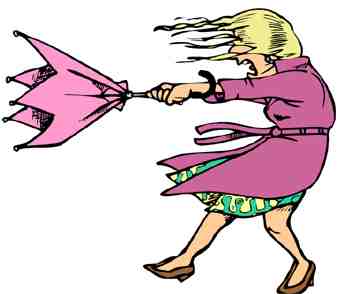
What I suggest is completely counter-intuitive. When you find yourself having negative feelings -- sadness, fear, hurt, anger, guilt, shame or whatever -- don't try to turn away from them. Turn towards them. Identify what you are feeling and what caused it. Label them consciously. Don't try to explain it rationally, because emotions are not rational -- they're, well, emotional. Whatever you're feeling just is, so you might as well feel it.
The reason this is a good idea is that, when you turn and face your negative emotions, they stop feeling so overwhelming. Feelings, by themselves, do not hurt us. What we tell ourselves about those feelings and the events that trigger them can. No one likes to feel sad or afraid, but you can tolerate it. Your negative emotion loses its power when you acknowledge it and face it head on.
Does this mean you should glue yourself to the TV and watch as much coverage as you can this weekend? No. Just as avoiding reminders isn't healthy, seeking them out to excess isn't, either. Watch, read and hear what interests and moves you or is meaningful to you. Consider for yourself what type of commemoration, if any, you believe is appropriate for you to participate in. Just monitor yourself and be careful when you find yourself saying things like, "I can't watch that," "I want to get my mind off it," or "I won't be able to handle that." Those are signs you're avoiding, and you're not turning into the wind.
For me, this Sunday is about reclaiming September 11th as a day of grief and fear -- yes, I'm reclaiming fear -- and as a day of unity, service and collective support. I am allowing myself to feel the sadness and, as hard as it is, some of the horror of that day. And I'm patting myself on the back for doing it, because it isn't easy. I hope you'll join me.
Thursday, September 8, 2011
America's PTSD Part 3: Society on Edge

We're continuing to look at the ways American society is manifesting behaviors indicative of PTSD in the wake of the 9-11 attacks. Today's topic is the third cluster of symptoms, "Hyper-Arousal." People with PTSD are, in many ways, in a permanent state of fight or flight. They are overly alert and on guard. So are we.
People with PTSD have at least two of the following symptoms:
Difficulty falling or staying asleep. It's somewhat difficult to judge how much of America's current sleep deprivation has happened since 9-11. It is certainly well documented that on average we don't get enough sleep. What's more, we don't value sleep as a society. Few people work in places where the boss will tell you not to come in if you're tired. In fact, we don't consider exhaustion do be a legitimate reason to take a sick day -- that's faking. More and more, our institutions function on the assumption that we are awake at all hours. Congress works into the wee hours of the morning. The funniest television is on past 11. The announcement of the death of Osama bin Laden was made late at night even though it had happened hours before -- couldn't it have waited until the morning? We assume no one is sleeping, and we may be right.
Irritability or outbursts of anger. I talked at some length about how angry we are as a society in yesterday's post. Everything is a place to draw the line, make a stand and stand our ground. You're either with us or against us, with us or with the terrorists. Comparisons between politicians, political parties, grassroots organizations and the Nazis are so common we're not even surprised anymore when someone makes them.
Difficulty concentrating. Let's face it. The American public has the attention span of a flea, with apologies to all the hardworking fleas out there. The "news cycle" is getting shorter and shorter and it is easier and easier to push a big story out of it. We can't stick with a substantive news story for more than a day. A mass shooting or a celebrity wedding, sure, but not hunger, poverty, public policy or the wars. We're on to the next.
Hyper-vigilance. Consider this. The risk of a terrorist attack on American soil was no different on September 12, 2001 than it was on September 10, 2001. Does that even seem possible to you? It barely does to me. What changed on September 11 was not the risk, but our knowledge of the risk. And since then, we're constantly looking for the next one.
You can make a reasonable argument that we should be more vigilant than we were before. We were naive, and now we know. We're smarter than we were. The thing is, we're not only vigilant in smart ways. We are constantly trying to prevent whatever plot was the last one, successful or not. We take off our shoes, put up with backscatter screening and don't carry liquids on planes because those steps might have prevented a previous attempt, not because we have any reason to think anyone's going to try them in the future.
We profile Arabs and Muslims horrifically. A report that came out in the last couple of days indicates that the Mall of America has been reporting people, two thirds of them non-white, for such suspicious and sinister behavior as forgetting their cell phone at the food court or pacing outside the bathroom while they wait for a companion. This isn't just a lesson learned, it's hyper-arousal.
What's more, we seem to also be defending against entirely imagined threats. The fact, for example, that Sarah Palin said that Paul Revere was telling the British they weren't going to be taking away our arms was not just wrong, it was weird. There's a segment of society that has been obsessed with the idea that the government, or more specifically the Obama administration, is trying to take their firearms. We're more than two years into Obama's term, and not one gun control measure has been proposed. We're afraid of being unable to defend ourselves and sure that that's what "they" want, but it's not based in reality.
Exaggerated startle response. Last year, a major international terrorism scare was triggered by someone shipping watches that were taped together. A plane was grounded because a man was putting on tefillin, the leather boxes with straps that Orthodox Jewish men wear when they pray. We're a little bit jumpy.
A couple of years ago, I was flying from Washington, DC to Detroit with my family. There are four of us, so it often winds up that the two kids sit with one parent and the other sits alone. On this occasion, I was alone. The man sitting next to me put his bags in the overhead compartment and sat down. I wasn't paying much attention. Then he spoke to me, in good but accented English: "My name is Ahmed. I am a dentist from Toledo. You are safe." How jumpy must the average member of the traveling public be around Arab men on planes that Ahmed felt he needed to say that before I even registered him at all?
So, we've established that we're all acting in very PTSD-congruent ways. But why did 9-11 do this to us in a way that the Kennedy assassination, the Oklahoma City bombing or the Challenger disaster did not? I'll be looking at that tomorrow.

Wednesday, September 7, 2011
Our Numbed Society: America's PTSD Part 2

Yesterday I shared the idea that America, as a society, is manifesting symptoms of PTSD. There are three sets of these symptoms, and today we'll be looking at symptoms of numbing. People with PTSD go to great lengths to avoid and/or numb themselves to feelings and experiences related to the trauma.
Specifically, to be diagnosed with PTSD, there must be at least three of the following symptoms present:
Efforts to avoid thoughts, feelings, or conversations associated with the trauma. Traumatized people often come across as angry. It's not that they don't have a right to be angry at the people who traumatized them. But they're often just angry all the time at everyone. Anger is a very effective defense mechanism against other, more uncomfortable feelings.
If there's one thing Americans are, it's angry. You need look no further than Capitol Hill. We don't just disagree, we think the other side is a threat and evil. We are locked and loaded. And we're rude.
So, what feelings are we avoiding? Fear. If you think back to how you felt on September 11, you weren't mad. You were horrified, and you were scared. Pretty quickly, you were sad. If someone had asked you if you were mad at the people who did this you would have said yes, but anger was not the primary emotion.
The thing is that fear doesn't feel good. It feels weak. So does sadness. Anger feels strong. So we stick with anger -- at each other, at other countries, at whomever. Do you remember that feeling of togetherness we all had right after the attacks? Have you wondered why we can't seem to get it back? Because we came together in fear and in grief, and as much as we might like togetherness, we don't want to go back and feel those things again.
Efforts to avoid activities, places, or people that arouse recollections of the trauma. There was a contingent of people who got mad at President Obama for visiting Ground Zero after bin Laden was killed. They said he was politicizing September 11th (and I would argue that ship sailed a long time ago, but let's put that aside). But Obama didn't go there to give a speech or do a victory lap. He went to lay a wreath. He went to acknowledge grief. That's a no-no.
Inability to recall an important aspect of the trauma. There are certainly things about 9-11 that none of us will ever forget, but here's a test question: Following the September 11th attacks, what was the stated motivation of Al Qaeda for attacking the U.S.? If you said something like, "They hate us for our freedoms," you're not alone -- that is our dominant societal narrative. It was started by President Bush the same week as the attacks. And, if I may be so bold, it's wrong. At the time of the attacks, Al Qaeda wanted the U.S. to withdraw its troops from bases in Saudi Arabia, which it considers sacred ground. We forgot the motivation for the attack almost as soon as it happened.
Markedly diminished interest or participation in significant activities. This is a tough one. "Significant activities" for individuals are easier to define. However, I'm struggling to remember the last time it seemed like everyone was having a joint experience -- like the last episode of M*A*S*H, or even the Superbowl. Is it me, or is it just harder for us to all decide that something, other than a disaster or trauma, is important these days?
Feeling of detachment or estrangement from others. We know who our allies are in official terms. But what foreign country do we as Americans truly respect as partners these days? I can think of no one. We have become a very lonely country in a lot of significant ways. You can blame politics or policies for this, but it's also the manifestation of a gut feeling that no one really understands us.
Restricted range of affect (e.g., unable to have loving feelings). As discussed above, our primary societal emotion is anger. We don't feel joint happiness or pride anymore. We don't "put aside politics" for any common purpose. We want Congress to compromise, as long as they don't compromise on the things we want. We have lost the ability to have mixed emotions, and changing one's mind about something is weak. This is what a restricted range of emotions looks like -- anger and black and white thinking with no nuance.
Sense of foreshortened future. There is a conventional wisdom in America that the United States is no longer a superpower, or that we won't be one for much longer. Polls show we believe America is headed in the wrong direction. Every new law or policy (passed or just proposed) on both sides of the aisle is met with doomsday scenarios about how it will mean the end of America as we know it. It's one thing to say you don't like an idea, and quite another to think we can't survive it. We don't, as a country, feel very confident about our future.
Tomorrow I'll look at the third cluster of symptoms -- hyper-arousal. Later in the week, we'll examine why 9-11 impacted us this way when other things didn't, and at what kind of "treatment" we might recommend for our traumatized society.

Tuesday, March 29, 2011
What Fukushima Dai-Ichi Doesn't Teach Us About Nuclear Power

The ongoing crisis at the Fukushima Dai-ichi power plant in Japan has a lot of people reexamining nuclear power as a generation method. In Europe in particular, people are taking a very close look at whether continuing or expanding nuclear power generation is a good idea. If what is happening in Japan is what one can expect from nuclear power, the argument goes, we need to find some alternate sources of energy.
So let's take a look. As it turns out, if you compare the various ways you can generate power and the fatalities associated with that method -- including those due to workplace accidents, but also including those due to environmental damage (like a nuclear accident) -- the range is vast. In fact, the most lethal method of power generation has more than 4,000 times as many deaths attributed to it per terawatt hour generated as the least lethal one, and about 4.5 times as many as the second most lethal method.
It would make quite a bit of sense, given the statistics, for countries to take a good, long, hard look at this deadly form of power, and start now to take steps to eliminate it. In fact, looking at the numbers, you might expect that there would be a major initiative to shift from the most lethal to the least lethal form of power generation, which would be in everybody's best interests.
As it turns out, that's exactly what had been happening before the Japanese earthquake. You see, the most lethal way to generate electricity, as it turns out, is from coal, which accounts for about 50% of the world's electricity generation right now and causes 161 deaths per terawatt hour generated. In addition to the deaths attributable to pollution and global warming, coal generation requires coal mining, one of the most dangerous occupations in the world.
So, before the earthquake, many countries were looking at switching more generation over to a much less deadly form of power generation. As it turns out, the lowest fatality rate per terawatt hour in the world is nuclear power, with just 0.04 deaths per terawatt hour, even taking into account the Chernobyl disaster and other smaller incidents. Even wind energy has more than 4 times this death rate -- caused by turbine blades flying off and workers falling from turbines.
So why are we so upset about nuclear power right now? Why can we muster opposition to even continuing to use the plants we have, let alone building new ones, but nowhere near the push to switch from coal to something -- anything -- else?
First of all, deaths related to coal generation are often invisible. When people die early because of respiratory problems, it doesn't make the news as being "coal-related." These deaths are spread out around the world, and the connection to electricity generation is not terribly obvious. Even when miners die in a mine collapse and it does get a lot of attention, this is generally seen as relating to mine safety, not to power generation. It's much easier to blame mine owners than it is to blame ourselves for using so much power in the first place or tolerating coal-burning plants.
With nuclear power, on the other hand, accidents are big news. This is in part because they really are very rare, but also because the environmental damage is much greater for a small pollution incident. Think about it. If we paid the kind of attention to a tiny seepage of coal smog that we are to the problems at Fukushima, we'd do nothing but talk about coal plants all day long. Unlike coal, which releases a continuous stream of pollutants into the air all the time, the release of nuclear material is much more unusual and much more deadly.
And that's the problem. We don't tend to react to overall averages when we think about deaths and risks. We react to what's going on right now. If every nuclear power plant released radiation the way the Fukushima plant is doing now, and they did it day in and day out, 365 days a year, it would really be catastrophic. The thing we're missing when we say that because of this accident nuclear is too dangerous is that, in fact, every nuclear plant doesn't do that, and even at worst they won't.
Does that mean there's nothing to learn here? Of course not. The safer nuclear plants can be made, the better. Same goes for reducing pollution from coal and making mines safer. And if we can figure out a way to generate power that never kills anyone, I'm all for it. But if we're going to make energy policy, maybe we should consider making it based on the complete facts, and not just what we're scared of today.

Wednesday, March 23, 2011
Soldiers are People Too

Yesterday morning, an F-15 Eagle Fighter
 crashed in rebel-held territory in Libya. The crew safely ejected and was rescued. Yesterday morning, NPR had some snippets from an Egyptian doctor who happened to be staying in the hotel where one of the crew members was brought. She was asked to treat him, but he pretty much only had bumps and bruises. The doctor commented that although the pilot was basically unhurt, he needed someone to sit with him because he was anxious and unsettled.
Our servicemen and women go through a lot of training, and they're very good at what they do. Pilots are trained on how to eject during a crash, and this crew clearly utilized that training. Anyone who flies in the military has considered the possibility that they're going to either be shot down or crash for some other reason. This isn't completely unforseen.
It pays to remember, however, that training for what to do and considering it ahead of time is very different than actually doing it. Servicepeople train so they can do the job, and so panic will not be added to the emotional stress of the situation. But you can't prevent people from feeling stress at all. The training these pilots had was like an emotional bullet proof vest
 -- it prevented this crash from completely overwhelming them. But people who get shot while wearing Kevlar will tell you that it still hurts, and can knock you down. It's not unreasonable for them to need a little help getting back up.
We tend to look at situations like this and think, "Well, that's their job," and, of course, it is. But even if it's your job to be in danger, there are times that are just plain scary, regardless. You might be prepared for them. You might handle them just right. But you're going to feel it when you're done. This might be a good time to remember that the men and women who serve in the military are still, first and foremost, people.

Saturday, March 19, 2011
Is There Going to Be a War?

When I was just shy of 12 years old, the British and Argentina got into a spat over the Falkland Islands
 . If you are a) British or b) Argentinian, this was probably a very big deal. For the rest of the world, not as much, to the point where, if you were not alive then you probably have no idea what I'm talking about. And while I don't remember much about the particulars, I do remember, as the tensions rose, a very serious conversation I had with my father.
We were walking through a museum -- I remember that distinctly -- and I told my father I was scared. I had heard on the news that there was this argument between these two countries, and the newscaster had said they were on the brink of war. From my point of view, there had never been a war in my lifetime, and I was really afraid.
Looking back, I suspect my father didn't know where to start. It's not that he couldn't explain the tension between Argentina and the UK. It's probably not even that he couldn't give some good predictions about what would happen between the two countries. The problem is that, in the second half of the twentieth century, as well as in the first half of the twenty-first, there is no good definition of what is and is not a war.
I bring this up, because the United States, along with several allies, has started air strikes in Libya. And even now, at the age of 40, I have a visceral reaction of, "Oh, no, I hope this doesn't become a war," followed by, "Wait, maybe it already is." In fact, last week my own 12-year-old asked me if the fight between Gaddafi's forces and the protester/rebel/opposition fighters was "at the point of becoming a war." I had no answer.
Technically speaking, the U.S. has not been at war since World War II. That was the last time the United States Congress exercised its constitutional power to declare war. Congress has authorized the use of military force since then, the President has ordered the use of force without Congressional authorization, and the U.S. has participated in military action authorized by the United Nations. In my lifetime, our troops and/or planes have fought in Vietnam, Cambodia, Bosnia, Grenada, Panama, Iraq, Kuwait, Afghanistan Somalia and Libya, and that's just right off the top of my head. But we have not been at war. At the Veterans Administration Hospital where I'm currently doing an internship, we talk about OEF/OIF vets, referring to Operation Enduring Freedom and Operation Iraqi Freedom, but not to the Iraq or Afghanistan wars.
While historians and legal scholars probably have a lot to say on the difference between declaring war and just fighting under some other authority, to a kid this is a distinction without a difference. To most young people, Vietnam looks just as war-like as World War I. Wars have an almost mythological status for kids, and probably for some adults, in which a switch is thrown and what was "fighting" becomes "The War" and everything is much, much worse.
So when a child asks whether there is going to be a war, what they are really asking is whether the conflict is going to affect their lives. Will their parents be called up. Will there be rationing. Will there be attacks on U.S. soil. Will people they know be killed. For children whose parents are in the service, the answer to "will there be a war" with Libya may well be yes. To most other kids in the United States, the answer is most likely no.
There was, in case you've forgotten, a war in the Falkland Islands in 1982. If I hadn't listened to the news, I would never have known anything about it. There was a war, but there wasn't a war the way I understood the term. In fact, I think 1982 may well have been the last time I actually had a working definition for what a war is.

Wednesday, March 16, 2011
The Japanese Crisis: Assessing the Need Stateside

The attention of most of the country continues to be across the Pacific in Japan. The loss of life is horrific. The material damage is enormous. The fear regarding the radiation in Fukushima is mounting.
Now is not the time for a psychological crisis intervention in Japan. The situation is still unfolding, and there are still significant basic physical and safety needs to be met. The best that can be done from a mental health standpoint in Japan right now is managing people's fear. Both the Prime Minister and the Emperor appear, from this vantage point, to be doing a pretty good job at exercising resilient leadership. The consistent emphasis on coming together and getting through this is good practice.
What about folks in the U.S.? Is there anything we can or should be doing for people here? I think there is.
First of all, everyone in the world needs some decent information about the radiation risk
 . With the exception of nuclear scientists, most of us have very little understanding of how much radiation is too much, how the current accident will affect people in Japan and whether it will affect anyone anywhere else at all. The news media is doing a somewhat better job of bringing in experts to explain this to us, but I think it would help if they acknowledged that none of us like hearing that there's any radiation at all, and that the biggest impact here is from fear, not nuclear byproducts.
People here who have family and close friends in Japan, particularly in the area where the quake and tsunami were, need something a little more. I think you could further separate that group into two -- those who come from Japan and have roots there, and those who don't trace their roots to Japan but have family studying or visiting there. Last Friday was ghastly for both of these groups, and it would not be surprising if they're feeling the affects even now, presuming that they now know how their loved ones fared in the quake.
For those who come from Japan, this incident is not, in some ways, over. The pictures the rest of us see and think are horrible are more personal. They may have lost homes or other special places. They may not be ready, yet, to process through their feelings and try to put them away.
For those who had family visiting or living in Japan but are not themselves Japanese, the incident is largely over and they are probably ready for some intervention. It would be totally understandable if they are having some issues with feeling irritable, having trouble concentrating, not sleeping well or having intrusive thoughts about the quake and the agonizing wait to hear from loved ones. They need to know they're normal -- it's the situation that isn't.
Then there is that group that is somewhere in a no man's land in between. They are from Japan, every picture is personal, the situation is ongoing, and they also experienced the traumatic death of someone they love. For them, some understanding and moral support is in order until the dust can settle a little more and they can start to come to terms with all of this.
I wrote yesterday about my son's friend, Taro. When I wrote, I wasn't sure which category Taro fell into. Late yesterday we confirmed that he is in this last category. He lost his grandmother and his home. The only bright side, perhaps, is that young children don't really understand death and loss as permanent things. But his family does, like so many other families in Japan, here and elsewhere. The latest estimate I've heard is 10,000 dead. That's a lot of people in limbo, waiting for this to be over so they can grieve.

Friday, March 11, 2011
Namazu Wakes: The Japanese Earthquake
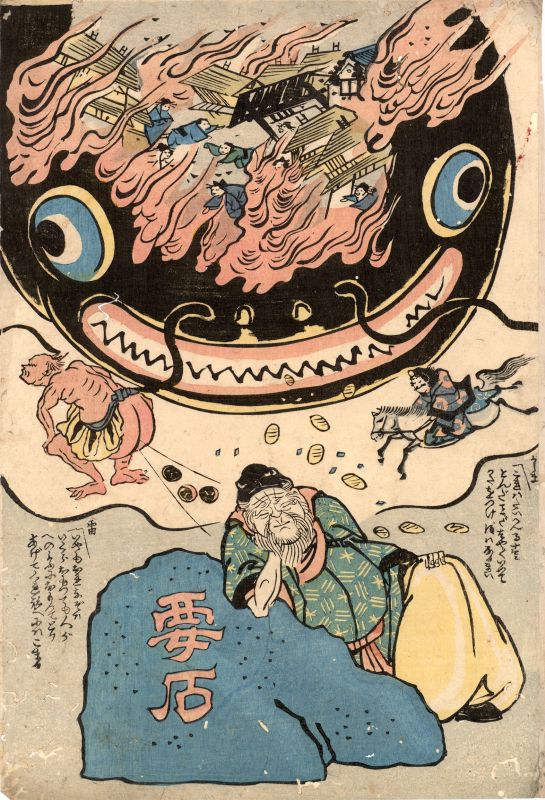
In Japanese mythology
 , Namazu is a giant catfish who lives in the mud on the ocean floor. The god Kashima restrains Namazu with a stone, but from time to time Kashima loses focus and Namazu wakes, thrashing around and shaking the ocean floor. This morning, 80 miles off the coast of Sendai, Japan, Namazu awoke.
 An earthquake measuring 8.9 on the Richter Scale hit northern Japan just after midnight Eastern time. The resulting tsunami devastated coastal towns in Japan, and then made its way across the Pacific, hitting many island nations, Hawaii, and the west coast of the United States. While the loss of life in the U.S. is nothing compared to what has happened and continues to happen in Japan, the damage to ports and harbors is considerable.
This is the largest earthquake in Japanese recorded history. It is likely there has not been one this big in Japan for more than 1,000 years. This earthquake was almost 100 times stronger than the one that devastated the nation of Haiti in 2010. In a country that builds and practices and prepares for "the big one," this was the big one.
While I don't mean to minimize in any way the devastation in northern Japan, the lives lost, or the very real dangers still posed by emergencies at two nuclear power plants damaged in the earthquake, it's also important to recognize the strengths present in this situation. Japan's construction standards are clearly designed to take an event like this into consideration. If you compare the destruction and loss of life in Haiti, where no such building standards existed, to what we are seeing in Japan, it is clear that Japan was as ready as you can be for something like this. The first news report I heard on the radio this morning was from a reporter standing on a balcony overlooking Tokyo. Just the fact that there is a single balcony left in Tokyo tells you how well the Japanese prepared.
The horror we feel considering what has happened in Japan, then, is very different than what we experienced after the earthquake in Haiti. In Haiti, we saw roughly 230,000 people wiped off the planet by a natural disaster and by the unpreparedness and fragility of life in abject poverty. In the United States, we suddenly knew, in a way that many of us hadn't before, that Haiti was our neighbor and that we needed to step up and help.
The horror many of us feel today is different. Far fewer people have died. Japan is much farther away. And, as I've already said, they were prepared. At the same time, we generally regard Japan as being something "like us." While the culture of Japan may be different, it is a highly industrialized, modern country. We have high expectations for their ability to function in all kinds of circumstances. So we watch what is happening there and realize that if it could happen to them, it could happen to us. In Haiti, we felt guilty. In Japan, we feel scared.
Of course, this is not a one size fits all situation. If you have family in one of these countries, have traveled there, or feel some other connection, then one of these quakes may have hit you in a particularly poignant way. I have traveled to both places and have friends in each. Not surprisingly, as I wait for word about people I know in Japan, my mind drifts to worrying about folks in Haiti I haven't heard from in a while. That's the way it is sometimes. Namazu makes connections when he wakes.

Tuesday, March 1, 2011
Libya, and the Fear that Comes After the Fear

Yesterday on NPR, there was an interview with Adel Idris, a Libyan man who recently escaped after being imprisoned for nine days during the current unrest in Libya. Mr. Idris describes some horrific things that he witnessed, including the torture and rape of other prisoners, and hearing the screams of women in the night. The reporter describes Idris' behavior during their interview:
He spoke to NPR for several hours about his experiences, his hands shaking, switching between broken English and Arabic. . . . . He stops talking and stares into the distance. He does that a lot during his narrative.Later in the story, Idris describes the Libyan authorities' use of dogs on the prisoners:
What he do with me there with his dogs, I don't give up - never to give up. I not cry. I not scream. Not. [He begins to cry.] It's the first time I cry now.What Mr. Idris describes is truly horrible, but his reaction to it is not surprising. He is exhibiting all the typical symptoms of someone who has been through a traumatic event.
When you take a class in Critical Incident Stress Management, one of the things you learn is the typical symptoms of normal, adaptive post-traumatic stress and how to distinguish them from warning signs of more serious problems. Not surprisingly, shaking and crying are on the "normal" list. In addition, "1000 yard stare" is listed as a typical symptom that is not, in the short term, of particular concern. From the description, it sounds like Mr. Idris is exhibiting a 1000 yard stare. What may seem less intuitive is the idea that someone could be stoic throughout such an ordeal, not cry while it's happening, and then cry while describing it. In fact, however, not only is this a common reaction, it's a good sign.
When I teach these classes, I encourage students to think of a traumatic incident as though they were a wild animal being attacked by a tiger. Their reaction, during and after the attack, is critical to the survival of the species. When the tiger first pounces, they exhibit some combination of three reactions -- fight, flight or freeze. Most of us have heard of "fight or flight" and it seems to make sense -- fight off the tiger if you can, run away if you can't. But freezing is also an adaptive response. In some cases, it may prevent the tiger from seeing us, if we can manage to blend into the background. And if we can't fight or run away, convincing the tiger we're already dead may save our life.
You will notice that crying is not one of the options in this scenario. That's not to say that no one ever cries at a moment of great danger, but this is not, in fact, an automatic response. Crying is triggered by a realization of what is happening, but fight, flight and freeze are triggered automatically, before our rational mind knows what is happening. Even a few moments later, when we realize the tiger is attacking, our full energies are dedicated to survival. We literally don't have the resources, in many instances, to cry.
Once the attack is over, our priority, from an evolutionary standpoint, is making sure we either avoid or survive the next tiger attack. This causes us to respond fearfully to sights, sounds and experiences that we associate with the attack, even if they are pretty irrelevant. If we smelled flowers right before the attack, after all, then that smell might signal that another attack is coming.
Imagine, however, that we didn't experience the attack as particularly bad, or that we blocked ourselves off from realizing how bad it really was. That might sound good, but it would be dangerous, because we would not be on the lookout for the next pouncing tiger. If humans ever exhibited this trait in large numbers, it's likely it was bred out of the gene pool a long time ago.
In order to avoid the next tiger attack, we need to know that tiger attacks are bad. That means that all the reactions of fear and distress which we avoided during the attack itself because we were trying to stay alive are critically important in helping us learn. So, when the attack is over, we cry when when we remember it. We shake. We can't concentrate, so we stare off into the distance.
So, Mr. Idris' tears are normal. But more than that, they are healthy. They mean that he is, in some way, in touch with how he feels about what happened to him. And while there are many more factors that go into determining how quickly and well people will heal after a traumatic event, we do know that isolating yourself from the painful feelings is a risk factor for Post Traumatic Stress Disorder down the line. So I applaud Mr. Idris for his bravery, his escape, and his tears, and I hope that Libya soon has many fewer reasons to cry.

Wednesday, January 5, 2011
Two Administrators Shot at Omaha, NE High School

There are two things I often say about school shootings. The first is that, if someone enters a school hell bent on killing the first person they see, then the first person they see is going to die. The second I sometimes say to teachers when we talk about lockdowns -- most people who come into the school mad are not going hunting for you. They're going hunting for me.
Today, a 17-year-old student at Millard South High School in Omaha, Nebraska, bore this out. At about 12:40, he shot both the Principal and the Assistant Principal. He then drove off in his car and, sometime less than an hour later, killed himself. Both administrators are in the hospital, one in critical and one in serious but stable condition. The shooter was a recent transfer student to the school whose father is an Omaha police officer. He apparently used his father's gun.
What are we to make of an incident like this? People's reactions are pretty predictable. Here are a few that might seem familiar: There needs to be stricter gun control. Kids see too much violence on TV. Our schools aren't safe. It's poor parenting. There must have been signs. Kids today have no respect for adults. He shouldn't have been able to get anywhere near those administrators with a gun. We need metal detectors in schools. These statements all fit rather nicely into two basic categories:
Category #1: This must be preventable and someone is to blame that it wasn't prevented.
While it is of course possible that this was preventable and that someone messed up, it is also entirely possible that everyone was as prepared and aware as they possibly could have been, and the signs just weren't there and all the procedures in the world wouldn't have stopped it. You can install metal detectors, but that won't stop shootings in the parking lot or the foyer. Criminals will find ways to get guns. Good parents have messed up kids.
We want to blame somebody because the alternative is awful. We can't really wrap our minds around the idea that something this scary could happen even when everything is done right, because that means that none of us is safe. Which brings us to our next category:
Category #2: I'm scared for my children's safety.
This is an interesting one, because, in fact, no children other than the shooter himself were injured in this shooting. However, it's not much of a stretch to imagine why a parent would feel their child was in danger if someone is shooting people in the school office.
Most parents have a pretty skewed understanding of how dangerous schools
 are. School shootings
 , when they happen, are all over the news. This makes them seem much worse and more common than they truly are. The reality is that kids are safer for the six or so hours they're in school than they are any other time of the day.
Good parents also view protecting their children as one of their primary responsibilities. Even though schools are, on the whole, very safe, they are the one place that parents have little control. When parents drop off their babies (and yes, even the high schoolers are their babies) at school, they are taking a leap of faith that the school will do for those children what the parents would do in an emergency. When there is violence in schools, it preys on the fears and insecurities of parents not because schools are so dangerous, but because parents aren't there. Parents overestimate the chances that they would be able to protect their children if they were present. The fact is, they couldn't do a better job in most cases, and in a lot of cases they would be worse.
All of this wends us back to my second stock comment about school shootings -- the shooters aren't going for the teachers or kids, they're going for the administrators. I haven't seen many statistics on that issue. It's certainly true in some cases, as it was in Omaha today. However, by no stretch of the imagination is school administration the profession where you are most likely to be assaulted on the job
 . You might be surprised to know that it isn't law enforcement, either. It's actually health care. How many of us think, "I don't want to become a nurse, it's too dangerous?" Yet another example of how bad we are at estimating our actual risks.
My heart goes out to the families and staff at Millard South. School is closed tomorrow, and that makes the healing process harder in a lot of ways. It's hard to open school in the middle of a police investigation, however, so one can hardly blame them. Walking back through those doors is going to be really hard. And a lot of school administrators in other schools are going to be a little more jumpy at work tomorrow.

Thursday, December 30, 2010
Confronting the Nightmare Reflected in Jonathan Foster's Murder

Jonathan Foster was a 12-year-old boy living with his mother in Houston. Two weeks ago, a family friend and her child moved in after the friend separated from her husband. Last Friday, Jonathan stayed home alone while his mom and her new roommate both worked. When his mother came home, he was gone. Initially, it seemed like Jonathan might have run away from home, but on Tuesday his body was found, burnt, in a ditch. An acquaintance of the roommate has been arrested and charged with his murder.
I can't imagine anyone reads a story like this and thinks anything positive. This is not a feel good news story. There are some of you out there who read this and think something like, "that's too bad" and move on. There are others who read this and feel a punch in your stomach. I am definitely of the latter category.
So, am I an inherently more sensitive person? Am I morally superior because I notice and care? Am I weaker, because I am more easily affected? Is it a female thing? I'll say it's "none of the above."
This story punches me in the gut for the simple reason that I have a 12-year-old child of my own. Sometimes she stays home alone while I work. We have gone over and over various safety rules for when she's alone, and I believe she follows them. I also recognize, however, that Jonathan probably broke the one that's hardest to remember -- don't open the door for an unexpected visitor even if you know them. Even if you know them. It's easy to say in theory, but how may 12-year-olds would find it easy to keep the door closed if the neighbor, an aunt, or a family friend stopped by? There's the rule, and then there's common courtesy.
I feel a punch in the gut because there is nothing in this story that makes me believe this could not happen to my family. There is no, "I would never let my child do that" or "My child would never do that" for me to fall back on. What separates my family from Jonathan Foster's family is depending on how you look at it, dumb luck or the fact that, as far as I know, I'm not acquainted with anyone who would kidnap and burn my child. That I know of. I'm sure Jonathan's mother thought the same thing.
Our minds are wired to look for patterns in stories like this. We look for signals that can help us either know how to prevent such an incident from happening to us or can help convince us that it couldn't happen to us. The punch in the gut isn't from being caring or sensitive or weak or female. It's the result of the realization, conscious or not, that the signals, rather than protect or reassure us, are telling us we can't prevent this at all.

Sunday, September 12, 2010
After the San Bruno Explosion, What are You Scared Of?

Thursday night, a giant explosion ripped through a neighborhood in San Bruno, California
 . The blast and subsequent fire, apparently caused by a ruptured gas line, leveled 38 homes and killed at least 7 people. Six more are missing.
 I don't know about you, but if you gave me an hour to list all the horrendous things that could happen to me I could come up with a pretty long list, but I doubt a gas explosion destroying my neighborhood would be on it. It certainly wouldn't be on the top. We all know, in the back of our minds, that there are certain things that could happen to us -- car accidents, homicide, natural disasters (different ones, depending on where you live) -- but there are other things that just don't make the list because they are so rare we don't know about them. Gas leaks? Sure. Gas explosions? Maybe. The entire neighborhood detonating? Not so much.
I'm not sure whether that makes the typical person's reaction to this better or worse, but it does make it different. When we hear about, say, a horrible car accident that killed multiple people, it may make us more afraid to drive. We may lose our own sense of safety on the road. We may imagine what it would be like to be a family member getting that call, or to be on the road and witness or be involved in the crash.
Our reaction when something so bizarre happens is a little bit different. Yes, we probably are more sensitive to the smell of gas or more careful not to leave the stove on. We probably don't spend a lot of time imagining what it would be like to be in the incident itself, largely because we just can't. Even once it's happened somewhere, our minds can't yet process fully how such an event would play out.
The most important difference is the quality and amount of fear we may feel. When we hear about a car accident, if we feel afraid we feel afraid when we drive, or when our loved ones drive. The fear is specific to the incident. An extraordinary incident like the San Bruno explosion, however, can cause two different kinds of reactions: either it seems so unlikely that even though it's happened it doesn't seem possible, or it seems so random that the entire world seems less safe. Our fears, if we have them, are not specific to gas lines or even to sitting in our homes. They are about something completely random coming out of nowhere and hurting us. We don't react to the sudden discovery that a specific situation is not safe, we react to the discovery that the world is not safe.
Most of us experienced this kind of reaction nine years ago, after the 9-11 attacks
 . The fear we felt and the reactions we had were not necessarily about flying or working in an office building or even about the type of person we presumed to be the terrorists. It was fundamentally about the notion that a day could start as normally as that day did, and turn into such a nightmare without warning. Our worldview was violated not because we used to think flying was safe and now it wasn't, but because we used to think that life was safe and we found out maybe we were wrong. The people of San Bruno found that out again this week, and in some small way, so did the rest of us.
Friday, March 5, 2010
The Other Victim of the Pentagon Shooter

As you probably know, a man with a history of mental illness, a strong belief in conspiracy theories and a serious animosity towards the United States government approached two police officers at the Pentagon Metro station last night and opened fire. The officers returned fire, mortally wounding him. They suffered relatively minor injuries. Whether your classify this as random violence, a failure of the mental health system, or terrorism, it's clear that this was a relatively minor incident as these things go, and while the death of the shooter is a tragedy for his family this obviously could have been much worse.
You might not have heard, in the stories about this incident, about Dan Namisi. Mr. Namisi is a native of Uganda and a resident of Virginia who happened to be nearby when the shooting started. He hit the ground as fast as he could, which aside from being a natural reflex is also a relatively good way to avoid being shot in a situation like this. Officers responding to the shots immediately approached him, handcuffed and searched him and placed him in a police car. He was held for three hours.
Mr. Namisi tells the Associated Press that he thinks he aroused suspicions because, when he dropped to the ground, he cut his hand. He was near the shooting and appeared to be injured, and he therefore appeared to be involved. I will say that I think Mr. Namisi is more charitable in his interpretation of what made him a suspect than I am, but really the main issue is that he was right there when the incident occurred. It took the police a while to make sure they had figured out what had happened.
Mr. Namisi says he is traumatized. It's easy to let that remark go by if you're not reading carefully. After all, who wouldn't be traumatized by having to hit the pavement due to a shooting right next to you? But he isn't referring to the shooting. He's referring to the experience of being taken into custody by the police.
In fact, I suspect that the trauma here is actually both things. Being suspected of something really terrible that you really didn't do, particularly if you come from a country where the justice system is not known for its fairness or good treatment of suspects, is traumatizing by itself. Being a witness to a shooting where you fear that your own life is in danger is traumatizing by itself. Having both things back to back is probably worse than the sum of its parts.
All the physical and emotional responses to trauma were already going for Mr. Namisi when the police handcuffed him. That means that his body and mind were that much less able to cope with the new trauma when it happened. Not only did he not have an opportunity to come down from the surge of stress hormones that occurred when the first shots were fired, he got a second surge on top of it. At a minimum, he's got to be exhausted.
I am in no position to judge whether the police were reasonable in suspecting Mr. Namisi and holding him as long as they did. I don't know how many, if any, other bystanders experienced the same thing, or what circumstances went into the police officers' decisions. I do know that Dan Namisi had a really bad evening yesterday, and I hope someone took a moment to thank him for his time and apologize for the inconvenience.
Thursday, February 18, 2010
The Austin Plane Crash

A man with years of tax troubles and disputes with the IRS crashed a small plane into the building that houses the IRS office in Austin, Texas this morning. Two people were injured and one is unaccounted for. It's not clear from the current coverage what happened to the pilot, although it seems likely that he is dead. Before crashing the plane, he had set fire to his home and left a six page letter/blog on the Internet explaining his actions.
Authorities have announced that this appears to be an isolated incident and that there is no ongoing threat. The Department of Homeland Security released a statement that said,
We do not yet know the cause of the plane crash. At this time, we have no reason to believe there is a nexus to terrorist activity. We continue to gather more information, and are aware there is additional information about the pilot's history.Press coverage has also emphasized the description of this as a suicide, and most outlets are referring to his writing as a suicide note and using words like "rambling" and "incoherent" to describe it.
I find this spin absolutely fascinating. Towards the end of his letter, the pilot wrote,
It has always been a myth that people have stopped dying for their freedom in this country. . . . I also know that by not adding my body to the count, I insure nothing will change. . . . I can only hope that the numbers quickly get too big to be white washed and ignored.If you read his writing all the way through (you can download it here), you will disagree with his conclusions but you will not find it hard to understand at all. It is not incoherent. He is very clear that he is angry at the government, why he is angry at the government, and that he is about to do this to draw attention to his grievances, cause other people to pay attention to his thinking and inspire others to also kill themselves in similar attacks.
Let's suppose you didn't know anything about this story. Suppose someone told you that a man, angry at the United States government and believing that its citizens should rise up against it, killed himself by flying an airplane into a building housing a government office. He left behind writing detailing his belief that the government is corrupt and encouraging others to similarly die for the cause of freedom. What is your mental image? Mine is not of a computer engineer. It's of a terrorist.
So why does DHS say this isn't terrorism? And why is the media reporting it as an incoherent suicide? Why does it seem so important to portray this person as crazy, while others, such as the Fort Hood shooter, are terrorists?
The practical difference is that this man has no links to any organized group that anyone can tell. When DHS says this isn't terrorism, they really mean this isn't organized terrorism, and they are right. There is also, frankly, and element of religious and/or racial profiling. Terrorists are Muslim and come from the Middle East, southern Asia or Northern Africa. Americans can't be terrorists.
The other reason it's important to us to maintain this distinction, however, is that it makes us feel safe. We have an image of terrorists that is truly frightening and represents an ongoing danger. The thing that keeps us from being scared out of our minds is that, for the most part, we believe them to be "over there" and not here. Those who may be here fit a certain profile and hence are easy to catch.
This pilot, on the other hand, isn't "over there." If he's a terrorist, then there's a much greater risk of terrorism than we would like to think about. There is no way to keep them out, because they're already in, and there is no way to figure out who they are. So we tell ourselves that this guy was crazy and suicidal. We know such people exist, and even that there is some danger from them, but they don't represent anything near the threat that terrorists do. They are isolated incidents.
A certain amount of psychological self-preservation is a reasonable thing. We do all sorts of things to prevent ourselves from being paralyzed by fear, and that is what allows us to function. Sometimes, however, it pays to take a step back and ask whether we are protecting ourselves from fear or simply being oblivious to the truth.
Subscribe to:
Posts (Atom)
Meet the Quarterback

- Naomi Zikmund-Fisher
- is a clinical social worker, former school Principal and a Crisis Consultant for schools and community organizations. You can learn more about her at www.SchoolCrisisConsultant.com

Subscribe


 Posts
All Comments
Posts
All Comments