No Time to Think: Nevada Air Show Crash


Yesterday, a small plane participating in the National Championship Air Races in Reno, Nevada, crashed into the box seats of spectators. Three people were killed on the scene, including the pilot. More than 50 were injured, many of them critically.
The still pictures of this crash are the sort that make me think, "That would be a really amazing shot if I didn't contemplate what's happening in it." The one displayed here, which is from the Associated Press (click here or on the picture to see a larger version), is particularly jarring for a number of reasons. First is the realization that it must have been taken literally the moment of the crash. This is not the aftermath, this is the event. Given how horrifying this must have been to watch, I admire the photographer, Ward Howes, for how clear and steady it is. If he was holding his camera, he wasn't shaking. If it was on a tripod, he managed not to knock into it in the excitement.
The other thing that I notice in this picture, and which I found somewhat disturbing, is that people are just standing there. From this angle, it does not appear that anyone at all is running away. How is that possible? If a plane were headed straight for you, wouldn't you run?
There are two major reasons that no one is running in this picture. The first has to do with visual perspective. It is very hard to judge where an object traveling in your general direction at high speed is going to land. Some people are much better at this than others, as evidenced by the fact that, at a baseball game, a foul ball hit pretty much anywhere into my side of the stands will make me duck, while other people don't even move unless it's coming within two rows of them.
If you look up and see the plane headed in your general direction, you may want to run. However, unless you're really good at figuring out where the plane will land, it's hard to know which way to run, or even if you should run at all. Clearly you'd rather be a mile away, but that's not an option. And while running ten feet to either side might save your life, it might also mean running directly into the path of the plane.
The second reason has to do with our natural reactions to an immediate threat. While most of us are familiar with the "fight or flight" response, you may not know that "freeze" is also a natural, involuntary reaction to danger. Evolutionarily this makes some sense. If you can get a predator not to notice you, your chances of survival are actually much greater than if you try to fight it or run from it.
People who experience this natural "freeze" reaction often feel horrible after the event. They say things like, "I just stood there. Why didn't I try to help? Why didn't I try to get away?" The answer is, they could no more avoid freezing than they could avoid their heart rate going up. It was not in their conscious control.
If you watch the video of this crash, you can see that no one had much time to move. By the time it registered with the spectators that the crash was occurring, it was pretty much over. Couple that with trying to figure out where it was going to land and the freeze response, as well as the fact that the crash was somewhat further away than you might think looking at this picture, and you get a photograph that captures what all of us feel in considering this tragedy -- stunned horror and complete helplessness.


The State Funeral Without the State

Polish President Lech Kaczynski and his wife Maria were buried today in Krakow, just over a week after the plane on which they were traveling went down in the fog in Russia. Usually, when a head of state dies, other world leaders, or at least their designees, attend the funeral. Not this time. Many leaders were unable to attend due to the difficulties with air travel in Europe caused by the recent eruption of Eyjafjallajokull, a volcano
 in Iceland which has sent ash into the skies over the continent and halted air travel in countries to the north. Leaders of the United States, France and Germany were among those who canceled their plans to fly to Poland to pay tribute to the Kaczynskis.
One of the feelings that people often report following a traumatic incident is a sense of disbelief that the world is continuing about its business when something so awful has happened. When you are feeling completely stopped in your tracks, it's easy to expect, on some level, that everyone else will be, too. This feeling is only stronger when an event has affected a lot of people, or even a whole country, as it has in this case. I remember distinctly the feeling that, after 9-11, it was fitting that there be no air travel. It wasn't just about security, it was that no one should move when the world had gone so crazy.
In that sense, you might think that the Icelandic volcano and its attendant flight disruptions would feel "right" to the people of Poland
 . After their "stop the world" moment -- the death of so many government officials on one plane -- the world had to come, at least somewhat, to a stop. Something apocalyptic in their lives was paired with something apocalyptic in nature. It seems fitting.
The problem is that when something big happens and we feel like the world should stop, we most commonly feel like the world should stop and pay attention to what has happened. This is what happened after 9-11, when in fact people weren't flying because of what had happened, and when the whole world did seem focuses, if only for a brief time, on what was happening to us in the United States. The week of the attacks, at the changing of the guard at Buckingham Palace in London, the band played "The Star Spangled Banner." It seemed to align. But that is not what happened this week. The natural world did something big, yes, but that something not only had nothing to do with Poland's tragedy, it actually prevented the rest of the world from focusing fully on Poland's mourning.
The fact of the matter is that the world does not stop turning when there is a critical incident. As much as it may pain us, most people keep on living their lives even when we feel like we can't. Friends may help and support us, but they cannot feel what we are feeling. And nature may seem to echo our anguish, but, in the end, a volcano can't empathize with us, either.
Note: In my lifetime, I think the most salient example of nature mirroring current events happened in October, 2004. For the first time in 86 years, the Boston Red Sox
 won the World Series, and there was a lunar eclipse the same night.
Poland's Tragedy

Ninety-seven people on a Polish government flight were killed in a plane crash in Russia yesterday. The group was on their way to a memorial service honoring some 22,000 Poles who were killed at Katyn by the Soviets in 1940. Thirty-seven government officials, including the President and First Lady, are among the dead.
Frequent Quarterbacker Edwin wrote yesterday with the following thought:
As I thought about it, I realized how crazy it was that the President of a country, all of the command of the armed forces, the head of the national bank and clergy, and members of parliament would all be on the same plane - a small plane going to a remote Russian village in foggy conditions. Clearly, there has to be something wrong with that. Isn't there?
I'm not sure I'm in a position to answer that question. Certainly it's not uncommon to have multiple members of a government on a single flight. We can all imagine that if Air Force One went down, it might kill more than jut the President. Edwin does have a point, however, that having so much governmental power on a single flight seems foolish. On the other hand, unlike the United States, Poland's President is the head of state but not the head of the government -- they have a prime minister -- so the loss to them is somewhat different than the death of a U.S. president would be to us.
When I was a young child, my parents sometimes traveled on vacation without us kids. While they were comfortable leaving us with a sitter, there was one rule. They never, ever traveled on the same plane. Even as a kid this freaked me out a little, because it represented my parent's contemplation of the possibility their plane would crash. As an adult, I realize that it also didn't make a lot of logical sense. If they were concerned about them both being affected by the same tragedy, leaving us with no parents, then they should not have been driving in the same car without us either.
There are certainly protocols that are publicly known for making sure that the entire U.S. government isn't wiped out all at once. If you watch the State of the Union Address on television, and you know your presidential succession, you may notice that one member of the President's cabinet is always absent. The entire line of succession never ever is in the same place at the same time, in case something happens to the whole group, to ensure continuity of the presidency. I don't know what the Polish equivalent is, but I would bet anything there is a reason that the Prime Minister was not on that plane.
It takes something quite counter-intuitive to produce a rule that says two important people can't be on a plane together. It takes overcoming the basic denial which enables us to not be afraid all the time to plan for the worst. Most civilians don't like to do that kind of planning -- that's why people who know they are extremely ill still don't make out wills or become organ donors. We don't like to admit that we might die, even though we know it's true. That's why, when it comes to security and continuity protocols, the people at risk are not the ones who make the rules. They have security and military people do it for them. The Poles may have a strong opinion about whether they did a decent job, given what has happened. Not being affected myself by the deaths of these government officials or the upheaval they may cause in Poland, I don't think I'm in a place to judge.
Freak Accidents

Robert Jones of Woodstock, Georgia was a 38 year-old pharmaceutical salesman. He was in Hilton Head, South Carolina yesterday on business. Around 6 PM, he was out for a run on the beach, listening to his iPod, when an experimental aircraft making an emergency landing struck and killed him. He leaves a wife and two children. The people on the plane were unharmed.
It appears that the plane started leaking oil and the propeller fell off. The oil got onto the windshield, so the pilot couldn't see. The pilot of the aircraft was still on the beach when the Associated Press interviewed him, but he didn't want to talk. He said,
I've got a lot of issues going on right now. I've got a plane that's all torn up. And I've got a young man that I killed.Who can blame him? Someone should have been running interference between him and the press in the first place.
"I've got a young man that I killed." I don't know about you, but something strikes me as problematic about that statement. Imagine listening to a 911 call where the caller says, "I've got a young man that I killed." What comes to mind is a murderer confessing to a shooting, or perhaps a death that occurred in self-defense. What does not come to mind is an accident.
And that's what this was -- an accident. The pilot did not get up yesterday morning thinking, "I think I'll kill a jogger today." He did not get up saying, "To heck with safety, I'll do what I want." He was trying to save his own life and the life of his passenger when he landed that plane. He didn't aim for Mr. Jones. He hit him by accident.
However, the pilot did hit Mr. Jones, creating a classic example of the type of danger we simply don't bother to worry about. I doubt that Robert Jones got up yesterday morning and thought, "I'll go for a run on the beach after work, but I'd better watch out for crashing airplanes." The way he died was so unlikely that it probably never occurred to him. I never occurred to me before I read about it.
The pilot will have to live with the knowledge that a craft he was in charge of took another person's life. He will need to make peace with a freak accident where, in some sense, he was the freak. Jones' family will have to make peace with him being killed in such a bizarre manner. And the joggers on Hilton Head Beach will need to make peace with their jogging spot, and the fact that, yesterday or not, it's still a pretty safe place to be.
All Trauma is Personal

On February 17 at about 8 AM, a small plane carrying three employees of Tesla Motors crashed on takeoff from Palo Alto Airport into a residential neighborhood in East Palo Alto, California. All three people on board were killed, but miraculously no one on the ground was injured. The ensuing fire damaged buildings and scorched the pavement of the street.
Frequent Quarterbacker Mike Miller, a longtime friend of mine, suggested shortly thereafter that I blog about the crash. I will admit that I wasn't particularly intrigued. I didn't have an "angle." Planes crash. Some privileged techies crashing into a much less privileged neighborhood did not make me want to blog about their survivors, harsh as that might seem.
For Mike, on the other hand, this was a very interesting story. Mike's father was a pilot for United Airlines for many years, and at one time he, too, aspired to be an airline pilot. He flew small planes and loved aviation, even after his career plans shifted and he became an attorney. I flew with him only once, the medication I took to avoid motion sickness putting me to sleep in the back seat of his plane as my stomach churned nonetheless.
Mike also lived in the San Francisco Bay Area, where this was a big story. To him, there was a lot to consider about this story, from the trauma it posed for the families to what it meant for other pilots like himself. He had a personal connection to this incident in a way I never would.
Today's San Jose Mercury News has a story about the East Palo Alto neighborhood where the plane crashed last month. The residents don't feel very safe right now, and one can hardly blame them. The sky pretty literally fell on them, and they have no reassurance that it won't happen again. The sound of every plane engine is a reminder of what happened and a trigger for their trauma reactions. They look up with trepidation and wonder when the next plane will come down. In a city rocked by gang violence, it is a plane crash that has residents thinking of moving out.
Usually I get my news stories from Google, the New York Times or suggestions from friends. The article about this neighborhood did not cross my radar from any of these sources. I was on the Mercury News website today looking to see if Mike Miller's obituary had been posted yet. He died on Monday at the age of 39 after a truly spirited battle with melanoma. He never got to read about the story he suggested, the story that was so personal to him, in this space. Oddly enough, reading the article was a trigger for me, not because of the crash itself but because of Mike. His memory is a blessing.
Take Our Children to Work Day at JFK Air Traffic Control

An air traffic controller and a supervisor at New York's John F. Kennedy Airport have been suspended after an incident in which the controller allowed his elementary-aged son to clear planes for take-off. The incident occurred in mid-February, but is just coming to light now because the audio recording was posted online. The FAA has also barred unofficial visits from family and friends in control towers until they can review their policies.
I think most of us get on an intuitive level that letting your kid direct air traffic is not a great idea. At the same time, most of us also get a kick out of seeing kids do adult things. This would explain the reaction of the pilots this child was talking to, who seemed to think this was rather charming. It also seems that this was a fairly low-risk situation. The father was telling the child what to say, and he wasn't relaying highly technical or difficult instructions. The Associated Press quotes Dave Pasco of the website LiveATC as saying,
I absolutely believe that this is being blown out of proportion. This is just a completely controlled situation. A child was being told exactly what to say. . . . I think it's just fantastic that this guy cared enough to take his kid to work. How many parents take their kids to work these days?So, which is it? Was this air traffic controller a caring father who had some harmless, educational fun with his son when he took him to work, or is he an unprofessional risk taker who put his son's fun ahead of air traffic safety? In my humble opinion, he's actually neither, or perhaps he's both.
When something horrible happens, you've often heard me say, people's minds go to blame. We don't like the notion that things can be random, so we look to find a preventable reason why they happen and blame the person who let that reason happen. Now, in this instance, nothing horrible happened. In fact, it's likely that there wasn't much of an opportunity for anything horrible to happen that would have been caused by this child or controller.
There certainly is, however, plenty of opportunity for something to go horribly wrong in general on any given day at JFK. It's a busy airport with lots of airplanes taking off and landing. Odds are, someday, there will be a crash at JFK simply because odds are, if there are enough planes doing enough things for enough days, something will go wrong. On the day that that happens, if it should coincide with the day an air traffic controller had his son at the radio, it seems fairly predictable that the inevitable blame will head towards the decision to let that happen. It won't matter that it really had nothing to do with it, because it will look like it had everything to do with it.
The AP story about this incident draws a parallel to the crash of a helicopter and a small airplane over the Hudson River in New York. In that incident, an air traffic controller was talking on the phone with his girlfriend just before the collision. Was it that choice to talk on the phone that was the difference between an accident and an event-free day? It could have been. The fact is, we'll never actually know. But the controller's poor choice certainly made an easy place to lay blame.
There are two things that people in positions of great responsibility should try to avoid. The first and most important is doing something completely wrong, because whatever they are responsible for will get messed up and it is likely to affect a lot of people, sometimes fatally. The second, which is certainly less important but, from a crisis preparation standpoint, still crucial, is doing something which, should something go wrong, will look like you did something completely wrong. That's for your own good, and it's also for the healing and recovery of everyone else. Tragedies are hard enough without having to wrap your mind around someone doing something incredibly foolish in the midst of it.
The Austin Plane Crash

A man with years of tax troubles and disputes with the IRS crashed a small plane into the building that houses the IRS office in Austin, Texas this morning. Two people were injured and one is unaccounted for. It's not clear from the current coverage what happened to the pilot, although it seems likely that he is dead. Before crashing the plane, he had set fire to his home and left a six page letter/blog on the Internet explaining his actions.
Authorities have announced that this appears to be an isolated incident and that there is no ongoing threat. The Department of Homeland Security released a statement that said,
We do not yet know the cause of the plane crash. At this time, we have no reason to believe there is a nexus to terrorist activity. We continue to gather more information, and are aware there is additional information about the pilot's history.Press coverage has also emphasized the description of this as a suicide, and most outlets are referring to his writing as a suicide note and using words like "rambling" and "incoherent" to describe it.
I find this spin absolutely fascinating. Towards the end of his letter, the pilot wrote,
It has always been a myth that people have stopped dying for their freedom in this country. . . . I also know that by not adding my body to the count, I insure nothing will change. . . . I can only hope that the numbers quickly get too big to be white washed and ignored.If you read his writing all the way through (you can download it here), you will disagree with his conclusions but you will not find it hard to understand at all. It is not incoherent. He is very clear that he is angry at the government, why he is angry at the government, and that he is about to do this to draw attention to his grievances, cause other people to pay attention to his thinking and inspire others to also kill themselves in similar attacks.
Let's suppose you didn't know anything about this story. Suppose someone told you that a man, angry at the United States government and believing that its citizens should rise up against it, killed himself by flying an airplane into a building housing a government office. He left behind writing detailing his belief that the government is corrupt and encouraging others to similarly die for the cause of freedom. What is your mental image? Mine is not of a computer engineer. It's of a terrorist.
So why does DHS say this isn't terrorism? And why is the media reporting it as an incoherent suicide? Why does it seem so important to portray this person as crazy, while others, such as the Fort Hood shooter, are terrorists?
The practical difference is that this man has no links to any organized group that anyone can tell. When DHS says this isn't terrorism, they really mean this isn't organized terrorism, and they are right. There is also, frankly, and element of religious and/or racial profiling. Terrorists are Muslim and come from the Middle East, southern Asia or Northern Africa. Americans can't be terrorists.
The other reason it's important to us to maintain this distinction, however, is that it makes us feel safe. We have an image of terrorists that is truly frightening and represents an ongoing danger. The thing that keeps us from being scared out of our minds is that, for the most part, we believe them to be "over there" and not here. Those who may be here fit a certain profile and hence are easy to catch.
This pilot, on the other hand, isn't "over there." If he's a terrorist, then there's a much greater risk of terrorism than we would like to think about. There is no way to keep them out, because they're already in, and there is no way to figure out who they are. So we tell ourselves that this guy was crazy and suicidal. We know such people exist, and even that there is some danger from them, but they don't represent anything near the threat that terrorists do. They are isolated incidents.
A certain amount of psychological self-preservation is a reasonable thing. We do all sorts of things to prevent ourselves from being paralyzed by fear, and that is what allows us to function. Sometimes, however, it pays to take a step back and ask whether we are protecting ourselves from fear or simply being oblivious to the truth.
Mourning the Ones at Fault

The National Transportation Safety Board (NTSB) held its final hearing today on the investigation of the crash of Continental Flight 3407 near Buffalo almost a year ago. The investigation revealed that the crash was almost entirely due to errors by the flight crew. They found that the pilot talked almost continuously through the flight, that the pilot and first officer were not alert to what was going on with the flight and that they did not act as their training had taught them to when the engine stalled. They also specifically said that there was time for the crew to act, and they did not.
Most of the families of the victims of this crash sat up front during today's hearing, all wearing red as a symbol of their united front. Families in these instances say that it is very important for them to know exactly what happened and why, and now they have their answer. They also have someplace to place their anger, since what appeared to be random or caused by the weather was caused by the crew.
There was at least one family not sitting in the front, not dressed in red at today's hearing, and for them the issue of who is to blame is much more complicated. Lynn Morris and Troy Shaw sat towards the back. They are the mother and husband, respectively, of Rebecca Shaw, who also died on flight 3407. She was the first officer.
It's hard enough when your loved one dies. Harder still when they die a traumatic death. But to learn that they were at fault, and that 50 people died because of their mistake, is incredibly complicated. Who is Shaw's mother supposed to be mad at? How can you be as mad at your family member as the other victims are and still love them? That tension is incredibly hard.
Morris gave an interview to KIRO, a local TV station near where she lives in Washington state. She said,
My heart is saying I would like there to be a reason I could understand and make sense of for all this and I'm not getting that sense of peace.We can hardly blame her for wishing that this investigation had turned out differently. Sometimes the truth is awfully hard to hear.
There probably isn't much anyone can say that will make this situation easier for the families of the crew. I commend NTSB chair Deborah Hersman for trying, however. At today's hearing, she commented,
As we speak about the flight crew, we remember that we’re talking about individuals. The actions in the last minutes of their lives are not representative of the whole of their lives.Maybe that will give their families just a little glimpse of some peace.
Another Plane Crash, Another Reason Not to Notice

A 737 with 90 people on board crashed shortly after takeoff today. So far 21 bodies have been recovered. The rest are all presumed dead.
If you hadn't heard about this crash before reading this post, you probably find the description above really unsatisfying. Where was the plane taking off from? Where was it going? Who were the people on board? Why did it crash?
All this brings me to a bigger question. Why do you care? Why does it matter where this happened or who was on board? No matter where or how, 90 people died on that airplane. Shouldn't we be equally interested in the story without knowing anything about them?
The quick answer to that, however, is no, and the reason is actually very simple. When we ask where the plane was, who was on board or why it crashed, we are actually asking something much more personal -- could it have been me or someone close to me?
That may sound callous and self-centered, but it actually makes a lot of sense. At our origins, we are animals and we are wired for survival. When something happens to someone else in the "pack," we automatically assess whether the danger that affected them is also a danger to us. If it is, we want more information -- we'll follow the news more closely -- because we want to learn all we can to avoid it happening to us. We'll also be more upset, because it will remind us that the danger is real to us.
How we assess whether this could have happened to us, however, is somewhat more problematic. The fact that we do or do not fly on 737's, for example, is unlikely to make much of a difference, because we generally tend to assume that if there was something wrong with the plane it was limited to that plane. We might be more inclined to make a judgment based on the route the plane is flying, but even that isn't terribly predictive. For example, a major plane crash in, say, St. Louis is likely to scare Americans even if they've never flown to or from St. Louis.
What we tend to rely on, unfortunately, is the characteristics of the people on board. This is why news organizations routinely report whether there were people from the country the media outlet is based in on board. We judge whether it could have happened to us by whether there were people like us whom it happened to. And we have a fairly narrow view of who is "like us."
Which brings us around to the particulars of this crash. The 737 was an Ethiopian Airlines flight from Beirut to Addis Ababa. It took off in bad weather and crashed into the Mediterranean very shortly thereafter. For the vast majority of Americans, that description is actually a relief -- the majority of Americans don't, unfortunately, think of Ethiopians as "like us" and we don't fly from Beirut to Addis Ababa. While that reasoning makes sense, it is disturbing to realize how easily we characterize people -- by nationality, by race, by economic status, by location -- and easily that leads to changes in how much we pay attention.
9-11 Trial in New York: How Do You Pick a Jury?
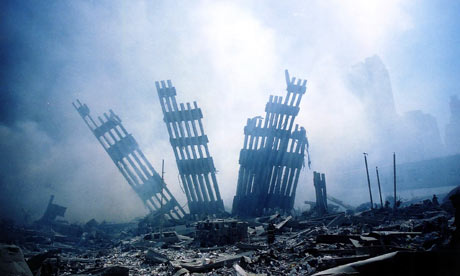
Attorney General Eric Holder announced yesterday that five people involved in the 9-11 terrorist attacks, including the mastermind, will be tried in civilian court in downtown Manhattan. I am not going to weigh in on the politics of this decision, nor on any security concerns or interrogation techniques. What I am going to weigh in on is the chances for these people to get a fair trial by an impartial jury in New York City.
Picking a fair jury is always somewhat tricky. Anyone can have a bias and not tell, or have a bias that they themselves don't know about. Figuring out who will truly be fair is an art, not a science. Still, we have some basic and uncontroversial understandings of which people should definitely not serve on a jury. The lawyers get a certain number of so-called "peremptory" challenges -- that is, a certain number of times they can say they don't want someone on the jury and not give a reason. They also get an infinite number of challenges "for cause" -- meaning that the juror is obviously biased or unsuitable in some way, and the lawyers have to say why. Among the people typically excused for cause are the victims of the crime, their family and friends, and anyone else directly impacted by it.
By way of example, let's imagine we were picking a jury for a typical murder case in which someone was shot in the parking lot of a convenience store. In the jury pool that day, we happen to have the victim's mother, fiance and best friend, as well as two people who work in the convenience store, one who lived across the street and had to stay in her house "locked down" while police sought the shooter, and someone who was in the parking lot. Aside from wondering how we got such a biased group of folks all on one day, the lawyers would challenge all of these people for cause, and almost certainly all of them would be excused.
Now, let's see how that affects the jury in a 9-11 trial in New York. This means we have to find 12 citizens of Manhattan, over 18, who were not in the twin towers, did not have a family member or friend killed, and were not nearby to see what was happening first hand. This would be hard, but not impossible.
But wait, we also need to exclude anyone who was endangered by the attacks, and anyone who had good reason to think they were endangered, as well as anyone who suffered traumatic stress related to the attacks. All of these people are like the neighbor across the street from the convenience store. They didn't see it, they weren't directly "in it," but they were deeply affected by it.
Just where exactly does the US government think it will find 12 acceptable people? It seems to me that the jury will have to be made up entirely by people who did not live in Manhattan in 2001. The secondary trauma from that attack affected the whole city. Everyone saw the smoke and breathed the air. Everyone was scared. The entire lower portion of Manhattan had to evacuate on foot. The local firehouses in all of the neighborhoods suffered catastrophic losses. Everyone had nightmares. There is no way that anyone who was in Manhattan on 9-11 can serve on this jury. In fact, there's a very large percentage of the US population who can't because so many of us suffered secondary trauma.
I'm sure the Justice Department has reasons, maybe even good ones, for trying this case in Manhattan. If I were a defense attorney, however, the first thing I'd do is ask for a change of venue.
Keeping it Surreal: 9 Declared Dead Off California Coast

The search for 7 members of the Coast Guard and 2 Marines who went down in a collision between a plane and a helicopter off the coast of California last week has now been declared a recovery mission. The Coast Guard announced that, after 60 hours, the chances of survival were negligible. In a forgotten detail of this story, the missing boater whom the Coast Guard was searching for when their plane went down is also still missing.
Far and away the most common reaction people have when receiving news of a traumatic death is one of disbelief. I have seen people who have been notified of a loved one's death by someone who has seen the body still demand "proof." The mind can only handle so much, and refusing to believe bad news is one of the many ways we protect ourselves from the pain that sudden death of someone we care about can bring. Even once the news has "settled in" a little more, survivors report feeling like they are in a nightmare, waiting to wake up. It just doesn't seem real.
The Associated Press reports that the father of one of the missing, Marine 1st Lt. Thomas Claiborne, confirmed that his son has been "declared deceased." That very fact is surreal by itself. It's hard enough to accept that someone could be here one moment and dead the next. In this case, the divider between life and death is not a biological fact, but a decision by a superior officer. How can someone be declared dead? They either are or they aren't.
So it is no surprise and no shame that the mother of another missing sailor, Coast Guard Lt. Adam W. Bryant, is not accepting this news right now. She told the Associated Press,
Miracles do happen. Miracles every day.After all, how would she live with herself if he were found and she had given up hope? And how will she carry on knowing that he is dead? Clearly, denial is a lot easier. Acceptance will come slowly. Our hearts go out to these families. Even if they find the remains of these servicemen, healing is going to take a long, long time.
Assigning Blame in a Circular Firing Squad

In June of 2007, a University of Michigan Survival Flight crashed into Lake Michigan, killing the pilot, co-pilot and four members of a medical transplant team which was transporting human organs to patients in Ann Arbor, Michigan. The local community here in Ann Arbor, where U of M is a major fixture and a major employer, took this crash very personally. It was covered very much as "our story," and we all struggled to understand how something had gone so wrong with a medical provider who we all consider to be good, particularly when it comes to transplants.
This past Wednesday, the National Transportation Safety Board issued its findings on the crash. They found that the pilot mishandled a problem shortly after takeoff, the co-pilot was poorly prepared and got in the way of an emergency landing, the carrier did not address safety issues and the FAA did not properly force the carrier to address those issues.
On Friday, the pilot's family issued its own statement, fiercely rejecting the NTSB findings. They believe a mechanical problem caused the crash, and they are suing Cessna, the maker of the airplane. In a statement, they said,
the NTSB's depiction of Capt. William Serra reflects the myopic view often induced by the search for scapegoats rather than causes for accidents.
By way of disclaimer, I should say that I know absolutely nothing about the technical aspects of aviation. I know how to make a reservation and find the cheapest price for a flight, and I let the professionals handle the rest. What interests me about this story is the family's accusation that, in the wake of a crash, the NTSB is looking for someone to blame.
It is certainly the case that, following a tragedy, we naturally tend to try to find fault somewhere. We are naturally wired to find patterns in the world, and random events are extraordinarily uncomfortable for us. Random events cannot be predicted and cannot be avoided, and that terrifies us. So we look for someone to blame. If we can't find someone outside of ourselves, we will blame ourselves. So yes, the investigation of a crash is, in part a search for a someone to blame.
For the family of the pilot, the search for blame is a little different. They, too, are hoping to find a reason for what happened. But since their experience is that this event happened to their loved one, they are going to be extraordinarily reluctant to blame him for what happened. They have assigned fault to the manufacturer of the plane.
What's interesting to me is that the family is accusing the NTSB of looking for a scapegoat when, in fact, they appear to be doing the same thing. It's possible the NTSB is wrong. It's possible the family is wrong. It's possible both are wrong, and it's possible both are right. But it certainly is the case that both the NTSB and the family have very good, healthy reasons to be pointing fingers. Adding to that by accusing the other of simply wanting to blame someone is, in the end, the pot calling the kettle black.
Odd Odds

Those who read the Quarterback regularly know that we tend to be more traumatized by events that we perceive to be rare. If our worldview suggests that something doesn't happen, it jars us when it does. The trouble with this, however, is that we are actually pretty bad at judging how rare things are. Even for those who, like me, make it their business to go digging up probabilities and statistics on various heinous situations, it's sometimes hard to find the data you need.
So I was very pleased to hear on NPR today about the launch of the website BookOfOdds.com. This site is extraordinarily simple. Put in the key word you are interested in, and it gives you a bunch of odds statements involving that key word. For example, if you type in "Naomi," you will discover that the chances of a female born in 1970 being named Naomi is 1 in 3,300. You can then put in the number 3,300 and discover that the odds of me being named Naomi are identical to the odds that an employed person over 16 living in South Dakota is an anesthesiologist. And while those particular statistics may not be very meaningful to you, you can imagine there are others that are.
For example, if you type in "New Hampshire" and "murder," you will discover that the odds of any given person in New Hampshire being murdered in the next year are 1 in 101,200, but the odds of someone living in Washington, D.C. being murdered in the next year are 1 in 3,182. So when I said last week that the murder of Kimberly Cates in Mont Vernon, NH was more shocking because of where it happened, I wasn't just blowing smoke.
If you explore those numbers more carefully, you will discover that the odds of being murdered in New Hampshire are slightly lower than the odds of any given person in the United States having to visit the Emergency Room in a given year because of an accident involving a drinking straw. Meanwhile, the odds of being murdered in Washington, D.C. are about the same as the chances that a woman my age is named Kimberlee. They're also about the same as the odds of someone in Boise, Idaho being a victim of a robbery. Now we can start to see why trauma affects different communities differently. It's not that the incident is less awful to those close to it, it's that it's more shocking to those further out.
This data is also useful in helping us put our fears in some perspective. For example, this summer plane, train and subway crashes were getting a lot of press. It turns out that the chances of dying in a transportation accident -- including a car crash -- in the next year are 1 in 6,212. That's pretty close to the chances of being diagnosed with end stage renal disease. And while both of those things are horrible, we don't live in fear of end stage renal disease. Maybe we should. Or maybe it would help us all to get a little more familiar with some hard numbers.
Welcome Back Sully

U.S. Airways Captain Chesley "Sully" Sullenberger and First Officer Jeffrey Skiles flew from New York to Charlotte yesterday. This wouldn't be such a big deal except that the last time these two men tried to fly a plane from New York to Charlotte, they hit a flock of geese and had to land in the Hudson River. In fact, four of the passengers who were on the plane for the so-called "miracle on the Hudson" also flew the route yesterday, with at least one reserving the exact same seat she sat in on that fateful flight in January.
This is the type of story we, as a society, just eat up. It's heartwarming. It has a hero everyone can love. It has symbolic significance. What's not to love? What it means to the six people who reunited for the flight yesterday, however, is somewhat more complicated.
It took Skiles 3 months to complete mandatory requalification training and return to flying. It took Sullenberger 9 months. And this is for a flight where everyone survived. (To be fair, Sullenberger also apparently wrote a book and got a promotion in there, so it was not all trauma recovery time, but still.) Sully may have been a hero, but he was a stressed out hero. Despite the fabulous outcome, this incident was unbelievably scary and he has to have thought he was going to die and take his passengers with him.
Returning to the thing you were doing when something awful happened is hard. If you've ever had a serious car accident, you know that getting in a car again is not trivial, and driving one again is even worse. At least one of the flight attendants on flight 1549 has said she will never return to work. The closer an activity approximates what you were doing when something bad happened, the harder it's going to be. Yesterday's flight was both a reunion and a triumph. It represented not only these six people getting back to the business of living life, but also overcoming the final hurdle of putting themselves in the position that was so traumatizing in the first place.
Captain Sullenberger got a huge round of cheers and applause when he introduced himself over the loud speaker before his flight yesterday. He certainly deserved it. People on the flight were quoted as saying they felt incredibly lucky to have him in the cockpit. At the same time, I have to admit to just a moment's hesitation at the thought of being on that flight. On the one hand, it is a triumph. Sullenberger said he wanted to complete the flight that went down with his co-pilot, and he finally got a chance to do that. On the other hand, I'm not sure how calm I would feel about being on a plane knowing that the pilot and co-pilot were putting themselves, for the first time, back in a situation which so clearly was associated with trauma for them. What would happen if this environment triggered some bad reactions from them? But it didn't -- they were as ready as they needed to be -- and I welcome them back to the sky.
Harrison High School's Football Plane Crash

From time to time I am interviewed for some newspaper or magazine story about school safety. The reporter always asks something like, "What is something schools might not think of to do?" and I always say, "Prepare for the fact that bad things are going to happen no matter what you do, and figure out how they're going to respond." Thus far, no reporter has printed that, because it is not what people want to hear. People in the school safety business, and parents who want their kids to be safe, want to hear about metal detectors and buzzer system and closed circuit TV. They don't want to hear that all of that can't prevent traumatic events from happening at a school.
I bring this up, because last night just after 8 PM, a bi-plane crashed right next to the football field at Harrison High School in Harrison, OH during half-time of a scrimmage, killing two people. Witnesses report that the plane appeared to be heading directly for the field before it did an abrupt nosedive. There is some speculation that the pilot may have intentionally gone straight down when he realized he was going to crash into the crowd of between 1,000 and 1,200 people.
There is no possible way that the school could have prevented this from happening. All the metal detectors in the world cannot keep a small plane from crashing, and they certainly cannot heal the trauma experienced by a high school kid looking up in the sky and realizing there is a very good possibility that he or she is going to die. You can have closed circuit cameras, but they won't obliterate the memory of seeing someone on the verge of death die right in front of you after the crash.
Still, many school districts do not have a plan in place for dealing with trauma on their campus. Most don't even have a plan for the more likely eventuality that someone in the community will die suddenly in a car accident or the like. And after the fact is really not the time to be trying to make good decisions with no guidance and no training. You may be thinking that most schools have counselors or social workers, and that is true. Very few school counseling or social work educator programs have any coursework, and certainly not required coursework, on trauma. And I hope we can all agree that helping kids make a college or career plan is a different skill than talking to them about being terrified they were going to die.
If this happened in my district, we have Critical Incident Stress Management teams to assist. If it happened in my county, and the district knew to make the call, they could call in our community-based team. In my opinion, this is a second choice in this instance for two reasons. First, the community team is going to have it's hands full with people from the families of those who died, the people at the airport, and possibly the spectators who were not associated with the school. Second, on our county team there is exactly one educator (me). Many community teams only have mental health professionals. And really, you want someone who knows schools from the inside to help you figure this out. Peer response isn't just for first responders.
I don't know what the folks in Harrison have done or will do to support their community. I do know that they circled school buses around the scene to limit what could be seen from the field. I also note with interest that they quickly made the decision to continue with the football game despite the fact that the rescue and recovery operation was going on less than a quarter mile away. This probably surprises most people, but it actually was a good idea. As it turns out, because it was halftime the players were busy meeting with their coaches and probably saw the least and hence were the least traumatized. If they can manage to play, continuing with the game is a strong counteraction of the natural feeling of traumatized people that the whole world has just come to an end. It gives people some anchoring in normal life. And, frankly, that soon after the crash no one who was really affected was really ready to talk about it anyway. If they could have managed to get a little crisis management briefing at the end of the game, that would have been ideal, but it may not have been possible.
I greatly feel for my administrator colleagues down in Harrison. Monday is going to be an interesting day at Harrison High School. I hope they're ready.
Aviation Over the Hudson
Writing this blog requires that I scour the news for something awful every day. Some days it isn't hard, some days it is, and some days, like today, make you just go "ugh." Shortly after noon today a private plane collided with a tour helicopter over the Hudson River in New York. There appear to be no survivors.
When I saw the headline, I made a prediction about how the coverage would run before I ever saw it. I predicted that coverage would very quickly include reference to US Airways Flight 1549, the plane that landed on the Hudson in January. And I wasn't disappointed. The New York Times breaking news article at 4:40 Eastern had its mention of the "Miracle on the Hudson" in the 9th paragraph:
The accident, on a sun-drenched weekend that beckoned people out of doors, occurred seven months after a US Airways jetliner with 155 people on board lost power after striking birds on takeoff from La Guardia Airport and ditched in the icy Hudson a half-mile north of Saturday’s crash, with stunningly different results: all on board were quickly rescued by a flotilla of ferries and emergency boats.Let's think about this for just a moment. The US Airways crash has, objectively, essentially no relationship to this crash. The cause clearly is not the same, the aircraft are not the same, the people involved are not the same. The only thing they share is landing in the same body of water.
So why does the coverage fly immediately to the US Airways crash? And why does that make sense to us? I think it's because of how we naturally store information and memories. I like to compare our minds to a gigantic system of filing cabinets. We file memories and new information in one or more cabinets based on some label. When something else comes along with the same label, we open that drawer again to file it, and in the process review what's already in the drawer. Today we opened the "Hudson River Plane Crash" drawer, and not surprisingly flight 1549 was already in there.
People who have been traumatized are often surprised by the associations that come up for them. They find that their car accident has them thinking about when they broke their arm in the 3rd grade, and they can't imagine why. But that triggering is all the same mechanism. We only have so many labels in our file drawers, and things that don't have much to do with one another wind up getting filed together.
With that in mind, the people I am concerned about (other than the families of the deceased) in this instance are the pilots of water taxis and tour boats on the Hudson. These folks helped heroically in the rescue efforts for flight 1549, and responded again today. Their reactions today will be not just about today, but about January. And I hope they are able to remember that, when there were survivors to rescue, they made a big difference. They probably aren't feeling so effective today.
And That's the Way it Is: Walter Cronkite (1916-2009)

But I'd like to take this opportunity to talk about Cronkite, not just because he was an American icon and a big part of my childhood (as was Michael Jackson, by the way), but because he was a pretty good crisis communicator.If you've never seen the footage of Cronkite announcing the death of President John F. Kennedy, I encourage you to do so now. I will date myself and say that I was not alive when Cronkite did this broadcast, so I can't claim it holds sentimental value for me, but I found it quite touching.
From a crisis communication standpoint, Cronkite does a lot of things right in this clip. He acknowledges the rumors that are out there, and he labels them rumors. He tells us that it is hard to get good information. When new information seems to come in that is simply the same rumors, he tells us that. And when confirmation finally comes that the President has died, he tells us in a very straightforward manner, and shows his emotions in a reasonable way. He then begins to move on to the next piece of information we are almost certainly wanting -- where is the Vice President? Except perhaps for the last few seconds, he engages in absolutely no speculation. He does not talk about "what if" scenarios. He sticks to the facts and he is clearly sharing them in real time.
If you've ever been watching TV as major news breaks, you know that Cronkite's style is pretty different from what we can expect on news today. Perhaps the most egregious example I can recall is when TWA Flight 800 exploded over Long Island and Dan Rather in less than an hour had declared that it was quite obviously a bomb. I have no interest in getting into the debate about what brought down Flight 800, but it was not "obviously" anything. News organizations like to "scoop" each other, and guessing right in a crisis has great rewards. Nobody thinks about what happens if you guess wrong.
Can you imagine if any of the myriad news stations were covering the JFK assassination now? Certainly we'd have various experts talking about gunshot wounds and the types of surgeries people have for them. We'd be shown old file footage of the President, the car he was riding in, that street corner in Dallas, and various kinds of rifles. The crawl underneath would tell us every minute detail of everything that anyone was saying about the situation, and the caption under the reporters would read "Breaking News: President Possibly Dead." Oh, and the anchor wouldn't be taking off and putting on his glasses, and you certainly wouldn't hear someone talking to him on camera.
Walter Cronkite reaped the benefit of being straightforward and honest, sticking to known facts and not holding back on them, and managing rumors when he was named the "Most Trusted Man in America" in repeated polls. He was a good example for all of us.
And that's the way it is . . .
The Intersection of Crisis Response and . . . Pretty Much Everything
 " Referring to the recent crash on the D.C. Metro that killed 9 people, he wrote:
The relative rarity of air and rail disasters makes them novel, and hence news. Car crashes bite man, and rail and air crashes bite dog. Intensive coverage of the few air and rail accidents that do occur in turn promotes the widespread — and erroneous — inference that planes and trains are unsafe. In an unfair irony, in transportation perhaps too much safety can be a dangerous thing.The Quarterback brings this up because in a recent post about the murder of Neda Sultan, I wrote:
We live our lives based on what is likely, not what is possible, in terms of danger. This video brings home in a very vivid way what of course we already knew -- that the world is not safe, particularly if you are a protester in Tehran.But Morris brings up the flip side of that, which is that trauma messes with our understanding of what is possible vs. what is likely. When something like this happens, we feel like we've been duped. We've been living our lives in a state of complacency, believing, say, that the Metro is safe, and we feel like all of a sudden we have woken up from our stupor to the horrible truth that it really isn't. And the media coverage reinforces that false perception.
On a related note, on Monday Freakonomics posted the following:
In the 1990’s, a call went out for the F.A.A. to stop letting air-traveling parents carry young children in their laps, making them buy a ticket for their children instead, so that every person could wear a seatbelt. The F.A.A. refused, saying that the cost of an extra ticket could force parents to travel by car instead. Car crashes are the leading cause of death for children. On the other hand, the problem of child safety in air travel, the F.A.A. said, “barely exists.” Yet another example of how terrible we are at assessing risk, especially when it comes to our children.One of the commenters replied:
The response to your blog is simple . . .The overwhelming majority of people are ignorant of the scientific method — thus, probability and risk.
I can't tell you how strenuously the Quarterback disagrees with this analysis. The fact that rational information tells us something different than that upon which we feel compelled to or choose to act does not mean we don't understand better information, or how good information is obtained. It just means that there are things that are psychologically more compelling than empirically derived data in this instance, and that, as the original post notes, we are actually pretty bad at estimating what the empirically derived data on danger will tell us.
Morris understands this when he looks at how the relative rarity and the news coverage of a transportation accident skews our perception of the danger of that mode of transportation. It may be that if you ask people which is safer, a car or the Metro, they will say a car. They will be wrong. But I doubt that if you told them the relevant statistics most people would say, "No, the Metro is still more dangerous." What they will say, however, is, "Even though I know that, my gut instinct is just to avoid the Metro."
Our guts are powerful, and yes, they are influenced by data and by the scientific method. They are also influenced by media coverage, shock, personalization, and perhaps most powerfully, by what we can control. We can avoid a plane, or strap our child in. We can avoid the Metro. We can drive defensively. But what most of us can't do without completely changing our entire lives is avoid driving, so it is important to us that, on a gut level, we continue to be able to drive. We therefore ignore that data, perhaps not cognitively, but instinctively. We're not stupid, we're just trying to get by, to live in the shadow of what is likely and what is possible.
Why We Love Bahia Bakari, But Not Enough to Know Her Name
It's time for a little honesty. Would all Americans reading this blog please answer the following: Before this week, could you locate the Comoros Islands on a map? Can you locate them now? Do you know why I'm asking? My guess is that the most common answers to those three questions, respectively, is no, probably not but maybe and yes, with a fair number of people answering no for all three (the Quarterback admits that her answers are yes to all three, but only because she is very fond of the quizzes on Sporcle).
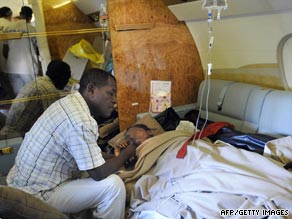
On Tuesday morning, a Yemenia Airways plane en route from Sanaa, Yemen to Moroni, Comoros crashed into the Indian Ocean. 152 people died. The only survivor is a 13 year-old girl named Bahia Bakari, who was apparently ejected from the plane and landed in the water, where she held onto debris until she was rescued.
There are two stories that have dominated the coverage of this tragedy. The first is Bakari's survival. Many Americans, including the Quarterback, first learned about the crash from news reports with headlines like "Rescuers Find Child Alive in Wreckage of Airliner Crash." The second is the poor maintenace record of Yemenia Airways and of this plane in general. Apparently the European Union had flagged this particular jet as having maintenance problems, but Yemenia Airways had flown planes in better condition into the EU ever since. On this flight, most passengers boarded in Paris and then switched planes in Yemen.
Certainly both of these stories are newsworthy. But it is notable that the kinds of stories we saw after the Air France crash off the coast of Brazil last month are almost completely absent. We don't know about the engaged couple, the European tourists, and the brilliant scientists who were on board the Yemenia Airways flight. We know about Bakari, but probably we don't remember her name.
In the humble opinion of the Quarterback, the two dominant stories and the absence of the other kind are all attributable to a single, understandable human reaction to tragedy, but one that has a very sinister side to it. As my readers know, we like to assign blame after a traumatic incident. If something can be blamed, it can be controlled.
But this crash offers Americans and to some extent Europeans something even better. It offers us the opportunity to completely detach from identifying with the victims. We white Americans can look at this situation and say, "Look, these people are nothing like us, they were on an airplane that we would not board on an airline that we would not fly. This could not happen in our world." We can easily convince ourselves that this cannot happen to us and people we think of as being like us. And make no mistake about it, when we say "these people are nothing like us" what we mean is that these people are black.
Which brings us back to Bahia Bakari. We love the fact that she is alive. It allows us to tell ourselves that even if something like this could happen to us, it's ok because we could survive. We all, on some level, believe that we are the one lucky one. But unlike if Bakari's name were Jane Johnson and she hailed from Nebraska, we don't want to look too closely. We don't want to know her name or her family background or why she was going to the Comoros Islands, because we'd rather not put ourselves on that plane with her, and we can avoid doing that because, well, she's nothing like us.
Avoiding identifying with the event and its victims is a healthy psychological defense mechanism. It certainly would not be helpful for everyone to personalize this story to the point of their own traumatization, and imagine in vivid detail the experience of being on a crashing plane. The Quarterback is not asking for that. But it might behoove us to be a little self-reflective about why, in this case, detachment is so particularly easy for us to do.
Rescue to Recovery to . . . What?

An update to a story the Quarterback first took a look at a couple of weeks ago. Officials have called off the operation to recover the remains of people who were aboard Air France Flight 447 when it went down off the coast of Brazil on June 1st. In the two weeks since we first looked at this search, only 7 additional bodies have been found, including the pilot and a flight attendant, bringing the total to just 51 of the 228 people aboard. Officials say it is unlikely that any more would be discovered.
As the Quarterback discussed in the June 14 post, it's hard to process trauma until it's over. For the families of those on this flight, this journey started out on June 1 with notice that the plane was missing and feared down and the beginning of a search and rescue operation, to the beginning of the recovery effort, to now the notification that for most of them, there will be no recovery of their loved one's body.
It's easy for us to say that everyone knows no one survived that crash. And yes, the thinking part of these families' minds knows their loved ones are dead. But the feeling part, the part that isn't rational, can hold out hope. And as long as it does, it's hard to process what has happened and find a place for it in the "new normal" of life.
In just the two weeks since I first blogged about this, the Quarterback has noticed a lot of media attention given to situations where people fake their deaths. Just last night I watched a re-run of a CSI Miami from 2005 in which Raymond Caine turns up after having supposedly been dead and then fakes his death again. This phenomenon can't be that common in real life. But when someone you love dies and their body never comes home, it has to cross your mind, and that can't be easy.
Meet the Quarterback

- Naomi Zikmund-Fisher
- is a clinical social worker, former school Principal and a Crisis Consultant for schools and community organizations. You can learn more about her at www.SchoolCrisisConsultant.com

Subscribe


 Posts
All Comments
Posts
All Comments