Showing posts with label 9-11. Show all posts
Showing posts with label 9-11. Show all posts
Sunday, September 11, 2011
How I Spent My 9-11


I've lived in this neighborhood
For twenty-seven years
I know where to get good bagels
And exotic beers
The favorite sidewalk cafes
Where locals like to eat
But I never paid attention to
The firehouse on this street
My house is about half a mile from our main township fire station. I'm particularly glad about this given that, because of zoning regulations, our area does not have fire hydrants, it's somewhat reassuring to know that the tanker truck is right nearby. The one time we had to call an ambulance the firefighters got here really, really fast.
Last week, driving by, I noticed the station had put up its 9-11 memorial banner. It's a white banner with a red, white and blue lapel ribbon and the words, "We remember 9-11-01." My son, who is 6 and has no knowledge of the attacks, asked about it.
I explained that 10 years ago there was a terrible tragedy in New York where many firefighters were killed. All the firefighters all around the country were scared and sad, and all the people in the country were scared and sad too. The sign says that the firefighters here are remembering, because the 10th anniversary of that day is coming up.
Neighbors lit votive candles
Laid flowers at the door
Baked casseroles and homemade breads
But wished they could do more
And the guys inside were grateful
But preferred to grieve alone
Though trained to save the lives of others
They could not save their own
Laid flowers at the door
Baked casseroles and homemade breads
But wished they could do more
And the guys inside were grateful
But preferred to grieve alone
Though trained to save the lives of others
They could not save their own
I decided bringing something to the firefighters today would be a good and appropriate way to commemorate the anniversary and involve the kids. We had a massive Tollhouse Cookie fest this morning and made probably six dozen or more cookies. Every surface of the kitchen and every surface of my son was coated in flour and dough. The whole family helped, which was a nice bit of togetherness and unity.
This afternoon, my son and I took a huge plate of cookies over to the firehouse (important tip -- the total capacity of a single Chinette dinner plate is close to, but not quite, 6 dozen cookies if you stack them really carefully and then wrap in foil). There are two firefighters on duty at all times there, one in the other station in town, and nine total.
I'm not sure what I expected. Half of me was afraid this would be the 47th plate of cookies they got today. Another piece was afraid they'd look at me like I was crazy. Neither was true. The two guys on duty were quite appreciative and very touched. They kept saying "you didn't have to do this. You really didn't." But both of them acknowledged this was a really hard day. They said they were trying to keep busy and not turn on the TV.
The guys let my son wear one of their helmets and get his picture taken in front of the engine with him standing on the front bumper and the two firefighters below. They let him sit in the driver's seat. He was in heaven. We said goodbye and thank you, they said come by anytime.
I'm glad we went. And it was heartbreaking. I don't think it could possibly have been otherwise.
This afternoon, my son and I took a huge plate of cookies over to the firehouse (important tip -- the total capacity of a single Chinette dinner plate is close to, but not quite, 6 dozen cookies if you stack them really carefully and then wrap in foil). There are two firefighters on duty at all times there, one in the other station in town, and nine total.
I'm not sure what I expected. Half of me was afraid this would be the 47th plate of cookies they got today. Another piece was afraid they'd look at me like I was crazy. Neither was true. The two guys on duty were quite appreciative and very touched. They kept saying "you didn't have to do this. You really didn't." But both of them acknowledged this was a really hard day. They said they were trying to keep busy and not turn on the TV.
The guys let my son wear one of their helmets and get his picture taken in front of the engine with him standing on the front bumper and the two firefighters below. They let him sit in the driver's seat. He was in heaven. We said goodbye and thank you, they said come by anytime.
I'm glad we went. And it was heartbreaking. I don't think it could possibly have been otherwise.
Maybe next year the pain
Won't be as sharp
As it is today
Though it will never
Completely go away
We will talk in terms of
'Before' and 'after' the attack
And wish that more than anything
We could bring those brave men back
Reality sliced cleanly through
That slender thread of hope
The digging just went on and on
Some snapped
Most of us still cope
The photos of the missing men
Are missing from the glass
Of the red door where
We say a prayer
Whenever we walk past
Won't be as sharp
As it is today
Though it will never
Completely go away
We will talk in terms of
'Before' and 'after' the attack
And wish that more than anything
We could bring those brave men back
Reality sliced cleanly through
That slender thread of hope
The digging just went on and on
Some snapped
Most of us still cope
The photos of the missing men
Are missing from the glass
Of the red door where
We say a prayer
Whenever we walk past
Note: The lyrics interspersed in today's post are from the song "Firehouse " by Christine Lavin, off her album "I Was in Love With a Difficult Man
 ." It was written for the men of Ladder 25 on the Upper West Side of Manhattan. Every singer-songwriter wrote a song about 9-11. This one, in my humble opinion, is the best for many reasons, but mostly because it so well captures the common experience of 9-11 in all of its many facets, as well as the experience of the first responders who lost their brothers and sisters that day.
" by Christine Lavin, off her album "I Was in Love With a Difficult Man." It was written for the men of Ladder 25 on the Upper West Side of Manhattan. Every singer-songwriter wrote a song about 9-11. This one, in my humble opinion, is the best for many reasons, but mostly because it so well captures the common experience of 9-11 in all of its many facets, as well as the experience of the first responders who lost their brothers and sisters that day.

Saturday, September 10, 2011
Why 9-11?

So, are you feeling like dog poop yet? Sick of the coverage? Want to talk about something -- anything else? Welcome to the 10th anniversary of 9-11, and to being a human who has experienced trauma. If you didn't read what I had to say yesterday about getting through this in a healthy way, I highly suggest it -- that one was more important than what I've got to say today.
What is it about 9-11 that holds such power over us? More Americans have died, after all, in Iraq and Afghanistan than did during that one day. There have been other big, national events -- Pearl Harbor, the Kennedy assassination, the Oklahoma City bombing -- that got our attention when they happened but don't seem to affect us quite the same way. Why?
First of all, I think there is an argument to be made that each of these events affected our society significantly. Certainly the Kennedy assassination did. While I won't put all of the '60s on that event, it was a catalyst. Each generation seems to have their "big thing," and 9-11 was ours.
But something does separate the September 11th attacks in our consciousness. If it wasn't worse, it was different. It is different.
PTSD is unusual in its diagnoses because, unlike most disorders, the cause is part of the diagnosis. You can be diagnosed with depression, for example, without having something obvious causing your depression. But in PTSD, there are particular criteria the trauma has to meet.
First, the person must have witnessed an event that they sincerely believed had the possibility to threaten the life or physical integrity of or cause serious injury to themselves or others. September 11th? Check.
Second, the person must have responded, at the time, with feelings of intense fear, horror or helplessness. September 11th? Check.
Of course, the Kennedy assassination, for those who saw it or saw the footage, met those same criteria. But there is one key difference.
On September 11, 2001, we as a country all witnessed an event that killed over 3,000 people. But more than that, we experienced an event that we sincerely believed had the possibility of killing us. We didn't just have intense horror or helplessness. We had intense fear. We don't like to admit it, and maybe it seems a little silly looking back, but the simple fact that someone was out there targeting Americans simply for being Americans, coupled with the idea that regular folks went off to regular jobs and never came back, was and is really scary.
My daughter was 3 years old on 9-11. She didn't know what was going on, but slowly, over the following weeks, she asked questions about the things she noticed -- flags in windows, singing the "Bless America" song (as she called it). We answered the questions she asked and nothing more. But she knew it was bad. After one such conversation where I had to reassure her of her own safety as I tucked her in, I remember coming out of her room and saying, "The good news is, our daughter now feels perfectly safe. Now who's going to tuck me in and make me feel safe?"
The real truth is, no one is. We can't go back to thinking it can't happen. All we can do is acknowledge that it's there and it's scary, and remind ourselves that it's still really, really, really unlikely that any one of us will become a victim of a terrorist attack. If we can channel our inner toddler, maybe that will be enough.

Friday, September 9, 2011
Turn Into the Wind: Dealing With the 9-11 Anniversary and its Hype
All week I've been writing about how American society matches the symptom profile for Post Traumatic Stress Disorder. This morning, I took the first of those pieces to my writer's group, a small circle of women writers who share and respond to each other's work every Friday mornings. I knew it was not my best work, and I wanted feedback.
As usual, the group was very helpful, but one of their reactions caught me by surprise. Members felt that my writing was distressing (not in terms of quality, but in terms of topic), and that I needed to give information on how to deal with that distress. So I'm taking a detour from the exploration of PTSD in a post 9-11 society to help all you Quarterbackers out there as we head into the 10th anniversary of the attacks.
Perhaps the most important thing you should know is that, if you're feeling blah this week, or sad, or anxious, or irritable, or having trouble sleeping, or anything else that makes you feel "off," even if you do not consciously connect those feelings to this anniversary, you're normal. Anniversaries are very powerful, and quite often people who don't even realize that it is an anniversary have negative reactions nonetheless. This isn't helped by the terrorism alert for New York and Washington. What might be somewhat distressing anyway only feels magnified given the time of year.
You also aren't crazy if you are sick and tired of the anniversary coverage (although chances are you aren't reading this, so I may be wasting my breath). The extra coverage is draining because it prevents us from getting away from the intense memories and the feelings they evoke.
Whichever of these two groups you most identify with, you're normal. Don't waste one minute worrying that your reaction is too much or not enough or inappropriate, any more than you would criticize yourself for feeling pain when you stub your toe. You couldn't control those feelings if you wanted to, so don't bother trying.
But what can you do? If the coverage or the date or the blogging about our messed-up society is bothering you, what is the solution? You may not like the answer, because here's what it isn't. Turning off the TV, avoiding reading my blog, doing something completely non-9-11 related on Sunday and generally trying to get your mind off it may feel good for the moment, but it is a quick fix for a longer term problem. That's because problem isn't the reminders of the attack, it's how upsetting they are to you. Avoiding the reminders won't solve the underlying issue, it will just push it back underground.
What I suggest is completely counter-intuitive. When you find yourself having negative feelings -- sadness, fear, hurt, anger, guilt, shame or whatever -- don't try to turn away from them. Turn towards them. Identify what you are feeling and what caused it. Label them consciously. Don't try to explain it rationally, because emotions are not rational -- they're, well, emotional. Whatever you're feeling just is, so you might as well feel it.
The reason this is a good idea is that, when you turn and face your negative emotions, they stop feeling so overwhelming. Feelings, by themselves, do not hurt us. What we tell ourselves about those feelings and the events that trigger them can. No one likes to feel sad or afraid, but you can tolerate it. Your negative emotion loses its power when you acknowledge it and face it head on.
Does this mean you should glue yourself to the TV and watch as much coverage as you can this weekend? No. Just as avoiding reminders isn't healthy, seeking them out to excess isn't, either. Watch, read and hear what interests and moves you or is meaningful to you. Consider for yourself what type of commemoration, if any, you believe is appropriate for you to participate in. Just monitor yourself and be careful when you find yourself saying things like, "I can't watch that," "I want to get my mind off it," or "I won't be able to handle that." Those are signs you're avoiding, and you're not turning into the wind.
For me, this Sunday is about reclaiming September 11th as a day of grief and fear -- yes, I'm reclaiming fear -- and as a day of unity, service and collective support. I am allowing myself to feel the sadness and, as hard as it is, some of the horror of that day. And I'm patting myself on the back for doing it, because it isn't easy. I hope you'll join me.
Thursday, September 8, 2011
America's PTSD Part 3: Society on Edge

We're continuing to look at the ways American society is manifesting behaviors indicative of PTSD in the wake of the 9-11 attacks. Today's topic is the third cluster of symptoms, "Hyper-Arousal." People with PTSD are, in many ways, in a permanent state of fight or flight. They are overly alert and on guard. So are we.
People with PTSD have at least two of the following symptoms:
Difficulty falling or staying asleep. It's somewhat difficult to judge how much of America's current sleep deprivation has happened since 9-11. It is certainly well documented that on average we don't get enough sleep. What's more, we don't value sleep as a society. Few people work in places where the boss will tell you not to come in if you're tired. In fact, we don't consider exhaustion do be a legitimate reason to take a sick day -- that's faking. More and more, our institutions function on the assumption that we are awake at all hours. Congress works into the wee hours of the morning. The funniest television is on past 11. The announcement of the death of Osama bin Laden was made late at night even though it had happened hours before -- couldn't it have waited until the morning? We assume no one is sleeping, and we may be right.
Irritability or outbursts of anger. I talked at some length about how angry we are as a society in yesterday's post. Everything is a place to draw the line, make a stand and stand our ground. You're either with us or against us, with us or with the terrorists. Comparisons between politicians, political parties, grassroots organizations and the Nazis are so common we're not even surprised anymore when someone makes them.
Difficulty concentrating. Let's face it. The American public has the attention span of a flea, with apologies to all the hardworking fleas out there. The "news cycle" is getting shorter and shorter and it is easier and easier to push a big story out of it. We can't stick with a substantive news story for more than a day. A mass shooting or a celebrity wedding, sure, but not hunger, poverty, public policy or the wars. We're on to the next.
Hyper-vigilance. Consider this. The risk of a terrorist attack on American soil was no different on September 12, 2001 than it was on September 10, 2001. Does that even seem possible to you? It barely does to me. What changed on September 11 was not the risk, but our knowledge of the risk. And since then, we're constantly looking for the next one.
You can make a reasonable argument that we should be more vigilant than we were before. We were naive, and now we know. We're smarter than we were. The thing is, we're not only vigilant in smart ways. We are constantly trying to prevent whatever plot was the last one, successful or not. We take off our shoes, put up with backscatter screening and don't carry liquids on planes because those steps might have prevented a previous attempt, not because we have any reason to think anyone's going to try them in the future.
We profile Arabs and Muslims horrifically. A report that came out in the last couple of days indicates that the Mall of America has been reporting people, two thirds of them non-white, for such suspicious and sinister behavior as forgetting their cell phone at the food court or pacing outside the bathroom while they wait for a companion. This isn't just a lesson learned, it's hyper-arousal.
What's more, we seem to also be defending against entirely imagined threats. The fact, for example, that Sarah Palin said that Paul Revere was telling the British they weren't going to be taking away our arms was not just wrong, it was weird. There's a segment of society that has been obsessed with the idea that the government, or more specifically the Obama administration, is trying to take their firearms. We're more than two years into Obama's term, and not one gun control measure has been proposed. We're afraid of being unable to defend ourselves and sure that that's what "they" want, but it's not based in reality.
Exaggerated startle response. Last year, a major international terrorism scare was triggered by someone shipping watches that were taped together. A plane was grounded because a man was putting on tefillin, the leather boxes with straps that Orthodox Jewish men wear when they pray. We're a little bit jumpy.
A couple of years ago, I was flying from Washington, DC to Detroit with my family. There are four of us, so it often winds up that the two kids sit with one parent and the other sits alone. On this occasion, I was alone. The man sitting next to me put his bags in the overhead compartment and sat down. I wasn't paying much attention. Then he spoke to me, in good but accented English: "My name is Ahmed. I am a dentist from Toledo. You are safe." How jumpy must the average member of the traveling public be around Arab men on planes that Ahmed felt he needed to say that before I even registered him at all?
So, we've established that we're all acting in very PTSD-congruent ways. But why did 9-11 do this to us in a way that the Kennedy assassination, the Oklahoma City bombing or the Challenger disaster did not? I'll be looking at that tomorrow.

Wednesday, September 7, 2011
Our Numbed Society: America's PTSD Part 2

Yesterday I shared the idea that America, as a society, is manifesting symptoms of PTSD. There are three sets of these symptoms, and today we'll be looking at symptoms of numbing. People with PTSD go to great lengths to avoid and/or numb themselves to feelings and experiences related to the trauma.
Specifically, to be diagnosed with PTSD, there must be at least three of the following symptoms present:
Efforts to avoid thoughts, feelings, or conversations associated with the trauma. Traumatized people often come across as angry. It's not that they don't have a right to be angry at the people who traumatized them. But they're often just angry all the time at everyone. Anger is a very effective defense mechanism against other, more uncomfortable feelings.
If there's one thing Americans are, it's angry. You need look no further than Capitol Hill. We don't just disagree, we think the other side is a threat and evil. We are locked and loaded. And we're rude.
So, what feelings are we avoiding? Fear. If you think back to how you felt on September 11, you weren't mad. You were horrified, and you were scared. Pretty quickly, you were sad. If someone had asked you if you were mad at the people who did this you would have said yes, but anger was not the primary emotion.
The thing is that fear doesn't feel good. It feels weak. So does sadness. Anger feels strong. So we stick with anger -- at each other, at other countries, at whomever. Do you remember that feeling of togetherness we all had right after the attacks? Have you wondered why we can't seem to get it back? Because we came together in fear and in grief, and as much as we might like togetherness, we don't want to go back and feel those things again.
Efforts to avoid activities, places, or people that arouse recollections of the trauma. There was a contingent of people who got mad at President Obama for visiting Ground Zero after bin Laden was killed. They said he was politicizing September 11th (and I would argue that ship sailed a long time ago, but let's put that aside). But Obama didn't go there to give a speech or do a victory lap. He went to lay a wreath. He went to acknowledge grief. That's a no-no.
Inability to recall an important aspect of the trauma. There are certainly things about 9-11 that none of us will ever forget, but here's a test question: Following the September 11th attacks, what was the stated motivation of Al Qaeda for attacking the U.S.? If you said something like, "They hate us for our freedoms," you're not alone -- that is our dominant societal narrative. It was started by President Bush the same week as the attacks. And, if I may be so bold, it's wrong. At the time of the attacks, Al Qaeda wanted the U.S. to withdraw its troops from bases in Saudi Arabia, which it considers sacred ground. We forgot the motivation for the attack almost as soon as it happened.
Markedly diminished interest or participation in significant activities. This is a tough one. "Significant activities" for individuals are easier to define. However, I'm struggling to remember the last time it seemed like everyone was having a joint experience -- like the last episode of M*A*S*H, or even the Superbowl. Is it me, or is it just harder for us to all decide that something, other than a disaster or trauma, is important these days?
Feeling of detachment or estrangement from others. We know who our allies are in official terms. But what foreign country do we as Americans truly respect as partners these days? I can think of no one. We have become a very lonely country in a lot of significant ways. You can blame politics or policies for this, but it's also the manifestation of a gut feeling that no one really understands us.
Restricted range of affect (e.g., unable to have loving feelings). As discussed above, our primary societal emotion is anger. We don't feel joint happiness or pride anymore. We don't "put aside politics" for any common purpose. We want Congress to compromise, as long as they don't compromise on the things we want. We have lost the ability to have mixed emotions, and changing one's mind about something is weak. This is what a restricted range of emotions looks like -- anger and black and white thinking with no nuance.
Sense of foreshortened future. There is a conventional wisdom in America that the United States is no longer a superpower, or that we won't be one for much longer. Polls show we believe America is headed in the wrong direction. Every new law or policy (passed or just proposed) on both sides of the aisle is met with doomsday scenarios about how it will mean the end of America as we know it. It's one thing to say you don't like an idea, and quite another to think we can't survive it. We don't, as a country, feel very confident about our future.
Tomorrow I'll look at the third cluster of symptoms -- hyper-arousal. Later in the week, we'll examine why 9-11 impacted us this way when other things didn't, and at what kind of "treatment" we might recommend for our traumatized society.

Tuesday, September 6, 2011
Does America Have PTSD?

This Sunday marks 10 years since the September 11th attacks. Everyone, it seems, is doing some kind of memorial or retrospective to mark this solemn anniversary. Some are focused on remembering those who died, others on service to the community and still others on looking at how America has changed over the last decade. This last theme intrigues me. We know that trauma changes people as individuals. Can trauma change a whole country?
I have a friend who is a mental health professional who suggests that it can and it did. In a blog post several months ago, she proposed that American society is showing many signs of post-traumatic stress.
Now, let's not take this too literally. American society does not have a single brain that can contract a mental illness. But Post Traumatic Stress Disorder (PTSD) is a very symptom-based disorder. You know someone has it by how they act. In my friend's opinion, American society isn't behaving in a very adaptive manner. Over the next several days in this space, I'll be laying out a detailed look at the ways in which our current society is showing signs of trauma.
Symptoms of PTSD fall into three categories: Intrusive Recollection, Numbing and Hyper-Arousal. Today I'd like to look at the first of these, the so-called "Criterion B Symptoms" (named after the letter in the description in the diagnostic manual) of intrusive recollection. People with PTSD have at least one of these symptoms, and many have more:
Recurrent and intrusive distressing recollections of the event, including images, thoughts, or perceptions. On the day after Osama bin Laden was caught, news outlets ran all kinds of 9-11 retrospectives. Some of them were horrifically graphic and would never have made it past the editors under other circumstances. Telephone recordings of dying people and video footage of people jumping out of windows was played without even the basic "viewer discretion is advised" warning. Not only do we remember, but we do not have mastery over our memories enough to modify how and when we process them.
Recurrent distressing dreams of the event. Obviously it's somewhat difficult for an entire society to have distressing dreams. There is some argument to be made, though, that works of art, literature and movies represent the "dreams" of society. If that is the case, the tremendous popularity of the Harry Potter series
 is telling. With each installment in the series, the foreboding message that there is a great evil "out there" that can strike anyone at any time and that we don't really know who can be trusted gets stronger. In each book, we look to Harry to master the terrifying unknown because we can't.
 Acting or feeling as if the traumatic event were recurring Perhaps the best example of this is the media coverage of the infamous "balloon boy" incident last year. A kid supposedly trapped in a balloon got national breaking news coverage. Even if it were true (which we know now it wasn't), how do we explain that? I think we learned, on 9-11, what it was like to scramble news coverage and all have our attention focused in one place, and we have become very bad at figuring out when that's actually necessary. Everything that is generally newsworthy is Big News. When something we think may be important happens, we go into 9-11 mode.
Intense psychological distress at exposure to internal or external cues that symbolize or resemble an aspect of the traumatic event. For much of our society, Muslims as a group have come to symbolize 9-11. When people get so upset about the so-called "Ground Zero Mosque," they are getting upset about something that reminds them of the trauma. Even for those who don't blame all Muslims, the anger against those who do may also be a symptom. One group is furious at Muslims for supposedly desecrating the memory of those who died, while the other is furious at the first group for supposedly desecrating the memory by being hateful.
Physiologic reactivity upon exposure to internal or external cues that symbolize or resemble an aspect of the traumatic event Can a whole society have a physical reaction? Society can certainly change its physical set-up. What in individuals manifests as a rapid heartbeat or excessive sweating, in society shows up as barriers, scanners, metal detectors and, more importantly, over-focus of security measures on people based on their ethnicity. Something reminds us of the attacks -- someone's religion or skin color -- and as a society we physically try to defend ourselves, even though we have no real evidence that religion or skin color is very predictive.
We need only one of these symptoms, but we have more than that. September 11 was 10 years ago, but in a very real way, as trauma victims often do, we are still reliving the attacks.
Tomorrow: America's symptoms of numbing

Tuesday, May 3, 2011
Bin Laden Coverage: Protecting Our Kids and the Kid Inside All of Us

Yesterday, I shared with you my thoughts about explaining Osama bin Laden to children. I was apparently not the only person worrying about this. Time
 ran a piece which began,
 President Obama certainly wasn't taking the sensibilities of West Coast children into consideration when he made his stunner of a speech Sunday night.Parents in the Pacific time zone found themselves scrambling to explain the news in real time, and some of them were pretty unhappy about it.
While I certainly understand the problems of trying to explain this stuff to kids -- that's why I wrote yesterday's piece in the first place -- I will admit to feeling a little frustrated with those who would make this complaint. If there was one thing we all should have learned from 9-11, it is that live television is unpredictable. Anything can happen at any time. Part of being a parent is recognizing this and using it to make decisions about whether your children can watch TV, and whether you will choose to watch things live. Part of being a parent is also realizing that kids will inevitably ask about things we'd just as soon they not know about, and we have to answer the questions when they come.
In addition, speaking as someone from the east coast, Obama's speech didn't start until way past my bedtime. If he had waited until every kid in the country was asleep, he wouldn't catch a whole lot of adults, either. News happens when it happens. If you don't want your kids to see it, don't turn on the news.
That having been said, I have been somewhat appalled by what some media outlets have chosen to run in their coverage of bin Laden's death. Yesterday afternoon I was listening to "Here and Now," a public radio show from WBUR in Boston. They had the usual talking heads discussing the implications of bin Laden's death, which was all well and good. At the very end, the host said that his death also brought us "back in time" to 9-11. They then proceeded, with explanation of what each clip was, to play the audio of the second plane hitting the World Trade Center (complete with screaming), audio of someone who died in the towers on the phone, and audio of a very frightened voicemail message left by someone who died.
I cried. Then I got mad. Don't get me wrong, I certainly understand that this weekend's events bring back memories of 9-11, and to some extent they will trigger any unresolved trauma we all have. But wasn't the memory enough? Did we really need the extra boost of some vivid sensory input? Did we need to invade the privacy of dead people just one more time? Were they afraid we wouldn't remember unless they retraumatized us? And if you're worried about the sensibilities of children, would you want your kids hearing that with no warning at all?
9-11 is unique in our collective experience because it was a trauma for almost everyone in the country. That means that, in planning what to broadcast, you have to treat everyone in the audience as a trauma victim. You wouldn't force the victim of a shooting, for example, to listen to the audio of the incident without a good reason. We all deserve a little less sensationalism and a little more respect for how raw this still feels.
* The artwork on this post, like yesterday's, comes from the FEMA website and was created by a 5th grader at Chagrin Falls Intermediate School for the 1st anniversary of 9-11.

Monday, May 2, 2011
Mommy, Who's Osama Bin Laden?

I can trace my expertise talking to children about traumatic events directly to the night when my 3 year-old daughter asked, as I was tucking her into bed, "Why is everyone singing the 'Bless America' song?" It was September 14, 2001. We had been at a previously scheduled party, and at 7 o'clock we spilled out in front of the house, lit candles, and sang.
This was the first of many questions my daughter would have about 9-11, then and many times in the years that followed. We tried our best to answer them in an age-appropriate way. We wanted to give her answers that were honest and respected the question, but not overwhelm her with frightening information. I like to think we did a decent job.
This morning, when my husband told our daughter that Osama bin Laden had been killed, she reacted with disbelief. "No way. Osama bin Laden, gone?" To her, the bogey-man had been vanquished. Then her brother piped up. "Who's Osama bin Laden?" My husband responded, "It's hard to explain."
My son will be 6 this week. As much as bin Laden was the bogey-man of my daughter's early childhood, he was completely irrelevant to my son. That by itself is amazing.
In our house, "It's hard to explain" really means, "Go ask Mommy, she's good at this sort of thing." So it fell to me. I wanted to give an honest answer to an honest question. But I knew the answer would be potentially scary, and so I wanted to make sure the answer removed any danger as much as possible from my son's experience.
Here's what I said:
- A long time ago, when your sister was little -- she was 3 -- some very mean people attacked our country. The man in charge of the mean people was named Osama bin Laden. We wanted to catch him and arrest him for what his people had done, but we couldn't find him. We looked for him for almost 10 years. Then, yesterday, our soldiers found him in the country of Pakistan. They tried to arrest him, but he didn't want to go. He shot a gun at the soldiers, and they shot guns back, and he died.
I'm sure my son is not the only little kid asking this question today. I'm sure my husband is not the only parent at something of a loss for how to explain the situation. If my explanation can help you talk to your own kids, please feel free to borrow. I've also heard very good things about the books The Day America Cried
 and The Little Chapel That Stood
 for discussing 9-11 with little ones.
 We owe our children honest answers to honest questions. If we don't give them that now, who will they be able to turn to when the next bogey-man comes along?
* The artwork on this post was created by a 5th grader at Chagrin Falls Intermediate School in Chagrin, OH for the 1st anniversary of 9-11, and comes from the FEMA website.

Friday, January 28, 2011
The Challenger Disaster 25 Years On

Those of us of "a certain age" remember vividly where we were the day the space shuttle Challenger
 exploded. It was January 28, 1986 -- 25 years ago today -- and by "certain age" I mostly mean the age such that we were in school 25 years ago.
 I myself was a junior in high school, and I was on a break from physics lab when a friend who was given to hyperbole ran up and said the space shuttle had exploded. No one believed him. By the end of the afternoon, we were all glued to the television watching the coverage, still gripped by disbelief, but knowing it was true.
Every generation, it seems, has a day like this -- a day where everyone remembers exactly where they were when they heard. For generations before ours, it was the Kennedy assassination, and, before that, Pearl Harbor. For the generation after, it was 9-11. In fact, I think it is now 9-11 for pretty much everyone.
Looking back, it seems almost quaint. The entire country came to a grinding halt 25 years ago because of the death of seven astronauts. The President postponed the State of the Union address by a week, and delivered a live address to the country from the oval office instead. It was a really big deal.
Twenty-five years later, it's hard to explain what was so gripping about this event. Yes, it was a tragedy. That we can tell just by reading about it. But the country didn't stop 17 years later when the Columbia exploded. Most people barely remember it. And compared to 9-11, the Challenger explosion seems incredibly small.
Twenty-five years ago, most of us thought of space travel as relatively safe. If you were in school then, you were too young to remember the Apollo 13 near-disaster or the earlier Apollo 1 launchpad fire. The space shuttle was still relatively new, it was cool and, on this particular mission, it was carrying the first teacher to space. A very large number of school children were watching the launch live on an upstart cable network called CNN when it exploded. The thing I remember most vividly was the palpable sense that things like that were not supposed to happen.
In 2011, we still don't like things like that to happen, but most of us know that they do. In the intervening 25 years, we've had another shuttle explosion, numerous mass shootings, the bombing of a Federal Building that killed 168 people including children, a massive Tsunami in Asia and several big earthquakes. Perhaps most importantly, we've had the 9-11 attacks. There is no way that the death of seven astronauts could seem like the worst thing that could happen when it is dwarfed by the memory of an event that killed more than 400 times as many people.
January 28, 1986 was a day that seriously challenged our collective worldview, which had been carefully rebuilt, one might argue, since the Kennedy assassination or, perhaps, the murders of Dr. Martin Luther King, Jr. and Bobby Kennedy. Having your worldview challenged is very painful and very memorable, and so we remember where we were that day. Our worldview as a country isn't so rosy twenty-five years later. One wonders how long it will take, or if it is even possible, to build it back again.

Sunday, January 16, 2011
Tucson and the Quest for Meaning
 One of the byproducts of the phenomenon I explored yesterday in which we try to find patterns and causes when something awful happens is that many people become glued to various types of coverage. There are people who read everything we can about the shooter, others who follow the recovery of the injured closely, and others who become obsessed with the funerals and memorial services. When we do this, we are not just looking for patterns, we are looking for meaning. We want this event to mean something. We want to find the positive, and with it to find some comfort.
It is this phenomenon that caused the largest flag recovered from the World Trade Center to be displayed at the funeral of Christina Taylor Green, who was born on September 11, 2001 and died last Saturday in the shooting. Scientifically, we know that the date of her birth is a coincidence that has nothing to do either with her death or with the terrorist attacks that occurred that day. And yet, this particular false pattern gives us a sense of meaning. It embodies the sadness and horror that we feel in a concrete way that perhaps has eluded us beforehand.
There are other ways to search for meaning in this tragedy. Fred Rogers of Mr. Rogers
 fame once said,
When I was a boy and I would see scary things in the news, my mother would say to me, "Look for the helpers. You will always find people who are helping."In that vein, I find meaning in the actions of Daniel Hernandez, a college student and intern for Representative Giffords who, as everyone ran away from the shots, ran towards the wounded and propped up Giffords and tried to stop the bleeding, probably saving her life. I also find meaning in the fact that, in a conservative state with serious controversy over Latino immigration, he is gay and Latino.
At the memorial service for those who were killed, Hernandez, speaking extemporaneously, said that he is not a hero, and urged us to honor the first responders at the scene with that title. I don't know what the word "hero" means anymore, since people list professional athletes as their "heroes" all the time. But it seems to me that Hernandez, the first responders, those who tackled the gunman, those who tried to shield others with their bodies, and probably many others deserve to be called heroes in some way. In my search for meaning, I look for the helpers.
I recently encountered a children's book entitled, The Moon Came Down on Milk Street
 by Jean Gralley. It was written for children in New York after 9-11. It tells, in simple verse and lovely pictures, the story of the day the moon fell from the sky onto the street. Everyone was frightened and wondered how things could ever be right again. Then the first responders arrived and carefully worked together to put the moon back up in the sky. I encourage you to buy it for your kids, for the next time you pass a traffic accident or see something horrible on the news. I also encourage you to buy it for yourself, as a gentle reminder, at moments like these, to look for the helpers.*
* For the record, I do not know Jean Gralley and have no personal connection to this book. I just think it's awesome.

Sunday, September 12, 2010
After the San Bruno Explosion, What are You Scared Of?

Thursday night, a giant explosion ripped through a neighborhood in San Bruno, California
 . The blast and subsequent fire, apparently caused by a ruptured gas line, leveled 38 homes and killed at least 7 people. Six more are missing.
 I don't know about you, but if you gave me an hour to list all the horrendous things that could happen to me I could come up with a pretty long list, but I doubt a gas explosion destroying my neighborhood would be on it. It certainly wouldn't be on the top. We all know, in the back of our minds, that there are certain things that could happen to us -- car accidents, homicide, natural disasters (different ones, depending on where you live) -- but there are other things that just don't make the list because they are so rare we don't know about them. Gas leaks? Sure. Gas explosions? Maybe. The entire neighborhood detonating? Not so much.
I'm not sure whether that makes the typical person's reaction to this better or worse, but it does make it different. When we hear about, say, a horrible car accident that killed multiple people, it may make us more afraid to drive. We may lose our own sense of safety on the road. We may imagine what it would be like to be a family member getting that call, or to be on the road and witness or be involved in the crash.
Our reaction when something so bizarre happens is a little bit different. Yes, we probably are more sensitive to the smell of gas or more careful not to leave the stove on. We probably don't spend a lot of time imagining what it would be like to be in the incident itself, largely because we just can't. Even once it's happened somewhere, our minds can't yet process fully how such an event would play out.
The most important difference is the quality and amount of fear we may feel. When we hear about a car accident, if we feel afraid we feel afraid when we drive, or when our loved ones drive. The fear is specific to the incident. An extraordinary incident like the San Bruno explosion, however, can cause two different kinds of reactions: either it seems so unlikely that even though it's happened it doesn't seem possible, or it seems so random that the entire world seems less safe. Our fears, if we have them, are not specific to gas lines or even to sitting in our homes. They are about something completely random coming out of nowhere and hurting us. We don't react to the sudden discovery that a specific situation is not safe, we react to the discovery that the world is not safe.
Most of us experienced this kind of reaction nine years ago, after the 9-11 attacks
 . The fear we felt and the reactions we had were not necessarily about flying or working in an office building or even about the type of person we presumed to be the terrorists. It was fundamentally about the notion that a day could start as normally as that day did, and turn into such a nightmare without warning. Our worldview was violated not because we used to think flying was safe and now it wasn't, but because we used to think that life was safe and we found out maybe we were wrong. The people of San Bruno found that out again this week, and in some small way, so did the rest of us.
Sunday, April 18, 2010
The State Funeral Without the State

Polish President Lech Kaczynski and his wife Maria were buried today in Krakow, just over a week after the plane on which they were traveling went down in the fog in Russia. Usually, when a head of state dies, other world leaders, or at least their designees, attend the funeral. Not this time. Many leaders were unable to attend due to the difficulties with air travel in Europe caused by the recent eruption of Eyjafjallajokull, a volcano
 in Iceland which has sent ash into the skies over the continent and halted air travel in countries to the north. Leaders of the United States, France and Germany were among those who canceled their plans to fly to Poland to pay tribute to the Kaczynskis.
One of the feelings that people often report following a traumatic incident is a sense of disbelief that the world is continuing about its business when something so awful has happened. When you are feeling completely stopped in your tracks, it's easy to expect, on some level, that everyone else will be, too. This feeling is only stronger when an event has affected a lot of people, or even a whole country, as it has in this case. I remember distinctly the feeling that, after 9-11, it was fitting that there be no air travel. It wasn't just about security, it was that no one should move when the world had gone so crazy.
In that sense, you might think that the Icelandic volcano and its attendant flight disruptions would feel "right" to the people of Poland
 . After their "stop the world" moment -- the death of so many government officials on one plane -- the world had to come, at least somewhat, to a stop. Something apocalyptic in their lives was paired with something apocalyptic in nature. It seems fitting.
The problem is that when something big happens and we feel like the world should stop, we most commonly feel like the world should stop and pay attention to what has happened. This is what happened after 9-11, when in fact people weren't flying because of what had happened, and when the whole world did seem focuses, if only for a brief time, on what was happening to us in the United States. The week of the attacks, at the changing of the guard at Buckingham Palace in London, the band played "The Star Spangled Banner." It seemed to align. But that is not what happened this week. The natural world did something big, yes, but that something not only had nothing to do with Poland's tragedy, it actually prevented the rest of the world from focusing fully on Poland's mourning.
The fact of the matter is that the world does not stop turning when there is a critical incident. As much as it may pain us, most people keep on living their lives even when we feel like we can't. Friends may help and support us, but they cannot feel what we are feeling. And nature may seem to echo our anguish, but, in the end, a volcano can't empathize with us, either.
Note: In my lifetime, I think the most salient example of nature mirroring current events happened in October, 2004. For the first time in 86 years, the Boston Red Sox
 won the World Series, and there was a lunar eclipse the same night.
Monday, February 15, 2010
A New View of 9-11
 Last week, ABC News released 12 photographs that were among the thousands they received in response to a Freedom of Information Act Request for pictures of the collapse of the World Trade Center. These images, which had never been released before, were taken on September 11, 2001 from a New York Police Department helicopter.
These new images have a huge amount of power. They are sharp and clear, and offer a new angle -- from above. They are good photography by any standard. As you flip through them, it is like using an old-fashioned animation flip book. In time lapse animation, we see the towers come down. From a dispassionate standpoint, it looks pretty cool. Then you remember that this isn't a movie, or a planned building implosion, but an occupied building, and it isn't cool anymore.
There isn't an adult in American who hasn't seen pictures or video of the collapse before. On some level, we think we're "over it," some more than others. Yet there is something compelling and awful about these new pictures. Maybe it's the new angle, maybe it's the clear sequencing, but these pictures put me back to that day more than 9 years ago in a way that little else has. Perhaps because they are so dispassionate, they refocus the viewer on the facts -- not the politics or even the fear or anger.
I have not chosen to post any of the pictures in this space because I want you to have control over whether and when you look at them. If you haven't yet, however, I would encourage you to. They aren't gory, but they do pack a wallop. If you want to understand what happened that day, I think you need to see these. You can view them here.
Monday, January 18, 2010
The New Normal for 9-11 Rescuers in Haiti

The New York Times website has an article today about a team of first responders from New York who are working to find survivors in the rubble of Port-au-Prince. There are eighty people from an urban search and rescue team there right now, pulling the living and the dead from the ruins. Yesterday they found four survivors. The article points out the direct parallels between their work looking for survivors of the collapsed World Trade Center and their work now.
Some of the things the searchers have to say are very familiar to those who have experience with traumatized people. One firefighter commented,
I can’t forget the smell of death from New York, and I can smell it right now. Sniff in the air. That’s it. Once it’s in your head it doesn’t come out.What this man is describing is a strong sensory memory. You've probably heard the adage that smell is the sense most closely linked to memory. I don't know if that's true, but it certainly is true that, at moments of great stress, our senses are heightened and much more likely to make it into our long term memory. This man isn't just saying he smells death, he's saying he smells death and associates it with New York. This is quite understandable.
Later in the article, another firefighter remarked,
When you have your head in the hole, you forget where you are. You could be anywhere really. And that person you’re looking for could be anywhere. It’s real simple though. You want to get them out alive.Certainly this sentiment is admirable. But I suspect that his description of forgetting where he is isn't for dramatic effect or poetic impact. People who go through traumatic events who are then placed in very similar situations, or in situations their minds have encoded as being similar, can experience disorientation. When things are similar enough, you actually aren't sure whether you're in the previous event or the current one. And if you're not ready for it, it can be extremely scary.
I don't know how much the current search, rescue and recovery operation is actually triggering these responders and how much it is just reminding them of their past experience. There is a difference, and one is much more distressing than the other. I hope that when they return to the U.S. there is a good CISM team ready to help them, both with what they're seeing now and with what it brings back about what they saw 8 years ago. Both are real.
Thursday, December 31, 2009
The Decade in Crisis Response

This week, many in the blogosphere are writing about their "top 10" or "bottom 10" for the past year or decade, or about their hopes for the coming year in their particular area of expertise. I thought long and hard about writing about my hopes for the coming year in crisis response, but my honest hope is that very few people will need crisis response in 2010. That may be unrealistic, but if we're talking about New Year's Wishes, then that's mine. Besides, I am a Monday Morning Quarterback, which means I specialize in looking back. So here is my review of the last decade's major crises (as designated by my executive Quarterback fiat) and how they were handled:
- Y2K. Remember that? Remember how civilization as we know it was going to come to a grinding halt at the stroke of midnight 10 years ago? This was the crisis that wasn't. Quarterback Points go to the people who realized there was a problem and set about trying to solve it. Quarterback Demerits for the complete failure of anyone in government to share any kind of unified message about what to expect, or even to figure out how big the problem really was. The result was people with stockpiled food and weapons and nothing to do with them. Never a good thing.
- 9-11. This was undoubtedly a defining moment for our country and perhaps for the world. It also was a defining moment in crisis response to see what the early trauma intervention community could do on a truly huge scale. Quarterback Points to ICISF and the many CISM Teams around the country that went to Ground Zero for months after the event. Points also to the various agencies that recognized the need of their people for immediate and longterm mental health support. We also have points for the surrounding communtiy in New York that took responsibility for nourishing the first responders' bodies and spirits. Finally, points for our country and the world for recognizing the need to support each other in addition to getting angry. In a million small ways, for a few weeks we all remembered what it meant to be human. We were all in this together. Quarterback Demerits to the quick transformation from a balance between the emotional reaction and the tactical response to an entirely action-oriented focus where grief and trauma had no place to breathe. Big demerits also to the brass at the New York City Fire Department who had long resisted implementing CISM in their organization and had no effective way of supporting their people, and to EAPs and corporations who violated basic rules of CISM like "don't mix the people who were there with the people who weren't" and then threw up their hands and said that CISM doesn't work.
- Hurricane Katrina. Much has been and will be written on the governmental response, or lack thereof, to Katrina. While I certainly have opinions on whether things were handled decently, I'm only looking at the emotional and mental health repercussions. Therefore Quarterback Points to Jesse Jackson and other leaders, particularly in the African American community, who recognized quickly that dispersing the residents of New Orleans throughout the country was a bad idea. People needed to stay together and as close to home as possible. I didn't get that at the time, but I see it now. Quarterback Demerits to everyone who opened their mouth without sufficient information during and immediately after the storm, or who put a rosy face on things to save their own rear ends. It is one thing to not have your needs met. It's another to have someone say on national TV that they are helping you when they aren't. From "Heck of a job, Brownie," to press conferences claiming there were no people stranded at the convention center, what was said publicly was a kick in the teeth for the people of New Orleans.
- H1N1. If you read this blog with any frequency, you know I've had a lot to say on this topic. This story isn't really over yet, but that's never stopped me before. Quarterback Points to the CDC and local health departments for coordinating their fall prevention and education efforts so much better than they did in the spring. Quarterback Demerits also to the CDC and local health departments for completely failing to coordinate in the spring, causing the message to be garbled, confusing, and scary. Demerits also go out to Joe Biden for his absurd comments about flying on airplanes, and to every person who had the unmitigated gall to try to use this disease as an argument regarding immigration policy. Finally, the whopper of all demerits to the U.S. media, who simply could not report facts without hype and are still having trouble doing so, and who can't seem to find context for statistics to save their lives.
Wednesday, December 23, 2009
Reality Check: Hostages Taken at Virginia Post Office

A man in a wheelchair is, as I write this, holding at least 5 people hostage in the Wytheville, Virginia Post Office. We know he has a gun, and he has what he claims is 5 pounds of C-4 explosive strapped to his chest. The only demand he has made thus far, at least as far as police have reported, is for pizza.
This story especially caught my eye because I have been joking around all afternoon, giving people my latest "hot tip" -- on December 23, do not attempt to mail a package at the Inman Square Post Office in Cambridge, Massachusetts. As you might guess, I myself attempted this feat this morning. The post office in question is very small, and it was very busy this morning, as were, probably, most post offices in the United States, including the one in Wytheville.
Wytheville has a population of just 8,500 people. This is not a bustling metropolis, nor is it a place anyone would pick as a high profile terrorist target. I bring this up, because most of us, rightly or wrongly, have an idea in the back of our minds that, because terrorists with major government agendas tend to pick very public, large places to attack, that no one ever attacks small towns.
This is, if you think about it, obviously false. While it may be true that people with grandiose agendas pick places like the World Trade Center, the Oklahoma City Federal Building, Fort Hood, or even the Holocaust Museum, there are numerous examples of people with smaller agendas, or just pure mental illness and no agenda at all, who strike in much more random places. Those places are often small.
I often write about how trauma affects us, even from a distance, because we can make a personal connection to something about the event. Certain types of incidents, locations, motives, or any number of factors that can make us identify just that little bit more it takes to go from thinking an event is horrible to really taking it personally. For me, today, it is knowing that I mailed a package in a crowded post office today, and knowing that it is just random chance that there wasn't a gunman in a wheelchair with explosives coming after me.
Saturday, November 14, 2009
9-11 Trial in New York: How Do You Pick a Jury?
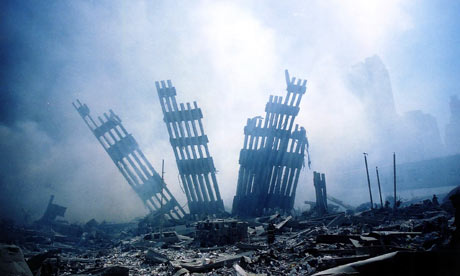
Attorney General Eric Holder announced yesterday that five people involved in the 9-11 terrorist attacks, including the mastermind, will be tried in civilian court in downtown Manhattan. I am not going to weigh in on the politics of this decision, nor on any security concerns or interrogation techniques. What I am going to weigh in on is the chances for these people to get a fair trial by an impartial jury in New York City.
Picking a fair jury is always somewhat tricky. Anyone can have a bias and not tell, or have a bias that they themselves don't know about. Figuring out who will truly be fair is an art, not a science. Still, we have some basic and uncontroversial understandings of which people should definitely not serve on a jury. The lawyers get a certain number of so-called "peremptory" challenges -- that is, a certain number of times they can say they don't want someone on the jury and not give a reason. They also get an infinite number of challenges "for cause" -- meaning that the juror is obviously biased or unsuitable in some way, and the lawyers have to say why. Among the people typically excused for cause are the victims of the crime, their family and friends, and anyone else directly impacted by it.
By way of example, let's imagine we were picking a jury for a typical murder case in which someone was shot in the parking lot of a convenience store. In the jury pool that day, we happen to have the victim's mother, fiance and best friend, as well as two people who work in the convenience store, one who lived across the street and had to stay in her house "locked down" while police sought the shooter, and someone who was in the parking lot. Aside from wondering how we got such a biased group of folks all on one day, the lawyers would challenge all of these people for cause, and almost certainly all of them would be excused.
Now, let's see how that affects the jury in a 9-11 trial in New York. This means we have to find 12 citizens of Manhattan, over 18, who were not in the twin towers, did not have a family member or friend killed, and were not nearby to see what was happening first hand. This would be hard, but not impossible.
But wait, we also need to exclude anyone who was endangered by the attacks, and anyone who had good reason to think they were endangered, as well as anyone who suffered traumatic stress related to the attacks. All of these people are like the neighbor across the street from the convenience store. They didn't see it, they weren't directly "in it," but they were deeply affected by it.
Just where exactly does the US government think it will find 12 acceptable people? It seems to me that the jury will have to be made up entirely by people who did not live in Manhattan in 2001. The secondary trauma from that attack affected the whole city. Everyone saw the smoke and breathed the air. Everyone was scared. The entire lower portion of Manhattan had to evacuate on foot. The local firehouses in all of the neighborhoods suffered catastrophic losses. Everyone had nightmares. There is no way that anyone who was in Manhattan on 9-11 can serve on this jury. In fact, there's a very large percentage of the US population who can't because so many of us suffered secondary trauma.
I'm sure the Justice Department has reasons, maybe even good ones, for trying this case in Manhattan. If I were a defense attorney, however, the first thing I'd do is ask for a change of venue.
Saturday, September 12, 2009
Terror(?) on the Potomac

Yesterday, September 11, at about 9:30 AM, CNN breathlessly reported that Coast Guard boats and a helicopter were apparently confronting a suspicious vessel in the security area of the Potomac River, near where the President was commemorating 9/11 at the Pentagon. The reports escalated -- the vessel had been fired upon. Cable news and the Internet picked up the story.
It was a training exercise.
Let the finger-pointing begin. CNN reported an interpretation of what they heard over a scanner picking up the Coast Guard radio traffic, but apparently didn't think it odd that the report of gun fire began with the radio transmission, "bang bang bang bang." They say they called the Coast Guard and were told they were not aware of anything going on on the Potomac. Meanwhile, the Coast Guard says that they never coordinate their training exercises with other agencies, and they train like this all the time.
So what went wrong? If training exercises like this one are commonplace in that area, why did this one make national news? I bet you already know part of the answer. It was September 11. And yes, that matters, and no, it's not because we're all crazy.
The date itself -- September 11 -- is a trigger for most people in this country. The various commemorations on the news heighten that. And that's not a bad thing, necessarily. But it means we are all in a space where we are much more willing to believe that terrorists will attack the US. Most days we know it's a possibility, but on September 11 it feels like a likelihood. This exercise, and what CNN heard over the scanners, was therefore much more believable, and the lack of confirmation was less troubling. It might have been a good idea if the Coast Guard had considered this and announced the exercise, or held it on another day, or at least made sure it's own people could tell the press what was going on. There are two sides to every coin, though, and CNN should probably have known that both they and their viewers were more willing to believe the worst and more prone to panic yesterday than, say, the day before.
It's interesting to consider how long it will be before we are not so triggered by September 11. I see signs that it is fading already: A few years ago I was lambasted for holding a fire drill on that date. We had one yesterday, and no one said a thing. The edge has, at least a little, been taken off. But not so much that everyone can not worry about the impact of anti-terror exercises and erroneous news reports.
Thursday, September 10, 2009
Eight Years Out
It was a Tuesday. I don't know why I know it was a Tuesday, but I do. The fact that I do tells you the impact that that day had on me, since the only other days of a year or more ago for which I remember the day of the week are the days each of my children were born and the day I was married. And that last one probably shouldn't count, since Jewish weddings are almost always on a Sunday, at least where I'm from.
It was a Tuesday and the kids were lined up for the bathroom when I heard. And when I talked to my husband on the phone I was sitting in the corner of the office looking at a garbage can. I can still see it in my mind. I can hear my daughter's daycare teacher telling me they were closing, and forgetting to tell me who was calling, first. I can still feel -- not just remember feeling, but actually experience feeling -- the brief terror when I heard an airplane go over my house in the afternoon and realized there were not supposed to be planes in the air, and I ran from the third floor of my house to the first before I realized it was an Air Force jet. I can also see the sign on Rita's Italian Ice saying they were closed for the rest of the day. What I remember perhaps even more vividly is putting my daughter, aged 3 1/2 years, to bed a few weeks later and reassuring her that our house was a safe place, that we were safe, and leaving her room and saying, "OK, now she feels safe. Who's going to make me feel safe?"
Absolutely everyone has at least some memories like this. This was a national, group trauma. And while we all experienced it differently, and certainly some of us experienced it much more directly than others, virtually no one over the age of about 13 doesn't remember it, or doesn't thing it affected them.
Trauma violates our worldview. That day violated the notion that many of us still had that this was a safe country, that we were personally not in danger, and that getting up in the morning and going to work was a reasonably safe activity. It happened in specific cities, but it happened in all of our living rooms, to all of us. That was the intent of it in the first place -- to terrorize. It is small wonder that most of us still can have those sensory memories triggered by something or other.
If you think this analysis is overblown, or overly dramatic -- if you think the effect on us collectively was not that great -- consider this. Nowhere in this post have I mentioned what day I remember so vividly. But you all knew anyway.
Subscribe to:
Posts (Atom)
Meet the Quarterback

- Naomi Zikmund-Fisher
- is a clinical social worker, former school Principal and a Crisis Consultant for schools and community organizations. You can learn more about her at www.SchoolCrisisConsultant.com

Subscribe


 Posts
All Comments
Posts
All Comments