Showing posts with label PTSD. Show all posts
Showing posts with label PTSD. Show all posts
Saturday, September 10, 2011
Why 9-11?


So, are you feeling like dog poop yet? Sick of the coverage? Want to talk about something -- anything else? Welcome to the 10th anniversary of 9-11, and to being a human who has experienced trauma. If you didn't read what I had to say yesterday about getting through this in a healthy way, I highly suggest it -- that one was more important than what I've got to say today.
What is it about 9-11 that holds such power over us? More Americans have died, after all, in Iraq and Afghanistan than did during that one day. There have been other big, national events -- Pearl Harbor, the Kennedy assassination, the Oklahoma City bombing -- that got our attention when they happened but don't seem to affect us quite the same way. Why?
First of all, I think there is an argument to be made that each of these events affected our society significantly. Certainly the Kennedy assassination did. While I won't put all of the '60s on that event, it was a catalyst. Each generation seems to have their "big thing," and 9-11 was ours.
But something does separate the September 11th attacks in our consciousness. If it wasn't worse, it was different. It is different.
PTSD is unusual in its diagnoses because, unlike most disorders, the cause is part of the diagnosis. You can be diagnosed with depression, for example, without having something obvious causing your depression. But in PTSD, there are particular criteria the trauma has to meet.
First, the person must have witnessed an event that they sincerely believed had the possibility to threaten the life or physical integrity of or cause serious injury to themselves or others. September 11th? Check.
Second, the person must have responded, at the time, with feelings of intense fear, horror or helplessness. September 11th? Check.
Of course, the Kennedy assassination, for those who saw it or saw the footage, met those same criteria. But there is one key difference.
On September 11, 2001, we as a country all witnessed an event that killed over 3,000 people. But more than that, we experienced an event that we sincerely believed had the possibility of killing us. We didn't just have intense horror or helplessness. We had intense fear. We don't like to admit it, and maybe it seems a little silly looking back, but the simple fact that someone was out there targeting Americans simply for being Americans, coupled with the idea that regular folks went off to regular jobs and never came back, was and is really scary.
My daughter was 3 years old on 9-11. She didn't know what was going on, but slowly, over the following weeks, she asked questions about the things she noticed -- flags in windows, singing the "Bless America" song (as she called it). We answered the questions she asked and nothing more. But she knew it was bad. After one such conversation where I had to reassure her of her own safety as I tucked her in, I remember coming out of her room and saying, "The good news is, our daughter now feels perfectly safe. Now who's going to tuck me in and make me feel safe?"
The real truth is, no one is. We can't go back to thinking it can't happen. All we can do is acknowledge that it's there and it's scary, and remind ourselves that it's still really, really, really unlikely that any one of us will become a victim of a terrorist attack. If we can channel our inner toddler, maybe that will be enough.


Friday, September 9, 2011
Turn Into the Wind: Dealing With the 9-11 Anniversary and its Hype
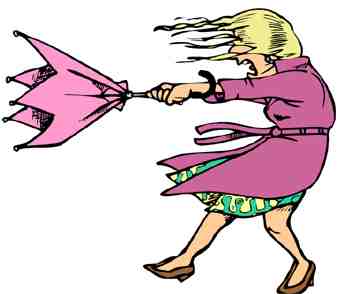
All week I've been writing about how American society matches the symptom profile for Post Traumatic Stress Disorder. This morning, I took the first of those pieces to my writer's group, a small circle of women writers who share and respond to each other's work every Friday mornings. I knew it was not my best work, and I wanted feedback.
As usual, the group was very helpful, but one of their reactions caught me by surprise. Members felt that my writing was distressing (not in terms of quality, but in terms of topic), and that I needed to give information on how to deal with that distress. So I'm taking a detour from the exploration of PTSD in a post 9-11 society to help all you Quarterbackers out there as we head into the 10th anniversary of the attacks.
Perhaps the most important thing you should know is that, if you're feeling blah this week, or sad, or anxious, or irritable, or having trouble sleeping, or anything else that makes you feel "off," even if you do not consciously connect those feelings to this anniversary, you're normal. Anniversaries are very powerful, and quite often people who don't even realize that it is an anniversary have negative reactions nonetheless. This isn't helped by the terrorism alert for New York and Washington. What might be somewhat distressing anyway only feels magnified given the time of year.
You also aren't crazy if you are sick and tired of the anniversary coverage (although chances are you aren't reading this, so I may be wasting my breath). The extra coverage is draining because it prevents us from getting away from the intense memories and the feelings they evoke.
Whichever of these two groups you most identify with, you're normal. Don't waste one minute worrying that your reaction is too much or not enough or inappropriate, any more than you would criticize yourself for feeling pain when you stub your toe. You couldn't control those feelings if you wanted to, so don't bother trying.
But what can you do? If the coverage or the date or the blogging about our messed-up society is bothering you, what is the solution? You may not like the answer, because here's what it isn't. Turning off the TV, avoiding reading my blog, doing something completely non-9-11 related on Sunday and generally trying to get your mind off it may feel good for the moment, but it is a quick fix for a longer term problem. That's because problem isn't the reminders of the attack, it's how upsetting they are to you. Avoiding the reminders won't solve the underlying issue, it will just push it back underground.
What I suggest is completely counter-intuitive. When you find yourself having negative feelings -- sadness, fear, hurt, anger, guilt, shame or whatever -- don't try to turn away from them. Turn towards them. Identify what you are feeling and what caused it. Label them consciously. Don't try to explain it rationally, because emotions are not rational -- they're, well, emotional. Whatever you're feeling just is, so you might as well feel it.
The reason this is a good idea is that, when you turn and face your negative emotions, they stop feeling so overwhelming. Feelings, by themselves, do not hurt us. What we tell ourselves about those feelings and the events that trigger them can. No one likes to feel sad or afraid, but you can tolerate it. Your negative emotion loses its power when you acknowledge it and face it head on.
Does this mean you should glue yourself to the TV and watch as much coverage as you can this weekend? No. Just as avoiding reminders isn't healthy, seeking them out to excess isn't, either. Watch, read and hear what interests and moves you or is meaningful to you. Consider for yourself what type of commemoration, if any, you believe is appropriate for you to participate in. Just monitor yourself and be careful when you find yourself saying things like, "I can't watch that," "I want to get my mind off it," or "I won't be able to handle that." Those are signs you're avoiding, and you're not turning into the wind.
For me, this Sunday is about reclaiming September 11th as a day of grief and fear -- yes, I'm reclaiming fear -- and as a day of unity, service and collective support. I am allowing myself to feel the sadness and, as hard as it is, some of the horror of that day. And I'm patting myself on the back for doing it, because it isn't easy. I hope you'll join me.
Thursday, September 8, 2011
America's PTSD Part 3: Society on Edge

We're continuing to look at the ways American society is manifesting behaviors indicative of PTSD in the wake of the 9-11 attacks. Today's topic is the third cluster of symptoms, "Hyper-Arousal." People with PTSD are, in many ways, in a permanent state of fight or flight. They are overly alert and on guard. So are we.
People with PTSD have at least two of the following symptoms:
Difficulty falling or staying asleep. It's somewhat difficult to judge how much of America's current sleep deprivation has happened since 9-11. It is certainly well documented that on average we don't get enough sleep. What's more, we don't value sleep as a society. Few people work in places where the boss will tell you not to come in if you're tired. In fact, we don't consider exhaustion do be a legitimate reason to take a sick day -- that's faking. More and more, our institutions function on the assumption that we are awake at all hours. Congress works into the wee hours of the morning. The funniest television is on past 11. The announcement of the death of Osama bin Laden was made late at night even though it had happened hours before -- couldn't it have waited until the morning? We assume no one is sleeping, and we may be right.
Irritability or outbursts of anger. I talked at some length about how angry we are as a society in yesterday's post. Everything is a place to draw the line, make a stand and stand our ground. You're either with us or against us, with us or with the terrorists. Comparisons between politicians, political parties, grassroots organizations and the Nazis are so common we're not even surprised anymore when someone makes them.
Difficulty concentrating. Let's face it. The American public has the attention span of a flea, with apologies to all the hardworking fleas out there. The "news cycle" is getting shorter and shorter and it is easier and easier to push a big story out of it. We can't stick with a substantive news story for more than a day. A mass shooting or a celebrity wedding, sure, but not hunger, poverty, public policy or the wars. We're on to the next.
Hyper-vigilance. Consider this. The risk of a terrorist attack on American soil was no different on September 12, 2001 than it was on September 10, 2001. Does that even seem possible to you? It barely does to me. What changed on September 11 was not the risk, but our knowledge of the risk. And since then, we're constantly looking for the next one.
You can make a reasonable argument that we should be more vigilant than we were before. We were naive, and now we know. We're smarter than we were. The thing is, we're not only vigilant in smart ways. We are constantly trying to prevent whatever plot was the last one, successful or not. We take off our shoes, put up with backscatter screening and don't carry liquids on planes because those steps might have prevented a previous attempt, not because we have any reason to think anyone's going to try them in the future.
We profile Arabs and Muslims horrifically. A report that came out in the last couple of days indicates that the Mall of America has been reporting people, two thirds of them non-white, for such suspicious and sinister behavior as forgetting their cell phone at the food court or pacing outside the bathroom while they wait for a companion. This isn't just a lesson learned, it's hyper-arousal.
What's more, we seem to also be defending against entirely imagined threats. The fact, for example, that Sarah Palin said that Paul Revere was telling the British they weren't going to be taking away our arms was not just wrong, it was weird. There's a segment of society that has been obsessed with the idea that the government, or more specifically the Obama administration, is trying to take their firearms. We're more than two years into Obama's term, and not one gun control measure has been proposed. We're afraid of being unable to defend ourselves and sure that that's what "they" want, but it's not based in reality.
Exaggerated startle response. Last year, a major international terrorism scare was triggered by someone shipping watches that were taped together. A plane was grounded because a man was putting on tefillin, the leather boxes with straps that Orthodox Jewish men wear when they pray. We're a little bit jumpy.
A couple of years ago, I was flying from Washington, DC to Detroit with my family. There are four of us, so it often winds up that the two kids sit with one parent and the other sits alone. On this occasion, I was alone. The man sitting next to me put his bags in the overhead compartment and sat down. I wasn't paying much attention. Then he spoke to me, in good but accented English: "My name is Ahmed. I am a dentist from Toledo. You are safe." How jumpy must the average member of the traveling public be around Arab men on planes that Ahmed felt he needed to say that before I even registered him at all?
So, we've established that we're all acting in very PTSD-congruent ways. But why did 9-11 do this to us in a way that the Kennedy assassination, the Oklahoma City bombing or the Challenger disaster did not? I'll be looking at that tomorrow.

Wednesday, September 7, 2011
Our Numbed Society: America's PTSD Part 2

Yesterday I shared the idea that America, as a society, is manifesting symptoms of PTSD. There are three sets of these symptoms, and today we'll be looking at symptoms of numbing. People with PTSD go to great lengths to avoid and/or numb themselves to feelings and experiences related to the trauma.
Specifically, to be diagnosed with PTSD, there must be at least three of the following symptoms present:
Efforts to avoid thoughts, feelings, or conversations associated with the trauma. Traumatized people often come across as angry. It's not that they don't have a right to be angry at the people who traumatized them. But they're often just angry all the time at everyone. Anger is a very effective defense mechanism against other, more uncomfortable feelings.
If there's one thing Americans are, it's angry. You need look no further than Capitol Hill. We don't just disagree, we think the other side is a threat and evil. We are locked and loaded. And we're rude.
So, what feelings are we avoiding? Fear. If you think back to how you felt on September 11, you weren't mad. You were horrified, and you were scared. Pretty quickly, you were sad. If someone had asked you if you were mad at the people who did this you would have said yes, but anger was not the primary emotion.
The thing is that fear doesn't feel good. It feels weak. So does sadness. Anger feels strong. So we stick with anger -- at each other, at other countries, at whomever. Do you remember that feeling of togetherness we all had right after the attacks? Have you wondered why we can't seem to get it back? Because we came together in fear and in grief, and as much as we might like togetherness, we don't want to go back and feel those things again.
Efforts to avoid activities, places, or people that arouse recollections of the trauma. There was a contingent of people who got mad at President Obama for visiting Ground Zero after bin Laden was killed. They said he was politicizing September 11th (and I would argue that ship sailed a long time ago, but let's put that aside). But Obama didn't go there to give a speech or do a victory lap. He went to lay a wreath. He went to acknowledge grief. That's a no-no.
Inability to recall an important aspect of the trauma. There are certainly things about 9-11 that none of us will ever forget, but here's a test question: Following the September 11th attacks, what was the stated motivation of Al Qaeda for attacking the U.S.? If you said something like, "They hate us for our freedoms," you're not alone -- that is our dominant societal narrative. It was started by President Bush the same week as the attacks. And, if I may be so bold, it's wrong. At the time of the attacks, Al Qaeda wanted the U.S. to withdraw its troops from bases in Saudi Arabia, which it considers sacred ground. We forgot the motivation for the attack almost as soon as it happened.
Markedly diminished interest or participation in significant activities. This is a tough one. "Significant activities" for individuals are easier to define. However, I'm struggling to remember the last time it seemed like everyone was having a joint experience -- like the last episode of M*A*S*H, or even the Superbowl. Is it me, or is it just harder for us to all decide that something, other than a disaster or trauma, is important these days?
Feeling of detachment or estrangement from others. We know who our allies are in official terms. But what foreign country do we as Americans truly respect as partners these days? I can think of no one. We have become a very lonely country in a lot of significant ways. You can blame politics or policies for this, but it's also the manifestation of a gut feeling that no one really understands us.
Restricted range of affect (e.g., unable to have loving feelings). As discussed above, our primary societal emotion is anger. We don't feel joint happiness or pride anymore. We don't "put aside politics" for any common purpose. We want Congress to compromise, as long as they don't compromise on the things we want. We have lost the ability to have mixed emotions, and changing one's mind about something is weak. This is what a restricted range of emotions looks like -- anger and black and white thinking with no nuance.
Sense of foreshortened future. There is a conventional wisdom in America that the United States is no longer a superpower, or that we won't be one for much longer. Polls show we believe America is headed in the wrong direction. Every new law or policy (passed or just proposed) on both sides of the aisle is met with doomsday scenarios about how it will mean the end of America as we know it. It's one thing to say you don't like an idea, and quite another to think we can't survive it. We don't, as a country, feel very confident about our future.
Tomorrow I'll look at the third cluster of symptoms -- hyper-arousal. Later in the week, we'll examine why 9-11 impacted us this way when other things didn't, and at what kind of "treatment" we might recommend for our traumatized society.

Tuesday, September 6, 2011
Does America Have PTSD?

This Sunday marks 10 years since the September 11th attacks. Everyone, it seems, is doing some kind of memorial or retrospective to mark this solemn anniversary. Some are focused on remembering those who died, others on service to the community and still others on looking at how America has changed over the last decade. This last theme intrigues me. We know that trauma changes people as individuals. Can trauma change a whole country?
I have a friend who is a mental health professional who suggests that it can and it did. In a blog post several months ago, she proposed that American society is showing many signs of post-traumatic stress.
Now, let's not take this too literally. American society does not have a single brain that can contract a mental illness. But Post Traumatic Stress Disorder (PTSD) is a very symptom-based disorder. You know someone has it by how they act. In my friend's opinion, American society isn't behaving in a very adaptive manner. Over the next several days in this space, I'll be laying out a detailed look at the ways in which our current society is showing signs of trauma.
Symptoms of PTSD fall into three categories: Intrusive Recollection, Numbing and Hyper-Arousal. Today I'd like to look at the first of these, the so-called "Criterion B Symptoms" (named after the letter in the description in the diagnostic manual) of intrusive recollection. People with PTSD have at least one of these symptoms, and many have more:
Recurrent and intrusive distressing recollections of the event, including images, thoughts, or perceptions. On the day after Osama bin Laden was caught, news outlets ran all kinds of 9-11 retrospectives. Some of them were horrifically graphic and would never have made it past the editors under other circumstances. Telephone recordings of dying people and video footage of people jumping out of windows was played without even the basic "viewer discretion is advised" warning. Not only do we remember, but we do not have mastery over our memories enough to modify how and when we process them.
Recurrent distressing dreams of the event. Obviously it's somewhat difficult for an entire society to have distressing dreams. There is some argument to be made, though, that works of art, literature and movies represent the "dreams" of society. If that is the case, the tremendous popularity of the Harry Potter series
 is telling. With each installment in the series, the foreboding message that there is a great evil "out there" that can strike anyone at any time and that we don't really know who can be trusted gets stronger. In each book, we look to Harry to master the terrifying unknown because we can't.
 Acting or feeling as if the traumatic event were recurring Perhaps the best example of this is the media coverage of the infamous "balloon boy" incident last year. A kid supposedly trapped in a balloon got national breaking news coverage. Even if it were true (which we know now it wasn't), how do we explain that? I think we learned, on 9-11, what it was like to scramble news coverage and all have our attention focused in one place, and we have become very bad at figuring out when that's actually necessary. Everything that is generally newsworthy is Big News. When something we think may be important happens, we go into 9-11 mode.
Intense psychological distress at exposure to internal or external cues that symbolize or resemble an aspect of the traumatic event. For much of our society, Muslims as a group have come to symbolize 9-11. When people get so upset about the so-called "Ground Zero Mosque," they are getting upset about something that reminds them of the trauma. Even for those who don't blame all Muslims, the anger against those who do may also be a symptom. One group is furious at Muslims for supposedly desecrating the memory of those who died, while the other is furious at the first group for supposedly desecrating the memory by being hateful.
Physiologic reactivity upon exposure to internal or external cues that symbolize or resemble an aspect of the traumatic event Can a whole society have a physical reaction? Society can certainly change its physical set-up. What in individuals manifests as a rapid heartbeat or excessive sweating, in society shows up as barriers, scanners, metal detectors and, more importantly, over-focus of security measures on people based on their ethnicity. Something reminds us of the attacks -- someone's religion or skin color -- and as a society we physically try to defend ourselves, even though we have no real evidence that religion or skin color is very predictive.
We need only one of these symptoms, but we have more than that. September 11 was 10 years ago, but in a very real way, as trauma victims often do, we are still reliving the attacks.
Tomorrow: America's symptoms of numbing

Monday, July 11, 2011
PTSD Lower Among UK Vets: What Do They Know That We Don't?

Soldiers from the United States and the United Kingdom are fighting side by side in Iraq and Afghanistan. They are facing the same dangers and experiencing the same amount of death and destruction. You would expect, then, that they would be experiencing Post Traumatic Stress Disorder at about the same rate. You would be wrong.
Frequent Quarterbacker Brian (better known to some of you as my husband) sends along an article from Miller-McCune that points out that US soldiers experience PTSD at about 7.5 times the rate of UK Soldiers. There are a number of possible explanations for this, not the least of which is that the rate of PTSD in the general US population is much higher than in the UK, which suggests that our soldiers were more traumatized to begin with than theirs. UK troops also serve much shorter tours of duty than do US troops.
The article also alludes to the practice in the British military, which is common outside of the US but unheard of here, called "Third Location Decompression" (TLD). British troops, before they come home, go to Cyprus for 24-36 hours before they come home. They hang out and relax with their unit. It is mandatory.
I did a little digging about TLD, and discovered something important that I think Miller-McCune missed. During TLD, in addition to having barbecue and volleyball and even a limited amount of alcohol, soldiers get 45 minutes of psychoeducation. In other words, for 45 minutes someone explains to them that readjusting to civilian life is going to be difficult, and what they might expect. In addition, soldiers spend their TLD with the same people they served with, giving them some time away from the war zone but still with those with shared experiences to talk about what they went through.
I don't have any way of knowing whether 45 minutes of psychoeducation make all the difference in diminishing the incidence of PTSD among British troops. It seems like it's probably some combination of factors at work. But, as someone who is a big believer in early trauma intervention, introducing the idea that you might have problems and you might need help seems like an obvious positive. I compare this to the stories I've heard from US vets, who were screened for PTSD on the day they returned and told that, if they failed the screening, they couldn't go home (how honest would you be?), I have to imagine the British are getting things right. And besides, who among us couldn't benefit from a day with friends on a tropical island?

Wednesday, June 29, 2011
Another Reason to Hate Jury Duty: Post Traumatic Stress

Much of the cable news business has been obsessed, over the last few weeks, with the murder trial of the mother accused of killing Caylee Anthony. It was a very highly publicized case when it first broke, and the trial has had lots of salacious details and conspiracy theories to keep Nancy Grace and the like buys for the foreseeable future.
Branching off in a different direction, CNN.com ran a piece yesterday about the symptoms often experienced by jurors following these trials. According to the article, some jurors in murder trials,
report symptoms reminiscent of post-traumatic stress disorder, such as flashbacks and intrusive thoughts. Whether you're in the courtroom or at home watching TV, repeated exposure to the details of a horrific events can lead to a phenomenon called vicarious traumatization -- you're so connected to a tragedy that you feel emotional trauma as if you'd been directly involved.To those of us in the trauma biz, this is not a particularly surprising phenomenon. In fact, it's so accepted that people hearing about trauma can themselves be traumatized that every training or workshop you go to through the International Critical Incident Stress Foundation includes a warning about the level of distress you can expect to experience. I don't know anyone who has been to significant numbers of these things (including myself) who hasn't found themselves unexpectedly upset by a role play or case study. Jurors have it worse, because they aren't just pretending something happened -- it really did.
What should we call what is going on with these jurors? The Diagnostic and Statistical Manual of Mental Disorders, 4th edition, Text Revision
 (DSM-IV,TR) is the bible by which mental illness is diagnosed. As the article states, these jurors have some of the symptoms of PTSD -- some of them may have all of them. has two relevant diagnoses listed as "official" psychological disorders that occur following trauma. But do they have PTSD?
By current standards, they can't. In order to have PTSD, the person must have
experienced, witnessed or was confronted with an event or events that involved actual or threatened death or serious injury, or a threat to the physical integrity of self or others.Most (but not all) diagnosticians would say that being on the jury in a grisly murder trial does not meet the threshold of being "confronted" with the event.
It just so happens, however, that the DSM is undergoing revision as we speak. The proposed guidelines for PTSD in the DSM-V define traumatic exposure as follows:
The jurors would most likely come under #4 in this definition. Their work, for the duration of their jury duty, is serving on the jury. They experience repeated or extreme exposure to aversive details of the murders. When the new manual comes out, they'll be eligible for a PTSD diagnosis.
The person was exposed to one or more of the following event(s): death or threatened death, actual or threatened serious injury, or actual or threatened sexual violation, in one or more of the following ways:
- Experiencing the event(s) him/herself
- Witnessing, in person, the event(s) as they occurred to others
- Learning that the event(s) occurred to a close relative or close friend; in such cases, the actual or threatened death must have been violent or accidental
- Experiencing repeated or extreme exposure to aversive details of the event(s) (e.g., first responders collecting body parts; police officers repeatedly exposed to details of child abuse); this does not apply to exposure through electronic media, television, movies, or pictures, unless this exposure is work related.
This raises two important points. First of all, it's absurd to think that what actually is going on for these people will miraculously change because a new book is published. This is somewhat like deciding that in order to be diagnosed with a cold, you now have to have a stuffy nose and a cough, whereas before you just needed the nose. Unlike a virus, bacterial infection or broken bone, there is no way to objectively define a mental illness. We classify disorders by symptoms, and every now and then we decide to reclassify. We pretend we're defining an actual thing, but really we're just describing what we see in people that have the thing.
The second, and perhaps more important point, is that most of these jurors will not have PTSD under the new definition, either. In addition to describing the symptoms and the definition of traumatic exposure, both the old and new guidelines require that the person experience
clinically significant distress or impairment in social, occupational, or other important areas of functioning.This would mean that, for an extended period of time, their symptoms significantly interfere with their ability to love, work, have friends, care for children, etc. Thankfully, even those with symptoms will mostly not reach this threshold.
Just because they don't and won't have PTSD, however, doesn't mean they don't need or deserve support. One of the most helpful things courts could do is, following a grisly trial, sit the jury down and tell them they may have a rough time for a while. That way, if and when the symptoms come, people won't add thinking they're going crazy to their stress. I think it's the least we can do for those whose misfortune was simply to be civic-minded and conscientious enough to show up for jury duty, and fair enough to be chosen to hear the case.
Tuesday, March 1, 2011
Libya, and the Fear that Comes After the Fear

Yesterday on NPR, there was an interview with Adel Idris, a Libyan man who recently escaped after being imprisoned for nine days during the current unrest in Libya. Mr. Idris describes some horrific things that he witnessed, including the torture and rape of other prisoners, and hearing the screams of women in the night. The reporter describes Idris' behavior during their interview:
He spoke to NPR for several hours about his experiences, his hands shaking, switching between broken English and Arabic. . . . . He stops talking and stares into the distance. He does that a lot during his narrative.Later in the story, Idris describes the Libyan authorities' use of dogs on the prisoners:
What he do with me there with his dogs, I don't give up - never to give up. I not cry. I not scream. Not. [He begins to cry.] It's the first time I cry now.What Mr. Idris describes is truly horrible, but his reaction to it is not surprising. He is exhibiting all the typical symptoms of someone who has been through a traumatic event.
When you take a class in Critical Incident Stress Management, one of the things you learn is the typical symptoms of normal, adaptive post-traumatic stress and how to distinguish them from warning signs of more serious problems. Not surprisingly, shaking and crying are on the "normal" list. In addition, "1000 yard stare" is listed as a typical symptom that is not, in the short term, of particular concern. From the description, it sounds like Mr. Idris is exhibiting a 1000 yard stare. What may seem less intuitive is the idea that someone could be stoic throughout such an ordeal, not cry while it's happening, and then cry while describing it. In fact, however, not only is this a common reaction, it's a good sign.
When I teach these classes, I encourage students to think of a traumatic incident as though they were a wild animal being attacked by a tiger. Their reaction, during and after the attack, is critical to the survival of the species. When the tiger first pounces, they exhibit some combination of three reactions -- fight, flight or freeze. Most of us have heard of "fight or flight" and it seems to make sense -- fight off the tiger if you can, run away if you can't. But freezing is also an adaptive response. In some cases, it may prevent the tiger from seeing us, if we can manage to blend into the background. And if we can't fight or run away, convincing the tiger we're already dead may save our life.
You will notice that crying is not one of the options in this scenario. That's not to say that no one ever cries at a moment of great danger, but this is not, in fact, an automatic response. Crying is triggered by a realization of what is happening, but fight, flight and freeze are triggered automatically, before our rational mind knows what is happening. Even a few moments later, when we realize the tiger is attacking, our full energies are dedicated to survival. We literally don't have the resources, in many instances, to cry.
Once the attack is over, our priority, from an evolutionary standpoint, is making sure we either avoid or survive the next tiger attack. This causes us to respond fearfully to sights, sounds and experiences that we associate with the attack, even if they are pretty irrelevant. If we smelled flowers right before the attack, after all, then that smell might signal that another attack is coming.
Imagine, however, that we didn't experience the attack as particularly bad, or that we blocked ourselves off from realizing how bad it really was. That might sound good, but it would be dangerous, because we would not be on the lookout for the next pouncing tiger. If humans ever exhibited this trait in large numbers, it's likely it was bred out of the gene pool a long time ago.
In order to avoid the next tiger attack, we need to know that tiger attacks are bad. That means that all the reactions of fear and distress which we avoided during the attack itself because we were trying to stay alive are critically important in helping us learn. So, when the attack is over, we cry when when we remember it. We shake. We can't concentrate, so we stare off into the distance.
So, Mr. Idris' tears are normal. But more than that, they are healthy. They mean that he is, in some way, in touch with how he feels about what happened to him. And while there are many more factors that go into determining how quickly and well people will heal after a traumatic event, we do know that isolating yourself from the painful feelings is a risk factor for Post Traumatic Stress Disorder down the line. So I applaud Mr. Idris for his bravery, his escape, and his tears, and I hope that Libya soon has many fewer reasons to cry.

Monday, May 31, 2010
This Memorial Day, Let's Honor the Survivors, Too

Today is Memorial Day in the United States. Most Americans spent the day doing yardwork or barbecuing or, perhaps, going to a parade. Summer is unofficially here, and women can wear white shoes without offending Miss Manners. But of course none of that (except, arguably, the parades) is the point of Memorial Day. We are supposed to be remembering those who died in the armed services.
There is one segment of the population that doesn't need much of a reminder of what Memorial Day is all about. There are thousands of families and friends across the country who have lost a loved one in the Iraq and Afghanistan wars, not to mention those who remember those who died in the first Gulf War, Vietnam, Korea and World War II, as well as a variety of smaller conflicts, attacks, and accidents. There are also an increasing number of people caring for severely disabled veterans, people who, in previous wars, would likely have died but who, through the miracle of modern medicine, are alive but living with significant lasting effects.
When someone you love goes off to war, you entertain the possibility that they might not come back. The day an officer and a chaplain knock on your door is not the first time this has ever occurred to you. In that sense, the death of a loved one in action is a little bit different than some other types of traumatic loss. At the same time, however, sudden, violent death is traumatic no matter how much you think you're prepared for its possibility.
You've probably read stories all over the news about veterans who come home with Post-Traumatic Stress Disorder
 (PTSD), and how we as a country do or don't effectively care for them. What you don't hear about is the post-traumatic stress (with or without the disorder) of those left behind by fallen soldiers, sailors, marines, airmen, etc. As mediocre a job of treating PTSD as we do for our veterans, I can't imagine we do much better for the relatives of the dead.
The men and women who gave their lives for this country deserve to be honored today, probably more than they actually are given the competition with white sales and going to the beach. At the same time, wherever they are we know they are not in pain. The same cannot be said for their parents, children, spouses and friends. We often say that those who died in war "made the ultimate sacrifice." For that we honor them. Let's take a moment, today, to honor those who have to live with that sacrifice for the rest of their lives, too.
photo copyright istockphoto/stephaniefrey
Friday, November 20, 2009
Predicting PTSD Ahead of Time

The U.S. military is undertaking a large research project using its own soldiers to see if there is a way to predict who will suffer from Post Traumatic Stress Disorder. They are screening hundreds of soldiers before they deploy, including their baseline stress rate, brain scans, family histories and past history of mental illness, and will be looking to see if any factor or combination of factors can predict who is at highest risk.
This is a very new way to look at PTSD, and raises interesting issues for those of us who work in trauma response. The conventional wisdom which we learn in training is that the factors that affect whether someone will develop PTSD are mostly things that occur with the trauma. We are taught that people who are more closely and directly exposed to an incident are more likely to have PTSD. People who experience dissociation and/or depression immediately surrounding the trauma are at increased risk. In addition, the more closely held beliefs, expectations and worldviews are violated, the more likely you are to have PTSD down the line.
This experiment aims to short-circuit most of those factors. What if we could predict who is most likely to experience those predictors? What if we knew that this person is at increased risk for dissociation, and that person will react particularly strongly to the violation of their worldview? What would that mean for trauma responders? What would that mean for the people themselves?
Let's suppose, for the sake of argument, that we discover that certain people have a particular kind of activity in a particular part of their brain, and that if you have that activity you are more prone to PTSD. Do we allow those people to serve in the military? Can they be police officers or firefighters? What if it turns out that that same anomaly is associated with bravery and calm under pressure, so these people also make especially good soldiers and first responders? How will we decide?
We also have to think about how we treat those people. Traumas will always happen, even if we exclude those most at risk for PTSD from serving. If we come upon someone at increased biological risk who has, say, witnessed a murder, will they immediately be referred for further care, or can early intervention still help? Will we be doing brain scans at the scene?
I often say that I love crisis work and I hate that I love crisis work. I feel guilty that I get so much satisfaction out of helping with other people's misery -- shouldn't I be hoping they aren't miserable? If this research is successful, it's possible that the whole way we proceed with this work will change. It's hard to imagine, though, that we won't need to do it at all.
Friday, August 28, 2009
Hurricane Katrina and the Help That Never Came

Where were you four years ago? This is an easy one for me, since I was home with a three month-old baby watching "overblown" news coverage about this hurricane that was heading straight for New Orleans. The predictions seemed outlandish. Flooding of an entire city? Don't be silly. In the days that came, my son and I continued to watch as the Convention Center in New Orleans where I had given a talk just a year before filled with people and the spokespeople in Washington incredibly said they were unaware that anyone was there, because they had been told not to go there.
The delay in rescuing the people of New Orleans was a national shame. The delay in restoring essential services got less attention, but was no less appalling and no less a failure of our society to care for those in need. There was another delay, though, that is more understandable. That is the delay -- or absence -- of mental health assistance for those whose lives were demolished by the storm and by the lack of help that followed.
In the days directly after the storm, people's basic physiological needs were not being met. It would have been totally inappropriate to go talk to people who are crammed into the Superdome or the Convention Center without basic food and sanitation about how they are feeling. Anyone who had the time and ability to do that should have been, and mostly was, getting people to safety, feeding them, and finding them someplace to stay.
The rule of thumb is to provide early crisis intervention services when the situation is stable and the incident itself is over, as close as possible in time and location to where it happened. But because of the way this disaster played out and the delays in assistance for physical needs, there was never an obvious opportunity to do that. It took many months, if not years, for many who had weathered the storm to be in a physically stable situation. By the time they were, they were literally scattered all over the country. CISM is designed for people who have been through hell and are now returning to a world that is basically still normal, but they don't feel normal. The world was never "still normal" for many Katrina survivors.
That is not to say that no one ever got help. Those with the most extreme manifestations of Post-Traumatic Stress Disorder are still being served by the mental health system. CISM is not designed to prevent PTSD, so I won't argue that earlier intervention would have made a difference. However, studies of PTSD in Katrina victims show that increased watching of news coverage following the storm was associated with risk of PTSD symptoms, and between 38% and 50% of people who lived in New Orleans when Katrina hit have or had symptoms of PTSD. The only thing I can imagine might have been done early is to advise people not to watch TV. That probably wouldn't have worked.
By the way, it's not that no one got CISM services after Katrina. Teams from around the country were mobilized to work with rescue workers following the storm. They had the possibility of coping with this as a discrete incident. Most of the residents never did.
Tuesday, July 7, 2009
Trigger: It's Not Just for Roy Rogers Anymore
The Quarterback has a friend who has Post Traumatic Stress Disorder. The details aren't important, she just does.  Recently, she told me that while she enjoyed reading this blog, she thought she might have to stop, because it triggers her. If you've never been triggered you may not have the first clue what it means. Once you have been, you don't have any doubt that that's what it was.
Recently, she told me that while she enjoyed reading this blog, she thought she might have to stop, because it triggers her. If you've never been triggered you may not have the first clue what it means. Once you have been, you don't have any doubt that that's what it was.Simply put, when someone is triggered, they suddenly feel the emotions and physical sensations of something really awful -- often something really awful from their past, but not always -- because of some association with the present. People with PTSD of course are more easily triggered and their reactions when they are triggered can be much more severe. But really, anyone can be triggered, and sometimes the connections can be quite tenuous.
I will use myself by way of illustration -- I don't know of anyone else who has volunteered to have their personal trauma reactions exposed to public scrutiny. One of the standard things that instructors warn you about when you take classes in Critical Incident Stress Management is that some scenario or other that is being used in a practice exercise may trigger you. So I'm going to warn you that I'm about to share a scenario that triggered me, and encourage you to take a deep breath, maybe have some tea, because it might well trigger you.
Last summer I took the Strategic Response to Crisis class at an ICISF regional conference. The practice scenarios in this class all build on one another. First there's a car accident in a small town. Then there's a leak at the chemical plant, causing the town to be evacuated. Then a school administrator completes a suicide, and it turns out he was responsible for part of the evacuation in which someone died. Then some kids on a hiking trip get lost in the mountains, and a rescuer falls over a cliff. In our class, we joked that this town was about as safe to live in as the fictional town of Cabot Cove, Maine was in the old TV series Murder She Wrote.
About the third or fourth scenario involved a panicked mother coming up to a roadblock during the evacuation and saying she couldn't reach her babysitter. Sure enough, the sitter had missed the evacuation notice, and both she and the baby were dead. When we reached that part of the script, there was a collective gasp and sort of a thud feeling in the group. And there was that same thud in my gut. Something must have shown in my face, because my instructor, the incomparable Doug Mitchell, asked if I was OK. I said, "This is a hard one for me" and he told me to take a walk. (As an aside, I went to the ladies room and Doug came to find me and sent someone in to drag me out. I enjoy telling people that Doug Mitchell once followed me into the ladies room.)
It wasn't that anything like this had ever happened to me or anyone I knew. It just represented the worst fear I had ever had as a parent. The fact that it had happened, even fictionally, represented on some level that it actually could happen, and my panic and all the associated emotions just flooded me. Doug did that which we do -- he walked and talked with me for a bit and told me I was normal, these things happen, and then I went back to class.
The thing I want to highlight here is that he told me I was normal. There are different ways people like to phrase this message, and different phrasings that different people like to hear:
- What you're going through is pretty typical for people in your situation
- You're having the normal reactions of a normal person under abnormal circumstances
- I'd be worried about you if you weren't feeling a little off
- I often hear that from people who have gone through something like this
Personally, I prefer the very professional wording, "You're not crazy." And I figure that between 80 and 90% of what I do in crisis intervention is deliver that message. People under stress feel like they are losing their mind. Reassurance that they're not goes a long way.
Which brings me back to my friend, and her triggering. Triggering is a real phenomenon. It happens to most people at some point in their lives, whether they have PTSD or not. So, if you ever read anything in this blog that triggers you, or causes secondary trauma even to the slightest degree, let the Quarterback preemptively tell you that you're not crazy (well, you might be, but this isn't evidence of it). Give yourself a break, do what you need to do to feel better, and don't feel like you have to read the rest of the post. I'll live.
Wednesday, June 17, 2009
More on Flight 1549: What you don't know can hurt you
I once taught a mini-elective for upper elementary and middle school students on writing opinion pieces. We generated a list of what made a piece effective, and included that the piece should consider the opposing opinion and respond to what someone who disagrees might say. Then the kids went off to start composing. One student was writing about his support for gay marriage. He wrote, "Gay people should be allowed to get married. It's the right thing to do." I reminded him to respond to what someone who disagreed to him might say, so he added, "Anyone who disagrees with me is a moron."
The Monday Morning Crisis Quarterback thought of this yesterday when, after writing my piece about Tess Sosa's fight to get insurance coverage for her therapy following the crash of US Airways Flight 1549 on the Hudson River, when I stumbled upon an entry at Plastic Surgery 101 on the same topic. In a post entitled "Exhibit A in Why We Will Never Be Able to Control Health Care Costs," Dr. Rob Oliver, Jr., a plastic surgeon in Alabama, writes:
Now, to be fair, Dr. Oliver and I are both guilty of not responding to the opposing point of view, although we did not go so far as to state the other is a moron (at least not yet!). So I would like to address what he has to say a little more fully.
PTSD is, indeed, unprovable. So is pretty much every psychiatric disorder. There is no blood test for schizophrenia, depression, bipolar disorder or PTSD. That doesn't mean they don't exist. And if I were Ms. Sosa and I was interested in going after AIG to milk whatever I could out of a deep pocket, don't you think I'd be going for cash? I can't imagine someone saying, "Gee, you know what I really want? Not a car, not a house, not financial security, no, what I want is some EMDR."
Dr. Oliver goes on to question why the insurer is liable at all, since this was an "act of God," (presuming, here, that the same supernatural force that produces earthquakes and lightning produces massive flocks of geese, which I think is fair). Without looking at the policy, it's hard to know whether this incident as a whole is covered. The standard, though, should be whether physical injuries to passengers would be covered. As I said yesterday, if a broken leg is covered, then psychotherapy should be covered. If a broken leg isn't covered, however, then of course neither should mental health care be covered. All I'm suggesting is that we have parity. I'm guessing we don't.
Trauma reactions are real, and in some cases they are really serious. Someone with untreated PTSD is a ticking time bomb, whether it's a vet who shoots in a crowd or a plane crash survivor who crashes her car into yours. Presuming it isn't real and that people are faking is a very good way to increase the death toll from traumatic events, via homicide or suicide.
Oh, and I just have to say. A plastic surgeon blaming a PTSD patient seeking treatment for the rise in healthcare costs because that treatment may be unnecessary? People who live in glass houses . . .
The Monday Morning Crisis Quarterback thought of this yesterday when, after writing my piece about Tess Sosa's fight to get insurance coverage for her therapy following the crash of US Airways Flight 1549 on the Hudson River, when I stumbled upon an entry at Plastic Surgery 101 on the same topic. In a post entitled "Exhibit A in Why We Will Never Be Able to Control Health Care Costs," Dr. Rob Oliver, Jr., a plastic surgeon in Alabama, writes:
You think Mrs. Sosa and other passengers would count their blessing to be alive and be thrilled with the $5000 check US Airways issued each passenger in compensation (which they didn't even an obligation to do). Apparently this was not acceptable to Mrs. Sosa who is demanding the airlines insurer, A.I.G., pay for all costs associated with her psychotherapy for post traumatic stress disorder, the unprovable sinkhole of psychiatric diagnoses.
Now, to be fair, Dr. Oliver and I are both guilty of not responding to the opposing point of view, although we did not go so far as to state the other is a moron (at least not yet!). So I would like to address what he has to say a little more fully.
PTSD is, indeed, unprovable. So is pretty much every psychiatric disorder. There is no blood test for schizophrenia, depression, bipolar disorder or PTSD. That doesn't mean they don't exist. And if I were Ms. Sosa and I was interested in going after AIG to milk whatever I could out of a deep pocket, don't you think I'd be going for cash? I can't imagine someone saying, "Gee, you know what I really want? Not a car, not a house, not financial security, no, what I want is some EMDR."
Dr. Oliver goes on to question why the insurer is liable at all, since this was an "act of God," (presuming, here, that the same supernatural force that produces earthquakes and lightning produces massive flocks of geese, which I think is fair). Without looking at the policy, it's hard to know whether this incident as a whole is covered. The standard, though, should be whether physical injuries to passengers would be covered. As I said yesterday, if a broken leg is covered, then psychotherapy should be covered. If a broken leg isn't covered, however, then of course neither should mental health care be covered. All I'm suggesting is that we have parity. I'm guessing we don't.
Trauma reactions are real, and in some cases they are really serious. Someone with untreated PTSD is a ticking time bomb, whether it's a vet who shoots in a crowd or a plane crash survivor who crashes her car into yours. Presuming it isn't real and that people are faking is a very good way to increase the death toll from traumatic events, via homicide or suicide.
Oh, and I just have to say. A plastic surgeon blaming a PTSD patient seeking treatment for the rise in healthcare costs because that treatment may be unnecessary? People who live in glass houses . . .
Subscribe to:
Posts (Atom)
Meet the Quarterback

- Naomi Zikmund-Fisher
- is a clinical social worker, former school Principal and a Crisis Consultant for schools and community organizations. You can learn more about her at www.SchoolCrisisConsultant.com

Subscribe


 Posts
All Comments
Posts
All Comments