Showing posts with label CISM team. Show all posts
Showing posts with label CISM team. Show all posts
Saturday, March 5, 2011
In Loco Parentis -- the Houston Daycare Fire


On February 24, a kitchen fire destroyed a home day care in Houston, Texas, killing four children and injuring the other three there. All were less than three years old. The day care operator was unharmed, which is not surprising given that surveillance video shows she was shopping at Target when the fire started. She has since fled the country.
The death of a child -- any child -- for any reason is horrific. Incidents involving children are one of the types of traumatic events that automatically trigger the response of a Critical Incident Stress Management team in many fire and police departments simply because the chances are so big that the first responders will be seriously emotionally impacted by them. Children aren't "supposed" to die. That's how we believe the world works, and when they do die it shakes us up.
This event, of course, is made infinitely worse by the fact that it appears to be directly caused by someone's negligence. As much as we believe children don't die, we also believe that everyone protects children. And we certainly believe that people whose job it is to protect children at least try. If the death of a child in a car accident shakes up our worldview, the death of a child due to the gross negligence of a caregiver explodes it.
Or does it? When children are killed by their parents we are horrified, but we are not, at least from a distance, as traumatized. That's because when parents kill their children, most of us analyze the situation and judge that our own children are safe. We know that the same thing won't happen to our family because we know we will not murder our children. It's horrible, but it's easily prevented.
Which brings us around to this particular situation. Those of us with children in day care or school drop our children off each day and leave them with others who act in loco parentis, meaning "in the place of the parents." We give those caregivers the right and the responsibility to behave as parents to our children, and we believe that those caregivers will do at least a rough approximation of what we would do with regards to our kids and their well-being.
Those of us who work in schools or day cares, on the other hand, know that sometimes the expectations of parents can be unreasonable. When something goes wrong and the parents are not present, they are likely to blame us, even if, in reality, they would have done the exact same thing we did. If a child is playing in their back yard and falls and breaks their arm, the parents feel bad but recognize it as an accident. If it happens on the playground at school, they are much more likely to blame the school staff. That's because we confuse acting in loco parentis with preventing all harm to children. The former is the law. The latter is impossible.
But in this case, it wasn't impossible. Could this fire have started had the day care provider been with the children? Quite possibly. Fires happen. It could have happened in a child's home, too. Could one or more of the children have been injured or killed in such a situation? Also possible. Kids are hurt in fires under the best of circumstances. Despite our best efforts, children die.
But this wasn't the day care provider's best efforts. We will never know if that fire would have started had she been doing her job, or whether the kids would have survived it if it did. She didn't try. When we drop our kids off at day care, we do so with the belief that the person acting in loco parentis is a responsible person. We wouldn't leave them if we didn't believe that. I can only imagine the horror of finding out this way that you were wrong.


Saturday, August 28, 2010
The Impact of Nicole John's Death

Nicole John, 17, died at about 4:15 AM on Friday, after she climbed out onto a ledge outside a 25th floor apartment in Manhattan and fell onto a 3rd floor outcropping. John, who was the daughter of U.S. Ambassador to Thailand Eric John, was to have started classes at Parsons New School of Design this fall. A statement from Parsons indicates that the school's "crisis management team" will be available to counsel those who were at the party that Ms. John was attending when she died, or others affected.
To answer what seems like the natural question, there is plenty of evidence that John was either drunk or under the influence of some other substance when she fell. It appears she may have decided to step out onto the ledge to take a picture -- a camera was found near her. The host of the party, who is 25, has been arrested on charges relating to having alcohol at a party with a minor present. Ms. John had a fake ID, and had been at a club with friends until about 2 hours before.
The crisis management team at Parsons has an interesting job to do here. Since John was a new student, the number of people affected by her death is probably lower than would be in even a few weeks. However, those who are affected are probably also new students, many away from home for the first time, all relatively young, and therefore particularly vulnerable. One could imagine that having a new friend die tragically just as school was starting would color your freshman year in school, and beyond.
The themes the team can expect to hear are complicated, too. Those who were not at the party are likely to be angry, and not to be comfortable with that anger. Ms. John did something dangerous when she drank too much, and that caused her to do something she would never have done while sober. Her friends are going to be mad -- at the people who were there, at the host of the party, and at Nicole John herself. But being mad at the person who died is never easy, because it's hard to reconcile being angry at someone and being sad that they're dead at the same time.
For those who were at the party, you can add a layer of guilt on top of all that. Folks will feel guilty that they didn't stop her, guilty that they let her get drunk, and guilty that they themselves may have been too impaired to realize what was happening. On top of that, there has been an arrest, which, rightly or wrongly, makes them wonder if something they express at this point will make the police look at them. So they feel guilty, but may be afraid to talk about it for fear that their guilt will make them look, well, guilty. Our society doesn't deal well with the difference between someone feeling guilt because they could have done differently and someone being guilty of a crime.
As for Ambassador John's family, one can only imagine what they might be experiencing. All of the above seems likely. Published reports suggest that Nicole John was not new to drugs and alcohol, and perhaps this was the moment they knew was possible but prayed would never come. Or perhaps they didn't know, or couldn't acknowledge, the trouble she was headed for. No one deserves to die the way Nicole John did, no matter what else they may have done. And certainly no parent deserves to get the phone call the Johns family got early Friday morning.
Thursday, August 26, 2010
Haiti -- Reentry and Reflection
 |
| Me, with one of my new friends |
It's been 12 days since I returned to Michigan from Haiti. That seems both the blink of an eye and an eternity. My return and reentry has presented an interesting opportunity for me to experience some of what I hear when I talk to people who have been in emergency situations first hand, because, while I was not in the earthquake itself and I was fairly comfortable for a brief week in Haiti, the shock to my worldview presented by what I saw and heard was real.
As I mentioned in my last post, I had some foresight to recognize that I might not be firing on all cylinders when I returned. In addition to upgrading my flight to first class, I also prearranged with colleagues from the community crisis team on which I serve to have someone talk to me when I returned. I was not surprised that I needed it. I was somewhat surprised at the reasons I needed it.
I expected to come back with visions of destruction and tales of horrible trauma running through my head. For the most part, that did not happen. What I did not expect was to come back feeling as attached and responsible for the people I met as I did. The conditions under which virtually everyone is living are of a type we simply would not permit in the United States. Even after Hurricane Katrina
 when, it might be argued, we as a country failed our fellow Americans in a way never before seen, we did not permit this kind of living conditions for this long. It felt callous to spend a week and then pack up my things and go because I "had" to leave. It even felt callous to be asking for help with what I had experienced. I experienced a week. Those kids are experiencing a lifetime.
This brings us to another layer of how I was feeling. Yes, it has been seven months since the earthquake. In reality, however, while things are worse for these families now than they used to be, they weren't starting from a great position to begin with. The level of poverty in Haiti is incomprehensible to someone used to US standards. Most of the poor here would be doing fairly well compared to Haitian poverty, and in Haiti there is no government safety net.
I came back feeling like I hadn't accomplished anything. I hadn't helped anyone. I had come down, picked up my gold star for going, packed up and gone home. Worse, that was all I could do, because the level of need is so high that even the most fabulous volunteers are not even going to make a dent in all that needs to be done. I felt, and to some extent still feel, truly helpless. And I feel that the world community has, throughout the 200+ year history of Haiti, failed in a moral obligation to at least try to give everyone a decent chance at a decent life.
At the same time, I feel guilty for talking like that. Yes, things in Haiti are bad. But this is people's home, and now I know some of those people. I wouldn't walk into a friend's house and comment on how small or broken down it is. Can you imagine going over to the neighbors and saying, "Geez, your house is a pit?" In the same way, while it's no secret to the people in Haiti that they are poor and have little, it doesn't seem right to insult their country or their living conditions. The fact is, they are making do with what they have, much better than I think I ever could. They are playing the hand they've been dealt, and they're playing it pretty well.
So, I have mixed feelings. That is the name of the game when it comes to complex, traumatic situations. In these moments, I find myself thinking about the teaching we have in Judaism that, when God made the world, it was intentionally left imperfect. It is up to us to repair the world, in partnership with God. This, of course, is an overwhelming task. No person could possibly repair everything that is wrong in our world. Rabbi Tarfon, one of the great thinkers, is quoted in the Pirkei Avot
 (ethics of the fathers) on this subject:
It is not for you to finish the work, but neither are you free to desist from it.I know I did something in Haiti. Was it enough? No, because it could not possibly be enough. But I did not desist from the work, and I find some small comfort in that.
I hope you've enjoyed reading about my experiences in Haiti. You can read this series from the beginning here. We now return to your regularly scheduled Quarterback, commenting on the news as usual.
Tuesday, August 3, 2010
Plenty of Trauma to Go Around in Manchester Warehouse Shootings
 A driver for Hartford Distributors, a beer distributor in Manchester, Connecticut
 , opened fire in the warehouse this morning around 7 AM. He killed 8 people and wounded two others. Police responded, and as they closed in on the gunman, he killed himself. That much, everyone agrees on. I think most if not all of us would also agree that, regardless of his motives, this kind of violence cannot be justified.
This story is not nearly as clean as that storyline would appear, however. The driver had just been in a disciplinary hearing in which he was shown a video allegedly depicting him stealing from a company truck. He was given the choice to resign or be fired, and he chose to resign. He began shooting essentially as soon as the meeting was over.
As if that weren't complicating enough, the shooter was allegedly being harassed by coworkers because of his race. He was one of two African-American employees, and his family says he showed them pictures of racial epithets and a stick figure being hung by a noose, taken in the company restroom. He also reported being referred to by the "N word." After he shot the other employees but before he killed himself, he reportedly called his mother and told her "I shot the five racists." Then he shot himself.
This situation is messy on many levels, and messy situations have a lot of impact and need a careful response. In this instance, I imagine the following groups need support:
- the survivors, who have experienced believing they were going to die
- the families of the dead, who have lost a loved one violently and suddenly
- the families of the survivors, who will have lasting fears for their loved ones' safety
- the family of the gunman, who must come to terms with what he did and grapple with the two disparate versions -- that he was being fired for misconduct and/or that he was the victim of racial harassment
- the administration of the company, who have lost employees "on their watch" and may feel guilt, either because they fired the gunman or because they didn't respond appropriately to harassment complaints
- the union, which would have represented him in the meeting this morning and which may have had harassment reported to them
- anyone who actually harassed the gunman, who may now feel responsible (or may now feel his actions prove them "right" in their racism)
Add to this the fact that there are likely to be one or more lawsuits flying in various directions, and everyone knows it. This means that anyone who feels guilty -- whether it's their fault or not -- is going to be pretty uncomfortable talking about those feelings for fear that what they say winds up in court.
I hope this workplace has access to a good crisis response team of some kind. I hope that team has an excellent coordinator. They're going to need to assign people carefully and make sure they have enough to cover all the bases, because no one in this situation is going to be able to support more than one group, and in some cases perhaps only one individual. They sure have their work cut out for them.
Thursday, June 24, 2010
Do Not Become a Casualty Yourself

Anyone who's ever had any kind of emergency training at all has heard some version of the same speech. "Before you try to help," it goes, "make sure that you yourself can assist safely. Do not become a casualty yourself." In a Red Cross CPR
 class, this comes in the form of the reminder to "Check, Call, Care," that is, check to make sure it's safe before you do anything else. In a lifesaving swim
 class, it takes the form of "Reach or throw, don't go," meaning don't get into the water if you can help the struggling swimmer any other way. CISM has a similar principle, usually expressed along the lines of, "If the incident is personal for you, get someone else."
I bring this up because on Tuesday I was assisting with a response and became a casualty myself, although not, perhaps, in the way you would think.
Earlier this week, a family from Ann Arbor was involved in a major car accident in Virginia. The mother, Theresa Supica, and one of the daughters, Samantha, were killed, and two other daughters are in the hospital. The girl who was killed was a student at Slauson Middle School in Ann Arbor, where I am the training coordinator for the CISM teams. Tuesday night, the team leader for that part of the district had organized a crisis management briefing and general get together for the middle school community as well as the associated elementary schools and the high school the sisters attend. It was outside on a large patio in front of the middle school. She asked me to attend as one of the supporting members of the team, which I was happy to do.
Tuesday was a pretty hot and humid day in Ann Arbor. After work I went to a weight lifting class and, despite the air conditioning, we were all sweating profusely. About three quarters of the way through the class I started to feel somewhat nauseous, so I sat out in the hallway (where it was a little cooler) for the end of class and felt much better. I hopped in my car and headed towards Slauson, about 10 minutes away.
Half way there, my stomach started to feel icky again. I realized I probably should stop driving, and that I wasn't going to be much use at the CMB. My cell phone was dead, so I thought I'd get to Slauson and find someone I knew to call my husband to come get me. I pulled into the parking lot, got out of the car, sat down in the grass near my car and, not seeing anyone I knew in the immediate vicinity, flagged down a stranger who was just arriving.
I don't know what I looked like at this point, but it can't have been good, because the woman immediately looked alarmed and said, "What's wrong?" I asked her to call my husband, and she went to get her cell phone out of her car. By the time she returned, I was vomiting in the grass, breathing very heavily and losing feeling in my hands. The woman called 911.
At this point I was pretty much doing a face plant in the grass. I could hear everyone and I knew what was going on, but I couldn't move and felt just ghastly. I could hear the woman trying to give directions to where we were, estimating my age ("middle aged" -- I was a little disheartened) and asking if I'd ever had a stroke "before." When the paramedics arrived and got me onto the stretcher, I was shocked to see that quite a crowd had gathered. It hadn't occurred to me that I was causing such a ruckus.
To make what is already a long story a little shorter, after 5 hours in the ER and all sorts of tests, the only thing wrong with me was dehydration. I should know better. Apparently, however, I don't. I was embarrassed to have caused such a scene.
More than anything, however, I knew that I had caused a scene in a place where people did not need more drama. A community reeling from the sudden death of one of its own does not need the image of a relatively young (OK, middle aged), relatively healthy person being wheeled into an ambulance. They don't need to hear sirens. They are working on believing that the world is a safe place once again, and my little episode underlined that maybe it isn't.
To the friends, neighbors, teachers and family of Samantha Supica, I send my heartfelt apologies. I became a casualty myself. You have my deepest sympathies and my sincerest regrets. Thank you for helping me when I should have been helping you.
Sunday, May 30, 2010
Murder-Suicide at NC Target

Guadalupe Rosas, 59, was working at her register in an Apex, North Carolina Target store this morning when a man she had once been involved with walked in and shot and killed her. When police arrived and confronted him, he shot and killed himself. About 150 people were in the store at the time of the incident. The Target corporation
 issued a statement this evening and said that the store would be closed tomorrow "so that we can focus on taking care of our team."
 Certainly there is plenty of work for counselors to do in this incident. Aside from the obvious fact that this is a violent death, it is the death of someone at work. While Ms. Rosas may not have been a public safety professional in the line of duty, she was nonetheless part of a team that worked together, and she, unlike her colleagues, did not survive her shift. This will make for a more complicated set of reactions in her coworkers, from wondering if "it could have been me" to anger that she put everyone at risk to guilt that they even entertained such a thought.
In addition, there are 150 people from all walks of life who were not sure they were going to survive their shopping trip this morning. News reports include statements from people who hid in a storage room, a man who was shopping with his young son, people who were smashed up against the doors in the panic, and someone who reported seeing flipflops and sandals strewn in the parking lot where people had run out of their shoes. Many people ran to a nearby Lowes
 store where staff tended to those injured in the evacuation and waited under lockdown for police to arrive. Every one of those Target patrons, as well as those staff and customers at Lowes who helped, potentially will have intrusive sensory images from the incident, whether they find themselves picturing the sandals in the parking lot or the shooter pointing a gun at them. Many of those people thought they were going to die, and that is a serious risk factor for post-traumatic stress disorder.
Then there are the police officers on the scene. Everyone is different, of course, and undoubtedly at least some of them will have no regrets that the shooter killed himself. He was, after all, a "bad guy." Others, however, will be troubled by the visual image of actually seeing him do it, and by the knowledge that they were right there but powerless to stop him.
This is another one of those times when having multiple different trained crisis teams responding and supporting people could be very beneficial. Ideally, Target has either its own team or an Employee Assistance Provider with trained CISM providers available. The police department, we can hope, has its own team with trained cops and mental health professionals and maybe a chaplain. If we're really lucky, there's also a community response team to support the customers and the folks from Lowes. Of course, this not being an ideal world, it's entirely possible that Target is sending in a couple of company psychologists with no trauma training at all, the police department will tell its people to "buck up," and no one will do anything for the customers at all. That happens all the time. I just hope folks are a little more prepared to recover in Apex.
Thursday, May 27, 2010
In Memoriam: Gary Logan

I took my first Critical Incident Stress Management
 training class in 2003. It was offered through my school district and taught by two social workers from the county department of Community Mental Health. One of them was Gary Logan. Gary was, among other things, the coordinator of the county community CISM team, called the Traumatic Events Response Network (TERN). At the end of the class, he solicited volunteers who wanted to join the team. I signed up.
I'm not sure that Gary knew what to do with me at first. There are two categories of CISM responders: mental health professionals and peers (some would argue that there's also a third -- clergy). TERN, at that point, was entirely made up of mental health professionals because there was no one population it served. Where a team assisting police officers would have cops on it as peers, a team assisting all kinds of people doesn't know what kind of peers it needs. For the first few years, I was only tapped to respond when there was a crisis involving children or schools.
Gary and I consulted and worked with each other more frequently when he came to assist our district team -- which needed lots of school personnel as peers -- with crises in our schools. He was very interesting to watch and work with. He had a calm about him in everything he did, and it put people at ease. I learned from him how to explain complex psychological processes in language people could understand, how to grasp themes from what people were saying, and how to firmly state what you think is the right thing to do and accept that sometimes those in charge are not going to listen to you. I never saw him sweat.
A few years ago, when I decided to pursue a Certificate of Specialized Training in schools and children crisis response, I asked Gary to please include me on more critical incident stress debriefings, and he did. He started assigning me to respond as a peer outside of schools -- in community settings, businesses, and even responding to a group of mental health professionals from his agency following the murder of a client. When I floated the idea of becoming a CISM instructor, Gary wrote my recommendation and told me he thought I'd be great.
Over the last couple of years, Gary has invited me to substitute for him as the coordinator on call for the county team and even allowed me to coordinate a couple of responses myself, something I do as a peer in a school setting all the time but a rarity out in the "real world." He has expressed faith in me at every turn, strongly encouraging me to take on whatever I could, expand my consulting and, most recently, start considering earning a mental health degree myself. His confidence in me has been astounding, and it has increased my confidence in myself.
Over the years I have needed assistance more than once with crises in which I was affected myself. Gary was always my first call. Watching him from the "other side" of a response was amazing, and his support was so helpful to all of us. Whether I was responding or being responded too, Gary always reminded me to take good care of myself, and knew that I wasn't always so good at it without his reminders.
Gary retired when his department was cut at the end of last year. He continued to coordinate TERN as a contractor. Yesterday, he died suddenly during treatment for heart disease. He was 63. I doubt there will ever be anyone with as much faith in my crisis response skills as Gary. I also doubt there will be anybody I so readily call on in my own time of need. In fact, this morning, after I heard that he had died, I found myself wishing more than anything that I could talk it over with my friend and mentor, Gary Logan.
Wednesday, May 5, 2010
Who's to Say What Constitutes a Crisis?

Earlier this week, I blogged about what I referred to (with tongue somewhat in cheek) as "the great water crisis of 2010," the Massachusetts water main break that left 2 million people without safe drinking water. I also used the term "catastrophe," although I said it wasn't a very catastrophic catastrophe. A Quarterbacker calling him/herself I'm Just Musing wrote an interesting comment:
Do you really feel this was a "crisis" or a "catastrophe"? What has happened to this country when something like this causes panic and people fighting in supermarkets to get bottled water. You could drink the water if you boiled it first, that isn't so hard to do. The power going out, I can see that being a problem, although even with that, you would be surprised how well people can function without it, it's just that we would rather complain than try to make do without.I responded briefly to this reader in the comments, but I think this deserves a more thorough explanation. Is a water main break automatically a crisis, or automatically not one?
What Musing is actually arguing here is not so much that the water incident in Massachusetts isn't a crisis, but rather that it shouldn't be a crisis. People should not react strongly to this. It's a little inconvenient, but it's not a big deal. We should not be upset. But whether something should be a crisis probably isn't the major factor in whether it actually turns out to be one.
I am reminded of a scene in one of my favorite movies, The American President, in which the President (played by Michael Douglas) says, "This is not the business of the American people," and his Chief of Staff, played by Martin Sheen, responds, "With all due respect, sir, the American people have a funny way of deciding on their own what is and what is not their business." In a similar vein, it is all well and good to say we shouldn't be upset about something, but our minds have a funny way of deciding for themselves what is and what is not upsetting.
From the point of view of early crisis intervention, it is completely irrelevant whether we should or should not be upset by something. The only thing that matters is whether we are. If something impacts us so significantly that it overwhelms our usual coping skills, it is a crisis. There is no "should" about it. There is only "is."
One of the biggest mistakes overly enthusiastic responders make, particularly when they're new, is to come at a situation with all the intervention tools they've got based on what they think people are probably feeling. On the flip side, it is equally bad to fail to notice that something is a crisis for the people involved because it wouldn't both most people. Experienced teams listen carefully to how people are doing before planning their response. That doesn't mean you can't use the event to predict who might be upset and what they may be feeling, but this shouldn't prevent you from noticing people who are impacted whom you didn't expect, or from discerning that everyone's actually doing OK.
So should the water incident in Massachusetts have been a crisis for people? I think Musing makes a compelling case that it should not have been, at least for your average citizen. For your average crisis responder, however, anything big can be a crisis, and we know that, for someone out there, this probably was.
Thursday, April 15, 2010
Sometimes, Even Mamas Make Mistakes

This afternoon, I was driving my daughter to dance class when we came to a spot in the highway where traffic was slowing down substantially. On the other side of the road, there were two cars stopped. In the median strip, a man was lying face down in the grass, not moving. Someone else was leaning over him. It wasn't safe to stop right there, so I grabbed my cell phone and dialed . . . 611.
Immediately realizing my mistake, I tried to dial again. On the third try I successfully dialed 911, and my Blackberry
 cheerfully told me it was "restoring network connections" -- it had a low battery and was not getting a signal. After waiting a few seconds, I asked my daughter for her cell phone. I opened it and hit the wrong button, so when I tried to dial, it thought I was dialing "W.." By this point, I had managed to get off the highway at the wrong exit, was totally flustered, and realized that almost certainly one of the stopped drivers and/or another passing motorist had already called for help. So I did what anyone in my situation would have done.
I yelled at my daughter.
I will, in the interest of both her privacy and brevity, skip over what I was ostensibly yelling at her for. And I should mention that, while I am not by any means the perfect mom or the calmest one, I am not, on the whole, a yeller. But there I was, saying things that one should not say to one's daughter, using language that one generally hopes one's daughter will not ever use, and generally being out of control, now in the parking lot of a nearby shopping center. She yelled back, tears were shed -- a lot of them on both sides.
What the heck happened here?
Let me start by saying that I don't want to make excuses for how I acted. Please don't flame me in the comments and tell me that it doesn't matter why I did it, it was the wrong thing to do. I know that. That's something that I have begun to, and will continue to attempt to, repair with my daughter.
It might help shed some light on why I was inclined to completely lose it at her (if not why I actually did) if you put yourself in my situation for a moment and imagine how I was feeling. First, I had just seen something that, on the face of it, was really upsetting. Second, I had been desperately trying to call 911 and had been unsuccessful, in part because I was so freaked out I couldn't operate a cell phone properly. Mostly, I felt incredibly helpless -- a man was, as far as I knew, dying on the median strip and I could not help in the simplest of ways.
So I did what people so often do at these moments -- I took it out on someone else. It couldn't be my fault, so it had to be my daughter's. It certainly had to be someone's fault. On top of that, my body had an adrenaline rush but nothing to to "do" with that sensation. There was no action I could take. I couldn't do flight, so I did fight -- I just fought with the wrong person.
Knowing that there was a good reason I acted as I did does not actually make me feel a whole lot better about doing it. As a crisis responder, I encounter people like me all the time -- people who have acted, in the middle of an incident, in a way that is totally uncharacteristic of them any other time -- and I'm pretty good at helping them. But it's hard to help yourself, which is why even crisis teams need crisis teams sometimes.
Friday, April 9, 2010
Why the Inuksuk?

Those of you reading this on the website (as opposed to the feed) will note that we have a brand new Quarterback look. This has a lot to do with me being on Spring break more than anything else, but it also allowed me to add a picture to the masthead -- an Inuksuk (or, more precisely, an Innunguaq, which is an Inuksuk in a human form) -- which I've been wanting to do for a long time.
If you're not familiar, an Inuksuk (this is the preferred spelling, not the more common Inukshuk) is a stone marker constructed by the native peoples of the northern tundra and arctic circle. Inuksuit are used to mark paths, hunting grounds, food caches and the like. You may recall seeing one as the basis for the logo of the 2010 Winter Olympics. So, what's a nice Jewish girl like me doing with a native rock formation on her blog?
Inuksuit are left behind by those traveling before you, to show you the way. The people who build them are not necessarily any smarter or better than those who follow, they simply are sharing their experience so others can make use of it and not have to do all the discovery themselves. In that sense, I've long thought that the Inuksuk was the perfect symbol of early crisis response.
When I talk to people about what I do, and about what I can do for them or their organization, I often explain that Critical Incident Stress Management, at its core, is simply the combined experience of those who have been through traumatic events. Each school Principal, for example, even if she is unlucky, might have 3 or 4 critical incidents affecting her school in an entire career. She can learn all there is to know the hard way, or she can turn to someone with more experience for help. But "more experience" still isn't much, so it's key to have someone who not only has been through this themselves, but also has gathered wisdom from many others.
I am not any smarter than the colleagues I help or the community organizations I support. I have no magical talents or even particular instincts. What I do have is the accumulated wisdom of the many who have gone through something like this before. With that wisdom, I try to build an Inuksuk, to point the way for those experiencing a traumatic incident of their own. If this blog, or my consulting and training work, or my work on CISM teams, points the way for just one person and prevents them from wandering the "tundra" alone, I'll consider that well worth the effort.
Tuesday, March 30, 2010
The Hutaree Go for the Brass Ring

On Sunday, I wrote about the Hutaree, a Christian extremist militia that had been raided by the FBI. At the time I wrote, we already knew that this group, which is headquartered in my "neck of the woods" was allegedly crazy and violent, and I wrote about how "out there" had become "right here." Yesterday's court appearances added yet another layer. It turns out they were, allegedly, plotting to kill a police officer, then wait for the funeral and use IEDs against the funeral procession.
This takes this story to a whole different level. Those of you who read the Quarterback regularly know that death in the line of duty is one of the "big five." These are the incidents that get a whole separate class to learn about when you're going through CISM training. These are the ones you want your very best responders. (The other four, in case you were wondering, are suicide of a colleague, mass disaster, multiple critical incidents in rapid succession and long delay between incident and response.)
Death in the line of duty is an emotionally messy situation for cops and their families. It brings up all kinds of issues around blame and anger, personal identification with the victim, fear for your own safety, and many more, all in an organizational culture that does not encourage people to talk to each other or to professionals about their feelings. Add to this the already high suicide rate among law enforcement and the fact that all of these people are armed, and it's pretty complicated.
But this situation doesn't just contemplate a line of duty death. It then, had it been successful, adds the attack on the funeral procession. That means, effectively, that these folks were plotting serial line of duty deaths for police officers and their loved ones. Imagine how messy that could have been.
For me, there's another complicating factor. While I don't spend a whole lot of time in law enforcement funeral processions, you may recall that just a few weeks ago my daughter and I stopped near our house to pay respects to one coming through our township. Because that was so recent, the picture I create in my mind when I imagine IEDs at a law enforcement funeral procession is of that morning, that street near my house, and me and my daughter. Now, it's personal.
I don't generally think of myself as the center of the universe. I also don't imagine it is anyone's idea of a good way to become famous to be covered in my blog. But I have to note that, if you did want to make sure I covered you, plotting an attack on a police officer followed by an attack on the funeral procession in southeast Michigan would pretty much guarantee it. So, in that sense, congratulations to the Hutaree. You grabbed the Quarterback's brass ring.
Saturday, February 27, 2010
Tsunami Warnings in the Pacific
As I write this, we are less than an hour away from a predicted tsunami hitting the islands of Hawaii. An earthquake measuring 8.8 on the Richter scale struck off the coast of Chile last night and has sent waves as high as 8 feet across the Pacific. Hawaii is predicted to get something, although we don't know how bad it will be. A tsunami warning has been issued, and beaches are being evacuated. The west coast of the United States and Canada has a less dire tsunami advisory.
It has been said that the waiting is the hardest part. In this instance, it depends very much on whether a tsunami actually hits and how big it is whether that will turn out to be true. I can imagine this is fairly scary for small children, and depending on how well the evacuations are going, it might be pretty frightening to adults, too. Presuming there is a tsunami, there may well be some work for CISM teams in Hawaii later this week.
Let me say that again -- Critical Incident Stress Management may well be needed later this week. Not now. Probably not later today. After the tsunami hits, the damage is assessed and people can begin returning either to normal or a "new normal" it will be appropriate to address the traumatic stress. The only thing anyone CISM trained or not should be doing for people's mental health right now is making sure they are fed and housed and that the shelter they are in is as safe as humanly possible, and then reassuring them of that.
But wait, I just said that kids in particular were probably scared. Why shouldn't we be helping them deal with those feelings of fear? Why shouldn't we break out the crayons and paper and start them drawing the evacuation? Isn't early intervention a good thing?
The simple answer is that this traumatic incident isn't over. In fact, if a tsunami does hit Hawaii, the incident has barely begun. You can't help people process the experience of being afraid for their lives or their homes when they still have every reason to be afraid.
CISM is designed to help people who have been traumatized, not those whose traumatization is currently in progress. When I train school teams in CISM, I frequently tell them, "If there's a shooter in the school, I am not going to be asking you about your feelings. I'm going to be hiding under my desk and I suggest you do the same." Trying to process people's feelings right now is about as appropriate as going to the scene of a car accident where someone is bleeding profusely and trapped in their car and talking to them about coming to terms with their fear. If they could deck you, they would.
In an hour or so, we'll have an idea of what Hawaii is actually dealing with. Tomorrow I might have something to say about what CISM has to offer these folks. For now, I just hope everyone stays safe.
Sunday, February 7, 2010
Mass Casualties from Kleen Energy Explosion
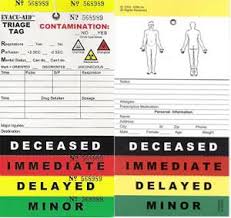
There was a massive explosion at a Kleen Energy Services gas power plant under construction in Middletown, Connecticut at about 11 o'clock this morning. Most recent reports suggest a gas leak may have been the cause, and that there were about 50 people working at the plant at the time. Police officials said that this was a "mass casualty event."
If you don't do this sort of thing for a living, the term "mass casualty event" probably sounds pretty bad. It probably sounds pretty bad if you do do this sort of thing for a living, too, but in a different way. Most of us, when we hear "casualty" think "death," but of course that's incorrect. Casualties include people who have been injured as well as people who have been killed. A mass casualty event (MCE) is an incident that is of sufficient size that it will stress the first response and health-care system locally. Different jurisdictions define how big something has to be to qualify as an MCE, and that also takes into account the capabilities of local responders.
Local hospitals in and around Middletown are reported to have activated their disaster plans. On the face of it, this may sound odd. We think of disasters as being earthquakes, tornadoes, floods and the like. For the purposes of responding to them, however, there really isn't a big difference between a massive accident and a massive tornado. If you work in the ER, you don't particularly care how all these people got hurt, but just that they did and how many of them there will be. A disaster plan enables the hospital (or whoever) to plan for a situation that is going to tax their capacity. It defines who does what when it's "all hands on deck."
Being injured in a mass casualty event as well as responding to one can have slightly different stressors. The biggest difference that most people notice right away is the use of triage. Responders have to choose who will get care first, and that means some people are going to have to wait. If you are injured when your car hits a tree, for example, you are going to get the full attention of first responders. If you are in a 50 car pileup, you will only get first attention if you are the most injured person that rescuers think has a chance of survival. Anyone who has ever gone to the emergency room on a busy day has experienced triage. You may be having the worst emergency of your life, but as long as someone else is having a worse one, you have to wait.
The triage involved in MCE's can become a predictable theme when responders and survivors work with crisis intervention personnel. Survivors express the fear and frustration of being seriously injured and having first responders walk right by them without helping. Responders report the horror of seeing multiple people in serious pain and having to leave them as they are rather than help. There is nothing quite like having to step over a dying person without offering even comfort in order to save someone else. These are choices none of us, even the highly trained, are used to making.
It will be a while before we know the full extent of the injuries at Kleen Energy. That's also one of the hallmarks of an MCE -- helping comes before counting the people who need help. As the dust begins to settle, this will be a big job for a CISM team, who will need to move in and help everyone recover from the difficult choices that had to be made today.
Monday, January 18, 2010
The New Normal for 9-11 Rescuers in Haiti

The New York Times website has an article today about a team of first responders from New York who are working to find survivors in the rubble of Port-au-Prince. There are eighty people from an urban search and rescue team there right now, pulling the living and the dead from the ruins. Yesterday they found four survivors. The article points out the direct parallels between their work looking for survivors of the collapsed World Trade Center and their work now.
Some of the things the searchers have to say are very familiar to those who have experience with traumatized people. One firefighter commented,
I can’t forget the smell of death from New York, and I can smell it right now. Sniff in the air. That’s it. Once it’s in your head it doesn’t come out.What this man is describing is a strong sensory memory. You've probably heard the adage that smell is the sense most closely linked to memory. I don't know if that's true, but it certainly is true that, at moments of great stress, our senses are heightened and much more likely to make it into our long term memory. This man isn't just saying he smells death, he's saying he smells death and associates it with New York. This is quite understandable.
Later in the article, another firefighter remarked,
When you have your head in the hole, you forget where you are. You could be anywhere really. And that person you’re looking for could be anywhere. It’s real simple though. You want to get them out alive.Certainly this sentiment is admirable. But I suspect that his description of forgetting where he is isn't for dramatic effect or poetic impact. People who go through traumatic events who are then placed in very similar situations, or in situations their minds have encoded as being similar, can experience disorientation. When things are similar enough, you actually aren't sure whether you're in the previous event or the current one. And if you're not ready for it, it can be extremely scary.
I don't know how much the current search, rescue and recovery operation is actually triggering these responders and how much it is just reminding them of their past experience. There is a difference, and one is much more distressing than the other. I hope that when they return to the U.S. there is a good CISM team ready to help them, both with what they're seeing now and with what it brings back about what they saw 8 years ago. Both are real.
Friday, January 15, 2010
Attention CISM-trained Personnel
ICISF has put out a call for the contact information of certified CISM providers who speak French, French Creole or Haitian Creole. If this describes you, please send an email including the following information:
Name:
State/Province – Country:
Fluent in: French - French Creole - Haitian Creole
E-mail Address:
Contact Phone Number:
to Pete Volkmann, ICISF Region 2 Liaison (New York, New Jersey, Puerto Rico) at pfvolkmann@fairpoint.net
At this time, ICISF is not deploying personnel to Haiti. They anticipate a need for personnel serving the Haitian-American population and American personnel assisting with the rescue effort, as well as telephone consultation and the like to Haiti. Your information will be included in a database for possible use as the situation unfolds.
Name:
State/Province – Country:
Fluent in: French - French Creole - Haitian Creole
E-mail Address:
Contact Phone Number:
to Pete Volkmann, ICISF Region 2 Liaison (New York, New Jersey, Puerto Rico) at pfvolkmann@fairpoint.net
At this time, ICISF is not deploying personnel to Haiti. They anticipate a need for personnel serving the Haitian-American population and American personnel assisting with the rescue effort, as well as telephone consultation and the like to Haiti. Your information will be included in a database for possible use as the situation unfolds.
Thursday, December 31, 2009
The Decade in Crisis Response

This week, many in the blogosphere are writing about their "top 10" or "bottom 10" for the past year or decade, or about their hopes for the coming year in their particular area of expertise. I thought long and hard about writing about my hopes for the coming year in crisis response, but my honest hope is that very few people will need crisis response in 2010. That may be unrealistic, but if we're talking about New Year's Wishes, then that's mine. Besides, I am a Monday Morning Quarterback, which means I specialize in looking back. So here is my review of the last decade's major crises (as designated by my executive Quarterback fiat) and how they were handled:
- Y2K. Remember that? Remember how civilization as we know it was going to come to a grinding halt at the stroke of midnight 10 years ago? This was the crisis that wasn't. Quarterback Points go to the people who realized there was a problem and set about trying to solve it. Quarterback Demerits for the complete failure of anyone in government to share any kind of unified message about what to expect, or even to figure out how big the problem really was. The result was people with stockpiled food and weapons and nothing to do with them. Never a good thing.
- 9-11. This was undoubtedly a defining moment for our country and perhaps for the world. It also was a defining moment in crisis response to see what the early trauma intervention community could do on a truly huge scale. Quarterback Points to ICISF and the many CISM Teams around the country that went to Ground Zero for months after the event. Points also to the various agencies that recognized the need of their people for immediate and longterm mental health support. We also have points for the surrounding communtiy in New York that took responsibility for nourishing the first responders' bodies and spirits. Finally, points for our country and the world for recognizing the need to support each other in addition to getting angry. In a million small ways, for a few weeks we all remembered what it meant to be human. We were all in this together. Quarterback Demerits to the quick transformation from a balance between the emotional reaction and the tactical response to an entirely action-oriented focus where grief and trauma had no place to breathe. Big demerits also to the brass at the New York City Fire Department who had long resisted implementing CISM in their organization and had no effective way of supporting their people, and to EAPs and corporations who violated basic rules of CISM like "don't mix the people who were there with the people who weren't" and then threw up their hands and said that CISM doesn't work.
- Hurricane Katrina. Much has been and will be written on the governmental response, or lack thereof, to Katrina. While I certainly have opinions on whether things were handled decently, I'm only looking at the emotional and mental health repercussions. Therefore Quarterback Points to Jesse Jackson and other leaders, particularly in the African American community, who recognized quickly that dispersing the residents of New Orleans throughout the country was a bad idea. People needed to stay together and as close to home as possible. I didn't get that at the time, but I see it now. Quarterback Demerits to everyone who opened their mouth without sufficient information during and immediately after the storm, or who put a rosy face on things to save their own rear ends. It is one thing to not have your needs met. It's another to have someone say on national TV that they are helping you when they aren't. From "Heck of a job, Brownie," to press conferences claiming there were no people stranded at the convention center, what was said publicly was a kick in the teeth for the people of New Orleans.
- H1N1. If you read this blog with any frequency, you know I've had a lot to say on this topic. This story isn't really over yet, but that's never stopped me before. Quarterback Points to the CDC and local health departments for coordinating their fall prevention and education efforts so much better than they did in the spring. Quarterback Demerits also to the CDC and local health departments for completely failing to coordinate in the spring, causing the message to be garbled, confusing, and scary. Demerits also go out to Joe Biden for his absurd comments about flying on airplanes, and to every person who had the unmitigated gall to try to use this disease as an argument regarding immigration policy. Finally, the whopper of all demerits to the U.S. media, who simply could not report facts without hype and are still having trouble doing so, and who can't seem to find context for statistics to save their lives.
Monday, November 30, 2009
What if You Survived the Lakewood Police Shootings?

By now you've probably heard about the murder of four uniformed Lakewood, Washington police officers in a coffee shop yesterday morning. There seems to be no doubt that the victims were targeted because they were police officers. Police have a suspect and have been trying to find him in a series of very visible but unsuccessful attempts today.
A lot has been, will be, and should be written about these courageous men and women and their surviving families, including nine children. The spontaneous outpouring of grief and support is amazing. The owner of the coffee shop chain where the shootings occurred is an ex-cop himself, and he said yesterday that since his employees were unhurt he was mostly concerned for the families. Who can blame him?
But the fact of the matter is that there were a handful of other people in the coffee shop when the shootings occurred yesterday -- both staff and patrons. Police have said that it took some time to get full statements from them because it was so hard for them to describe what they saw right away. Who can blame them, either?
It is not uncommon for survivors of shootings, particularly shootings in which multiple people are killed, to feel survivor's guilt. They wonder why they lived when others died. They feel that if only they had done more, they might have saved others. Most often, they find some solace in the knowledge that everyone there was a target, and had they done anything different they might well be among the dead.
This situation is a little different. The other patrons were not, in fact, targets themselves. It seems pretty clear that the gunman was looking to shoot cops. It is not as simple as realizing that they had to save themselves. But in fact, they did have to save themselves. While they may not have been targets to begin with, had they confronted the gunman they undoubtedly would have become targets.
When all is said and done, however, four police officers are dead in a highly publicized and sensational shooting that is making the national news, and the only people in any kind of position to stop it, one might argue, were the staff and other patrons. While we all know that we don't blame them and we don't think they could have stopped this, that probably isn't how they are feeling. That kind of guilt can lead to isolating oneself, and that's a very bad thing to do after a traumatic incident.
Add to this the wrinkle that the gunman is still out there. The survivors have to be concerned, at least on a gut level, for their own safety. They are witnesses, and he clearly doesn't care much about human life. It has to be hard to get up and go out in public under these circumstances.
Most police departments have supports in place for families of officers killed in the line of duty and also for other officers and their families who understandably have renewed fears for other officers' safety. Fewer communities are really set up to support the civilian survivors of an incident like this. This is a time when a community-based CISM team is critical. I hope there is one out there, or that someone asks for one on those people's behalf. They need our support, too.
Update: The suspect in these murders was shot and killed by police on December 1. Hopefully, that will alleviate some small amount of the stress the survivors are experiencing.
Tuesday, November 24, 2009
Census Worker Bill Sparkman's Death a Suicide, Staged for the "Benefit" of Others

Back in September, William Sparkman, a part time census worker, was found hanging from a tree in rural Kentucky with the word "FED" written across his chest. At the time, the question of whether he was killed as part of a vast right-wing reaction against the census was being bandied about in the press. Today, word has come that Sparkman killed himself. He apparently intentionally staged the scene to look like a homicide so his son could collect on multiple life insurance policies Sparkman had recently taken out, totaling in excess of $600,000. Those policies would not pay in the event of a suicide.
The traumatic death of a loved one is incredibly hard. When that death is a suicide, it is much more complicated. When CISM teams plan a response to a suicide, we expect to hear a lot of regret and guilt. In this instance, police report that Sparkman told someone exactly what he was planning to do, and they did not take him seriously. That person must be feeling the weight of the world on their shoulders, although of course it's impossible to know whether, had they responded differently, it would have made any difference.
In addition, it's not uncommon for those who kill themselves to express that they think their families will be better off without them, and that sentiment complicates the situation for survivors. Inevitably, they do not feel "better off" and often feel a combination of anger at their loved one for thinking they would be and guilt that somehow this happened because of them. It's not uncommon to hear families say, "why didn't he care about me enough to not do this?"
Sparkman's death takes this to a whole new level. In this instance, Sparkman quite clearly was thinking about his family when he killed himself. He took the time and effort to elaborately stage the scene so his son could get his life insurance money. He cared enough to make it look like a murder.
Sparkman had a son that he cared about and wanted to help financially. He wasn't thinking rationally enough to recognize that killing himself would cause much more than monetary damage, however, or he was in too much psychological pain for that to be a deciding factor. People who attempt suicide are like fish drowning in a bowl of water. Everything they need is available to them, and they can't seem to see or take advantage of it. That isn't anyone's fault, but when it happens to you, it's hard not to feel like it is.
Tuesday, November 10, 2009
Hostage Situation at Stissing Mountain Middle School: Send in the Peers

This morning, a man walked into Stissing Mountain Middle School in Pine Plains, New York, assembled a gun in the bathroom, and took my colleague, Principal Bob Hess, hostage. The standoff lasted two hours before the suspect surrendered, releasing Mr. Hess. The entire bulding locked down for those two hours, with children hiding in locked classrooms, the school kitchen and even under the desk in the counseling office right next door to where the gunman was.
The fact is, we all know it's a possibility. Any school Principal who has given any detailed thought to an armed intruder coming into the school has already realized that the most likely target is the Principal. An angry parent, a custody dispute that we intervene in, a trespasser we ask to leave, or a disturbed child, if they took out a gun, could all very well be aiming it at us. In places where, as in Michigan, we practice locking down the school, we practice it with the administrator directing the rest of the staff and taking the lead. We try not to think about the possibility that we would be shot or held hostage ourselves.
Counseling will now be offered to the students, staff and families at Stissing Mountain. In the official curriculum I teach on Critical Incident Stress Management, they say that peers may not be necessary in delivering CISM services to schools. If there's anyone from Pine Plains out there listening, I want you to know that I think a peer is absolutely critical in assisting Mr. Hess.
If this were me, I would not want to talk to a counselor or a social worker or a psychologist. I would want to talk to someone else who has lived with the knowledge they walk around with a big target on their head every day. I would want my person to understand that in an emergency I take pride in being able to keep everyone calm and safe, and who can imagine that being the one person least able to do anything in this situation was horrible. I would want someone who has had their own child in the building when something bad happened, and had to worry about the group, not the individual. I would want someone who knew the significance of having something happen "on your watch." I would want to talk to a really well trained Principal.
I hope they have one in Pine Plains. And Principal Hess, I'm glad you're safe.
Monday, November 9, 2009
The Children of Fort Hood

As everyone knows by now, 13 people died and 30 were injured in a mass shooting at Fort Hood last Thursday. There has been a lot of focus, quite appropriately, on the people who died and on their families. There has also been some given to those who were wounded, some quite critically. And of course there has been an inordinate amount of speculation about the alleged shooter, who, reports say, is now awake and talking in the hospital.
It is impossible to predict how any individual person will be affected by Thursday's events. Some who you might expect to be very emotionally impacted will bounce back quickly, and some who seem to be on the periphery of the incident may be profoundly affected. As the CISM personnel work to triage those traumatized by the shooting -- those who lost a loved one, those who were shot, those who knew the shooter, those who witnessed the shooting, etc. -- there is one group that is probably giving them a little pause: the children.
To my knowledge there were no children present when the shooting started on Thursday. That means no children saw the scenes of violence first hand. But that in no way means that the children at Fort Hood aren't impacted, and they are going to need a lot of support. But we all know intuitively that helping children through these moments is different than helping adults, and few early crisis interventionists have any training at all in working with kids.
CNN reports that officials at Fort Hood have called in child psychologists as well as disaster management experts. That means the impact here is big -- bigger than what their town of 60,000 can handle on their own. It is a disaster, just as surely as a building collapse in a large-ish town that killed 13 and injured 30 would be, only probably worse, or at least different, for the families.
So why are the children impacted? There are numerous factors. First, these kids were on lockdown for several hours on Thursday. During that time, they did not know what was going on, where their parents were, if anyone in their family had been injured, or when they would see them again. If they looked out the window they saw what amounted to a live military operation going on outside of their schools, and for all they knew the "bad guy" was coming for them next.
Some of these children, of course, lost a parent in the shooting or have a parent who was injured. If not, they almost certainly have a neighbor or friend who was impacted. They went to school on Thursday morning believing that they were OK in school and their parents were OK at work, and came home knowing that very well might not be true at any given moment.
I've often said that trauma violates our world view. For these kids, that is doubly true. All of us need to believe that the world is generally a safe place, and this incident took away that belief from these children. But it also took away something else. It took away their visceral understanding that soldiers -- parents -- who are stateside are safe, and that danger lies in the war zone. A big part of how they can cope with having parents who put themselves in harm's way for a living is by telling themselves that the fact that they come home means they are OK. Now, 13 people who were stateside, who were home, are not coming home any more.
So what do we do for these kids? That depends, of course, on what they need. I suspect the days, weeks and months ahead will hold a lot of crayons and paper, a lot of tissues, and a lot of nightmares for some of these kids. Watching parents ship out is going to be really hard. Watching them come home is going to be surreal. So while we're honoring the dead and thanking our troops, particularly during Wednesday's Veteran's Day celebration, let's take a moment to remember their kids, and to thank them for all they give up in service to our country, too.
Subscribe to:
Posts (Atom)
Meet the Quarterback

- Naomi Zikmund-Fisher
- is a clinical social worker, former school Principal and a Crisis Consultant for schools and community organizations. You can learn more about her at www.SchoolCrisisConsultant.com

Subscribe


 Posts
All Comments
Posts
All Comments