Showing posts with label guilt. Show all posts
Showing posts with label guilt. Show all posts
Wednesday, January 4, 2012
Why Blame Is a Bad Idea: Death at Cummings Middle School


Everything about this story is wrong.
Based on as yet very sketchy reports, here's what we know:
An 8th grader at Cummings Middle School in Brownsville, Texas, showed a gun in the hallways at school this morning. Police were called. They ordered him to drop the gun. He didn't. He appeared to aim it at them. They shot him. He died. The gun turns out to have been an air pellet gun.
When I say that everything about this is wrong, I don't mean to imply it's not true. It's just wrong. It doesn't fit the model of a good day at middle school, certainly, but it doesn't even fit the model of a bad day. A kid is either armed or he's not -- none of this pellet gun stuff. He either wants to die and kills himself or doesn't and puts down the gun. The violence is either threatened or real. This entire episode occupies this weird no-man's land between the possibilities our brains know how to deal with.
Given that , perhaps it's not surprising that everything about the press coverage is wrong, too. The headlines read things like, "Brownsville police kill teen at middle school." While technically accurate, it sure leaves a lot of important information out.
Whose fault is this? The kid, for bringing the gun in the first place and refusing to drop it and aiming it towards police? The police for shooting when the kid wasn't actually lethally armed? The school for calling the police? The parents for this kid having access to the pellet gun in the first place?
I don't think I've ever seen a case that both so clearly begs you to blame someone and so clearly illustrates why blame gets in the way of healing. Now that this incident is over, we can all point to numerous places people "should" have done things differently. But by "should," we mean "if they had, this probably would have had a different outcome." That's really different than saying that the outcome is their fault. It's so easy to confuse "should have" with "I wish they would have" or even "next time, I hope they don't."
This happened. Period. It will never have not happened. Everyone involved in it has to make peace with that fact. While preventing it in the future may be a priority, accepting it as part of the past has to happen, too. The messy question of whose fault it was can only get in the way of that process.


Sunday, August 14, 2011
Explaining the British Riots

Last week, parts of the United Kingdom were rocked by four nights of violent rioting. The initial incident began when a planned peaceful protest in the of the police shooting of Mark Duggan, a black man, in the Tottenham section of London turned violent. The trouble spread, first to other parts of London and then to other parts of the UK.
If you read the coverage of this, you will find two perspectives on what went wrong. The official view taken by the British government, is that this was senseless criminality by people who have no actual complaint against anyone but who are using the excuse to cause trouble. This was exemplified by Prime Minister David Cameron, who told the British Parliament that the Duggan shooting
was then used as an excuse by opportunist thugs in gangs, first in Tottenham itself, then across London and then in other cities. It is completely wrong to say there is any justifiable causal link.On the other side, you have people who argue that, while the Duggan shooting itself may not be the cause of the unrest, the rioting is nonetheless based in people's deep dissatisfaction with their current situation. Writing on CNN.com, Matthias Matthijs notes,
The present moment . . . is defined by a more disorganized class politics of reaction, propelled by huge inequalities and a perceived injustice and indifference by the state to the fate of those involved.So, which is it? Is this rioting the work of criminals who saw their chance and took it, or of the dispossessed victims of economic and judicial inequality? And why is everyone so sure they know the right answer?
Traumatic events often challenge deeply held beliefs about the world. Given this conflict, people have two choices. They can assimilate the trauma into their worldview, or they can change their worldview to accommodate the trauma.
Let's imagine, by way of example, that I strongly believe that the world is safe. Then, one day, I am mugged. What do I do with that belief? I can change it and decide that the world is dangerous. Or I can take a view of the mugging that allows me to continue to believe the world is safe. In that case, the mugging was my fault for being where I should not have been. In other words, if the world is safe, it must be my fault.
Of course, the most adaptive thing to do is a mixture of both of these. In my mugging example, the healthiest place for me to land is with a belief that the world is generally safe, but probably not as safe as I once thought it was, and that given that I probably should not go to that particular area. Unfortunately, very often people over-accommodate (the world is dangerous) or over-assimilate (it's all my fault). These beliefs often get in the way of people recovering after a trauma.
You can see these two tendencies in the analysis of the London riots. David Cameron's version holds that London, and the UK in general, is full of criminals just waiting for their moment to cause havoc. This is an over-accommodated belief. In the face of danger, he is saying that the world is dangerous. He is also not taking any responsibility at all for the situation. The view that the UK's inequality caused the riots is, in much the same way, an over-assimilated belief. Faced with danger, this view holds that the world continues to be safe, so this bit of danger must be our (or somebody's) fault.
Just as in my mugging example, however, there is a healthy middle ground. It says that yes, the world is generally safe, but there are those who take advantage of situations. Our actions, or the actions of governments, furthermore, can make it less safe. The riots are neither purely the anger of the dispossessed (what Dr. Martin Luther King, Jr. was referring to when he called riots "the language of the unheard") nor the work of pure thugs. Like everything else in life, they're complicated. Denying one side or the other will only make it that much harder to recover.

Wednesday, July 20, 2011
The Guests at the Hadley House

Mary Jo and Blake Hadley were murdered on Saturday afternoon, allegedly by their 17 year-old son. Specifically, the son posted an invitation to a party at his house then allegedly bludgeoned his parents with a hammer and hid their bodies in the master bedroom. He then hosted between 40 and 60 people for the party that night as his parent's bodies lay behind closed doors in the house.
There is certainly plenty of awfulness to comment on here. There's the horror of a kid killing his own parents and the brutality of how he did it. There's the unbelievable callousness of hosting a party with your parents lying dead in the same house. How unfeeling can one person be?
My thoughts, however, go to a less-examined aspect of this case. There are between 40 and 60 people out there who found out on Sunday that they had partied Saturday night away at a crime scene, just feet away from the victims' bodies. Think about that. How would you feel?
Interestingly, my first thought was that these kids wouldn't care. I mean, who goes to a party at the house of a kid who kills his parents anyway? I had to stop myself. Most if not all of these guests didn't know what had happened. They were doing something that appears unbelievably heartless, but they didn't know they were doing it.
One of the things that people often struggle with after a traumatic event is guilt. We believe, rightly or wrongly, that we should have done something differently and that our doing something differently would have made a difference. Most often, however, we are basing our ideas of what we should have done on information we only got after the event. That's certainly true in this case.
I doubt there was one person at that party who, if the invitation to the party had read, "Come on over to my house for a party. My parents will be dead in the master bedroom," would have thought that was a good idea. At the same time, I'll bet there are a lot of people freaked out by the thought that they were there and thinking, in hindsight, they should have known.

Friday, March 11, 2011
Namazu Wakes: The Japanese Earthquake
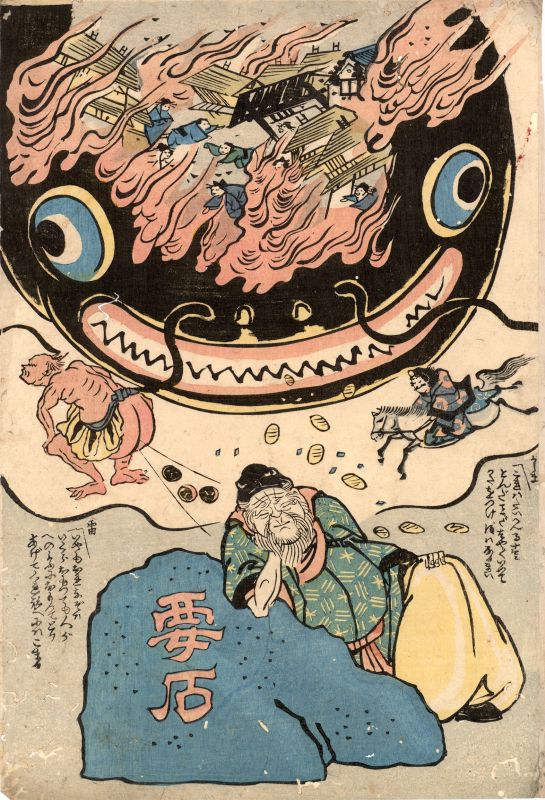
In Japanese mythology
 , Namazu is a giant catfish who lives in the mud on the ocean floor. The god Kashima restrains Namazu with a stone, but from time to time Kashima loses focus and Namazu wakes, thrashing around and shaking the ocean floor. This morning, 80 miles off the coast of Sendai, Japan, Namazu awoke.
 An earthquake measuring 8.9 on the Richter Scale hit northern Japan just after midnight Eastern time. The resulting tsunami devastated coastal towns in Japan, and then made its way across the Pacific, hitting many island nations, Hawaii, and the west coast of the United States. While the loss of life in the U.S. is nothing compared to what has happened and continues to happen in Japan, the damage to ports and harbors is considerable.
This is the largest earthquake in Japanese recorded history. It is likely there has not been one this big in Japan for more than 1,000 years. This earthquake was almost 100 times stronger than the one that devastated the nation of Haiti in 2010. In a country that builds and practices and prepares for "the big one," this was the big one.
While I don't mean to minimize in any way the devastation in northern Japan, the lives lost, or the very real dangers still posed by emergencies at two nuclear power plants damaged in the earthquake, it's also important to recognize the strengths present in this situation. Japan's construction standards are clearly designed to take an event like this into consideration. If you compare the destruction and loss of life in Haiti, where no such building standards existed, to what we are seeing in Japan, it is clear that Japan was as ready as you can be for something like this. The first news report I heard on the radio this morning was from a reporter standing on a balcony overlooking Tokyo. Just the fact that there is a single balcony left in Tokyo tells you how well the Japanese prepared.
The horror we feel considering what has happened in Japan, then, is very different than what we experienced after the earthquake in Haiti. In Haiti, we saw roughly 230,000 people wiped off the planet by a natural disaster and by the unpreparedness and fragility of life in abject poverty. In the United States, we suddenly knew, in a way that many of us hadn't before, that Haiti was our neighbor and that we needed to step up and help.
The horror many of us feel today is different. Far fewer people have died. Japan is much farther away. And, as I've already said, they were prepared. At the same time, we generally regard Japan as being something "like us." While the culture of Japan may be different, it is a highly industrialized, modern country. We have high expectations for their ability to function in all kinds of circumstances. So we watch what is happening there and realize that if it could happen to them, it could happen to us. In Haiti, we felt guilty. In Japan, we feel scared.
Of course, this is not a one size fits all situation. If you have family in one of these countries, have traveled there, or feel some other connection, then one of these quakes may have hit you in a particularly poignant way. I have traveled to both places and have friends in each. Not surprisingly, as I wait for word about people I know in Japan, my mind drifts to worrying about folks in Haiti I haven't heard from in a while. That's the way it is sometimes. Namazu makes connections when he wakes.

Saturday, August 28, 2010
The Impact of Nicole John's Death

Nicole John, 17, died at about 4:15 AM on Friday, after she climbed out onto a ledge outside a 25th floor apartment in Manhattan and fell onto a 3rd floor outcropping. John, who was the daughter of U.S. Ambassador to Thailand Eric John, was to have started classes at Parsons New School of Design this fall. A statement from Parsons indicates that the school's "crisis management team" will be available to counsel those who were at the party that Ms. John was attending when she died, or others affected.
To answer what seems like the natural question, there is plenty of evidence that John was either drunk or under the influence of some other substance when she fell. It appears she may have decided to step out onto the ledge to take a picture -- a camera was found near her. The host of the party, who is 25, has been arrested on charges relating to having alcohol at a party with a minor present. Ms. John had a fake ID, and had been at a club with friends until about 2 hours before.
The crisis management team at Parsons has an interesting job to do here. Since John was a new student, the number of people affected by her death is probably lower than would be in even a few weeks. However, those who are affected are probably also new students, many away from home for the first time, all relatively young, and therefore particularly vulnerable. One could imagine that having a new friend die tragically just as school was starting would color your freshman year in school, and beyond.
The themes the team can expect to hear are complicated, too. Those who were not at the party are likely to be angry, and not to be comfortable with that anger. Ms. John did something dangerous when she drank too much, and that caused her to do something she would never have done while sober. Her friends are going to be mad -- at the people who were there, at the host of the party, and at Nicole John herself. But being mad at the person who died is never easy, because it's hard to reconcile being angry at someone and being sad that they're dead at the same time.
For those who were at the party, you can add a layer of guilt on top of all that. Folks will feel guilty that they didn't stop her, guilty that they let her get drunk, and guilty that they themselves may have been too impaired to realize what was happening. On top of that, there has been an arrest, which, rightly or wrongly, makes them wonder if something they express at this point will make the police look at them. So they feel guilty, but may be afraid to talk about it for fear that their guilt will make them look, well, guilty. Our society doesn't deal well with the difference between someone feeling guilt because they could have done differently and someone being guilty of a crime.
As for Ambassador John's family, one can only imagine what they might be experiencing. All of the above seems likely. Published reports suggest that Nicole John was not new to drugs and alcohol, and perhaps this was the moment they knew was possible but prayed would never come. Or perhaps they didn't know, or couldn't acknowledge, the trouble she was headed for. No one deserves to die the way Nicole John did, no matter what else they may have done. And certainly no parent deserves to get the phone call the Johns family got early Friday morning.
Thursday, August 26, 2010
Haiti -- Reentry and Reflection
 |
| Me, with one of my new friends |
It's been 12 days since I returned to Michigan from Haiti. That seems both the blink of an eye and an eternity. My return and reentry has presented an interesting opportunity for me to experience some of what I hear when I talk to people who have been in emergency situations first hand, because, while I was not in the earthquake itself and I was fairly comfortable for a brief week in Haiti, the shock to my worldview presented by what I saw and heard was real.
As I mentioned in my last post, I had some foresight to recognize that I might not be firing on all cylinders when I returned. In addition to upgrading my flight to first class, I also prearranged with colleagues from the community crisis team on which I serve to have someone talk to me when I returned. I was not surprised that I needed it. I was somewhat surprised at the reasons I needed it.
I expected to come back with visions of destruction and tales of horrible trauma running through my head. For the most part, that did not happen. What I did not expect was to come back feeling as attached and responsible for the people I met as I did. The conditions under which virtually everyone is living are of a type we simply would not permit in the United States. Even after Hurricane Katrina
 when, it might be argued, we as a country failed our fellow Americans in a way never before seen, we did not permit this kind of living conditions for this long. It felt callous to spend a week and then pack up my things and go because I "had" to leave. It even felt callous to be asking for help with what I had experienced. I experienced a week. Those kids are experiencing a lifetime.
This brings us to another layer of how I was feeling. Yes, it has been seven months since the earthquake. In reality, however, while things are worse for these families now than they used to be, they weren't starting from a great position to begin with. The level of poverty in Haiti is incomprehensible to someone used to US standards. Most of the poor here would be doing fairly well compared to Haitian poverty, and in Haiti there is no government safety net.
I came back feeling like I hadn't accomplished anything. I hadn't helped anyone. I had come down, picked up my gold star for going, packed up and gone home. Worse, that was all I could do, because the level of need is so high that even the most fabulous volunteers are not even going to make a dent in all that needs to be done. I felt, and to some extent still feel, truly helpless. And I feel that the world community has, throughout the 200+ year history of Haiti, failed in a moral obligation to at least try to give everyone a decent chance at a decent life.
At the same time, I feel guilty for talking like that. Yes, things in Haiti are bad. But this is people's home, and now I know some of those people. I wouldn't walk into a friend's house and comment on how small or broken down it is. Can you imagine going over to the neighbors and saying, "Geez, your house is a pit?" In the same way, while it's no secret to the people in Haiti that they are poor and have little, it doesn't seem right to insult their country or their living conditions. The fact is, they are making do with what they have, much better than I think I ever could. They are playing the hand they've been dealt, and they're playing it pretty well.
So, I have mixed feelings. That is the name of the game when it comes to complex, traumatic situations. In these moments, I find myself thinking about the teaching we have in Judaism that, when God made the world, it was intentionally left imperfect. It is up to us to repair the world, in partnership with God. This, of course, is an overwhelming task. No person could possibly repair everything that is wrong in our world. Rabbi Tarfon, one of the great thinkers, is quoted in the Pirkei Avot
 (ethics of the fathers) on this subject:
It is not for you to finish the work, but neither are you free to desist from it.I know I did something in Haiti. Was it enough? No, because it could not possibly be enough. But I did not desist from the work, and I find some small comfort in that.
I hope you've enjoyed reading about my experiences in Haiti. You can read this series from the beginning here. We now return to your regularly scheduled Quarterback, commenting on the news as usual.
Tuesday, August 3, 2010
Plenty of Trauma to Go Around in Manchester Warehouse Shootings
 A driver for Hartford Distributors, a beer distributor in Manchester, Connecticut
 , opened fire in the warehouse this morning around 7 AM. He killed 8 people and wounded two others. Police responded, and as they closed in on the gunman, he killed himself. That much, everyone agrees on. I think most if not all of us would also agree that, regardless of his motives, this kind of violence cannot be justified.
This story is not nearly as clean as that storyline would appear, however. The driver had just been in a disciplinary hearing in which he was shown a video allegedly depicting him stealing from a company truck. He was given the choice to resign or be fired, and he chose to resign. He began shooting essentially as soon as the meeting was over.
As if that weren't complicating enough, the shooter was allegedly being harassed by coworkers because of his race. He was one of two African-American employees, and his family says he showed them pictures of racial epithets and a stick figure being hung by a noose, taken in the company restroom. He also reported being referred to by the "N word." After he shot the other employees but before he killed himself, he reportedly called his mother and told her "I shot the five racists." Then he shot himself.
This situation is messy on many levels, and messy situations have a lot of impact and need a careful response. In this instance, I imagine the following groups need support:
- the survivors, who have experienced believing they were going to die
- the families of the dead, who have lost a loved one violently and suddenly
- the families of the survivors, who will have lasting fears for their loved ones' safety
- the family of the gunman, who must come to terms with what he did and grapple with the two disparate versions -- that he was being fired for misconduct and/or that he was the victim of racial harassment
- the administration of the company, who have lost employees "on their watch" and may feel guilt, either because they fired the gunman or because they didn't respond appropriately to harassment complaints
- the union, which would have represented him in the meeting this morning and which may have had harassment reported to them
- anyone who actually harassed the gunman, who may now feel responsible (or may now feel his actions prove them "right" in their racism)
Add to this the fact that there are likely to be one or more lawsuits flying in various directions, and everyone knows it. This means that anyone who feels guilty -- whether it's their fault or not -- is going to be pretty uncomfortable talking about those feelings for fear that what they say winds up in court.
I hope this workplace has access to a good crisis response team of some kind. I hope that team has an excellent coordinator. They're going to need to assign people carefully and make sure they have enough to cover all the bases, because no one in this situation is going to be able to support more than one group, and in some cases perhaps only one individual. They sure have their work cut out for them.
Monday, June 7, 2010
Kyron Horman's Disappearance is a Nightmare for Everyone

On Friday morning, 7-year-old Kyron Horman attended his school science fair in Portland, Oregon with his step-mother. At 8:45 AM, he walked down the hall at Skyline Elementary School, towards his 2nd grade classroom. He has not been seen since. Just before 4 PM, when Kyron didn't get off the bus at home, his step-mother called the school and learned he had never been in class.
The disappearance of a child is every parent's nightmare. Most of us know that instinctively. This particular scenario, however, is also every school's nightmare. A child makes it to school and the school loses track of them, and they're gone. I wish I could say that I can't imagine how this could happen, and certainly it isn't easy, but honestly, this could have happened at any school I've ever worked in.
Most schools have a system that works something like this: when the bell rings, the teacher takes attendance. That is conveyed -- either by a child messenger or by computer -- to the office. Someone in the office, meanwhile, is taking phone calls from parents calling to say their child is sick and matching these with reported absences, also taking into consideration any children who come in late. Then the office, or an automated system, calls the homes of children who are not accounted for. Ideally, this should be done by the time an hour or so has passed.
There are plenty of places for this system to go wrong. The teacher accidentally marks the wrong child absent. She marks "excused absence" instead of an unexcused one, perhaps because a friend says he's sick, so the computer records that the parent has called the child off. There is a sub who doesn't know how to properly mark the sheet, so the office misreads the attendance sheet. There is a sub in the office who doesn't fully understand the system, or doesn't make phone calls at all. Someone with a similar name signs in late, and the wrong child is marked tardy. Some emergency takes attention away from attendance in the office, or a single phone call doesn't get made.
Now a child is missing
 , and it isn't hard to point fingers at the school, rightly or wrongly. This is one of those times when the need for peers in early crisis response is especially clear. The school staff are feeling terribly guilty, and they need to be able to talk to someone who understands how this could happen. The Principal needs a Principal who gets that sometimes attendance isn't done properly. The secretary needs a secretary who knows how hard it is to keep track of everyone. The teacher needs another teacher. And all of them need school staff who know how very responsible all of us in schools feel when something goes wrong on "our watch," and how much harder it is when you're being blamed from the outside as well as yourself.
As much as I know this could have happened in my school, or any school, I will also admit to some healthy skepticism. The chances of the system failing for any individual child are pretty small. The chances of it failing for the one child who happens to be missing are infinitesimal. Something else happened here. Maybe the school knows what it was, maybe they don't. But even if they know what it is, even if they know it wasn't their fault, they're still going to feel guilty, and they're still going to get blamed. Let's hope that somehow, Kyron gets home safe soon, and both the parents and the school can wake up from this nightmare.
Tuesday, June 1, 2010
Substance Abuse, Waiting for the Worst, and the Death of Andrew Koppel

Andrew Koppel, 40, was found dead early this morning. He apparently had gone on an at least day-long drinking binge, bar hopping throughout New York City. He finally wound up, with his drinking buddy, at the apartment of one of the buddy's friends. He went to sleep it off, and never woke up. Among others, he leaves his girlfriend, a child, and his famous father, newsman Ted Koppel
 . The cause of death has not been determined. He had a history of alcohol abuse.
This story is in the news because Andrew Koppel's father is famous. But deaths like this one are, unfortunately, not at all unheard of. People who live with or love alcoholics and other substance abusers live with the knowledge that, if they don't successfully stay away from their substance of choice, someday it may very well kill the people they love. Overdose -- in this case, apparently alcohol poisoning -- is only one of a seemingly endless number of ways that people can die from substance abuse. Motor vehicle accidents, falling or jumping from tall buildings, or picking a fight with the wrong person are a few of the others.
It's likely that the phone call the Koppel family got this morning was shocking. It's also likely, if stories about Andrew's drinking are true, that they knew such a phone call was a possibility. At the same time, no one can ever really be prepared for a phone call like that. Every family hopes that the addict they love will straighten out or sober up before they hit bottom, and the phone call informs them that their hopes are over.
This type of death brings with it a difficult mishmash of themes for those left behind. Of course they are sad. They are also angry, because the person who died "did this to themselves." Unlike a suicide, however, the person didn't do it to themselves on purpose, or at least not as clearly on purpose as if they had completed a suicide. Those left behind are mad that they didn't stop in time and mad that they couldn't. They feel guilty because they couldn't save them, and blame others -- the person's friends or other people in the family -- because they didn't. The drinking or drugs often go hand in hand with mental illness or other complicating factors, and it's hard to know what or who to blame for the result. In short, it's a mess.
I don't know what kind of relationship Ted Koppel had with his son. Maybe they were estranged, maybe they were close. Frankly, it's none of our business. No father holds his baby and imagines that someday he will bury his son. No father should have to, no matter how much he may have prepared for the possibility.
Tuesday, March 30, 2010
The Hutaree Go for the Brass Ring

On Sunday, I wrote about the Hutaree, a Christian extremist militia that had been raided by the FBI. At the time I wrote, we already knew that this group, which is headquartered in my "neck of the woods" was allegedly crazy and violent, and I wrote about how "out there" had become "right here." Yesterday's court appearances added yet another layer. It turns out they were, allegedly, plotting to kill a police officer, then wait for the funeral and use IEDs against the funeral procession.
This takes this story to a whole different level. Those of you who read the Quarterback regularly know that death in the line of duty is one of the "big five." These are the incidents that get a whole separate class to learn about when you're going through CISM training. These are the ones you want your very best responders. (The other four, in case you were wondering, are suicide of a colleague, mass disaster, multiple critical incidents in rapid succession and long delay between incident and response.)
Death in the line of duty is an emotionally messy situation for cops and their families. It brings up all kinds of issues around blame and anger, personal identification with the victim, fear for your own safety, and many more, all in an organizational culture that does not encourage people to talk to each other or to professionals about their feelings. Add to this the already high suicide rate among law enforcement and the fact that all of these people are armed, and it's pretty complicated.
But this situation doesn't just contemplate a line of duty death. It then, had it been successful, adds the attack on the funeral procession. That means, effectively, that these folks were plotting serial line of duty deaths for police officers and their loved ones. Imagine how messy that could have been.
For me, there's another complicating factor. While I don't spend a whole lot of time in law enforcement funeral processions, you may recall that just a few weeks ago my daughter and I stopped near our house to pay respects to one coming through our township. Because that was so recent, the picture I create in my mind when I imagine IEDs at a law enforcement funeral procession is of that morning, that street near my house, and me and my daughter. Now, it's personal.
I don't generally think of myself as the center of the universe. I also don't imagine it is anyone's idea of a good way to become famous to be covered in my blog. But I have to note that, if you did want to make sure I covered you, plotting an attack on a police officer followed by an attack on the funeral procession in southeast Michigan would pretty much guarantee it. So, in that sense, congratulations to the Hutaree. You grabbed the Quarterback's brass ring.
Tuesday, March 16, 2010
Freak Accidents

Robert Jones of Woodstock, Georgia was a 38 year-old pharmaceutical salesman. He was in Hilton Head, South Carolina yesterday on business. Around 6 PM, he was out for a run on the beach, listening to his iPod, when an experimental aircraft making an emergency landing struck and killed him. He leaves a wife and two children. The people on the plane were unharmed.
It appears that the plane started leaking oil and the propeller fell off. The oil got onto the windshield, so the pilot couldn't see. The pilot of the aircraft was still on the beach when the Associated Press interviewed him, but he didn't want to talk. He said,
I've got a lot of issues going on right now. I've got a plane that's all torn up. And I've got a young man that I killed.Who can blame him? Someone should have been running interference between him and the press in the first place.
"I've got a young man that I killed." I don't know about you, but something strikes me as problematic about that statement. Imagine listening to a 911 call where the caller says, "I've got a young man that I killed." What comes to mind is a murderer confessing to a shooting, or perhaps a death that occurred in self-defense. What does not come to mind is an accident.
And that's what this was -- an accident. The pilot did not get up yesterday morning thinking, "I think I'll kill a jogger today." He did not get up saying, "To heck with safety, I'll do what I want." He was trying to save his own life and the life of his passenger when he landed that plane. He didn't aim for Mr. Jones. He hit him by accident.
However, the pilot did hit Mr. Jones, creating a classic example of the type of danger we simply don't bother to worry about. I doubt that Robert Jones got up yesterday morning and thought, "I'll go for a run on the beach after work, but I'd better watch out for crashing airplanes." The way he died was so unlikely that it probably never occurred to him. I never occurred to me before I read about it.
The pilot will have to live with the knowledge that a craft he was in charge of took another person's life. He will need to make peace with a freak accident where, in some sense, he was the freak. Jones' family will have to make peace with him being killed in such a bizarre manner. And the joggers on Hilton Head Beach will need to make peace with their jogging spot, and the fact that, yesterday or not, it's still a pretty safe place to be.
Monday, November 30, 2009
What if You Survived the Lakewood Police Shootings?

By now you've probably heard about the murder of four uniformed Lakewood, Washington police officers in a coffee shop yesterday morning. There seems to be no doubt that the victims were targeted because they were police officers. Police have a suspect and have been trying to find him in a series of very visible but unsuccessful attempts today.
A lot has been, will be, and should be written about these courageous men and women and their surviving families, including nine children. The spontaneous outpouring of grief and support is amazing. The owner of the coffee shop chain where the shootings occurred is an ex-cop himself, and he said yesterday that since his employees were unhurt he was mostly concerned for the families. Who can blame him?
But the fact of the matter is that there were a handful of other people in the coffee shop when the shootings occurred yesterday -- both staff and patrons. Police have said that it took some time to get full statements from them because it was so hard for them to describe what they saw right away. Who can blame them, either?
It is not uncommon for survivors of shootings, particularly shootings in which multiple people are killed, to feel survivor's guilt. They wonder why they lived when others died. They feel that if only they had done more, they might have saved others. Most often, they find some solace in the knowledge that everyone there was a target, and had they done anything different they might well be among the dead.
This situation is a little different. The other patrons were not, in fact, targets themselves. It seems pretty clear that the gunman was looking to shoot cops. It is not as simple as realizing that they had to save themselves. But in fact, they did have to save themselves. While they may not have been targets to begin with, had they confronted the gunman they undoubtedly would have become targets.
When all is said and done, however, four police officers are dead in a highly publicized and sensational shooting that is making the national news, and the only people in any kind of position to stop it, one might argue, were the staff and other patrons. While we all know that we don't blame them and we don't think they could have stopped this, that probably isn't how they are feeling. That kind of guilt can lead to isolating oneself, and that's a very bad thing to do after a traumatic incident.
Add to this the wrinkle that the gunman is still out there. The survivors have to be concerned, at least on a gut level, for their own safety. They are witnesses, and he clearly doesn't care much about human life. It has to be hard to get up and go out in public under these circumstances.
Most police departments have supports in place for families of officers killed in the line of duty and also for other officers and their families who understandably have renewed fears for other officers' safety. Fewer communities are really set up to support the civilian survivors of an incident like this. This is a time when a community-based CISM team is critical. I hope there is one out there, or that someone asks for one on those people's behalf. They need our support, too.
Update: The suspect in these murders was shot and killed by police on December 1. Hopefully, that will alleviate some small amount of the stress the survivors are experiencing.
Sunday, November 29, 2009
Man Traveling with Family Dies at the Grand Canyon

A man fell more than 200 feet from the south rim of the Grand Canyon on Saturday and died. His name has not been released pending notification of family members, and it is not clear how this happened. Some of his family members, however, already know. He was visiting the park with his son and daughter-in-law and "other extended family."
If we assume this man was not pushed, there are two possible scenarios, both truly awful to contemplate. The first is that the victim was either looking out over the edge or hiking when he fell, in which case he was almost certainly with members of his family who saw him die. The second is that he spent the holiday weekend with his family at the park, and then went off by himself and jumped. Obviously this is a tragedy either way, but it seems to be even more of a tragedy because his family was there in the park. Why is that? Why is it worse to have a loved one die while you are traveling with him than while he's off with some tour group?
Having someone die before your eyes has a particular impact. Our naive but deep-seated belief is that we have control over what we are close to, and particularly what we can see. When we see someone die, it very much shakes up this understanding of how the world works. Having this particular belief shaken, furthermore, is especially damaging because trauma makes us feel helpless as it is. It's bad enough having to deal with the notion that trauma happens and we can't control it. It's more distressing when it happens in a way that, on a visceral level, we feel like we should be able to control. Feelings of helplessness and loss of control are, as any mental health professional will tell you, warning signs of depression and red flags for suicide risk. As much as traumatic incidents always put people at risk, this sort of event may be even worse.
If this were a suicide, on the other hand, it might be even messier. Suicides leave behind a lot of guilt about what survivors could have or should have done to stop it. They leave that sense of helplessness that can make suicide contagious. If this man completed his suicide while traveling with family, however, it adds the additional sense that people have that they are responsible for one another when they are traveling together or even just engaged in an activity together. "I should have known" becomes "it was my personal responsibility to know."
There are two or three deaths by falling every year at the Grand Canyon, and most of them are accidents. In all of 2006 there were only 11 violent deaths in the entire National Park system, and only one was a suicide. Two were people being pushed over cliffs, so, at least that year, a fall from a cliff was more likely to be a murder than a suicide. Anecdotally there are many more suicide attempts by jumpers or people wanting to leap into the geysers at Yellowstone. When we imagine the final scary moments for a visitor who falls into the Grand Canyon, we tend to imagine the fall itself -- particularly if we're afraid of heights and have peered nervously over that edge. Sometimes we forget that every visitor has a family, and sometimes they're watching the tragedy first hand.
Tuesday, November 24, 2009
Census Worker Bill Sparkman's Death a Suicide, Staged for the "Benefit" of Others

Back in September, William Sparkman, a part time census worker, was found hanging from a tree in rural Kentucky with the word "FED" written across his chest. At the time, the question of whether he was killed as part of a vast right-wing reaction against the census was being bandied about in the press. Today, word has come that Sparkman killed himself. He apparently intentionally staged the scene to look like a homicide so his son could collect on multiple life insurance policies Sparkman had recently taken out, totaling in excess of $600,000. Those policies would not pay in the event of a suicide.
The traumatic death of a loved one is incredibly hard. When that death is a suicide, it is much more complicated. When CISM teams plan a response to a suicide, we expect to hear a lot of regret and guilt. In this instance, police report that Sparkman told someone exactly what he was planning to do, and they did not take him seriously. That person must be feeling the weight of the world on their shoulders, although of course it's impossible to know whether, had they responded differently, it would have made any difference.
In addition, it's not uncommon for those who kill themselves to express that they think their families will be better off without them, and that sentiment complicates the situation for survivors. Inevitably, they do not feel "better off" and often feel a combination of anger at their loved one for thinking they would be and guilt that somehow this happened because of them. It's not uncommon to hear families say, "why didn't he care about me enough to not do this?"
Sparkman's death takes this to a whole new level. In this instance, Sparkman quite clearly was thinking about his family when he killed himself. He took the time and effort to elaborately stage the scene so his son could get his life insurance money. He cared enough to make it look like a murder.
Sparkman had a son that he cared about and wanted to help financially. He wasn't thinking rationally enough to recognize that killing himself would cause much more than monetary damage, however, or he was in too much psychological pain for that to be a deciding factor. People who attempt suicide are like fish drowning in a bowl of water. Everything they need is available to them, and they can't seem to see or take advantage of it. That isn't anyone's fault, but when it happens to you, it's hard not to feel like it is.
Wednesday, September 9, 2009
Stephen Farrell: Survivor's Guilt, Survivor's Anger

New York Times reporter Stephen Farrell was rescued from the Taliban early this morning. He and his translator, Sultan Munadi, had been taken captive in Afghanistan four days before. The raid by British soldiers that rescued Mr. Farrell resulted in the death of both Mr. Munadi, one of the British soldiers and at least two others (news reports conflict about how many and who they were).
Most of us have heard the term "survivor's guilt." It's the guilty feeling that people have when someone else has died in an incident that could have killed them. It's the feeling of the person who called in sick to the World Trade Center on 9-11, or who skipped the exercise class at LA Fitness the night of the shootings, or who survived the accident that killed their friend. I think it's safe to say that Stephen Farrell is, at best, at high risk for feelings of survivor's guilt, both because of Mr. Munadi's death and because a soldier died trying to save Farrell's life.
There's a difficult twist to this episode as well, however. The British went in to rescue Farrell in part because he is a British citizen. His colleague, Munadi, died at least in part because the British initiated the raid, although it isn't clear who fired the shots that killed him. Certainly the British soldier died trying to resuce Farrell. This has the potential to leave some tricky mixed feelings.
On the one hand, Farrell has expressed great thankfulness for his rescue. He is glad to be alive and glad to be free. On the other hand, it has to have crossed his mind that, were it not for him, Munadi would probably not have been abducted and that, were it not for the British coming to rescue him, Munadi might still be alive.
Obviously none of that is Farrell's fault. It also doesn't mean the British military made the wrong call in going in. But it leaves Farrell feeling grateful to the same group that he is, on some level, angry at, and angry at someone who died trying to save him. We can all take a step back and say that all of this was the fault of the Taliban. Farrell probably can too. But the gut feelings following trauma are often not nearly that logical, and Farrell may not just experience survivor's guilt, he may experience survivor's anger, too.
Thursday, August 27, 2009
Waking Up From a Nightmare You've Gotten Used To

It is hard for most people to even imagine, but let's try. Your daughter is 11 (this part is easy for me, since my daughter actually is 11). She leaves the house to walk to school, and you stand on your driveway, watching her as she goes. When she's about a quarter of a mile away, you see a car pull up next to her and someone pulls her inside. The car drives away before you can get there. No trace of her is ever found.
This is a nightmare for any parent. It would take a tremendous amount of assistance and intervention to return you to any kind of functioning. You do not "get over" something like this. The fact that your daughter was never found means that accepting that she isn't coming back is going to be that much harder and take that much longer. Eventually, you find a space for this reality in your mind, and you reach a "new normal."
Then one day, 18 years later (it happens to be the day before what would have been her 29th birthday), the phone rings and you hear something you can't believe. A woman has walked into a police department and told them she is your daughter. Two people are under arrest for kidnapping. You have woken up from the nightmare.
Obviously there is much to celebrate in the reappearance of Jaycee Dugard in California on Wednesday, 18 years after her abduction. It certainly is preferable to the more common alternative, where what is finally found is only remains. At the same time, I strongly suspect her parents and she are going to experience some mixed emotions in the days, weeks and months ahead.
Jaycee's parents somehow came to grips with her being gone and built their lives on the notion that she wasn't coming home. It was imperative for them to do this, because it was the only way they could reclaim their lives. Now, they're going to have to readjust back. One presumes that will be easier, but that doesn't make it trivial. They have missed 18 years of their little girls' life. They can't pick up where they left off with her. Whatever guilt they had about not being able to save her in 1991 is going to come back, compounded by whatever residual anger Jaycee brings with her as an adult.
I am thrilled for the Dugard family, and I know they are truly thankful for this miracle. I just hope that everyone gives them -- and they give themselves -- the space to have some mixed feelings moving forward, and the time to resolve them as best they can.
Wednesday, August 26, 2009
When Your Hero Dies

At the end of June, I blogged about the death of Michael Jackson and how it wasn't a crisis. About three seconds after I posted it, I got my first inkling that I had perhaps not taken the correct tone in my post. It's not that Jackson's death, for most of us, was truly traumatic, but my tone trivialized what he meant to so many people. Over the summer that point has been driven home to me over and over.
What I now understand is that, as a white woman with no particular love of pop music, I had no particular attachment to Michael Jackson,
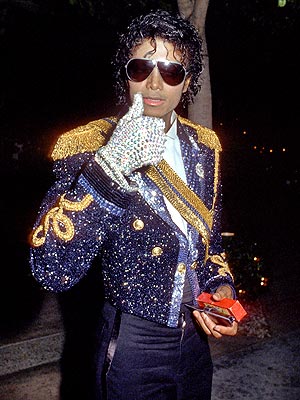 and I failed to realize that trivializing his death wasn't just trivializing people's grief, it was trivializing the racial and cultural experience in this country. I want to truly apologize for that. A death that is not traumatic is nonetheless a death, and grief is grief. I have been struggling for several weeks to figure out how best to bring this up, and today seems like the right day.
I say that because I was born and raised in a staunch liberal household in Massachusetts. Senator Edward Kennedy was an icon of my childhood. In 1980, I was old enough to be active in politics, and I supported Kennedy. My older brother worked in his Boston office one summer. He was what I understood a great politician was supposed to be. I was absolutely stunned, when I went away to college, to learn that Kennedy was not as revered elsewhere and that people used him as the joking example of liberalism gone too far. I never did.
Senator Kennedy wasn't perfect, by any means. I also grew up in a milieu where "Chappaquiddick" held the same sort of ominous tone as "Watergate." I was very confused when we spent summers on Martha's Vineyard and a youth swim meet was held in Chappaquiddick -- why would you hold it someplace bad? I knew that Kennedy was a drinker and that he had been kicked out of Harvard for cheating. Later on, I was appalled by his architecture of the No Child Left Behind Act, which in my mind was the worst law ever to come out of pure intentions.
Ted Kennedy also exemplified being able to go on with life despite traumatic loss, which he certainly suffered all too often, and despite the guilt of having caused traumatic death. Some would say that he never felt appropriately guilty about the death of Mary Jo Kopechne. That isn't for me to judge. But he certainly showed that that awful night was not the sum total of who he was, and he did not let it end his hopes for doing good in his life.
Anais Nin once said, "We don't see things as they are, we see them as we are." As a white liberal from Massachusetts, I cried when I heard that Kennedy had died. As African-American males growing up in the 80's, several of my friends cried for Michael Jackson. Neither are traumatic, both are sad. I should know better than to judge others' outpouring of emotion just because I don't see things the same way. I am imperfect, just like Kennedy and Jackson were. I hope that I can show that isn't the full measure of who I am, either.
The work goes on.
The cause endures.
The Hope still lives,
and the dream will never die.
Monday, August 24, 2009
What If It Is Your Fault?

You may have missed it in all the static that sometimes passes for news, but as Hurricane Bill passed off the Maine coast yesterday, a large group of people watching the resulting surf were hit by a gigantic wave. Three were swept out to sea, including 7 year-old Clio Dahyun Axilrod and her father. Clio died, her father was rescued by the Coast Guard, and her mother was seriously injured. 16 people were admitted to the hospital.
Now, let me ask you to imagine a conversation with Clio's parents. They were with her when the wave hit, and in fact were moving away from the shore because of the danger. There had been warnings issued about the surf. What do you want to say to them? What is your gut instinct?
Generally speaking, people give one of two types of answer. The first is, "What were you thinking, that was an incredibly stupid place to be." The second is, "It wasn't your fault, you couldn't have known." We are very black and white about this sort of thing. I'm reminded of a line the Wizard sings in the musical Wicked:
There are precious few at easeYou're either right or wrong, at fault or innocent.
With moral ambiguities
So we act as though they don't exist
The fact is, the truth in this situation is somewhere in between. Yes, there were warnings about the waves and they should not have allowed their daughter to be where she was. And yes, they could not possibly have known that that wave was coming at that moment, and they were trying to move away.
The fact is also that neither of our natural reactions to this family are likely to be at all helpful to them. "It's all your fault" is hardly the support they need. They can beat themselves up, thank you, without our help. At the same time, "It's not your fault" denies reality, and actually takes away their permission to talk about how they are feeling. If you tell them it's not their fault when they think it is, you're telling them they're wrong. They're not going to want to talk to you after that.
So how do people learn to live with situations like this? How do you go on, knowing that you are at least partially responsible for the death of your own child? All I know is that people do. They make their peace. They come to forgive themselves for their human failings. They try to prevent similar things from happening to others. They turn to their spiritual beliefs about forgiveness and the afterlife. It isn't easy.
We can't tell people how to feel, and trying only makes things harder. The best we can do is affirm that what they are feeling makes a lot of sense, and help them explore what those thoughts and emotions mean to them. As judgmental as we like to be, it's not about our judgment.
Wednesday, August 19, 2009
Tom Barrett's Recovery

Milwaukee Mayor Tom Barrett held his first news conference since being beaten after attempting to get emergency help for a woman and baby near the Wisconsin State Fair over the weekend. I blogged a few days ago about this incident, and about the complicated nature of psychological healing after a traumatic incident in which you are being hailed as the hero. I neglected, however, to talk about the added complexity of things when you are a politician, and everything you say or do is already incredibly complex.
Barrett does some interesting things in this news conference. After he introduces the various members of his family who are there and thanks his wife for being by his side, he introduces his niece, Molly, again and points out how terrific she was in the emergency. Then he goes on to explain why his security detail was not with him. Next, he characterizes the situation as one which any citizen of his city would have responded to in the same way, and then he starts to describe what happened, again pointing out that his niece did just what he did.
I think there are a number of things going on here. One is that this is a politician, and politicians always need to worry about how they come across. He can't be the only hero in Milwaukee -- this has to be something anyone would do -- because that makes citizens feel good about themselves and they associate that food feeling with him and vote for him. Imagine how obnoxious he would seem if he came out and said, "I know I was really brave and heroic, and few would do what I did." That would be the end of his career right then and there.
Another thing you see is Barrett explaining away some criticism -- that he didn't have his security detail -- up front. Part of this, too, is simply that he is a public figure. But part, also, may represent him thinking through what could have happened differently. Just about anyone who has ever been assaulted has questioned if they could have prevented it. I'm sure he has, too.
You also see Barrett talking repeatedly about his niece. This is, in part, because he is a nice person and a good uncle and he wants her to get some credit for what she did, as well she should. Realizing that she acted just as he did also helps all of us, and Barrett himself, focus again on the fact that this was random and that he wasn't doing anything wrong. Again, he has thought through whether he could have or should have prevented what happened. If Molly called 911, and if any citizen would have called 911, then calling 911 was not the wrong thing to do. And yes, I have heard criticism in the last few days suggesting he shouldn't have.
During the Q&A, someone asked what he was thinking during the attack. He replies, "This is really bad, this is really bad." Then a reporter mentions that her viewers are calling Barrett their hero, and asks for a reaction. He says that Molly's his hero. At this point, I have to say I don't think this is posturing or politics at all. This is a man who knows he could have been killed and knows who he has to thank for that not happening. A pure politician would have stuck with "I did what anyone would have done" and maybe claimed that during the attack he was concerned for the safety of his family or the baby and grandmother. This is an honest person who has experienced trauma speaking. It rings true.
But perhaps the part of the press conference that touched me the most was at the very end. In talking about the support he has received from others -- including a phone call from President Obama -- he said it meant a great deal to him because, "This is tough." I don't think he only meant physically.
Below is a link to the full video of the news conference, although you will have to go to Youtube to watch it.
Monday, August 17, 2009
"You Didn't Do the Best You Could"

I don't know about you, but I don't find John Yettaw to be a particularly sympathetic figure. Yettaw is the American who swam, uninvited, across a lake in Burma (Myanmar) to the compound of opposition leader and Nobel Peace Prize winner Aung San Suu Kyi last May. Both of them were placed on trial by the military government, along with two of Suu Kyi's employees. All were convicted, and Suu Kyi was sentenced to an additional 18 months of house arrest. Yettaw was sentenced to a total of seven years detention, including four hard labor. This weekend, Virginia Senator Jim Webb went to Burma and negotiated his release.
I say that I don't find Yettaw sympathetic because he single-handedly managed to get a world heroine put in even longer detention -- she's been under some form of arrest for 14 of the last 20 years. There are those who say he is part of a plot and that the timing was no accident. Under this theory, he did what he did when he did it specifically to get Suu Kyi into more trouble. There are those who think he is crazy. One thing that may point to this is that he testified at his trial that God wanted him to go to Burma because he had a dream that terrorists were going to attack Suu Kyi. Whether you think he's crazy, stupid or evil, I think we can all agree that he did something that caused a big problem.
On the other hand, one can imagine that being arrested and detained in a country known for human rights abuses and then sentenced to hard labor there could be traumatic. As such, Yettaw, depending on how he is feeling about the whole thing and what he experienced in prison, is a prime candidate for some crisis intervention. Would you want to be working with him? Few would.
But the fact is, we deal with less dramatic situations like this every day. Sometimes, something goes horribly wrong and it really is somebody's fault, even though they didn't mean to cause damage. Perhaps the most common instance is traffic accidents -- a driver runs a red light or a stop sign or is speeding, an accident occurs and someone dies. This is traumatic for the driver, but the blame falls squarely on him or her as well.
Folks just starting out in crisis intervention are very inclined to try to "rescue" the people they work with from their feelings. When someone says, "it's my fault this happened" or "I could have stopped it" we want to run in and say, "You did the best you could." This is almost always a huge mistake. We can rarely know whether someone truly did the best they could, and sometimes, as in Yettaw's case, we truly know they messed up.
The point of crisis intervention isn't to rescue people. People do not get over the guilt of what they have done by someone telling them not to feel guilty, any more than people stop panicking when we tell them not to panic. People who have made a mistake with horrible consequences do not need to be told they didn't make a mistake, they need to be helped to live with what happened. Somehow, some way, they need to make it a part of their "new normal." I don't know how John Yettaw will frame this experience for himself and learn to live with the havoc he has caused for himself, for Suu Kyi and for Burma, but I do know that under no circumstances should anyone say, "You did the best you could."
Subscribe to:
Posts (Atom)
Meet the Quarterback

- Naomi Zikmund-Fisher
- is a clinical social worker, former school Principal and a Crisis Consultant for schools and community organizations. You can learn more about her at www.SchoolCrisisConsultant.com

Subscribe


 Posts
All Comments
Posts
All Comments