Showing posts with label theme. Show all posts
Showing posts with label theme. Show all posts
Sunday, September 12, 2010
After the San Bruno Explosion, What are You Scared Of?


Thursday night, a giant explosion ripped through a neighborhood in San Bruno, California
 . The blast and subsequent fire, apparently caused by a ruptured gas line, leveled 38 homes and killed at least 7 people. Six more are missing.
 I don't know about you, but if you gave me an hour to list all the horrendous things that could happen to me I could come up with a pretty long list, but I doubt a gas explosion destroying my neighborhood would be on it. It certainly wouldn't be on the top. We all know, in the back of our minds, that there are certain things that could happen to us -- car accidents, homicide, natural disasters (different ones, depending on where you live) -- but there are other things that just don't make the list because they are so rare we don't know about them. Gas leaks? Sure. Gas explosions? Maybe. The entire neighborhood detonating? Not so much.
I'm not sure whether that makes the typical person's reaction to this better or worse, but it does make it different. When we hear about, say, a horrible car accident that killed multiple people, it may make us more afraid to drive. We may lose our own sense of safety on the road. We may imagine what it would be like to be a family member getting that call, or to be on the road and witness or be involved in the crash.
Our reaction when something so bizarre happens is a little bit different. Yes, we probably are more sensitive to the smell of gas or more careful not to leave the stove on. We probably don't spend a lot of time imagining what it would be like to be in the incident itself, largely because we just can't. Even once it's happened somewhere, our minds can't yet process fully how such an event would play out.
The most important difference is the quality and amount of fear we may feel. When we hear about a car accident, if we feel afraid we feel afraid when we drive, or when our loved ones drive. The fear is specific to the incident. An extraordinary incident like the San Bruno explosion, however, can cause two different kinds of reactions: either it seems so unlikely that even though it's happened it doesn't seem possible, or it seems so random that the entire world seems less safe. Our fears, if we have them, are not specific to gas lines or even to sitting in our homes. They are about something completely random coming out of nowhere and hurting us. We don't react to the sudden discovery that a specific situation is not safe, we react to the discovery that the world is not safe.
Most of us experienced this kind of reaction nine years ago, after the 9-11 attacks
 . The fear we felt and the reactions we had were not necessarily about flying or working in an office building or even about the type of person we presumed to be the terrorists. It was fundamentally about the notion that a day could start as normally as that day did, and turn into such a nightmare without warning. Our worldview was violated not because we used to think flying was safe and now it wasn't, but because we used to think that life was safe and we found out maybe we were wrong. The people of San Bruno found that out again this week, and in some small way, so did the rest of us.
Saturday, August 28, 2010
The Impact of Nicole John's Death

Nicole John, 17, died at about 4:15 AM on Friday, after she climbed out onto a ledge outside a 25th floor apartment in Manhattan and fell onto a 3rd floor outcropping. John, who was the daughter of U.S. Ambassador to Thailand Eric John, was to have started classes at Parsons New School of Design this fall. A statement from Parsons indicates that the school's "crisis management team" will be available to counsel those who were at the party that Ms. John was attending when she died, or others affected.
To answer what seems like the natural question, there is plenty of evidence that John was either drunk or under the influence of some other substance when she fell. It appears she may have decided to step out onto the ledge to take a picture -- a camera was found near her. The host of the party, who is 25, has been arrested on charges relating to having alcohol at a party with a minor present. Ms. John had a fake ID, and had been at a club with friends until about 2 hours before.
The crisis management team at Parsons has an interesting job to do here. Since John was a new student, the number of people affected by her death is probably lower than would be in even a few weeks. However, those who are affected are probably also new students, many away from home for the first time, all relatively young, and therefore particularly vulnerable. One could imagine that having a new friend die tragically just as school was starting would color your freshman year in school, and beyond.
The themes the team can expect to hear are complicated, too. Those who were not at the party are likely to be angry, and not to be comfortable with that anger. Ms. John did something dangerous when she drank too much, and that caused her to do something she would never have done while sober. Her friends are going to be mad -- at the people who were there, at the host of the party, and at Nicole John herself. But being mad at the person who died is never easy, because it's hard to reconcile being angry at someone and being sad that they're dead at the same time.
For those who were at the party, you can add a layer of guilt on top of all that. Folks will feel guilty that they didn't stop her, guilty that they let her get drunk, and guilty that they themselves may have been too impaired to realize what was happening. On top of that, there has been an arrest, which, rightly or wrongly, makes them wonder if something they express at this point will make the police look at them. So they feel guilty, but may be afraid to talk about it for fear that their guilt will make them look, well, guilty. Our society doesn't deal well with the difference between someone feeling guilt because they could have done differently and someone being guilty of a crime.
As for Ambassador John's family, one can only imagine what they might be experiencing. All of the above seems likely. Published reports suggest that Nicole John was not new to drugs and alcohol, and perhaps this was the moment they knew was possible but prayed would never come. Or perhaps they didn't know, or couldn't acknowledge, the trouble she was headed for. No one deserves to die the way Nicole John did, no matter what else they may have done. And certainly no parent deserves to get the phone call the Johns family got early Friday morning.
Sunday, May 30, 2010
Murder-Suicide at NC Target

Guadalupe Rosas, 59, was working at her register in an Apex, North Carolina Target store this morning when a man she had once been involved with walked in and shot and killed her. When police arrived and confronted him, he shot and killed himself. About 150 people were in the store at the time of the incident. The Target corporation
 issued a statement this evening and said that the store would be closed tomorrow "so that we can focus on taking care of our team."
 Certainly there is plenty of work for counselors to do in this incident. Aside from the obvious fact that this is a violent death, it is the death of someone at work. While Ms. Rosas may not have been a public safety professional in the line of duty, she was nonetheless part of a team that worked together, and she, unlike her colleagues, did not survive her shift. This will make for a more complicated set of reactions in her coworkers, from wondering if "it could have been me" to anger that she put everyone at risk to guilt that they even entertained such a thought.
In addition, there are 150 people from all walks of life who were not sure they were going to survive their shopping trip this morning. News reports include statements from people who hid in a storage room, a man who was shopping with his young son, people who were smashed up against the doors in the panic, and someone who reported seeing flipflops and sandals strewn in the parking lot where people had run out of their shoes. Many people ran to a nearby Lowes
 store where staff tended to those injured in the evacuation and waited under lockdown for police to arrive. Every one of those Target patrons, as well as those staff and customers at Lowes who helped, potentially will have intrusive sensory images from the incident, whether they find themselves picturing the sandals in the parking lot or the shooter pointing a gun at them. Many of those people thought they were going to die, and that is a serious risk factor for post-traumatic stress disorder.
Then there are the police officers on the scene. Everyone is different, of course, and undoubtedly at least some of them will have no regrets that the shooter killed himself. He was, after all, a "bad guy." Others, however, will be troubled by the visual image of actually seeing him do it, and by the knowledge that they were right there but powerless to stop him.
This is another one of those times when having multiple different trained crisis teams responding and supporting people could be very beneficial. Ideally, Target has either its own team or an Employee Assistance Provider with trained CISM providers available. The police department, we can hope, has its own team with trained cops and mental health professionals and maybe a chaplain. If we're really lucky, there's also a community response team to support the customers and the folks from Lowes. Of course, this not being an ideal world, it's entirely possible that Target is sending in a couple of company psychologists with no trauma training at all, the police department will tell its people to "buck up," and no one will do anything for the customers at all. That happens all the time. I just hope folks are a little more prepared to recover in Apex.
Thursday, May 27, 2010
In Memoriam: Gary Logan

I took my first Critical Incident Stress Management
 training class in 2003. It was offered through my school district and taught by two social workers from the county department of Community Mental Health. One of them was Gary Logan. Gary was, among other things, the coordinator of the county community CISM team, called the Traumatic Events Response Network (TERN). At the end of the class, he solicited volunteers who wanted to join the team. I signed up.
I'm not sure that Gary knew what to do with me at first. There are two categories of CISM responders: mental health professionals and peers (some would argue that there's also a third -- clergy). TERN, at that point, was entirely made up of mental health professionals because there was no one population it served. Where a team assisting police officers would have cops on it as peers, a team assisting all kinds of people doesn't know what kind of peers it needs. For the first few years, I was only tapped to respond when there was a crisis involving children or schools.
Gary and I consulted and worked with each other more frequently when he came to assist our district team -- which needed lots of school personnel as peers -- with crises in our schools. He was very interesting to watch and work with. He had a calm about him in everything he did, and it put people at ease. I learned from him how to explain complex psychological processes in language people could understand, how to grasp themes from what people were saying, and how to firmly state what you think is the right thing to do and accept that sometimes those in charge are not going to listen to you. I never saw him sweat.
A few years ago, when I decided to pursue a Certificate of Specialized Training in schools and children crisis response, I asked Gary to please include me on more critical incident stress debriefings, and he did. He started assigning me to respond as a peer outside of schools -- in community settings, businesses, and even responding to a group of mental health professionals from his agency following the murder of a client. When I floated the idea of becoming a CISM instructor, Gary wrote my recommendation and told me he thought I'd be great.
Over the last couple of years, Gary has invited me to substitute for him as the coordinator on call for the county team and even allowed me to coordinate a couple of responses myself, something I do as a peer in a school setting all the time but a rarity out in the "real world." He has expressed faith in me at every turn, strongly encouraging me to take on whatever I could, expand my consulting and, most recently, start considering earning a mental health degree myself. His confidence in me has been astounding, and it has increased my confidence in myself.
Over the years I have needed assistance more than once with crises in which I was affected myself. Gary was always my first call. Watching him from the "other side" of a response was amazing, and his support was so helpful to all of us. Whether I was responding or being responded too, Gary always reminded me to take good care of myself, and knew that I wasn't always so good at it without his reminders.
Gary retired when his department was cut at the end of last year. He continued to coordinate TERN as a contractor. Yesterday, he died suddenly during treatment for heart disease. He was 63. I doubt there will ever be anyone with as much faith in my crisis response skills as Gary. I also doubt there will be anybody I so readily call on in my own time of need. In fact, this morning, after I heard that he had died, I found myself wishing more than anything that I could talk it over with my friend and mentor, Gary Logan.
Wednesday, May 5, 2010
Who's to Say What Constitutes a Crisis?

Earlier this week, I blogged about what I referred to (with tongue somewhat in cheek) as "the great water crisis of 2010," the Massachusetts water main break that left 2 million people without safe drinking water. I also used the term "catastrophe," although I said it wasn't a very catastrophic catastrophe. A Quarterbacker calling him/herself I'm Just Musing wrote an interesting comment:
Do you really feel this was a "crisis" or a "catastrophe"? What has happened to this country when something like this causes panic and people fighting in supermarkets to get bottled water. You could drink the water if you boiled it first, that isn't so hard to do. The power going out, I can see that being a problem, although even with that, you would be surprised how well people can function without it, it's just that we would rather complain than try to make do without.I responded briefly to this reader in the comments, but I think this deserves a more thorough explanation. Is a water main break automatically a crisis, or automatically not one?
What Musing is actually arguing here is not so much that the water incident in Massachusetts isn't a crisis, but rather that it shouldn't be a crisis. People should not react strongly to this. It's a little inconvenient, but it's not a big deal. We should not be upset. But whether something should be a crisis probably isn't the major factor in whether it actually turns out to be one.
I am reminded of a scene in one of my favorite movies, The American President, in which the President (played by Michael Douglas) says, "This is not the business of the American people," and his Chief of Staff, played by Martin Sheen, responds, "With all due respect, sir, the American people have a funny way of deciding on their own what is and what is not their business." In a similar vein, it is all well and good to say we shouldn't be upset about something, but our minds have a funny way of deciding for themselves what is and what is not upsetting.
From the point of view of early crisis intervention, it is completely irrelevant whether we should or should not be upset by something. The only thing that matters is whether we are. If something impacts us so significantly that it overwhelms our usual coping skills, it is a crisis. There is no "should" about it. There is only "is."
One of the biggest mistakes overly enthusiastic responders make, particularly when they're new, is to come at a situation with all the intervention tools they've got based on what they think people are probably feeling. On the flip side, it is equally bad to fail to notice that something is a crisis for the people involved because it wouldn't both most people. Experienced teams listen carefully to how people are doing before planning their response. That doesn't mean you can't use the event to predict who might be upset and what they may be feeling, but this shouldn't prevent you from noticing people who are impacted whom you didn't expect, or from discerning that everyone's actually doing OK.
So should the water incident in Massachusetts have been a crisis for people? I think Musing makes a compelling case that it should not have been, at least for your average citizen. For your average crisis responder, however, anything big can be a crisis, and we know that, for someone out there, this probably was.
Thursday, April 1, 2010
Arson and Layoffs in Flint

On March 24, the city of Flint, Michigan announced that it would be laying off 23 firefighters and 46 police officers the next day. Within minutes of the press conference, an arson fire broke out in a vacant building. In the nine days since, there have been nearly 40 such fires, including five last night alone. Three firefighters have been injured. Flint has asked for mutual aid, a system under which cities and towns agree to help each other in an emergency, from other county fire departments. Now those departments are starting to cancel their mutual aid agreements because they, too, are stretched thin.
No one knows for sure who is starting the fires. Many have speculated that they are a protest against the layoffs. Some have gone further and accused firefighters of setting them. The head of the firefighter's union has said he is truly insulted by that accusation, and that he does not believe the layoffs and the fires are connected at all. It is always possible that this is a horrible coincidence.
Layoffs can be very distressing to people in any profession. In a profession, like firefighting, where colleagues are closely knit, it is especially difficult. Unless you know or are a firefighter, it's difficult to imagine how much these men and women rely on each other and bond together. Layoffs represent a separation of one or members of, essentially, the family. It's a grotesque understatement to say that that is bad for morale.
On the other hand, you might expect that firefighters don't mind a string of fires. After all, putting out fires is what they do. Most firefighters will tell you, however, that while they like their work and are glad to be able to help the community, they don't actually want there to be a lot of fires. Like most emergency workers, they like being able to make a difference, but they wish they didn't have to. What's more, every fire represents a danger to the firefighters who respond. Any fire could become dangerous or even lethal. In that sense, every one of the arson fires in Flint is an intentional assault on the fire department.
In addition to the double-whammy of layoffs and the fires, we now have other departments saying that they will not come to Flint to help. I'm certainly not in a position to criticize those decisions -- every city has to do what makes sense for their people and their community. To the Flint fire department, however, this just adds insult to injury. People who go through critical incidents often feel helpless. The sense of not being able to do anything is horrible. Asking for help and not getting it greatly complicates the situation. Imagine someone who is assaulted in broad daylight while passersby ignore it. Their reaction may have as much to do with being ignored as with the assault. Now the Flint firefighters are being assaulted repeatedly, and neighboring cities are saying they will no longer help.
I don't know who's setting the fires in Flint, or what their motivation is. I will say that if they are motivated by support for the firefighters and protest of the layoffs, their actions are truly counter productive. They have taken a situation that would be hard under the best of circumstances, and escalated it severely. With friends like this, the firefighters in Flint sure don't need enemies.
Monday, March 1, 2010
Why We Should Leave the Osmonds Alone

Marie Osmond's 18 year old son died this weekend. He apparently jumped from an apartment building in downtown Los Angeles, where he attended school. He left a suicide note behind. Various media reports indicate that he had been in rehab in the past, that he suffered from depression, and that his mother thought he was doing better before his death. The autopsy was "inconclusive" pending toxicology results. Marie Osmond is described as devastated.
People are asking all sorts of questions about this situation. Why did he do it? Did he tell anyone he was going to, and if so who and what did they do? Was he intoxicated? Were there warning signs? What was in the suicide note? I have one simple answer to all of these questions: None of your business. I don't mean to be rude, but why on earth do we imagine we are entitled to this information?
When someone kills themselves, they always leave behind unanswered questions. These are very difficult for family and friends, who always wonder what they missed or what they could have done differently. Sometimes there are answers in the form of background information or the contents of a note, and sometimes not. When there is information, the family often chooses to keep it private. If you've ever worked with family or friends of someone who has killed themselves, you know that the themes all revolve around "woulda, coulda, shoulda."
The questions that the public is asking about Marie Osmond's son right now are questions I would not presume to ask my best friend if (God forbid) a family member completed a suicide. If the family wants people to know, they will tell us. Otherwise, all we are doing is drawing the family's attention repeatedly to the most painful aspects of this death -- the nagging questions of what could have been done differently and whether this could have been prevented. We are truly rubbing salt in what has to be a large and open wound.
Marie Osmond is a public figure. As such, some would argue that she gives up some measure of privacy. Her son, however, was not a public figure. You probably don't even know his name, or at least you didn't before this weekend. He never agreed to surrender his privacy, and his mother didn't surrender it on his behalf. Is this a news story? Sure. It's worth a brief notice that this happened, and fans can express their condolences. Demanding additional information, however, isn't just nosy -- it's mean.
Friday, February 12, 2010
Would You Luge Tomorrow?

Nodar Kumaritashvili, an Olympic luger from the country of Georgia, died today after crashing during a training run in Vancouver. He was 21. He is the fourth athlete and only the second luger to die at a Winter Olympics. The most recent death prior to his was in 1992 when a skiier crashed into snow grooming equipment.
If you've ever watched the luge on television, it has probably crossed your mind that there is something fairly crazy about it. Lugers hurtle down an ice-covered track at speeds up to 90 miles per hour, on their backs. The track twists and turns and they have to steer, although they cannot see where they are going. This is a trade-off, in some sense, with the skeleton, in which the athletes are on their stomach and can see where they are going, but are going head first, which may or may not seem even more insane to you.
Crazy or not, there are hundreds of athletes preparing to race in the luge in Vancouver. The men's luge is scheduled for tomorrow afternoon. If that schedule holds, it means that athletes will be sliding down the same course where Kumaritashvili died, doing exactly what he was doing when he died, just about a day after the accident. That's awfully soon.
The effort to come to grips with this tragedy is already evident among lugers from other countries and in the press coverage of this incident. The two main themes of this seem to be a) that the track itself is unusually dangerous and that b) Kumaritashvili was not one of the best lugers. Choosing one or both of these themes as they process his death will have a big impact on what competing again means to these athletes.
If the track itself was unsafe, then lugers are blaming the officials in Vancouver. There have been previous warnings and complaints, but nothing was done, and now a man is dead. This is a relatively easy way to lay blame for Kumaritashvili's death, but it brings with it some problems. First of all, blame is never a particularly useful tool in processing a trauma. Assigning blame does not actually change the fact that someone is dead, and when that truth settles in all the work of dealing with that still has to happen. Secondly, if the track is to blame, that implies that these athletes are themselves in danger.
On the other hand, if Kumaritashvili made a mistake, then lugers can tell themselves that they are better than that. That makes it easier for them to get on the track tomorrow. But if they knew and liked Kumaritashvili, it's pretty painful to blame him for his own death. As much as blame isn't very useful, blaming the dead person is even less so, because you have no hope that that blame will result in a change. The officials might fix the track. Kumaritashvili can't un-crash his sled.
It's not unusual, after something horrible has happened, for people to want to avoid the place where it occurred, at least for a while. For a few days or weeks, people take alternate routes in their cars after an accident or cross the street to be away from a house where a murder occurred. I usually tell people that as long as they are still willing to go out, that fear is typical and will diminish. Unfortunately, in this instance, the equivalent of taking an alternate route would be not competing in the Olympics, and that is also the equivalent of not going out. I don't know how many, if any, athletes will make that choice. But I do know that most, if not all of them, will feel at least a little distracted going down that track tomorrow.
Sunday, February 7, 2010
Mass Casualties from Kleen Energy Explosion
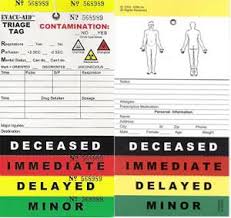
There was a massive explosion at a Kleen Energy Services gas power plant under construction in Middletown, Connecticut at about 11 o'clock this morning. Most recent reports suggest a gas leak may have been the cause, and that there were about 50 people working at the plant at the time. Police officials said that this was a "mass casualty event."
If you don't do this sort of thing for a living, the term "mass casualty event" probably sounds pretty bad. It probably sounds pretty bad if you do do this sort of thing for a living, too, but in a different way. Most of us, when we hear "casualty" think "death," but of course that's incorrect. Casualties include people who have been injured as well as people who have been killed. A mass casualty event (MCE) is an incident that is of sufficient size that it will stress the first response and health-care system locally. Different jurisdictions define how big something has to be to qualify as an MCE, and that also takes into account the capabilities of local responders.
Local hospitals in and around Middletown are reported to have activated their disaster plans. On the face of it, this may sound odd. We think of disasters as being earthquakes, tornadoes, floods and the like. For the purposes of responding to them, however, there really isn't a big difference between a massive accident and a massive tornado. If you work in the ER, you don't particularly care how all these people got hurt, but just that they did and how many of them there will be. A disaster plan enables the hospital (or whoever) to plan for a situation that is going to tax their capacity. It defines who does what when it's "all hands on deck."
Being injured in a mass casualty event as well as responding to one can have slightly different stressors. The biggest difference that most people notice right away is the use of triage. Responders have to choose who will get care first, and that means some people are going to have to wait. If you are injured when your car hits a tree, for example, you are going to get the full attention of first responders. If you are in a 50 car pileup, you will only get first attention if you are the most injured person that rescuers think has a chance of survival. Anyone who has ever gone to the emergency room on a busy day has experienced triage. You may be having the worst emergency of your life, but as long as someone else is having a worse one, you have to wait.
The triage involved in MCE's can become a predictable theme when responders and survivors work with crisis intervention personnel. Survivors express the fear and frustration of being seriously injured and having first responders walk right by them without helping. Responders report the horror of seeing multiple people in serious pain and having to leave them as they are rather than help. There is nothing quite like having to step over a dying person without offering even comfort in order to save someone else. These are choices none of us, even the highly trained, are used to making.
It will be a while before we know the full extent of the injuries at Kleen Energy. That's also one of the hallmarks of an MCE -- helping comes before counting the people who need help. As the dust begins to settle, this will be a big job for a CISM team, who will need to move in and help everyone recover from the difficult choices that had to be made today.
Saturday, December 12, 2009
Now What? Roommate, 98, Indicted in the Murder of Elizabeth Barrow, 100

Elizabeth Barrow's 98 year-old roommate has been indicted for her murder. In case you missed it, Elizabeth Barrow is the 100 year-old woman from Massachusetts who died in September at her nursing home in Dartmouth, Massachusetts. It took a few weeks for the coroner to rule that she had not, in fact, died of natural causes, but rather had been strangled in her bed. I blogged at the time about the difference between trauma and grief and why cause of death matters to the family.
It turns out that Barrow and her roommate had gotten into an argument about the placement of a table in their room. The roommate threatened her. Soon, she was dead. Now a 98 year-old woman faces the possibility of going on trial for murder. She is currently being evaluated for competency to stand trial. She is one of only 3 people that old ever to be charged with homicide in the United States.
Most families of murder victims want to see the perpetrator brought to justice. While the trial does not bring "closure," in the sense that it is not truly the end of processing the trauma and grief, it reduces the sense that the world is random and the bad guys are everywhere. It is one less thing to worry about, even though the list of things to worry about is still pretty long.
I wonder, though, about Elizabeth Barrow's family. Will it bring them any kind of peace to try a 98 year-old woman for murder? By all accounts, the roommate has a history of dementia. She may well not have been really aware of the consequences of her actions. Will the sense of "closure" come from her conviction, or does it come from just knowing what happened and that it can't happen to anyone else? Or is there something else altogether going on for this family -- a sense of anger that the staff did not prevent this?
For now, Elizabeth Barrow's son has declined to comment, so we may never know. If there's one thing I've learned over years of crisis intervention, it's that traumatized people, particularly people faced with a kind of incident I've never dealt with before, will have themes to their reaction that I can't possibly predict. Because the victim in this case had a very short life expectancy to begin with, and perhaps because it is so unusual, I feel a little more comfortable than usual saying that I'm really pretty curious.
Tuesday, November 24, 2009
Census Worker Bill Sparkman's Death a Suicide, Staged for the "Benefit" of Others

Back in September, William Sparkman, a part time census worker, was found hanging from a tree in rural Kentucky with the word "FED" written across his chest. At the time, the question of whether he was killed as part of a vast right-wing reaction against the census was being bandied about in the press. Today, word has come that Sparkman killed himself. He apparently intentionally staged the scene to look like a homicide so his son could collect on multiple life insurance policies Sparkman had recently taken out, totaling in excess of $600,000. Those policies would not pay in the event of a suicide.
The traumatic death of a loved one is incredibly hard. When that death is a suicide, it is much more complicated. When CISM teams plan a response to a suicide, we expect to hear a lot of regret and guilt. In this instance, police report that Sparkman told someone exactly what he was planning to do, and they did not take him seriously. That person must be feeling the weight of the world on their shoulders, although of course it's impossible to know whether, had they responded differently, it would have made any difference.
In addition, it's not uncommon for those who kill themselves to express that they think their families will be better off without them, and that sentiment complicates the situation for survivors. Inevitably, they do not feel "better off" and often feel a combination of anger at their loved one for thinking they would be and guilt that somehow this happened because of them. It's not uncommon to hear families say, "why didn't he care about me enough to not do this?"
Sparkman's death takes this to a whole new level. In this instance, Sparkman quite clearly was thinking about his family when he killed himself. He took the time and effort to elaborately stage the scene so his son could get his life insurance money. He cared enough to make it look like a murder.
Sparkman had a son that he cared about and wanted to help financially. He wasn't thinking rationally enough to recognize that killing himself would cause much more than monetary damage, however, or he was in too much psychological pain for that to be a deciding factor. People who attempt suicide are like fish drowning in a bowl of water. Everything they need is available to them, and they can't seem to see or take advantage of it. That isn't anyone's fault, but when it happens to you, it's hard not to feel like it is.
Friday, October 16, 2009
Carolina Forest High School: Not By the Book

There was a school shooting in Myrtle Beach, South Carolina this morning, and a 16 year old boy is dead. That, by itself, is very upsetting, certainly to the people who were there, but also to society as a whole, as we reflect on what our world has come to that someone can be shot in school. And that's where it gets, well, weird.
The details are still dribbling in, but as best as we can tell, Trevor Varinecz, a junior at Carolina Forest High School, asked to see the school resource officer -- a police officer stationed at the school -- at about 8:25 this morning. The door to the room where the two met was closed, so no one knows for sure just yet, but it appears that Varinecz stabbed Officer Marcus Rhodes and Rhodes shot Varinecz in self-defense. Rhodes is in the hospital. Needless to say, if there is such a thing as a "typical school shooting," this is not it.
When you train as an early crisis responder, you learn that there are certain patterns that different types of incidents fall into. While each incident is different, there are predictable themes that come up. Suicides cause one set of reactions, natural disasters another, domestic violence yet another. You can expect different things from those who have been involved in car accidents than from those who witnessed a mass shooting. No two incidents have exactly the same reactions, but you can prepare. From time to time, as a responder, you work on an incident and come out saying, "that was page 73 of the textbook." Sometimes it is that cut and dried.
A good Critical Incident Stress Management Team knows what to expect from an officer involved shooting. They know what to expect when an officer is injured. They know the patterns when a child dies, and those from violence in a school. They even know that sometimes two types of incidents combine into one event.
All that having been said, I don't think there is a team in the country that feels truly prepared for what happened at Carolina Forest High School today. There is no page in the textbook for the injury of an officer at a school in an incident resulting in an officer involved shooting of a child. As a school CISM Team Leader myself, I look at this incident and have to take a few moments just to swear under my breath before I can even consider where I would start.
This is just one more reminder that emergency preparedness isn't just about practicing for every awful event you can imagine. It's also about developing a tool kit of skills and the creativity and flexibility to use them in new ways, when those things that you can't possibly imagine in a million years happen on your watch.
Monday, August 31, 2009
The Station Fire
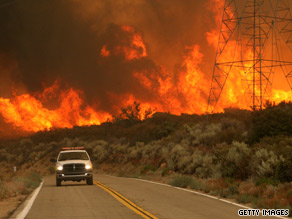
More than 105,000 acres are on fire in Southern California. For those of us from relatively wet regions of the country, this seems unbelievable. For those of us with children with a particular fear of fire, it's horrifying. For a firefighter and their family, it's a source of some ambivalence.
Firefighters become firefighters because they want to fight fire. It sounds silly when you put it that way, but often we forget. No one trains for this who doesn't get something out of it. Jeff Mitchell (whose brother, Doug, is a fire fighter) says you have to be crazy to do it. The natural reflex of any sane person is to run out of a burning building -- these guys run in. So many firefighters across the country are looking at the Station Fire and wishing they were there. Some of them are getting their chance, as firefighters from neighboring states are being called in.
On the other hand, firefighting is only enjoyable when everything comes out right. Nothing beats the rush these guys can have when they beat back the flames and save a house or a life and no one gets hurt. But when one of our nation's bravest dies fighting a fire, every firefighter in America feels the loss, and every family member of a firefighter takes a blow to the gut. Two firefighters out of Los Angeles have died in the Station Fire already. When this is over -- which isn't predicted to be for one or two more weeks -- that's going to be a hard truth to cope with for the others in their own company, the other fighting this fire, and those who just know it could have been them.
Reading the coverage of the fire, the inklings of what the themes of an intervention on this event might be are starting to emerge. Right now there are five people trapped by the fire because they did not comply with mandatory evacuation orders. Not only did they put their own lives at risk when they made that choice, but they also put the lives of the firefighters who now must try to get to them on the line. I can't imagine there isn't going to be anger about that, particularly if someone gets hurt or, God forbid, dies trying to get them out.
CISM teams most often help with incidents that happen very close to home. Right now, CISM teams all over the west are getting ready to intervene with firefighters caught in a critical incident in another state -- some of them may be deploying there right now. And CISM teams may be hearing about the Station Fire all over this country, as fire departments everywhere watch, wait, and mourn two of their own.
Tuesday, July 21, 2009
The Line of Duty
 Detective Mark DiNardo died this morning at 9:35 AM. He was a 10 year veteran of the Jersey City Police Department in New Jersey, and tomorrow would have been his 38th birthday. He leaves behind a wife and three small children. He was promoted to Detective just this past week, but he didn't know it. He was in a coma on life support after he and four of his colleagues were shot while trying to arrest a robbery suspect on Thursday.
There are five types of critical incidents that require a CISM team with special expertise. In fact, there's a whole extra class on them. Death in the line of duty is one of them. Death of a colleague is always hard. Traumatic death of a colleague is worse. But death of a colleague in the line of duty introduces a whole new layer of complexity, both for the surviving colleagues and for the team supporting them.
I started to write this post about what was different about line of duty deaths, but as I reflect upon it, they aren't really different, they are just the usual traumatic themes only moreso. Here are some issues that come up:
- Survivor's Guilt: If I had been [fill in name of circumstance] it would have been me. If I hadn't stopped to tie my shoe. If I had gone in first. If I hadn't called off sick. It should have been me, because my wound was worse, he was a better cop, etc.
- Self-Blame: My job is to protect and serve, but I could do neither for my colleague. If we can't do it for each other, what makes us think we can do it for anyone else?
- Familiarity: I see death and destruction every day. Usually bad guys do it to each other. But this was one of us.
- Anger at the Brass: If we weren't working long hours, if we were properly equipped, if they hadn't let this guy out on bail this wouldn't have happened.
- Identification: What will happen to my wife or husband if this happens to me?
- Self-Doubt: Now I go out on the street and everything makes me jump. What if I can't do my job?
- Keeping it In: If I talk about how this has affected me, they will take me off the street. Besides, cops don't cry.
- Suicide Risk: I can't handle this, and I have a lethal suicide method on my hip all day every day.
In many departments CISM has become required for certain kinds of incidents, usually officer involved shootings and line of duty deaths. There are problems with this -- requirements build resentment, and some people really will do better on their own. But by making it part of what is expected, departments create a way for officers to get the help they need without losing face, and without specifically deciding they need it.
My thoughts are with the men and women of the Jersey City Police Department tonight. Good luck on the journey ahead.
Thursday, June 25, 2009
The Themes Thicken: The Murder of Ed Thomas, Part 2
Yesterday, the Quarterback shared an overview of how the CISM response to Iowa football coach Ed Thomas's murder might be handled. I also promised to update, and an update is warranted. A 24 year-old former player has been charged with first degree murder in this case. The suspect has a very lengthy criminal record dating back to a drug charge when he was on the team. He was a known methamphetamine user. Most recently, he was arrested on Saturday night following a high speed police chase, and committed to a local psychiatric ward. Reports differ, but it seems that the hospital was to notify the police before he was released. They didn't, he was released Tuesday evening, and on Wednesday morning he allegedly killed Coach Thomas.
If you read the comments on any story about this posted around Internet, you can see certain themes start to emerge:
- It's the hospital's fault for not keeping him and/or alerting police to his discharge.
- The police shouldn't have taken him to the hospital.
- Back in my day, kids got punished for doing wrong. If that had happened to this guy, he wouldn't be like this.
- This is what happens when parents don't hold kids accountable.
Why do people move towards blame so quickly? It's a defense mechanism. Critical incidents are terrifying. They violate your worldview, and make you feel unsafe. The mind immediately starts looking for reassurances that the world is, indeed, safe. To do that, something must have gone wrong in this case, and it must be preventable. The world would have been safe but for the failing of some person or group, and therefore the world is safe as long as everyone does their job.
We most commonly see this reaction to suicides. It is too much to bear that someone would kill themselves of their own free will, or even from a state of mental illness. It must have been preventable. It must be someone's fault, and to blame the person who is dead interferes with the grief one naturally feels after such a loss. So family and friends begin to blame each other, to blame mental health professionals, and to blame themselves. Which brings us to another sticky issue in this case.
The other theme that the CISM team now has to be aware of is that it is entirely possible that one or more of the team members who witnessed the shooting knew the suspect or were friendly with his family. Certainly school staff knew him. And that will bring up issues of blaming oneself (e.g. I should have seen it coming, I should have stopped him) but also issues of split loyalties (e.g. my friend did something horrible to my coach, but he's still a good guy).
For school personnel there is the added issue that all of us like to believe that we can make our students successful human beings, intervene in bad situations and make them better, and spot kids in trouble and step in to turn them around. Situations like this one violate that belief and shake us to the core. If a student we taught could turn out like this, what good do we do anyway? What's the point?
The Quarterback isn't in a position to judge whether anyone other than the shooter is to blame in this case. People have free will, and it can be used for good or for evil. We as educators do the best we can, and we do make a difference to some kids. No one can make a difference to all kids. We go through life most days oblivious to the amount we rely on others not to act crazy -- we cross in front of a stopped car at an intersection trusting that the driver won't hit the gas, and we don't think about it. Today the people of Iowa are thinking about it. And their crisis responders are adding blame to their list of themes.
Monday, June 15, 2009
On Openings and Closure
Yesterday, the Monday Morning Crisis Quarterback ranted about how important the recovery of loved ones' remains is in the healing process. This got me thinking about how we as a culture and we as crisis responders think about the bodies of the dead.
When we think about Themes for crisis response, one that sometimes comes up is the issue of whether or not there will be an open casket at the funeral or visitation. Sometimes the death is so grisly that having an open casket is simply not an option. And those in the CISM biz will sometimes say, "Not having an open casket interferes with people's sense of closure."
I always cringe when I hear this, because it is said with such authority and as though any idiot could figure it out, but it isn't universally true. I had never been to a funeral with an open casket until I was an adult. Jewish funerals do not have open caskets. So failing to have an open casket doesn't interfere with anything for me or my family.
The signs and symptoms of distress that are displayed by those exposed to trauma, and the thoughts and feelings they report are so universal that it's easy to forget that this experience, like all experiences, is rooted in culture. Culture is the lens through which we see absolutely everything, and sometimes that changes what we see or how we see it. We tend to assume that the way we see things is the "normal" way, particularly if the culture we come from is dominant in our society. This is where the listening side of crisis intervention is so important.
It is not uncommon at all for me to hear, as I work with traumatized people, some discussion of whether or not there will be an open casket and how important having one is to the person and their sense of this being a "real" funeral. I know my job is to hear that distress, normalize it, and help the person cope with it. I try to say, "It sounds like having an open casket is very important to you. That makes sense, because it is part of how you understand death. Not having one takes this abnormal situation and makes it even more abnormal for you."
It is not my job, nor should it be anyone's job, to say, "You don't really need that. My family never has open caskets." Yet I also know that, during a group intervention, what I say will be heard by everyone in the group, so I also don't say, "Yes, having an open casket is very important for closure." Who knows what the next person in the circle is used to, or how that will or will not alienate them from the intervention and their sense of trust in me. On the other hand, I have been in interventions where my partner said just that, and it makes me cringe -- not for myself, I can handle it -- but for anyone else for whom closed caskets are the norm.
I don't mean to criticize my colleagues -- we all do the best we can. But how many other things come up in interventions that I, or they, treat as "just normal" when they're really cultural? It's something to think about. I guess Quarterbacks are only human, too.
When we think about Themes for crisis response, one that sometimes comes up is the issue of whether or not there will be an open casket at the funeral or visitation. Sometimes the death is so grisly that having an open casket is simply not an option. And those in the CISM biz will sometimes say, "Not having an open casket interferes with people's sense of closure."
I always cringe when I hear this, because it is said with such authority and as though any idiot could figure it out, but it isn't universally true. I had never been to a funeral with an open casket until I was an adult. Jewish funerals do not have open caskets. So failing to have an open casket doesn't interfere with anything for me or my family.
The signs and symptoms of distress that are displayed by those exposed to trauma, and the thoughts and feelings they report are so universal that it's easy to forget that this experience, like all experiences, is rooted in culture. Culture is the lens through which we see absolutely everything, and sometimes that changes what we see or how we see it. We tend to assume that the way we see things is the "normal" way, particularly if the culture we come from is dominant in our society. This is where the listening side of crisis intervention is so important.
It is not uncommon at all for me to hear, as I work with traumatized people, some discussion of whether or not there will be an open casket and how important having one is to the person and their sense of this being a "real" funeral. I know my job is to hear that distress, normalize it, and help the person cope with it. I try to say, "It sounds like having an open casket is very important to you. That makes sense, because it is part of how you understand death. Not having one takes this abnormal situation and makes it even more abnormal for you."
It is not my job, nor should it be anyone's job, to say, "You don't really need that. My family never has open caskets." Yet I also know that, during a group intervention, what I say will be heard by everyone in the group, so I also don't say, "Yes, having an open casket is very important for closure." Who knows what the next person in the circle is used to, or how that will or will not alienate them from the intervention and their sense of trust in me. On the other hand, I have been in interventions where my partner said just that, and it makes me cringe -- not for myself, I can handle it -- but for anyone else for whom closed caskets are the norm.
I don't mean to criticize my colleagues -- we all do the best we can. But how many other things come up in interventions that I, or they, treat as "just normal" when they're really cultural? It's something to think about. I guess Quarterbacks are only human, too.
Sunday, June 14, 2009
Lost at Sea
In today's New York Times, Donald G. McNeil, Jr. wrote a piece entitled, "The Sea Still Claims, but Not for Eternity." In it, he notes the huge differences between the disappearance of Amelia Earhart and the disappearance of Air France Flight 447. He begins with this belief-defying statement:
When there is a well-publicized tragedy, such as the crash of Flight 447, we as a society have a morbid fascination. We talk about how horrible it is, how frightening. But we also seem to lose sight, in the statistics and numbers and news coverage, that these are real human beings. Flight 447 carried 228 human beings. Every one of them left behind someone who loved them, and 184 of those families, sweethearts and friends are still waiting for their bodies to be recovered -- only 44 have been.
Watching from the sidelines, it's easy for us to say, "Look, we now know the plane went down. No one could have survived, so why does it matter whether the bodies are found?" Well, it does matter. For families and loved ones, recovering remains is a very important step in accepting the death, processing the trauma and grieving the loss.
Disbelief is an almost universal response to traumatic loss. Sometimes people say, "It can't be true" or get angry at the person who tells them for lying to them. Sometimes it takes the more subtle form of not being able to process the words that are being spoken. People ask the person bringing the news to repeat themselves, sometimes several times.
As long as bodies are not recovered, it gives the brain one more detour to take in accepting what has happened. "Never giving up hope" sounds good in the movies, but in real life, clinging to false hope prevents you from doing the psychological and emotional work you need to recover from the event. You can't recover because as long as your mind holds out a glimmer of hope, the event is never over.
When crisis teams respond to traumatic events, we plan by thinking about the 5 T's: Trauma, Timing, Target, Team and Theme. Trauma is the event -- what happened? Timing is when the response should happen -- is it over, and are people ready for help? Target is which group(s) need the help. Team is who is going to respond. Theme refers to what the team should expect in terms of aspects of the event that are particularly troubling to those impacted.
If the Monday Morning Crisis Quarterback were responding to the families of Flight 447, you'd better believe we'd be talking about missing remains as a Theme. When the team asks, "What is the worst part of this for you?" not knowing exactly what happened or where the bodies are is going to come up.
So the Quarterback is terribly sorry to burst Mr. McNeil's bubble, but trauma trumps romanticism. It may not be the stuff of country songs or romantic novels, but the Quarterback hopes all 228 bodies are found. The families need that a lot more than you need to be able to sigh at the idealistic notion of "lost at sea."
The Quarterback had to read Mr. McNeil's column three times before she could fathom that he really is saying what he seems to be saying. He is lamenting the fact that no one disappears without a trace anymore. He is saddened that bodies are being recovered. He writes, "Not to deny the sadness of so many lives lost, but the abyss suddenly seemed more like a subway grating." His only nod to the possibility that finding remains might be a positive thing is in the last paragraph, when he quotes Charles Lindbergh's widow, who said, "There is a huge terrible difference between 'dead' and 'lost.'"Watching Brazilian divers haul up the gleaming tricolor tail of Air France Flight 447, one can’t help but wonder what happened to the romantic notion that countless guitar-pickers have celebrated in “Amelia Earhart’s Last Flight” since 1939, two years after she went missing somewhere in the South Pacific. Doesn’t anyone just vanish at sea anymore?
When there is a well-publicized tragedy, such as the crash of Flight 447, we as a society have a morbid fascination. We talk about how horrible it is, how frightening. But we also seem to lose sight, in the statistics and numbers and news coverage, that these are real human beings. Flight 447 carried 228 human beings. Every one of them left behind someone who loved them, and 184 of those families, sweethearts and friends are still waiting for their bodies to be recovered -- only 44 have been.
Watching from the sidelines, it's easy for us to say, "Look, we now know the plane went down. No one could have survived, so why does it matter whether the bodies are found?" Well, it does matter. For families and loved ones, recovering remains is a very important step in accepting the death, processing the trauma and grieving the loss.
Disbelief is an almost universal response to traumatic loss. Sometimes people say, "It can't be true" or get angry at the person who tells them for lying to them. Sometimes it takes the more subtle form of not being able to process the words that are being spoken. People ask the person bringing the news to repeat themselves, sometimes several times.
As long as bodies are not recovered, it gives the brain one more detour to take in accepting what has happened. "Never giving up hope" sounds good in the movies, but in real life, clinging to false hope prevents you from doing the psychological and emotional work you need to recover from the event. You can't recover because as long as your mind holds out a glimmer of hope, the event is never over.
When crisis teams respond to traumatic events, we plan by thinking about the 5 T's: Trauma, Timing, Target, Team and Theme. Trauma is the event -- what happened? Timing is when the response should happen -- is it over, and are people ready for help? Target is which group(s) need the help. Team is who is going to respond. Theme refers to what the team should expect in terms of aspects of the event that are particularly troubling to those impacted.
If the Monday Morning Crisis Quarterback were responding to the families of Flight 447, you'd better believe we'd be talking about missing remains as a Theme. When the team asks, "What is the worst part of this for you?" not knowing exactly what happened or where the bodies are is going to come up.
So the Quarterback is terribly sorry to burst Mr. McNeil's bubble, but trauma trumps romanticism. It may not be the stuff of country songs or romantic novels, but the Quarterback hopes all 228 bodies are found. The families need that a lot more than you need to be able to sigh at the idealistic notion of "lost at sea."
Subscribe to:
Posts (Atom)
Meet the Quarterback

- Naomi Zikmund-Fisher
- is a clinical social worker, former school Principal and a Crisis Consultant for schools and community organizations. You can learn more about her at www.SchoolCrisisConsultant.com

Subscribe


 Posts
All Comments
Posts
All Comments