Showing posts with label ed thomas. Show all posts
Showing posts with label ed thomas. Show all posts
Friday, June 26, 2009
The Crisis that Isn't: RIP Michael Jackson

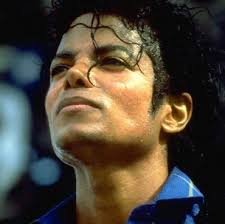
The Quarterback is somewhat at a loss for a topic for today because apparently the only thing that happened yesterday is that Michael Jackson died. And while I certainly was sorry to hear that, the death of Michael Jackson is not, in point of fact, a "Critical Incident." This might be a good time to talk about what makes a critical incident, and what doesn't.
A critical incident is an event that overwhelms one's usual coping mechanisms. All of us have a set of skills that help us to deal with stressful situations. And all of us have some point past which we can't deal anymore. That point is when incidents become critical, and it is different for everyone.
Certainly there are some things that we can safely presume will constitute critical incidents for most people. Watching your spouse be murdered, for example, would overwhelm most people's ability to grieve and move on. And certainly there are some things that are generally not critical incidents for most people. For example, the death of an elderly grandparent after a long but not particularly painful illness is sad, but not usually overwhelming.
There are a lot of incidents that lie in the middle. What is intolerable for one person is within the realm of tolerable for another. One person may be seriously traumatized by a shooting in the neighborhood, while another is not, perhaps because it happens more frequently for them. As my frequent readers know, there are some predictors of traumatic stress: believing that you are going to die, sensory exposure to the event, triggering of past events, violation of your worldview and the involvement of children in the event are all predictive, but there are others that can cause trauma and these can all be there and a person still not be traumatized.
The death of Michael Jackson is not, for most people, a critical incident. It is sudden and perhaps shocking, and you may feel that it is sad. But it is within the realm of what most of us can cope with. It won't cause most of us nightmares or loss of appetite or drinking or depression. There may be exceptions, either for his family and close friends, those who were there when he died, or for people who have recent similar losses in their own lives. And if you are traumatized by it, that doesn't make you "wrong" or "crazy," just unusual.
Arguably, the death of Michael Jackson is more likely to be traumatizing than the death, also yesterday, of Farrah Fawcett. Hers was a long time coming, she was older, and she was ill, so it was not as sudden and perhaps not as shocking. But neither are likely to traumatize the general public.
Meanwhile, every family who did experience trauma this week now has an added wrinkle. The families of Neda Soltan and Ed Thomas will now add to their story, "and then Michael Jackson died, and everyone stopped looking at us very suddenly." This may be good and it may be bad. Most likely it will be some of each. But let's not lose sight of what a real critical incident really looks like.

Thursday, June 25, 2009
The Themes Thicken: The Murder of Ed Thomas, Part 2
Yesterday, the Quarterback shared an overview of how the CISM response to Iowa football coach Ed Thomas's murder might be handled. I also promised to update, and an update is warranted. A 24 year-old former player has been charged with first degree murder in this case. The suspect has a very lengthy criminal record dating back to a drug charge when he was on the team. He was a known methamphetamine user. Most recently, he was arrested on Saturday night following a high speed police chase, and committed to a local psychiatric ward. Reports differ, but it seems that the hospital was to notify the police before he was released. They didn't, he was released Tuesday evening, and on Wednesday morning he allegedly killed Coach Thomas.
If you read the comments on any story about this posted around Internet, you can see certain themes start to emerge:
- It's the hospital's fault for not keeping him and/or alerting police to his discharge.
- The police shouldn't have taken him to the hospital.
- Back in my day, kids got punished for doing wrong. If that had happened to this guy, he wouldn't be like this.
- This is what happens when parents don't hold kids accountable.
Why do people move towards blame so quickly? It's a defense mechanism. Critical incidents are terrifying. They violate your worldview, and make you feel unsafe. The mind immediately starts looking for reassurances that the world is, indeed, safe. To do that, something must have gone wrong in this case, and it must be preventable. The world would have been safe but for the failing of some person or group, and therefore the world is safe as long as everyone does their job.
We most commonly see this reaction to suicides. It is too much to bear that someone would kill themselves of their own free will, or even from a state of mental illness. It must have been preventable. It must be someone's fault, and to blame the person who is dead interferes with the grief one naturally feels after such a loss. So family and friends begin to blame each other, to blame mental health professionals, and to blame themselves. Which brings us to another sticky issue in this case.
The other theme that the CISM team now has to be aware of is that it is entirely possible that one or more of the team members who witnessed the shooting knew the suspect or were friendly with his family. Certainly school staff knew him. And that will bring up issues of blaming oneself (e.g. I should have seen it coming, I should have stopped him) but also issues of split loyalties (e.g. my friend did something horrible to my coach, but he's still a good guy).
For school personnel there is the added issue that all of us like to believe that we can make our students successful human beings, intervene in bad situations and make them better, and spot kids in trouble and step in to turn them around. Situations like this one violate that belief and shake us to the core. If a student we taught could turn out like this, what good do we do anyway? What's the point?
The Quarterback isn't in a position to judge whether anyone other than the shooter is to blame in this case. People have free will, and it can be used for good or for evil. We as educators do the best we can, and we do make a difference to some kids. No one can make a difference to all kids. We go through life most days oblivious to the amount we rely on others not to act crazy -- we cross in front of a stopped car at an intersection trusting that the driver won't hit the gas, and we don't think about it. Today the people of Iowa are thinking about it. And their crisis responders are adding blame to their list of themes.
Wednesday, June 24, 2009
Behind the Scenes: The Murder of Ed Thomas

Ed Thomas, the football coach of Aplington-Parkersburg High School in Iowa, was shot to death in the school's weight room this morning in front of students. A suspect is in custody, but no one is commenting on who it is (except to say it's an adult) or what happened. "Crisis Counselors" are reported to be at the school working with the witnesses.
Before commenting, a disclaimer: the Quarterback is not there, doesn't know Ed Thomas and doesn't work for the Aplington-Parkersburg schools. I am acquainted with some folks high up in CISM response for the state of Iowa, and know that they have a pretty well organized structure. Also, this story is only about two hours old as I write this, and by the time you read it more facts may be public. If so, I will try to update the Quarterback site so this post remains relevant.
As you may know, responding to just this kind of situation is what the Quarterback does and is passionate about. So I thought it might be instructive to walk through what I would be thinking about and doing if I were in charge.
As my regular readers know, in Critical Incident Stress Management we talk about the 5 T's: Trauma, Target, Timing, Theme and Team. Let's walk those through:
Trauma: This is fairly straightforward -- a beloved coach was shot in sight of students. Whoever is heading up the response is going to want to get as much detail as possible about what happened, and I guarantee that there is more detail to be had than what is in news reports at this point. Some questions to ask: Do we know who the shooter is and/or what the motive might be? Did the witnesses know the shooter? What did he say? Who tried to help the coach? Who called the police? How were parents notified?
Target: First, a reminder -- we're responding to people's reactions to the incident, not to the incident itself. So we can sketch out who may need help and what might be appropriate, but we won't know if we're right until we find out how people are reacting.
- In the center of the circle are the people who were in the room with the coach when he was shot. Most likely, we'll be wanting to do a Defusing (a.k.a. Immediate Small Group Support) for these folks, depending on how many there are. This is a process whereby they get to briefly talk about what happened and the team will give them information on what kind of stress reactions they might experience and how they can best take care of themselves.
- Someone needs to be assigned exclusively to the family and will be doing Defusings and one-to-one intervention.
- Next out, we may need to do a Defusing with first responders, depending on how awful the scene was.
- We will probably also want to Defuse the staff who were in the building.
- Now it's time to deal with the rest of the community. It's time for a Crisis Management Briefing. A member of the team will M.C. The Principal will welcome everyone, the police will state the facts and the state of the investigation, and the team will educate folks on traumatic stress reactions, and then hang around afterwards to talk to anyone who needs individual support.
- Throughout this all, we are assessing, assessing, assessing: Who seems to be in the worst shape? What resources do they have for recovery? What more do they need? Based on the answers to that, we will be doing a lot of individual crisis intervention and may well schedule a Critical Incident Stress Debriefing for those towards the center of the circle.
Theme: Three big things are going to come up, particularly for the kids in the room when it happened. 1) I should have stopped him. 2) I thought he was going to come after me next and I do not feel safe now and 3) This town was devastated by a tornado last year and now this. Trauma always brings up trauma -- it causes you to open up the same file drawer in your mind and out comes everything else. Folks may well still be fragile from the tornado, so reactions are going to come harder and faster for this.
Team: Everyone responding needs to be trained in CISM. School counselors and social workers are often wonderful, talented, fabulous clinicians, but they do not generally have training in early crisis intervention. The tendency if you are in mental health but don't have this training is to start down the road towards therapy, and now is not the time for that. If this were my response, I would want to send in (presuming we have the personnel) CISM trained counselors, social workers and/or psychologists who work in schools, a CISM trained Principal and teacher, and whoever is CISM trained who the kids feel the most comfortable with, if it's not the folks above.
God bless the folks in this town. I hope they get the best CISM response in the history of the world.
Subscribe to:
Posts (Atom)
Meet the Quarterback

- Naomi Zikmund-Fisher
- is a clinical social worker, former school Principal and a Crisis Consultant for schools and community organizations. You can learn more about her at www.SchoolCrisisConsultant.com

Subscribe


 Posts
All Comments