Showing posts with label New York. Show all posts
Showing posts with label New York. Show all posts
Tuesday, April 24, 2012
Etan Patz and Why Child Abductions Make the News


Frequent quarterbacker Alan (who blogs over at Poor Mojo) shared a new Time column today about Etan Patz, the New York City first grader who disappeared in 1979 in New York City. The case is in the news lately because police in search of clues have recently been digging up a basement near where the boy lived. The column talks about the ways we have come to expect that we can prevent bad things from happening to our children, be they stranger abductions or broken bones.
Alan comments,
The fact is your child is far more likely to die young in a motor vehicle accident than to be kidnapped by a stranger and murdered. Tens of thousands of times more likely. But car accidents are quotidian and kidnappings are good copy and so we live in terror.I agree with Alan. We tend to vastly overestimate the chances of a child being abducted by a stranger (about 115 cases a year, with 60% surviving and only 4% remaining unsolved) and vastly underestimate their chances of being killed in a car crash. And car crashes are, indeed, "quotidian" (which I had to look up -- it means mundane or every-day). I suppose that kidnappings also make good news stories. But that begs the question, why do they make good news stories? And why don't car crashes make good stories, too?
First of all, the news tends to cover things that are unusual. If they covered everything, we'd never do anything but watch the news. This is why there is a real dearth of "good news" on as well. Good news -- or at least neutral news -- is actually much more common than bad news. For the most part, if good news is about something common, we don't expect to see it covered. There are no stories about your kid's birthday party, or the lovely bike ride you took last weekend. That's common.
Second, we also expect to see news that affects us, and this is where it gets complicated. Most of us, because it is common, are aware of the risk of traffic accidents. We believe, however, that we can master those risks. Those accidents happen to someone else -- someone not being careful, not wearing a seat belt, under the influence or otherwise foolish. We know what is dangerous about driving a car, and we don't do those things.
We also believe that we can master the risks to our children. We give them bike helmets and put them in car seats. We don't let our toddlers have small toys. We take them to the doctor. For the most part, in fact, we are right. Kids get hurt, sure, but most kids don't get killed in this country.
Stranger abductions make the news because they bring to our attention something that we don't want to admit. About 115 times a year, parents just like us have kids who are abducted. Those parents also had helmets and car seats and medical care. They kept an eye on their kids as best as they could. And someone took them anyway. They didn't master the risk. We want to know what they could have done differently so we can.
Etan Patz's story is compelling because it has to do with a child, because it was the first case to appear on a milk carton, and because it is unsolved. It is also compelling because he disappeared walking to the school bus alone for the first time ever. We all make that decision for our kids at one point or another. We all know it's a risk. We don't read about Etan because it's sensational. We read because we want it to be different for our kid.


Friday, September 9, 2011
Turn Into the Wind: Dealing With the 9-11 Anniversary and its Hype
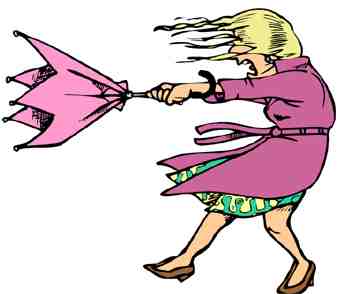
All week I've been writing about how American society matches the symptom profile for Post Traumatic Stress Disorder. This morning, I took the first of those pieces to my writer's group, a small circle of women writers who share and respond to each other's work every Friday mornings. I knew it was not my best work, and I wanted feedback.
As usual, the group was very helpful, but one of their reactions caught me by surprise. Members felt that my writing was distressing (not in terms of quality, but in terms of topic), and that I needed to give information on how to deal with that distress. So I'm taking a detour from the exploration of PTSD in a post 9-11 society to help all you Quarterbackers out there as we head into the 10th anniversary of the attacks.
Perhaps the most important thing you should know is that, if you're feeling blah this week, or sad, or anxious, or irritable, or having trouble sleeping, or anything else that makes you feel "off," even if you do not consciously connect those feelings to this anniversary, you're normal. Anniversaries are very powerful, and quite often people who don't even realize that it is an anniversary have negative reactions nonetheless. This isn't helped by the terrorism alert for New York and Washington. What might be somewhat distressing anyway only feels magnified given the time of year.
You also aren't crazy if you are sick and tired of the anniversary coverage (although chances are you aren't reading this, so I may be wasting my breath). The extra coverage is draining because it prevents us from getting away from the intense memories and the feelings they evoke.
Whichever of these two groups you most identify with, you're normal. Don't waste one minute worrying that your reaction is too much or not enough or inappropriate, any more than you would criticize yourself for feeling pain when you stub your toe. You couldn't control those feelings if you wanted to, so don't bother trying.
But what can you do? If the coverage or the date or the blogging about our messed-up society is bothering you, what is the solution? You may not like the answer, because here's what it isn't. Turning off the TV, avoiding reading my blog, doing something completely non-9-11 related on Sunday and generally trying to get your mind off it may feel good for the moment, but it is a quick fix for a longer term problem. That's because problem isn't the reminders of the attack, it's how upsetting they are to you. Avoiding the reminders won't solve the underlying issue, it will just push it back underground.
What I suggest is completely counter-intuitive. When you find yourself having negative feelings -- sadness, fear, hurt, anger, guilt, shame or whatever -- don't try to turn away from them. Turn towards them. Identify what you are feeling and what caused it. Label them consciously. Don't try to explain it rationally, because emotions are not rational -- they're, well, emotional. Whatever you're feeling just is, so you might as well feel it.
The reason this is a good idea is that, when you turn and face your negative emotions, they stop feeling so overwhelming. Feelings, by themselves, do not hurt us. What we tell ourselves about those feelings and the events that trigger them can. No one likes to feel sad or afraid, but you can tolerate it. Your negative emotion loses its power when you acknowledge it and face it head on.
Does this mean you should glue yourself to the TV and watch as much coverage as you can this weekend? No. Just as avoiding reminders isn't healthy, seeking them out to excess isn't, either. Watch, read and hear what interests and moves you or is meaningful to you. Consider for yourself what type of commemoration, if any, you believe is appropriate for you to participate in. Just monitor yourself and be careful when you find yourself saying things like, "I can't watch that," "I want to get my mind off it," or "I won't be able to handle that." Those are signs you're avoiding, and you're not turning into the wind.
For me, this Sunday is about reclaiming September 11th as a day of grief and fear -- yes, I'm reclaiming fear -- and as a day of unity, service and collective support. I am allowing myself to feel the sadness and, as hard as it is, some of the horror of that day. And I'm patting myself on the back for doing it, because it isn't easy. I hope you'll join me.

Wednesday, August 31, 2011
All Hazard Preparedness (for Some, Anyway)
 |
| Rikers Island circled in blue on evacuation map from NY Times |
As Hurricane Irene churned its way up the East Coast last week, New York City Mayor Michael Bloomberg ordered the evacuation of coastal areas of the city. 300,000 people were ordered out of their homes (although a fair number didn't leave).
In the middle of this unusual situation, someone asked a very interesting question. What about Rikers Island? For those of you who don't watch Law & Order
 reruns, Rikers is the principal correctional facility for New York City. It currently houses about 12,000 prisoners. As the name suggests, it's on an island, and it's smack dab in the middle of the zone that was evacuated ahead of the hurricane.
But Rikers Island was not evacuated for Irene. We can argue about whether it -- or anywhere else in New York City -- really needed to be. But it turns out that Rikers has no evacuation plan. Let me reiterate that, because it really is striking. There is no plan in place to evacuate Rikers Island under any circumstance. Not a hurricane, tornado, flood, fire, earthquake, riot or anything else. If someone brings a bomb into the visitor's room and they can't diffuse it, too bad. If the whole island catches fire, oh, well.
I know that concern about the welfare of criminals is not a politically popular stance, and maybe that's why they haven't figured this out. But there are some other things to consider. First of all, Rikers houses people temporarily awaiting transfer to other facilities, those serving less than a year in jail and those awaiting trial who cannot make bail or are being held without bail. This is not, overall, the place you find the most hardened criminals of New York. What's more, a sizable number of them have never been convicted of a crime. They are accused and poor, but presumed innocent.
What's more, in order to maintain the prisoners at Rikers, there is a sizable staff of guards, cleaning crew, cooks, medical personnel and others who make the place run. Those people aren't even accused of crimes. They're just doing their jobs. And as long as there are prisoners on Rikers Island, they have to be there.
The public school where I was Principal has not one but two different evacuation locations plus a variety of plans based on the hazard. We have to practice evacuating the building, as does every school in the country. If your business doesn't know how to evacuate its personnel and its customers in the event of a disaster, I'd call that negligent. But a facility with about 20,000 people in it, all told, has no plan.
I'm sure evacuating Rikers would be a nightmare. It is possible that even if they had a plan, implementing it for Irene would not have been worth it. Fine. But not having a plan at all isn't just stupid, it's criminal. I don't know which is more horrifying -- that there is no plan, or that nobody thought it was a problem until now.

Tuesday, August 30, 2011
Irene, Goodnight
 |
| The remains of a VT highway bridge. |
It seems like I should have something to say about Hurricane Irene. I write about traumatic events, and this storm certainly did some serious damage to parts of the east coast and was a major nuisance to others. At least 40 people died, and many more lost their homes and businesses.
It's not really that I don't have anything to say about Irene. But all weekend and yesterday I found myself having difficulty formulating something. I think I've finally put my finger on why. Put simply, the media coverage of Irene stunk. Or, perhaps more precisely, the national media coverage -- which was the only coverage you could get if you weren't in the storm's path -- stunk. And I really don't have much to say about the storm as it was portrayed in the media.
 |
| The former Rte. 7 |
This was big news, and the potential for disruption to those two cities got a ton of coverage. I found the breathless speculation that Wall Street might not open for business on Monday a little much. Yes, that would be unusual. Yes, it would be newsworthy. And if it happened, there would be much more important stories of damage and loss of life to talk about. It's a stock exchange. It's one day. Let's get a grip.
 |
| Killington Ski Resort base lodge |
Except that is not even vaguely a decent picture of where the news from Irene actually happened. The state of Vermont was massacred by this storm (Keene, NY, by the way, is fairly near the Vermont border). Vermont, since it is not on the Atlantic coast, was not nearly as over-prepared as some other places. The damage was horrific, the power was out, and no one had reporters there to report. One might expect NPR (or other outlets -- I'm just picking on them because that's where I got my news yesterday) to talk about this, even if only to say that information was sketchy. They didn't. The word "Vermont" did not make the newscast.
On the one hand, I think storm coverage is often overblown. Hurricanes happen. It's a storm, not the apocalypse, at least most of the time. But I certainly think we owe it to our friends in Vermont to have headlines that are a little more relevant than "Storm Doesn't Close Wall Street After All."

Thursday, July 14, 2011
Leiby Kletzky, May His Memory Be for a Blessing

Leiby Kletzky won't be home for Shabbat dinner tomorrow night. He won't be home next week, or the week after, or for any Shabbat or holiday or regular dinner ever again. Leiby was 8 years old when his parents let him walk alone, for the first time, from his summer camp in Brooklyn, NY to meet them a few blocks away on Monday. He took a wrong turn and asked a stranger for directions. Leiby Kletzky is dead, and that stranger has reportedly confessed to killing him and dismembering his body.
There are news stories that upset me. There are news stories that scare me. There are news stories that make me angry. There are very few news stories that make me physically ill. This is one of them.
I've been trying to identify just what it is that has made me feel like I was going to throw up since the moment the details of this case came to light. I've been doing crisis work for a long time, and I've heard some pretty awful stories. The murder of children is always particularly poignant, but this one is different.
I think there are two aspects to this case that cause me to feel that connection in a particularly personal way. The first is that, this week, I sent my own 6 year-old son on a plane as an unaccompanied minor to visit his grandparents in Washington, DC for the first time. We've done this countless times with his oldest sister and it has always gone smoothly.
We are careful, or so we think. We make sure not just that the airline has the information they need to keep the kids safe, but that they know what to do if someone isn't there to pick them up, if their seatmate is bothering them or making them uncomfortable, if they get lost or if someone other than an airline employee offers to take them someplace. We trust that these precautions, coupled with the help of the airline and the common sense of our kids, will keep them safe. Leiby Kletzky's parents thought there wasn't much that could go wrong, too. They were a few blocks away. He would walk right to them. What could go wrong?
Today, when I went to pick my son up at the airport, I got stuck in traffic. His plane arrived early. The line to get a security pass to go to the gate was slow. The security line was long. I knew that he was off the plane, and I found myself in a panic. We had a plan for this. All he had to do was stay with the airline employees. But what if he didn't?
One of the deeply held beliefs about the world that we have as parents is that we can keep our children safe. My kids will tell you that I often say that that is my most important job as a mom -- keeping them safe. Leiby's parents were doing that job as best they could with the information they had. And it wasn't enough. That shakes my own belief in a world that will work the way it should.
The other poignant piece of this case for me was that it occurred in a Hasidic community in Brooklyn. I am not Hasidic and have never been. I lived for a while in a heavily Jewish section of Pittsburgh, PA that had many Hasidim, and as a Jew I feel a connection to that part of my roots. Hasidic communities are famously close knit. You can see this in the sheer number of people who turned out within an hour or two after Leiby went missing to look for him. It may be Brooklyn, NY, but it is a small shtetl in many ways. This isn't supposed to happen. The fact that the accused killer is also an Orthodox Jew, albeit not a Hasid, makes it even worse.
Of course, no one should do this to anyone else. The fact that Leiby was Jewish or Hasidic doesn't make his death any more or less important than that of any other child. But just as it would affect me if it happened on my street more than two miles away, I feel that sense of shock not just that a child was murdered, but that it happened in "our" community. Reading the comments on various blogs around the net, I realize that there is a cultural context to this case that I can't put into words and the commenters clearly don't get. This perpetrator was able to do what he did to this boy precisely because they had a connection and a similar understanding of what their community was like. This didn't just violate the law and human decency, it violated a communal sense of trust. I can't explain it any better than that.
Leiby won't be home for Shabbat tomorrow. In Judaism, we say that the memory of the righteous is for a blessing. May his family be comforted among the mourners of Zion.
Thanks to frequent Quarterbacker Jim for suggesting that my take on this might be a little different than others and that I should blog about it. I needed the noodge.

Saturday, August 28, 2010
The Impact of Nicole John's Death

Nicole John, 17, died at about 4:15 AM on Friday, after she climbed out onto a ledge outside a 25th floor apartment in Manhattan and fell onto a 3rd floor outcropping. John, who was the daughter of U.S. Ambassador to Thailand Eric John, was to have started classes at Parsons New School of Design this fall. A statement from Parsons indicates that the school's "crisis management team" will be available to counsel those who were at the party that Ms. John was attending when she died, or others affected.
To answer what seems like the natural question, there is plenty of evidence that John was either drunk or under the influence of some other substance when she fell. It appears she may have decided to step out onto the ledge to take a picture -- a camera was found near her. The host of the party, who is 25, has been arrested on charges relating to having alcohol at a party with a minor present. Ms. John had a fake ID, and had been at a club with friends until about 2 hours before.
The crisis management team at Parsons has an interesting job to do here. Since John was a new student, the number of people affected by her death is probably lower than would be in even a few weeks. However, those who are affected are probably also new students, many away from home for the first time, all relatively young, and therefore particularly vulnerable. One could imagine that having a new friend die tragically just as school was starting would color your freshman year in school, and beyond.
The themes the team can expect to hear are complicated, too. Those who were not at the party are likely to be angry, and not to be comfortable with that anger. Ms. John did something dangerous when she drank too much, and that caused her to do something she would never have done while sober. Her friends are going to be mad -- at the people who were there, at the host of the party, and at Nicole John herself. But being mad at the person who died is never easy, because it's hard to reconcile being angry at someone and being sad that they're dead at the same time.
For those who were at the party, you can add a layer of guilt on top of all that. Folks will feel guilty that they didn't stop her, guilty that they let her get drunk, and guilty that they themselves may have been too impaired to realize what was happening. On top of that, there has been an arrest, which, rightly or wrongly, makes them wonder if something they express at this point will make the police look at them. So they feel guilty, but may be afraid to talk about it for fear that their guilt will make them look, well, guilty. Our society doesn't deal well with the difference between someone feeling guilt because they could have done differently and someone being guilty of a crime.
As for Ambassador John's family, one can only imagine what they might be experiencing. All of the above seems likely. Published reports suggest that Nicole John was not new to drugs and alcohol, and perhaps this was the moment they knew was possible but prayed would never come. Or perhaps they didn't know, or couldn't acknowledge, the trouble she was headed for. No one deserves to die the way Nicole John did, no matter what else they may have done. And certainly no parent deserves to get the phone call the Johns family got early Friday morning.
Sunday, June 27, 2010
In Central Park, the Sky Really Is Falling

Yesterday afternoon, a branch fell off a tree just outside the seal lion exhibit at the Central Park Zoo
 in New York. It was not windy or raining, and no one really knows why it fell. About thirty feet below, Gianna Ricciutti, aged six months, was having her picture taken by her father, Mike, while being held by her mother, Karla Del Gallo. It was part of a visit from their home in New Jersey. The branch hit Gianna and her mother, leaving Gianna dead and Karla in critical condition.
This is the sort of story that makes you gasp and exclaim how awful it is. The sheer randomness of this event, coupled with the death of a tiny child, seems especially horrible. As we start to think about it, we wonder why it doesn't happen more often. After all, parks are full of tall trees, and branches fall off trees, so it was just a matter of time, we suppose, before this happened. And if it happened once, it can happen again.
If that's how we feel, imagine what it would be like to be just outside sea lion exhibit at the Central Park Zoo and suddenly hear a loud noise and see a woman and her baby crushed by a falling tree limb. Gianna's father witnessed his baby's death and his wife's serious injury, completely powerless to stop it. There were certainly others, perhaps not as focused on that particular pair, who saw the accident or arrived shortly thereafter.
A security guard at the scene was interviewed by the New York Times
 . The Times reports his experience as,
he heard a loud crack, like a thunderclap, and saw the branch plummet. After the mother fell, members of her family shrieked, the guard said, and her husband began screaming and jumping around. “He was going crazy,” the guard said.The phrase "going crazy" really bothers me in this context. First of all, what, exactly, is our expectation for rational behavior when you have just seen two of the most important people in your life critically injured in a freak accident? How do we expect this man to act under the circumstances? Is screaming and jumping around really that odd?
The second problem I have with this description is that the number one thing I talk to people who have been traumatized about is the sense they have that they are going crazy. I would say that at least 80% of what I do is assure people that there reactions are typical and understandable. They are not crazy, the situation is. Behavior and reactions that would be totally bizarre on a regular day or in reaction to regular stress make total sense when the world has turned upside down.
At the same time, I can't blame the guard too much. He just witnessed something awful as well, and frankly I wish the press wasn't so eager to get quotes from people in situations like this. I doubt very much that the security guard actually thinks Mike Ricciutti's reaction was so out of whack. He was describing the scene, and he used a turn of phrase that was unfortunate. Under the circumstances, I can more than forgive him.
I really hope everyone who was in that part of the park yesterday gets some support. It's going to be hard to walk under trees for a while, not because trees really are, statistically, all that dangerous, but because they seem that way. I also hope all of those people have a chance to talk to each other at some point. They need to know they aren't crazy, that this really was awful, and that the others around them didn't think their reaction was nuts. It's easy, at moments like this, to feel like you're the only one reacting the way you are. It might help them to know that others are gasping and exclaiming how awful it is, too.
Tuesday, June 1, 2010
Substance Abuse, Waiting for the Worst, and the Death of Andrew Koppel

Andrew Koppel, 40, was found dead early this morning. He apparently had gone on an at least day-long drinking binge, bar hopping throughout New York City. He finally wound up, with his drinking buddy, at the apartment of one of the buddy's friends. He went to sleep it off, and never woke up. Among others, he leaves his girlfriend, a child, and his famous father, newsman Ted Koppel
 . The cause of death has not been determined. He had a history of alcohol abuse.
This story is in the news because Andrew Koppel's father is famous. But deaths like this one are, unfortunately, not at all unheard of. People who live with or love alcoholics and other substance abusers live with the knowledge that, if they don't successfully stay away from their substance of choice, someday it may very well kill the people they love. Overdose -- in this case, apparently alcohol poisoning -- is only one of a seemingly endless number of ways that people can die from substance abuse. Motor vehicle accidents, falling or jumping from tall buildings, or picking a fight with the wrong person are a few of the others.
It's likely that the phone call the Koppel family got this morning was shocking. It's also likely, if stories about Andrew's drinking are true, that they knew such a phone call was a possibility. At the same time, no one can ever really be prepared for a phone call like that. Every family hopes that the addict they love will straighten out or sober up before they hit bottom, and the phone call informs them that their hopes are over.
This type of death brings with it a difficult mishmash of themes for those left behind. Of course they are sad. They are also angry, because the person who died "did this to themselves." Unlike a suicide, however, the person didn't do it to themselves on purpose, or at least not as clearly on purpose as if they had completed a suicide. Those left behind are mad that they didn't stop in time and mad that they couldn't. They feel guilty because they couldn't save them, and blame others -- the person's friends or other people in the family -- because they didn't. The drinking or drugs often go hand in hand with mental illness or other complicating factors, and it's hard to know what or who to blame for the result. In short, it's a mess.
I don't know what kind of relationship Ted Koppel had with his son. Maybe they were estranged, maybe they were close. Frankly, it's none of our business. No father holds his baby and imagines that someday he will bury his son. No father should have to, no matter how much he may have prepared for the possibility.
Monday, May 3, 2010
The Big Story of the Weekend (no, not that one)
This weekend someone packed a bunch of explosive and flammable material into an SUV and parked it in Times Square in New York. The investigation of this is the number one most popular story on Google News today, and I am not going to blog about it. President Obama gave the commencement speech at the University of Michigan here in Ann Arbor, and I'm not blogging about that either. Thousands of gallons of oil are threatening the Gulf Coast, and I probably will blog about that tomorrow. Massachusetts is still without drinking water, and I blogged about that yesterday. You probably knew about all of these things (perhaps not the U of M
 story, but you would if you lived here).
Early this morning, Detroit police officers responding to shots fired in a vacant apartment were ambushed. Four were wounded, one was killed. Officer Brian Huff became the first line of duty death in the Detroit Police Department
 since 2004. The national press barely covered it. The Ann Arbor press, 40 minutes from Detroit, didn't cover it at all. Neither did the Michigan-wide public radio affiliate.
Certainly a lot more people are affected by the Massachusetts water situation and the oil spill in the Gulf. The President speaking in town is pretty rare. The bomb in Times Square affected a lot of people directly, and scares a lot of people vicariously. All of these things are important.
In a typical year, there are less than 70 police officers nationwide that are killed by suspects. Michigan has had two this year, but had none last year. This isn't terribly common. It may not affect as many people as some of the other stories, but those it does impact are affected much more severely. Frequent Quarterbackers may recall that there is a whole Critical Incident Stress Management course just on responding to the 5 most serious types of incidents. Not only is death in the line of duty one of those, but there is actually an additional course just on that.
So why did Officer Huff's death and his colleagues' shootings get so little attention? I think there are two reasons. First, there was a lot of news affecting a lot of people this weekend, which meant that this story had to more actively compete for coverage. Second, Detroit has a lousy reputation for high crime. In other words, people think that this sort of thing is about par for the course in Detroit. This is especially ironic since, although Detroit's crime rate is high, its rate of line of duty deaths for police officers isn't. By any objective standard, this ought to be a big story. We just don't make those judgments by objective standards.
There is no community in this country for which a police officer shot in the line of duty feels normal. The Detroit press is covering this story closely. It's the rest of us, outside (but not all that far outside) of Detroit that are turning a blind eye. We think "those people" in "that city" expect this sort of thing. Unfortunately, we think wrong.
Monday, April 26, 2010
Death in NYC: Can Empathy and Condemnation Go Hand in Hand?

Several years ago, a teacher in my school district, at a different school, was disciplined for using duct tape to fasten a student to a chair. The day after this hit the newspaper, the staff room was abuzz with teachers saying, "What was she thinking?" "I can't imagine what she was thinking." "Does anyone know what she was thinking?" There was a lull in the conversation, and one of the most senior teachers said, "Let's be honest. Is there anyone who actually doesn't know what she was thinking?"
I am reminded of this episode today because an item has hit the news regarding a homeless man who was killed in New York City a week ago. Hugo Alfredo Tale-Yax, 31, was stabbed as he intervened in an early morning altercation between a man and a woman on a Queens sidewalk-- some reports say it was a mugging. In a scene captured by a surveillance camera, Tale-Yax then walked down the sidewalk, collapsed, and lay there for about an hour as numerous pedestrians walked by. One took a picture of him. Another shook him and lifted him up far enough to see a pool of blood. By the time authorities arrived, he was dead.
What were those passersby thinking? You may find yourself reminded of the storied case of Kitty Genovese
 , the woman who was stabbed to death in 1964 outside a Queens apartment building. Her death became symbolic of people's uncaring attitude towards others, after it was reported that the killer returned for three separate assaults, 38 people had witnessed the attack, and no one had called the police. Forty-five years from now will be we be talking about the Tale-Yax case in the same way we talk about Kitty Genovese?
It turns out, however, that the Genovese case wasn't all that simple. In their recent book SuperFreakonomics
 , Steven D. Levitt and Stephen J. Dubner argue that the attack on Kitty Genovese was not witnessed by as many people as reported, not as obviously a murder in progress as reported, and in fact at least one person did call the police. There were two attacks, not three, and they were in two different locations. Several people did yell out their windows to the killer to leave her alone, and, when they did, he appeared to leave and she appeared to get up. They thought it was over. Is it possible that the Tale-Yax case also has some shades of gray?
I think we can all agree that, in an ideal world, anyone who knew he was injured should have tried to help him and/or called 911. So, why didn't they? Did Mr. Tale-Yax have the misfortune to be injured in the one place in America where everyone doesn't agree on this? Probably not.
When we say that people should have called, we are doing so with much better information than people had at the time. We know now that Mr. Tale-Yax was dying, and that failure to call an ambulance probably cost him his life. The people walking by, on the other hand, were not met with that certainty. They had to weigh out the probability that this man needed help against the chances that he didn't, and also the chances that if they tried to help him they would wind up regretting it.
At least some of the pedestrians presumed that Mr. Tale-Yax was asleep. The sight of a homeless man sleeping -- or passed out -- on the sidewalk in Queens is not that unusual. It is certainly far more common than someone bleeding to death on a sidewalk in Queens. These people weighed the probabilities and went with the one that was far more likely.
Other passersby, though, clearly knew he was hurt. The person who shook him and picked him up certainly did. The person who took his picture appears to talk with a companion about the situation before they leave. We all assume that we, in the same situation, would have called 911. Why didn't they?
First of all, somebody did. There were a total of three 911 calls. The first, which appears to have come during the initial altercation, reported a woman screaming but gave the wrong address. The second reported a man lying in the street and also gave the wrong address. The third brought emergency personnel, who found Mr. Tale-Yax dead.
Let's just say, however, for the sake of argument, that there was at least one person who walked by, saw Tale-Yax, realized he was injured, and didn't call. Should they be condemned for it? Or can we muster some empathy for them? I think the answer may be both.
Someone failed to help a dying person. That can't be OK in our society. At the same time, I can imagine 100 reasons why they didn't, from being a wanted criminal or an undocumented immigrant themselves, to simply failing to grasp what they were seeing, to convincing themselves that if he was really hurt someone would have already called. Think about it -- have you ever seen a car on the side of the road and not called for help? You probably have -- I know I have -- because you figured someone else had already called.
Empathizing with the passersby does not require condoning what they did. Understanding and accepting are not the same thing. We know that the people who walked by Hugo Alfredo Tale-Yax should have helped him. Chances are, they know it too. And really, if we think about it, is there anyone who doesn't know what they were thinking?
Monday, March 22, 2010
Pain and Suffering

Two seemingly unrelated stories made headlines today. The first was that the Georgia Supreme Court struck down laws limiting jury awards for pain and suffering in malpractice lawsuits. The second was that New York City settled a lawsuit involving roughly 100,000 strip searches of people who were charged with nonviolent misdemeanors. The total settlement is $33 million.
The reasons for these headlines are different. They happened in different states with different plaintiffs and different legal arguments. Both, however, bring home a key point that sometimes gets missed amidst political rhetoric, and that is simply this: pain and suffering is a real thing.
When we think about pain and suffering awards in lawsuits, we often think about what seem like frivolous or outlandish cases. The term "pain and suffering" conjures up visions of people faking whiplash from car accidents or suing over burns from drive-through coffee. It's easy to lose sight of what this type of award is supposed to be for, that is, to compensate people with money for the non-monetary damage that someone's wrong actions have done to them.
The New York case, although it does not specifically reference "pain and suffering" as far as I can see, illustrates these damages in a way most of us can probably understand. The settlement is punitive -- that is, the city is paying as a punishment for doing strip searches when they shouldn't have (and in most of the cases in violation of a 2002 agreement not to). Those who were searched will receive between $1800 and $2900 each, with two exceptions.
Two women will receive $20,000 as part of the settlement. These women, who were also arrested for nonviolent misdemeanors, were forced to undergo gynecological exams as part of their strip search. The difference in the amounts given to most of the plaintiffs vs. these two women are not small, and they are not accidental.
Everyone who undergoes a mass strip search is humiliated. Most of us are nervous getting naked in front of our physicians, let alone strangers. The added indignity of having to lift or separate various body parts only makes it worse. For some people, the humiliation is milder than for others. Some may feel traumatized by the experience.
Undergoing a forced gynecological exam adds a whole other layer of trauma to the experience, however. This goes beyond "they shouldn't have done that" and beyond humiliation, and into the territory of assault. Many women find going to the gynecologist distasteful under the best of circumstances. We swallow our pride and our nervousness and go because we know it's what's best for our health. Being forced to do it as part of a search, however, is a particular kind of awful that I think men might guess at but only women truly know. It's hard enough to give up enough control of your body to have an exam at the doctor's office. Having someone take that control is traumatizing.
Which brings us back around to my earlier point: pain and suffering is a real thing. The city is not just being punished for what they did to these two women, they are being made to compensate them for the real, non-monetary effects of the trauma. I don't know what post-traumatic stress symptoms these women had, but I can't imagine they didn't have any. While you may not be able to put a price tag on that in terms of lost wages or doctor's bills, it was real. That's why the law allows for awards for pain and suffering in the first place. It's not possible to make people whole after something like this. We can't untraumatize them. But we, as a society, have decided that they deserve to get something nice to compensate for the awful. Twenty thousand dollars, under the circumstances, seems reasonable to me.
Wednesday, March 17, 2010
Suicide High Above Cayuga's Waters

In the last month, three students at Cornell University in Ithaca, New York have killed themselves by jumping off bridges into the gorges that mark the campus. Two died on consecutive days last week. The total number of suicides at Cornell this year now stands at six, with four additional deaths from other causes, on a campus of roughly 20,000 students. If that sounds high to you, it is. The suicide rate nationally for college students is roughly 7.5 per 100,000 per year, which would give a school the size of Cornell a predicted rate of 1.5 suicides per year. They're at six, and it's still March.
So, what is going on at Cornell? First of all, as the college points out, their average number of suicides per year is still about 1.4, so if whatever is going on is Cornell-specific, it is specific to this year. One might posit reasons why Cornell students might be at higher risk than other students. Cornell is a relatively high pressure school. Ithaca is way off the beaten path, which may isolate some students from natural support systems. And the system of gorges and bridges represent a particularly convenient and lethal way to attempt suicide, so those who attempt it might be more likely to complete it. On the other hand, none of those things is new, and before this year Cornell hadn't had a suicide in four or five years. So what is going on?
Those who study suicide will tell you that suicide is, in some sense, contagious. People whose relatives complete a suicide are more likely to attempt one themselves, and people who have friends, or even just close peers, who complete a suicide are also more likely to try. The reasons for this are complex. It's not as simple as someone learning that someone close to them has killed themselves and "getting the idea." In some cases, people who have already contemplated suicide think "if they can do it I can too." They identify with the person who died and how they were feeling, and the example they set by killing themselves tilts others decision making in that direction. In other cases, the reaction to the suicide of a loved one is so complex and severe that it promotes suicidal actions from others. There is also some component of this phenomenon caused by the fact that someone who completes a suicide makes others aware that that particular method works, so people who might otherwise have tried something less lethal are more likely to complete their suicide.
There are absolutely things that institutions can do in an effort to be caring that can make things worse. The most common is to over-honor and over-memorialized the person who died. Particularly in adolescence and young adults, whose brains are not fully developed and hence don't think things through very well, watching a peer get the full attention of the school or community in death may encourage them to kill themselves in a misguided attempt to get that attention for themselves.
Given the complexity of the problem, the response of Cornell this week has been pretty impressive. They have put in place two initiatives that have grabbed headlines, perhaps even more than the suicides themselves. The first is that they have placed staff at the bridges over the various gorges on campus, and placed suicide hotline information on the bridges. This is a relatively small and short-term fix, but in a community that has demonstrated that it is at increased risk, taking away the method of choice for suicide is not a bad idea.
If that were all Cornell were doing, it would be inadequate. However, they are also having staff members knock on the door of every single student in the residence halls, check on their welfare and engage them in conversation. This may seem like a small thing, but it is a really good idea. It prevents anyone on campus from being completely isolated, and it breaks the silence that often surrounds suicide and depression in our society. It invites every single student, individually, to talk about how they are doing.
I once heard a fellow CISM person describe people contemplating suicide as fish drowning in a bowl of water. Everything they need is right there, but they can't make use of it. If that is true, Cornell is doing two things: making it hard for the fish to jump out of the water, and providing individual assistance in figuring out how to use the water they're in. I sure hope it works.
Wednesday, March 3, 2010
Take Our Children to Work Day at JFK Air Traffic Control

An air traffic controller and a supervisor at New York's John F. Kennedy Airport have been suspended after an incident in which the controller allowed his elementary-aged son to clear planes for take-off. The incident occurred in mid-February, but is just coming to light now because the audio recording was posted online. The FAA has also barred unofficial visits from family and friends in control towers until they can review their policies.
I think most of us get on an intuitive level that letting your kid direct air traffic is not a great idea. At the same time, most of us also get a kick out of seeing kids do adult things. This would explain the reaction of the pilots this child was talking to, who seemed to think this was rather charming. It also seems that this was a fairly low-risk situation. The father was telling the child what to say, and he wasn't relaying highly technical or difficult instructions. The Associated Press quotes Dave Pasco of the website LiveATC as saying,
I absolutely believe that this is being blown out of proportion. This is just a completely controlled situation. A child was being told exactly what to say. . . . I think it's just fantastic that this guy cared enough to take his kid to work. How many parents take their kids to work these days?So, which is it? Was this air traffic controller a caring father who had some harmless, educational fun with his son when he took him to work, or is he an unprofessional risk taker who put his son's fun ahead of air traffic safety? In my humble opinion, he's actually neither, or perhaps he's both.
When something horrible happens, you've often heard me say, people's minds go to blame. We don't like the notion that things can be random, so we look to find a preventable reason why they happen and blame the person who let that reason happen. Now, in this instance, nothing horrible happened. In fact, it's likely that there wasn't much of an opportunity for anything horrible to happen that would have been caused by this child or controller.
There certainly is, however, plenty of opportunity for something to go horribly wrong in general on any given day at JFK. It's a busy airport with lots of airplanes taking off and landing. Odds are, someday, there will be a crash at JFK simply because odds are, if there are enough planes doing enough things for enough days, something will go wrong. On the day that that happens, if it should coincide with the day an air traffic controller had his son at the radio, it seems fairly predictable that the inevitable blame will head towards the decision to let that happen. It won't matter that it really had nothing to do with it, because it will look like it had everything to do with it.
The AP story about this incident draws a parallel to the crash of a helicopter and a small airplane over the Hudson River in New York. In that incident, an air traffic controller was talking on the phone with his girlfriend just before the collision. Was it that choice to talk on the phone that was the difference between an accident and an event-free day? It could have been. The fact is, we'll never actually know. But the controller's poor choice certainly made an easy place to lay blame.
There are two things that people in positions of great responsibility should try to avoid. The first and most important is doing something completely wrong, because whatever they are responsible for will get messed up and it is likely to affect a lot of people, sometimes fatally. The second, which is certainly less important but, from a crisis preparation standpoint, still crucial, is doing something which, should something go wrong, will look like you did something completely wrong. That's for your own good, and it's also for the healing and recovery of everyone else. Tragedies are hard enough without having to wrap your mind around someone doing something incredibly foolish in the midst of it.
Saturday, January 23, 2010
You Don't Have to Live in Haiti to be Traumatized

Today's New York Times has a really nice article about a Catholic school in Queens, New York. The vast majority of the children at the school are from Haitian and Haitian-American families. Large numbers of them have lost relatives in the earthquake. Others haven't been able to find out what happened to their families. Many of them spend summers in Haiti, one was living there during the earthquake and another's father was killed. All of them feel a close connection to Haiti, even if they were born here.
It would be a fairly straightforward assumption that children who were in the earthquake are traumatized, those who had relatives die are less so, and those who did not lose a loved one are not traumatized at all. This article makes it clear that the situation is not that simple. First of all, there are few if any Haitian-American children did not lose a relative or other loved one in the quake. It also makes clear that all of them are trying very hard to understand what happened and figure out what it means for them.
The picture at the beginning of the article is of a girl at SS. Joachim and Anne drawing a picture with the dictated words, "I want to build homes for the people in Haiti." The picture is of a house with three people in it. One of them is clearly dead. The story talks about a boy who was in Haiti at the time of the earthquake, and was worried for the safety of friends and family in New York, because the earthquake was so big he thought it must be shaking New York as well. As much as the adults can barely understand the enormity of what happened, these kids have that much less of a framework into which to fit this event. They are trying to make sense of it the best they can.
Perhaps most heart-wrenching, in some sense, are the stories about the older children. The middle schoolers are old enough to really understand the destruction and to have expectations about how adults will act in moments of crisis. In many cases, they are one step more removed from the situation than their parents, who are severely impacted. This leaves them in the difficult position of trying to comfort and reassure their own parents, and of being impacted not only by the earthquake itself but by their parents' reactions to it.
So, what is a school to do? It sounds like SS. Joachim and Anne is doing a lot of great stuff. They have counselors working with the kids. The children are drawing, which is very important because kids can often express in drawings much more complex thoughts and emotions than they can just talking. They are using developmentally appropriate lessons to teach the children the science behind earthquakes, which aside from being a useful curricular tie-in also gives the kids an understanding of how this happened and real information about how likely something like it is to happen again -- in Haiti or in New York. They are coming up with constructive ways to help. As a religious institution, the school is also talking to the children about God's role in protecting and comforting them and their parents.
There are things the article doesn't mention that probably would help. I have no way of knowing whether these are things the school is doing that just weren't mentioned or whether they're not being done, so this is more of an intellectual exercise for the benefit of Quarterbackers than anything else.
First off, folks need to be careful in balancing how they talk about God in this situation. It is fine and appropriate to share the church's theology on these questions and to encourage the religious practice that is appropriate in that context. However, adults, in an effort to comfort children, sometimes wind up saying things about God that even they don't believe, or which are confusing in their simplicity to children. Saying, "God will protect you," for example, might sound good, but for kids who have seen their families destroyed it is confusing to hear this and know that somehow their families were not protected. Telling kids to pray for those affected is fine, similarly, as long as there is room for them to also talk about it and express their feelings. Our simple reassurances shouldn't be the end of the conversation.
I also hope someone -- in the school, the church or the community -- is helping those older kids understand their parents' anguish. I hope someone is telling them that it is not and cannot be their job to keep their parents from falling apart. Someone older and more detached needs to take that burden off of the children. Seeing your parents that upset is hard enough without feeling responsible for it. There needs to be a third party helping mediate that.
Mostly, I hope there is lots of opportunity for these kids to visit and revisit their feelings and their understanding of what happened. That girl in the picture needs to draw a lot more, and she needs the chance to tell someone about her picture. Who is that who died? What happened to them? What will happen to them next? What will the two people who are alive do? And perhaps the most poignant question of all, where do you see yourself in this picture?
Monday, January 18, 2010
The New Normal for 9-11 Rescuers in Haiti

The New York Times website has an article today about a team of first responders from New York who are working to find survivors in the rubble of Port-au-Prince. There are eighty people from an urban search and rescue team there right now, pulling the living and the dead from the ruins. Yesterday they found four survivors. The article points out the direct parallels between their work looking for survivors of the collapsed World Trade Center and their work now.
Some of the things the searchers have to say are very familiar to those who have experience with traumatized people. One firefighter commented,
I can’t forget the smell of death from New York, and I can smell it right now. Sniff in the air. That’s it. Once it’s in your head it doesn’t come out.What this man is describing is a strong sensory memory. You've probably heard the adage that smell is the sense most closely linked to memory. I don't know if that's true, but it certainly is true that, at moments of great stress, our senses are heightened and much more likely to make it into our long term memory. This man isn't just saying he smells death, he's saying he smells death and associates it with New York. This is quite understandable.
Later in the article, another firefighter remarked,
When you have your head in the hole, you forget where you are. You could be anywhere really. And that person you’re looking for could be anywhere. It’s real simple though. You want to get them out alive.Certainly this sentiment is admirable. But I suspect that his description of forgetting where he is isn't for dramatic effect or poetic impact. People who go through traumatic events who are then placed in very similar situations, or in situations their minds have encoded as being similar, can experience disorientation. When things are similar enough, you actually aren't sure whether you're in the previous event or the current one. And if you're not ready for it, it can be extremely scary.
I don't know how much the current search, rescue and recovery operation is actually triggering these responders and how much it is just reminding them of their past experience. There is a difference, and one is much more distressing than the other. I hope that when they return to the U.S. there is a good CISM team ready to help them, both with what they're seeing now and with what it brings back about what they saw 8 years ago. Both are real.
Monday, January 4, 2010
Boy, 9, Stabbed in his Uncle's Home, So Why Didn't You Hear About It?

Anthony Maldonado, a 9 year-old from New Jersey, was visiting his uncle in Manhattan over the holidays. In the wee hours of Saturday morning, he was playing video games with three other people when two of them decided to go get something to eat. This left Anthony alone with the 25 year-old son of his uncle's partner. Just after 3:30, he staggered to his uncle's room and collapsed, bleeding from multiple stab wounds. He died later that morning.
We all have a basic understanding of what we believe to be the threats "out there" to children. Children are killed in car accidents. They are killed by predators. They are killed in the crossfire of disputes between adults. Once in a great while, they are killed by family members as part of a family annihilation murder. They are killed in mass shootings.
We tend to operate under the assumption, however, that children are not murdered by adults who are not predators, are not trying to wipe out the family, and are not shooting at random. That is, kids aren't targeted for things like drug disputes, love triangles and business deals -- the kinds of situations that get adults killed -- nor are they generally targeted for robberies and muggings. We know that children die, and that's bad as it is, but we assume that young children don't die because someone, put simply, is gunning for them. That explains the fact that, in New York City, about two percent of murder victims last year were under 10. (Kudos to the New York Times for reporting this statistic in its coverage today. Context is important!!)
So what happened to Anthony Maldonado? It seems that the man he was left alone with suffers from schizophrenia and has a history of violence. He was released from prison last summer. As recently as Christmas, he told his mother he wanted to kill someone. His statement to police about the stabbing was, from published reports, fairly incomprehensible. He said that Anthony provoked him, but it's not clear how.
There are plenty of people we can point the finger at here, from the justice system to the parole system to his mother to the uncle to Anthony's mother. None of that will bring this young man back. No one should be unsafe with family. It offends our sense of order in the universe.
This story has all the makings of front page news. You would at least expect to see it picked up as a side story in the national press. We have a dead child, killed in an incident that is completely out of the ordinary. It ought to get coverage. But if you do a Google News search for "Anthony Maldonado" you find lots of stuff in the New York and New Jersey press, and basically nothing anywhere else. Even in the New York Times, this story ran on page 22 in the local news section.
Why didn't Anthony Maldonado get our attention? My guess, and that is all that it is, is that there were two factors. First, Anthony's family is Latino and speaks Spanish. While that shouldn't matter, you need only look at the coverage of the crime to know that it does -- both the Times and the New York Daily News, for example, felt it was necessary to specifically state that his mother's comments about the crime were made in Spanish. Second, Anthony died north of 123rd Street in Manhattan, in a housing project. Somehow, our society believes that deaths in these neighborhoods and projects are less gut-wrenching than the same things happening elsewhere.
I don't know which stories should get our attention or tug at our heartstrings. I don't make decisions about what page stories run in the paper or how far down they are in the news cast, and I'm glad I don't have to. I do suspect, however, that if Anthony Maldonado had an Anglo name and was murdered at 86th and Park Avenue, we'd probably have heard a lot more about him. That's a tragedy all its own.
Subscribe to:
Posts (Atom)
Meet the Quarterback

- Naomi Zikmund-Fisher
- is a clinical social worker, former school Principal and a Crisis Consultant for schools and community organizations. You can learn more about her at www.SchoolCrisisConsultant.com

Subscribe


 Posts
All Comments
Posts
All Comments