Showing posts with label mental illness. Show all posts
Showing posts with label mental illness. Show all posts
Friday, December 14, 2012
Updated: What I'm Telling My Kid About the Connecticut Shootings

 |
| Photo courtesy Reuters. |
I am a mental health professional, a former principal and teacher, and an expert in responding to school traumas. But today, more than anything, I am a mom. Like moms and dads and other human beings today, my feelings about the shootings in Connecticut are complex and painful.
I came home tonight wanting to hug my child, and struggling with what to say. I offer my words here (followed by some description of how he responded and why I said what I did) not because they are the only or even the best way to approach this horrible incident with children, but because they are a way, and we have to start somewhere.
Here's what I said:
I need to tell you about something that happened today. It's kind of scary, but I think you're probably going to hear about it so I wanted to tell you so you can understand it and ask questions if you want.
Today something really scary happened in a school in Connecticut. There was a teacher there, I think she taught 1st grade, and she had a grownup son who had a very bad sickness in his brain. His brain was making him think very weird things. And he decided he wanted to kill his mom. But unfortunately, when he went to kill his mom, he went to her classroom where she was teaching, and after he killed her he also killed a bunch of the kids. It was very sad and everybody is talking about it and very sad and scared.Every kid and every parent is different, and every conversation like this happens in a specific context. In our case, my son is 7 years old. He and I have had very recent conversations about mental illness in the context of the work I do as a clinician in Community Mental Health, and the terminology "sickness in the brain" is how we've described that. Another kid might need a different or more thorough explanation.
Of course, my son did have a few things to say:
- Where's Connecticut?
- Was the sickness like a concussion, or like people who don't know what day it is or think things are true that aren't?
- I don't want to talk about it.
So, why did I choose these particular things to tell my son? There is method to my madness:
I need to tell you about something that happened today. It's kind of scary, but I think you're probably going to hear about it so I wanted to tell you so you can understand it and ask questions if you want.
Kids need to know it's OK to be scared, and that you can be scared and still function and be in control. As adults, we model this and open the door to talk about emotions. Also, this opener tells him that his understanding and processing is important, in general and to me.
There was a teacher there, I think she taught 1st grade, and she had a grownup son who had a very bad sickness in his brain. His brain was making him think very weird things. And he decided he wanted to kill his mom.
This begins to point out how unusual and out of the ordinary this incident is. Kids don't know, as adults do, that this kind of violence is rare. But they do have a sense that a very bad brain disease and thinking weird things is rare. Also, the focus in this description is not on the children as targets. By giving the shootings some background and context, my son is less likely to think of this and think, "the bad guys are coming for me."
It was very sad and everybody is talking about it and very sad and scared.
Here, again, the door is open to the idea that everyone -- not just kids -- has feelings about things like this. Scared and sad are OK, as is talking about it. Telling him about this is not specifically to make him talk or to make him scared, but to include him. He is important.
I don't know what questions or comments my son will make in the days and weeks ahead. I know if he has something to say, he'll say it. We talk about these things at my house. Hard as it is, that's how it should be.
More guidance on talking to children about violence and trauma is available here.
Update: Since I wrote this yesterday, we have learned that the shooter's mother died before the shootings at the school, and was not a current teacher. My son hasn't asked about the details today, so I haven't had occasion to correct what I said yesterday, and I'm not going to unless he brings the topic up. If I had it to do over again, I would still say largely the same things, except adding that after he killed his mom, he went to the school where he used to go when he was little to kill people. Note that I would not say he went to kill kids. We don't know that, first of all, and second of all it adds an emphasis that is unnecessarily scary.


Wednesday, April 25, 2012
Is the Norway Shooter Sane . . . and Does it Matter?

For the last six days, the man responsible for the bombing and mass shooting that killed 77 people in Norway last July has been testifying at his trial. He admits that he was the person who carried out the attacks -- there is no question or controversy about that. This trial is being held to determine whether what he did was a crime and, if so, whether he was sane at the time he committed it.
The shooter's view is that this was not a crime. He has an elaborate and fairly paranoid political ideology which, he believes, justifies the attacks as part of a war against Muslims and multiculturalism. Since he was defending his people, he claims, this was not a crime. As far as I can tell, no one expects this argument to win the case.
The question of whether he is -- or was at the time of the attack -- sane is somewhat more complicated. There are two psychiatric reports in play. One says that the shooter has paranoid schizophrenia and was unaware of reality when he committed the crime. The other says that he is a narcissist, but he knew what he was doing and is responsible for his actions. The shooter, for his part, says he is sane.
This case points out some of the big problems with legal discussions of sanity. "Insanity" is a legal term, not a medical or psychiatric one. There are millions of people in the world at this very moment who have a disorder that is listed in the Diagnostic and Statistical Manual of Mental Disorders (DSM) right along with paranoid schizophrenia, and they are legally sane. That is, they know right from wrong and can appreciate the consequences of their actions. In fact, there are millions of legally sane people with paranoid schizophrenia.
In fact, one of the mental disorders listed in the DSM is narcissistic personality disorder. In other words, both psychiatrists who have evaluated this man think he has a disorder. What they disagree about is which one, what type (personality disorders are considered to be in a different group or "Axis" from other mental disorders) and whether it impacted his ability to know right from wrong. (In another high profile case, the man who kidnapped and repeatedly raped Elizabeth Smart was found legally sane in part on the basis of a report that said he had narcissistic personality disorder as well.)
On an intuitive level, most of us have a sense that you can't be all there and do what this man did. You'd have to be "sick" or "crazy." But those aren't medical terms either. And obviously your view of right and wrong has to be pretty messed up to think this is OK. But most people who commit murder are legally sane, and most legally insane people don't commit murder.
Where is the line between wrong or bad or evil and insane? Where do messed up values and priorities cross the line into not responsible for your actions? I think that's a question that doesn't have an answer. We have legal standards, and we hope we'll know the difference when we see it.
In my next post, I'll take a look at the impact of the trial on the families of those who died. Stay tuned.

Wednesday, July 27, 2011
The Norway Narrative

As you almost certainly know, last Friday a massive explosion rocked Oslo, Norway. Shortly thereafter, a gunman opened fire at a camp run by the Labour Party on a nearby island. In all, 76 people were killed and many more injured. Many of the victims were children.
For a brief time on Friday, it was reported that a previously unknown radical Islamist group had taken responsibility for the attacks. The stories in the mainstream media generally represented two different views of this (we now know incorrect) fact.
View 1 was that this showed how dangerous Muslims in Europe are. View 2 was that this was a case of a small minority of Muslims twisting the religion to suit their own purposes and beliefs, and should not be viewed as typical of all Muslims or the religion itself.
Soon it came out that, in fact, the perpetrator in these attacks was a Norwegian citizen upset over immigration and multiculturalism. Two views quickly emerged about this as well. View 1 holds that this is the inevitable result of dangerous rhetoric on the part of conservatives. View 2 holds that this man is clearly mentally ill, and his actions should not be held against an entire political ideology.
There are certainly parallels between these two sets of views. Either the person responsible is representative of their group or they are the exception but not the rule. But there is one notable difference -- in the first scenario, neither view considers mental illness to be a factor.
What is going on here, in both scenarios, is people's attempt to distance themselves from those responsible. They are not like us. They are other. They are different. That means that we are not at risk of becoming like them, and we are less vulnerable to them because their difference may be easy to detect. In the first scenario, the difference in question is one of religion. American mainstream media is largely a Judeo-Christian business. From that perspective, Muslims, whether a handful of radicals or an entire religion, are not "us."
Once it was clear that the perpetrator was European, however, we regrouped. For those on the political left, it was easy to point to him as being on the political right. For those on the right, however, "othering" him was more difficult. He must be mentally ill.
I actually think that this perpetrator probably is mentally ill. Whether that is the whole story or political ideology also plays a part is open for debate. What is interesting to me, though, is that we tend not to consider that suicide bombers from Al-Qaeda, or Osama Bin Laden, or anyone in that general category may be mentally ill. Some of that is racism. Some of it is the ease of separating ourselves from them if we are not Muslim ourselves.
But if you consider it, the narrative of the Oslo massacre probably should be that these attacks were carried out by a deranged person or persons. What religion or ethnic group they are from is not, from that perspective, all that important.

Friday, May 13, 2011
What Exactly Do We Think an Emergency Looks Like?

Usually in this space I write about people's natural, typical reactions to stressful events. Often, these are reactions that appear, at first glance, to be overreactions. We are affected by things that we think perhaps we should not be. And of course, my "moral of the story" is almost always that the ways that we are affected actually make a lot of sense. What I'd like to share today, however, is a little difference. I encountered a stressful experience during and after which I understood my own reaction, but not that of others.
I spent a few hours this morning in a local coffee shop. I should have been doing work, but honestly at the time this occurred I was playing a game on Facebook. Sue me. At any rate, I suddenly became aware of raised voices at the counter. More specifically, a man was yelling about wanting his money from the barista. The first that I "tuned in" to what was being said, he was saying something about a card being worth $500 and the barista was saying something about it being $5. My immediate, gut impression, without hearing anything more, was that the man was mentally ill in some way. I don't know where I got that, and I couldn't see him, but there was something about the interaction.
Soon, the man's words escalated. He was swearing and saying he wanted his money, and that the barista "always slips out the back door." She was asking him, calmly, to leave. Her coworker asked him to leave. I could see him now -- a well dressed but somewhat poorly groomed man in a suit and tie, about my age.
At this point you could hear what he was yelling clearly throughout the store. I had put down my computer and was watching carefully, wondering if it was my place to call 911. I had just decided that I would if he actually threatened the barista or became physically aggressive, when he said, "If I had a knife! Not a little knife! A chef's knife! I should get a chef's knife!" I reached for my phone just as the coworker picked up hers and called 911.
The man was pleased that the police had been called. He said they would settle this. He calmed down and sat in a chair for a while. I continued to watch. And I became aware that not one other person in the store had changed what they were doing at all. The woman in the next chair over from me was still talking to a friend on her cell phone, and not about this. The men having a business meeting were continuing their meeting.
I don't get it. I understand not wanting to get involved. I understand not wanting to overreact. Maybe this encounter was more disturbing to me than it needed to be. Maybe the police didn't need to be called. Those are all judgment calls. But how could you sit in the coffee shop this morning and not think that this warranted your attention. A very quiet establishment in a relatively quiet town has a man yelling about getting a knife and refusing to leave, and you don't even look up? Really?
The only thing to which I can attribute this is people's tendency to think that danger is more obvious than it ever is. For example, your kid will probably tell you they're not supposed to talk to strangers. But if a nice woman with a puppy starts chatting them up on the playground, most kids will still talk to her. She's not a stranger, she's a woman with a puppy. Similarly, I did a training for a school yesterday in which we used a scenario regarding an out-of-place backpack. There was some debate about whether that could constitute a "suspicious package." The thing is, suspicious packages don't come labeled as such.
I don't want to invoke stereotypes, and I don't know the whole story here. But it seems to me there was a man not completely in touch with reality threatening violence, and that such a person is somewhat more likely than average to carry out violence. Yes, he's wearing a suit. Yes, the chances are still on the small side. But it might be worth pricking your ears up. Deranged gunmen don't wear t-shirts that say, "Kiss me, I'm a deranged gunman."
The police took a long time coming, and the man left in the meantime. I offered to talk to the police but they said they had the information they needed. Another day on the job. Another day for most of the patrons at the coffee shop. I'm left shaking my head.

Saturday, January 15, 2011
Searching for a Cause in Tucson

The week since the attempted assassination of Congresswoman Gabrielle Giffords, which killed six people and injured an 12 in addition to Giffords, has been full of discussion about our political discourse. On one side, we have people pointing to the fact that Sarah Palin
 's website had a map with gunsight graphics over several congressional districts -- including Giffords' -- during the campaign, and to political rhetoric like "2nd amendment solutions" and "lock and load" as being responsible. On the other, we have people pointing out that the shooter was almost certainly seriously mentally ill.
What both sides have in common is the very human trait of seeking a reason for a traumatic incident. Studies have shown that humans are hard-wired to see patterns and causation, and if there isn't any we tend to see it anyway. From an evolutionary standpoint, this makes a lot of sense. In order to survive in the wild, animals need to have very good and detailed information about what a threat looks like, how to know when it's coming, and how to avoid it. Understanding that something can't be avoided is not very helpful. So if there is any chance at all that there is a pattern, we will find it, but we're not great at knowing if there isn't one.
If you ask me (and you did, because you're reading my blog), the choice between blaming this on political rhetoric and blaming this on mental illness is a false dichotomy. Yes, it seems extremely likely that the shooter is mentally ill. I don't have enough information to know if he is so ill that he is not criminally responsible for what he did, but it would be ludicrous to suggest that his mental state did not play a part in this tragedy.
At the same time, mental illness occurs in a context. The delusions
 that people experience are influenced by the culture in which they live. You can see this clearly if you imagine someone with a psychotic mental disorder, in some completely other time and/or place. I doubt people in the middle ages thought the CIA was monitoring their thoughts through their dental work, and I'm guessing that few such people in Mongolia believe they are Jesus.
This man's delusions apparently centered around illiteracy, mind control, the constitution and the government. Did he ever see Sarah Palin's graphic or listen to Sharon Angler speak? I have no idea. Did he hear the negative tone of current discourse about the government? Almost certainly. That is the context of our culture.
That having been said, that doesn't mean that toning down the rhetoric would have prevented this particular person from killing people. It might have prevented him from killing these particular people on this day. And maybe it would have held off the violence for long enough for someone to recognize that he really needed help. We don't know. We can't know. And we don't like that.
What do I take from all this? As they say, the best we can do is the best we can do. And whether you blame rhetoric or illness or both for this situation, it's clear we can do better with both. Talking about armed rebellion and resistance with regards to public figures is not OK, whether it caused this or not. It adds to a culture that devalues those with whom we disagree, and that can't be good for us, with or without this instance. And there are hundreds or thousands of severely mentally ill people who don't get decent help and, as in this case, sometimes don't even get noticed, because of the stigma associated with their disorders and the devaluing of its treatment in our society. That isn't just bad for them. As we learned this week, it's bad for everyone. We can do better.
And if I'm wrong, and neither of these things are at fault, and I'm just seeing patterns where there aren't any, I think our society will benefit from fixing them anyway. It's certainly worth a try.
Tomorrow: What pulled at our heartstrings in the Tucson coverage, and why

Friday, February 19, 2010
Amerithrax

The FBI officially ended its investigation into the 2001 anthrax attacks today, after determining that a single Army scientist, acting alone, was responsible. He suffered from significant mental illness and had worked on the vaccine against anthrax. The letters included in the mailings, which at first blush appeared to be from a radical Muslim terrorist group, contained elaborate code that referenced two colleagues with whom he was obsessed. There will be no arrest and no trial in this case. The scientist the FBI says is responsible killed himself in 2008.
The mailer, as I'm sure you recall, wreaked havoc on the country, and particularly on the government and media outlets, by sending two batches of letters laced with anthrax through the postal system. Five people died and 22 more were infected. The majority of those infected were not targets themselves, but postal workers or people whose mail was contaminated as it passed through a contaminated facility. Buildings were evacuated for anthrax contamination, both real and suspected, and Americans were literally frightened to touch their mail for weeks.
Given that, I suppose we should feel relief that we have gotten to the bottom of this and found that one person, who is no longer a threat to us, is responsible for the chaos of the fall of 2001. He acted alone, he is dead, and we are not in danger.
I suspect I'm not alone, however, in finding this ending most unsatisfying. We are used to big news stories having big conclusions. It doesn't seem right that someone could single-handedly hold the entire country hostage, and even less right that he will never be brought to justice. That's not how it plays out in the movies.
There is more than a need for dramatic closure in our news stories, however, driving this feeling of letdown. There is also a sense that, although this case has been brought to an end, and with it the accompanying feeling that we are in danger from the anthrax mailer, a conclusion like this actually leaves us feeling still unnerved.
The fact is, a single person did terrorize our country. The fact is, if he could do it there are probably other people out there who could, too. That makes this neither an isolated incident nor a coordinated campaign which we might be able to learn to live with, but a truly random act of violence which could occur, or not, at any time. If there is one thing our minds do not like is unpredictable danger. It leaves us always vaguely afraid and on edge. In that sense, this single, seriously ill scientist has pulled off one of the most successful terrorist attacks in United States history.
Monday, January 4, 2010
Boy, 9, Stabbed in his Uncle's Home, So Why Didn't You Hear About It?

Anthony Maldonado, a 9 year-old from New Jersey, was visiting his uncle in Manhattan over the holidays. In the wee hours of Saturday morning, he was playing video games with three other people when two of them decided to go get something to eat. This left Anthony alone with the 25 year-old son of his uncle's partner. Just after 3:30, he staggered to his uncle's room and collapsed, bleeding from multiple stab wounds. He died later that morning.
We all have a basic understanding of what we believe to be the threats "out there" to children. Children are killed in car accidents. They are killed by predators. They are killed in the crossfire of disputes between adults. Once in a great while, they are killed by family members as part of a family annihilation murder. They are killed in mass shootings.
We tend to operate under the assumption, however, that children are not murdered by adults who are not predators, are not trying to wipe out the family, and are not shooting at random. That is, kids aren't targeted for things like drug disputes, love triangles and business deals -- the kinds of situations that get adults killed -- nor are they generally targeted for robberies and muggings. We know that children die, and that's bad as it is, but we assume that young children don't die because someone, put simply, is gunning for them. That explains the fact that, in New York City, about two percent of murder victims last year were under 10. (Kudos to the New York Times for reporting this statistic in its coverage today. Context is important!!)
So what happened to Anthony Maldonado? It seems that the man he was left alone with suffers from schizophrenia and has a history of violence. He was released from prison last summer. As recently as Christmas, he told his mother he wanted to kill someone. His statement to police about the stabbing was, from published reports, fairly incomprehensible. He said that Anthony provoked him, but it's not clear how.
There are plenty of people we can point the finger at here, from the justice system to the parole system to his mother to the uncle to Anthony's mother. None of that will bring this young man back. No one should be unsafe with family. It offends our sense of order in the universe.
This story has all the makings of front page news. You would at least expect to see it picked up as a side story in the national press. We have a dead child, killed in an incident that is completely out of the ordinary. It ought to get coverage. But if you do a Google News search for "Anthony Maldonado" you find lots of stuff in the New York and New Jersey press, and basically nothing anywhere else. Even in the New York Times, this story ran on page 22 in the local news section.
Why didn't Anthony Maldonado get our attention? My guess, and that is all that it is, is that there were two factors. First, Anthony's family is Latino and speaks Spanish. While that shouldn't matter, you need only look at the coverage of the crime to know that it does -- both the Times and the New York Daily News, for example, felt it was necessary to specifically state that his mother's comments about the crime were made in Spanish. Second, Anthony died north of 123rd Street in Manhattan, in a housing project. Somehow, our society believes that deaths in these neighborhoods and projects are less gut-wrenching than the same things happening elsewhere.
I don't know which stories should get our attention or tug at our heartstrings. I don't make decisions about what page stories run in the paper or how far down they are in the news cast, and I'm glad I don't have to. I do suspect, however, that if Anthony Maldonado had an Anglo name and was murdered at 86th and Park Avenue, we'd probably have heard a lot more about him. That's a tragedy all its own.
Tuesday, December 29, 2009
The Execution of Akmal Shaikh Hits a Little Too Close to Home

Akmal Shaikh, a British citizen, was executed in China today. This might not ordinarily interest people, certainly not outside of China and the United Kingdom, were it not for two factors: the crime of which he was convicted and the state of his health. Akmal Shaikh was sentenced for bringing 4 kilograms of heroin into the country. He was also, by all accounts, mentally ill.
No one would dispute that bringing that much heroin into the country is a very big deal. He clearly should not have done that, and if he had done it in the United States and found legally sane, he would have spent a very, very long time in jail. Drug smuggling is not, in our country, a capital crime. In Great Britain, there is no death penalty at all. China, on the other hand, leads the world in executions.
Shaikh reportedly suffered from bipolar disorder. Those of us who know and love people with bipolar disorder know that it can be incapacitating if it's not properly managed. For whatever reason, Shaikh's wasn't. He had delusions of grandeur that caused him to record a song about rabbits believing it would usher in world peace. The emails he sent about his trial are rambling. He came into posession of the heroin from drug smugglers who found him on the streets of Poland. There is a serious question to be asked about whether he understood the difference between right and wrong when he smuggled the drugs, and even if he knew they were in his luggage. It seems relatively clear that he did not understand the nature of the proceedings against him.
Under ordinary circumstances, we are not used to contemplating our own personal risk of being executed. Most of us cannot, for example, imagine committing premeditated murder. Yes, there are people out there who do it, but most of us don't. To keep ourselves from lethal injection, all we need to do is not kill anybody. We can handle that.
This case, however, is not ordinary circumstances. To avoid being executed in this case, we have to avoid smuggling drugs. That doesn't seem so hard. But we also have to avoid suffering from a mental illness that causes us to lose touch with reality. A lot of people probably feel like that shouldn't be too difficult either. If you yourself or someone close to you suffers from depression, bipolar disorder, or any number of other psychiatric problems, however, it's not too much of a stretch to imagine that this really could happen to anyone.
I'm not too comfortable using the statement "it could happen to anyone" associated with the concept of execution. Maybe you aren't, either. That's why we don't execute people in these situations in this country. That's why the United Kingdom doesn't have the death penalty at all. It's just a little too close to home.
Tuesday, December 15, 2009
Taking it Personally: Guilty Verdict in the Seattle Jewish Federation Shooting
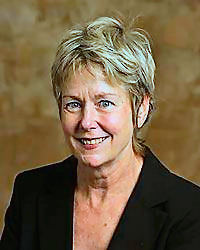
On July 28, 2006, a man took held a teenage girl at gunpoint, forced his way into the Seattle Jewish Federation offices and started shooting. One woman was killed and five others were injured. The gunman, who had a history of mental illness, told a dispatcher he was tired of Jews, Israel and American foreign policy, and he was hoping to get on CNN. Today, a jury rejected his insanity defense and found him guilty at his second trial (the first one ended in a hung jury).
This was not the first shooting at a place associated with Judaism in the United States, and it was not the last. Over the last 15 years or so, security has been increasing steadily at synagogues, community centers and museums. Here in Ann Arbor, you have to show picture ID to get into the Jewish Community Center. Many synagogues have police presence during holiday services.
All of us who frequent Jewish community buildings know why the extra security is there. At the same time, we don't spend a whole lot of time thinking about it. We tell ourselves that it's to guard against something that, realistically, isn't going to happen anyway. We know there are those "out there" who, because of ignorance or illness, think that shooting at Jews is a good thing to do. We just don't think they are anywhere near us.
I remember distinctly how I felt when I heard about the shooting in Seattle. My family lived in Seattle for four months about ten years ago, and we've visited several times, so I felt some connection. More than that, however, I remember imagining very vividly what the scene must have looked like. I placed the shooting in my mind at building that looked just like the local JCC. I could very much picture what happened and where it happened, even though I'd never been there and the building in Seattle probably looks nothing like this.
This is what having a personal connection to a traumatic event does to us. While everyone who heard about this event knew it was terrible, those of us with ties to the Jewish community had much easier access to the details of what made it awful. Anyone can, if they try, put themselves in a traumatic scene in their mind's eye. We just got there much more easily.
I was therefore somewhat surprised when I read about the verdict in this case. I wasn't surprised that the jury found the gunman guilty, although I don't have enough of the details to have an opinion about whether he was legally insane or not. What surprised me was that, before I read about the verdict, I had totally forgotten about this incident. Part of what allows me to go to my Temple on a regular basis is the ability to not vividly imagine an actual shooting when I do, and so my mind has given itself permission to file this away until needed.
Nevertheless, when I heard about the verdict, I immediately saw that same scene that I had imagined 3 years ago in my mind. For me, that is what represents the trauma of this shooting. Oddly, I have a vivid visual memory of something that I never saw. In a few days or weeks, the Seattle shooting will be filed away again. Soon enough, I and many other people, will convince ourselves that we are guarding against something that, realistically, isn't going to happen anyway. Until the next time.
Note: The picture above is of Pam Waechter, the director of the Seattle Jewish Federation's annual campaign, who was killed in the shooting. Ms. Waechter was a Jew by choice, having been raised Lutheran. As Richard Silverstein wrote at the time,
It is terribly ironic that a woman who elects to convert to Judaism in order to share the joy and fate of the Jewish people should pay the ultimate price for that commitment.May her memory be a blessing.
Wednesday, November 25, 2009
Should the President Send Condolences When a Soldier Kills Himself?

If your loved one dies while serving in the United States Military, whether they are killed in action or by accident, you will receive a letter of condolence from the President. Presidents have been doing this since Abraham Lincoln. If your loved one serves in the military and kills themselves, however, you will get many of the same things that other families get, but you will not receive a letter from the Commander in Chief. That has been true at least since the Clinton administration.
There is a push on from some military suicide survivors to change that policy. They argue that their loved ones died in service of their country, certainly as much as someone who was killed in an accident. The injuries they suffered were not visible, but they were certainly service related. Their families deserve the same consideration from the President as anyone else's, and to do so would go a long way towards reducing the shame that has for so long been associated with death by suicide, particularly in the military.
This is one of those issues which, spun the way these families and the press coverage are spinning it, seems pretty clear cut. Of course being a suicide survivor should not have stigma associated with it. These families are grieving just as much as any other, and deserve all the support we can give them.
There is a problem, however. One of the rules of thumb in responding to a suicide and memorializing people who die by suicide is that you in no way want to glorify the act of killing yourself. When you have grand ceremonies to honor their memory, you run the risk that someone else who is considering suicide will, consciously or unconsciously, view killing themselves as a means to get that kind of attention for themselves and their families. This is probably more of an issue with teenagers, who aren't fully able to appreciate the consequences of any action because their brains are not yet fully developed, but it remains an issue for others, too.
I don't know that I have a good answer for this. On the one hand, families who are survivors of military suicides should not be treated with any kind of stigma. They deserve our honor and support in a very, very difficult and complicated time. On the other hand, there is an argument to be made that even what is already done for these families -- receiving a folded flag, a 21 gun salute at the funeral -- let alone a letter from the President might look pretty appealing to a soldier considering suicide. They might think that in death they can bring honor to their family that they feel they could not bring in life.
Taking away the stigma associated with suicide in the military may well save lives by making soldiers more willing to seek help. The question is, by honoring grieving families properly, how many lives will we lose?
Friday, November 20, 2009
Predicting PTSD Ahead of Time

The U.S. military is undertaking a large research project using its own soldiers to see if there is a way to predict who will suffer from Post Traumatic Stress Disorder. They are screening hundreds of soldiers before they deploy, including their baseline stress rate, brain scans, family histories and past history of mental illness, and will be looking to see if any factor or combination of factors can predict who is at highest risk.
This is a very new way to look at PTSD, and raises interesting issues for those of us who work in trauma response. The conventional wisdom which we learn in training is that the factors that affect whether someone will develop PTSD are mostly things that occur with the trauma. We are taught that people who are more closely and directly exposed to an incident are more likely to have PTSD. People who experience dissociation and/or depression immediately surrounding the trauma are at increased risk. In addition, the more closely held beliefs, expectations and worldviews are violated, the more likely you are to have PTSD down the line.
This experiment aims to short-circuit most of those factors. What if we could predict who is most likely to experience those predictors? What if we knew that this person is at increased risk for dissociation, and that person will react particularly strongly to the violation of their worldview? What would that mean for trauma responders? What would that mean for the people themselves?
Let's suppose, for the sake of argument, that we discover that certain people have a particular kind of activity in a particular part of their brain, and that if you have that activity you are more prone to PTSD. Do we allow those people to serve in the military? Can they be police officers or firefighters? What if it turns out that that same anomaly is associated with bravery and calm under pressure, so these people also make especially good soldiers and first responders? How will we decide?
We also have to think about how we treat those people. Traumas will always happen, even if we exclude those most at risk for PTSD from serving. If we come upon someone at increased biological risk who has, say, witnessed a murder, will they immediately be referred for further care, or can early intervention still help? Will we be doing brain scans at the scene?
I often say that I love crisis work and I hate that I love crisis work. I feel guilty that I get so much satisfaction out of helping with other people's misery -- shouldn't I be hoping they aren't miserable? If this research is successful, it's possible that the whole way we proceed with this work will change. It's hard to imagine, though, that we won't need to do it at all.
Saturday, September 19, 2009
Do Now, Blame Later: Phillip Arnold Paul on the Loose

Phillip Arnold Paul has paranoid schizophrenia. In 1987, he killed a woman because he believed she was a witch and was committed to Eastern State Hospital in Medical Lake, Washington, about 20 miles south of Spokane. On Thursday, he went with a group of patients on a field trip to the Spokane Interstate Fair. Sometime around 11:30 AM, he walked away from his group, and he hasn't been seen since. This is not good.
What makes it doubly not good, however, is that there seems to be no coordinated effort to keep the public informed. I'm not in Washington, so I can't say for sure, but looking over the news reports from the last few days I see no reference to a press conference, no official statement, no news release. There is information out there, but it is very much not clear who is in charge and what they are doing.
Actually, that's not true. One thing that authorities clearly are doing is blaming each other. The union that represents workers at the hospital says that they warned about these field trips. The Secretary of Health and Human Services for Washington has hit the airwaves announcing a review of the policy that allowed Paul out in the first place. The Sheriff's Department has let it be known that they are pretty mad at hospital officials, who didn't report the escape for more than an hour. The Governor has criticized the trip. The hospital says they acted according to policy and taken this trip before. The organizers of the fair say they didn't know about it.
I'm not saying there isn't anything to criticize here, although I'm certainly not in a position to say what the policy ought to be. What I am saying is that criticism of the policy is not what the public needs to hear right now. There is a time and a place for infighting. What the public needs is to put this situation in some context and to understand just exactly how much of a threat they are under. They also need to feel somewhat confident that authorities are going to catch this man. For that, officials are going to need to present a united front.
Here's what should be happening. The communications officer for the incident command (and I sure hope they are using the Incident Command System to organize this) needs to hold a Crisis Management Breifing, which can be watched remotely by the public. He or she needs to stand up in front of the press, with representatives from the Fair, the hospital, the Sheriff's Department, the State Police, and the Department of Human Services, and make it clear that finding Paul is their number one priority. They should say that they have halted field trips (which they have) until the policy can be reviewed, which will happen as soon as they apprehend Paul. They need to detail all the various things they are doing to find him. They need to give information about his current mental state, so the media doesn't need to rely on old court documents that may or may not apply, and about how stable he is and for how long.
There will come a time for a thorough investigation. There will come a time when everyone can point fingers to their hearts' content. Now is not that time. That energy needs to be devoted to finding this guy. People can get fired for the escape later.
Monday, July 13, 2009
The Pros and Cons of a Military Smoking Ban
 Last week, a report by the Institute of Medicine recommended that the United States Military move towards being smoking-free over the next 20 years. On the face of it, the reasons to do this seem pretty straightforward. Given that the American taxpayer will be picking up the health care costs for most members of the military indefinitely, it is certainly in our best interests to have these folks stop smoking. Also, since people who smoke get sick more often with respiratory infections and the like, eliminating smoking among our soldiers improves military readiness.
It certainly seems to make sense for the military to stop subsidizing tobacco on military installations. There's no reason for the military to be encouraging people to smoke, and studies do show that increased prices on tobacco products reduce use.
However, the Quarterback, an avid non-smoker and smoke-hater, has some mixed feelings about banning smoking in the military outright. Don't get me wrong, I'm all for soldiers not smoking. I wish nobody smoked. And if we could guarantee that no person in the military ever started smoking, I'd be all in favor of that. To the extent that we can do things, like stop subsidizing cigarettes, that will discourage people from starting smoking in the first place, we definitely should.
But let's take a look at some of the statistics from that report. Thirty-two percent of members of the military smoke, compared to 20% of the general population. Soldiers on deployment are twice as likely to smoke as those stationed stateside.
To what do we attribute this? Part of it is what the report refers to as "the image of a tough, fearless warrior," who, one presumes, smokes. But I think that is missing a rather major point.
Nicotine is a drug. We all know that. When we talk about it as a drug, we are usually talking about it's addictiveness -- and it sure is addictive. But it also is a drug the same way valium or xanax is a drug -- it calms you, and may actually combat cognitive dysfunction in people with mental illness. In fact, a 2000 Harvard study published in the Journal of the American Medical Association estimated that mentally ill people, who are 4-8% of the population, account for more than 44% of all cigarettes sold in this country. In short, people use nicotine to self-medicate. That is why deployed soldiers smoke more than non-deployed ones. When stress goes up, so does tobacco use. Soldiers in battle are traumatized, and they are using nicotine to ease the psychological effects of that trauma.
And who is the person most likely to turn to a cigarette to ease stress in a war zone? Well, smokers, obviously. But a close second would be former smokers. People who have been addicted to cigarettes and who know what effect they have psychologically start wanting cigarettes under stress. The question is, how bad do we think that is?
The Quarterback recently responded to the scene of a suicide. The deceased's buddies were standing around outside the apartment, and we asked them what we could get for them in terms of food and drink. They asked for hamburgers, cigarettes and a keg. We got them the first two, but not the keg. It is well-established practice in CISM to discourage substance use and abuse following trauma. But what about cigarettes? At least one of these guys had quit smoking the month before. It just didn't seem like the time to argue about it.
On the one hand, discouraging smoking is, as a general rule, a good thing. On the other hand, I worry about having a bunch of soldiers who quit smoking to join up walking around a battle zone unable to smoke and jonesing for a cigarette like mad. I don't know what the right answer is. The Quarterback welcomes your comments.
Subscribe to:
Posts (Atom)
Meet the Quarterback

- Naomi Zikmund-Fisher
- is a clinical social worker, former school Principal and a Crisis Consultant for schools and community organizations. You can learn more about her at www.SchoolCrisisConsultant.com

Subscribe


 Posts
All Comments
Posts
All Comments