Showing posts with label politics. Show all posts
Showing posts with label politics. Show all posts
Friday, February 11, 2011
What Egypt Tells Us About Crisis Response


As you probably know, Hosni Mubarak stepped down today as President of Egypt following 18 days of street protests in Cairo and throughout the country. Others more informed than I will have intelligent things to say about what this means for the future of the country, the region, the world and democracy. And others less informed than I will have unintelligent things to say on these topics, I'm sure. A few things jumped out at me, however, from the point of view of crisis management and response.
During the protests last week, an apparently organized group of armed men in plain clothes, some riding camels and horses, attacked the protesters in Cairo's Tahrir Square

 . This received widespread coverage around the world, and widespread condemnation as well. At the same time, however, this incident was still part of the story. It did not become the story.
If you stop to think about it, that is truly remarkable. Can you imagine armed people attacking a march on Washington -- any march on Washington? The coverage would no longer be about gay rights or the Tea Party or whatever the march was about. It would be about the violence. But that didn't happen here, even though people died in the fighting. Why not?
I think the violence failed to take over the story because, in some real sense, the story was still unfolding. The "incident" here, to take a page from CISM, was the uprising. It was so unusual and so gripping and it captured everyone's attention. No doubt, had the violence ended the protests, as it did in Tiananman Square
in 1989, that would be the crux of the story. But it didn't, and one of the great principles of crisis response is that you have to wait until the incident is over. Last week, it just wasn't over. Today feels much more like an ending. Even though there is still tremendous uncertainty about what lies ahead for Egypt
 , there is a sense that this is the end of a chapter. So it is now that those most affected by the violence will start to feel it the most, and now that others will start to go back and find out the names of the dead, erect memorials to them, etc.
The other great connection I see between the events in Egypt and the principles of crisis response has to do with the actions of Mubarak
 and others in the government in the last 48 hours or so. If you listened to Mubarak's speech yesterday, the one where everyone expected him to resign and he didn't, it felt a little like you had stepped into the Twilight Zone
 . Was it actually possible that he thought that speech would placate the protesters? Did he really believe that if he said he was handing over some power but not all and working on the constitution that they'd pack up and go home?
During a crisis -- any crisis -- it is critically important that those in authority pay close attention to what people are asking for. I cannot tell you how many times I have seen the powers that be enter a room full of people who want to hear X and deliver an impassioned defense of Y. When you ask them why they do it, they say that Y is more important. Y is good and right and what people should care about. But during a crisis, people don't care about things just because you tell them they should. People care about what they care about, and the biggest mistake you can make is to ignore that.
Last night, Hosni Mubarak got up before a country -- or even a world -- that wanted him to say he was leaving and explained why he was staying. He had important reasons, reasons that seemed right and good to him. But he lost sight of the fact that what seemed right to him was not the point. He failed to address what people wanted to hear. Not only did he not say he was going, he didn't even acknowledge that that's what people were expecting.
Would it have made any difference? We'll never know. But I suspect the reaction might have been even a tad more positive if he had begun with, "I know you are expecting me to resign tonight, and I understand why, and you have a point. I will be going soon. But first we need to . . ." It wouldn't have been perfect, but it would have been a start.
And speaking of starts, the Egyptian people now have a fresh one. Their future is much less than certain, however. Let's hope they use this opportunity wisely.


Saturday, January 22, 2011
The Enduring Lesson of Keith Olbermann
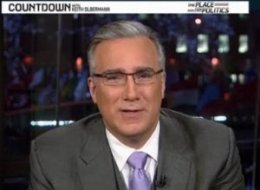
Depending on your politics and personal tastes, Keith Olbermann is a liberal pundit, a newsman, an overhyped sports reporter, a propagandist, the voice of the nation's conscience, or a traitor to his country. Last evening, he added one title most can agree on -- unemployed. Olbermann, the host of MSNBC's Countdown With Keith Olbermann
 , announced on his show last night that he was leaving the network. Rumors vary between him being fired and him leaving over a money dispute. Last night's show was his last.
Olbermann had a decidedly and unashamedly liberal bent to his show. He openly loathed Fox News, which he called "faux news," and particularly Bill O'Reilly
 and Glenn Beck,
 who often took top honors on his "Worst Person in the World
 " feature. Throughout the Bush administration, he ended his newscast by stating how many days it had been since the declaration of "Mission Accomplished" in Iraq. He was suspended last fall for violating the network's rules about political donations by reporters after he donated to three congressional campaigns, including Gabrielle Giffords.
 Even if you loved Olbermann's politics, there was plenty to squirm about in Olbermann's style. He often used the same kind of "anyone who disagrees with me is an idiot" kind of rhetoric that he criticized in O'Reilly. His segments with guest commentators often fit the formula:
- Introduce story by stating the facts intertwined with Olbermann's opinion
- Introduce guest
- Ask guest whether Olbermann's opinion is the only reasonable one, as he thinks
- In unlikely event guest disagrees, restate opinion as fact and wait for response
I'm writing about Keith Olbermann today, however, not because of my personal feelings about him leaving MSNBC or even about the show itself. Keith Olbermann deserves a nod because of something absolutely unheard of which he did, on air, with great frequency. Keith Olbermann apologized.
When you are as unabashedly partisan and fiery as Olbermann is, you wind up saying a lot of things that make people mad. And certainly, Olbermann stood behind the majority of what he had to say nonetheless. But every once in a while, Keith Olbermann had the good sense and the good grace to admit when he was wrong. A terrific example occurred after Olbermann raised questions and spoke, in a way that some felt was offensive, about the rape accusations against Wikileaks
 founder Julian Assange. He later tweeted,
Rape has touched my family, directly and savagely, and if anybody thinks I have addressed it without full sensitivity, then that assessment is the one that counts, and I apologize.Read that again, because you won't hear apologies
 like that from media people -- or from anyone else, really -- very often. He doesn't say, "sorry if I offended you," or even, "sorry that I offended you," both of which imply that the problem is the offense taken and not what was said. He says, "If I offended you then my words were offensive, and so I'm sorry."
Most recently, Olbermann delivered a passionate and, in my opinion, moving commentary the night of the shootings in Tucson on January 9th. He discussed the current political climate but, unlike many other liberal commentators, he didn't put the blame on the right. He said,
Violence, or the threat of violence, has no place in our Democracy, and I apologize for and repudiate any act or any thing in my past that may have even inadvertently encouraged violence. Because for whatever else each of us may be, we all are Americans.So, why am I bringing this up on a blog about trauma and crisis response? Because very often, after a major incident, the impulse of those in charge is to circle the wagons and vehemently deny any responsibility. The result is that those affected, who are primed to be looking for someone to blame, have a reason to step up their blame of those in charge. Few and far between are people in authority willing to say, "This shouldn't have happened, we didn't want for it to happen either, and we will be carefully reviewing everything to make sure it doesn't happen again," let alone, "We screwed up, and while we don't think this is entirely our fault, we are willing to take some of the blame. We're sorry."
It's always easier to blame those who are upset then to take a good long look at yourself. Failure to do so, however, often makes it worse. Whatever you think of Keith Olbermann, his show, or his politics, I hope that, with his departure, we don't also lose his excellent example of how to apologize gracefully and sincerely for the mistakes we all make in this world.

Saturday, January 15, 2011
Searching for a Cause in Tucson

The week since the attempted assassination of Congresswoman Gabrielle Giffords, which killed six people and injured an 12 in addition to Giffords, has been full of discussion about our political discourse. On one side, we have people pointing to the fact that Sarah Palin
 's website had a map with gunsight graphics over several congressional districts -- including Giffords' -- during the campaign, and to political rhetoric like "2nd amendment solutions" and "lock and load" as being responsible. On the other, we have people pointing out that the shooter was almost certainly seriously mentally ill.
What both sides have in common is the very human trait of seeking a reason for a traumatic incident. Studies have shown that humans are hard-wired to see patterns and causation, and if there isn't any we tend to see it anyway. From an evolutionary standpoint, this makes a lot of sense. In order to survive in the wild, animals need to have very good and detailed information about what a threat looks like, how to know when it's coming, and how to avoid it. Understanding that something can't be avoided is not very helpful. So if there is any chance at all that there is a pattern, we will find it, but we're not great at knowing if there isn't one.
If you ask me (and you did, because you're reading my blog), the choice between blaming this on political rhetoric and blaming this on mental illness is a false dichotomy. Yes, it seems extremely likely that the shooter is mentally ill. I don't have enough information to know if he is so ill that he is not criminally responsible for what he did, but it would be ludicrous to suggest that his mental state did not play a part in this tragedy.
At the same time, mental illness occurs in a context. The delusions
 that people experience are influenced by the culture in which they live. You can see this clearly if you imagine someone with a psychotic mental disorder, in some completely other time and/or place. I doubt people in the middle ages thought the CIA was monitoring their thoughts through their dental work, and I'm guessing that few such people in Mongolia believe they are Jesus.
This man's delusions apparently centered around illiteracy, mind control, the constitution and the government. Did he ever see Sarah Palin's graphic or listen to Sharon Angler speak? I have no idea. Did he hear the negative tone of current discourse about the government? Almost certainly. That is the context of our culture.
That having been said, that doesn't mean that toning down the rhetoric would have prevented this particular person from killing people. It might have prevented him from killing these particular people on this day. And maybe it would have held off the violence for long enough for someone to recognize that he really needed help. We don't know. We can't know. And we don't like that.
What do I take from all this? As they say, the best we can do is the best we can do. And whether you blame rhetoric or illness or both for this situation, it's clear we can do better with both. Talking about armed rebellion and resistance with regards to public figures is not OK, whether it caused this or not. It adds to a culture that devalues those with whom we disagree, and that can't be good for us, with or without this instance. And there are hundreds or thousands of severely mentally ill people who don't get decent help and, as in this case, sometimes don't even get noticed, because of the stigma associated with their disorders and the devaluing of its treatment in our society. That isn't just bad for them. As we learned this week, it's bad for everyone. We can do better.
And if I'm wrong, and neither of these things are at fault, and I'm just seeing patterns where there aren't any, I think our society will benefit from fixing them anyway. It's certainly worth a try.
Tomorrow: What pulled at our heartstrings in the Tucson coverage, and why

Thursday, September 24, 2009
Death By Politics, Fear By Media

Bill Sparkman, 51, was found hanging from a tree in rural Kentucky on September 12. As far as anyone knows, he was working his second job as an interviewer for the Census Bureau. Authorities are not 100% sure whether it was a suicide or a homicide. This kind of thing happens with some frequency, and so it's not surprising that it did not make national news at the time. The Associate Press didn't pick up the story until yesterday, when it reported that Sparkman had the letters "FED" written on his body when it was found, raising suspicions that he was killed because of his job with the Census Bureau.
Occam's razor tells us that the simplest explanation is the most likely one. Even if we presume that Mr. Sparkman was murdered, the most likely scenario is that he happened upon someone who didn't want to be happened upon. The area where he died has a lot of methamphetamine activity, and it's not hard to imagine him knocking on the door of a meth lab and/or a house inhabited by someone high on meth, who killed him and wrote "FED" as a way of being mocking. That scenario is horrible, but, frankly, it isn't why this has made the national news.
What people are really interested in and worried about is the possibility that Sparkman was murdered not for happening upon the wrong people, but for doing his job. It could be that someone murdered him because they didn't think the government should be asking questions, or because they just didn't like the government. Some on the political far-right have recently expressed great distrust of the 2010 census. Maybe Sparkman was murdered by someone who thought this way.
This is a sensationalistic possibility, and reporters can usually dig up someone who makes the sensational seem very real. The AP found a waitress near where Sparkman was killed, who said,
Sometimes I think the government should stick their nose out of people's business and stick their nose in their business at the same time. They care too much about the wrong things.And of course the article makes it seem like this was her answer to what she thought about the murder. More likely, it was her answer to why someone would not like the census.
The notion that someone is killing governent workers because they work for the government is fundamentally frightening to a lot of people. If, in general, you think that the United States government is, if not a force for good, at least a necessary evil, the targeting of government workers in an attempt to protest their work makes you worried for the safety of the country, and for your own safety by extension.
But the fact remains that it is far more likely that Sparkman was killed because of where he was, not who he was. And even if he was killed for working for the census, it is more likely to be the work of a single fanatic than representative of any organized movement. But that's boring, and boring doesn't get the attention of the press. Let's hope, however, that boring wins out in the end.
Subscribe to:
Posts (Atom)
Meet the Quarterback

- Naomi Zikmund-Fisher
- is a clinical social worker, former school Principal and a Crisis Consultant for schools and community organizations. You can learn more about her at www.SchoolCrisisConsultant.com

Subscribe


 Posts
All Comments
Posts
All Comments