Showing posts with label anger. Show all posts
Showing posts with label anger. Show all posts
Thursday, September 8, 2011
America's PTSD Part 3: Society on Edge


We're continuing to look at the ways American society is manifesting behaviors indicative of PTSD in the wake of the 9-11 attacks. Today's topic is the third cluster of symptoms, "Hyper-Arousal." People with PTSD are, in many ways, in a permanent state of fight or flight. They are overly alert and on guard. So are we.
People with PTSD have at least two of the following symptoms:
Difficulty falling or staying asleep. It's somewhat difficult to judge how much of America's current sleep deprivation has happened since 9-11. It is certainly well documented that on average we don't get enough sleep. What's more, we don't value sleep as a society. Few people work in places where the boss will tell you not to come in if you're tired. In fact, we don't consider exhaustion do be a legitimate reason to take a sick day -- that's faking. More and more, our institutions function on the assumption that we are awake at all hours. Congress works into the wee hours of the morning. The funniest television is on past 11. The announcement of the death of Osama bin Laden was made late at night even though it had happened hours before -- couldn't it have waited until the morning? We assume no one is sleeping, and we may be right.
Irritability or outbursts of anger. I talked at some length about how angry we are as a society in yesterday's post. Everything is a place to draw the line, make a stand and stand our ground. You're either with us or against us, with us or with the terrorists. Comparisons between politicians, political parties, grassroots organizations and the Nazis are so common we're not even surprised anymore when someone makes them.
Difficulty concentrating. Let's face it. The American public has the attention span of a flea, with apologies to all the hardworking fleas out there. The "news cycle" is getting shorter and shorter and it is easier and easier to push a big story out of it. We can't stick with a substantive news story for more than a day. A mass shooting or a celebrity wedding, sure, but not hunger, poverty, public policy or the wars. We're on to the next.
Hyper-vigilance. Consider this. The risk of a terrorist attack on American soil was no different on September 12, 2001 than it was on September 10, 2001. Does that even seem possible to you? It barely does to me. What changed on September 11 was not the risk, but our knowledge of the risk. And since then, we're constantly looking for the next one.
You can make a reasonable argument that we should be more vigilant than we were before. We were naive, and now we know. We're smarter than we were. The thing is, we're not only vigilant in smart ways. We are constantly trying to prevent whatever plot was the last one, successful or not. We take off our shoes, put up with backscatter screening and don't carry liquids on planes because those steps might have prevented a previous attempt, not because we have any reason to think anyone's going to try them in the future.
We profile Arabs and Muslims horrifically. A report that came out in the last couple of days indicates that the Mall of America has been reporting people, two thirds of them non-white, for such suspicious and sinister behavior as forgetting their cell phone at the food court or pacing outside the bathroom while they wait for a companion. This isn't just a lesson learned, it's hyper-arousal.
What's more, we seem to also be defending against entirely imagined threats. The fact, for example, that Sarah Palin said that Paul Revere was telling the British they weren't going to be taking away our arms was not just wrong, it was weird. There's a segment of society that has been obsessed with the idea that the government, or more specifically the Obama administration, is trying to take their firearms. We're more than two years into Obama's term, and not one gun control measure has been proposed. We're afraid of being unable to defend ourselves and sure that that's what "they" want, but it's not based in reality.
Exaggerated startle response. Last year, a major international terrorism scare was triggered by someone shipping watches that were taped together. A plane was grounded because a man was putting on tefillin, the leather boxes with straps that Orthodox Jewish men wear when they pray. We're a little bit jumpy.
A couple of years ago, I was flying from Washington, DC to Detroit with my family. There are four of us, so it often winds up that the two kids sit with one parent and the other sits alone. On this occasion, I was alone. The man sitting next to me put his bags in the overhead compartment and sat down. I wasn't paying much attention. Then he spoke to me, in good but accented English: "My name is Ahmed. I am a dentist from Toledo. You are safe." How jumpy must the average member of the traveling public be around Arab men on planes that Ahmed felt he needed to say that before I even registered him at all?
So, we've established that we're all acting in very PTSD-congruent ways. But why did 9-11 do this to us in a way that the Kennedy assassination, the Oklahoma City bombing or the Challenger disaster did not? I'll be looking at that tomorrow.


Wednesday, September 7, 2011
Our Numbed Society: America's PTSD Part 2

Yesterday I shared the idea that America, as a society, is manifesting symptoms of PTSD. There are three sets of these symptoms, and today we'll be looking at symptoms of numbing. People with PTSD go to great lengths to avoid and/or numb themselves to feelings and experiences related to the trauma.
Specifically, to be diagnosed with PTSD, there must be at least three of the following symptoms present:
Efforts to avoid thoughts, feelings, or conversations associated with the trauma. Traumatized people often come across as angry. It's not that they don't have a right to be angry at the people who traumatized them. But they're often just angry all the time at everyone. Anger is a very effective defense mechanism against other, more uncomfortable feelings.
If there's one thing Americans are, it's angry. You need look no further than Capitol Hill. We don't just disagree, we think the other side is a threat and evil. We are locked and loaded. And we're rude.
So, what feelings are we avoiding? Fear. If you think back to how you felt on September 11, you weren't mad. You were horrified, and you were scared. Pretty quickly, you were sad. If someone had asked you if you were mad at the people who did this you would have said yes, but anger was not the primary emotion.
The thing is that fear doesn't feel good. It feels weak. So does sadness. Anger feels strong. So we stick with anger -- at each other, at other countries, at whomever. Do you remember that feeling of togetherness we all had right after the attacks? Have you wondered why we can't seem to get it back? Because we came together in fear and in grief, and as much as we might like togetherness, we don't want to go back and feel those things again.
Efforts to avoid activities, places, or people that arouse recollections of the trauma. There was a contingent of people who got mad at President Obama for visiting Ground Zero after bin Laden was killed. They said he was politicizing September 11th (and I would argue that ship sailed a long time ago, but let's put that aside). But Obama didn't go there to give a speech or do a victory lap. He went to lay a wreath. He went to acknowledge grief. That's a no-no.
Inability to recall an important aspect of the trauma. There are certainly things about 9-11 that none of us will ever forget, but here's a test question: Following the September 11th attacks, what was the stated motivation of Al Qaeda for attacking the U.S.? If you said something like, "They hate us for our freedoms," you're not alone -- that is our dominant societal narrative. It was started by President Bush the same week as the attacks. And, if I may be so bold, it's wrong. At the time of the attacks, Al Qaeda wanted the U.S. to withdraw its troops from bases in Saudi Arabia, which it considers sacred ground. We forgot the motivation for the attack almost as soon as it happened.
Markedly diminished interest or participation in significant activities. This is a tough one. "Significant activities" for individuals are easier to define. However, I'm struggling to remember the last time it seemed like everyone was having a joint experience -- like the last episode of M*A*S*H, or even the Superbowl. Is it me, or is it just harder for us to all decide that something, other than a disaster or trauma, is important these days?
Feeling of detachment or estrangement from others. We know who our allies are in official terms. But what foreign country do we as Americans truly respect as partners these days? I can think of no one. We have become a very lonely country in a lot of significant ways. You can blame politics or policies for this, but it's also the manifestation of a gut feeling that no one really understands us.
Restricted range of affect (e.g., unable to have loving feelings). As discussed above, our primary societal emotion is anger. We don't feel joint happiness or pride anymore. We don't "put aside politics" for any common purpose. We want Congress to compromise, as long as they don't compromise on the things we want. We have lost the ability to have mixed emotions, and changing one's mind about something is weak. This is what a restricted range of emotions looks like -- anger and black and white thinking with no nuance.
Sense of foreshortened future. There is a conventional wisdom in America that the United States is no longer a superpower, or that we won't be one for much longer. Polls show we believe America is headed in the wrong direction. Every new law or policy (passed or just proposed) on both sides of the aisle is met with doomsday scenarios about how it will mean the end of America as we know it. It's one thing to say you don't like an idea, and quite another to think we can't survive it. We don't, as a country, feel very confident about our future.
Tomorrow I'll look at the third cluster of symptoms -- hyper-arousal. Later in the week, we'll examine why 9-11 impacted us this way when other things didn't, and at what kind of "treatment" we might recommend for our traumatized society.

Saturday, January 22, 2011
The Enduring Lesson of Keith Olbermann
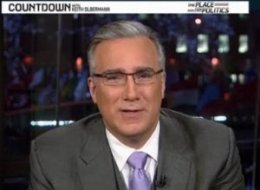
Depending on your politics and personal tastes, Keith Olbermann is a liberal pundit, a newsman, an overhyped sports reporter, a propagandist, the voice of the nation's conscience, or a traitor to his country. Last evening, he added one title most can agree on -- unemployed. Olbermann, the host of MSNBC's Countdown With Keith Olbermann
 , announced on his show last night that he was leaving the network. Rumors vary between him being fired and him leaving over a money dispute. Last night's show was his last.
Olbermann had a decidedly and unashamedly liberal bent to his show. He openly loathed Fox News, which he called "faux news," and particularly Bill O'Reilly
 and Glenn Beck,
 who often took top honors on his "Worst Person in the World
 " feature. Throughout the Bush administration, he ended his newscast by stating how many days it had been since the declaration of "Mission Accomplished" in Iraq. He was suspended last fall for violating the network's rules about political donations by reporters after he donated to three congressional campaigns, including Gabrielle Giffords.
 Even if you loved Olbermann's politics, there was plenty to squirm about in Olbermann's style. He often used the same kind of "anyone who disagrees with me is an idiot" kind of rhetoric that he criticized in O'Reilly. His segments with guest commentators often fit the formula:
- Introduce story by stating the facts intertwined with Olbermann's opinion
- Introduce guest
- Ask guest whether Olbermann's opinion is the only reasonable one, as he thinks
- In unlikely event guest disagrees, restate opinion as fact and wait for response
I'm writing about Keith Olbermann today, however, not because of my personal feelings about him leaving MSNBC or even about the show itself. Keith Olbermann deserves a nod because of something absolutely unheard of which he did, on air, with great frequency. Keith Olbermann apologized.
When you are as unabashedly partisan and fiery as Olbermann is, you wind up saying a lot of things that make people mad. And certainly, Olbermann stood behind the majority of what he had to say nonetheless. But every once in a while, Keith Olbermann had the good sense and the good grace to admit when he was wrong. A terrific example occurred after Olbermann raised questions and spoke, in a way that some felt was offensive, about the rape accusations against Wikileaks
 founder Julian Assange. He later tweeted,
Rape has touched my family, directly and savagely, and if anybody thinks I have addressed it without full sensitivity, then that assessment is the one that counts, and I apologize.Read that again, because you won't hear apologies
 like that from media people -- or from anyone else, really -- very often. He doesn't say, "sorry if I offended you," or even, "sorry that I offended you," both of which imply that the problem is the offense taken and not what was said. He says, "If I offended you then my words were offensive, and so I'm sorry."
Most recently, Olbermann delivered a passionate and, in my opinion, moving commentary the night of the shootings in Tucson on January 9th. He discussed the current political climate but, unlike many other liberal commentators, he didn't put the blame on the right. He said,
Violence, or the threat of violence, has no place in our Democracy, and I apologize for and repudiate any act or any thing in my past that may have even inadvertently encouraged violence. Because for whatever else each of us may be, we all are Americans.So, why am I bringing this up on a blog about trauma and crisis response? Because very often, after a major incident, the impulse of those in charge is to circle the wagons and vehemently deny any responsibility. The result is that those affected, who are primed to be looking for someone to blame, have a reason to step up their blame of those in charge. Few and far between are people in authority willing to say, "This shouldn't have happened, we didn't want for it to happen either, and we will be carefully reviewing everything to make sure it doesn't happen again," let alone, "We screwed up, and while we don't think this is entirely our fault, we are willing to take some of the blame. We're sorry."
It's always easier to blame those who are upset then to take a good long look at yourself. Failure to do so, however, often makes it worse. Whatever you think of Keith Olbermann, his show, or his politics, I hope that, with his departure, we don't also lose his excellent example of how to apologize gracefully and sincerely for the mistakes we all make in this world.

Saturday, August 28, 2010
The Impact of Nicole John's Death

Nicole John, 17, died at about 4:15 AM on Friday, after she climbed out onto a ledge outside a 25th floor apartment in Manhattan and fell onto a 3rd floor outcropping. John, who was the daughter of U.S. Ambassador to Thailand Eric John, was to have started classes at Parsons New School of Design this fall. A statement from Parsons indicates that the school's "crisis management team" will be available to counsel those who were at the party that Ms. John was attending when she died, or others affected.
To answer what seems like the natural question, there is plenty of evidence that John was either drunk or under the influence of some other substance when she fell. It appears she may have decided to step out onto the ledge to take a picture -- a camera was found near her. The host of the party, who is 25, has been arrested on charges relating to having alcohol at a party with a minor present. Ms. John had a fake ID, and had been at a club with friends until about 2 hours before.
The crisis management team at Parsons has an interesting job to do here. Since John was a new student, the number of people affected by her death is probably lower than would be in even a few weeks. However, those who are affected are probably also new students, many away from home for the first time, all relatively young, and therefore particularly vulnerable. One could imagine that having a new friend die tragically just as school was starting would color your freshman year in school, and beyond.
The themes the team can expect to hear are complicated, too. Those who were not at the party are likely to be angry, and not to be comfortable with that anger. Ms. John did something dangerous when she drank too much, and that caused her to do something she would never have done while sober. Her friends are going to be mad -- at the people who were there, at the host of the party, and at Nicole John herself. But being mad at the person who died is never easy, because it's hard to reconcile being angry at someone and being sad that they're dead at the same time.
For those who were at the party, you can add a layer of guilt on top of all that. Folks will feel guilty that they didn't stop her, guilty that they let her get drunk, and guilty that they themselves may have been too impaired to realize what was happening. On top of that, there has been an arrest, which, rightly or wrongly, makes them wonder if something they express at this point will make the police look at them. So they feel guilty, but may be afraid to talk about it for fear that their guilt will make them look, well, guilty. Our society doesn't deal well with the difference between someone feeling guilt because they could have done differently and someone being guilty of a crime.
As for Ambassador John's family, one can only imagine what they might be experiencing. All of the above seems likely. Published reports suggest that Nicole John was not new to drugs and alcohol, and perhaps this was the moment they knew was possible but prayed would never come. Or perhaps they didn't know, or couldn't acknowledge, the trouble she was headed for. No one deserves to die the way Nicole John did, no matter what else they may have done. And certainly no parent deserves to get the phone call the Johns family got early Friday morning.
Monday, July 26, 2010
Tragedy Upon Tragedy as Car Crash Victims Identities Accidentally Swapped

Abby Guerra, 19, and Marlena Cantu, 21, along with three of their high school friends, were returning to Arizona from Disneyland
 on July 18 when the SUV they were riding in blew a tire, lost control and rolled over several times. Reports on that day said that Guerra was killed at the scene and Cantu was in critical condition. Another friend died at the hospital, and the remaining two were severely injured. This, by itself, would be an awful situation.
Guerra's autopsy was a relatively low priority, and the county coroner was very busy, so it was scheduled for Friday, July 23. On Saturday, July 24, her dental records were compared and the startling discovery was made that the body in the Maricopa County morgue was not Abby Guerra. It was Marlena Cantu. Abby was in critical condition in the hospital with Marlena's family surrounding her. Abby's family was planning her funeral, but she wasn't dead.
This sort of thing should not happen, and for the most part it doesn't. There was a similar case in Indiana in 2006, but such mix-ups are, as they should be, the exception. This is the cruelest kind of mistake.
When someone we love is suddenly killed or seriously injured, the situation feels surreal. The most typical reaction to the news is, "This can't be true." Many people actually say those exact words, sometimes over and over and over. In this incident, it actually wasn't true. Guerra's family spent a week trying to grasp the reality of the situation, only to discover that they were, basically, right in the first place -- this wasn't real. Cantu's family, has the awful reverse -- having spent the week very worried but grateful she was alive, they have found out that she isn't.
The worst of it, for Marlena Cantu's family, is not just that she is dead. That by itself would be bad enough, and by itself would cause them to say "this can't be true." But, on top of that, they have a very real reason to believe that it might not be true. After all, if Guerra can be thought dead and actually be alive, why can't Cantu? And while you and I, looking from the outside in, may know that's not going to happen, and while the Cantus may know it on some level as well, one can hardly blame them if they have trouble accepting it.
Aside from disbelief, I would expect the Cantus to also be experiencing some anger. First of all, for obvious reasons, they are probably mad at emergency personnel, medical personnel and the medical examiner for getting this wrong in the first place. It would be understandable as well if they were mad at the Guerras on some level. This is a zero sum game -- one woman is dead and one is alive -- and so, on some level, the fact that Guerra is alive appears to cause Cantu's death. That isn't a rational statement, but people who have just suddenly lost a loved one are not in a particularly rational place. If they're like a lot of people, they're mad, they know they shouldn't be mad, and they're mad at themselves for being mad. That doesn't help much, but it's hard to avoid.
My heart certainly aches for both of these families, for the mix up, for the accident, for the struggle Abby Guerra is now engaged in for her survival, and for the emotional roller coaster they will be on for a long, long time.
Monday, March 8, 2010
Protesting the Fallen

The United States Supreme Court agreed today to hear an appeal of a $5 million verdict against a number of members and clergy from Westboro Baptist Church of Topeka, KS. The case stems from the church's sponsorship of demonstrations at the funerals of servicemen and -women who have been killed in Iraq or Afghanistan. Their church teaches that God is punishing the United States for tolerating homosexuality, and that these casualties, the deaths on 9/11, and a number of other things are the result of this tolerance. This particular case was brought after the group picketed the funeral of Lance Cpl. Matthew Snyder with such signs as "Thank God for Dead Soldiers." The family sued for for emotional distress and invasion of privacy and won.
I should say at the outset that I find the teachings of Westboro Baptist Church completely repugnant, and I in no way wish to appear to defend what they did. Whether or not their actions were protected by the Bill of Rights, they were incredibly offensive. I also don't want to in any way appear to say that having these people show up at your loved one's funeral is a good thing, or even a neutral thing.
What I wonder, though, is how much emotional distress this protest actually caused. I think we can probably agree it is not zero. People processing a traumatic loss find comfort in some things and difficulty in others, and this definitely caused difficulty. There is no question that the funeral would have been a better, more private, more tasteful event had the protesters not been there.
At the same time, however, this family was in a tremendous amount of emotional distress to begin with. They were angry, they were in shock, they were undoubtedly a mess. I have no doubt that the protesters completely enraged them, and I don't blame them one bit. The question is, how much did the protesters make their emotional states worse, versus how much did they simply provide a really obvious and convenient target for those emotions?
I am sorry Lance Cpl. Snyder died. I am sorry that these horrible people decided to picket his funeral -- they shouldn't have. In the end, however, Snyder would be dead whether they showed up or not. That would be awful, whether they showed up or not. And that part isn't their fault.
Thursday, December 31, 2009
The Decade in Crisis Response

This week, many in the blogosphere are writing about their "top 10" or "bottom 10" for the past year or decade, or about their hopes for the coming year in their particular area of expertise. I thought long and hard about writing about my hopes for the coming year in crisis response, but my honest hope is that very few people will need crisis response in 2010. That may be unrealistic, but if we're talking about New Year's Wishes, then that's mine. Besides, I am a Monday Morning Quarterback, which means I specialize in looking back. So here is my review of the last decade's major crises (as designated by my executive Quarterback fiat) and how they were handled:
- Y2K. Remember that? Remember how civilization as we know it was going to come to a grinding halt at the stroke of midnight 10 years ago? This was the crisis that wasn't. Quarterback Points go to the people who realized there was a problem and set about trying to solve it. Quarterback Demerits for the complete failure of anyone in government to share any kind of unified message about what to expect, or even to figure out how big the problem really was. The result was people with stockpiled food and weapons and nothing to do with them. Never a good thing.
- 9-11. This was undoubtedly a defining moment for our country and perhaps for the world. It also was a defining moment in crisis response to see what the early trauma intervention community could do on a truly huge scale. Quarterback Points to ICISF and the many CISM Teams around the country that went to Ground Zero for months after the event. Points also to the various agencies that recognized the need of their people for immediate and longterm mental health support. We also have points for the surrounding communtiy in New York that took responsibility for nourishing the first responders' bodies and spirits. Finally, points for our country and the world for recognizing the need to support each other in addition to getting angry. In a million small ways, for a few weeks we all remembered what it meant to be human. We were all in this together. Quarterback Demerits to the quick transformation from a balance between the emotional reaction and the tactical response to an entirely action-oriented focus where grief and trauma had no place to breathe. Big demerits also to the brass at the New York City Fire Department who had long resisted implementing CISM in their organization and had no effective way of supporting their people, and to EAPs and corporations who violated basic rules of CISM like "don't mix the people who were there with the people who weren't" and then threw up their hands and said that CISM doesn't work.
- Hurricane Katrina. Much has been and will be written on the governmental response, or lack thereof, to Katrina. While I certainly have opinions on whether things were handled decently, I'm only looking at the emotional and mental health repercussions. Therefore Quarterback Points to Jesse Jackson and other leaders, particularly in the African American community, who recognized quickly that dispersing the residents of New Orleans throughout the country was a bad idea. People needed to stay together and as close to home as possible. I didn't get that at the time, but I see it now. Quarterback Demerits to everyone who opened their mouth without sufficient information during and immediately after the storm, or who put a rosy face on things to save their own rear ends. It is one thing to not have your needs met. It's another to have someone say on national TV that they are helping you when they aren't. From "Heck of a job, Brownie," to press conferences claiming there were no people stranded at the convention center, what was said publicly was a kick in the teeth for the people of New Orleans.
- H1N1. If you read this blog with any frequency, you know I've had a lot to say on this topic. This story isn't really over yet, but that's never stopped me before. Quarterback Points to the CDC and local health departments for coordinating their fall prevention and education efforts so much better than they did in the spring. Quarterback Demerits also to the CDC and local health departments for completely failing to coordinate in the spring, causing the message to be garbled, confusing, and scary. Demerits also go out to Joe Biden for his absurd comments about flying on airplanes, and to every person who had the unmitigated gall to try to use this disease as an argument regarding immigration policy. Finally, the whopper of all demerits to the U.S. media, who simply could not report facts without hype and are still having trouble doing so, and who can't seem to find context for statistics to save their lives.
Saturday, December 19, 2009
2,000 People Trapped in the Chunnel: How Not to Handle a Crisis

Five trains between France and England broke down under the English Channel on Saturday, trapping about 2,000 passengers for up to 16 hours. Whether this sounds like a particularly bad situation or just a travel mishap to you probably depends on your familiarity with the "Chunnel" trains and/or whether you are at all claustrophobic. I myself try very hard not to think about it when I'm taking a tunnel under a large body of water, because I know that if I do I will freak out. I think 16 hours would give me a little bit too much time to think about the water above me.
The trip from Paris to London (or vice versa) usually takes about 2 hours and 15 minutes. No one gets on one of those trains with the idea that they will need food, water, pillows, blankets or significant amounts of medicine. No one plans to spend the night. Making matters worse, the trains apparently were carrying large numbers of children coming back from Disneyland Paris. There was no power on the trains and hence no temperature controls -- some stories report temperatures of 104 degrees Farhenheit while others report that passengers were very cold. The toilet facilities on the trains are not designed to accomodate this many people for this long, and they started to overflow. It was dark, there was no water, and people started to get sick.
If you read the accounts of this event given by passengers when they finally got off the train, there is one theme that runs through all of them. The lack of communication from Eurostar, the company that operates the train, and from train and rescue staff, left a lot of people very upset:
There was no communication at all.
They kept changing their story, so we didn't know what to believe.
We’d been sat trapped in a train for four hours and no one told us what was going on.
The driver locked himself in the engine room and we were knocking on the door asking what was going on – you could just hear him inside, crying. Passengers were getting very angry.
All we were told on the intercom was to ‘inhale less and keep seated’.
Someone came round and told us to stop breathing heavily because there wasn’t enough oxygen for everyone.
Staff just didn't seem to be telling people what was happening.
Staff are pleasant but have no idea.
It was an utterly disgraceful service and the lack of communication was unforgiveable.
It beggars belief in terms of the lack of organisation, incompetence and lack of information on the part of Eurostar.
The lack of communication caused people to become a lot more distressed than necessary,
We weren't ever told a huge amount of what was going on, the information was so vague.
Throughout this entire ordeal there was almost no information, no customer care and no help or advice.
Communication was the main problem, there were lots of confusing messages.
There was very, very poor communication from the staff.
During a major crisis, it's not unusual for a company or organization to "circle the wagons." They don't want the wrong information to get out, and they want to limit the damage caused by the incident. The result is that they don't say anything to anyone until they are very sure of what they are saying. We experience this in big and small ways every day -- an airline doesn't tell you your plane will be late even though you can tell the plane you're leaving on hasn't arrived; the police have "no comment" when it is completely obvious they are focusing in on a single suspect; the cable company tells you your call is important to them, but not how long you'll have to stay on the line.
There are certainly times when this lack of information may be necessary, as in the police investigation above. However, it is not necessary nearly as often as it is used. Organizations can afford to share a lot more information than they are naturally inclined to, but it takes some skill. A good example of what not to do is in the employees who were suggesting that people not breathe so much on the trains. There is honesty, and then there is tactlessness.
Imagine, though, if the train staff had said,
We know this is very upsetting. We are doing everything we can to get you out of here. Right now, however, we do not know how long that is going to take. We apologize, and we will let you know when we have more information.Would that have made everyone calm and happy? Probably not. But it would have given people one less thing to be angry and stressed about. It would have eliminated the perception that information was out there and wasn't being shared, and the fear that things were much worse than Eurostar was letting on. This experience would still have been truly awful, but perhaps it wouldn't have been so traumatic.
Tuesday, December 1, 2009
The Washington Shootings: Moving On or Just Moving?

Early this morning, Seattle Police shot and killed the alleged gunman in the murders of four Lakewood, Washington police officers. Whatever motivated this man to do what he did, he will never hurt another person again. So ends the story.
The story doesn't really end there, however, because there is plenty of traumatic stress for those involved and plenty of follow-up news coverage for the rest of us. The long process of coming to terms with what happened is just beginning for those who witnessed the shootings and the families and fellow officers of the victims.
As this story has unfolded, a lot of anger has bubbled to the surface. It seems that this anger is pointed, broadly, in two directions.
The first is at the gunman. This makes sense -- he is the one ultimately responsible for his own actions. It comes as no surprise to those of us who watch police dramas on TV that the suspect did not come out of his confrontation with police alive. That is not to say in any way that his shooting was not appropriate, but rather that, when hunting for a cop killer, the preservation of his life is not the highest priority on everyone's mind. Generally, they come quietly or they come dead.
The second place that anger is directed is at Mike Huckabee, or more broadly at the criminal justice system. Huckabee, when he was governor of Arkansas, granted clemency to the alleged killer. This was one of what appear to be a large number of opportunities that were missed, both before the Arkansas clemency and after, to keep this man away from the public.
We all know that Mike Huckabee, or this or that prosecutor, or this or that judge, did not pull the trigger in these shootings. By being angry and blaming them, however, we are reassuring ourselves that this could have been prevented. We need to do that, because the alternative is too scary to fathom -- that there are people out there who just want to kill other people, we don't know who they are, and they can't be stopped. By blaming these officials, we tell ourselves that if only everyone did their jobs we would be safe. I have no idea whether any one or all of these people should have done anything differently, given the information they had at the time. I do know that even if they had, they would not have stopped every violent sociopath out there.
If you want to understand the primal fear we are shunting to the side, try talking to the young child of a police officer this week. They will tell you they don't want their mom or dad going out for coffee. The bogeyman is real. The one in Washington may be gone, but we don't want to reckon with the idea that there may actually be other ones hiding in the closet.
Wednesday, September 9, 2009
Stephen Farrell: Survivor's Guilt, Survivor's Anger

New York Times reporter Stephen Farrell was rescued from the Taliban early this morning. He and his translator, Sultan Munadi, had been taken captive in Afghanistan four days before. The raid by British soldiers that rescued Mr. Farrell resulted in the death of both Mr. Munadi, one of the British soldiers and at least two others (news reports conflict about how many and who they were).
Most of us have heard the term "survivor's guilt." It's the guilty feeling that people have when someone else has died in an incident that could have killed them. It's the feeling of the person who called in sick to the World Trade Center on 9-11, or who skipped the exercise class at LA Fitness the night of the shootings, or who survived the accident that killed their friend. I think it's safe to say that Stephen Farrell is, at best, at high risk for feelings of survivor's guilt, both because of Mr. Munadi's death and because a soldier died trying to save Farrell's life.
There's a difficult twist to this episode as well, however. The British went in to rescue Farrell in part because he is a British citizen. His colleague, Munadi, died at least in part because the British initiated the raid, although it isn't clear who fired the shots that killed him. Certainly the British soldier died trying to resuce Farrell. This has the potential to leave some tricky mixed feelings.
On the one hand, Farrell has expressed great thankfulness for his rescue. He is glad to be alive and glad to be free. On the other hand, it has to have crossed his mind that, were it not for him, Munadi would probably not have been abducted and that, were it not for the British coming to rescue him, Munadi might still be alive.
Obviously none of that is Farrell's fault. It also doesn't mean the British military made the wrong call in going in. But it leaves Farrell feeling grateful to the same group that he is, on some level, angry at, and angry at someone who died trying to save him. We can all take a step back and say that all of this was the fault of the Taliban. Farrell probably can too. But the gut feelings following trauma are often not nearly that logical, and Farrell may not just experience survivor's guilt, he may experience survivor's anger, too.
Sunday, September 6, 2009
Who Owns Your Death?

Lance Corporal Joshua M. Bernard, 21, died in Afghanistan on August 14. An Associated Press photographer embedded with his unit captured a picture of him after he was wounded and before he was transferred to a medical facility, where he died. This week Defense Secretary Robert Gates blasted the AP for publishing the picture, against the express wishes of Bernard's family.
On Friday, my niece's high school notified parents of the death of one of her classmates. Support was offered to students and guidance offered to parents, but no information was shared about the cause of death. The local newspaper reported it was a suicide.
These two events may not seem to have much in common, but in fact they capture a very common problem in traumatic situations. What happens when the powers that be, or just some random witness, have information about a death that the family does not want to share?
There are always two sides to this argument. In the case of Lance Cpl. Bernard, the AP argues that publishing the picture helps the public understand what war is really about. It says it is,
choosing after a period of reflection to make public an image that conveys the grimness of war and the sacrifice of young men and women fighting it.Bernard's family, on the other hand, feels that the publication of the photo inflicts more pain on a family already traumatized and grieving. They prefer not to remember their son that way, and do not want others to see him that way. His father says the photo is disrespectful of his memory.
In cases of suicide, families often want to withhold the fact that their loved one killed themselves. There is a tremendous stigma in our society about suicide. Families often refuse to accept that the victim's death was, indeed, a suicide. Even if they do accept it, they fear that others will look down on them as the family, or will think ill of the dead family member who completed the suicide. It is not at all uncommon for families of those who complete suicide to hear from people trying to be "helpful" that their loved one was selfish or is going to Hell. Not surprisingly, families opt to limit the number of people who have cause to be "helpful" in this way.
On the other hand, from a high school administration point of view (and just generally from a public health point of view), it is important to talk about suicide. While no one wants to destigmatize it to the point where it is considered completely normal and acceptable, community leaders do want to get people talking about the depression and desperation that leads to suicide. The stigma surrounding suicide can prevent those who are contemplating killing themselves from getting the help they need, because they fear people's reactions if they talk about it. In a school setting, often the students know a classmate has completed a suicide, even when the administration does not acknowledge it. Not talking about it when everyone knows about it further sends the message that help is not available, and can lead to the clustering of suicides at high schools that sometimes occurs.
So, what to do? How do you weigh the educational and/or news value of a picture or a piece of information against the legitimate needs of a family in crisis? Whose needs for mitigating critical incident stress win? And whose values should we base that decision on?
We have a strong custom in this society of respecting the wishes of families of the dead. Because of this, violating those wishes provides an easy target for the natural anger that families feel after a traumatic death. I can't say that the AP made the right choice in the death of Lance Cpl. Bernard, even if I wish the family had given permission. They didn't. And I am not convinced that the picture had so much value that it should eclipse those wishes. Luckily, I don't have to make judgements like that most of the time.
As a school administrator and crisis team member, I will not disclose that a death was a suicide without family permission. But I will do two things to try to get around this. The first is that I will explain why I think it is important to share the information. Very often families are willing to hear that their disclosure may help another suicidal person, but they do not make that connection alone. School staff are also often reluctant to share this information, even if they can. We have to educate them about suicide prevention as well.
The second is, if I cannot get permission, to acknowledge when others say they heard it was a suicide. You can talk about it in the abstract even if you can't confirm. So when a child says, "I heard he killed himself" or "the paper says she took pills" I wills say, "I heard that too. If that were true, what do you think about that?" This finesses the whole question of telling when someone's death is a suicide by letting the students tell themselves. The AP could have written a story about the picture without publishing the picture, and explained that the family, who could be kept anonymous, did not give permission. This would have been a chance to talk about the impact of war on families at home, something they chose to gloss over by publishing the picture.
I think the AP, school administrators, and anyone else who has tough decisions to make about sharing or not sharing information, would do well to ask themselves what their ultimate goal is. If it's just to share information for its own sake, that takes you in a different direction than if, as in both of these cases, the aim is to educate. As the saying goes, there is more than one way to skin a cat, and there is more than one way to educate following a traumatic death.
I have chosen not to add the picture that the AP published of Lance Cpl. Bernard after his injury. I hope that the picture above is more in keeping with how the family would like this soldier remembered.
Friday, September 4, 2009
The Georgia Murders

Last Saturday morning, a man called 911 in Brunswick, GA, and said that he had returned home to find 7 members of his family dead and two critically injured. One of the two died on the way to the hospital. The other is still on life support. Today, the caller was arrested for the murders.
It's hard to imagine something more horrific than this. It's difficult to imagine what brings a person to this level of violence, particularly against their own family. It's also hard to imagine how Diane Isenhower, whose ex-husband, four children, ex-brother-in-law and ex-sister-in-law, as well as her daughter's boyfriend, were all murdered and whose grandchild is in critical condition, moves on from something like this. Now her ex-husband's nephew is under arrest. That hardly makes things less complicated.
What particularly caught my attention in the coverage were a couple of comments that various people made about how those affected were coping. Isenhower's brother-in-law, Clint Rowe, expressed concern about the police officers:
They're the ones who walked in on that, so you know it wears on the police as well.I think it's remarkable that a member of this family would think of the police at this moment. It's not that, when you think about it, it's particularly surprising that police officers would be affected by working on a case like this, particularly if they were on scene when the bodies were first found. It's just remarkable that anyone from the family would think of it, given what they themselves are going through.
The Police Chief also commented on the burden of what the police are going through right now. Chief Matt Doering responded to some criticism that police have not released much information about the case, and said that releasing more information will not stop people from being afraid:
We, too, have that same fear. We're the ones that have to get out there and try to make people feel better as best that we can
I felt a personal connection with the Chief when I read this. As a school administrator, I have several times been in the position of having to keep things confidential in a crisis and under pressure, and to reassure people about safety when I wasn't feeling so safe myself. People get very upset when they feel they don't have all the information, but often that is more about directing their anxiety and anger towards the nearest available target than it is about anything those in charge have done wrong.
Information does help, but it doesn't change reality and sometimes it just can't be released. At the end of the day, even with all the information in the world, this community must come to grips with the fact that 8 people were brutally murdered, allegedly by one of their own. Knowing the intimate facts of the case will not make that much easier.
Thursday, August 27, 2009
Waking Up From a Nightmare You've Gotten Used To

It is hard for most people to even imagine, but let's try. Your daughter is 11 (this part is easy for me, since my daughter actually is 11). She leaves the house to walk to school, and you stand on your driveway, watching her as she goes. When she's about a quarter of a mile away, you see a car pull up next to her and someone pulls her inside. The car drives away before you can get there. No trace of her is ever found.
This is a nightmare for any parent. It would take a tremendous amount of assistance and intervention to return you to any kind of functioning. You do not "get over" something like this. The fact that your daughter was never found means that accepting that she isn't coming back is going to be that much harder and take that much longer. Eventually, you find a space for this reality in your mind, and you reach a "new normal."
Then one day, 18 years later (it happens to be the day before what would have been her 29th birthday), the phone rings and you hear something you can't believe. A woman has walked into a police department and told them she is your daughter. Two people are under arrest for kidnapping. You have woken up from the nightmare.
Obviously there is much to celebrate in the reappearance of Jaycee Dugard in California on Wednesday, 18 years after her abduction. It certainly is preferable to the more common alternative, where what is finally found is only remains. At the same time, I strongly suspect her parents and she are going to experience some mixed emotions in the days, weeks and months ahead.
Jaycee's parents somehow came to grips with her being gone and built their lives on the notion that she wasn't coming home. It was imperative for them to do this, because it was the only way they could reclaim their lives. Now, they're going to have to readjust back. One presumes that will be easier, but that doesn't make it trivial. They have missed 18 years of their little girls' life. They can't pick up where they left off with her. Whatever guilt they had about not being able to save her in 1991 is going to come back, compounded by whatever residual anger Jaycee brings with her as an adult.
I am thrilled for the Dugard family, and I know they are truly thankful for this miracle. I just hope that everyone gives them -- and they give themselves -- the space to have some mixed feelings moving forward, and the time to resolve them as best they can.
Tuesday, August 18, 2009
The Trouble With "Closure"

The District Attorney in Westchester County has concluded the investigation into the crash that killed 8 people on the Taconic State Parkway in July. The crash was caused when a woman who was reportedly drunk and under the influence of marijuana drove her van with five children in the wrong direction on the Parkway and hit an SUV, killing three people in the SUV, four of the children and herself. The D.A. has announced that there will be no criminal prosecution in this case.
There has been a lot of backlash surrounding the lab reports that say the driver had a blood alcohol level of 0.19 (legally drunk is 0.08) and had chemicals from marijuana in her system. Her husband has said:
She did not drink. She was not an alcoholic. Something medical had to have happened. I never saw her drunk since the day I met her.He insists that he does not believe alcohol caused the crash that killed his wife and one of his two children, despite both the toxicology reports and the fact that a vodka bottle was found in the van.
Michael Bastardi, Jr., the son and brother of two of the men killed in the SUV, on the other hand, has this to say about the husband and his family:
I am appalled that they won’t face the facts that she was drunk and killed seven innocent lives and ruined the lives of so many people.The Bastardi family is planning a lawsuit.
So what is going on here? Is the husband in denial? Is Bastardi taking this tragedy out on the husband? Yes, and yes. Occam's Razor tells us that when you have two competing theories that have the same results, the less complicated one is true. In that case, the driver was almost certainly drunk. The husband is in denial.
So technically Bastardi is right, the husband "won't face the facts." But the word "won't" tends to imply "could if he really wanted to," and my guess is that he actually really can't right now. The facts are not just that his wife and daughter are dead. The facts are not just that his wife is at fault, or that 6 other people died too, or that everyone is angry at his wife, including him. Throw in there that his wife drank incredibly heavily and he didn't know it. I don't know if she did this a lot or this was a rarity, but it seems clear that her husband was clueless.
On the other side, the Bastardis are angry at the husband. They look at this situation and say that it is perfectly obvious that the wife was to blame, and since she's dead and her husband is defending her, he is a very convenient and obvious target for their natural rage. In tragedy, our minds go to blame. In this one, it doesn't have far to go.
The fact is also that both of these families are traumatized. They are trying to process a traumatic event of monstrous proportions. They won't be successful at doing that until all the investigating and suing and everything else is done, because all of that is retraumatizing. I'm not saying the Bastardis shouldn't sue -- I have no idea. I'm just saying that lawsuits tend to prolong the healing process.
At the same time, I cringe when I hear people say that families in a traumatic situation need to find "closure." That word implies that when all of this is over, this tragedy will be in a box and they can close the lid and move on. The fact is, while they are doing the hard work of processing what has happened, that box doesn't get closed and left behind. The work they are doing now is building a box into which this will fit, and then finding a space for it in their minds. That means moving some other stuff around, and their minds will never be quite the same. They may be healthy. They may be happy. But this will always be a part of them.
At some point, the husband is going to find a place for his wife's substance use/abuse in that box. At some point, Michael Bastardi, Jr. will find a place for anger and blame. Maybe they will "get over" their denial and anger. Maybe today's decision not to charge anyone will help, maybe a lawsuit will, maybe both will hurt. But there will be no closure. The only way to close the box is to bring the dead back to life and make this never have happened. Short of that, for both families, the lid will stay open.
Thursday, August 13, 2009
Friendly Fire

It reads like the "before the opening credits" section of a Law & Order episode. On May 28, New York City Police Officer Omar Edwards finished his shift and came out to find someone breaking into his car. He wrestled with the suspect, who got away, and then chased him with his gun in hand. Officer Andrew Dunton, who was working in plain clothes, drove by with two other officers and saw an armed man chasing another man down the street. He got out of the car, crouched down behind the door and told Edwards to stop and drop his weapon. Edwards turned towards Dunton with his gun still in his hand and Dunton opened fire, killing Edwards. When responding officers removed Edwards shirt, they found a Police Academy t-shirt, and then found his badge in his pocket. Roll opening credits.
The thing is, this story is true, and today a grand jury in New York declined to indict Officer Dunton, who has been on administrative leave since the shooting. You probably didn't even need to look at the picture with this post to predict that Edwards is African-American and Dunton is White. I don't know what happened that night, and I didn't hear what the grand jury heard, but I have to imagine this outcome will not be without controversy.
Death of a police officer in the line of duty is a "big one" in Critical Incident Stress Management, as are most officer-involved shootings. While Edwards wasn't technically killed in the line of duty, I think for CISM purposes that is a distinction without a difference. The fact that he was killed by "friendly fire" is not going to make this situation any smaller.
One of the reasons CISM works is that groups that work together in the same job with the same experience support each other really well. But it is extremely important that groups for CISM interventions be homogeneous in terms not only of their exposure to the event but their cohesion before the event. You absolutely cannot intervene with a group if there are factions within it or blame and anger at each other. The CISM response to this incident would have to very carefully sort through who goes with whom, looking not only at who was where when it happened and who works with whom, but who is blaming whom.
In the CISM Planning 5 T's of target, timing, trauma, theme and team (or more rightly the 6 T's, including technique), sorting out the targets will in some sense be by theme, and you're going to need a big and trusted team to intervene appropriately. What a mess.
Monday, August 10, 2009
What Makes an Incident a "Bad One"

I know it when I see it.
Supreme Court Justice Potter Stewart famously used that line to try to define hard-core pornography. That's how it feels sometimes trying to define a critical incident. That's particularly true when you're dealing with first responders -- cops, EMS, firefighters -- who see this stuff every day and can't possibly be traumatized by all of it. What makes one incident particularly bad?
I know it when I see it.
Yesterday, California Highway Patrol attempted to stop a car on a traffic violation in Dinuba, California. The car wouldn't stop and the police chased it for about four miles. Then the car ran a stop sign and hit a pickup truck carrying 5 children. As of this writing, 8 people -- 5 children and all 3 adults from the car -- are dead. Four of the children, ages 1,3,4 and 7 were ejected from the truck and died at the scene.
I know it when I see it.
There are certain rules of thumb about critical incidents. There are certain types of things that are likely to impact a first responder -- line-of-duty-death or serious injury, officer-involved shooting, trauma involving children, and multiple casualties all raise red flags. And yes, this was a multiple casualty incident involving children. But that's not what makes me, and probably you, say that this is a "bad one."
You just know it when you see it.
This one would probably be a big one even without the police chase. An accident involving multiple dead children offends our sense of how the world should be and, if we are parents or have children close to us, makes us feel uneasy about their safety. I don't know about you, but one of my first reactions was also to question how five children could possibly be riding safely in a pickup truck, and whether the fact that they were ejected means they weren't wearing seat belts or were riding in the back. Someone has to be to blame. Then you add in the car running a stop sign, and you have someone else to blame. It makes me angry -- it probably makes you angry too.
And then you add the police chase, which means there were officers on the scene who are now asking themselves what they could have done to stop that car or whether they should have given up the chase, and who witnessed the accident and were first on the scene to see the carnage. The Fresno Bee already indicates some people are blaming them for the crash. So now there's going to be an investigation, on top of the guilt. And that's in addition to being mad at the driver and mad that those children weren't safe and afraid for their own children.
I know it when I see it. It looks like that.
Monday, July 27, 2009
The Ethics of Flu and the Trauma of Ethics
 Shortly after 9-11, as the anthrax attacks were starting to unfold, I remember a friend of mine telling me that she had called her doctor to make sure that her smallpox vaccination was up to date and arrange to get a booster. She was quite surprised to learn that not only was such a booster not recommended for her, it wasn't available. There literally was no vaccine out there in the world. When the WHO declared that smallpox had been eradicated back in the 1980's, they stopped manufacturing the vaccine for general use.
 This was surprising to most affluent Americans, because we are generally used to being able to get whatever health care we are willing to pay for. The notion that a technology exists and we can't have it -- not just that our doctors don't want us to have it but that we can't have it -- goes against the way we believe the health care system works. Unlike some aspects of our world view, such as the ones I discussed yesterday involving trauma with children, a lot of people actually believed this one, from our heads to our hearts to our guts, to be true. We really thought we could have any health care that existed. We were wrong.
I suspect we are up against that issue once again, because the medical research community is coming out with a vaccine for H1N1, probably in early October, and there is a good likelihood that there will be more people who want it right away than the initial supply. Over time, the supply will probably increase and everyone can have it, but in the meantime, someone is going to have to decide who gets it. Or, more to the point, somebody is going to have to decide who doesn't. Of course, this isn't news to the powers that be, who issued guidelines and recommendations on this before H1N1 had come on the scene (although it is notable that the United States government flu website still refers to a pandemic declaration as a hypothetical event, despite the fact that it was issued in June).
We've dealt with a shortage of flu vaccine before. In 2004 there was a production quality problem that limited the supply of seasonal flu vaccine, and for several months you could only get a vaccine in the U.S. if you were "high risk." I remember this distinctly because I was pregnant, and hence I could get the vaccine and my daughter could not. But this time will be different, because not everyone wants the seasonal vaccine, and an awful lot more people are going to want this one. An awful lot of people who don't know that "no" is even a possibility are going to be told no.
But it gets worse, because another thing that has kept us relatively calm about H1N1 is that we know that science has advanced in its treatment of respiratory illness. We comfort ourselves that if the 1918 flu pandemic repeats itself, we have ventilators to keep people alive. We also know that health care is more advanced in the U.S. than in most parts of Mexico, so we believe we'll be more "OK" than they were this spring.
There's only one problem. If a pandemic like 1918 comes around again, there very well may not be enough ventilators to help everyone who needs one. The recommendation is that, in a severe and deadly epidemic, ventilators be used only for people who are most likely to survive. Let me put it another way. In the event of a "Spanish Flu"-like epidemic, you could be critically ill and they would not attempt to save you, because giving you treatment would take it away from someone else with a better chance.
I first heard about this charming nugget of information during a training with the public health community in November, before "swine flu" was even in our lexicon. This was the same one, you may recall, at which it was stated that people would not overwhelm ER's because they would be told not to go to the ER. And we all know how well that worked this spring. At any rate, the plan I heard was for only those who were likely to survive to even get to the hospital. Those too sick to have a good chance would be left at the triage center, where they would die. Oh, and I wasn't supposed to tell anyone.
Well, the cat's out of the bag, because the Canadian national newspaper, the Globe and Mail, reported this morning that New York's pandemic working group is recommending removing or withdrawing ventilators by those likely to die during a serious pandemic. So now I can rant publicly.
Don't get me wrong. I get it. I get that we can all only get all the medical care in the world if we have available all the medical care in the world, and that given limited resources we should give them to the people most likely to benefit from them. I also get that that is a complex and difficult line to draw, and that's why we have medical ethicists out there working on this stuff. I am also glad I am not them.
But let's get down to brass tacks. If this pandemic gets bad, particularly in terms of the virulence of the virus, implementing "the plan" is going to be hard. People are going to go to the hospital when we ask them not to. People who are low on the priority list are not going to like that they can't get vaccine. And people are going to get really, really upset when their loved ones are not allowed a ventilator or some other piece of intervention. That is a given. What are we going to do about it?
If there's a plan out there, I haven't seen it. I know in my county that they are including mental health in the planning. They are also aware that the likelihood is that about 80% of us won't be able to respond because of our own illness or illness in our family. If you read the federal guidelines, it looks like perhaps we are in the second tier of vaccination priority, but no mention is made of volunteers, which accounts for an awful lot of us. I fear that once again we are in danger of underestimating the panic and even the rage that is going to occur. All I can say is, I'm ready to be part of the solution and I promise not to be part of the problem. I hope there are a lot of like-minded folks out there.
(For related Quarterbacking, see Getting It Right the Second Time, Flu Preparedness: Body AND Mind, and The 2009 Flu Pandemic)
Tuesday, July 21, 2009
The Line of Duty
 Detective Mark DiNardo died this morning at 9:35 AM. He was a 10 year veteran of the Jersey City Police Department in New Jersey, and tomorrow would have been his 38th birthday. He leaves behind a wife and three small children. He was promoted to Detective just this past week, but he didn't know it. He was in a coma on life support after he and four of his colleagues were shot while trying to arrest a robbery suspect on Thursday.
There are five types of critical incidents that require a CISM team with special expertise. In fact, there's a whole extra class on them. Death in the line of duty is one of them. Death of a colleague is always hard. Traumatic death of a colleague is worse. But death of a colleague in the line of duty introduces a whole new layer of complexity, both for the surviving colleagues and for the team supporting them.
I started to write this post about what was different about line of duty deaths, but as I reflect upon it, they aren't really different, they are just the usual traumatic themes only moreso. Here are some issues that come up:
- Survivor's Guilt: If I had been [fill in name of circumstance] it would have been me. If I hadn't stopped to tie my shoe. If I had gone in first. If I hadn't called off sick. It should have been me, because my wound was worse, he was a better cop, etc.
- Self-Blame: My job is to protect and serve, but I could do neither for my colleague. If we can't do it for each other, what makes us think we can do it for anyone else?
- Familiarity: I see death and destruction every day. Usually bad guys do it to each other. But this was one of us.
- Anger at the Brass: If we weren't working long hours, if we were properly equipped, if they hadn't let this guy out on bail this wouldn't have happened.
- Identification: What will happen to my wife or husband if this happens to me?
- Self-Doubt: Now I go out on the street and everything makes me jump. What if I can't do my job?
- Keeping it In: If I talk about how this has affected me, they will take me off the street. Besides, cops don't cry.
- Suicide Risk: I can't handle this, and I have a lethal suicide method on my hip all day every day.
In many departments CISM has become required for certain kinds of incidents, usually officer involved shootings and line of duty deaths. There are problems with this -- requirements build resentment, and some people really will do better on their own. But by making it part of what is expected, departments create a way for officers to get the help they need without losing face, and without specifically deciding they need it.
My thoughts are with the men and women of the Jersey City Police Department tonight. Good luck on the journey ahead.
Saturday, July 11, 2009
The Other Survivors of Train Accidents
Four families (two of the dead were siblings) are in a state of shock and anger and disbelief this weekend. Friends, classmates and people who live near the track are also traumatized. The situation is further muddied by the fact that the driver had had his license suspended just the day before. Plenty of blame and anger is being thrown around, I'm sure.
But there is one person you might not be feeling for today, and maybe you should. What about the train's engineer?
The statistics about railway fatalities are pretty stark. In 2007, there were 856 people killed in railroad incidents in the United States. Of those, 339 were at railroad crossings. The vast majority of fatalities -- 630 -- were what are called "trespasser fatalities." Those are people on the tracks, either at the crossing or elsewhere, who should not have been there (this accident was not a trespasser fatality, since the car was trying to cross the tracks, not sitting on them). There are no official statistics on how many of those trespasser fatalities were suicides, but the number is high.
The Quarterback had the pleasure, at a recent conference, of getting to know a gentleman who works in the Employee Assistance Program at Amtrak. I asked him what the chances were that any given engineer would be involved in an incident in which the train struck and killed someone during his career. My colleague said, "If you stick with the job, it will happen to you, possibly more than once." In fact, Amtrak includes pre-incident inoculation -- preparing people for such an accident -- as part of its education of new train crews.
The fact of the matter is, if someone is on the tracks who shouldn't be, or crossing the tracks when it's not safe, there is nothing the engineer can possibly do to stop the train in time. With the power of operating an enormous, fast machine like a train, comes the knowledge that in fact the train is more powerful than you. What an awful part of the job to have to "get used to."
We've all heard people joke about, or maybe even discuss seriously, throwing themselves under a train or a bus. We rarely stop to think that when someone does that, intentionally or not, they also force the operator to kill them. So this evening, I'm taking a moment to think about my new acquaintance and the men and women he works with, and the engineer who will have to live with this experience for the rest of his or her life.
Monday, July 6, 2009
Anger and Trauma: Two Great Tastes that Taste Great Together

Imagine, if you can, that your husband and father of your children doesn't come home one night. He's done this before, and you hate it, but you live with it. He's not home the next day, either, which is a little strange and you're starting to get worried. Then, in the afternoon, the doorbell rings and a police officer tells you that your husband has been murdered. What would your first reaction be?
If you said, "disbelief," "that can't be true" or "how do you know?" you're probably right. The mind is amazingly good at protecting itself, and the sudden death of a loved one is something it needs to deal with a piece at a time. There are some messages we don't accept delivery on right away.
After you accepted the news, perhaps not completely but at least enough to consider it, you might well start asking, "How? Who did it? Where?" You are trying to make sense of something that makes no sense. You hope that the answers to those questions will help this event fit into some schema that already exists in your mind, so you can process it. The answers rarely help much, but we think they will.
Now imagine that the answer is he was shot, along with his mistress, in a condo he owned and she lived in. It may or may not have been a murder-suicide that she committed. Oh, and the police have a lot of questions for you. And your husband is a semi-public figure, and it's already all over the news. Now what is your reaction?
The Quarterback, for one, can't even imagine it. As much as I can imagine feeling disbelief at the death of my husband, I can't even process in the hypothetical the morass of emotions that would come flooding under these circumstances.
The murder of your spouse by itself is traumatic. Your spouse's affair by itself is emotionally devastating and makes you angry and hurt. Now try processing them at the same time. Who are you mad at?
Your husband seems an obvious choice, but he's dead and you are coping with that loss. It's hard to be mad at the dead, even though you are. He clearly shouldn't have been where he was, doing what he was doing, and he hurt you and got himself killed. But anger that can't be expressed because the person is dead is hard anger to hold, and many people can't do it.
Maybe you're mad at his mistress, but is it her fault? Or is it your husband's fault for being in that situation? The police officer? Don't shoot the messenger, no pun intended. The media? Sure, but that doesn't really capture it. God? Where does that leave you?
Paradoxically, when faced with situations where none of the people who seem obvious targets for your anger or blame are comfortable, many people turn those emotions in on themselves. People find the most amazing and convoluted reasons why things are their fault when they clearly aren't: If I had known. If I had been there. If I had made him stay home. If I had been a better wife. If I had insisted on counseling. If I had paid more attention to his whereabouts.
Even more frequently, the anger and trauma and grief all mingles together into a big jumble where nothing seems to fit. People jump from blaming themselves to anger at the victim to anger at others to sadness to hopelessness to powerlessness and back to blame. Is it any wonder that depression is a common aftereffect?
I hope nothing like this ever happens to you. Nothing like this should ever happen to anyone. And it shouldn't have happened to Mechelle McNair.
Subscribe to:
Posts (Atom)
Meet the Quarterback

- Naomi Zikmund-Fisher
- is a clinical social worker, former school Principal and a Crisis Consultant for schools and community organizations. You can learn more about her at www.SchoolCrisisConsultant.com

Subscribe


 Posts
All Comments
Posts
All Comments