H1N1: When the News Isn't Scary, They Just Make it Up


The World Health Organization came out with its latest overview of H1N1 on Friday. Unlike many previous reports, this one didn't take the American media by storm. I suspect that has a lot more to do with the news cycle and funeral coverage for Senator Kennedy than anything else. The report is interesting to read, because, as one would expect, it takes a global perspective. It starts with an overview of recommendations for heightened surveillance and preparedness by regions of the world, and our region is about what we've heard before.
WHO is advising countries in the northern hemisphere to prepare for a second wave of pandemic spread.
OK, so we're preparing. But what else is in this report?
Mostly, this report is an overview of where we are and what countries in the southern hemisphere have experienced during their flu season. So you might think that American blogs and news organizations, if they covered it at all, would have headlines like WHO Shares Lessons Learned on H1N1. OK, you probably don't think that, but only because you know that American writers do not cover at all what they cannot sensationalize.
From a document of 1,087 words, writers have almost unanimously seized upon the following 134:
OK, so reasonably one could expect from this a headline that says something like WHO Urges ICU Preparedness for H1N1. After all, that is what this section of the report is about, and it is very much not about people dying from severe H1N1.Severe respiratory failure
Perhaps most significantly, clinicians from around the world are reporting a very severe form of disease, also in young and otherwise healthy people, which is rarely seen during seasonal influenza infections. In these patients, the virus directly infects the lung, causing severe respiratory failure. Saving these lives depends on highly specialized and demanding care in intensive care units, usually with long and costly stays.
During the winter season in the southern hemisphere, several countries have viewed the need for intensive care as the greatest burden on health services. Some cities in these countries report that nearly 15 percent of hospitalized cases have required intensive care.
Preparedness measures need to anticipate this increased demand on intensive care units, which could be overwhelmed by a sudden surge in the number of severe cases.
But of course not. A sampling of headlines from around the net includes:
- WHO Warns of Severe Form of Swine Flu Affecting Young and Healthy
- Doctors are Seeing “Very Severe” Types of H1N1 Flu Where Immediate and Sophisticated Treatment is Needed for Survival
- Doctors Report Severe Form Of H1N1
- WHO Cites Severe H1N1 Cases as Southern Outbreaks Wane
In related news, a new poll shows that the public's fear about H1N1 is growing. I hardly think this is a surprise. Perhaps if the media was not so hell bent on scaring us and actually shared the facts and the correct interpretation of those facts, we might have a fighting chance of reacting rationally. Yes, we're scared. And we're still going to be scared, even without sensationalism. But if it's all the same to you bloggers and journalists out there, we really don't need their help getting more scared than we already are.

The New CDC H1N1 Guidance for Schools
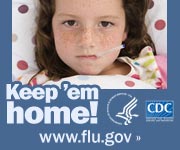 I often use this space to lament the inadequate or wrongheaded response of one group or another to a crisis. That is, after all, the essence of Monday Morning quarterbacking. However, I like to think of myself as a fair person, and as such I would like to give three hearty cheers to the CDC for the new guidance they issued today for schools regarding H1N1 "swine" flu.
I am in no position whatsoever to comment on whether these new guidelines are what they should be in terms of scientific content. At some point, we have to have some faith in our scientists that what they tell us is true. I suppose it is possible that these guidelines are absolutely horrific from a scientific standpoint and will get us all killed by this new virus. I doubt it.
From a crisis preparation and crisis communication standpoint, however, the guidance issued today is very, very good. And since I take such joy from tearing this sort of thing apart, I'd like to look in a fairly detailed way at what is right about how this was done:
- Information was shared in multiple ways. There was a press conference and a press release, and within a relatively short time a detailed guidance document, as well as the press release and the video of the press conference was available on the web. Someone reading about the new guidelines and wanting more information can find it relatively easily. And if they wanted even more information, each section of the guidelines links to a more detailed "Technical Report" intended for public health officials.
- The guidelines consider multiple contingencies. There are guidelines for what we expect to happen, and then guidelines for the possibility that the problem will be worse than we expect. This lends credibility to the message of the initial guidelines and makes people more likely to trust that things are under control, because they know up front that the authorities have considered the possibility that this could be really bad. Nothing makes people feel worse than hearing the equivalent of "here's the plan for right now, and if things change, well, we have no idea."
- Directives include information about why they are being issued, and also consider what those questioning might ask. For example, the directive on school cleaning reads: "School staff should routinely clean areas that students and staff touch often with the cleaners they typically use. Special cleaning with bleach and other non-detergent-based cleaners is not necessary." This not only tells us what to do, it tells us what we don't need to bother with. Last spring, many schools found themselves being pressured to do more than what the CDC recommended, particularly with regards to cleaning, and had no response. With a single sentence, the CDC now has provided them with something specific they can say -- "the guidelines indicate that special cleaners are not necessary." Extra points would have been awarded if they had explained why, but still, high marks.
- They give schools issues to think about that include emotional reactions to the situation. There is a very large amount of space devoted to how to make local decisions about schools, and it's all very good. The last section is entitled "acceptability" and it asks schools to consider how they will deal with people's anxiety about the flu and their possible resistance to whatever decisions are being implemented. Three more cheers just for this -- they recognized that implementing a plan isn't just about the science of the flu, it's about the psychology of those affected by the plan.
Quick -- How Lethal is H1N1?
 Headlines based on an update yesterday from the World Health Organization include "Global Swine Flu Deaths Top 1,100" (CNN), "WHO Says Swine Flu Death Surge to 1,154" (New York Times), and "Swine Flu Death Toll Climbs to 1,154" (Wall Street Journal). So, this is a quiz, how does the mortality rate of H1N1 compare to seasonal flu? How does it compare to the death rate of the 1918 flu pandemic? Don't feel bad if you don't know. No one seems to be bothering to tell you.
At this point, most of us have heard the statistic that 36,000 Americans die every year from seasonal flu. What we don't have is some point of comparison to how many people actually get seasonal flu. So I did some digging. And I came up fairly empty. The best information I came up with was from the CDC, which says that between 5% and 20% of the U.S. population gets the flu each year. That comes out to a mortality rate of somewhere between .06% and .2%. The new numbers from the WHO come out to a mortality rate of .7%, which is anywhere from 3 to 12 times more lethal than a typical seasonal flu is in the United States.
The problem, of course, is that we don't have accurate figures on how many people have had H1N1 so far, or on how many people get seasonal flu each year. That's because most people don't get tested. Think about it. Have you ever had the flu? Did you get tested?
By the way, if you're wondering about the "Spanish Flu" of 1918, it had a mortality rate estimated between 10% and 20%, which I think we can all agree is much worse than anything we're talking about here.
So H1N1 may well be worse than seasonal flu, and that is definitely worth reporting. It would just be nice if the media bothered to report it in some context where the numbers actually mean something. Reporting a raw death toll tells you that 1,154 people have died. And I am sorry to hear that. But it doesn't tell you anything about how dangerous this virus is, and I'm guessing that's what most people want to know. Worse yet, unless you think carefully about it, it's easy to think that you know how dangerous H1N1 is just based on the death toll, and that's what leads people to react based on gut instinct rather than facts. And that's the last thing we need.
(Related Quarterbacking here)
H1N1: Sound the Alarm! Or not . . .
 This weekend the New York Times ran a series of four op-ed pieces about Influenza A H1N1 "swine" flu. They asked four people with expertise in four different areas to comment on what needs to be done to get ready for what the Times calls "Swine Flu, Round 2." The articles covered schools, airlines, emergency rooms, and vaccine safety. (A big Quarterback shout out to my mother, hereinafter referred to as the "Quarterback Mum," who drew these articles to my attention)
Now, far be it from me to criticize others for sticking their nose into H1N1 preparedness issues. People who live in glass houses shouldn't throw stones. But at the same time I would be remiss if I didn't give their Monday morning crisis quarterbacking some MMCQuarterbacking of its own.
I would say the Times commentaries are two for two. Let's start with the good ones:
Arthur Allen's piece, "Prepare for a Vaccine Controversy," does quite a good job at looking at the other side of the coin that I talked about last week with regards to H1N1 vaccination. While I looked at the controversy that was likely to occur because people who wanted vaccine couldn't get it, Allen points out that there are likely to be those who the government thinks should get it but don't want to, and those who do get it who then get sick or die, either from the vaccine itself or by coincidence. He urges the government to get out in front of this and talk about vaccine safety, the importance of vaccination, and how to tell a dangerous vaccine from the random chance that something bad will happen to you whether you get the vaccine or not. All good points, well stated, and, if his advice is followed, likely not only to get people vaccinated but also to keep their panic level down.
Eric Toner wrote, "E.R.'s May be the First Victims" about the overload on emergency rooms that occurred during the initial outbreak and what could be done about it if there's another big one. He suggests such steps as educating people better about when to stay home vs. when to go to the ER, setting up flu clinics and adding staff at Emergency Rooms. Frankly, he sounds a lot like what I had to say on the subject so it's hard to find fault.
Then we come to two articles that made me scratch my head:
The first is entitled "Fly the Germ-Free Skies" by an emergency physician named Marc Gendreau. Gendreau's basic argument is that airlines should do more to stop the spread of disease on airplanes. I don't actually disagree with that, but his breathless and alarmist tone is really counterproductive. As one example of many, Dr. Gendreau notes that
on a recent full flight from Boston to Orlando, Fla., I was horrified to see that most of my fellow passengers failed to periodically wash or sanitize their hands.Really? Horrified? On what planet does Dr. Gendreau live where people are constantly sanitizing their hands in the course of daily life? This wasn't in a hospital, it was on a plane. And there's a big difference between saying, "people should probably wash their hands" and being "horrified" that they don't.
Keep in mind, thus far what is atypical about this virus is that it is new and it infected people in the spring and summer. Yes, it could come back around in a particularly virulent form during flu season. But we don't know that it will. What is causing everyone to worry is some combination of that possibility and the fact that initial reports out of Mexico City suggested that this virus was much more deadly than it appears to be now. Would Gendreau be "horrified" that people aren't sanitizing their hands on the way to Disney World during a typical flu season? I have no problem with a general campaign by airlines and airports to get people washing and sanitizing more often, but a little reminder to panic at the same time is not what we need.
Which brings us around to Dr. James C. King, Jr., a pediatrician who wrote "The ABC's of H1N1." King has a lengthy litany of things he believes schools and health departments should be doing, or preparing to do, during the coming flu season. He suggests that schools tell people to keep their kids home for 7 days if they are sick. He proposes schools have hand sanitizer dispensers installed. He thinks schools and health departments should work together to monitor flu activity and make sure preventative steps are taken. All of these things are good ideas. In fact, they are so good that schools started doing them in April at the latest -- some of them have been standard practice in many jurisdictions for years.
While there's no harm in making sure we school folk are doing what we're supposed to do, by putting these out as novel ideas it reinforces the notion among parents and the rest of the public that school don't know what they're doing. If April and May are any indication, the more measured and scientifically informed the steps that schools take, the more parents seem to believe we are not doing anything. What is needed is a unified message that schools are taking their lead from public health, period. King's article implies that cooperating with health departments is at best the exception, not the rule.
The kicker, to me, is that in the middle of his article, King throws out this gem:
In cases of a widespread outbreak — if, for instance, there are confirmed cases of H1N1 flu in half the regions of a state — it may be wise to close schools for a few weeks until most of the children have recovered.The problem is that this is not the current recommendation from the CDC, which now encourages schools to treat H1N1 the same as it would ordinary seasonal flu. Can you imagine if schools shut down anytime half the regions in the state have confirmed cases of seasonal flu? We might as well just plan to close for the winter. And again, the last thing we need is panicked parents saying, "Why aren't you closed? The New York Times thinks you should be."
My bottom line is this. Recommendations for what to do about flu when it happens should be based on what we know to be true. Preparations for worst case scenarios can take into account what might be. And responsible commentary needs to look at what is already being done. Words, particularly words in the newspaper of record, have power. I am very much opposed to covering up what needs to be shared with the public. But we need to anticipate the reactions people will have to what we say. While "don't panic" is insufficient, "go ahead and panic, we are unprepared" is irresponsible.
Vaccine Priorities are Out
 The Advisory Committee on Immunization Practices (ACIP) met today and issued guidelines on who should get the vaccine for H1N1 "swine" flu first. As you know, I have strong opinions about how these guidelines, or any guidelines, are going to affect people and how they will be received. So, now that they're out, let's see how we're doing at mitigating the impact up front.
I give Day 1 of this process a C-, max. Don't get me wrong -- I don't have any problem with what appear to be the new guidelines. What I have a problem with is that I can find well over 800 articles about them by googling "H1N1 vaccine guidelines," but the guidelines themselves are nowhere to be found.
All 800 articles have roughly the same information: the first wave of vaccinations will go to pregnant women, children and young adults 6 months to 24 years, healthcare workers, adult caregivers of infants and adults under 65 with other medical conditions. If there isn't enough vaccine to accomplish this (since this is about half the U.S. population) they will further pare it down. This information was apparently delivered in a press conference this afternoon. As far as I can find, no press release was distributed, and there is nothing on the CDC website, the government flu website or the ACIP website (in fact, the postings to the ACIP website seem to be running at least a month out of date). You can get the transcript from the Federal News Service -- if you happen to already have a subscription.
In short, the government is relying solely on the press to get the word out. This is pretty much what they did in April and May, and I refer you to my post on the 2009 Flu Pandemic to see how that can go really wrong. You need only look at some of the headlines to see why relying solely on the press is a bad idea. Most news outlets have fairly low key headlines running, like CNN.com, whose headline reads "Federal Panel Issues H1N1 Vaccine Guidelines." On the other hand, we have ABC News, which is running the sensationalist tagline, "Who Gets Swine Flu Vaccine Before You Do?" The government is managing the facts, but not how those facts are presented.
It's probably true that they can't control how the story gets spun. But what they could do, which they aren't, is put out the guidelines in writing on the web so that people who want more information can get it, and so news organizations can link to it. They also could, in the same document, discuss not only why they are making these recommendations, but why those who aren't going to get the vaccine in the first wave should still feel calm. Some detailed, scientific reassurance is in order to frame this as a way of keeping everyone as safe as possible -- after all, an effective vaccination program actually provides some protection for those who have not been immunized, since they are less likely to be exposed.
Once again, the powers that be are failing to understand a basic principle of crisis communication, which is that they not only have to get the information out there, but they also need to anticipate what other information will be out there and where it will come from, as well as how people will react to it. Yes, it's complicated to put out something in writing at the same time as a press conference that is based on a decision that has just been made. But it's not impossible. And they need to get better at it, because with this particular flu, people want their information to be accurate and timely, and timeliness is measured in minutes, not days. And frankly, they really don't have that much time to start getting this right.
(Don't miss the previous Quarterbacking on H1N1)
The Ethics of Flu and the Trauma of Ethics
 Shortly after 9-11, as the anthrax attacks were starting to unfold, I remember a friend of mine telling me that she had called her doctor to make sure that her smallpox vaccination was up to date and arrange to get a booster. She was quite surprised to learn that not only was such a booster not recommended for her, it wasn't available. There literally was no vaccine out there in the world. When the WHO declared that smallpox had been eradicated back in the 1980's, they stopped manufacturing the vaccine for general use.
 This was surprising to most affluent Americans, because we are generally used to being able to get whatever health care we are willing to pay for. The notion that a technology exists and we can't have it -- not just that our doctors don't want us to have it but that we can't have it -- goes against the way we believe the health care system works. Unlike some aspects of our world view, such as the ones I discussed yesterday involving trauma with children, a lot of people actually believed this one, from our heads to our hearts to our guts, to be true. We really thought we could have any health care that existed. We were wrong.
I suspect we are up against that issue once again, because the medical research community is coming out with a vaccine for H1N1, probably in early October, and there is a good likelihood that there will be more people who want it right away than the initial supply. Over time, the supply will probably increase and everyone can have it, but in the meantime, someone is going to have to decide who gets it. Or, more to the point, somebody is going to have to decide who doesn't. Of course, this isn't news to the powers that be, who issued guidelines and recommendations on this before H1N1 had come on the scene (although it is notable that the United States government flu website still refers to a pandemic declaration as a hypothetical event, despite the fact that it was issued in June).
We've dealt with a shortage of flu vaccine before. In 2004 there was a production quality problem that limited the supply of seasonal flu vaccine, and for several months you could only get a vaccine in the U.S. if you were "high risk." I remember this distinctly because I was pregnant, and hence I could get the vaccine and my daughter could not. But this time will be different, because not everyone wants the seasonal vaccine, and an awful lot more people are going to want this one. An awful lot of people who don't know that "no" is even a possibility are going to be told no.
But it gets worse, because another thing that has kept us relatively calm about H1N1 is that we know that science has advanced in its treatment of respiratory illness. We comfort ourselves that if the 1918 flu pandemic repeats itself, we have ventilators to keep people alive. We also know that health care is more advanced in the U.S. than in most parts of Mexico, so we believe we'll be more "OK" than they were this spring.
There's only one problem. If a pandemic like 1918 comes around again, there very well may not be enough ventilators to help everyone who needs one. The recommendation is that, in a severe and deadly epidemic, ventilators be used only for people who are most likely to survive. Let me put it another way. In the event of a "Spanish Flu"-like epidemic, you could be critically ill and they would not attempt to save you, because giving you treatment would take it away from someone else with a better chance.
I first heard about this charming nugget of information during a training with the public health community in November, before "swine flu" was even in our lexicon. This was the same one, you may recall, at which it was stated that people would not overwhelm ER's because they would be told not to go to the ER. And we all know how well that worked this spring. At any rate, the plan I heard was for only those who were likely to survive to even get to the hospital. Those too sick to have a good chance would be left at the triage center, where they would die. Oh, and I wasn't supposed to tell anyone.
Well, the cat's out of the bag, because the Canadian national newspaper, the Globe and Mail, reported this morning that New York's pandemic working group is recommending removing or withdrawing ventilators by those likely to die during a serious pandemic. So now I can rant publicly.
Don't get me wrong. I get it. I get that we can all only get all the medical care in the world if we have available all the medical care in the world, and that given limited resources we should give them to the people most likely to benefit from them. I also get that that is a complex and difficult line to draw, and that's why we have medical ethicists out there working on this stuff. I am also glad I am not them.
But let's get down to brass tacks. If this pandemic gets bad, particularly in terms of the virulence of the virus, implementing "the plan" is going to be hard. People are going to go to the hospital when we ask them not to. People who are low on the priority list are not going to like that they can't get vaccine. And people are going to get really, really upset when their loved ones are not allowed a ventilator or some other piece of intervention. That is a given. What are we going to do about it?
If there's a plan out there, I haven't seen it. I know in my county that they are including mental health in the planning. They are also aware that the likelihood is that about 80% of us won't be able to respond because of our own illness or illness in our family. If you read the federal guidelines, it looks like perhaps we are in the second tier of vaccination priority, but no mention is made of volunteers, which accounts for an awful lot of us. I fear that once again we are in danger of underestimating the panic and even the rage that is going to occur. All I can say is, I'm ready to be part of the solution and I promise not to be part of the problem. I hope there are a lot of like-minded folks out there.
(For related Quarterbacking, see Getting It Right the Second Time, Flu Preparedness: Body AND Mind, and The 2009 Flu Pandemic)
The 2009 Flu Pandemic
In the beginning of May, we were all in a complete panic here in the U.S.. Now we seem to be uttering a collective yawn. What happened? And why couldn't we have been so laid back 6 weeks ago?
The biggest difference for folks in the U.S. between now and 6 weeks ago is that, having lived with H1N1 in our midst for a month and a half, we have realized that we are not all going to die. On May 1, we were not so sure. Between the time that "swine flu" came to the U.S. and yesterday, we learned a lot of information: that the seasonal flu kills 36,000 Americans every year, so a few deaths was not a big deal by comparison (although clearly still a big deal to those patients and their families); that H1N1 in the United States turns out to have a death rate of less than .1% of cases, which is the rate for a typical seasonal flu; and that "pandemic" actually doesn't have anything to do with the severity of the disease.
You might argue that we had to live through the last 6-8 weeks to really believe that this wasn't that big a deal, but I'm not sure that's true. This is a situation where folks in authority managed their message so well that they didn't actually give us what we needed.
If you watched TV, listened to the radio, or read e-mail the last week of April or the first week of May, you heard the lockstep mantra: don't panic but do be concerned, wash your hands often, stay home if you are sick. I got emails from my school district as an employee, and from that same district as a parent. I also heard from the local health department, the state health department, the CDC, the WHO, my congressman and President Obama. And all of that was good, but it wasn't enough, as evidenced by the fact that people were flooding emergency rooms, demanding that neighbors who had been to Mexico be quarantined, and even, in one case, asking why we were still serving tacos in our lunchrooms (really, the Monday Morning Crisis Quarterback never lies!)
The problem was that we didn't really understand what was going on. The data about flu mortality rates and how this compared to the typical flu came out achingly slowly, and was not well publicized. Joe Biden's "off the cuff" statements that we shouldn't even be taking the subway didn't help.
Good information was hard to find. Each health organization was reporting statistics to the next one up the chain once a day, but not every one was reporting at the same time. The result was that the CDC might report at 11 AM EDT on Tuesday, but the data they reported from Michigan might have been reported to them Monday at noon. In turn, the WHO, upon getting the CDC's report, might well wait 12 or more hours to update their data. The result was that the WHO might be reporting cases from Michigan on Tuesday morning, almost 48 hours later than Michigan published them. Speaking of Michigan, in the Quarterback's fair state the Department of Community Health was releasing press releases that did not match what was on their website, so if you heard something on the news and wanted to learn more, you would go to the website and discover that what you heard did not appear to be true. I'm sure other jurisdictions had their own problems.
The result of this was that the most up to date place to get information was Wikipedia, which is probably not where most public health officials want people to be getting their information. And the mantra of "don't panic" lost credibility, because it was so obvious that the factual information was jumbled that it seemed likely the information about the severity of the situation was also jumbled.

Then, of course, there was the issue of what the United States was doing to respond. If you went online looking for information about pandemic influenza preparedness, you might well have found this chart. If you look at it carefully, you will note that "first human case in North America" is U.S. Response stage 4, which maps to WHO alert phase 6, which is a pandemic. But we were only in alert phase 5. Why?? Because the U.S. stages presumed that the disease would emerge in Asia, and were fairly useless for a Mexico/U.S. outbreak.
In the end, though, the most important problem that kept us from hearing "don't panic" was the complete and utter failure on the part of public figures to acknowledge that we were already panicking. There is an idea out there that if we manage the factual message, people will manage their emotions, and that if we acknowledge the emotions we cause people to be emotional. In CISM, however, we find that the opposite is true. Acknowledging the emotional response, normalizing it, and letting people know that it's understandable lends credibility to everything else you say.
In the long run, it may not matter. However, if H1N1 comes back around in a more virulent form next flu season, the Quarterback hopes that the CDC has more credibility in getting us take it seriously than it did in getting us not to panic this spring.
Meet the Quarterback

- Naomi Zikmund-Fisher
- is a clinical social worker, former school Principal and a Crisis Consultant for schools and community organizations. You can learn more about her at www.SchoolCrisisConsultant.com

Subscribe


 Posts
All Comments
Posts
All Comments