H1N1: When the News Isn't Scary, They Just Make it Up


The World Health Organization came out with its latest overview of H1N1 on Friday. Unlike many previous reports, this one didn't take the American media by storm. I suspect that has a lot more to do with the news cycle and funeral coverage for Senator Kennedy than anything else. The report is interesting to read, because, as one would expect, it takes a global perspective. It starts with an overview of recommendations for heightened surveillance and preparedness by regions of the world, and our region is about what we've heard before.
WHO is advising countries in the northern hemisphere to prepare for a second wave of pandemic spread.
OK, so we're preparing. But what else is in this report?
Mostly, this report is an overview of where we are and what countries in the southern hemisphere have experienced during their flu season. So you might think that American blogs and news organizations, if they covered it at all, would have headlines like WHO Shares Lessons Learned on H1N1. OK, you probably don't think that, but only because you know that American writers do not cover at all what they cannot sensationalize.
From a document of 1,087 words, writers have almost unanimously seized upon the following 134:
OK, so reasonably one could expect from this a headline that says something like WHO Urges ICU Preparedness for H1N1. After all, that is what this section of the report is about, and it is very much not about people dying from severe H1N1.Severe respiratory failure
Perhaps most significantly, clinicians from around the world are reporting a very severe form of disease, also in young and otherwise healthy people, which is rarely seen during seasonal influenza infections. In these patients, the virus directly infects the lung, causing severe respiratory failure. Saving these lives depends on highly specialized and demanding care in intensive care units, usually with long and costly stays.
During the winter season in the southern hemisphere, several countries have viewed the need for intensive care as the greatest burden on health services. Some cities in these countries report that nearly 15 percent of hospitalized cases have required intensive care.
Preparedness measures need to anticipate this increased demand on intensive care units, which could be overwhelmed by a sudden surge in the number of severe cases.
But of course not. A sampling of headlines from around the net includes:
- WHO Warns of Severe Form of Swine Flu Affecting Young and Healthy
- Doctors are Seeing “Very Severe” Types of H1N1 Flu Where Immediate and Sophisticated Treatment is Needed for Survival
- Doctors Report Severe Form Of H1N1
- WHO Cites Severe H1N1 Cases as Southern Outbreaks Wane
In related news, a new poll shows that the public's fear about H1N1 is growing. I hardly think this is a surprise. Perhaps if the media was not so hell bent on scaring us and actually shared the facts and the correct interpretation of those facts, we might have a fighting chance of reacting rationally. Yes, we're scared. And we're still going to be scared, even without sensationalism. But if it's all the same to you bloggers and journalists out there, we really don't need their help getting more scared than we already are.

When Your Hero Dies

At the end of June, I blogged about the death of Michael Jackson and how it wasn't a crisis. About three seconds after I posted it, I got my first inkling that I had perhaps not taken the correct tone in my post. It's not that Jackson's death, for most of us, was truly traumatic, but my tone trivialized what he meant to so many people. Over the summer that point has been driven home to me over and over.
What I now understand is that, as a white woman with no particular love of pop music, I had no particular attachment to Michael Jackson,
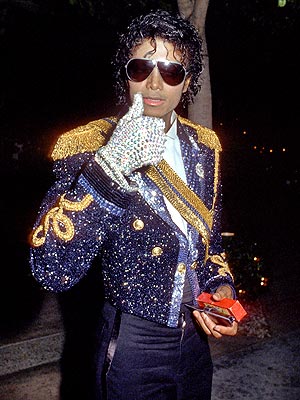 and I failed to realize that trivializing his death wasn't just trivializing people's grief, it was trivializing the racial and cultural experience in this country. I want to truly apologize for that. A death that is not traumatic is nonetheless a death, and grief is grief. I have been struggling for several weeks to figure out how best to bring this up, and today seems like the right day.
I say that because I was born and raised in a staunch liberal household in Massachusetts. Senator Edward Kennedy was an icon of my childhood. In 1980, I was old enough to be active in politics, and I supported Kennedy. My older brother worked in his Boston office one summer. He was what I understood a great politician was supposed to be. I was absolutely stunned, when I went away to college, to learn that Kennedy was not as revered elsewhere and that people used him as the joking example of liberalism gone too far. I never did.
Senator Kennedy wasn't perfect, by any means. I also grew up in a milieu where "Chappaquiddick" held the same sort of ominous tone as "Watergate." I was very confused when we spent summers on Martha's Vineyard and a youth swim meet was held in Chappaquiddick -- why would you hold it someplace bad? I knew that Kennedy was a drinker and that he had been kicked out of Harvard for cheating. Later on, I was appalled by his architecture of the No Child Left Behind Act, which in my mind was the worst law ever to come out of pure intentions.
Ted Kennedy also exemplified being able to go on with life despite traumatic loss, which he certainly suffered all too often, and despite the guilt of having caused traumatic death. Some would say that he never felt appropriately guilty about the death of Mary Jo Kopechne. That isn't for me to judge. But he certainly showed that that awful night was not the sum total of who he was, and he did not let it end his hopes for doing good in his life.
Anais Nin once said, "We don't see things as they are, we see them as we are." As a white liberal from Massachusetts, I cried when I heard that Kennedy had died. As African-American males growing up in the 80's, several of my friends cried for Michael Jackson. Neither are traumatic, both are sad. I should know better than to judge others' outpouring of emotion just because I don't see things the same way. I am imperfect, just like Kennedy and Jackson were. I hope that I can show that isn't the full measure of who I am, either.
The work goes on.
The cause endures.
The Hope still lives,
and the dream will never die.
Meet the Quarterback

- Naomi Zikmund-Fisher
- is a clinical social worker, former school Principal and a Crisis Consultant for schools and community organizations. You can learn more about her at www.SchoolCrisisConsultant.com

Subscribe


 Posts
All Comments
Posts
All Comments