Showing posts with label crisis communication. Show all posts
Showing posts with label crisis communication. Show all posts
Tuesday, February 28, 2012
School Shootings in a Cell Phone Era


Yesterday morning, a teenager walked into the cafeteria at Chardon High School in Chardon, Ohio and opened fire, apparently targeting a particular group of students. One died immediately, another at the hospital, and several others were seriously wounded.
The news coverage about this attack has repeatedly mentioned that the school had practiced for this kind of an event. Students say they didn't know whether this was a drill or the real deal. Teachers knew how to lock down their rooms. There's no way to know how many lives were saved by this training, or whether the shooter never intended to kill more people than he did.
The news coverage also mentions that parents outside the school were alerted to the situation through text messages from their kids, and kids inside the school spread information among one another via text. Since the Columbine attacks almost 13 years ago, most states and most schools have allowed cell phones in the classroom for just this reason -- to allow kids to communicate in a life-threatening emergency.
So, here's what's bugging me. If a school is in lockdown -- if they are trained to be in lockdown -- one of the things they should know is that, during a lockdown, you turn off your cell phone.
This may seem counterintuitive. After all, isn't the entire point of having a cell phone so you can communicate in an emergency? But during a lockdown you are locking yourself inside a dark room and hiding. You are trying not to be noticed, in case the gunman comes looking for more victims in your general direction. You are silent.
And if you are silent, that means turning off your cell phone. A ringing phone -- or even the sound of one vibrating -- can be the thing that tips off the bad guys to where you are and makes you a target. And you know that if the word gets out to parents that there's a gunman in the building, phones are going to start ringing. In a situation where a shooter may be looking to shoot anyone he can easily find, you just made yourself easy to find.
When I have been at schools that practiced lockdowns, the staff always are aware that getting kids to turn off their cell phones is going to be the hardest thing because it is so counterintuitive. But it has to be done.
There is a place for cell phones in these situations. A quick 911 call can mean the difference between life and death. But then the phone goes off. While contacting your parents or your friends may feel reassuring, it's not nearly as useful as staying alive.


Monday, January 30, 2012
U of M Child Porn Case: A Study in Crisis Communication

In a story that made everyone's blood run cold, a resident physician specializing in pediatrics at the University of Michigan was arrested in December after investigators found child pornography on his computer. If that wasn't bad enough for you, it now turns out that another doctor found child pornography on a thumb drive at the hospital last May, determined to whom it most likely belonged, and reported it to her superiors, who assured her it was being dealt with according to protocol. It wasn't reported to the police until November.
So, let's get the righteous indignation out of the way first. If you're thinking, "Penn State," you're not alone. There seems to be a complete inability or unwillingness in certain circles to recognize that you report this sort of thing not because you are absolutely sure who did it or to whom, but because you want the police to try to make sure they don't do it to anybody again. Child porn is not a victimless crime. Not reporting it because you're not completely sure whose it is is like not reporting a burglary because you didn't see the burglar.
One of the huge mistakes leaders and organizations tend to make at moments like this is to think solely about what information they want to transmit, without thinking about what the recipient needs to hear. In this instance, the University could have issued a statement that said, "We were not required to report this under Michigan law. We followed procedures. We are now reviewing our procedures to see if they need to be revised." All of that would be true, and it would only serve to make people more angry.
But Michigan did something different. They appear to have recognized that, in addition to factual information, the public needs to know that the University knows this was wrong. Today, the CEO of the University of Michigan Health System wrote a blog post addressed to employees. In part, she wrote:
Early findings have identified significant problems with how initial reporting of these allegations was handled. . . . In situations like this when there are mistakes in how such a situation was handled, human nature makes us want to quickly identify and resolve the problem. However, jumping to quick conclusions and making assumptions with partial information isn’t the answer. That’s why the University is engaged in a comprehensive review into what went wrong in this particular case. This review and taking appropriate action are top priorities. . . . We will make improvements to prevent this from happening again.This is crisis communication done right. It doesn't make excuses. It doesn't say we were right and the public is wrong. It doesn't try to downplay the significance of the problem. It takes responsibility and gives a plan for future action. It includes both what they want to say and what we need to hear.
I can't excuse this situation, and neither can the University of Michigan. It makes me nervous that someone suspected of having child pornography was treating children, in the hospital my family uses, for 6 months after the suspicion first occurred. But let me tell you, I'd rather bring my kids to a hospital that knows that was a mistake and is working to fix it than to one that doesn't.
Go blue.
Thursday, September 29, 2011
Did the Onion Cross the Line?

The Onion, if you're not familiar, is a "news" outlet that puts out a printed newspaper, a TV show and a website absolutely chock full of fake news. Typical headlines are things like, "Historians Politely Remind Nation To Check What's Happened In Past Before Making Any Big Decisions" and "Syracuse Leaves Big East For Woman Named 'Misti'." The Onion, in my humble opinion, varies between mildly amusing and downright hilarious, and occasionally it hits the nail on the head with its headlines in ways that make you say, "What's sad is, that's almost true."
From time to time, the Onion gets in trouble because someone doesn't realize they're kidding. There is, in fact, an entire blog devoted to people taking the Onion literally on Facebook, often with hilarious results. Many years ago, when the Onion published a story saying that Congress was threatening to leave Washington unless they got a new Capitol building with sky boxes, it got picked up by the official media in China and reported as factual evidence of the failures of capitalism.
Today there was another such Onion incident. The Onion ran an article on its website with the headline, "Congress Takes Group of Schoolchildren Hostage." The tagline was, "'We need $12 trillion or all these kids die.'" This was accompanied by a doctored photo of John Boehner with a gun to the head of a little girl.
The Onion then began sending tweets, the first of which read, "BREAKING: Witnesses reporting screams and gunfire heard inside Capitol building." This got retweeted enough times and alarmed enough people that the phones at the Capitol Police Department started ringing off the hook. They actually began an investigation, because by this point, although they knew the story was false, they couldn't figure out where it had started.
So the question is, is this just another case of people not getting an Onion joke, or did the Onion actually do something wrong here? I think it's the latter, but apparently for a different reason than most commentators out there.
My take is this: the Onion is funny because they manage to run stories that relate to reality in some way but are just off the wall enough that if you're paying attention you know they can't be true. In this instance, the notion that Congress is "holding the country hostage" is not a new one, but no one really thinking about it would believe that John Boehner actually was threatening little children with a firearm. You may or may not like the politics of this story, and you may or may not think it was funny, but it was clearly intended as a joke. Most of the comments out there about this mess suggest that such a story by itself, or with the picture, crosses the line of decency. I actually think that is not the problem
The problem is that, when the Onion started tweeting, they did something crucially different than what they did in the original story. That first tweet had absolutely nothing in it that would even hint that it was supposed to be a joke. There wasn't anything about how Congress, as a whole, was taking hostages. That's the part we knew was false. All it said was that there was gunfire and screams at the Capitol. That was purely believable, and because of that it wasn't funny.
You might argue that anyone who knows anything about the Onion should have known it wasn't true anyway, and you would have a point. However, not everyone knows the Onion, and once people started retweeting and the original author was lost in the stream, people seeing this tweet had no way to know that it wasn't real. The Onion lost control of the joke. In hindsight, at least, that seems pretty predictable.
The Onion's sin here wasn't making fun of violence at the Capitol. It was joking in a way that did not insure that everyone would at least have a chance to be in on the joke. I hope the folks over at the Onion learned a lesson, because I'd hate to feel like I can't read it anymore. It's pretty funny.
This post was updated on September 30 at 11:09 PM.

Thursday, June 23, 2011
Incident Management vs. Crisis Management vs. Crisis Response

Yesterday, guest blogger Ed Vielmetti treated us to his thoughts about last week's computer outage at United Airlines. His assessment of this incident brings up something that frequent Quarterbackers have read about in this space a lot. There seems to be a fairly widespread belief held by leaders in many corners of the corporate and public sectors that, during an emergency, when in doubt, the best thing to do is clamp down tightly on information.
For some reason, otherwise fairly smart people believe that, in the absence of information, people will generally wait patiently until instructed what to do. They also apparently believe that, if they don't have complete information to share, people will be understanding and forgiving of complete silence until such a time as they do. At best, many organizations have utterly failed to update their communication techniques to keep up with the pace of information in the age of Twitter, or even the Internet. People expect information, even partial information, right away. Gone are the days that you could announce you'd have an announcement in a couple of hours and that would appease people.
Ed's observations raise another issue, however. Companies such as United almost all have "crisis management plans" and "incident management plans." Generally speaking, when people in the business world talk about "crisis management," what they really mean is "damage control." These are the spin doctors who help you regain your reputation when you've done something really stupid. "Incident management," on the other hand, refers to what you do to stop the actual event from happening or get it under control as soon as possible. What is missing from these plans, however, which Ed illustrated so nicely, is the "crisis response plan."
In United's case, they had a plan to fix the computer system. They probably also had a plan for how to get customers back buying tickets on United when their confidence is shaken by something like this. But they didn't have a plan to minimize the amount of confidence-shaking that happened in the first place. They didn't have anything on the shelf and ready to minimize the inconvenience to their customers. They managed the incident, and they even may have managed the crisis. But they didn't respond to the crisis adequately.
This is a very tough lesson to learn, and most organizations don't learn it even after an incident like this. In fact, I saw one repost of Ed's piece yesterday that had the comment, "This is why you should back up your hard drive." And yes, you should back up your hard drive. That's an incident management issue. But what Ed was pointing out is not that United should have kept this from happening in the first place, but rather that they should have planned better for the eventuality that it, or something like it, was going to happen despite everyone's best efforts.
Most people and organizations are very resistant to planning for the worst problem that they themselves might cause. Emergencies happen, but we believe they happen to us, not because of us. Somehow, if United doesn't plan for how they're going to help customers during a computer outage, it won't happen. It would be nice if life worked that way. Unfortunately, as United discovered last week, it doesn't.

Wednesday, June 22, 2011
Guest Blogger: The United Computer Outage

Today, I turn the keyboard over to friend, blogger, Internet savant and frequent Quarterbacker Ed Vielmetti. I'll be back tomorrow with some thoughts about Ed's thoughts. (If you like Ed's stuff, and you should, check out his regular blog, Vacuum).
***************
On Friday night, the computer screens of United Airlines gate terminals were transformed from the windows on the teeming world of air transportation to inert, mute bricks. United's computer network had gone down, and with it the airline's ability to route airplanes, passengers, and baggage.
When an event like this happens, it's worthwhile to remember that for the most part catastrophic network failures are routine, mundane events. Any organization big enough to depend on their global network is also big enough to have senior engineering staff on call around the globe to make it work again after whatever glitch that took it out is found and fixed. The quiet dedication of network engineers to make the network work again means that there are no infrastructure heroes to congratulate for their work.
Unfortunately for the flying public, the lack of heroic measures in network rebuilding that night was accompanied by stony silence from United public relations and management, who were not able to get out ahead of the problem. With their main web site down for the count as well, United's crisis communications team did not spin up fast enough to get in front of the people through Twitter, Facebook, or whatever else they might have dreamed up in a pinch to get some kind of news out. Rather, it was up to the FAA to make the announcement, and to news organizations and bloggers and the irritated public to share details all by themselves.
Repairing global broken networks must always be the first priority in restoring service, and at some level I feel deep compassion for the United and their technicians who worked to get their system back
online. I only wish that someone on the technical team had a clear line of communications to a professional who could get in front of the public and tell people waiting in line what to do. If nothing else, this crisis professional needs to broadcast clear and unambiguous messages to United personnel - who after all don't have a network to turn to for their real work - and keep them from adding to the problem.

Wednesday, March 16, 2011
The Japanese Crisis: Assessing the Need Stateside

The attention of most of the country continues to be across the Pacific in Japan. The loss of life is horrific. The material damage is enormous. The fear regarding the radiation in Fukushima is mounting.
Now is not the time for a psychological crisis intervention in Japan. The situation is still unfolding, and there are still significant basic physical and safety needs to be met. The best that can be done from a mental health standpoint in Japan right now is managing people's fear. Both the Prime Minister and the Emperor appear, from this vantage point, to be doing a pretty good job at exercising resilient leadership. The consistent emphasis on coming together and getting through this is good practice.
What about folks in the U.S.? Is there anything we can or should be doing for people here? I think there is.
First of all, everyone in the world needs some decent information about the radiation risk
 . With the exception of nuclear scientists, most of us have very little understanding of how much radiation is too much, how the current accident will affect people in Japan and whether it will affect anyone anywhere else at all. The news media is doing a somewhat better job of bringing in experts to explain this to us, but I think it would help if they acknowledged that none of us like hearing that there's any radiation at all, and that the biggest impact here is from fear, not nuclear byproducts.
People here who have family and close friends in Japan, particularly in the area where the quake and tsunami were, need something a little more. I think you could further separate that group into two -- those who come from Japan and have roots there, and those who don't trace their roots to Japan but have family studying or visiting there. Last Friday was ghastly for both of these groups, and it would not be surprising if they're feeling the affects even now, presuming that they now know how their loved ones fared in the quake.
For those who come from Japan, this incident is not, in some ways, over. The pictures the rest of us see and think are horrible are more personal. They may have lost homes or other special places. They may not be ready, yet, to process through their feelings and try to put them away.
For those who had family visiting or living in Japan but are not themselves Japanese, the incident is largely over and they are probably ready for some intervention. It would be totally understandable if they are having some issues with feeling irritable, having trouble concentrating, not sleeping well or having intrusive thoughts about the quake and the agonizing wait to hear from loved ones. They need to know they're normal -- it's the situation that isn't.
Then there is that group that is somewhere in a no man's land in between. They are from Japan, every picture is personal, the situation is ongoing, and they also experienced the traumatic death of someone they love. For them, some understanding and moral support is in order until the dust can settle a little more and they can start to come to terms with all of this.
I wrote yesterday about my son's friend, Taro. When I wrote, I wasn't sure which category Taro fell into. Late yesterday we confirmed that he is in this last category. He lost his grandmother and his home. The only bright side, perhaps, is that young children don't really understand death and loss as permanent things. But his family does, like so many other families in Japan, here and elsewhere. The latest estimate I've heard is 10,000 dead. That's a lot of people in limbo, waiting for this to be over so they can grieve.

Monday, March 14, 2011
Plain Talk About Fukushima

The headlines coming out of Japan today are alarming. "Authorities scramble to avert meltdown." "Fukushima second worst nuclear accident in history." "Meltdown probably underway at Fukushima." Are you scared
now? How about, "Radioactive releases in Japan could last months?" Obviously, things are bad. How bad? Well, you know, bad. If that seems inarticulate, consider this. As I write this, authorities around the world are bickering about whether the accident at the nuclear power plant in Fukushima, Japan is a level 4 or level 5 incident. Oh my goodness. Level 5.
The very fact that we can't articulate any relative level of "badness" may give you some insight into just how hard it is to have decent crisis communications in this situation and, frankly, how unhelpful the media reporting has tended to be. What's a level 4? What's a level 5? What does it mean to the people near the plant? What does it mean to me?
Why is it so hard to get good, straightforward information from the media about this accident? I think there are three major reasons: sensationalism, science and subconscious.
For starters, these headlines are sensationalistic. Sensationalism sells papers and gets web hits. They want to draw you in, and it works, so they keep doing it. It's hard to summarize the scientific nuances of the situation in five catchy words.
This brings us to science. The science here is way beyond what the average American truly understands. Summarizing it quickly for the purposes of crisis communication is pretty nearly impossible. This is especially true because we want the people who really understand this stuff to be working on containing the accident, not explaining it to us.
This leaves us to fend for ourselves, and we have a problem. Our subconscious (ok, that's a stretch, but I needed an "s" word for the alliteration) does not like the notion of a nuclear accident. Those of us of a certain age were reared on the notion that the United States and the USSR were going to blow each other to nuclear smithereens, and that we would all die from radiation poisoning if we survived the initial blast. When we we hear "explosion" and "nuclear" and "radiation," the memory of those lessons is stored in the particular file drawer in our minds which gets opened. It gets worse, because when we hear "nuclear," "explosion" and "Japan," our associations are with horrific images of Hiroshima and Nagasaki
 .
.But let's try to put the hysteria to the side for one moment and figure out what those of us who are not nuclear physicists can actually figure out. Thus far, this is a level 4 or 5 accident. These levels come from the International Nuclear Events Scale, which goes from 0 to 7. A 0 means it has no detectable implications. A 7 is Chernobyl, the only 7 ever to happen. A 4 is a local impact event, and a 5 is an accident with wider consequences. By way of comparison, the Three Mile Island accident was a 5. That probably doesn't help a whole lot, but it's a start.
If you'd like a really good look at why we are so bad at understanding the risk here and why the notion of it going on for a long time is so distressing, I strongly recommend a post over at the blog of the University of Michigan Risk Science Center. The fact that the author has the same last name as me is purely coincidental. I'm sure there are many, many people with the last name "Zikmund-Fisher." Well, actually, just four. This one happens to be married to me, but that's not why I'm recommending it -- it's really good.

Friday, February 11, 2011
What Egypt Tells Us About Crisis Response

As you probably know, Hosni Mubarak stepped down today as President of Egypt following 18 days of street protests in Cairo and throughout the country. Others more informed than I will have intelligent things to say about what this means for the future of the country, the region, the world and democracy. And others less informed than I will have unintelligent things to say on these topics, I'm sure. A few things jumped out at me, however, from the point of view of crisis management and response.
During the protests last week, an apparently organized group of armed men in plain clothes, some riding camels and horses, attacked the protesters in Cairo's Tahrir Square

 . This received widespread coverage around the world, and widespread condemnation as well. At the same time, however, this incident was still part of the story. It did not become the story.
If you stop to think about it, that is truly remarkable. Can you imagine armed people attacking a march on Washington -- any march on Washington? The coverage would no longer be about gay rights or the Tea Party or whatever the march was about. It would be about the violence. But that didn't happen here, even though people died in the fighting. Why not?
I think the violence failed to take over the story because, in some real sense, the story was still unfolding. The "incident" here, to take a page from CISM, was the uprising. It was so unusual and so gripping and it captured everyone's attention. No doubt, had the violence ended the protests, as it did in Tiananman Square
in 1989, that would be the crux of the story. But it didn't, and one of the great principles of crisis response is that you have to wait until the incident is over. Last week, it just wasn't over. Today feels much more like an ending. Even though there is still tremendous uncertainty about what lies ahead for Egypt
 , there is a sense that this is the end of a chapter. So it is now that those most affected by the violence will start to feel it the most, and now that others will start to go back and find out the names of the dead, erect memorials to them, etc.
The other great connection I see between the events in Egypt and the principles of crisis response has to do with the actions of Mubarak
 and others in the government in the last 48 hours or so. If you listened to Mubarak's speech yesterday, the one where everyone expected him to resign and he didn't, it felt a little like you had stepped into the Twilight Zone
 . Was it actually possible that he thought that speech would placate the protesters? Did he really believe that if he said he was handing over some power but not all and working on the constitution that they'd pack up and go home?
During a crisis -- any crisis -- it is critically important that those in authority pay close attention to what people are asking for. I cannot tell you how many times I have seen the powers that be enter a room full of people who want to hear X and deliver an impassioned defense of Y. When you ask them why they do it, they say that Y is more important. Y is good and right and what people should care about. But during a crisis, people don't care about things just because you tell them they should. People care about what they care about, and the biggest mistake you can make is to ignore that.
Last night, Hosni Mubarak got up before a country -- or even a world -- that wanted him to say he was leaving and explained why he was staying. He had important reasons, reasons that seemed right and good to him. But he lost sight of the fact that what seemed right to him was not the point. He failed to address what people wanted to hear. Not only did he not say he was going, he didn't even acknowledge that that's what people were expecting.
Would it have made any difference? We'll never know. But I suspect the reaction might have been even a tad more positive if he had begun with, "I know you are expecting me to resign tonight, and I understand why, and you have a point. I will be going soon. But first we need to . . ." It wouldn't have been perfect, but it would have been a start.
And speaking of starts, the Egyptian people now have a fresh one. Their future is much less than certain, however. Let's hope they use this opportunity wisely.

Saturday, January 22, 2011
The Enduring Lesson of Keith Olbermann
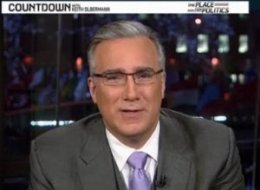
Depending on your politics and personal tastes, Keith Olbermann is a liberal pundit, a newsman, an overhyped sports reporter, a propagandist, the voice of the nation's conscience, or a traitor to his country. Last evening, he added one title most can agree on -- unemployed. Olbermann, the host of MSNBC's Countdown With Keith Olbermann
 , announced on his show last night that he was leaving the network. Rumors vary between him being fired and him leaving over a money dispute. Last night's show was his last.
Olbermann had a decidedly and unashamedly liberal bent to his show. He openly loathed Fox News, which he called "faux news," and particularly Bill O'Reilly
 and Glenn Beck,
 who often took top honors on his "Worst Person in the World
 " feature. Throughout the Bush administration, he ended his newscast by stating how many days it had been since the declaration of "Mission Accomplished" in Iraq. He was suspended last fall for violating the network's rules about political donations by reporters after he donated to three congressional campaigns, including Gabrielle Giffords.
 Even if you loved Olbermann's politics, there was plenty to squirm about in Olbermann's style. He often used the same kind of "anyone who disagrees with me is an idiot" kind of rhetoric that he criticized in O'Reilly. His segments with guest commentators often fit the formula:
- Introduce story by stating the facts intertwined with Olbermann's opinion
- Introduce guest
- Ask guest whether Olbermann's opinion is the only reasonable one, as he thinks
- In unlikely event guest disagrees, restate opinion as fact and wait for response
I'm writing about Keith Olbermann today, however, not because of my personal feelings about him leaving MSNBC or even about the show itself. Keith Olbermann deserves a nod because of something absolutely unheard of which he did, on air, with great frequency. Keith Olbermann apologized.
When you are as unabashedly partisan and fiery as Olbermann is, you wind up saying a lot of things that make people mad. And certainly, Olbermann stood behind the majority of what he had to say nonetheless. But every once in a while, Keith Olbermann had the good sense and the good grace to admit when he was wrong. A terrific example occurred after Olbermann raised questions and spoke, in a way that some felt was offensive, about the rape accusations against Wikileaks
 founder Julian Assange. He later tweeted,
Rape has touched my family, directly and savagely, and if anybody thinks I have addressed it without full sensitivity, then that assessment is the one that counts, and I apologize.Read that again, because you won't hear apologies
 like that from media people -- or from anyone else, really -- very often. He doesn't say, "sorry if I offended you," or even, "sorry that I offended you," both of which imply that the problem is the offense taken and not what was said. He says, "If I offended you then my words were offensive, and so I'm sorry."
Most recently, Olbermann delivered a passionate and, in my opinion, moving commentary the night of the shootings in Tucson on January 9th. He discussed the current political climate but, unlike many other liberal commentators, he didn't put the blame on the right. He said,
Violence, or the threat of violence, has no place in our Democracy, and I apologize for and repudiate any act or any thing in my past that may have even inadvertently encouraged violence. Because for whatever else each of us may be, we all are Americans.So, why am I bringing this up on a blog about trauma and crisis response? Because very often, after a major incident, the impulse of those in charge is to circle the wagons and vehemently deny any responsibility. The result is that those affected, who are primed to be looking for someone to blame, have a reason to step up their blame of those in charge. Few and far between are people in authority willing to say, "This shouldn't have happened, we didn't want for it to happen either, and we will be carefully reviewing everything to make sure it doesn't happen again," let alone, "We screwed up, and while we don't think this is entirely our fault, we are willing to take some of the blame. We're sorry."
It's always easier to blame those who are upset then to take a good long look at yourself. Failure to do so, however, often makes it worse. Whatever you think of Keith Olbermann, his show, or his politics, I hope that, with his departure, we don't also lose his excellent example of how to apologize gracefully and sincerely for the mistakes we all make in this world.

Tuesday, August 31, 2010
The Non-Terror Attack that Wasn't

Two Yemeni men living in the United States were arrested yesterday in Amsterdam after flying there from Chicago. Initial reports indicated that the men were under suspicion for carrying out a "dry run" of a terrorist attack. The news reports this morning said that one of the men had been stopped in Alabama by TSA officers and found to be carrying $7,000 in cash. When his checked luggage was searched, officers found a cell phone taped to a Pepto-Bismol
 bottle, several watches taped together, and knives and a box-cutter. Since none of that is prohibited, he was allowed to travel to Chicago. Instead of continuing on to Washington as planned, however, he booked a flight to Amsterdam. The other suspect did the same. The suspicious luggage continued on to Washington and was checked through to the United Arab Emirates. Authorities returned the flight out of New York to the gate and removed the luggage, and alerted authorities in the Netherlands.
American authorities now suggest that, in fact, this was all a big misunderstanding. The two men did not know each other. They both missed the flight to Washington and were rebooked by the airline through Amsterdam. Passengers traveling to foreign countries, particularly third world countries, frequently carry cash for relatives and friends, and they frequently tape valuables into bundles or to large objects to make them harder to steal.
In between the first version of this story and the second one, news organizations seemed to have every expert (real or imagined) on airline security commenting on this incident. The consensus seemed to be that everything that could have been done wrong was. People suspected of terrorism were allowed to fly and allowed to be separated from their luggage. Imagine what could have gone wrong!!
First of all, I hate this line of reasoning. Boiled down to its bare bones, what these folks are saying is that the conclusive proof that we can't stop something bad from happening is that something that was judged not to be imminently dangerous was, in fact, not imminently dangerous. If that's true, what would be the conclusive proof that we can stop something bad from happening?
I actually have an easier time imagining what could have gone right in this situation, had this been handled differently. I don't know enough to know whether arresting these men was the right or the reasonable thing to do. However, it seems to me that if it took less than 12 hours to go from being sure they were evil to thinking it was all a coincidence, then maybe they could have waited 12 hours to go public with the information in the first place.
You may remember that I'm generally not a fan of sitting on information in a crisis. Withholding information from anxious people is almost universally a bad idea, because it makes them more anxious. In this instance, however, it's not clear to me that anyone would have been anxious if they hadn't released the information when they did. If there was a leak, and the preliminary information would have gotten out anyway, then certainly the authorities were right to talk about it. But they missed the opportunity to, instead of saying that they thought this was a dry run for a terror attack, say that they were still investigating and they'd get back to us.
Crisis communication shouldn't be this hard. Tell what you know. Don't speculate. Stick to the facts. Acknowledge the anxiety. Make it clear that more information will be forthcoming. Then stop talking. It's common sense, really. Unfortunately, it's not so common.
Saturday, June 26, 2010
Mr. Feinberg Goes to Louisiana -- And Shows Us How Crisis Communication Should Be Done

Kenneth Feinberg got a new job last week. He is administering the $20 billion fund that BP is setting up to compensate people affected by the oil gusher, now entering its third month of spewing millions of gallons of oil into the Gulf of Mexico. You may remember Feinberg as the person in charge of a compensation fund for families of those killed in the 9-11 attacks
 as well. Yesterday, he made his first trip to Louisiana for a series of town hall meetings to hear and answer questions from residents.
NPR ran a story yesterday with sound bites from one of these meetings, and it immediately became clear why Feinberg is an excellent choice for this job. Not only has he done this kind of work before, but he seems to understand that the job is not just deciding who gets money and cuts checks. It is also to acknowledge and try to assist with the level of stress that the people asking for compensation are under, because if he doesn't do that then the financial side of things will be infinitely more difficult.
The story had some masterful examples of Feinberg speaking to locals who were very upset. One fisherman asked how Feinberg could presume to put a price on his life's work, which is now impossible due to the spill. Your average bureaucratic answer would be something like, "We will be compensating you for any lost income." But Feinberg actually acknowledged the question as it was asked:
I can't give you that decades of work and sweat that you put into your business. All I can do is sit with you and try and give you the one thing I can give you: compensation.In other words, Feinberg was willing to utter the unimaginable. He was asked whether he could do something, and he acknowledged that he can't.
People in charge, during a crisis, have to sound authoritative. The last thing anyone wants to do is get up in front of a bunch of scared and angry people and sound like you haven't a clue what you're doing. This only makes matters worse. The two big mistakes that a lot of leaders make in this situation, however, are trying to be authoritative about something they actually don't know anything about, or only talking about the thing that they are knowledgeable about when people want to talk about something else. There is an art, however, to acknowledging what you don't know while still sounding very competent about what you do know. Feinberg seems to have this down.
Why is this important? Because if you try to sound knowledgeable when you're not, you will eventually get caught and then no one will listen to you again, and if you try to ignore what people are saying so you can get to what you want to talk about, they won't be listening in the first place. Even when you're not there to deal with emotions in a crisis, you have to be ready to work with them. That makes the other so much easier. But to give you an idea how simple this would be to mess up, consider what one woman told Feinberg about what she'd heard from authorities so far:
Please quit telling us that you're going to make us whole. There is nothing that can make these communities whole again.In other words, please get it. Please get us. Do what you can do for us, and acknowledge what you can't. I think Feinberg is up to the task.
Tuesday, April 13, 2010
How to Give Bad News

Tomorrow, I will sit down, one by one, with several members of my teaching staff and inform them that they will be getting a layoff notice next week. I am not treasuring this experience -- it certainly is not why I became a school administrator. These are the newest, most energetic, and in many cases most talented teachers in the school, who can least afford to lose their jobs because they make the least in the first place. Because I've known for a while that I am likely to have to do this, I've given a lot of thought to how to do it right. I know I'm not the only manager these days faced with this task, so I thought I'd share some basic rules to follow when you have to deliver bad news, no matter what that news is.
- Prepare and be prepared. If the news is at all forseeable, share that it's a possibility before it becomes a reality. We think we are doing people a favor by reassuring them that nothing bad will happen, but that's only true until something bad actually happens. People need time to process bad news, and a little expectation goes a long way. (For more on this, read my thoughts about preparing my staff for layoffs here.
- It's not about you. Very often, when you need to deliver bad news to someone else, you are also distressed by what has happened. It's easy to fall into the trap of talking about how incredibly hard this is for you. No matter how impacted you are yourself, however, when you deliver bad news that will seriously impact someone else, that interaction is about the other person, not you.
Here's a good example of what not to do: I worked as an office temp just after high school, and my first assignment was cut short. I was supposed to work for 6 weeks but they didn't need me after 4. This was not a big deal to me, since it just meant the agency would send me somewhere else. When the manager at the office where I was temping called me in to tell me, he began with, "This is probably the hardest job a manager has to do." And then he waited and didn't say anything else. I remember thinking that someone must have died, because I couldn't imagine what would be so awful that the manager couldn't bring himself to say it. Had he delivered the news and waited for my reaction, we both could have saved a lot of stress. Which brings us to our next rule . . .
- Let the reaction be your guide. You may be able to guess at how someone will react, but people do all kinds of strange things in the face of bad news. Be prepared for a colossal reaction or overreaction, but also for the possibility that they won't seem upset at all. This is particularly true with kids, whose reactions often are not the same at all as the adults around them. Thus, a kid who is heartbroken by the loss of a favorite piece of Lego can be completely unfazed by the death of a grandparent -- one is very real to him and one is not.
- Skip the platitudes and offer real help. "Everything's going to be OK" sounds better in your head than it probably does to the person receiving the news. On the other hand, if you can sincerely say, "I'm going to help you" or "I'm going to stay with you until you're OK" or the like, that's a measurable, observable piece of support.
- Be careful about leaving people alone. People who are seriously upset can easily faint, crash their car or hurt themselves intentionally. When in doubt, simply say, "I'm a little worried about leaving you alone. Who can I call? It will make me feel better." In this instance, making it about you may be a good strategy.
Wednesday, April 7, 2010
Lessons from Sago at Upper Big Branch

As the town of Montcoal, West Virginia mourns its dead and waits for word on the four miners still missing following the Upper Big Branch mine explosion on Monday, minds around the country can't help but wander to the Sago mining disaster of 2006. To refresh your memory, in January of that year an explosion tore through the Sago Mine in Sago, West Virginia, and trapped 13 miners. Two days after the explosion, media outlets broadcast the news that all of the miners had been found alive. Unfortunately, this was not true -- only one miner survived the accident. Until this week, Sago was the deadliest mining accident in West Virginia for more than 40 years.
There are a lot of obvious comparisons to be drawn between what happened in Sago and what happened at Upper Big Branch. Part of the hope that is being held out for the minders in Montcoal is that new safety equipment, invented in the wake of the Sago explosion, was installed in the mine that would allow miners who could reach it to set up self contained breathing tents in the toxic air. One similarity that might have escaped attention, however, was noted in a story in the Associated Press today. The Governor of West Virginia, Joe Manchin, who delivered the false news of survivors at Sago to the families and the press, is still the Governor.
The AP reports that Manchin appears to have learned a great deal about how to communicate and work with families in a disaster since the catastrophic blunder at Sago. This time around, he is delivering scheduled briefings to the press and scheduled updates to the families regardless of whether there is news to share. Everyone knows when he will be speaking, and that he will share what he knows in those updates, but this time around he isn't trying to take control of the information.
What Manchin did at Sago was a very understandable and, in some sense, very common mistake. He saw his role as using information to calm and comfort people, and so he was desperate for information that would do that. As a result, when he heard a preliminary radio transmission of survivors (it turned out he misheard the transmission about the single survivor) and rumors started flying through the community, he jumped to be the one to deliver the news.
It's not at all unusual for people in positions of importance who don't actually have authority over a crisis situation to try to control the flow of information to reassure their constituents. Information is the only control they have. The problem is that information cannot be controlled indefinitely, or even spun indefinitely. Eventually, wrong information will be corrected and information that is delivered with a particular spin will be seen clearly. Sometimes, the only real information available is bad news. People in politically sensitive positions (and here I use the term broadly to apply to politicians but also leaders like CEOs, school superintendents, and anyone else who relies on their constituents having faith in them) are afraid that if they are straightforward or, worse yet, have nothing to share, people will be angry with them.
As Manchin has learned, and as is being reinforced in Montcoal right now, this just isn't true. Yes, people want information and are frustrated when they can't have it. However, people also appreciate honesty. If you can convince people that you aren't hiding anything or spinning anything, they can begin to accept that the lack of information isn't your fault, and they won't blame you. In fact, they'll appreciate you for what you are doing, and that is being there for them even though you can't really help the situation. That's the human decency that people remember at the ballot box. That's the biggest lesson Governor Manchin learned in Sago.
Tuesday, March 23, 2010
Mom's on the Roof and We Can't Get Her Down

Tomorrow night, the Superintendent of the Ann Arbor Public Schools, where I am a school Principal, will make budget recommendations for next year to the Board of Education. Next year's budget is about $20 million in the red, and so the recommendations will involve substantial cuts. In a school district, where 85-90% of the budget is spent on people, $20 million is a lot of jobs.
There's an old joke my family likes to tell that goes something like this:
A man is on vacation and his brother is taking care of his cat. The man calls his brother to check in and asks, "How is the cat?" The brother says, "The cat's dead." The man is distraught. He says, "You can't just tell me like that. You have to ease me into it. The first day, you tell me the cat's on the roof and you can't get her down. The second day, you tell me the cat fell and she's in a coma. Then on the third day you can tell me the cat died." The brother apologizes profusely. Then the man says, "It's ok. Don't worry about it. How's mom?" The brother responds, "Mom's on the roof and we can't get her down."
It's only a joke, and perhaps (depending upon your sense of humor) not that funny of one. At the same time, however, it illustrates an important point, and one I've been trying to keep in mind as our district goes through this painful process: Whenever possible, people should have warning of bad news. That doesn't mean we need to artificially prolong the sharing of news, as the man in the joke would have us do. But it does mean that, when we can see that something bad is possibly looming, it's a kind gesture to let those affected know.
This is the same principle that lies behind doing inoculation training for critical incidents. Inoculation training is simply giving people some exposure to what a crisis might be like, what they might experience, and what they can expect. The principle is that people will be more resistant to stress and more resilient from it if, when the crisis happens, this is not the first time they've considered its possibility. That's why train engineers are prepared for crashes, and that's why our district is using grant money to have me walk every school's staff through how a crisis in their school would unfold.
Which brings us back to the budget. We have known since November that big cuts were on the horizon. I have tried hard to talk candidly with my staff about what those cuts might entail, particularly with our less senior staff whose jobs might be on the line. We have taken a "we're all in this together" approach to talking about it, even though we know that we won't all bear the burden equally. I've tried to answer as many "what if" questions as I know the answers to, and I've tried to acknowledge the stress that the uncertainty is causing for everyone.
Tomorrow night, when the Superintendent makes his recommendations, there may well be bad news for a lot of people. I hope I am correct in saying that there will not be anything that is a brand new surprise to my staff, however. That doesn't make everything OK, but with any luck it will make it just a little bit easier.
Thursday, March 4, 2010
Killer Hydrolyzed Vegetable Protein
The FDA announced a recall today of products containing hydrolyzed vegetable protein (HVP) manufactured by Basic Food Flavors, Inc. due to possible salmonella contamination. There have been no reports of injury or illness, but contamination at the plant has understandably caused concern.
If you are like me, you have some questions at this point. The most obvious is probably, "What on earth is hydrolyzed vegetable protein?" You may also wonder what it's in, and in particular what products contain HVP from this manufacturer. It is these questions that pose an interesting crisis communication issue for the FDA.
As it turns out, HVP is a food additive used in processed foods as a flavor enhancer. Therefore, the answer to the question of what foods contain it is basically everything, or at least most processed foods may contain it. As for which products contain HVP from this manufacturer, the answer may disturb you: nobody's sure. Once it is manufactured, it is sold to distributors, wholesalers and manufacturers who then either use it or resell it again. It's not that we can't find out what it's in, it's just that right now we don't know.
The FDA, then, was faced with a dilemma that is fairly common during the throes of a crisis. They have some information but not complete information. They have a difficult choice to make -- they can wait until they have complete information before issuing the recall, they can issue a recall based on the information they have and call it complete and only later acknowledge that it wasn't, or they can issue the recall with incomplete information, acknowledge that it's incomplete up front, and update it as they go.
You would be amazed how many organizations, when faced with this situation, pick one of the first two choices. They either sit on the information they have because they're not ready to release it, or they act as though they are certain of things they are not certain of. Later, when the whole story comes out, they are surprised when people are angry or distrusting.
A good example of this is when there is a violent incident at a school. Schools often don't talk to the press or to parents at all because they aren't sure, for example, how many casualties there are. Alternately, they state with authority that there are a certain number of victims, and later have to admit that they were wrong. Parents feel they mishandled the crisis, but in reality they may just have mishandled the information.
The FDA, in my humble opinion, has made the correct choice. If you visit the recall page, you will see the following statement:
This list includes products subject to recall in the United States since February 2010 related to hydrolyzed vegetable protein (HVP) paste and powder distributed by Basic Food Flavors, Inc. This list will be updated with publicly available information as received. The information is current as of the date indicated. Once included, recalls will remain listed. If we learn that any information is not accurate, we will revise the list as soon as possible. When available, this database also includes photos of recalled products that have been voluntarily submitted by recalling firms to the FDA to assist the public in identifying those products that are subject to recall.In other words, "this is what we know so far. It's not everything, and we'll update the information as soon as we can."
Organizations are often worried that statements like this show weakness because they show what they don't know. I disagree. Sharing what you do know and acknowledging what you don't is actually a very effective tool for building trust in a crisis situation. People hearing or reading something like this feel reassured that the organization is sharing as much as it can and trying to be as accurate as possible, and that they will be told whatever is known whenever it is known. For an organization to engender that kind of trust, whether it's about a shooting or a food additive, is a tremendous strength.
Thursday, January 28, 2010
Crisis Communications When Communications are Down

It's been more than two weeks since a major earthquake reduced much of Haiti to rubble. News stories suggest that Haitians are, understandably, getting more and more desperate, more and more angry and, possibly, more and more violent (although this last point is somewhat in dispute). For two weeks, many Haitians have not had reliable sources for clean water, food, shelter or medical care. Perhaps most importantly, they haven't had reliable sources of information, either.
I say that this may be more important, because people can tolerate a lot of hardship if they know if, when and how it is going to come to an end. Without decent information, rumors take control and people are frightened by the uncertainty. People who are hungry, for example, can stick it out if they know that food is coming the day after tomorrow. If there's any likelihood that food is not coming for weeks or months, hungry people need to do something about that now, before it's too late. They can't wait for weeks or months to see what happens.
The antidote to uncertainty is information, and on any normal day there are a number of methods at the disposal of the authorities to get out that information. Following a massive disaster, it's a little more tricky, and when the information infrastructure wasn't in great shape to begin with, it's that much harder. The two mediums that seem to be available to get information to large numbers of people right now are radio and loud speaker. Not ideal for a reasoned discussion of the situation.
The how of crisis communication is, of course, only one part of the issue. There's also the what. One of the reasons that Haitians don't know when they are going to get help is that the people helping them don't know, either. Even if any given agency or government knows how much help they are sending and how fast they can get it to Haiti, they can't tell any given person whether that aid will make it to them, and that's under the best of circumstances. Delays at the airport, red tape and the simple magnitude of the need create uncertainty for the very people who are trying to be reassuring.
The message also needs to include something that indicates that those communicating know how bad things are. People who are desperate or angry need to know that they are being heard. Hungry people are not going to stick anything out if they think that no one even cares that they are hungry. The yelling sometimes simply means that people don't feel they have been heard.
This week, the U.S. embassy started trying to disseminate the message that most Haitians, even those with relatives in Haiti, were not going to be getting help from the embassy. Ambassador Kenneth Merton got on the radio to deliver a message the Christian Science Monitor summarized as,
The US is providing unprecedented amounts of assistance to Haiti. . . but the embassy is only serving the legitimate needs of American citizens. . . . Haitians’ needs would not be attended to at the embassy.
This harsh message was made necessary by the growing crowds of people gathering outside the embassy, trying to get to the United States or to get assistance from the U.S. government. The embassy was understandably concerned that there would be a riot, and they wanted people not to come there. It seems to have worked.
The fact that it worked, however, doesn't change the level of need for assistance, nor does it change the need for decent information and a little empathy. I wish the United States had taken a page from Crisis Management Briefing techniques and issued a statement saying that they were helping as many people as they could as fast as they could, that they understood that it wasn't enough, that they were going to keep trying, and that people needed to understand the difference between what the embassy could do and what the United States was doing. This may sound like the same message, but it has some important differences. It's one thing to say, "We've already given you people a lot, and we're looking out for our own," and quite another to say, "We understand, we want to help, we really are doing the best we can, but unfortunately there are some things we just can't help with." The latter might not only have averted a riot, but actually made people feel just a little better.
Thursday, December 31, 2009
The Decade in Crisis Response

This week, many in the blogosphere are writing about their "top 10" or "bottom 10" for the past year or decade, or about their hopes for the coming year in their particular area of expertise. I thought long and hard about writing about my hopes for the coming year in crisis response, but my honest hope is that very few people will need crisis response in 2010. That may be unrealistic, but if we're talking about New Year's Wishes, then that's mine. Besides, I am a Monday Morning Quarterback, which means I specialize in looking back. So here is my review of the last decade's major crises (as designated by my executive Quarterback fiat) and how they were handled:
- Y2K. Remember that? Remember how civilization as we know it was going to come to a grinding halt at the stroke of midnight 10 years ago? This was the crisis that wasn't. Quarterback Points go to the people who realized there was a problem and set about trying to solve it. Quarterback Demerits for the complete failure of anyone in government to share any kind of unified message about what to expect, or even to figure out how big the problem really was. The result was people with stockpiled food and weapons and nothing to do with them. Never a good thing.
- 9-11. This was undoubtedly a defining moment for our country and perhaps for the world. It also was a defining moment in crisis response to see what the early trauma intervention community could do on a truly huge scale. Quarterback Points to ICISF and the many CISM Teams around the country that went to Ground Zero for months after the event. Points also to the various agencies that recognized the need of their people for immediate and longterm mental health support. We also have points for the surrounding communtiy in New York that took responsibility for nourishing the first responders' bodies and spirits. Finally, points for our country and the world for recognizing the need to support each other in addition to getting angry. In a million small ways, for a few weeks we all remembered what it meant to be human. We were all in this together. Quarterback Demerits to the quick transformation from a balance between the emotional reaction and the tactical response to an entirely action-oriented focus where grief and trauma had no place to breathe. Big demerits also to the brass at the New York City Fire Department who had long resisted implementing CISM in their organization and had no effective way of supporting their people, and to EAPs and corporations who violated basic rules of CISM like "don't mix the people who were there with the people who weren't" and then threw up their hands and said that CISM doesn't work.
- Hurricane Katrina. Much has been and will be written on the governmental response, or lack thereof, to Katrina. While I certainly have opinions on whether things were handled decently, I'm only looking at the emotional and mental health repercussions. Therefore Quarterback Points to Jesse Jackson and other leaders, particularly in the African American community, who recognized quickly that dispersing the residents of New Orleans throughout the country was a bad idea. People needed to stay together and as close to home as possible. I didn't get that at the time, but I see it now. Quarterback Demerits to everyone who opened their mouth without sufficient information during and immediately after the storm, or who put a rosy face on things to save their own rear ends. It is one thing to not have your needs met. It's another to have someone say on national TV that they are helping you when they aren't. From "Heck of a job, Brownie," to press conferences claiming there were no people stranded at the convention center, what was said publicly was a kick in the teeth for the people of New Orleans.
- H1N1. If you read this blog with any frequency, you know I've had a lot to say on this topic. This story isn't really over yet, but that's never stopped me before. Quarterback Points to the CDC and local health departments for coordinating their fall prevention and education efforts so much better than they did in the spring. Quarterback Demerits also to the CDC and local health departments for completely failing to coordinate in the spring, causing the message to be garbled, confusing, and scary. Demerits also go out to Joe Biden for his absurd comments about flying on airplanes, and to every person who had the unmitigated gall to try to use this disease as an argument regarding immigration policy. Finally, the whopper of all demerits to the U.S. media, who simply could not report facts without hype and are still having trouble doing so, and who can't seem to find context for statistics to save their lives.
Friday, December 25, 2009
Should We Panic About Northwest Flight 253?

The reports are still sketchy, and the details keep changing, but as of this moment it appears that a Nigerian national on board Northwest Airlines flight 253 from Amsterdam to Detroit either set off or tried to set off a small explosive or incendiary device shortly before the plane landed around noon today. He claims to have been acting on instructions from Al-Qaeda, and the White House has labeled this an attempted terrorist attack. Reports differ on whether he actually got the thing lighted, but everyone seems to agree that two or three fellow passengers noticed what he was doing and one of them jumped on him.
At moments like this, we are conditioned to panic. The idea that we should be extremely worried whenever a terrorist plot is uncovered, especially if it becomes operational in any way, has been pushed upon us from any number of sources over the last 8 years. We are earnestly asked to be aware of our surroundings and report anything suspicious, and told that we may be facing additional security measures. We are told that the terror alert level is going up, or not (as in today's incident). Be afraid, be very afraid.
There are any number of things wrong with this picture. Let's begin with the terror alert level. What exactly changes when we go, say, from yellow to orange, or from orange to red? What are we supposed to do differently? What purpose is served by telling us that it is staying steady, or going up? Is the fact that it's not going up supposed to mean that nothing has changed? How does that jibe with the fact that we are told that security may be tightened at the airport?
Add to this the fact that at least several news outlets reported that the terror alert level was being raised to orange, despite the fact that it has been at orange for airline travel for quite some time. I wonder if I'm missing something here -- some nuance about the terror alert level that makes this actually a change. But even if I am, that only reinforces the notion that the use of this scale is not helpful, at least as it's happening now.
More broadly, however, this incident begs the question: Why, exactly, are we supposed to be afraid? There are people out there, most relevantly to this event people associated with Al-Qaeda, who want to hurt Americans. They are inclined to use air travel to do so. This isn't news. The only thing that changed today was that we may have actually seen someone try (or have caught someone who is completely unrelated to Al-Qaeda, but is trying to boost his own importance).
The ways we prevent terrorist attacks are multi-layered. In this instance, the suspect was, by some reports, on the government No Fly list but was allowed to board a plane to the US anyway -- layer #1 failed. He then managed to get something that burns or explodes and something to light it with onto a plane -- layer #2 failed. He then tried to detonate it and both caused himself serious burns without seriously injuring anyone else and was immediately detected and subdued by his fellow passengers -- layer #3 succeeded. What we learned today is that even if the bad guys manage to get on a plane with something they shouldn't have, we are capable of stopping them before they cause a real problem. We don't need to be told to pay attention to our surroundings -- this incident proves that we already are.
You'll excuse me if I don't join in the panic today. It seems to me that the new information we have from flight 253 tells us we're safer than we might have thought.
Saturday, December 19, 2009
2,000 People Trapped in the Chunnel: How Not to Handle a Crisis

Five trains between France and England broke down under the English Channel on Saturday, trapping about 2,000 passengers for up to 16 hours. Whether this sounds like a particularly bad situation or just a travel mishap to you probably depends on your familiarity with the "Chunnel" trains and/or whether you are at all claustrophobic. I myself try very hard not to think about it when I'm taking a tunnel under a large body of water, because I know that if I do I will freak out. I think 16 hours would give me a little bit too much time to think about the water above me.
The trip from Paris to London (or vice versa) usually takes about 2 hours and 15 minutes. No one gets on one of those trains with the idea that they will need food, water, pillows, blankets or significant amounts of medicine. No one plans to spend the night. Making matters worse, the trains apparently were carrying large numbers of children coming back from Disneyland Paris. There was no power on the trains and hence no temperature controls -- some stories report temperatures of 104 degrees Farhenheit while others report that passengers were very cold. The toilet facilities on the trains are not designed to accomodate this many people for this long, and they started to overflow. It was dark, there was no water, and people started to get sick.
If you read the accounts of this event given by passengers when they finally got off the train, there is one theme that runs through all of them. The lack of communication from Eurostar, the company that operates the train, and from train and rescue staff, left a lot of people very upset:
There was no communication at all.
They kept changing their story, so we didn't know what to believe.
We’d been sat trapped in a train for four hours and no one told us what was going on.
The driver locked himself in the engine room and we were knocking on the door asking what was going on – you could just hear him inside, crying. Passengers were getting very angry.
All we were told on the intercom was to ‘inhale less and keep seated’.
Someone came round and told us to stop breathing heavily because there wasn’t enough oxygen for everyone.
Staff just didn't seem to be telling people what was happening.
Staff are pleasant but have no idea.
It was an utterly disgraceful service and the lack of communication was unforgiveable.
It beggars belief in terms of the lack of organisation, incompetence and lack of information on the part of Eurostar.
The lack of communication caused people to become a lot more distressed than necessary,
We weren't ever told a huge amount of what was going on, the information was so vague.
Throughout this entire ordeal there was almost no information, no customer care and no help or advice.
Communication was the main problem, there were lots of confusing messages.
There was very, very poor communication from the staff.
During a major crisis, it's not unusual for a company or organization to "circle the wagons." They don't want the wrong information to get out, and they want to limit the damage caused by the incident. The result is that they don't say anything to anyone until they are very sure of what they are saying. We experience this in big and small ways every day -- an airline doesn't tell you your plane will be late even though you can tell the plane you're leaving on hasn't arrived; the police have "no comment" when it is completely obvious they are focusing in on a single suspect; the cable company tells you your call is important to them, but not how long you'll have to stay on the line.
There are certainly times when this lack of information may be necessary, as in the police investigation above. However, it is not necessary nearly as often as it is used. Organizations can afford to share a lot more information than they are naturally inclined to, but it takes some skill. A good example of what not to do is in the employees who were suggesting that people not breathe so much on the trains. There is honesty, and then there is tactlessness.
Imagine, though, if the train staff had said,
We know this is very upsetting. We are doing everything we can to get you out of here. Right now, however, we do not know how long that is going to take. We apologize, and we will let you know when we have more information.Would that have made everyone calm and happy? Probably not. But it would have given people one less thing to be angry and stressed about. It would have eliminated the perception that information was out there and wasn't being shared, and the fear that things were much worse than Eurostar was letting on. This experience would still have been truly awful, but perhaps it wouldn't have been so traumatic.
Wednesday, December 9, 2009
Seabrook, Texas Shelters In Place
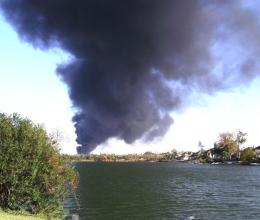
At about 8:45 this morning, a tank at the American Acryl chemical plant in Seabrook, Texas exploded, releasing a massive amount of black smoke and fumes into the air. The blast shook buildings throughout the town and as far away as Houston, 30 miles away. The fire was out within about an hour, and the only injuries were two workers who inhaled some fumes. Local residents and all of the schools in the surrounding area were asked to shelter in place following the explosion.
This raises an interesting question. Do you know what sheltering in place is? If you got an order to do it, would you know what to do? If you're not in emergency management, crisis response or a first responder, you may well not. And that's a problem because, unfortunately, emergency managers don't always speak plain English when they're giving information. The clear directive to shelter in place may seem obvious to them, but it isn't necessarily to us.
In case you're still wondering, sheltering in place is a lot like what it sounds like. It means staying where you are and not going outside. Depending on the circumstances, it might also mean going to the lowest level of the building or to the highest levels (in the case of chemical agents that are settling down). It may or may not involve locking and securing doors and windows, depending on whether the hazard is something like a chemical spill or something like a bank robber running through the neighborhood.
Sheltering in place may not seem like a big deal, and it probably isn't if you only have to do it for an hour or two. In Michigan, we are actually required to practice sheltering in place at least once a year, which basically entails telling everyone to come inside, locking the doors and taking attendance. We can imagine situations, however, where people have to shelter in place for several days -- for example, if a chemical plant is burning and the fire isn't put out quickly.
Most homes are pretty poorly equipped to shelter in place for any length of time. Most of us have enough food for several days, but most of us don't have enough water if the water supply is contaminated. Schools are even worse -- most schools don't have even one day's supply of food and water for all staff and students, let alone facilities for sleeping. I can imagine nothing much worse, as a Principal, than having to keep students overnight. In fact, when I teach CISM classes I use such a scenario as a training exercise. It's that bad.
I'm glad the fire is out in Seabrook and the danger seems to have passed. I'm glad all those kids got to go home at the regular time and sleep in their own beds, and the residents are going about their daily business. But I wonder how long it will be before something like this happens and really shuts down a school district or a county. I know for sure, we're not really ready.
Subscribe to:
Posts (Atom)
Meet the Quarterback

- Naomi Zikmund-Fisher
- is a clinical social worker, former school Principal and a Crisis Consultant for schools and community organizations. You can learn more about her at www.SchoolCrisisConsultant.com

Subscribe


 Posts
All Comments
Posts
All Comments