Showing posts with label Washington. Show all posts
Showing posts with label Washington. Show all posts
Monday, November 7, 2011
Homicide Watch and Victim Identification

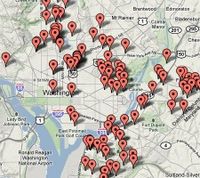
This week, the NPR show On the Media had an interview with Laura Amico, the founder of a website called Homicide Watch D.C. This website tracks every homicide in Washington, DC from the time the crime is committed through the investigation, trial and sentencing. It's a big job in a city that has already experienced 95 murders in 2011 (down from 106 at this point in 2010).
One of the things that makes Homicide Watch interesting is that they often publish information that has not been made public by the police department. Most notably, they publish victim's names before they have been released. The interview on NPR today focused on how they are able to do that.
If you think about it, it actually isn't all that hard. The fact of the matter is that, unless the person is truly unidentified, a large number of people know the identity of the victim immediately after a homicide. Friends, relatives, neighbors, colleagues, classmates etc. hear about it very quickly. These people, in turn, do two things: they go online looking for information about the crime, and they go online to talk about it.
When these folks go looking for information, they don't realize that public information tends to be very meager and come out very slowly. Chances are that they themselves already know more about what happened than is available in the media. They're looking, nonetheless. So immediately after the murder of John Smith, his friends and relations start googling terms like, "murder John Smith Washington November 7." One of the sites they are most likely to find themselves directed to is Homicide Watch D.C., even though it doesn't have any information for them.
Meanwhile, the folks over at the website have a preliminary police report that a male victim died of stab wounds on XYZ street. All of a sudden, the analytics for their website start showing that people are googling "murder John Smith Washington November 7." So the website folks go on Twitter and Facebook, looking for things like "RIP John Smith." When they find it, they can also often find additional information. For example, the full tweet might read, "RIP John Smith, stabbed to death tonight." That's a good clue that the victim is John Smith. Even better, they may be able to find John Smith's Facebook page, where people may be posting memorials and comments about the murder.
At this point, they know the victim's name and they publish it, hours and sometimes days before the police release it. But should they? After all, the police hang onto that information for a reason, and if they have a good reason shouldn't the website have the same reason?
Let's start with why the police are slow to release the name. They want to be absolutely certain they have it right, and they want to be absolutely certain that no close relative will hear about the crime from the media before they are officially notified. The techniques the police department uses to identify victims and the standards they use for "absolutely certain," however, are very different than what Homicide Watch is using.
The police may be waiting on fingerprint confirmation. At a minimum they're waiting for a family member to come down to the morgue and identify the body. Homicide Watch presumes that if the family is tweeting and facebooking about it, they've already identified the body for their own purposes, if not for the police department's, and that's good enough for them. Homicide Watch also relies on the fact that if the murder has made it to Twitter and Facebook there is very little chance that any close relatives don't already know. Another way of looking at it is this -- the police wait until they have identified the victim to their satisfaction. Homicide Watch waits until they see evidence that the victim's family has identified them to the family's satisfaction.
In the end, I actually think publishing the name before it's released officially is something of a service to the relatives and loved ones of the victim. If you have ever been involved in a traumatic event, you have probably experienced the odd feeling that comes when you realize that your world has stopped turning and the rest of the world doesn't know it. Reading media that has no coverage of your event, or inaccurate or minimalist coverage, feels just plain wrong. At least with Homicide Watch, the next time someone googles for information, they will find some confirmation that yes, this awful thing did happen and yes, someone noticed. On balance, I think that's a good thing.


Wednesday, October 12, 2011
Why Terrorism is Like Mosquitoes

There's an old wives' tail that goes something like this: Male mosquitoes buzz, but don't bite. Females bite, but don't buzz. So it's when you don't hear anything that you should worry.*
I was reminded of this yesterday, when news broke of the failed plot, allegedly by Iran, to recruit members of a Mexican drug cartel to assassinate the Syrian ambassador to the United States by bombing an undetermined location in Washington, DC. The media has been making the obvious comparisons to a spy novel or Hollywood script.
The plot seems amateurish. The evil Iranians we all fear can certainly do better than this, can't they? In the Middle East, the story has been met with outright disbelief.
In the sage of another highly publicized failed plot, the "underwear bomber" pled guilty in Detroit today. Apparently what he wanted more than anything was the chance to make a public statement about why he did it, and so he did.
Both of these plots should, from one perspective, terrify me. Not only do I live in the Detroit area, I've taken Flight 253 from Amsterdam. I have family in Washington, DC. These plots represent plots against people and places I care about.
And yet, I'm not terrified. To me, these plots seem like the male mosquitoes. They're the ones that we notice, but not the ones that are dangerous. They make the noise, but they don't bite.
I'm not worried about these. If this is the best the terrorists can come up with, I think we're OK. What scares me isn't the ones we know about. It's the ones we don't. Remember, it's the silent, female mosquitoes that bite.
* Like many pieces of "common knowledge," this turns out not to be true. While it is only the females that bite, the buzz is the sound of beating wings and comes from both males and females.

Thursday, September 29, 2011
Did the Onion Cross the Line?

The Onion, if you're not familiar, is a "news" outlet that puts out a printed newspaper, a TV show and a website absolutely chock full of fake news. Typical headlines are things like, "Historians Politely Remind Nation To Check What's Happened In Past Before Making Any Big Decisions" and "Syracuse Leaves Big East For Woman Named 'Misti'." The Onion, in my humble opinion, varies between mildly amusing and downright hilarious, and occasionally it hits the nail on the head with its headlines in ways that make you say, "What's sad is, that's almost true."
From time to time, the Onion gets in trouble because someone doesn't realize they're kidding. There is, in fact, an entire blog devoted to people taking the Onion literally on Facebook, often with hilarious results. Many years ago, when the Onion published a story saying that Congress was threatening to leave Washington unless they got a new Capitol building with sky boxes, it got picked up by the official media in China and reported as factual evidence of the failures of capitalism.
Today there was another such Onion incident. The Onion ran an article on its website with the headline, "Congress Takes Group of Schoolchildren Hostage." The tagline was, "'We need $12 trillion or all these kids die.'" This was accompanied by a doctored photo of John Boehner with a gun to the head of a little girl.
The Onion then began sending tweets, the first of which read, "BREAKING: Witnesses reporting screams and gunfire heard inside Capitol building." This got retweeted enough times and alarmed enough people that the phones at the Capitol Police Department started ringing off the hook. They actually began an investigation, because by this point, although they knew the story was false, they couldn't figure out where it had started.
So the question is, is this just another case of people not getting an Onion joke, or did the Onion actually do something wrong here? I think it's the latter, but apparently for a different reason than most commentators out there.
My take is this: the Onion is funny because they manage to run stories that relate to reality in some way but are just off the wall enough that if you're paying attention you know they can't be true. In this instance, the notion that Congress is "holding the country hostage" is not a new one, but no one really thinking about it would believe that John Boehner actually was threatening little children with a firearm. You may or may not like the politics of this story, and you may or may not think it was funny, but it was clearly intended as a joke. Most of the comments out there about this mess suggest that such a story by itself, or with the picture, crosses the line of decency. I actually think that is not the problem
The problem is that, when the Onion started tweeting, they did something crucially different than what they did in the original story. That first tweet had absolutely nothing in it that would even hint that it was supposed to be a joke. There wasn't anything about how Congress, as a whole, was taking hostages. That's the part we knew was false. All it said was that there was gunfire and screams at the Capitol. That was purely believable, and because of that it wasn't funny.
You might argue that anyone who knows anything about the Onion should have known it wasn't true anyway, and you would have a point. However, not everyone knows the Onion, and once people started retweeting and the original author was lost in the stream, people seeing this tweet had no way to know that it wasn't real. The Onion lost control of the joke. In hindsight, at least, that seems pretty predictable.
The Onion's sin here wasn't making fun of violence at the Capitol. It was joking in a way that did not insure that everyone would at least have a chance to be in on the joke. I hope the folks over at the Onion learned a lesson, because I'd hate to feel like I can't read it anymore. It's pretty funny.
This post was updated on September 30 at 11:09 PM.

Friday, September 9, 2011
Turn Into the Wind: Dealing With the 9-11 Anniversary and its Hype
All week I've been writing about how American society matches the symptom profile for Post Traumatic Stress Disorder. This morning, I took the first of those pieces to my writer's group, a small circle of women writers who share and respond to each other's work every Friday mornings. I knew it was not my best work, and I wanted feedback.
As usual, the group was very helpful, but one of their reactions caught me by surprise. Members felt that my writing was distressing (not in terms of quality, but in terms of topic), and that I needed to give information on how to deal with that distress. So I'm taking a detour from the exploration of PTSD in a post 9-11 society to help all you Quarterbackers out there as we head into the 10th anniversary of the attacks.
Perhaps the most important thing you should know is that, if you're feeling blah this week, or sad, or anxious, or irritable, or having trouble sleeping, or anything else that makes you feel "off," even if you do not consciously connect those feelings to this anniversary, you're normal. Anniversaries are very powerful, and quite often people who don't even realize that it is an anniversary have negative reactions nonetheless. This isn't helped by the terrorism alert for New York and Washington. What might be somewhat distressing anyway only feels magnified given the time of year.
You also aren't crazy if you are sick and tired of the anniversary coverage (although chances are you aren't reading this, so I may be wasting my breath). The extra coverage is draining because it prevents us from getting away from the intense memories and the feelings they evoke.
Whichever of these two groups you most identify with, you're normal. Don't waste one minute worrying that your reaction is too much or not enough or inappropriate, any more than you would criticize yourself for feeling pain when you stub your toe. You couldn't control those feelings if you wanted to, so don't bother trying.
But what can you do? If the coverage or the date or the blogging about our messed-up society is bothering you, what is the solution? You may not like the answer, because here's what it isn't. Turning off the TV, avoiding reading my blog, doing something completely non-9-11 related on Sunday and generally trying to get your mind off it may feel good for the moment, but it is a quick fix for a longer term problem. That's because problem isn't the reminders of the attack, it's how upsetting they are to you. Avoiding the reminders won't solve the underlying issue, it will just push it back underground.
What I suggest is completely counter-intuitive. When you find yourself having negative feelings -- sadness, fear, hurt, anger, guilt, shame or whatever -- don't try to turn away from them. Turn towards them. Identify what you are feeling and what caused it. Label them consciously. Don't try to explain it rationally, because emotions are not rational -- they're, well, emotional. Whatever you're feeling just is, so you might as well feel it.
The reason this is a good idea is that, when you turn and face your negative emotions, they stop feeling so overwhelming. Feelings, by themselves, do not hurt us. What we tell ourselves about those feelings and the events that trigger them can. No one likes to feel sad or afraid, but you can tolerate it. Your negative emotion loses its power when you acknowledge it and face it head on.
Does this mean you should glue yourself to the TV and watch as much coverage as you can this weekend? No. Just as avoiding reminders isn't healthy, seeking them out to excess isn't, either. Watch, read and hear what interests and moves you or is meaningful to you. Consider for yourself what type of commemoration, if any, you believe is appropriate for you to participate in. Just monitor yourself and be careful when you find yourself saying things like, "I can't watch that," "I want to get my mind off it," or "I won't be able to handle that." Those are signs you're avoiding, and you're not turning into the wind.
For me, this Sunday is about reclaiming September 11th as a day of grief and fear -- yes, I'm reclaiming fear -- and as a day of unity, service and collective support. I am allowing myself to feel the sadness and, as hard as it is, some of the horror of that day. And I'm patting myself on the back for doing it, because it isn't easy. I hope you'll join me.

Friday, May 6, 2011
White Powder in Letters: DC Schools Say, "Nya, nya, you can't scare us!"

Someone is sending letters to Washington, D.C. schools with white powder in them. The letters, which also contain the typewritten message, "AL AQEDA-FBI [sic]," have arrived at at least 28 schools thus far, and four more letters have been intercepted. Authorities say that the substance inside them is not hazardous, although they haven't said what it is.
If you do a Google News search for "white powder schools" you will find numerous incidents over the last decade, plus a bunch involving various organizations, institutions, and even Dancing With the Stars. Apparently, something similar even happened in Washington schools last October.
Am I the only one who remembers a time when it would have been the furthest thing from someone's mind to try to scare people with cornstarch? Before the anthrax attacks of 2001
 , this just wasn't on anyone's radar screen -- not even the lunatic fringe. Since then, it seems like almost an epidemic.
In 2001, schools in Western Pennsylvania (and perhaps elsewhere -- I just happened to work in Western PA at the time) had to scramble over "white powders." A local supplier of science curriculum had a 5th grade science explorations unit which many districts used which asked students to identify various "mystery powders," all of them white. All of a sudden, this didn't seem like a good idea, and replacement units had to be created or purchased.
As far as I can tell from the news coverage of the latest incident, the level of panic occurring at the schools involved is extremely low. It looks like people opened the letters and notified the authorities, who took it seriously and came out to the schools. I'm not seeing reports of school personnel becoming hysterical or evacuating buildings. I'm not seeing any reaction from kids, which seems to indicate that most of them didn't know about it. One school did notice the letter before it came inside and left it outside -- that seems cautious without being a complete overreaction.
The thing is, if we panic every time someone does this, then the bozos who are doing it get what they want. This encourages future bozos to do the same thing. Would it be safer to evacuate every building where this happens? Maybe, maybe not. We may be at the point where the chances of someone getting hurt in the evacuation -- tripping, stepping on something, getting hit by lightning, being a crime victim, getting hit by a car -- are actually greater than the chances of someone getting hurt by a mystery powder in a letter.
You might be surprised to know that the same logic often applies to bomb threats in schools. Many schools do not routinely evacuate if they receive a bomb threat. They wait for the advice of the police and fire departments regarding the specific threat. That's because if you know you can disrupt school -- any school, but particularly your own school -- by phoning in a bomb threat, then this becomes a very attractive thing for kids to do to get out of exams and such. Add to this the risk that someone will phone in a bomb threat and then wait for everyone to start coming outside and do something to them there, and evacuating is not always the thing to do. It depends on the situation.
Often times parents, in particular, don't want to hear that not evacuating is the best thing. Our knee-jerk reaction is that we should evacuate kids if there is any risk or threat. The thing is, that may not be in the best of interests of the kids. If we actually did that, we could well spend every day going in and out of school buildings. Schools have to evaluate relative risk, just as parents do at home. We don't get everyone outside when our dirty ovens start to smoke at home, or every time we hear a funny noise in the night. In loco parentis means that schools must act with the same care that parents would at home, not that they must jump every time someone says "boo." It would be a lot easier, however, if people didn't think it was a good idea to say "boo" in the first place.

Tuesday, August 31, 2010
The Non-Terror Attack that Wasn't

Two Yemeni men living in the United States were arrested yesterday in Amsterdam after flying there from Chicago. Initial reports indicated that the men were under suspicion for carrying out a "dry run" of a terrorist attack. The news reports this morning said that one of the men had been stopped in Alabama by TSA officers and found to be carrying $7,000 in cash. When his checked luggage was searched, officers found a cell phone taped to a Pepto-Bismol
 bottle, several watches taped together, and knives and a box-cutter. Since none of that is prohibited, he was allowed to travel to Chicago. Instead of continuing on to Washington as planned, however, he booked a flight to Amsterdam. The other suspect did the same. The suspicious luggage continued on to Washington and was checked through to the United Arab Emirates. Authorities returned the flight out of New York to the gate and removed the luggage, and alerted authorities in the Netherlands.
American authorities now suggest that, in fact, this was all a big misunderstanding. The two men did not know each other. They both missed the flight to Washington and were rebooked by the airline through Amsterdam. Passengers traveling to foreign countries, particularly third world countries, frequently carry cash for relatives and friends, and they frequently tape valuables into bundles or to large objects to make them harder to steal.
In between the first version of this story and the second one, news organizations seemed to have every expert (real or imagined) on airline security commenting on this incident. The consensus seemed to be that everything that could have been done wrong was. People suspected of terrorism were allowed to fly and allowed to be separated from their luggage. Imagine what could have gone wrong!!
First of all, I hate this line of reasoning. Boiled down to its bare bones, what these folks are saying is that the conclusive proof that we can't stop something bad from happening is that something that was judged not to be imminently dangerous was, in fact, not imminently dangerous. If that's true, what would be the conclusive proof that we can stop something bad from happening?
I actually have an easier time imagining what could have gone right in this situation, had this been handled differently. I don't know enough to know whether arresting these men was the right or the reasonable thing to do. However, it seems to me that if it took less than 12 hours to go from being sure they were evil to thinking it was all a coincidence, then maybe they could have waited 12 hours to go public with the information in the first place.
You may remember that I'm generally not a fan of sitting on information in a crisis. Withholding information from anxious people is almost universally a bad idea, because it makes them more anxious. In this instance, however, it's not clear to me that anyone would have been anxious if they hadn't released the information when they did. If there was a leak, and the preliminary information would have gotten out anyway, then certainly the authorities were right to talk about it. But they missed the opportunity to, instead of saying that they thought this was a dry run for a terror attack, say that they were still investigating and they'd get back to us.
Crisis communication shouldn't be this hard. Tell what you know. Don't speculate. Stick to the facts. Acknowledge the anxiety. Make it clear that more information will be forthcoming. Then stop talking. It's common sense, really. Unfortunately, it's not so common.
Friday, March 5, 2010
The Other Victim of the Pentagon Shooter

As you probably know, a man with a history of mental illness, a strong belief in conspiracy theories and a serious animosity towards the United States government approached two police officers at the Pentagon Metro station last night and opened fire. The officers returned fire, mortally wounding him. They suffered relatively minor injuries. Whether your classify this as random violence, a failure of the mental health system, or terrorism, it's clear that this was a relatively minor incident as these things go, and while the death of the shooter is a tragedy for his family this obviously could have been much worse.
You might not have heard, in the stories about this incident, about Dan Namisi. Mr. Namisi is a native of Uganda and a resident of Virginia who happened to be nearby when the shooting started. He hit the ground as fast as he could, which aside from being a natural reflex is also a relatively good way to avoid being shot in a situation like this. Officers responding to the shots immediately approached him, handcuffed and searched him and placed him in a police car. He was held for three hours.
Mr. Namisi tells the Associated Press that he thinks he aroused suspicions because, when he dropped to the ground, he cut his hand. He was near the shooting and appeared to be injured, and he therefore appeared to be involved. I will say that I think Mr. Namisi is more charitable in his interpretation of what made him a suspect than I am, but really the main issue is that he was right there when the incident occurred. It took the police a while to make sure they had figured out what had happened.
Mr. Namisi says he is traumatized. It's easy to let that remark go by if you're not reading carefully. After all, who wouldn't be traumatized by having to hit the pavement due to a shooting right next to you? But he isn't referring to the shooting. He's referring to the experience of being taken into custody by the police.
In fact, I suspect that the trauma here is actually both things. Being suspected of something really terrible that you really didn't do, particularly if you come from a country where the justice system is not known for its fairness or good treatment of suspects, is traumatizing by itself. Being a witness to a shooting where you fear that your own life is in danger is traumatizing by itself. Having both things back to back is probably worse than the sum of its parts.
All the physical and emotional responses to trauma were already going for Mr. Namisi when the police handcuffed him. That means that his body and mind were that much less able to cope with the new trauma when it happened. Not only did he not have an opportunity to come down from the surge of stress hormones that occurred when the first shots were fired, he got a second surge on top of it. At a minimum, he's got to be exhausted.
I am in no position to judge whether the police were reasonable in suspecting Mr. Namisi and holding him as long as they did. I don't know how many, if any, other bystanders experienced the same thing, or what circumstances went into the police officers' decisions. I do know that Dan Namisi had a really bad evening yesterday, and I hope someone took a moment to thank him for his time and apologize for the inconvenience.
Friday, February 26, 2010
Tacoma School Shooting: A Threat to a Colleague is a Threat to Us All

Jennifer Paulson, a 30 year-old special education teacher in Tacoma, Washington was shot to death in the parking lot of Birney Elementary School as she arrived for work this morning. The suspect was pulled over by police and opened fire some time later. He was killed in the shootout. The shooter was someone Paulson had worked with in college. He started turning up at her work a few years ago and calling her 10 or 15 times a day, and she eventually got a restraining order against him. Last Friday, he followed her in his car and was arrested for violating the order. He spent the weekend in jail, made bail and was released on Monday. Friday morning, Jennifer Paulson was dead.
When you hear the phrase "school shooting" you probably think of situations like Columbine, or even the hallway shooting at an Alabama middle school last month. In our minds, violence at schools is carried out by students towards students, or by adults who are intent on harming children. This case, like the shooting in Knoxville earlier this month and even the one in Littleton, Colorado earlier this week, paint a very different picture.
The fact is that, in any workplace including a school, the most likely person to murder another person is a current or former employee or an acquaintance or family member of a current employee. People who open fire at schools for the most part do it for exactly the same reasons they do it in factories, office buildings and other places of business -- they are gunning for an adult who they know is there. They are current employees who are dissatisfied and go after the boss, former employees taking out their revenge, family members commiting domestic violence homicides in public, and stalkers of all kinds, whether former love interests or people who think they should be love interests. The biggest danger doesn't come from strangers, and it doesn't come from children. It comes from the adults we know.
Paulson certainly was afraid for her own safety. She had not been staying at home since the shooter was released from jail. I don't know if she told her colleagues or her boss about this man and the restraining order. I hope she did, but it wouldn't be unusual if she didn't. Do you know if anyone at your work is being stalked or harassed? Do you know if they have a restraining order against someone? You should.
It's actually not as uncommon as you would think for schools in particular to need to deal with restraining orders and issues of people who may be a danger to the school community, but usually these take the form of orders against non-custodial parents, step-parents and former partners of parents. From time to time a parent will come to school with a picture and a court order and tell us to call the police if the person pictured comes within a certain distance of their child. If we're doing our job, we share that information with school staff and file it in the child's file for future reference.
It is even more common, however, for a parent who is either non-custodial or does not have physical custody of a child on a given day but has joint custody in general to turn up and pick up their child from school. The next day, we hear from the other, very angry, parent demanding to know why we allowed this to happen. They are always surprised to learn that we cannot enforce a custody arrangement that is not ordered by the court, nor can we enforce one that is ordered by the court if we don't have a copy. We have no way of knowing that Tuesdays are always "mom's day" if they don't tell us.
Which brings us back to Jennifer Paulson and school employees like her. Someone who is a threat to a teacher is a threat to that teacher's students and colleagues. If they know where the teacher works, that is one of the easiest places to find her. In my 19 years working in schools, however, I have only known of a restraining order involving a colleague once. People are embarrassed to talk about people who are stalking or threatening them, particularly if it is someone they once had a relationship with. But we can't be alert to the danger to them or to us and the children if we don't know, and it's naive to think that someone who would act so inappropriately in the first place would let a restraining order stop them if they wanted to do violence.
There is a lot of healing to be done at Birney Elementary School in the days ahead. If Paulson hadn't told her colleagues about her stalker, they're going to have to come to terms with the question of whether they could have made a difference if she had. We'll never know the answer to that. Hopefully, this tragedy will encourage other women in similar situations to confide in their bosses and their colleagues, if not for their own safety then for everyone else's.
Wednesday, February 10, 2010
Where's the Line Between Cautious and Snow Wimp?

The United States Federal Government is shut down for the third straight day today due to snow. Washington, DC is often the butt of jokes when it snows. They always seem surprised and completely unable to cope with even minor snowfall. Shortly after President Obama took office he expressed great surprised that his daughters' school had closed due to "a little ice." In short, people in the Northeast and Upper Mid-west tend to think that people in Washington are snow wimps.
Today, Washington is in the grips of the second huge snow storm of the week. This is, by any measure, an actually large storm, not just a Washington-is-hysterical storm. They're getting up to 16 inches on top of a couple of feet they got over the weekend. In addition, there are high winds, making this not just a storm but a blizzard. In response, among other things, Washington declared that it was too dangerous for plows to be on the roads this morning, and halted snow removal.
Growing up, as I did, in New England, my first reaction was to use this news as more affirmation that Washington just doesn't know how to deal with snow. I certainly cannot remember a time when plows in Boston, Pittsburgh or Ann Arbor (the three areas where I've lived the longest) were told to stand down because it was too dangerous. It becomes a point of pride for people from highly snowy areas that "a little snow" doesn't stop us. How can it be too dangerous to plow?
This is really not very fair to Washington for two reasons. The first is that this is, objectively, a pretty bad storm. Washington is not the only jurisdiction to have pulled over its plows today. The fact that I don't remember this happening where I was living doesn't mean it didn't, and it certainly doesn't mean it wouldn't if this same storm happened to hit literally close to home. I can certainly remember storms where there was concern that there was literally no place to put plowed snow, and ones where the snow was so deep that plows could not easily navigate through it.
The other reason is more complicated. The public works department of every city has to decide whether it is safe to send out their plows. For most storms, regardless of where you live, this is pretty straightforward. It's unlikely, however, that this is the only storm in the history of the country to at least spur the conversation about whether it is too windy to plow. Part of this decision does have to do with how used to snow the jurisdiction is. What seems like a "bad storm" in Washington is not necessarily a bad storm in New Hampshire. But there's more to it than that.
In every jurisdiction, when they make the decision about whether to send out the plows, they also have to take into consideration that not sending out the plows will have a serious impact on the residents. Being stuck at home during a snow storm isn't just an issue of closing schools, it's also an issue of public safety. The longer folks are snowed in, the more likely there are to be medical emergencies, and those emergencies will have trouble getting to the hospital. If this is a one-time, unusual instance, it may well be a risk worth taking given the risk of sending out the plows.
If you live someplace where you are making this decision not twice a year but two or three times a week throughout the winter months, however, your decision is never truly an isolated one. If you decide not to send out the plows today, you are also setting the precedent that you will not send out the plows anytime there is a storm like this one. That's fine if the storm really is an unusual event, but if it's going to happen a lot there's going to be a problem. Washington can afford to shut down for a week. If Boston does, it's running the risk that that week will keep coming, week after week.
So, does that mean that Washingtonians really aren't snow wimps? Probably not. It does mean, however, that today isn't necessarily and example of it. Everyone has to assess whether risks are worth it every day. It's OK for us to come up with different answers.
Subscribe to:
Posts (Atom)
Meet the Quarterback

- Naomi Zikmund-Fisher
- is a clinical social worker, former school Principal and a Crisis Consultant for schools and community organizations. You can learn more about her at www.SchoolCrisisConsultant.com

Subscribe


 Posts
All Comments
Posts
All Comments