Showing posts with label survivors. Show all posts
Showing posts with label survivors. Show all posts
Friday, November 11, 2011
We Are Penn State


By now, you probably know what happened. At least eight young boys were allegedly sexually assaulted and/or raped in State College, Pennsylvania over the course of 15 years. The alleged perpetrator was an assistant coach for the Penn State football team, which, let's face it, is the only reason those of us outside of the area even know about it.
If the allegations aren't enough to outrage you, throw in the fact that two administrators were also arrested for allegedly covering it up and lying about it to the grand jury. They never even bothered to find out the name of the kid they knew had been assaulted. Joe Paterno, the head football coach, has lost his job for knowing about it, reporting it, but never questioning why nothing was done. The President of the college is out, too, for knowing something was up and not bothering to find out what.
If you have a strong stomach, you might want to read the grand jury report in its entirety (linked here). It gives you an understanding that "eight boys were molested" fails to capture. Two different people actually witnessed boys being raped and reported it, and nothing was done. The question in my mind, and probably a lot of yours, is not just how you can witness that and not stop it, but how you can sit back, knowing you've reported this, and, when nothing ever happens about it just keep it to yourself.
We're glued to this story because it's Penn State football. We're also glued to it because we want so badly to know that this couldn't happen if we were around. If we had seen it, if we had known, we would have stopped it. If it were our coworker, we would have stood up. If it had been our kid . . . it couldn't be our kid.
But let's look at the statistics. Estimates are that between 5% and 15% of men and between 15% and 25% of women were sexually abused as children. If you think about your circle of friends and acquaintances, however, it's unlikely you can think of that many who you know are survivors. That's because this is a crime of shame. Sexual assault -- on adults as well as on children -- is a crime that leaves the person who has been assaulted believing that there is something wrong with them. It is a crime of humiliation and degradation. So people don't tell.
We like to think, however, that telling is enough, and that's part of why the Penn State situation is so disturbing. If the secrecy is what let's this crime go on, then someone knowing about it should make it stop.
And yet, it can be a fine line. There are people who are creepy and inappropriate, who may well be abusers, but we don't have proof, or they're not abusers yet. And you can't ruin someone's life for being creepy. Being creepy is not a crime. Those cases, I know from personal experience, are agonizing.
In this case, though, it wasn't a fine line at all. People saw it happen. But the fact of the matter is, this situation -- that someone knew and nothing was done -- is far from an isolated incident.
I work with a lot of sexual abuse survivors. Whether by temperament or by training, I can listen to their stories with empathy without usually being traumatized myself. It doesn't generally get to me. But what gets to me, what I struggle with, is their stories about what happened when they tried to tell:
My mother told me to tell my father, but he was asleep so that was it.Time after time after time, people tell me that their safety was sacrificed for family cohesion, reputation, the safety of others or simply someone else would not have to deal with the unthinkable.
My grandmother asked me what I did to make it happen?
My dad said I must have wanted it.
My pastor said I was going to hell for talking about sex.
My mom slapped my face and told me never to lie again.
My mother let him do it to me so he wouldn't go after my little brother and sister.
My mother put me in foster care because she didn't want to leave him.
And is what happened at Penn State so different? People knew but did not want to know. They played a gigantic round of the game "telephone," downplaying a little more as the report went on, to the point that they convinced themselves not to do anything. They sacrificed the safety of young boys for the reputation of the University, its athletic program and its coaches.
We, all of us, need to know that not only can this happen in our neighborhoods, it is happening in each of our neighborhoods, and we can stop it. We need to believe that no reputation or family togetherness or peace of mind is more important than the life of a child. Let us all look back on this incident, on this week, and say that this was the time the silence and complicity ended, not just at Penn State, but everywhere.

Monday, November 7, 2011
Homicide Watch and Victim Identification
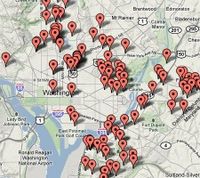
This week, the NPR show On the Media had an interview with Laura Amico, the founder of a website called Homicide Watch D.C. This website tracks every homicide in Washington, DC from the time the crime is committed through the investigation, trial and sentencing. It's a big job in a city that has already experienced 95 murders in 2011 (down from 106 at this point in 2010).
One of the things that makes Homicide Watch interesting is that they often publish information that has not been made public by the police department. Most notably, they publish victim's names before they have been released. The interview on NPR today focused on how they are able to do that.
If you think about it, it actually isn't all that hard. The fact of the matter is that, unless the person is truly unidentified, a large number of people know the identity of the victim immediately after a homicide. Friends, relatives, neighbors, colleagues, classmates etc. hear about it very quickly. These people, in turn, do two things: they go online looking for information about the crime, and they go online to talk about it.
When these folks go looking for information, they don't realize that public information tends to be very meager and come out very slowly. Chances are that they themselves already know more about what happened than is available in the media. They're looking, nonetheless. So immediately after the murder of John Smith, his friends and relations start googling terms like, "murder John Smith Washington November 7." One of the sites they are most likely to find themselves directed to is Homicide Watch D.C., even though it doesn't have any information for them.
Meanwhile, the folks over at the website have a preliminary police report that a male victim died of stab wounds on XYZ street. All of a sudden, the analytics for their website start showing that people are googling "murder John Smith Washington November 7." So the website folks go on Twitter and Facebook, looking for things like "RIP John Smith." When they find it, they can also often find additional information. For example, the full tweet might read, "RIP John Smith, stabbed to death tonight." That's a good clue that the victim is John Smith. Even better, they may be able to find John Smith's Facebook page, where people may be posting memorials and comments about the murder.
At this point, they know the victim's name and they publish it, hours and sometimes days before the police release it. But should they? After all, the police hang onto that information for a reason, and if they have a good reason shouldn't the website have the same reason?
Let's start with why the police are slow to release the name. They want to be absolutely certain they have it right, and they want to be absolutely certain that no close relative will hear about the crime from the media before they are officially notified. The techniques the police department uses to identify victims and the standards they use for "absolutely certain," however, are very different than what Homicide Watch is using.
The police may be waiting on fingerprint confirmation. At a minimum they're waiting for a family member to come down to the morgue and identify the body. Homicide Watch presumes that if the family is tweeting and facebooking about it, they've already identified the body for their own purposes, if not for the police department's, and that's good enough for them. Homicide Watch also relies on the fact that if the murder has made it to Twitter and Facebook there is very little chance that any close relatives don't already know. Another way of looking at it is this -- the police wait until they have identified the victim to their satisfaction. Homicide Watch waits until they see evidence that the victim's family has identified them to the family's satisfaction.
In the end, I actually think publishing the name before it's released officially is something of a service to the relatives and loved ones of the victim. If you have ever been involved in a traumatic event, you have probably experienced the odd feeling that comes when you realize that your world has stopped turning and the rest of the world doesn't know it. Reading media that has no coverage of your event, or inaccurate or minimalist coverage, feels just plain wrong. At least with Homicide Watch, the next time someone googles for information, they will find some confirmation that yes, this awful thing did happen and yes, someone noticed. On balance, I think that's a good thing.

Monday, October 24, 2011
Bombing at Occupy Maine

Imagine, if you will, that you are a protester at Occupy Maine, the Portland, ME off-shoot of the Occupy Wall Street protests. In the interest of economic equality, you have been camping in Lincoln Park in Portland for a few weeks. There aren't many of you, but you're committed. And while not everyone agrees with you, those who don't tend to brand you as harmless loons. Not a compliment, certainly, but if you can stand Portland nights in October you can stand a little ridicule.
Then, early one Sunday morning, someone tries to kill you. Maybe that's actually their intent, or maybe they think they're being funny or its a "prank," but they throw a chemical explosive device out of a passing car into the tent next to yours. You awaken to an explosion. You realize that if they had aimed a little bit to the side you would be maimed or dead right now. You're shaken. You're scared. Sleep isn't going to come easily the next night, or for a few nights. The police come, but have no real leads.
To you, this is a turning point, not just for you but for the Occupy protests. Now it's not just us vs. the banks, or even us vs. the police. Someone out there hates the Occupy movement enough to want people dead. You wait to see what the reaction will be. Will the anti-Occupy folks denounce this act of violence? Will it galvanize support for the movement or cause others to think twice about participating? Is this the first of a rash of similar incidents or an isolated problem? You wait to see what the press will say.
Nothing.
The sum total of press coverage of this attack in the first 24 hours is 148 words in the Portland Press Herald. Not only is there no national coverage, there isn't even any coverage in other parts of Maine. You're pretty sure that if this had happened while you were just out camping in the park for fun, or if it had happened at your house, it would be big news. But you, as a protester, don't matter. Your movement doesn't matter. Your life is so insignificant that nearly losing it isn't news.
At least there isn't intrusive and inaccurate press coverage. At least the press aren't hounding you. At least no one's trying to spin it as justified.
Somehow, I doubt you feel any better.

Wednesday, October 19, 2011
What if a Wolf Should Come Out of the Forest?
 |
| A dead lion on the Ohio game preserve. |
My first impression when I heard this story was that someone had murdered the preserve owner had been murdered by someone who then thought it would be a good idea to let the animals out, perhaps to cover his tracks. Upon reflection, I don't know why I thought this. Certainly that was not in any way what the media reported. But I think all of us, at these moments, become "experts" based on the many crime novels and cop TV shows we've been exposed to over the years.
One article this morning, however, reports that initial indications are that the owner killed himself. This would imply that he released the animals himself in an unusual twist on a murder-suicide.
I will not pretend to understand what causes someone to decide not only that they would be better off dead but that they should take other people with them. I suppose I vaguely understand, although of course do not agree with, people who believe they've messed up their and other's lives so badly that it's best to put everyone out of their misery at once.
But this type of case is different. In this situation, someone decided that others have made their lives unlivable, and that the others need to be punished with death at the same time that they themselves stop living. That's not just depression, that's a level of rage I simply can't imagine.
This is of course just one facet of the story. These animals did nothing wrong at all and will now be killed to protect human life. I get it, it's probably necessary, but it's wrong. And kids are locked in with their parents out of fear of a wild animal eating them. It feels like a scene out of "Peter and the Wolf." The kicker is that this is the second death of a wild animal keeper this year in this area -- another man choked to death in what the press delicately termed a "voluntary sex act" in July. I'll spare you the details.
If we went with that fictional crime expertise we all seem to posess, this would all be part of a bizarre plot, perhaps on the part of radical animal rights activists, to murder wild animal preserve owners and free the animals. The defense would try to convince the jury that the action was necessary to save the lives of hundreds of animals. Perhaps Jessica Fletcher would crack the case after her nephew was falsely accused by the bumbling local law enforcement authorities.
Unfortunately, this is real life, and real life can be just plain weird sometimes. I hope more of these animals can be tranquilized rather than killed now that daylight is here, and I hope that happens before anyone gets hurt. I also hope we all remember that, no matter what incomprehensible thing he did, this owner was someone's son, brother and/or friend, and they are hurting in private somewhere today. Coming to grips with this is not going to be easy.
* The title of today's post comes from Prokofiev's "Peter and the Wolf," about a boy who encounters a wolf after being warned not to play outside. The link above is to a really fun version illustrated by Bono of U2 fame. It's my favorite, and proceeds benefit Irish Hospice.
Wednesday, July 6, 2011
Policy Change: President to Send Condolences Following Suicides
President Obama announced today that he would change the long-standing practice, in existence at least since the Clinton administration, that the President does not send a letter of condolence to families of servicemen and women who die by suicide, even in a combat zone. Obama will begin to send such letters, just as he does to families of military members who are killed in action. Obama said he was making the change to emphasize that people who need mental health care in the military are not weak and should not be stigmatized.
I first wrote about this issue in November, 2009, when the drive to change the policy was relatively new. Since then, I have begun working with veterans with PTSD directly, and have a lot more first-hand knowledge of what the state of mental health care and stigma is in our armed forces. When I went back to read my thinking from 18 months ago, however, I found that it really hasn't changed much. There were pros and cons then, and there are pros and cons now. So I'm reprinting my original post, below.
I want to make it absolutely clear that I fundamentally believe that deaths by suicide are, without question, service-related and/or combat-related deaths. My ambivalence about this policy comes not out of any desire to stigmatize these families or lessen the importance of the sacrifice, but rather out of my number one priority, which is to prevent as many of these deaths as we can.
**********************************
Wednesday, November 25, 2009
Should the President Send Condolences When a Soldier Kills Himself?
 If your loved one dies while serving in the United States Military, whether they are killed in action or by accident, you will receive a letter of condolence from the President. Presidents have been doing this since Abraham Lincoln. If your loved one serves in the military and kills themselves, however, you will get many of the same things that other families get, but you will not receive a letter from the Commander in Chief. That has been true at least since the Clinton administration.
There is a push on from some military suicide survivors to change that policy. They argue that their loved ones died in service of their country, certainly as much as someone who was killed in an accident. The injuries they suffered were not visible, but they were certainly service related. Their families deserve the same consideration from the President as anyone else's, and to do so would go a long way towards reducing the shame that has for so long been associated with death by suicide, particularly in the military.
This is one of those issues which, spun the way these families and the press coverage are spinning it, seems pretty clear cut. Of course being a suicide survivor should not have stigma associated with it. These families are grieving just as much as any other, and deserve all the support we can give them.
There is a problem, however. One of the rules of thumb in responding to a suicide and memorializing people who die by suicide is that you in no way want to glorify the act of killing yourself. When you have grand ceremonies to honor their memory, you run the risk that someone else who is considering suicide will, consciously or unconsciously, view killing themselves as a means to get that kind of attention for themselves and their families. This is probably more of an issue with teenagers, who aren't fully able to appreciate the consequences of any action because their brains are not yet fully developed, but it remains an issue for others, too.
I don't know that I have a good answer for this. On the one hand, families who are survivors of military suicides should not be treated with any kind of stigma. They deserve our honor and support in a very, very difficult and complicated time. On the other hand, there is an argument to be made that even what is already done for these families -- receiving a folded flag, a 21 gun salute at the funeral -- let alone a letter from the President might look pretty appealing to a soldier considering suicide. They might think that in death they can bring honor to their family that they feel they could not bring in life.
Taking away the stigma associated with suicide in the military may well save lives by making soldiers more willing to seek help. The question is, by honoring grieving families properly, how many lives will we lose?

Thursday, April 28, 2011
Life and Death in Tornado Alley

I remember when I was an undergraduate, I was working on a computer project in an evening class during a wind storm. All of a sudden, the TA started yelling "Save, save! Everybody save!" About two minutes later, the lights went out. From the main computer lab across the courtyard, we could hear people screaming -- they hadn't saved. The TA was from Oklahoma. He said, "I just knew."
There are places in this country where tornadoes are a fact of life. Oklahoma is one of them, as are many places in the south. Last night, those facts hit hard. A string of storms ravaged the southern U.S., killing at least 214 people including 131 in Alabama alone.
Remember, these are places that are prepared for tornadoes
 . They know they get tornadoes -- perhaps not as many as last night in a typical night, but some. They practice for tornadoes. They have a plan. And 214 people still died.
 This brings up a difficult issue for me, and perhaps for you as well. Preparedness
 for likely threats is important, and some of us like to think we're pretty good at it. My family has a tornado plan and an automatic weather radio. We know where to go and what to do when a storm is coming, and we have done it several times. Luckily, the storms have never hit us directly.
 What we don't spend a whole lot of time thinking about is the simple truth that if a tornado actually hit our house dead on, there's no guarantee that we'd survive it. We have a better chance in our little basement room, certainly. But if a twister flattens the house, we pretty much have to hope that the first floor doesn't fall on us in the basement. Our safe room is useful for a storm that goes nearby, breaks the windows, picks up the cars and throws them, and generally wreaks havoc, as long as it doesn't actually hit our house.
Most of the time, however, we choose to ignore that fact. This is largely because we can't do anything about it. We know where the safest place to be during a tornado is, and we make sure our kids know it too. But "safest" and "safe" isn't the same thing. Sometimes, your TA doesn't have time to yell "save!" or they do but you don't have time to hit the right keys.
They're cleaning up across the south today. A lot of people are digging through a lot of rubble. And a lot of folks are facing up to what they already knew in the back of their minds -- you won't know if you're safe from the next storm until it comes.

Saturday, January 15, 2011
Two Personal Notes from the Tucson Shootings
Aside from what I had to say last week and today, and will have to say tomorrow, about this horrible event, I wanted to share two tidbits that are important, but neither of which stands on its own as a blog post.
The first is that I'd like to extend my prayers and well-wishes to fellow blogger Ashleigh Burroughs. I don't know Ashleigh personally, but she and I are both part of the BlogHer network, which sponsors our blogs and links the writing of female bloggers (supposedly quality writing, but then they include me so who knows) across the Internet. From time to time my sidebar includes links to her blog, "The Burrow," and hers to mine. When my traffic statistics show people coming here from ashleighburroughs.blogspot.com, I always think, "Thanks, Ashleigh!" even though I know the link was automatically generated.
Ashleigh was at the front of the line to shake Gabrielle Gifford's hand last Saturday when the shooting started. She was shot three times but, thankfully, survived. I wanted to publicly recognize Ashleigh and her family, and the difficult road they are on right now. Life has a funny way of linking people, and I take Ashleigh's shooting more personally than any of the other victims. It adds a "that could have been me" aspect that is both scary and tender. I'm keeping Ashleigh and her family in my prayers today and hope that you will, too.

*********************
The first is that I'd like to extend my prayers and well-wishes to fellow blogger Ashleigh Burroughs. I don't know Ashleigh personally, but she and I are both part of the BlogHer network, which sponsors our blogs and links the writing of female bloggers (supposedly quality writing, but then they include me so who knows) across the Internet. From time to time my sidebar includes links to her blog, "The Burrow," and hers to mine. When my traffic statistics show people coming here from ashleighburroughs.blogspot.com, I always think, "Thanks, Ashleigh!" even though I know the link was automatically generated.
Ashleigh was at the front of the line to shake Gabrielle Gifford's hand last Saturday when the shooting started. She was shot three times but, thankfully, survived. I wanted to publicly recognize Ashleigh and her family, and the difficult road they are on right now. Life has a funny way of linking people, and I take Ashleigh's shooting more personally than any of the other victims. It adds a "that could have been me" aspect that is both scary and tender. I'm keeping Ashleigh and her family in my prayers today and hope that you will, too.
************************
The second is that I'd like to share with you what I think is the best commentary on the shooting out there. It might come as no surprise, given the polarization and dumbing down of our public remarks these days that it comes from Jon Stewart of the Daily Show. I urge you to watch it, if only to aid in the healing of this wound to our collective psyche. (The clip begins with a rather amusing bit by John Oliver -- stick with it through that to get to the commentary.)
of the Daily Show. I urge you to watch it, if only to aid in the healing of this wound to our collective psyche. (The clip begins with a rather amusing bit by John Oliver -- stick with it through that to get to the commentary.)
Tuesday, August 3, 2010
Plenty of Trauma to Go Around in Manchester Warehouse Shootings
 A driver for Hartford Distributors, a beer distributor in Manchester, Connecticut
 , opened fire in the warehouse this morning around 7 AM. He killed 8 people and wounded two others. Police responded, and as they closed in on the gunman, he killed himself. That much, everyone agrees on. I think most if not all of us would also agree that, regardless of his motives, this kind of violence cannot be justified.
This story is not nearly as clean as that storyline would appear, however. The driver had just been in a disciplinary hearing in which he was shown a video allegedly depicting him stealing from a company truck. He was given the choice to resign or be fired, and he chose to resign. He began shooting essentially as soon as the meeting was over.
As if that weren't complicating enough, the shooter was allegedly being harassed by coworkers because of his race. He was one of two African-American employees, and his family says he showed them pictures of racial epithets and a stick figure being hung by a noose, taken in the company restroom. He also reported being referred to by the "N word." After he shot the other employees but before he killed himself, he reportedly called his mother and told her "I shot the five racists." Then he shot himself.
This situation is messy on many levels, and messy situations have a lot of impact and need a careful response. In this instance, I imagine the following groups need support:
- the survivors, who have experienced believing they were going to die
- the families of the dead, who have lost a loved one violently and suddenly
- the families of the survivors, who will have lasting fears for their loved ones' safety
- the family of the gunman, who must come to terms with what he did and grapple with the two disparate versions -- that he was being fired for misconduct and/or that he was the victim of racial harassment
- the administration of the company, who have lost employees "on their watch" and may feel guilt, either because they fired the gunman or because they didn't respond appropriately to harassment complaints
- the union, which would have represented him in the meeting this morning and which may have had harassment reported to them
- anyone who actually harassed the gunman, who may now feel responsible (or may now feel his actions prove them "right" in their racism)
Add to this the fact that there are likely to be one or more lawsuits flying in various directions, and everyone knows it. This means that anyone who feels guilty -- whether it's their fault or not -- is going to be pretty uncomfortable talking about those feelings for fear that what they say winds up in court.
I hope this workplace has access to a good crisis response team of some kind. I hope that team has an excellent coordinator. They're going to need to assign people carefully and make sure they have enough to cover all the bases, because no one in this situation is going to be able to support more than one group, and in some cases perhaps only one individual. They sure have their work cut out for them.
Monday, May 31, 2010
This Memorial Day, Let's Honor the Survivors, Too

Today is Memorial Day in the United States. Most Americans spent the day doing yardwork or barbecuing or, perhaps, going to a parade. Summer is unofficially here, and women can wear white shoes without offending Miss Manners. But of course none of that (except, arguably, the parades) is the point of Memorial Day. We are supposed to be remembering those who died in the armed services.
There is one segment of the population that doesn't need much of a reminder of what Memorial Day is all about. There are thousands of families and friends across the country who have lost a loved one in the Iraq and Afghanistan wars, not to mention those who remember those who died in the first Gulf War, Vietnam, Korea and World War II, as well as a variety of smaller conflicts, attacks, and accidents. There are also an increasing number of people caring for severely disabled veterans, people who, in previous wars, would likely have died but who, through the miracle of modern medicine, are alive but living with significant lasting effects.
When someone you love goes off to war, you entertain the possibility that they might not come back. The day an officer and a chaplain knock on your door is not the first time this has ever occurred to you. In that sense, the death of a loved one in action is a little bit different than some other types of traumatic loss. At the same time, however, sudden, violent death is traumatic no matter how much you think you're prepared for its possibility.
You've probably read stories all over the news about veterans who come home with Post-Traumatic Stress Disorder
 (PTSD), and how we as a country do or don't effectively care for them. What you don't hear about is the post-traumatic stress (with or without the disorder) of those left behind by fallen soldiers, sailors, marines, airmen, etc. As mediocre a job of treating PTSD as we do for our veterans, I can't imagine we do much better for the relatives of the dead.
The men and women who gave their lives for this country deserve to be honored today, probably more than they actually are given the competition with white sales and going to the beach. At the same time, wherever they are we know they are not in pain. The same cannot be said for their parents, children, spouses and friends. We often say that those who died in war "made the ultimate sacrifice." For that we honor them. Let's take a moment, today, to honor those who have to live with that sacrifice for the rest of their lives, too.
photo copyright istockphoto/stephaniefrey
Tuesday, May 25, 2010
Deepwater Horizon Memorial Service

Transocean
 , the company that operated the oil rig
 that exploded last month in the Gulf of Mexico, sponsored a memorial service today in Jackson, Mississippi for the 11 employees who are missing and presumed dead in that accident. Many of the 115 surviving workers from the rig, whose collapse triggered the massive oil spill still going on in the Gulf, were expected to travel from throughout the south to attend the service.
 I will admit to greeting this news with some cynicism. My first thought was that today -- five weeks after the accident -- was a little late to be holding a memorial service. The second was that, having allegedly tried to muscle its workers into signing waivers the day of the accident, the company had a lot of nerve inviting them to this service and saying they were a "community."
Let's take that second thought first. I still am skeptical that the executives at Transocean are very concerned with the wellbeing of this community of theres. Their past actions, at least as alleged in court documents, don't seem to support that. However, the fact that they allegedly did something really awful does not actually preclude the possibility that they're doing something good. Whatever their motivation -- be it altruism or pure PR -- bringing the workers back together and holding a memorial service is a good thing to do, and the executives at Transocean get some credit for it.
This brings us to the timing of the service. As memorial services go, this is pretty late. Depending on your religious tradition, services to honor the dead are usually held within a week or two of the death, and in some traditions with 24 or 48 hours. Funerals and memorial services give a sense of "closure" to survivors, which is not to say that they are somehow then "over" the death, but rather that the death itself as an event is over and the healing can, perhaps, begin. For the survivors of the Deepwater Horizon
, there has been no formal event to mark the end of the event. When they finished with the lawyers on the day of the explosion, they went to be with their families, some were still in the hospital, and they scattered to their home towns. At that point, the search was still on for the 11 missing men.By the time the search was called off, the hospitalized were out of the hospital and the dust had settled somewhat, the two week window for a service had passed. At that point, the easiest thing to do would have been nothing. Each of the 11 families undoubtedly held services according to their own traditions and beliefs in their own communities, and Transocean was not really obligated to do much other than possibly send a representative to those services.
Having a memorial service sponsored by the company, however, allows the survivors to come back together, to see each other, to be with others who understand what they went through, and to reach some kind of closure. It recognizes that the dead workers hailed not just from communities defined by their residences, but from a community of workers who were on the rig that day and most of whom were employed by Transocean.
It has been said that funerals are more for the living than for the dead. That is certainly my personal belief. In this instance, a delayed but well-planned memorial service offered comfort not just to the bereaved, but to the survivors. That is how it should be, and why Transocean chose to do the right thing is entirely beside the point.
Friday, May 7, 2010
Were Oil Rig Workers Coerced After the Explosion?

As most of us know by now, on April 20, an oil rig exploded in the Gulf of Mexico, killing 11 workers. The well in question belongs to BP, but the oil rig was owned by Transocean. Allegations have now surfaced that, after the surviving workers were rescued from the rig, they were kept at sea for 15 hours and then brought to a hotel where they were asked to sign pre-printed statements indicating whether they witnessed the accident and whether they were injured. Only after this were they allowed to see their families.
Workers who have now filed lawsuits against the company are now finding that Transocean will be using those statements against them. The survivors argue that their statements were coerced. No one but the lawyers and the survivors really know what happened that night.
When we think about a statement being "coerced," we usually imagine some B-movie crime drama. Bright lights shine in the person's face. Threats are made. Perhaps torture is used. The New Oxford American Dictionary
 defines "coerce" as:
persuade (an unwilling person) to do something by using force or threats.It seems unlikely that thumbscrews were literally applied to the oil workers. It does not appear that anyone is alleging that the workers were threatened if they didn't sign. So were their statements coerced?
Putting aside the semantics of the word, I think it's safe to say that their statements are not reliable. One of the things trauma survivors experience is difficulty making decisions and appreciating the consequences of their actions. Their judgment is impacted. That's why we routinely tell people not to make life-altering decisions in the days or weeks following an incident. People shouldn't be deciding whether to quit their job when there's just been a horrible incident at work -- they can't think it through clearly. People who have just been rescued from an exploding oil rig where 11 of their coworkers have died don't have the cognitive capacity to decide whether to sign something, or even really to assess whether it's true.
In addition to this, Maslow argues that you can't attend to higher order needs until more basic needs are cared for. In Maslow's hierarchy of needs
 , the most basic level is physical needs, the second is safety and the third is love/belonging, which includes family. The evacuated oil workers were, at best, concerned about this third level when they were asked to sign those statements, and probably still pretty concerned for their safety as well. Problem solving and morality (which would include telling the truth) are on level five, self-actualization. The workers were in no condition to worry about that.
Were they coerced? If they thought that signing the statements was the only way to get out of there, then they were. Otherwise, it's not so clear. What is clear is that those statements shouldn't hold up in court any more than if the workers had been drugged when they signed them. What's more, the Transocean lawyers almost certainly knew that. They were hoping to scare people out of suing. Apparently, it hasn't worked.
Monday, November 30, 2009
What if You Survived the Lakewood Police Shootings?

By now you've probably heard about the murder of four uniformed Lakewood, Washington police officers in a coffee shop yesterday morning. There seems to be no doubt that the victims were targeted because they were police officers. Police have a suspect and have been trying to find him in a series of very visible but unsuccessful attempts today.
A lot has been, will be, and should be written about these courageous men and women and their surviving families, including nine children. The spontaneous outpouring of grief and support is amazing. The owner of the coffee shop chain where the shootings occurred is an ex-cop himself, and he said yesterday that since his employees were unhurt he was mostly concerned for the families. Who can blame him?
But the fact of the matter is that there were a handful of other people in the coffee shop when the shootings occurred yesterday -- both staff and patrons. Police have said that it took some time to get full statements from them because it was so hard for them to describe what they saw right away. Who can blame them, either?
It is not uncommon for survivors of shootings, particularly shootings in which multiple people are killed, to feel survivor's guilt. They wonder why they lived when others died. They feel that if only they had done more, they might have saved others. Most often, they find some solace in the knowledge that everyone there was a target, and had they done anything different they might well be among the dead.
This situation is a little different. The other patrons were not, in fact, targets themselves. It seems pretty clear that the gunman was looking to shoot cops. It is not as simple as realizing that they had to save themselves. But in fact, they did have to save themselves. While they may not have been targets to begin with, had they confronted the gunman they undoubtedly would have become targets.
When all is said and done, however, four police officers are dead in a highly publicized and sensational shooting that is making the national news, and the only people in any kind of position to stop it, one might argue, were the staff and other patrons. While we all know that we don't blame them and we don't think they could have stopped this, that probably isn't how they are feeling. That kind of guilt can lead to isolating oneself, and that's a very bad thing to do after a traumatic incident.
Add to this the wrinkle that the gunman is still out there. The survivors have to be concerned, at least on a gut level, for their own safety. They are witnesses, and he clearly doesn't care much about human life. It has to be hard to get up and go out in public under these circumstances.
Most police departments have supports in place for families of officers killed in the line of duty and also for other officers and their families who understandably have renewed fears for other officers' safety. Fewer communities are really set up to support the civilian survivors of an incident like this. This is a time when a community-based CISM team is critical. I hope there is one out there, or that someone asks for one on those people's behalf. They need our support, too.
Update: The suspect in these murders was shot and killed by police on December 1. Hopefully, that will alleviate some small amount of the stress the survivors are experiencing.
Subscribe to:
Posts (Atom)
Meet the Quarterback

- Naomi Zikmund-Fisher
- is a clinical social worker, former school Principal and a Crisis Consultant for schools and community organizations. You can learn more about her at www.SchoolCrisisConsultant.com

Subscribe


 Posts
All Comments
Posts
All Comments