Showing posts with label war. Show all posts
Showing posts with label war. Show all posts
Saturday, March 19, 2011
Is There Going to Be a War?

When I was just shy of 12 years old, the British and Argentina got into a spat over the Falkland Islands
 . If you are a) British or b) Argentinian, this was probably a very big deal. For the rest of the world, not as much, to the point where, if you were not alive then you probably have no idea what I'm talking about. And while I don't remember much about the particulars, I do remember, as the tensions rose, a very serious conversation I had with my father.
We were walking through a museum -- I remember that distinctly -- and I told my father I was scared. I had heard on the news that there was this argument between these two countries, and the newscaster had said they were on the brink of war. From my point of view, there had never been a war in my lifetime, and I was really afraid.
Looking back, I suspect my father didn't know where to start. It's not that he couldn't explain the tension between Argentina and the UK. It's probably not even that he couldn't give some good predictions about what would happen between the two countries. The problem is that, in the second half of the twentieth century, as well as in the first half of the twenty-first, there is no good definition of what is and is not a war.
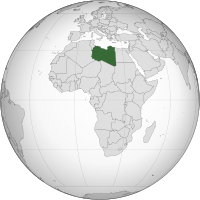
I bring this up, because the United States, along with several allies, has started air strikes in Libya. And even now, at the age of 40, I have a visceral reaction of, "Oh, no, I hope this doesn't become a war," followed by, "Wait, maybe it already is." In fact, last week my own 12-year-old asked me if the fight between Gaddafi's forces and the protester/rebel/opposition fighters was "at the point of becoming a war." I had no answer.
Technically speaking, the U.S. has not been at war since World War II. That was the last time the United States Congress exercised its constitutional power to declare war. Congress has authorized the use of military force since then, the President has ordered the use of force without Congressional authorization, and the U.S. has participated in military action authorized by the United Nations. In my lifetime, our troops and/or planes have fought in Vietnam, Cambodia, Bosnia, Grenada, Panama, Iraq, Kuwait, Afghanistan Somalia and Libya, and that's just right off the top of my head. But we have not been at war. At the Veterans Administration Hospital where I'm currently doing an internship, we talk about OEF/OIF vets, referring to Operation Enduring Freedom and Operation Iraqi Freedom, but not to the Iraq or Afghanistan wars.
While historians and legal scholars probably have a lot to say on the difference between declaring war and just fighting under some other authority, to a kid this is a distinction without a difference. To most young people, Vietnam looks just as war-like as World War I. Wars have an almost mythological status for kids, and probably for some adults, in which a switch is thrown and what was "fighting" becomes "The War" and everything is much, much worse.
So when a child asks whether there is going to be a war, what they are really asking is whether the conflict is going to affect their lives. Will their parents be called up. Will there be rationing. Will there be attacks on U.S. soil. Will people they know be killed. For children whose parents are in the service, the answer to "will there be a war" with Libya may well be yes. To most other kids in the United States, the answer is most likely no.
There was, in case you've forgotten, a war in the Falkland Islands in 1982. If I hadn't listened to the news, I would never have known anything about it. There was a war, but there wasn't a war the way I understood the term. In fact, I think 1982 may well have been the last time I actually had a working definition for what a war is.


Sunday, January 2, 2011
David Senft: A Foreseeable Suicide that Wasn't Foreseen

The New York Times
 ran an article today about Staff Sgt. David Senft, who died in Afghanistan in mid-November. All indications are that Senft killed himself with his roommate's firearm. This was at least his third attempt at suicide.
Senft was on his second tour of duty in Afghanistan, and had also done one tour in Iraq. It seems that everyone who knew him knew he was depressed and traumatized by his experiences in the wars, most notably responding to the site where a helicopter carrying wounded servicepeople had been shot down in Iraq. After one of his previous attempts to kill himself, Senft admitted himself to a psychiatric hospital and his deployment to Afghanistan was delayed. In Afghanistan, his superiors were concerned enough about his suicide risk that they took away his weapon.
Senft family wants to know why, if everyone knew he was in this much trouble, he was allowed to deploy to Afghanistan and why, if he was enough of a danger to himself to take away his weapon, he wasn't sent home. These are decent questions, and the army says they have three different investigations into Senft's death going on.
I have no idea who, if anyone, screwed up here. I am, as the name implies, just a Monday Morning Quarterback. However, I do know that it is much easier after the fact to look back and see what might have been done differently than it is to make predictions looking forward. Anyone -- in the military or not -- who ever comes into contact with someone who may be at risk of suicide has to make a judgment about how big the risk is. It's easy to look back now and say Senft was a big risk -- obviously, since he killed himself -- but what is obvious now was not necessarily obvious then.
Could this have been prevented? Probably. In fact, we could probably eliminate most of the suicides in the military if we disarmed all military personnel, stripped them naked and locked them in empty rooms. Everyone recognizes that we don't want to do that. But where is the line? How many other soldiers like Senft came across however he did and turned out to be OK? How do we balance the risk of a suicidal soldier with the risk of severely restricting someone who doesn't need those restrictions?
After a suicide, it's very typical to start pointing fingers about who should have or could have done something differently. In this case, the finger is being pointed at Senft's superiors. No doubt they're pointing fingers at themselves, too. Maybe they deserve it. Or maybe, this is a case where although they could have done something differently, no one at the time thought they should have. Sometimes, you just can't know.

Monday, May 31, 2010
This Memorial Day, Let's Honor the Survivors, Too

Today is Memorial Day in the United States. Most Americans spent the day doing yardwork or barbecuing or, perhaps, going to a parade. Summer is unofficially here, and women can wear white shoes without offending Miss Manners. But of course none of that (except, arguably, the parades) is the point of Memorial Day. We are supposed to be remembering those who died in the armed services.
There is one segment of the population that doesn't need much of a reminder of what Memorial Day is all about. There are thousands of families and friends across the country who have lost a loved one in the Iraq and Afghanistan wars, not to mention those who remember those who died in the first Gulf War, Vietnam, Korea and World War II, as well as a variety of smaller conflicts, attacks, and accidents. There are also an increasing number of people caring for severely disabled veterans, people who, in previous wars, would likely have died but who, through the miracle of modern medicine, are alive but living with significant lasting effects.
When someone you love goes off to war, you entertain the possibility that they might not come back. The day an officer and a chaplain knock on your door is not the first time this has ever occurred to you. In that sense, the death of a loved one in action is a little bit different than some other types of traumatic loss. At the same time, however, sudden, violent death is traumatic no matter how much you think you're prepared for its possibility.
You've probably read stories all over the news about veterans who come home with Post-Traumatic Stress Disorder
 (PTSD), and how we as a country do or don't effectively care for them. What you don't hear about is the post-traumatic stress (with or without the disorder) of those left behind by fallen soldiers, sailors, marines, airmen, etc. As mediocre a job of treating PTSD as we do for our veterans, I can't imagine we do much better for the relatives of the dead.
The men and women who gave their lives for this country deserve to be honored today, probably more than they actually are given the competition with white sales and going to the beach. At the same time, wherever they are we know they are not in pain. The same cannot be said for their parents, children, spouses and friends. We often say that those who died in war "made the ultimate sacrifice." For that we honor them. Let's take a moment, today, to honor those who have to live with that sacrifice for the rest of their lives, too.
photo copyright istockphoto/stephaniefrey
Wednesday, November 25, 2009
Should the President Send Condolences When a Soldier Kills Himself?

If your loved one dies while serving in the United States Military, whether they are killed in action or by accident, you will receive a letter of condolence from the President. Presidents have been doing this since Abraham Lincoln. If your loved one serves in the military and kills themselves, however, you will get many of the same things that other families get, but you will not receive a letter from the Commander in Chief. That has been true at least since the Clinton administration.
There is a push on from some military suicide survivors to change that policy. They argue that their loved ones died in service of their country, certainly as much as someone who was killed in an accident. The injuries they suffered were not visible, but they were certainly service related. Their families deserve the same consideration from the President as anyone else's, and to do so would go a long way towards reducing the shame that has for so long been associated with death by suicide, particularly in the military.
This is one of those issues which, spun the way these families and the press coverage are spinning it, seems pretty clear cut. Of course being a suicide survivor should not have stigma associated with it. These families are grieving just as much as any other, and deserve all the support we can give them.
There is a problem, however. One of the rules of thumb in responding to a suicide and memorializing people who die by suicide is that you in no way want to glorify the act of killing yourself. When you have grand ceremonies to honor their memory, you run the risk that someone else who is considering suicide will, consciously or unconsciously, view killing themselves as a means to get that kind of attention for themselves and their families. This is probably more of an issue with teenagers, who aren't fully able to appreciate the consequences of any action because their brains are not yet fully developed, but it remains an issue for others, too.
I don't know that I have a good answer for this. On the one hand, families who are survivors of military suicides should not be treated with any kind of stigma. They deserve our honor and support in a very, very difficult and complicated time. On the other hand, there is an argument to be made that even what is already done for these families -- receiving a folded flag, a 21 gun salute at the funeral -- let alone a letter from the President might look pretty appealing to a soldier considering suicide. They might think that in death they can bring honor to their family that they feel they could not bring in life.
Taking away the stigma associated with suicide in the military may well save lives by making soldiers more willing to seek help. The question is, by honoring grieving families properly, how many lives will we lose?
Friday, November 20, 2009
Predicting PTSD Ahead of Time

The U.S. military is undertaking a large research project using its own soldiers to see if there is a way to predict who will suffer from Post Traumatic Stress Disorder. They are screening hundreds of soldiers before they deploy, including their baseline stress rate, brain scans, family histories and past history of mental illness, and will be looking to see if any factor or combination of factors can predict who is at highest risk.
This is a very new way to look at PTSD, and raises interesting issues for those of us who work in trauma response. The conventional wisdom which we learn in training is that the factors that affect whether someone will develop PTSD are mostly things that occur with the trauma. We are taught that people who are more closely and directly exposed to an incident are more likely to have PTSD. People who experience dissociation and/or depression immediately surrounding the trauma are at increased risk. In addition, the more closely held beliefs, expectations and worldviews are violated, the more likely you are to have PTSD down the line.
This experiment aims to short-circuit most of those factors. What if we could predict who is most likely to experience those predictors? What if we knew that this person is at increased risk for dissociation, and that person will react particularly strongly to the violation of their worldview? What would that mean for trauma responders? What would that mean for the people themselves?
Let's suppose, for the sake of argument, that we discover that certain people have a particular kind of activity in a particular part of their brain, and that if you have that activity you are more prone to PTSD. Do we allow those people to serve in the military? Can they be police officers or firefighters? What if it turns out that that same anomaly is associated with bravery and calm under pressure, so these people also make especially good soldiers and first responders? How will we decide?
We also have to think about how we treat those people. Traumas will always happen, even if we exclude those most at risk for PTSD from serving. If we come upon someone at increased biological risk who has, say, witnessed a murder, will they immediately be referred for further care, or can early intervention still help? Will we be doing brain scans at the scene?
I often say that I love crisis work and I hate that I love crisis work. I feel guilty that I get so much satisfaction out of helping with other people's misery -- shouldn't I be hoping they aren't miserable? If this research is successful, it's possible that the whole way we proceed with this work will change. It's hard to imagine, though, that we won't need to do it at all.
Wednesday, September 9, 2009
Stephen Farrell: Survivor's Guilt, Survivor's Anger

New York Times reporter Stephen Farrell was rescued from the Taliban early this morning. He and his translator, Sultan Munadi, had been taken captive in Afghanistan four days before. The raid by British soldiers that rescued Mr. Farrell resulted in the death of both Mr. Munadi, one of the British soldiers and at least two others (news reports conflict about how many and who they were).
Most of us have heard the term "survivor's guilt." It's the guilty feeling that people have when someone else has died in an incident that could have killed them. It's the feeling of the person who called in sick to the World Trade Center on 9-11, or who skipped the exercise class at LA Fitness the night of the shootings, or who survived the accident that killed their friend. I think it's safe to say that Stephen Farrell is, at best, at high risk for feelings of survivor's guilt, both because of Mr. Munadi's death and because a soldier died trying to save Farrell's life.
There's a difficult twist to this episode as well, however. The British went in to rescue Farrell in part because he is a British citizen. His colleague, Munadi, died at least in part because the British initiated the raid, although it isn't clear who fired the shots that killed him. Certainly the British soldier died trying to resuce Farrell. This has the potential to leave some tricky mixed feelings.
On the one hand, Farrell has expressed great thankfulness for his rescue. He is glad to be alive and glad to be free. On the other hand, it has to have crossed his mind that, were it not for him, Munadi would probably not have been abducted and that, were it not for the British coming to rescue him, Munadi might still be alive.
Obviously none of that is Farrell's fault. It also doesn't mean the British military made the wrong call in going in. But it leaves Farrell feeling grateful to the same group that he is, on some level, angry at, and angry at someone who died trying to save him. We can all take a step back and say that all of this was the fault of the Taliban. Farrell probably can too. But the gut feelings following trauma are often not nearly that logical, and Farrell may not just experience survivor's guilt, he may experience survivor's anger, too.
Sunday, August 2, 2009
Rest in Peace, Captain Speicher
 The remains of Navy pilot Michael Scott Speicher were found in Iraq last week and positively identified in the last day or two. Until then, he was the only service person still Missing in Action from the first gulf war in 1991.
I try not to euphemise, and I particularly dislike the term "loss of a loved one" when we mean "death of a loved one" (although you will catch me using it from time to time, purely out of habit). But for families of those who are MIA, they truly are dealing with a "loss" in the literal sense. Frequent Quarterbackers already know how messy recovering from traumatic loss is when remains are missing. This situation was apparently no different -- for 18 years there have been rumors that Captain Speicher was alive, or that he survived his initial crash and then died some years later. He was classified as killed in action in 1991 and reclassifed as missing in action in 2002. That can't have been easy for his family.
So now his body is coming home, to a gravestone that is already standing at Arlington National Cemetery, and I would imagine that on some level that is a good thing for his family. I would also imagine that it is a complicated thing, because while they now have certainty they also don't have hope. And to whatever extent, over the last 18 years, they had brought closure to his loss or death -- however they chose to frame it -- it's being reopened now and will need to be reprocessed, at least a little. I also would guess that they feel some pressure from those around them to feel something clean and easily described, whether that is relief or grief or something else. And whatever they are feeling, it is probably not that simple.
In the musical Miss Saigon they say, "War isn't over when it ends." This situation is testament to that. While Captain Speicher may have disappeared 18 years ago, the discovery of his remains may create a critical incident in and of itself. I hope his family is getting some good support.
I also want to mention something that really touched me about this story. Apparently Captain Speicher's body was found by local Bedouins shortly after he was shot down and buried in the desert. On the one hand, some might argue that this kept the United States military from finding him. On the other hand, in most cultures of the Middle East, particularly those with nomadic origins, burying the dead is considered a selfless act of service to the dead and should be accomplished quickly. These Iraqis treated Captain Speicher with all the care they would have wanted for their own family. With all the anti-Arab sentiment in this country right now, that might be a lesson for all of us to learn.
Subscribe to:
Posts (Atom)
Meet the Quarterback

- Naomi Zikmund-Fisher
- is a clinical social worker, former school Principal and a Crisis Consultant for schools and community organizations. You can learn more about her at www.SchoolCrisisConsultant.com

Subscribe


 Posts
All Comments
Posts
All Comments