Showing posts with label kidnapping. Show all posts
Showing posts with label kidnapping. Show all posts
Wednesday, April 25, 2012
Is the Norway Shooter Sane . . . and Does it Matter?


For the last six days, the man responsible for the bombing and mass shooting that killed 77 people in Norway last July has been testifying at his trial. He admits that he was the person who carried out the attacks -- there is no question or controversy about that. This trial is being held to determine whether what he did was a crime and, if so, whether he was sane at the time he committed it.
The shooter's view is that this was not a crime. He has an elaborate and fairly paranoid political ideology which, he believes, justifies the attacks as part of a war against Muslims and multiculturalism. Since he was defending his people, he claims, this was not a crime. As far as I can tell, no one expects this argument to win the case.
The question of whether he is -- or was at the time of the attack -- sane is somewhat more complicated. There are two psychiatric reports in play. One says that the shooter has paranoid schizophrenia and was unaware of reality when he committed the crime. The other says that he is a narcissist, but he knew what he was doing and is responsible for his actions. The shooter, for his part, says he is sane.
This case points out some of the big problems with legal discussions of sanity. "Insanity" is a legal term, not a medical or psychiatric one. There are millions of people in the world at this very moment who have a disorder that is listed in the Diagnostic and Statistical Manual of Mental Disorders (DSM) right along with paranoid schizophrenia, and they are legally sane. That is, they know right from wrong and can appreciate the consequences of their actions. In fact, there are millions of legally sane people with paranoid schizophrenia.
In fact, one of the mental disorders listed in the DSM is narcissistic personality disorder. In other words, both psychiatrists who have evaluated this man think he has a disorder. What they disagree about is which one, what type (personality disorders are considered to be in a different group or "Axis" from other mental disorders) and whether it impacted his ability to know right from wrong. (In another high profile case, the man who kidnapped and repeatedly raped Elizabeth Smart was found legally sane in part on the basis of a report that said he had narcissistic personality disorder as well.)
On an intuitive level, most of us have a sense that you can't be all there and do what this man did. You'd have to be "sick" or "crazy." But those aren't medical terms either. And obviously your view of right and wrong has to be pretty messed up to think this is OK. But most people who commit murder are legally sane, and most legally insane people don't commit murder.
Where is the line between wrong or bad or evil and insane? Where do messed up values and priorities cross the line into not responsible for your actions? I think that's a question that doesn't have an answer. We have legal standards, and we hope we'll know the difference when we see it.
In my next post, I'll take a look at the impact of the trial on the families of those who died. Stay tuned.


Tuesday, April 24, 2012
Etan Patz and Why Child Abductions Make the News

Frequent quarterbacker Alan (who blogs over at Poor Mojo) shared a new Time column today about Etan Patz, the New York City first grader who disappeared in 1979 in New York City. The case is in the news lately because police in search of clues have recently been digging up a basement near where the boy lived. The column talks about the ways we have come to expect that we can prevent bad things from happening to our children, be they stranger abductions or broken bones.
Alan comments,
The fact is your child is far more likely to die young in a motor vehicle accident than to be kidnapped by a stranger and murdered. Tens of thousands of times more likely. But car accidents are quotidian and kidnappings are good copy and so we live in terror.I agree with Alan. We tend to vastly overestimate the chances of a child being abducted by a stranger (about 115 cases a year, with 60% surviving and only 4% remaining unsolved) and vastly underestimate their chances of being killed in a car crash. And car crashes are, indeed, "quotidian" (which I had to look up -- it means mundane or every-day). I suppose that kidnappings also make good news stories. But that begs the question, why do they make good news stories? And why don't car crashes make good stories, too?
First of all, the news tends to cover things that are unusual. If they covered everything, we'd never do anything but watch the news. This is why there is a real dearth of "good news" on as well. Good news -- or at least neutral news -- is actually much more common than bad news. For the most part, if good news is about something common, we don't expect to see it covered. There are no stories about your kid's birthday party, or the lovely bike ride you took last weekend. That's common.
Second, we also expect to see news that affects us, and this is where it gets complicated. Most of us, because it is common, are aware of the risk of traffic accidents. We believe, however, that we can master those risks. Those accidents happen to someone else -- someone not being careful, not wearing a seat belt, under the influence or otherwise foolish. We know what is dangerous about driving a car, and we don't do those things.
We also believe that we can master the risks to our children. We give them bike helmets and put them in car seats. We don't let our toddlers have small toys. We take them to the doctor. For the most part, in fact, we are right. Kids get hurt, sure, but most kids don't get killed in this country.
Stranger abductions make the news because they bring to our attention something that we don't want to admit. About 115 times a year, parents just like us have kids who are abducted. Those parents also had helmets and car seats and medical care. They kept an eye on their kids as best as they could. And someone took them anyway. They didn't master the risk. We want to know what they could have done differently so we can.
Etan Patz's story is compelling because it has to do with a child, because it was the first case to appear on a milk carton, and because it is unsolved. It is also compelling because he disappeared walking to the school bus alone for the first time ever. We all make that decision for our kids at one point or another. We all know it's a risk. We don't read about Etan because it's sensational. We read because we want it to be different for our kid.
Thursday, July 14, 2011
Leiby Kletzky, May His Memory Be for a Blessing

Leiby Kletzky won't be home for Shabbat dinner tomorrow night. He won't be home next week, or the week after, or for any Shabbat or holiday or regular dinner ever again. Leiby was 8 years old when his parents let him walk alone, for the first time, from his summer camp in Brooklyn, NY to meet them a few blocks away on Monday. He took a wrong turn and asked a stranger for directions. Leiby Kletzky is dead, and that stranger has reportedly confessed to killing him and dismembering his body.
There are news stories that upset me. There are news stories that scare me. There are news stories that make me angry. There are very few news stories that make me physically ill. This is one of them.
I've been trying to identify just what it is that has made me feel like I was going to throw up since the moment the details of this case came to light. I've been doing crisis work for a long time, and I've heard some pretty awful stories. The murder of children is always particularly poignant, but this one is different.
I think there are two aspects to this case that cause me to feel that connection in a particularly personal way. The first is that, this week, I sent my own 6 year-old son on a plane as an unaccompanied minor to visit his grandparents in Washington, DC for the first time. We've done this countless times with his oldest sister and it has always gone smoothly.
We are careful, or so we think. We make sure not just that the airline has the information they need to keep the kids safe, but that they know what to do if someone isn't there to pick them up, if their seatmate is bothering them or making them uncomfortable, if they get lost or if someone other than an airline employee offers to take them someplace. We trust that these precautions, coupled with the help of the airline and the common sense of our kids, will keep them safe. Leiby Kletzky's parents thought there wasn't much that could go wrong, too. They were a few blocks away. He would walk right to them. What could go wrong?
Today, when I went to pick my son up at the airport, I got stuck in traffic. His plane arrived early. The line to get a security pass to go to the gate was slow. The security line was long. I knew that he was off the plane, and I found myself in a panic. We had a plan for this. All he had to do was stay with the airline employees. But what if he didn't?
One of the deeply held beliefs about the world that we have as parents is that we can keep our children safe. My kids will tell you that I often say that that is my most important job as a mom -- keeping them safe. Leiby's parents were doing that job as best they could with the information they had. And it wasn't enough. That shakes my own belief in a world that will work the way it should.
The other poignant piece of this case for me was that it occurred in a Hasidic community in Brooklyn. I am not Hasidic and have never been. I lived for a while in a heavily Jewish section of Pittsburgh, PA that had many Hasidim, and as a Jew I feel a connection to that part of my roots. Hasidic communities are famously close knit. You can see this in the sheer number of people who turned out within an hour or two after Leiby went missing to look for him. It may be Brooklyn, NY, but it is a small shtetl in many ways. This isn't supposed to happen. The fact that the accused killer is also an Orthodox Jew, albeit not a Hasid, makes it even worse.
Of course, no one should do this to anyone else. The fact that Leiby was Jewish or Hasidic doesn't make his death any more or less important than that of any other child. But just as it would affect me if it happened on my street more than two miles away, I feel that sense of shock not just that a child was murdered, but that it happened in "our" community. Reading the comments on various blogs around the net, I realize that there is a cultural context to this case that I can't put into words and the commenters clearly don't get. This perpetrator was able to do what he did to this boy precisely because they had a connection and a similar understanding of what their community was like. This didn't just violate the law and human decency, it violated a communal sense of trust. I can't explain it any better than that.
Leiby won't be home for Shabbat tomorrow. In Judaism, we say that the memory of the righteous is for a blessing. May his family be comforted among the mourners of Zion.
Thanks to frequent Quarterbacker Jim for suggesting that my take on this might be a little different than others and that I should blog about it. I needed the noodge.

Monday, March 21, 2011
Is Kyron's Law a Good Idea?

Last June, 7-year-old Kyron Horman disappeared from his elementary school without a trace. All eyes have been focused for quite some time on his stepmother
 in connection with his disappearance, but no arrests have been made and she remains a free woman and, for all I know, an innocent one. Now there is a push to put surveillance cameras in all elementary schools in Oregon, under a proposed law dubbed "Kyron's Law." Kyron's own school got cameras shortly after he disappeared, funded by a private citizen.
As a school administrator, there have been many times I wished I had video footage of an incident. The "he hit me first" thing gets very old, very fast. As more and more kids have cell phones, there have even been a couple of times when kids recorded an incident themselves, although more often than not the person recording was doing so to post it on YouTube, not to aid in the investigation.
One might argue that, had their been cameras in Kyron's school the day he disappeared, he might have been found by now. But I think that those who advocate for putting in surveillance cameras
 would go a step further, arguing that either he wouldn't have disappeared or that he definitely would have been found right away. That is, most likely, not true.
Surveillance cameras in schools give people, and particularly parents, a false sense of security. Because they might prevent some problems, we think they prevent all problems. But surveillance cameras are problematic themselves.
First of all, no matter how many cameras you install, there will most likely be someplace the cameras aren't. This is how most of us want it, because as much as we want to protect our kids, we don't want someone filming them in the bathroom or the locker room. This raises a larger issue, which is that there is a need to balance privacy with safety, and parents tend to be a stickler for both.
Second, if there are cameras and someone wants to snatch a kid or otherwise harm him, that person will go where the cameras aren't. That means that while the hallways and classrooms and buses may be safer, the bathrooms and locker rooms are more dangerous. In the case of Kyron Horman, if indeed his stepmother is responsible, she simply would not have used the school as her "alibi."
Third, and this is the toughest one for parents to wrap their heads around, we can't watch our kids 24/7. We do our best to keep them safe, and at some point we have done all we can. At night, when my kids are asleep in their rooms, I assume they are asleep in their rooms. I don't have a camera there, I don't sleep on the floor, and I don't check on them all that often. Could they disappear? Yes. Is that likely? No.
The fact of the matter is that Kyron's disappearance made the news because it was so rare. Kids do not disappear from school in the middle of the day. They disappear, if they disappear, from the neighborhood or the bus stop or walking to or from school, or even from their homes. But they don't go missing from their schools because that is actually a pretty hard place to snatch a kid. And putting in cameras may make it even harder, but is that really where you want that money to go? You can almost certainly do more to protect children by putting another layer of wood chips
 on the playground of every school, or posting another adult on their walking route. And that doesn't even take into consideration what educational use that money could be put to.
Once again, we, as parents, have to face up to the fact that dropping off our children at school is an act of faith. We also have to face the fact that parents are really not any better at protecting children than schools are. If Kyron's stepmother harmed him, the greatest risk he faced was not going to a school with no cameras, it was living with a family with her in it. And while cameras might have brought her to justice, they wouldn't have changed that risk factor one bit.

Thursday, December 30, 2010
Confronting the Nightmare Reflected in Jonathan Foster's Murder

Jonathan Foster was a 12-year-old boy living with his mother in Houston. Two weeks ago, a family friend and her child moved in after the friend separated from her husband. Last Friday, Jonathan stayed home alone while his mom and her new roommate both worked. When his mother came home, he was gone. Initially, it seemed like Jonathan might have run away from home, but on Tuesday his body was found, burnt, in a ditch. An acquaintance of the roommate has been arrested and charged with his murder.
I can't imagine anyone reads a story like this and thinks anything positive. This is not a feel good news story. There are some of you out there who read this and think something like, "that's too bad" and move on. There are others who read this and feel a punch in your stomach. I am definitely of the latter category.
So, am I an inherently more sensitive person? Am I morally superior because I notice and care? Am I weaker, because I am more easily affected? Is it a female thing? I'll say it's "none of the above."
This story punches me in the gut for the simple reason that I have a 12-year-old child of my own. Sometimes she stays home alone while I work. We have gone over and over various safety rules for when she's alone, and I believe she follows them. I also recognize, however, that Jonathan probably broke the one that's hardest to remember -- don't open the door for an unexpected visitor even if you know them. Even if you know them. It's easy to say in theory, but how may 12-year-olds would find it easy to keep the door closed if the neighbor, an aunt, or a family friend stopped by? There's the rule, and then there's common courtesy.
I feel a punch in the gut because there is nothing in this story that makes me believe this could not happen to my family. There is no, "I would never let my child do that" or "My child would never do that" for me to fall back on. What separates my family from Jonathan Foster's family is depending on how you look at it, dumb luck or the fact that, as far as I know, I'm not acquainted with anyone who would kidnap and burn my child. That I know of. I'm sure Jonathan's mother thought the same thing.
Our minds are wired to look for patterns in stories like this. We look for signals that can help us either know how to prevent such an incident from happening to us or can help convince us that it couldn't happen to us. The punch in the gut isn't from being caring or sensitive or weak or female. It's the result of the realization, conscious or not, that the signals, rather than protect or reassure us, are telling us we can't prevent this at all.

Monday, May 10, 2010
Do You Remember Sandra Cantu?

Just over a year ago, an 8-year-old girl named Sandra Cantu disappeared. Today, her killer pleaded guilty to her murder. I know that I, along with many of you, followed Sandra Cantu's disappearance and the arrest of her killer carefully when it happened. In the intervening year, however, the details have faded to the point where the name Sandra Cantu only vaguely rang a bell when I saw it in the headline. I knew I knew something about her, but couldn't place it. I'm guessing many of you can't, either.
Let me help you out. Sandra Cantu lived in Tracy, California trailer park. On the day she disappeared, surveillance cameras captured images of her skipping through the neighborhood. Ten days later, her body was found a few miles away in a suitcase in an irrigation pond on a dairy farm. The woman arrested was a former Sunday school teacher and the mother of one of Sandra's friends. In addition to her kidnapping and murder, the killer was charged with various counts of sexual assault. These were dropped as part of the plea deal.
If you, like me, are now saying, "Oh, yeah, I remember her," it suggests an obvious question: how could we know so much about this case and forget it in a relatively short time? How could this story capture our attention so thoroughly and then let it go almost as quickly?
First of all, part of what captured our attention in the first place was the mystery of what happened to this little girl. While the search was still going on, we paid attention because we were waiting for new information. Once the body was found and an arrest made, we still paid attention because we wanted more information about what had happened. But after a while, we stopped getting new information. We knew who had killed her and what they had done, and we realized we weren't going to get any more details about the motive or the killer, so we stopped paying attention and the media stopped reporting. Without the daily dose of new details, we lost interest and started to forget.
Another part of why we were interested initially is that the case scared us personally. Whether you were a parent concerned for your own child or just a person who wondered what on earth the world was coming to, as long as Sandra Cantu was missing or her killer was "out there," the world didn't seem very safe. Once her killer had been caught, and once the initial shock that it was a woman and a neighbor had worn off, we weren't scared anymore. The boogie man wasn't out there, and she wasn't a man. She was a woman in jail, and we could go back to pretending that bad people don't exist.
This is, in fact, a fairly adaptive response. As I'm fond of saying, we live our lives based on what is likely, not what is possible. Sandra Cantu's murder made us acutely aware of what was possible. But we can't go through life like that, and so, when the initial hubbub died down we allowed ourselves to put this case to the side. The alternative would be to look suspiciously at everyone we know and keep our children locked in the house all the time. With the exception of those who lived in the same trailer park as Cantu and her killer, we recognize that that would be an overreaction. A little forgetting is good.
So, now the Sandra Cantu case is over. Her killer faces 25 years to life in jail. A case that took up so much of our collective attention a year ago now ends with more of a whimper than a bang. Perhaps that's how it should be. Perhaps this footnote on her death will allow those who loved her to remember her not as much for how she died, but as we all wish to be remembered -- for how we lived.
Tuesday, April 27, 2010
It's Only a Joke if Everyone Thinks It's Funny

On April 15, a 7-year-old girl in Stevensville, Montana was walking along the sidewalk when a man in a car yelled, "I'm going to kidnap you!" Police were called, and the girl helped a sketch artist create a picture of her assailant. Flyers were posted around town, and on Monday an 18-year-old man turned himself in, and today he pled guilty to disorderly conduct and was given a $185 fine and a 10 day suspended jail sentence. He says he was just joking when he shouted at the girl.
This is not a big story. It merited three paragraphs in the Associated Press today, and nothing when it originally happened. It lies on a continuum, somewhere between stories of kids walking along the sidewalk uneventfully and kids being kidnapped off the sidewalk. The sentence here clearly takes into consideration the man's intent. He did not intend to kidnap the girl, just to scare her, and the sentence reflects that. The AP headline,
Montana Teen Fined for Trying to Scare 7-year-oldalso reflects the man's intentions.
Our legal system cares about intent
 . That's why attempted murder is different than assault. Possession with intent to distribute is different than possession. Hate crimes carry a different punishment than other crimes because of what motivated them. On the whole, Americans accept that what you were trying to do when you committed a crime matters. We therefore understand that there's a big difference between threatening to kidnap someone because you think you're being funny and threatening to kidnap someone because you're actually going to try.
But should it be this way? Imagine you're a 7-year-old girl, walking down the street, and a man yells that he's going to kidnap you. You run, someone calls the police, they start looking for the man. In terms of how scared you are, is there any difference at all between someone trying to be funny and yelling this at you and someone who actually was going to kidnap you yelling it? Will you have fewer nightmares, less regression in your behavior, and fewer fears from one than the other? Of course not.
Clearly scaring a little kid like this is not the same as actually kidnapping her. There is and should be a continuum. The notion that we take into account intent, however, should be recognized for what it is -- a cultural construct. Our system has decided to punish people based on intent. Another system might punish based on the effect of one's actions. There are pros and cons for each, and each will have some citizens who are more comfortable with it than others.
Several times a month, on the playground or in my office, I wind up talking to a child or a group of children who have been "play-fighting." The difference between play-fighting and actual fighting, in terms of actions, is basically zero. These are usually younger kids, and often the playing ends with a bloody nose or someone in tears. All of them are baffled. "We were just playing." Similarly, I wind up talking to older kids who have said some really vile things to each other and someone has gotten mad. "It was just a joke." I hope, while I still have some sway over them, they learn some simple lessons: when someone gets hurt, they are still hurt whether you meant to hurt them or not, and something's only a joke if both the speaker and the listener think it's funny. Obviously, this young man never got the message.
Monday, November 16, 2009
The Unthinkable: Shaniya Davis' Body Found

The body of 5 year-old Shaniya Davis was found in Fayetteville, North Carolina this afternoon. She had been missing since Tuesday, when her mother reported she disappeared from their home. Since then, a man has been arrested for kidnapping and Shaniya's mother has been arrested for human trafficking and felony child abuse involving prostitution. In other words, her mother is accused of selling her into the sex trade.
Usually when I blog about a situation in the news that gives you a kick in the gut, the reason has to do with our own safety. We lead our lives believing the world is safe, and when something shakes that belief it upsets us. When someone is killed in a mass shooting or a plane crash, it damages our understanding of how the world works as a generally safe place. We know it could have been us, and we feel scared, or we blame, or we push it away. These are all healthy defense mechanisms.
This case is different. Almost no one will learn of little Shaniya Davis and think that it could have been them. Very few of us will worry for the safety of our own children based on what happened to her. We feel no personal connection for her particular circumstances. We don't say, "There but for the grace of God."
But make no mistake about it -- this case very much disturbs a deeply held worldview most of us share. That belief is that everyone understands that children are special and deserve our protection. We know there are people who beat their children. We even reckon, when we have to, with the notion that people sometimes kill their own children. But the idea that someone would sell their own child for sex at the age of 5 goes beyond that. It represents not just anger and disdain for human life. It represents a complete and total disregard for the value of that little girl's life by her own mother. And we don't believe that mothers are supposed to act that way.
Shaniya Davis' murder may not leave us feeling scared, but it does leave us shaken. It overwhelms our ability to understand. We have no convenient space in our minds under which to file this incident. No schema we have allows us to process it. That's what makes it traumatic -- for her father, who allowed her to go live with her mother; for the searchers who found her body; and for all of us who think of parenthood as a sacred trust. This isn't how the world is supposed to work.
Wednesday, November 4, 2009
Why Can't We Blame Those Who Most Deserve It?
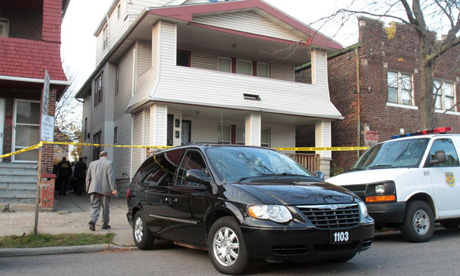
Two high profile cases are in the news today. The first is the kidnapping of Jaycee Lee Dugard, the 11 year old who was kidnapped, raped, and held in a California backyard for 18 years. The second is the discovery of at least 11 women's bodies at a house in Cleveland. If I asked you who is to blame for Dugard's kidnapping, you would probably say her kidnappers are. If I asked you who was to blame for the murders in Cleveland, you would probably pin them on the serial killer. Yet today's coverage points the finger squarely at law enforcement in both cases.
A report from the California Inspector General, which was issued today, says that parole officers had numerous opportunities to discover Dugard during the 10 years they were in charge of supervising her alleged captor. They failed to follow their own procedures in some cases, and in others failed to have decent procedures in the first place. In the Cleveland case, neighbors are coming forward to say that they reported assaults by the alleged perpetrator on their street, and the police did not take them seriously. They also say that there was an odor -- presumably of decomposing bodies -- coming from the property, which was reported but never addressed. At least today, it seems like the answer to whose fault these crimes were is not the perpetrators at all, but law enforcement officials.
So what's going on here? Why have we shifted from outrage at the people who did these things to outrage at the people who didn't catch them? I think what we're seeing is the evolution of people's world view as they try to cope with the horrible things that have occurred.
When the Dugard case first broke, for example, comments on blogs and news sites said things like, "I hope you rot in h*** you sick b*****d." This represented people confronting the idea that there are people out there who do evil things, and we don't know who they are. We heard about the case and conceived of the suspect as sick, twisted, mentally ill, or just plain evil. That scared us, because it seemed so random. If this man could be like this, couldn't anyone? If his neighbors didn't know, do we know about our neighbors?
If there are this sort of person, and/or the alleged murderer in Cleveland, in the world, and if we cannot know who they are, then the world is random. We don't like random. So, as we process these traumatic events, we must move on to the question of how this could have been prevented. If we can't know who is evil, we must rely on those whose job it is to know for us -- the police, the corrections department, etc. We may come to accept that evil people exist, but we don't want to accept that the police can't protect us from them. So now it is their fault.
It's not that there is no logic to investigating what went wrong in these cases. Obviously, we would like to prevent these things from happening again. But in our rush to investigate and prevent, we shouldn't take our eye off the fact that the people most to blame for these crimes are the people who commited them. No one else should suffer solely because we can't accept the randomness of what they did.
Saturday, October 31, 2009
What Should Really Scare Us This Halloween?

About 94% of kids will be out trick or treating tonight. Most of them, particularly the little ones, will be with a parent or other adult. Most of them will be told not to eat their candy until they get home, where an adult will look it over or at least tell them not to eat anything that looks suspicious. We, as a society, believe Halloween to be fun but also risky, and we take numerous precautions to avoid those risks.
But what are those risks? Let's start with the treats. 40 years ago, it wasn't uncommon for people to make popcorn balls or give out apples on Halloween. Over time, we came to understand that eating unwrapped food was dangerous, because the distributor might lace it with poison, put a needle or a razor blade in it, or otherwise try to hurt the kids coming by for treats. Now, I know of no one who would let their child eat an apple from their treat bag. So what do you imagine is the average number of treat tampering cases per year in this country? Is it more or less than it used to be? How often does someone tamper with candy and then distribute it on Halloween?
Never. According to research, there has never, ever been a case of someone poisoning or lacing or putting something in the treats they give out to children. There have been cases of poisoned candy, to be sure, but they have mostly turned out to be an adult's attempt to harm a specific child and blame it on a stranger. Back in the '70s, there were some highly publicized cases. One turned out to be a parent poisoning his own child for life insurance money, and another that was blamed on heroine in candy was actually a child getting a hold of a relative's stash. The candy kids get from the neighbors is safe.
The next thing we think we know about risks on Halloween is that you should go with an adult. Strangers are dangerous, and if you shouldn't talk to strangers then you shouldn't talk to strangers, period. What might surprise you, however, is that there is no increase in sex crimes against children on Halloween, either. All sorts of law enforcement efforts go into making sure that registered sex offenders don't answer their doorbells for the little ghosts and goblins, but it really doesn't make a difference. Children are at risk from predators every day, and Halloween is no exception, but it is not the bonanza for pedophiles we think it is.
So what really is the biggest risk to kids on Halloween? What makes it more risky than the day before or the day after for our kids? You probably can figure it out if you think about it. Halloween is the one time all year when children are walking around in the dark. The number of children who are killed being hit by a car on Halloween is more than double the number for any typical night, simply because there are more children out there. In fact, if you account for the massive increase of children walking outside between 4 and 10 PM on Halloween night, the rate of childhood pedestrian death per pedestrian may actually be lower. Oh, and when I say "doubled," it goes from one child per night to 2.2 on Halloween -- in the whole country.
Despite all of this, we all pay a lot of attention to safety on Halloween. I think that has nothing whatsoever to do with the odds of something happening to our kids. It has to do with our image of ourselves as protectors of them. We see ourselves as being able to keep our children safe, and we are pretty good at that. On Halloween, we afford them a teeny bit of independence. We let them ring doorbells they would never ring any other day, and talk to people they would never talk to. We loosen the apron strings just a little bit, and compensate by creating a lot of rules and procedures to make sure they're still OK when we do.
To be sure, there's nothing wrong with being careful on Halloween. There's no harm in trying to keep our little ones safe, and avoiding unnecessary dangers. It just probably would make the evening a little more fun for the whole family if we all kept in mind that the biggest chance we take with our kids on Halloween probably has more to do with tooth decay and childhood obesity than with the evening itself.
Thanks to Quarterbacker Alan over at Poor Mojo Newswire for the article about candy tampering.
Tuesday, October 13, 2009
Justice and the Healing of Trauma

Jennifer Schuett was 8 years old in 1990 when she was kidnapped from her bedroom, sexually assaulted, had her throat slashed and was left for dead in a field. Her voice was damaged in the attack and she could not scream for help. She told investigators she knew she was going to die. She didn't. Not only did she live, but she was able to help with a sketch of her attacker and his first name.
Today, 19 years later, modern science did the rest. A suspect was arrested based on a DNA match with evidence at the scene. The suspect's DNA was in the system from a very similar attack on an adult woman for which he has served time. At a press conference, Schuett, now 27, said,
This event in my life was a tragic one, but today, 19 years later, I stand here and want you all to know that I am OK. I am not a victim, but instead, victorious.Schuett went public with her story in hopes of finally finding the perpetrator. She wants to encourage other victims of violent crime to speak out.
A common and simple summary of this story would say that Schuett will finally get "closure." If authorities have arrested the right man, the perpetrator of her attack is no longer a threat to her and will go to jail. But saying that she now has closure is far too simplistic. Trauma isn't quite that linear and straightforward.
Those who have experienced trauma -- whether from crime or from less nefarious sources -- experience it as a series of events. There is the initial critical incident -- the one that shakes their world view and makes them feel completely off center. Then there are other events, often less severe in their impact, which represent new chapters in their understanding and processing of the experience.
One need only look at the video of Schuett's press conference and listen to her tears to know that this is not "closed." That in no way makes her less of a survivor, or less victorious, or less strong. What it does mean is that once a traumatic incident occurs, it is always a part of the people it impacts. They may process it, incorporate it, and understand it, but it will never be gone.
Most likely, Schuett had acclimated to the "new normal" as a tween, teen, and young adult who had survived a vicious attack. Now, she will acclimate to a new, new normal, where the alleged perpetrator is brought to justice. She will come to understand what that means for her, and she will move on to the next thing. While getting there will, hopefully, not be anywhere near as difficult as processing the original incident must have been, it will still take some doing. If her past history is any indication, she is certainly strong enough to accomplish the task.
Tuesday, October 6, 2009
Pregnant and Scared, But Should You Be?

Yair Anthony Carillo is back home with his mother tonight, after a first two weeks of life with more drama than most adults can even dream of. Carillo was kidnapped last Tuesday at the age of 4 days. His mother was stabbed and left to bleed to death by a woman who, apparently, was intent on passing him off as her son, adopted from a "friend" who was "going to jail." He was found on Saturday, but after a brief visit with his mother both he and his three siblings were placed in foster care while child welfare personnel investigated an allegation that someone in the family had tried to sell the children. Yair's parents have now been cleared.
Every so often, one of these stories grabs our attention. A woman late in pregnancy or having just given birth is attacked and often killed. The baby is stolen. Often, we later learn that the kidnapper has been telling friends she is pregnant or, less frequently, about to adopt a baby. The stories make news because they are sensational, and America loves anything having to do with a baby. From time to time we get word of a missing pregnant woman, and those stories also get a fair amount of attention. Most commonly, those women are white and relatively affluent. They are frequently found dead or never found at all. And, most commonly, their husbands or boyfriends are charged with the crime.
The fact of the matter is, homicide is the second most common cause of non-health-related death for pregnant women. It is more common than suicide and somewhere behind car accidents. Headlines on this topic say things like "Homicide: A Leading Cause of Death Among Pregnant Women." The stories then go on to tell us that one third of pregnant women who are murdered are murdered by their intimate partner.
All of this is enough to whip you into a frenzy, but as with most statistics it's a good idea to look a little deeper. First of all, the leading cause of death among pregnant women is not homicide. It is pregnancy. About 7.5 pregnant women die per 100,000 live births in the United States right now (down, I should point out, from about 850 per 100,000 in 1900) due to pregnancy-related complications.
Second, the homicide rate among pregnant women is actually lower than in the population at large. While the homicide rate in the United States in 2008 was 5.4 per 100,000, the rate among pregnant women is somewhere around 1.7 per 100,000. So how can homicide be both at a lower rate for pregnant women and a leading cause of death? It's all in how you look at the data.
Pregnant women are less likely to die from some other causes of death than the general population. Their suicide rate is somewhat lower, as is their rate of auto accidents. The fact that homicide appears higher in the list of causes of death, however, does not mean that pregnant women are more likely to be murdered than other women. They're not. They're just more likely to have been murdered if they die at all, if their death was not caused by the pregnancy, than they are to have died by some other means. That's a lot of ifs.
What's more, the typical homicide of a pregnant woman, furthermore, is not a kidnapping attack, nor is it the murder of a white, affluent woman. It is very disproportionately the murder of an African-American woman who is poor and has not received adequate prenatal care and who is murdered by her spouse or boyfriend. It is a sad commentary that those cases almost never make the news at all.
So before we all get into a panic about the safety of pregnant women and their babies, it might be a good idea to take a deep breath and realize that what we're really reacting to isn't really the rate of homicide. It's the fact that pregnant women are murdered at all, which offends our sense of motherhood and pregnancy as being sacrosanct. We imagine that someone who would kill a pregnant woman would kill anyone, which makes us all feel unsafe. In the end, however, while any homicide is a traumatic tragedy, the murder of a pregnant woman isn't really that different than the murders we ignore in this country every day.
Sunday, September 13, 2009
Annie Le's Wedding Day: Who Could We Help, and How?

Yale pharmacology graduate student Annie Le was supposed to get married today. Instead, her fiance is in New Haven, trying to help law enforcement officials figure out where she is and what happened to her. She was last seen outside the Yale medical school on Tuesday. Her keys, purse and cell phone were all left in her office. She doesn't have a car. Friday brought word that a Professor whose class she was to take Tuesday afternoon, and who canceled class abruptly on that day, was being interviewed. Evidence was removed from the med school building yesterday, and unofficial, unconfirmed reports say that evidence was bloody clothing found in the drop ceiling of the lab in which she worked. Police say they don't think she ran away.
This has got to be gut-wrenching for her fiance, family and friends. The twists and turns are coming quickly, but no resolution is in sight. While everything I've detailed here is true, it's entirely possible some or all of it is irrelevant. The reports regarding the clothes could be false, or they aren't hers. The Professor could have gotten the stomach flu. Clues give hope for figuring this out, but they don't make the waiting much easier.
From a crisis response point of view, this is also incredibly tricky. It's not that no one needs help, it's that it's not at all clear who we should be supporting or how we would go about doing it. We're supposed to respond after the event is over. This one isn't, but it's in a new stage. We've moved from "she'll turn up" to "something happened to her," but we don't know that for sure and we don't know what it was. We also don't know if she's alive. And worse, it could be we will never know. At what point do we decide that it's time to help out anyway? Or is this one of those incidents when help will never come, because there will never be a time we can say it's over?
What particularly gives me the creeps, however, is the notion that if, at some point, we decided it was time to try to offer some early crisis intervention to those affected -- and there have to be a lot of them, including everyone who goes to school or works there -- there is a significant possibility we'd be working with the person or persons responsible for her disappearance. Now, there are times when working with the person responsible for an event is more than appropriate. I'm thinking, for example, of the person who ran a red light and caused a fatal car accident. But there, their level of culpability is out in the open. Here, we'd be working with someone who is simply lying to us. And the thought that there would be the remotest possibility of learning something during the course of the intervention that the police did not already know is horrifying. We promise confidentiality, but privilege has not been established. I don't want to be in that position.
All this, I suppose, is why you wait until the event is over to respond. It's just much easier to do that when the event has a clear beginning, middle and end. The current endless middle is hard for us. It has to be a zillion times harder for Annie Le's friends and family and the Yale community. I hope they get their resolution soon, and I hope against hope that she comes home safe.
Wednesday, September 9, 2009
Stephen Farrell: Survivor's Guilt, Survivor's Anger

New York Times reporter Stephen Farrell was rescued from the Taliban early this morning. He and his translator, Sultan Munadi, had been taken captive in Afghanistan four days before. The raid by British soldiers that rescued Mr. Farrell resulted in the death of both Mr. Munadi, one of the British soldiers and at least two others (news reports conflict about how many and who they were).
Most of us have heard the term "survivor's guilt." It's the guilty feeling that people have when someone else has died in an incident that could have killed them. It's the feeling of the person who called in sick to the World Trade Center on 9-11, or who skipped the exercise class at LA Fitness the night of the shootings, or who survived the accident that killed their friend. I think it's safe to say that Stephen Farrell is, at best, at high risk for feelings of survivor's guilt, both because of Mr. Munadi's death and because a soldier died trying to save Farrell's life.
There's a difficult twist to this episode as well, however. The British went in to rescue Farrell in part because he is a British citizen. His colleague, Munadi, died at least in part because the British initiated the raid, although it isn't clear who fired the shots that killed him. Certainly the British soldier died trying to resuce Farrell. This has the potential to leave some tricky mixed feelings.
On the one hand, Farrell has expressed great thankfulness for his rescue. He is glad to be alive and glad to be free. On the other hand, it has to have crossed his mind that, were it not for him, Munadi would probably not have been abducted and that, were it not for the British coming to rescue him, Munadi might still be alive.
Obviously none of that is Farrell's fault. It also doesn't mean the British military made the wrong call in going in. But it leaves Farrell feeling grateful to the same group that he is, on some level, angry at, and angry at someone who died trying to save him. We can all take a step back and say that all of this was the fault of the Taliban. Farrell probably can too. But the gut feelings following trauma are often not nearly that logical, and Farrell may not just experience survivor's guilt, he may experience survivor's anger, too.
Wednesday, September 2, 2009
Why Do We Care, Or Not?

- So far, 34 people have died in today's earthquake.
- In the last 6 years, at least 300,000 people have died and 3 million have been forced to leave their homes because of their ethnicity.
- More than 1,300 children have abnormally high levels of lead in their system due to the malfeasance of 8 local factories.
- Five years ago this week, 334 people, 180 of them children, were killed following a three day hostage-taking standoff at a school.
- A kidnapped girl reappeared after being missing 18 years.
Now, let's be honest. Which one of these incidents did you instantly recognize? Which ones did you say, "Wait, where did that happen?"
"Where did that happen," is often our instant reaction to bad news. And, on the whole, that's not an unreasonable question. If there is a major earthquake at my parents' house, for example, I really would like to know that (and it would really be big news, since major earthquakes are not frequent in Massachusetts). It seems straightforward and understandable that we want to know whether people we know and love may be in trouble.
If you don't have any relatives or friends in, say, California or Indonesia, for example, why do you care where today's earthquake was? But you probably do. There are two explanations for this phenomenon, one more palatable than the other.
The first explanation is that you simply are trying to reassure yourself that not only are your loved ones safe, but that something like this will not happen to you or your loved ones in the future. An earthquake in California makes us feel, somewhat irrationally, like an earthquake in Massachusetts is more likely. Certainly a hostage siege in a school in California makes us worry about security in American schools.
The second explanation, which is a little harder to swallow, is that this is not actually about location, but about "alikeness." When things happen to people "like us" it makes us feel less safe -- and less compassionate -- than when they happen to people who we think are not "like us." On some level, we even come to imagine that events that would absolutely devastate anyone in this country are not so upsetting to people elsewhere, particularly in non-European, non-prosperous countries. Somehow, "they" must be used to it. We may not say these things out loud, or even think them consciously, but they resonate with us. Call it racism, call it xenophobia, call it American self-centeredness, but we just do not care nearly as much about trauma that happens in other parts of the world.
- Today's earthquake was in Indonesia. It's not even the top story on CNN as of 12:30 this afternoon. Imagine what the coverage would be if it were in California.
- The genocide in Darfur, Sudan, is something we know about but which gets next to no daily coverage, nor most people's attention, in this country.
- The factories in China have been shut down until they comply with safety standards. It's not a "top story" in this country.
- The siege in Beslan, Russia, caught our attention as it was happening and quickly faded from memory.
- Imagine what the coverage would be of Jaycee Lee Dugard's story if she were in Senegal, or China, or Belize. Imagine what it would be if she were African-American.
Thursday, August 27, 2009
Waking Up From a Nightmare You've Gotten Used To

It is hard for most people to even imagine, but let's try. Your daughter is 11 (this part is easy for me, since my daughter actually is 11). She leaves the house to walk to school, and you stand on your driveway, watching her as she goes. When she's about a quarter of a mile away, you see a car pull up next to her and someone pulls her inside. The car drives away before you can get there. No trace of her is ever found.
This is a nightmare for any parent. It would take a tremendous amount of assistance and intervention to return you to any kind of functioning. You do not "get over" something like this. The fact that your daughter was never found means that accepting that she isn't coming back is going to be that much harder and take that much longer. Eventually, you find a space for this reality in your mind, and you reach a "new normal."
Then one day, 18 years later (it happens to be the day before what would have been her 29th birthday), the phone rings and you hear something you can't believe. A woman has walked into a police department and told them she is your daughter. Two people are under arrest for kidnapping. You have woken up from the nightmare.
Obviously there is much to celebrate in the reappearance of Jaycee Dugard in California on Wednesday, 18 years after her abduction. It certainly is preferable to the more common alternative, where what is finally found is only remains. At the same time, I strongly suspect her parents and she are going to experience some mixed emotions in the days, weeks and months ahead.
Jaycee's parents somehow came to grips with her being gone and built their lives on the notion that she wasn't coming home. It was imperative for them to do this, because it was the only way they could reclaim their lives. Now, they're going to have to readjust back. One presumes that will be easier, but that doesn't make it trivial. They have missed 18 years of their little girls' life. They can't pick up where they left off with her. Whatever guilt they had about not being able to save her in 1991 is going to come back, compounded by whatever residual anger Jaycee brings with her as an adult.
I am thrilled for the Dugard family, and I know they are truly thankful for this miracle. I just hope that everyone gives them -- and they give themselves -- the space to have some mixed feelings moving forward, and the time to resolve them as best they can.
Monday, June 22, 2009
"Do What You Know You Can Do Well and Get Out of There":The Escape of David Rohde

New York Times reporter David Rohde escaped from 7 months of captivity in Afghanistan on Friday night. He had been kidnapped by Taliban and, if you are like most people, you had no idea. The New York Times decided not to publish the story out of fear for Rohde's safety.
Certainly being kidnapped by the Taliban qualifies as a "critical incident," and I think we could all forgive Mr. Rohde if he has some critical stress reactions in the next several months. But his is an interesting case. You see, he'd been abducted before -- several years ago in Bosnia.
The Quarterback certainly has no way of knowing what either experience was like for Mr. Rohde, but the fact that he continued to work as he did in dangerous, kinapping-prone areas after the first time suggests that he was doing OK. How is he doing now?
There are a number of possibilities:
- For whatever reason, Mr. Rohde is fairly well inoculated against the traumatic stress of being kidnapped. That doesn't mean he likes it, mind you, but that it doesn't give him nightmares and flashbacks and depression. This is the phenomenon that allows most first responders to stay on the job and only be impacted by the most grisly and shocking events -- day-to-day violence and blood become part of the job.
- The first kidnapping was indeed traumatic for Rohde, but he got good intervention and the experience largely inoculated him against the distress of the second one.
- Both kidnappings were traumatic, independent of each other.
- Rohde's reaction to the second kidnapping is big, and as much about the first incident as the second one. He is reliving the previous traumatic stress while trying to process the current.
In fact, the Quarterback knows a lot of responders who wouldn't touch Mr. Rohde with a ten foot pole. I participated in a training once where we planned a response to a workplace hostage situation which ended in a fire and the police shooting the perpetrator. The question of what should be done for the person who was taken hostage, who was the estranged wife of the perpetrator, got about 30 seconds of attention, with everyone (except the Quarterback) agreeing "she gets a referral" to psychiatric intervention. We don't like to work with people who are smack dab in the middle of the trauma. The next concentric circle out is more comfortable.
Certainly there are times when working with the most impacted people is not advisable. You should never be doing intervention with people who are still injured in the hospital, because they are still getting their physical needs met and can't yet attend to their safety and security or belonging and love needs. And it is absolutely the mantra of CISM providers to do what you know you can do well and get out of there -- doing nothing is preferable to doing it wrong, and if you really don't think you can handle this, then you shouldn't be doing it at all.
The problem is, the standard of care for the treatment of traumatic stress, as contrasted by the intervention in traumatic stress, is to wait 30-60 days after the event. And if no one intervenes with the primary victim during that time, it can be a truly hellish couple of months. It's the equivalent of breaking your arm and having the ER say, "We can't operate for a week until the swelling goes down, so go home and wait" without putting it in a splint. The splint isn't going to heal it, but it will make the waiting more bearable and hopefully prevent the injury from getting worse.
But before we go rushing in to hypothetically assist Mr. Rohde, one last caution is in order. Critical Incident Stress Management does not respond to the critical incident. It responds to the critical incident stress. So before anyone does anything, they need to assess what exactly is going on for Mr. Rohde, and don't forget his family and colleagues. If everyone's doing OK, we can go find another trauma to intervene with -- there are plenty. And if not, let's do what we know we can do well, and get out of there.
Subscribe to:
Posts (Atom)
Meet the Quarterback

- Naomi Zikmund-Fisher
- is a clinical social worker, former school Principal and a Crisis Consultant for schools and community organizations. You can learn more about her at www.SchoolCrisisConsultant.com

Subscribe


 Posts
All Comments
Posts
All Comments