Showing posts with label racism. Show all posts
Showing posts with label racism. Show all posts
Tuesday, August 3, 2010
Plenty of Trauma to Go Around in Manchester Warehouse Shootings

 A driver for Hartford Distributors, a beer distributor in Manchester, Connecticut
 , opened fire in the warehouse this morning around 7 AM. He killed 8 people and wounded two others. Police responded, and as they closed in on the gunman, he killed himself. That much, everyone agrees on. I think most if not all of us would also agree that, regardless of his motives, this kind of violence cannot be justified.
This story is not nearly as clean as that storyline would appear, however. The driver had just been in a disciplinary hearing in which he was shown a video allegedly depicting him stealing from a company truck. He was given the choice to resign or be fired, and he chose to resign. He began shooting essentially as soon as the meeting was over.
As if that weren't complicating enough, the shooter was allegedly being harassed by coworkers because of his race. He was one of two African-American employees, and his family says he showed them pictures of racial epithets and a stick figure being hung by a noose, taken in the company restroom. He also reported being referred to by the "N word." After he shot the other employees but before he killed himself, he reportedly called his mother and told her "I shot the five racists." Then he shot himself.
This situation is messy on many levels, and messy situations have a lot of impact and need a careful response. In this instance, I imagine the following groups need support:
- the survivors, who have experienced believing they were going to die
- the families of the dead, who have lost a loved one violently and suddenly
- the families of the survivors, who will have lasting fears for their loved ones' safety
- the family of the gunman, who must come to terms with what he did and grapple with the two disparate versions -- that he was being fired for misconduct and/or that he was the victim of racial harassment
- the administration of the company, who have lost employees "on their watch" and may feel guilt, either because they fired the gunman or because they didn't respond appropriately to harassment complaints
- the union, which would have represented him in the meeting this morning and which may have had harassment reported to them
- anyone who actually harassed the gunman, who may now feel responsible (or may now feel his actions prove them "right" in their racism)
Add to this the fact that there are likely to be one or more lawsuits flying in various directions, and everyone knows it. This means that anyone who feels guilty -- whether it's their fault or not -- is going to be pretty uncomfortable talking about those feelings for fear that what they say winds up in court.
I hope this workplace has access to a good crisis response team of some kind. I hope that team has an excellent coordinator. They're going to need to assign people carefully and make sure they have enough to cover all the bases, because no one in this situation is going to be able to support more than one group, and in some cases perhaps only one individual. They sure have their work cut out for them.

Monday, June 14, 2010
New Study from NYU Gives Insight Into Trauma, IQ, Racism and Distancing

This week, the Proceedings of the National Academy of Sciences
 has a study from New York University
 about the affect of traumatic exposure on children's IQs. Specifically, researchers looked at the IQ scores of children in Chicago who lived in a neighborhood where a murder had taken place, whether or not they had witnessed it, and compared them to children in the same neighborhood who were not tested close to the time of a murder. They found that, for 7-9 days following the murder, children's IQs dipped about one half of a standard deviation, or 7-8 points. Given the disparity in crime rates and demographics in American neighborhoods, the researchers surmise that this effect might account for half of the noted gap between the average IQ scores of African American students and their White counterparts.
For people who work with children, and for people who work with people exposed to trauma, this finding is not particularly shocking. Anyone who has experienced a homicide in their neighborhood can tell you that they feel distracted and not 100% functional for a week or a week and a half afterwards. Educators have long noticed the dip in academic performance for children who are experiencing stress at home. The notion that this can be measured scientifically is not much of a stretch.
Apparently, for some people, however, it is. The Reuters story on this new study is followed by a number of comments, some of which are really disturbing. One commenter writes:
Nobody wants to live in a neighborhood with a high homicide rate. If you do not live in such a neighborhood now, you also would like some reassurance that you are not at risk of winding up in one so you can feel secure and not spend a lot of time and stress worrying about it. If you acknowledge that it is some combination of luck, inherited privilege and societal discrimination that has some people living in those neighborhoods and you not living there, then that opens up the possibility that your luck might change. You might someday live there, and might someday be in danger. But if your living situation is caused by something inate -- say, inborn intelligence -- then you are not at risk. You don't have to worry about living in such a neighborhood because only dumb people live there, and you are not dumb.
The fact that I can explain why someone would think this way, and how it relates to an understandable wish to distance ourselves from violence, should not be misconstrued to mean that I agree with the commenter or approve of what they wrote. I think this comment is truly repulsive. We all have a natural urge to distance ourselves from certain types of things. In this instance, if it's all the same to you, I'll distance myself from this commenter and their way of thinking.
image copyright istockphoto/akajeff
Saturday, March 27, 2010
Does it Matter Whose Fault it Is?

This week, a lot of threats, epithets, and mild vandalism has been hurled in the general direction of Democratic members of Congress. Most of this has either been directly related to anti-healthcare-bill protests or presumed to be linked to them. Among those who condemn this state of affairs, there seem to be two schools of thought. One holds that these actions represent the worst of the worst of the fringe on the right, and those responsible are simply doing what they do. The other holds that the rhetoric by more mainstream pundits and politicians who oppose the bill has been sufficiently over the top that it has given approval to or incited this behavior.
The question of whose fault this is is largely being treated as a political question, but does it have a practical application? If someone gets hurt or, God forbid, killed, does it matter to the survivors whether they were encouraged or incited or just acting on their own? I actually think it does, but perhaps not for the reasons you would expect.
Let's imagine, for the sake of argument, that someone shoots up a congressional office in protest of the bill. No one is injured (by a miracle) but there are a lot of very scared, very traumatized staffers. There is a certain amount of processing that all of them will need to go through to make their peace with what happened. They will have to get to a point where they are willing to go back to work and not cower under their desks in fear. That will be true no matter whether they perceive the shooter as a lone crazy person or as the inevitable outcome of a larger attitude and type of rhetoric.
What it will take to get them there, however, will be different. If the shooter is a lone crazy person, then they need to come to terms with the fact, which we all know but don't think about, that there are crazy people out there and one of them can come to get you at any moment. They'll have to restore their sense that such events are, in the scheme of things, unlikely, in order for them to return to something like real functioning.
If the blame lies in pundits and politicians inciting people to violence, however, the game changes. Now they must come to terms with the fact that there are people who are motivated to do something like this by rhetoric which is still going on. Even if the incident makes everyone stop being inflammatory, the people who were so incendiary in the first place are still around, and their words are still out there. They will actually have no idea at all how many of those people are still waiting in the wings. Indeed, having survived an attack they may, perhaps correctly, believe they are more likely to be targeted by other such people. And the blame they direct towards those responsible will get in the way of them accepting the fact that this happened in the first place.
I think most reasonable people hope that things calm down, at least as far as racist, homophobic, or violent actions go. I hope we can all agree that none of that is good. Throwing around blame for it may score political points, but unless it serves to get people to stop inciting the masses, drawing attention to it may, in the long run, just make everything worse.
Thursday, February 18, 2010
The Austin Plane Crash

A man with years of tax troubles and disputes with the IRS crashed a small plane into the building that houses the IRS office in Austin, Texas this morning. Two people were injured and one is unaccounted for. It's not clear from the current coverage what happened to the pilot, although it seems likely that he is dead. Before crashing the plane, he had set fire to his home and left a six page letter/blog on the Internet explaining his actions.
Authorities have announced that this appears to be an isolated incident and that there is no ongoing threat. The Department of Homeland Security released a statement that said,
We do not yet know the cause of the plane crash. At this time, we have no reason to believe there is a nexus to terrorist activity. We continue to gather more information, and are aware there is additional information about the pilot's history.Press coverage has also emphasized the description of this as a suicide, and most outlets are referring to his writing as a suicide note and using words like "rambling" and "incoherent" to describe it.
I find this spin absolutely fascinating. Towards the end of his letter, the pilot wrote,
It has always been a myth that people have stopped dying for their freedom in this country. . . . I also know that by not adding my body to the count, I insure nothing will change. . . . I can only hope that the numbers quickly get too big to be white washed and ignored.If you read his writing all the way through (you can download it here), you will disagree with his conclusions but you will not find it hard to understand at all. It is not incoherent. He is very clear that he is angry at the government, why he is angry at the government, and that he is about to do this to draw attention to his grievances, cause other people to pay attention to his thinking and inspire others to also kill themselves in similar attacks.
Let's suppose you didn't know anything about this story. Suppose someone told you that a man, angry at the United States government and believing that its citizens should rise up against it, killed himself by flying an airplane into a building housing a government office. He left behind writing detailing his belief that the government is corrupt and encouraging others to similarly die for the cause of freedom. What is your mental image? Mine is not of a computer engineer. It's of a terrorist.
So why does DHS say this isn't terrorism? And why is the media reporting it as an incoherent suicide? Why does it seem so important to portray this person as crazy, while others, such as the Fort Hood shooter, are terrorists?
The practical difference is that this man has no links to any organized group that anyone can tell. When DHS says this isn't terrorism, they really mean this isn't organized terrorism, and they are right. There is also, frankly, and element of religious and/or racial profiling. Terrorists are Muslim and come from the Middle East, southern Asia or Northern Africa. Americans can't be terrorists.
The other reason it's important to us to maintain this distinction, however, is that it makes us feel safe. We have an image of terrorists that is truly frightening and represents an ongoing danger. The thing that keeps us from being scared out of our minds is that, for the most part, we believe them to be "over there" and not here. Those who may be here fit a certain profile and hence are easy to catch.
This pilot, on the other hand, isn't "over there." If he's a terrorist, then there's a much greater risk of terrorism than we would like to think about. There is no way to keep them out, because they're already in, and there is no way to figure out who they are. So we tell ourselves that this guy was crazy and suicidal. We know such people exist, and even that there is some danger from them, but they don't represent anything near the threat that terrorists do. They are isolated incidents.
A certain amount of psychological self-preservation is a reasonable thing. We do all sorts of things to prevent ourselves from being paralyzed by fear, and that is what allows us to function. Sometimes, however, it pays to take a step back and ask whether we are protecting ourselves from fear or simply being oblivious to the truth.
Monday, January 25, 2010
Another Plane Crash, Another Reason Not to Notice

A 737 with 90 people on board crashed shortly after takeoff today. So far 21 bodies have been recovered. The rest are all presumed dead.
If you hadn't heard about this crash before reading this post, you probably find the description above really unsatisfying. Where was the plane taking off from? Where was it going? Who were the people on board? Why did it crash?
All this brings me to a bigger question. Why do you care? Why does it matter where this happened or who was on board? No matter where or how, 90 people died on that airplane. Shouldn't we be equally interested in the story without knowing anything about them?
The quick answer to that, however, is no, and the reason is actually very simple. When we ask where the plane was, who was on board or why it crashed, we are actually asking something much more personal -- could it have been me or someone close to me?
That may sound callous and self-centered, but it actually makes a lot of sense. At our origins, we are animals and we are wired for survival. When something happens to someone else in the "pack," we automatically assess whether the danger that affected them is also a danger to us. If it is, we want more information -- we'll follow the news more closely -- because we want to learn all we can to avoid it happening to us. We'll also be more upset, because it will remind us that the danger is real to us.
How we assess whether this could have happened to us, however, is somewhat more problematic. The fact that we do or do not fly on 737's, for example, is unlikely to make much of a difference, because we generally tend to assume that if there was something wrong with the plane it was limited to that plane. We might be more inclined to make a judgment based on the route the plane is flying, but even that isn't terribly predictive. For example, a major plane crash in, say, St. Louis is likely to scare Americans even if they've never flown to or from St. Louis.
What we tend to rely on, unfortunately, is the characteristics of the people on board. This is why news organizations routinely report whether there were people from the country the media outlet is based in on board. We judge whether it could have happened to us by whether there were people like us whom it happened to. And we have a fairly narrow view of who is "like us."
Which brings us around to the particulars of this crash. The 737 was an Ethiopian Airlines flight from Beirut to Addis Ababa. It took off in bad weather and crashed into the Mediterranean very shortly thereafter. For the vast majority of Americans, that description is actually a relief -- the majority of Americans don't, unfortunately, think of Ethiopians as "like us" and we don't fly from Beirut to Addis Ababa. While that reasoning makes sense, it is disturbing to realize how easily we characterize people -- by nationality, by race, by economic status, by location -- and easily that leads to changes in how much we pay attention.
Monday, January 4, 2010
Boy, 9, Stabbed in his Uncle's Home, So Why Didn't You Hear About It?

Anthony Maldonado, a 9 year-old from New Jersey, was visiting his uncle in Manhattan over the holidays. In the wee hours of Saturday morning, he was playing video games with three other people when two of them decided to go get something to eat. This left Anthony alone with the 25 year-old son of his uncle's partner. Just after 3:30, he staggered to his uncle's room and collapsed, bleeding from multiple stab wounds. He died later that morning.
We all have a basic understanding of what we believe to be the threats "out there" to children. Children are killed in car accidents. They are killed by predators. They are killed in the crossfire of disputes between adults. Once in a great while, they are killed by family members as part of a family annihilation murder. They are killed in mass shootings.
We tend to operate under the assumption, however, that children are not murdered by adults who are not predators, are not trying to wipe out the family, and are not shooting at random. That is, kids aren't targeted for things like drug disputes, love triangles and business deals -- the kinds of situations that get adults killed -- nor are they generally targeted for robberies and muggings. We know that children die, and that's bad as it is, but we assume that young children don't die because someone, put simply, is gunning for them. That explains the fact that, in New York City, about two percent of murder victims last year were under 10. (Kudos to the New York Times for reporting this statistic in its coverage today. Context is important!!)
So what happened to Anthony Maldonado? It seems that the man he was left alone with suffers from schizophrenia and has a history of violence. He was released from prison last summer. As recently as Christmas, he told his mother he wanted to kill someone. His statement to police about the stabbing was, from published reports, fairly incomprehensible. He said that Anthony provoked him, but it's not clear how.
There are plenty of people we can point the finger at here, from the justice system to the parole system to his mother to the uncle to Anthony's mother. None of that will bring this young man back. No one should be unsafe with family. It offends our sense of order in the universe.
This story has all the makings of front page news. You would at least expect to see it picked up as a side story in the national press. We have a dead child, killed in an incident that is completely out of the ordinary. It ought to get coverage. But if you do a Google News search for "Anthony Maldonado" you find lots of stuff in the New York and New Jersey press, and basically nothing anywhere else. Even in the New York Times, this story ran on page 22 in the local news section.
Why didn't Anthony Maldonado get our attention? My guess, and that is all that it is, is that there were two factors. First, Anthony's family is Latino and speaks Spanish. While that shouldn't matter, you need only look at the coverage of the crime to know that it does -- both the Times and the New York Daily News, for example, felt it was necessary to specifically state that his mother's comments about the crime were made in Spanish. Second, Anthony died north of 123rd Street in Manhattan, in a housing project. Somehow, our society believes that deaths in these neighborhoods and projects are less gut-wrenching than the same things happening elsewhere.
I don't know which stories should get our attention or tug at our heartstrings. I don't make decisions about what page stories run in the paper or how far down they are in the news cast, and I'm glad I don't have to. I do suspect, however, that if Anthony Maldonado had an Anglo name and was murdered at 86th and Park Avenue, we'd probably have heard a lot more about him. That's a tragedy all its own.
Friday, November 6, 2009
No Easy Answers: The Why's and Wherefores of Fort Hood and Orlando

He had compassion fatigue. He was a Muslim. He had money problems. He was depressed. He was disgruntled. He didn't want to deploy. He was a terrorist. He was harassed. He faced discrimination. He hated his boss. He was turned down for unemployment. He blamed the company. He blamed the army. He should have been stopped.
Today, as America reels from the second mass shooting in as many days, the blogosphere and the traditional media are lighting up with commentary on why the shooters in the Fort Hood and Orlando killings did what they did. If you google the stories, you find headline after headline with various speculation about motive, interspersed with the occasional article referring to the motives in each shooting as a "mystery."
Human beings don't like uncertainty, as I discussed yesterday. And the media doesn't like to report anything nuanced, and certainly not "we don't know." Where's the human interest in that? So we look for answers, and sometimes the answers we come up with sound good . . . until you think about them.
The shooter at Fort Hood is a psychiatrist. He had treated many people who suffer from Post Traumatic Stress Disorder. Now there is speculation that this experience caused him to be traumatized himself, and in turn caused yesterday's shootings. No sooner had that theory hit the airwaves then we had articles arguing the opposite -- that PTSD is not contagious, and we are just making excuses.
The truth is, PTSD is indeed contagious, in a documented phenomenon called "compassion fatigue" or sometimes secondary or vicarious traumatization. People who work with the traumatized are susceptible to symptoms of trauma themselves -- this is a documented phenomenon and there are documented ways to try to prevent it. But as much as compassion fatigue is a real thing, most people who have it don't shoot people. Saying that is the cause is much too simplistic.
The shooter is also Muslim, true. And yet, most people who are Muslim don't shoot people either. And if mass shootings are caused by being Muslim, how do we account for the Orlando shooter, who certainly wasn't, or the perpetrator in the Pittsburgh gym shootings, or at Virginia Tech, or Columbine? Why is the Fort Hood shooting "terrorism" and those are horrible violent crime?
In Orlando, the shooter almost certainly was a disgruntled former employee with money problems. This is all true. But how many thousands of people fit that description, and never hurt a fly? How many hurt themselves but not others? How do you know who is who and which is which. Unfortunately, you don't.
There is a lot of commentary today suggesting that we as a country are hesitant to admit the "truth" about Fort Hood, and I think they are right. But that truth isn't that the shooter was a Muslim terrorist. That truth is that we just don't know. We may someday, or we may not. And if we don't know, we can't know it won't happen again, and that scares us.
We want to think that if we exclude certain ethnicities or nationalities or religions from our lives, we will prevent the next shooting from happening to us. We want to believe that if we know the Fort Hood shooter was a terrorist, we can protect ourselves by staying away from terrorists. But in Orlando, we discovered that that isn't true either. And that scares us more, so we pretend there's no inconsistency there, no nuance. It seems we'd rather live with our bigotry in this country than with our fear of what is random.
Sunday, October 25, 2009
The Puerto Rican Earthshattering Kaboom
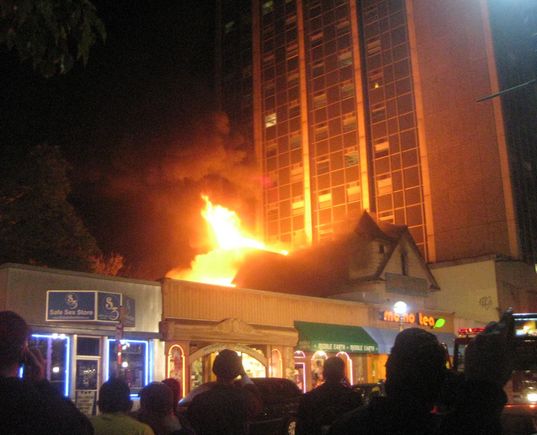
Last night, I asked a friend, "Did you hear about the explosion in Puerto Rico?" He hadn't. About 1500 people near San Juan have been displaced by an explosion at a Caribbean Oil storage facility in the wee hours of Friday morning. The explosion registered 2.8 on the Richter scale, which isn't much for an earthquake but is one heck of an explosion. Yesterday brought fears of increased casualties as the wind brought the cloud of smoke over San Juan, but so far no major injuries have been reported and the wind has shifted in the other direction, although the fire is still burning out of control, almost 60 hours after it started.
This morning, that same friend asked me, "Did you hear the news?" He wasn't talking about the fire in Puerto Ri
The fact that the Caribbean Oil fire hasn't gotten all that much coverage in the mainland US should not be surprising. As I've often said, we pay attention to things that are horrible, unexpected, and happen in places and to people we identify with. It will give you some idea how much we in the United States identify with Puerto Rico that CNN.com has been running its coverage in its "World" section, not in its "U.S." section. As they say in the musical "West Side Story,"
Nobody knows in AmericaThe Washington Post has this story in the Nation Digest, so at least they've located it properly. It's the third story in the digest. Balloon Boy is number one.
Puerto Rico's in America
Both of these fires are exciting. To the people who are right there, they are also probably traumatic. One man in Puerto Rico was quoted as saying,
I didn't expect to see a mushroom cloud from my houseFor most of us, though, these stories are attention grabbing if we live nearby or know the area, and mildly interesting otherwise. That's because we know that fires happen, we hope they don't happen to us, and no one was seriously injured in either blaze. We love stories like this. We can sit back and watch, admire the power of fire to destroy and its beauty in the night sky, and not really worry about it. We are voyeurs at heart, and in these cases, we can do it with impunity.
Monday, October 12, 2009
We Have Met the Enemy, and He is Us

After a while, writing a blog like this, there are certain things you find yourself talking about over and over again. In the blogosphere, those simply become "tags" for your writing. But some themes are more than tags -- I'm talking about the posts your write where you have to go back and look to make sure you hadn't actually written that post before, because it all sounds too familiar. That's how I'm feeling, today, about the issues of distancing and blame.
It seem like coverage of trauma in the news separates itself, rather neatly, into two categories: stories that are tragic but point out the various reasons this tragedy could have been avoided, and stories that express shock that such a thing could happen. These are two sides of the same coin. Saying an incident was avoidable implies that we will be able to avoid it happening to us. Expressing shock implies that it is anomalous -- that things like this are not "supposed" to happen to people like us, and therefore won't in the future. From these stories, we get a very interesting picture of what a victim of trauma or a perpetrator of crime is and is not "supposed" to be like. If you pay attention to the news, particularly the coverage of traumatic incidents, you will find the following:
- Victims of trauma -- those who die in traumatic incidents -- are supposed to be poor, not white, and live in cities. They are supposed to be stupid and preferably morally questionable. They tolerate domestic violence and marry entirely the wrong people. They don't have the sense to ask for help when they need it. If they are children, then the adults in their lives fit this description.
- Perpetrators of trauma -- those who cause death by crime or even by negligence -- are supposed to be poor, not white and live in cities as well. They are supposed to not have jobs and to drop out of school. They are supposed to be male. They are supposed to have a history of drug use and have been abused as children. They are supposed to care about nothing but the almighty dollar, and view women as inherently subservient.
There are many problems with this way of thinking, of course. The virtual codification of racism, classism and sexism they demonstrate is at best disheartening. Because they sort tragedies into categories, they help us deny the humanity of those affected by trauma. They make it easy to blame.
Fundamentally, they also do a tremendous disservice to our preparedness for trauma. Part of how we become resistant to traumatic stress and resilient following an incident is by having a realistic expectation of what might happen to us and how we will feel afterwards. While it is not healthy to live in fear of rare events, it is also not healthy to believe they are significantly rarer than they are. Perhaps if we were not so busy convincing ourselves that trauma happens somewhere else to someone else, we might be able to face what our actual risks are and prepare to cope with them.
Tuesday, September 29, 2009
What Makes Something Important?
Generally speaking, I blog about whatever heinous situation is dominating the news at the moment. Sometimes, that's a very easy event to spot. Generally speaking if it gets several columns on the front page of the New York Times, or more than one story on the splash page at CNN, you know it's "big." And if it's "big" and traumatic, it's stuff for the Quarterback.
Sometimes, however, it's not as obvious what is "big" in American media. Finding traumatic events is not much of a problem. Finding ones that seem compelling (and that I have something to say about) is sometimes harder. Today I had a particularly difficult time finding a story I wanted to blog about, so I started to reflect on what makes me think a story is "compelling." Sometimes the reflection isn't so pretty.
By my gut level definition, a story is compelling if it meets one or more of the following criteria, the more the better:
- the event is unusual
- the event affects people in an unusual way
- the event affects a group of people you might not think of as being affected
- the news coverage of the event raises a particularly interesting point
- the event affects people who I believe most people will identify with
There are two examples of this that became clear to me as I was desperately searching for a topic today. The first has to do with natural disasters. In my searching, I had skimmed over the deaths of hundreds of people in the Philippines during recent flooding, and decided I didn't have much to say. Somewhat later, a breaking news headline appeared detailing a very large earthquake near Samoa and a tsunami warning in New Zealand, and I caught myself thinking, "If there's a tsunami in New Zealand, then I'll have something to write about." Really? Deaths from natural disasters in the Philippines aren't compelling, but those in New Zealand are? How can I possibly assume that somehow people in the Philippines are "used" to this sort of thing?
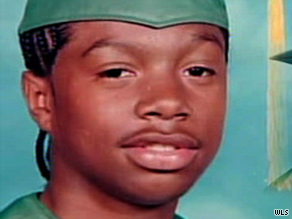
Which brings me to my second example. Derrion Albert, 16, was beaten to death when he got caught in the conflict between two groups of students on his way home from school on Thursday. He was an honor student, a church-goer, and an innocent bystander. If this had happened in my hometown, it would be national news. But it happened in Chicago, and Derrion was black, and so it didn't make the news until a video of the beating surfaced, and we white folks could see that this is not a sort of violence you can ever "expect" or "get used to." But let's face it, privileged, suburban, white folks, of which I am one, still think of it that way.
All life is precious. We know that intellectually, but we can't seem to act like it. We distance ourselves a hundred different ways from trauma, whether to protect ourselves from the idea that it could happen to us or for more sinister reasons of racism, classism or xenophobia. If trauma happens to "those people," it doesn't happen to "us." But we are all those people, and they are all us. We probably won't make much progress in this world until we really believe that.
Thursday, September 17, 2009
Tashawnea Hill: Won't Somebody Think of the Children?

Some of the facts are not in dispute. Tashawnea Hill, a 35 year-old army reservist, was taking her 7 year-old daughter to dinner at a Cracker Barrel restaurant in Poulan, Georgia on the evening of September 9. A White man was coming out of the door when Hill, who is African-American, and her daughter were about to go in, and Hill believed that he almost hit her daughter in the face with the door. She exchanged words with the man, and he beat her in full view of her daughter.
The only facts in dispute are what exactly Hill said to the man, whether, as he alleges, she spit on him, and whether, as she alleges, he shouted racial and sexist epithets at her as he beat her. The FBI is investigating this as a hate crime, and the police say that witness statements and surveillance footage indicate the attack was unprovoked.
The man who beat Ms. Hill is charged with misdemeanor battery and disorderly conduct. He is also charged with cruelty to children even though everyone agrees he did not hit the daughter. Let's hear it for Georgia law enforcement for understanding that damage to children doesn't necessarily require physical contact.
The police report described the daughter's reaction in vivid terms. When officers arrived, she was
crying uncontrollably and her body [was] shaking/trembling.
This is a very typical reaction for a child -- and for an adult -- who has witnessed a traumatic incident. In addition to watching her mother be attacked, this girl has to have feared for her own safety. And where does a 7 year-old run when her mother is being beaten? Where does she believe is safe? Probably nowhere.
I've written a lot in this space about the way trauma violates our world view. In this instance, that is doubly the case. While Tasha Hill knew before September 9 that the world can be dangerous, but probably did not operate with that in the front of her mind day in and day out. Her daughter, at 7, was most likely at a stage where she believed her mother was powerful and would keep her safe. Little kids scare more easily than adults, but they also fundamentally think adults can protect them. When this girl saw her mother beaten, she was suddenly and shockingly exposed to the danger her mother was in and the fact that her mother could not keep that danger away from her. That's a big lesson for a little girl.
And of course, that's without dealing with the obvious other ways this incident will affect Ms. Hill's daughter. She not only saw her mother attacked, but she allegedly saw her attacked for being an African-American female. That has to have an impact on a little African-American girls' sense not only of safety but of self esteem and self worth. The bottom line is, if I were she, I'd be shaking too.
Tuesday, September 15, 2009
Violence on Campus

It's another Quarterback Truth-Telling Moment. What do you assume this post is going to be about? What current event comes to mind when you hear "violence on campus?" I'm guessing that, for those of you who have an answer, you're thinking about the murder of Annie Le, the Yale pharmacology graduate student. It's all over the news, with new suspicions and breaking stories several times a day. I blogged about it myself twice in one day this weekend.
Actually, the story that caught my attention this morning was the murder of Juan Carlos Rivera at about 9 AM at Coral Gables High School in Florida. I thought this would be big news, but it disappeared off the major news sites basically as fast as it appeared, and it made me wonder why. Why is the murder of Annie Le, and adult in a relatively large city, more newsworthy than that of Juan Carlos Rivera, a teenager in an suburban high school? In fact, the Internet community itself is debating a very similar question as we speak -- is the murder of Annie Le a big enough event to merit its own Wikipedia page, or is it just a flash in the pan.
My first hypothesis on this was that murder on college campuses is significantly less frequent than murder on K-12 campuses. A little rummaging turns up the fact that in 2004 (the most recent statistics I could find for both years) there were 15 homicides on college campuses in the United States, while in the 2003-2004 school year there were 22 homicides at K-12 schools. So yes, murder in a K-12 school is more rare, but not by much, and not when you consider that the total student population of colleges is significantly smaller than the student population of K-12 schools. This doesn't seem like the answer.
Part of the answer, I think, is that American society is quite captivated with weddings, what happens before weddings and what happens after them. The fact that Annie Le disappeared a few days before her wedding caught our attention, and once we were paying attention to the mystery, we weren't going to let it go. Part of the answer is probably also the mystique of an Ivy League College and an obviously bright victim.
Still, we as a society are usually really interested in school violence. The murder of Juan Carlos Rivera hit the national news this morning, I think, because it played to our deepest fears about our children's safety in school. The problem is that as soon as the press got more information about this murder, the victim suddenly didn't seem the innocent schoolchild we envision when we think about school violence. It turns out that Rivera was in a fight, reportedly over a girl, and the other student pulled out a box cutter and stabbed him. That defies our idea of what "school violence" is -- when we get scared about it, we get scared about random mass shootings and people from the outside coming in, not about fights.
More than that, though, we tend to have this idea that if someone is killed in a fight at a school, it must be at a school that is "used to" this kind of violence. While certainly there is more violence at some schools than at others, I don't think any school is "used to" students killing each other. Keep in mind, only about 20 kids in the whole country die this way each year. Violent death at a school where you work or study violates the generally true premise that school is a safe place and that the adults in a school can keep children safe. Keep in mind that children are twice as likely to be victims of a violent crime when they are not at school as they are at school.
Finally, and perhaps most disturbingly, Juan Carlos Rivera is not the quintessential "sympathetic victim" our society rallies around. He is male. He appears to have been somewhat violent himself, at least today. And, yes, he is Latino. And our gut intuitions about some schools being "used to" violence pales in comparison to what we assume to be true of violence in Latino communities. Few would have such a thought consciously, but that underlying racist assumption is reinforced daily in popular culture. Consciously or not, the press began with "this is big, a student was killed at school" and quickly reverted to "it was a Latino boy in a fight, that's not news."
At the end of the day, the Le family and the Rivera family have empty seats at their tables. Whether one victim is "sympathetic" or "deserved it" is really an offensive question. Their families don't deserve to be without their children, period.
Wednesday, September 2, 2009
Why Do We Care, Or Not?
- So far, 34 people have died in today's earthquake.
- In the last 6 years, at least 300,000 people have died and 3 million have been forced to leave their homes because of their ethnicity.
- More than 1,300 children have abnormally high levels of lead in their system due to the malfeasance of 8 local factories.
- Five years ago this week, 334 people, 180 of them children, were killed following a three day hostage-taking standoff at a school.
- A kidnapped girl reappeared after being missing 18 years.
Now, let's be honest. Which one of these incidents did you instantly recognize? Which ones did you say, "Wait, where did that happen?"
"Where did that happen," is often our instant reaction to bad news. And, on the whole, that's not an unreasonable question. If there is a major earthquake at my parents' house, for example, I really would like to know that (and it would really be big news, since major earthquakes are not frequent in Massachusetts). It seems straightforward and understandable that we want to know whether people we know and love may be in trouble.
If you don't have any relatives or friends in, say, California or Indonesia, for example, why do you care where today's earthquake was? But you probably do. There are two explanations for this phenomenon, one more palatable than the other.
The first explanation is that you simply are trying to reassure yourself that not only are your loved ones safe, but that something like this will not happen to you or your loved ones in the future. An earthquake in California makes us feel, somewhat irrationally, like an earthquake in Massachusetts is more likely. Certainly a hostage siege in a school in California makes us worry about security in American schools.
The second explanation, which is a little harder to swallow, is that this is not actually about location, but about "alikeness." When things happen to people "like us" it makes us feel less safe -- and less compassionate -- than when they happen to people who we think are not "like us." On some level, we even come to imagine that events that would absolutely devastate anyone in this country are not so upsetting to people elsewhere, particularly in non-European, non-prosperous countries. Somehow, "they" must be used to it. We may not say these things out loud, or even think them consciously, but they resonate with us. Call it racism, call it xenophobia, call it American self-centeredness, but we just do not care nearly as much about trauma that happens in other parts of the world.
- Today's earthquake was in Indonesia. It's not even the top story on CNN as of 12:30 this afternoon. Imagine what the coverage would be if it were in California.
- The genocide in Darfur, Sudan, is something we know about but which gets next to no daily coverage, nor most people's attention, in this country.
- The factories in China have been shut down until they comply with safety standards. It's not a "top story" in this country.
- The siege in Beslan, Russia, caught our attention as it was happening and quickly faded from memory.
- Imagine what the coverage would be of Jaycee Lee Dugard's story if she were in Senegal, or China, or Belize. Imagine what it would be if she were African-American.
Friday, August 28, 2009
Hurricane Katrina and the Help That Never Came

Where were you four years ago? This is an easy one for me, since I was home with a three month-old baby watching "overblown" news coverage about this hurricane that was heading straight for New Orleans. The predictions seemed outlandish. Flooding of an entire city? Don't be silly. In the days that came, my son and I continued to watch as the Convention Center in New Orleans where I had given a talk just a year before filled with people and the spokespeople in Washington incredibly said they were unaware that anyone was there, because they had been told not to go there.
The delay in rescuing the people of New Orleans was a national shame. The delay in restoring essential services got less attention, but was no less appalling and no less a failure of our society to care for those in need. There was another delay, though, that is more understandable. That is the delay -- or absence -- of mental health assistance for those whose lives were demolished by the storm and by the lack of help that followed.
In the days directly after the storm, people's basic physiological needs were not being met. It would have been totally inappropriate to go talk to people who are crammed into the Superdome or the Convention Center without basic food and sanitation about how they are feeling. Anyone who had the time and ability to do that should have been, and mostly was, getting people to safety, feeding them, and finding them someplace to stay.
The rule of thumb is to provide early crisis intervention services when the situation is stable and the incident itself is over, as close as possible in time and location to where it happened. But because of the way this disaster played out and the delays in assistance for physical needs, there was never an obvious opportunity to do that. It took many months, if not years, for many who had weathered the storm to be in a physically stable situation. By the time they were, they were literally scattered all over the country. CISM is designed for people who have been through hell and are now returning to a world that is basically still normal, but they don't feel normal. The world was never "still normal" for many Katrina survivors.
That is not to say that no one ever got help. Those with the most extreme manifestations of Post-Traumatic Stress Disorder are still being served by the mental health system. CISM is not designed to prevent PTSD, so I won't argue that earlier intervention would have made a difference. However, studies of PTSD in Katrina victims show that increased watching of news coverage following the storm was associated with risk of PTSD symptoms, and between 38% and 50% of people who lived in New Orleans when Katrina hit have or had symptoms of PTSD. The only thing I can imagine might have been done early is to advise people not to watch TV. That probably wouldn't have worked.
By the way, it's not that no one got CISM services after Katrina. Teams from around the country were mobilized to work with rescue workers following the storm. They had the possibility of coping with this as a discrete incident. Most of the residents never did.
Wednesday, August 26, 2009
When Your Hero Dies

At the end of June, I blogged about the death of Michael Jackson and how it wasn't a crisis. About three seconds after I posted it, I got my first inkling that I had perhaps not taken the correct tone in my post. It's not that Jackson's death, for most of us, was truly traumatic, but my tone trivialized what he meant to so many people. Over the summer that point has been driven home to me over and over.
What I now understand is that, as a white woman with no particular love of pop music, I had no particular attachment to Michael Jackson,
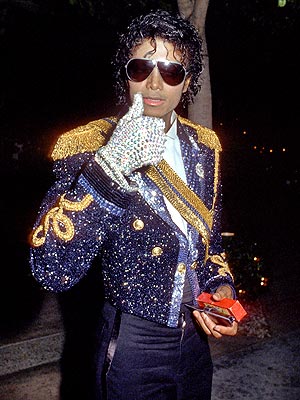 and I failed to realize that trivializing his death wasn't just trivializing people's grief, it was trivializing the racial and cultural experience in this country. I want to truly apologize for that. A death that is not traumatic is nonetheless a death, and grief is grief. I have been struggling for several weeks to figure out how best to bring this up, and today seems like the right day.
I say that because I was born and raised in a staunch liberal household in Massachusetts. Senator Edward Kennedy was an icon of my childhood. In 1980, I was old enough to be active in politics, and I supported Kennedy. My older brother worked in his Boston office one summer. He was what I understood a great politician was supposed to be. I was absolutely stunned, when I went away to college, to learn that Kennedy was not as revered elsewhere and that people used him as the joking example of liberalism gone too far. I never did.
Senator Kennedy wasn't perfect, by any means. I also grew up in a milieu where "Chappaquiddick" held the same sort of ominous tone as "Watergate." I was very confused when we spent summers on Martha's Vineyard and a youth swim meet was held in Chappaquiddick -- why would you hold it someplace bad? I knew that Kennedy was a drinker and that he had been kicked out of Harvard for cheating. Later on, I was appalled by his architecture of the No Child Left Behind Act, which in my mind was the worst law ever to come out of pure intentions.
Ted Kennedy also exemplified being able to go on with life despite traumatic loss, which he certainly suffered all too often, and despite the guilt of having caused traumatic death. Some would say that he never felt appropriately guilty about the death of Mary Jo Kopechne. That isn't for me to judge. But he certainly showed that that awful night was not the sum total of who he was, and he did not let it end his hopes for doing good in his life.
Anais Nin once said, "We don't see things as they are, we see them as we are." As a white liberal from Massachusetts, I cried when I heard that Kennedy had died. As African-American males growing up in the 80's, several of my friends cried for Michael Jackson. Neither are traumatic, both are sad. I should know better than to judge others' outpouring of emotion just because I don't see things the same way. I am imperfect, just like Kennedy and Jackson were. I hope that I can show that isn't the full measure of who I am, either.
The work goes on.
The cause endures.
The Hope still lives,
and the dream will never die.
Saturday, August 1, 2009
Update: Suspect in Provost Murder Completes Suicide
 The suspect in the murder of Seaman August Provost III completed a suicide in his cell at Camp Pendleton yesterday. He had been charged on July 23 (and I apologize for not bringing that to you -- I was on an Amtrak train with no internet access).
For those of you just joining this story (feel free to read the previous Quarterbacking on this topic), Provost was standing sentry at Camp Pendleton in the wee hours of June 30 when he was shot and his body set on fire. His family suspected a hate crime, since Provost was either bisexual or homosexual, depending on which article you read, and he had complained to them of being harassed both because of his sexual orientation and because of his race. The Navy said there was no evidence of a hate crime. They also failed to tell his family how he died -- they heard about it on the news.
The official story is that the suspect went on a really bad trip from hallucinogens sometime in May, and it was all downhill from there. He broke into a sailor's home and stole a gun and an xbox, and was pulled over in mid-June for driving while intoxicated. Provost allegedly confronted him as he was trying to set fire to a Navy landing craft, although there was no apparent motive for him wanting to set that fire. The Navy has said it was "part of a crime spree."
And now the suspect is dead. You might think that Provost's family would be glad he was dead -- an eye for an eye, a tooth for a tooth. But victims and their families rarely feel that way. They may well want to see the perpetrator put to death, but death without a conviction is symbolically difficult, because it means he will never officially have been punished for what he did. In this instance, the family also will not have the opportunity to find out whether there was a race- or sexuality-based motive. From their point of view, the truth died with the suspect. And I'm sure there are conspiracty theorists out there who find the suicide of the suspect just a little too convenient for the Navy.
I am not one of them. I believe that most people have a conscience, and that living with that conscience when the drugs or the alcohol or the rage wears off is pretty difficult. I have no difficulty believing that this suspect felt he couldn't live with himself. Now his family, as well as the Provost family, are left with the aftermath.
(Two notes on usage: I use the term "completed the act of suicide" or "completed a suicide" because it most accurately describes what happened. If you think about it, "completed" is the natural extension of "attempted," which we commonly use to describe someone who tried to kill him or herself and did not die. The more common "committed suicide" is somewhat euphemistic, and I try whenever possible to use plain language, particularly when dealing with issues around death. I also try to avoid the terms "successful" or "unsuccessful," because they imply that suicide is a goal to be attained, and I never say "took his own life" because, again, that is euphemistic -- where did he take it?
You may also have noticed that I never name suspects or perpetrators in this blog. This represents my value that those who kill others should not in any way be made the center of the story, particularly in a blog about trauma.)
Tuesday, July 14, 2009
You Can't Contain the Facts: The Murder of August Provost, Part 2
To refresh your memory, Provost was murdered while standing sentry. He was shot three times, bound, gagged, and set on fire. He was African-American and, depending on which report your read, either gay or bisexual. He complained of being harassed by fellow service members, and his family believes his murder was a hate crime. The Navy, on the other hand, has said there is no evidence of a hate crime and referred to this murder as a "random act of violence."
The way the Navy has chosen to deal with this situation is unfortunate, and is probably making things worse for both themselves and the family. It turns out that when the Navy notified Seaman Provost's family of his death, they told them he was found unconscious on sentry duty and later died. They failed to mention that he was murdered, let alone share the details. Provost's mother found out he had been shot and burned from the television coverage.
This violates some very, very basic principles of how institutions should behave in a crisis. I wish I could say it was unusual, but unfortunately it is all too common. Institutions -- whether it's a school, the military, a business or the government -- like to clamp down on information. We have this naive notion that all that will become public is what we say, so we don't say much.
But facts exist whether we talk about them or not, and they have a way of making it into the public arena. Instead of asking, "What facts do we want people to have?" institutions should be asking, "If we don't share this fact, how will it look when it does become public." It's almost always better for people to hear bad news immediately, directly and completely.
The two rules I always share with staff in my school and other schools about sharing bad news with children are very simple:
- Tell the truth, the whole truth, and nothing but the truth (which also means no guessing) and
- Make sure that every known fact they will hear comes from you, and that no rumors do.
The minute you violate either of those rules, no matter how well-meaning you are, you lose all trust and credibility, and the same rules go for adults. As soon as it is known that you withheld information, gave inaccurate information or left facts to be revealed by the media or the rumor mill, no one will trust what you say and you will be completely ineffective in being supportive following the incident. People naturally want to blame others following an incident, and you will be the target whether you deserve it or not.
I wonder how this situation would have played out if the Navy had told the family how Seaman Provost died, had acknowledged the possibility of a hate crime even if they didn't think it was one, and had been honest with the Congressman on the base that day. I have to imagine that there would be a whole lot fewer conspiracy theories floating around.
Saturday, July 4, 2009
All Men are Created Equal
Update: The Quarterback has been updating this story as it unfolds. Take a look at what's happened since this post was written.
If the name August Provost doesn't ring a bell, don't feel bad. News of his death this past Tuesday hasn't made the New York Times yet. It just hit CNN today. We can't all be Michael Jackson.
Seaman August Provost was murdered at Camp Pendleton in California while he stood sentry. He was shot and the area set on fire, apparently in an attempt to cover up the evidence. The Quarterback just did some digging to find out how common homicide is in the armed forces, and hence how newsworthy this sort of thing should be. In 2007, the latest year I could find statistics for, there were 42 homicides in the military. That comes out to a rate of about 3.06 per 100,000. In the United States in 2007, the homicide rate was 5.9 per 100,000. So murder in the military is less common than in the general population, but still not unheard of.
What makes Seaman Provost's death particularly interesting is that he was an African-American bisexual man serving in the United States Navy, and he had apparently complained to his family that he was being harassed. They told him to tell his supervisors, and not surprisingly, given that he would be discharged for telling a supervisor he was bisexual, he did not. So now his family wants to know whether his death was related to either his race or his sexual orientation.
The Navy says that as far as they can tell, the answer is no. They have someone in custody, but no one has been charged. The Navy spokesperson said,
Now throw in another wrinkle: California Congressman Bob Filner was at Camp Pendleton on Wednesday after the body was found, and no one told him. He sat next to the Commander at an event and wasn't told. The base has a daytime population of about 100,000, so this probably happens about 3 times a year. If you were the mayor of a town of 100,000 with a homicide rate of 3 per 100,000, and your local Congressman came by just after a body had been found in your town, would you tell him? I don't know.What I can tell you, unequivocally at this point, based on the preliminary information that we have, is that regardless of the person standing watch in that sentry station, this crime would have most likely been carried out in the same way. In other words, another sailor could have been on that post and would have been the victim of this crime.
But let's be real here. This is news because Don't Ask Don't Tell and the issue of gays serving openly in the military is in the news right now. A cover up would be a very big deal. A hate crime would be a very big deal. So the reporters have gotten wind of it and are starting to write stories.
From a crisis response standpoint, we have here what we like to call, in technical parlance, a "mess." Let's tally up the factors. We have:
- A homicide, which is traumatic if you were close to the deceased whether or not you witnessed it or found the body
- A homicide far away from home (Seaman Provost is from Texas), adding to the family's feelings of helplessness that are already endemic to a homicide
- An ongoing investigation, making people feel reluctant to talk to critical incident personnel on the one hand, even though it's confidential, and making people want to talk about the investigation instead of the event on the other hand
- Blame being thrown around, making it hard to feel like the event is "over," especially given the ongoing investigation
- A politician involved, adding to the stress on all involved even if he's actually doing good
- Media coverage, meaning the event is being replayed for the family and friends
- Media coverage that came slowly, often making people feel like they didn't get the attention they deserved
- One group accusing another of indifference at best and a coverup at worst, making it even more critically important that responders don't mix up the two groups
- The other group gently saying that the first group is wrong, making anger at each other a major theme of the healing process
It's Independence Day, a day to celebrate our country. So the Quarterback would like to take this opportunity to honor Seaman August Pendleton for his service to our country and his death in its service, whatever the motive may have been. He may not have felt it, he may not have lived it, and he may have died because others didn't believe it, but he is a stark reminder of what we aspire to in our country, that all men are created equal.
Thursday, July 2, 2009
Why We Love Bahia Bakari, But Not Enough to Know Her Name
It's time for a little honesty. Would all Americans reading this blog please answer the following: Before this week, could you locate the Comoros Islands on a map? Can you locate them now? Do you know why I'm asking? My guess is that the most common answers to those three questions, respectively, is no, probably not but maybe and yes, with a fair number of people answering no for all three (the Quarterback admits that her answers are yes to all three, but only because she is very fond of the quizzes on Sporcle).
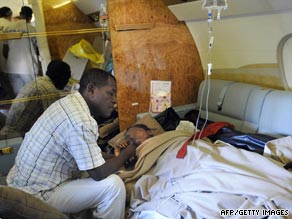
On Tuesday morning, a Yemenia Airways plane en route from Sanaa, Yemen to Moroni, Comoros crashed into the Indian Ocean. 152 people died. The only survivor is a 13 year-old girl named Bahia Bakari, who was apparently ejected from the plane and landed in the water, where she held onto debris until she was rescued.
There are two stories that have dominated the coverage of this tragedy. The first is Bakari's survival. Many Americans, including the Quarterback, first learned about the crash from news reports with headlines like "Rescuers Find Child Alive in Wreckage of Airliner Crash." The second is the poor maintenace record of Yemenia Airways and of this plane in general. Apparently the European Union had flagged this particular jet as having maintenance problems, but Yemenia Airways had flown planes in better condition into the EU ever since. On this flight, most passengers boarded in Paris and then switched planes in Yemen.
Certainly both of these stories are newsworthy. But it is notable that the kinds of stories we saw after the Air France crash off the coast of Brazil last month are almost completely absent. We don't know about the engaged couple, the European tourists, and the brilliant scientists who were on board the Yemenia Airways flight. We know about Bakari, but probably we don't remember her name.
In the humble opinion of the Quarterback, the two dominant stories and the absence of the other kind are all attributable to a single, understandable human reaction to tragedy, but one that has a very sinister side to it. As my readers know, we like to assign blame after a traumatic incident. If something can be blamed, it can be controlled.
But this crash offers Americans and to some extent Europeans something even better. It offers us the opportunity to completely detach from identifying with the victims. We white Americans can look at this situation and say, "Look, these people are nothing like us, they were on an airplane that we would not board on an airline that we would not fly. This could not happen in our world." We can easily convince ourselves that this cannot happen to us and people we think of as being like us. And make no mistake about it, when we say "these people are nothing like us" what we mean is that these people are black.
Which brings us back to Bahia Bakari. We love the fact that she is alive. It allows us to tell ourselves that even if something like this could happen to us, it's ok because we could survive. We all, on some level, believe that we are the one lucky one. But unlike if Bakari's name were Jane Johnson and she hailed from Nebraska, we don't want to look too closely. We don't want to know her name or her family background or why she was going to the Comoros Islands, because we'd rather not put ourselves on that plane with her, and we can avoid doing that because, well, she's nothing like us.
Avoiding identifying with the event and its victims is a healthy psychological defense mechanism. It certainly would not be helpful for everyone to personalize this story to the point of their own traumatization, and imagine in vivid detail the experience of being on a crashing plane. The Quarterback is not asking for that. But it might behoove us to be a little self-reflective about why, in this case, detachment is so particularly easy for us to do.
Subscribe to:
Posts (Atom)
Meet the Quarterback

- Naomi Zikmund-Fisher
- is a clinical social worker, former school Principal and a Crisis Consultant for schools and community organizations. You can learn more about her at www.SchoolCrisisConsultant.com

Subscribe


 Posts
All Comments
Posts
All Comments