Showing posts with label car accident. Show all posts
Showing posts with label car accident. Show all posts
Sunday, September 12, 2010
After the San Bruno Explosion, What are You Scared Of?


Thursday night, a giant explosion ripped through a neighborhood in San Bruno, California
 . The blast and subsequent fire, apparently caused by a ruptured gas line, leveled 38 homes and killed at least 7 people. Six more are missing.
 I don't know about you, but if you gave me an hour to list all the horrendous things that could happen to me I could come up with a pretty long list, but I doubt a gas explosion destroying my neighborhood would be on it. It certainly wouldn't be on the top. We all know, in the back of our minds, that there are certain things that could happen to us -- car accidents, homicide, natural disasters (different ones, depending on where you live) -- but there are other things that just don't make the list because they are so rare we don't know about them. Gas leaks? Sure. Gas explosions? Maybe. The entire neighborhood detonating? Not so much.
I'm not sure whether that makes the typical person's reaction to this better or worse, but it does make it different. When we hear about, say, a horrible car accident that killed multiple people, it may make us more afraid to drive. We may lose our own sense of safety on the road. We may imagine what it would be like to be a family member getting that call, or to be on the road and witness or be involved in the crash.
Our reaction when something so bizarre happens is a little bit different. Yes, we probably are more sensitive to the smell of gas or more careful not to leave the stove on. We probably don't spend a lot of time imagining what it would be like to be in the incident itself, largely because we just can't. Even once it's happened somewhere, our minds can't yet process fully how such an event would play out.
The most important difference is the quality and amount of fear we may feel. When we hear about a car accident, if we feel afraid we feel afraid when we drive, or when our loved ones drive. The fear is specific to the incident. An extraordinary incident like the San Bruno explosion, however, can cause two different kinds of reactions: either it seems so unlikely that even though it's happened it doesn't seem possible, or it seems so random that the entire world seems less safe. Our fears, if we have them, are not specific to gas lines or even to sitting in our homes. They are about something completely random coming out of nowhere and hurting us. We don't react to the sudden discovery that a specific situation is not safe, we react to the discovery that the world is not safe.
Most of us experienced this kind of reaction nine years ago, after the 9-11 attacks
 . The fear we felt and the reactions we had were not necessarily about flying or working in an office building or even about the type of person we presumed to be the terrorists. It was fundamentally about the notion that a day could start as normally as that day did, and turn into such a nightmare without warning. Our worldview was violated not because we used to think flying was safe and now it wasn't, but because we used to think that life was safe and we found out maybe we were wrong. The people of San Bruno found that out again this week, and in some small way, so did the rest of us.
Monday, July 26, 2010
Tragedy Upon Tragedy as Car Crash Victims Identities Accidentally Swapped

Abby Guerra, 19, and Marlena Cantu, 21, along with three of their high school friends, were returning to Arizona from Disneyland
 on July 18 when the SUV they were riding in blew a tire, lost control and rolled over several times. Reports on that day said that Guerra was killed at the scene and Cantu was in critical condition. Another friend died at the hospital, and the remaining two were severely injured. This, by itself, would be an awful situation.
Guerra's autopsy was a relatively low priority, and the county coroner was very busy, so it was scheduled for Friday, July 23. On Saturday, July 24, her dental records were compared and the startling discovery was made that the body in the Maricopa County morgue was not Abby Guerra. It was Marlena Cantu. Abby was in critical condition in the hospital with Marlena's family surrounding her. Abby's family was planning her funeral, but she wasn't dead.
This sort of thing should not happen, and for the most part it doesn't. There was a similar case in Indiana in 2006, but such mix-ups are, as they should be, the exception. This is the cruelest kind of mistake.
When someone we love is suddenly killed or seriously injured, the situation feels surreal. The most typical reaction to the news is, "This can't be true." Many people actually say those exact words, sometimes over and over and over. In this incident, it actually wasn't true. Guerra's family spent a week trying to grasp the reality of the situation, only to discover that they were, basically, right in the first place -- this wasn't real. Cantu's family, has the awful reverse -- having spent the week very worried but grateful she was alive, they have found out that she isn't.
The worst of it, for Marlena Cantu's family, is not just that she is dead. That by itself would be bad enough, and by itself would cause them to say "this can't be true." But, on top of that, they have a very real reason to believe that it might not be true. After all, if Guerra can be thought dead and actually be alive, why can't Cantu? And while you and I, looking from the outside in, may know that's not going to happen, and while the Cantus may know it on some level as well, one can hardly blame them if they have trouble accepting it.
Aside from disbelief, I would expect the Cantus to also be experiencing some anger. First of all, for obvious reasons, they are probably mad at emergency personnel, medical personnel and the medical examiner for getting this wrong in the first place. It would be understandable as well if they were mad at the Guerras on some level. This is a zero sum game -- one woman is dead and one is alive -- and so, on some level, the fact that Guerra is alive appears to cause Cantu's death. That isn't a rational statement, but people who have just suddenly lost a loved one are not in a particularly rational place. If they're like a lot of people, they're mad, they know they shouldn't be mad, and they're mad at themselves for being mad. That doesn't help much, but it's hard to avoid.
My heart certainly aches for both of these families, for the mix up, for the accident, for the struggle Abby Guerra is now engaged in for her survival, and for the emotional roller coaster they will be on for a long, long time.
Thursday, June 24, 2010
Do Not Become a Casualty Yourself

Anyone who's ever had any kind of emergency training at all has heard some version of the same speech. "Before you try to help," it goes, "make sure that you yourself can assist safely. Do not become a casualty yourself." In a Red Cross CPR
 class, this comes in the form of the reminder to "Check, Call, Care," that is, check to make sure it's safe before you do anything else. In a lifesaving swim
 class, it takes the form of "Reach or throw, don't go," meaning don't get into the water if you can help the struggling swimmer any other way. CISM has a similar principle, usually expressed along the lines of, "If the incident is personal for you, get someone else."
I bring this up because on Tuesday I was assisting with a response and became a casualty myself, although not, perhaps, in the way you would think.
Earlier this week, a family from Ann Arbor was involved in a major car accident in Virginia. The mother, Theresa Supica, and one of the daughters, Samantha, were killed, and two other daughters are in the hospital. The girl who was killed was a student at Slauson Middle School in Ann Arbor, where I am the training coordinator for the CISM teams. Tuesday night, the team leader for that part of the district had organized a crisis management briefing and general get together for the middle school community as well as the associated elementary schools and the high school the sisters attend. It was outside on a large patio in front of the middle school. She asked me to attend as one of the supporting members of the team, which I was happy to do.
Tuesday was a pretty hot and humid day in Ann Arbor. After work I went to a weight lifting class and, despite the air conditioning, we were all sweating profusely. About three quarters of the way through the class I started to feel somewhat nauseous, so I sat out in the hallway (where it was a little cooler) for the end of class and felt much better. I hopped in my car and headed towards Slauson, about 10 minutes away.
Half way there, my stomach started to feel icky again. I realized I probably should stop driving, and that I wasn't going to be much use at the CMB. My cell phone was dead, so I thought I'd get to Slauson and find someone I knew to call my husband to come get me. I pulled into the parking lot, got out of the car, sat down in the grass near my car and, not seeing anyone I knew in the immediate vicinity, flagged down a stranger who was just arriving.
I don't know what I looked like at this point, but it can't have been good, because the woman immediately looked alarmed and said, "What's wrong?" I asked her to call my husband, and she went to get her cell phone out of her car. By the time she returned, I was vomiting in the grass, breathing very heavily and losing feeling in my hands. The woman called 911.
At this point I was pretty much doing a face plant in the grass. I could hear everyone and I knew what was going on, but I couldn't move and felt just ghastly. I could hear the woman trying to give directions to where we were, estimating my age ("middle aged" -- I was a little disheartened) and asking if I'd ever had a stroke "before." When the paramedics arrived and got me onto the stretcher, I was shocked to see that quite a crowd had gathered. It hadn't occurred to me that I was causing such a ruckus.
To make what is already a long story a little shorter, after 5 hours in the ER and all sorts of tests, the only thing wrong with me was dehydration. I should know better. Apparently, however, I don't. I was embarrassed to have caused such a scene.
More than anything, however, I knew that I had caused a scene in a place where people did not need more drama. A community reeling from the sudden death of one of its own does not need the image of a relatively young (OK, middle aged), relatively healthy person being wheeled into an ambulance. They don't need to hear sirens. They are working on believing that the world is a safe place once again, and my little episode underlined that maybe it isn't.
To the friends, neighbors, teachers and family of Samantha Supica, I send my heartfelt apologies. I became a casualty myself. You have my deepest sympathies and my sincerest regrets. Thank you for helping me when I should have been helping you.
Wednesday, February 3, 2010
Toyotaphobia Sweeps the Nation

If you've been in a completely non-industrialized part of the world for the last month or two, you might have missed that Toyota has recalled about 9 million vehicles due to unintended acceleration problems and problems with pedals getting caught in floor mats. They have also stopped manufacturing or selling the affected models until a fix can be put in place. This is disastrous news for a company that has built its business on reliability.
Pundits have been all over the news discussing Toyota's future. On Marketplace this afternoon, one commentator said that it can take an entire generation -- 20 years or so -- for a company to recover from a problem like this. The host commented that an informal poll around the office showed that no one was going to buy the Toyotas even after they were fixed.
I understand why the brand has taken a hit. I understand that you can't turn a profit if you can't manufacture and sell your product. What seems unreasonable, however, is the sheer level of fear this is causing people.
Based on the mass anti-Toyota feelings around the country, you might think that hundreds or even thousands of people have been seriously injured or killed in accident involving these defects. People are treating their Toyotas as if they might turn on them at any moment, so the actual numbers involved might surprise you. For the floor mat problem, the NTSB has identified 2 incidents that caused 5 deaths. For the accidental acceleration problem, the NTSB has identified no fatalities at all. Other organizations say there have been 2,000 incidents with 19 deaths in the acceleration defect. So, at worst, we're talking about 24 deaths over up to 10 years.
I don't mean to discount the tragedy that has befallen the families and loved ones of these 24 people. Any traumatic death is awful, particularly when it is avoidable. I wouldn't be in this line of work if it weren't. You might feel that this number of deaths represent an unacceptable risk. If you do, it might be time for a little reality check. More than 43,600 people died in motor vehicle accidents in 2006. If Toyotas present a completely unacceptable risk to the point that you will never drive one again, then, you probably shouldn't be driving at all, since driving itself is much, much more risky than any one brand.
We are sucked into this recall and its hype because it's Toyota and because it affects so many cars and hence so many consumers. Certainly if we can avoid another 24 deaths in these vehicles, we should. We shouldn't, however, confuse a big story with a big risk. We do riskier things than drive a Toyota every day.
Monday, February 1, 2010
It Hurts Us More Than it Hurts Them

A brief update from the Associated Press alerted us today that the Stepping Stones Childcare Center on the north side of Indianapolis has reopened. You may recall that an SUV driven by two robbery suspects crashed into the front room of the center in December, critically injuring one child and injuring three others and a staff member less seriously. Repairs are complete and all of the injured children are expected to return to the center now that it has reopened.
There is something very powerful about returning to the place where something traumatic occurred. Depending on where you are in your healing process, going to the scene of the incident can be very distressing, or it can be a sign of victory over the fear that the incident caused. The children who witnessed the accident or were hurt in it, in this case, are three years old and may not really remember the details of what happened unless someone has talked to them about it quite a bit. The residual effects of the crash for these kids, if there are any, are less likely to come in the form of being afraid of the space where it happened and more likely to come in the form of an overall anxiety about their safety.
The adults -- both the staff and the parents -- are another story. They remember what happened and some of them undoubtedly were really affected by it. Those who witnessed the accident might feel triggered by working in that space again. Hopefully, all of the staff have had a chance to be in there without the kids before today's opening.
In my experience, most parents bringing their kids back to school after something frightening has happened and been resolved are OK with it. Some may feel a little anxious, but they also are able to tell themselves that their fears aren't really rational -- the chances of another SUV crashing through the wall are very small. Those who are more anxious, however, don't usually come right out and say it. What they do say is that their child is anxious, and often the child is. The parent in these cases has talked to the child in a way that interferes with both of their natural processing of the event. A parent might say to a child, for example,
Daycare is opening back up on Monday. You know, it's been closed because of that scary accident where all those kids got hurt, remember? That was really frightening. It's going to be really frightening to go back, isn't it.
Before you accuse me of exaggerating, I must tell you that I have heard conversations similar to this many times between parents and kids. The parent will tell you that she is just acknowledging their child's fears, but in fact they are planting their own fears in their child. They are telling their child not just that they accept their feelings, but that they expect them to be scared. Children are pretty good at living up to our expectations.
Acknowledging children's feelings sounds a little different than that example. A parent who is responding rather than influencing might say,
Daycare is opening back up on Monday. It's been closed for a long time. How do you think you'll feel when you go back?Now the door is open for the child to say something if she's feeling anxious, but also allowing for the possibility -- even the probability -- that the child will be happy going back.
Anxious parents make for anxious children, and in a situation like this the adults are probably a lot more concerned than the kids. After a traumatic incident, we need to make space for kids to be impacted. We also need to remember to make space for them to be fine.
Sunday, January 3, 2010
Arizona Teen Runs Over Brother, and Assigning Blame Isn't So Simple

Dwight J. Brock, Jr., age 17, died on Saturday evening after being hit by a car driven by his sister, Nicole, 16. Nicole had just dropped him off at a Mesa, Arizona mall and the two were goofing around. Dwight would jump in front of the car and Nicole would slam on the brakes. During one such interchange, she couldn't stop in time and ran him over.
This is an unbelievable tragedy for the Brock family, I think we can all agree. Losing a child is awful to begin with, regardless the cause. But this situation is really complicated. I don't know the parents, but it seems likely that they, like most parents, would have told their kids not to play this game, and this accident shows why. However, I also think they probably, even if they saw their kids doing this, could not fathom that one of them would lose their lives playing this game. They way this story is "supposed" to end, at worst, is with some kind of minor injury that teaches the kids a lesson, and the parents say, "See, I told you so."
The online comments on this incident, as usual, are all about blame. Here's a sampling from the local ABC affiliate's web site:
This girl should be charged with a crime and made an example of. Ignorance of the law is not an excuse.
This foolish child may well be on the road again. Do you really want to be anywhere near a kid who thinks the vehicle she's driving is a toy?
Why is this any different then a kid getting killed by a gun? Where is the demand that the owner of the car be held accountable for allowing kids access to this dangerous weapon?
If she would have hit your child, mother, husband, wife, or grandma, what would you say then? It sure wouldn't be "Oh she's just a child, it was an accident." I don't think so, you would be screaming to have her locked up.
Do you feel pity for someone who plays Russian roulette and loses? That's essentially what they did and he lost.
The blame should rightly rest with the parents also, because the parents should have taught and insisted on them driving responsibly. Problems with kids today are a result of terrible parents.
The problem is that this incident is all about the gray areas in between. The parents are most likely furious with their daughter and want to support her. They are livid at their son, but they mourn his death. Nicole feels terribly guilty and she has also just experienced a tremendous trauma. Simply saying she's bad (or she's not) will not resolve those tensions. Whether or not the daughter should be charged, that won't be the end of the story. I suspect the whole family is going to need a lot of help for a long time to come to a place where they can make sense of what happened and look each other in the eye.
Science tells us that teenagers do not have a fully developed frontal lobe of their brain. This means that they cannot fully appreciate the consequences of their actions. All of us did stupid things when we were teenagers. However, the fact that doing stupid stuff is age-appropriate doesn't mean we don't try to teach kids to do better. Just as we teach our toddlers not to bite at the same time as understanding that biting is developmentally appropriate for their age, we try to instill in them the idea that people can get hurt playing games like this. Sometimes they listen, sometimes they don't. Rarely, they pay the ultimate price. When they do, "I told you so" just isn't helpful.
Thursday, December 3, 2009
Psychological and Physical Scars After the Indianapolis Daycare Crash

An SUV with two robbery suspects lost control and crashed into a daycare center today just as a group of 3 year olds were getting ready for nap in the front room. One child is in critical condition, and three more had less serious injuries. One adult at the center was injured, as was another bystander when their car was hit by the SUV during the chase. Luckily, a lot of the daycare center's children were on a field trip when the accident occurred, or things might have been much worse.
Leaving your children at daycare each day can be hard. Often, it's the parents who have more trouble separating than the kids, especially after the first week or two. We drop off our kids wishing we could stay with them, but knowing we have picked a place for them to be cared for and nurtured and safe.
Anyone who's ever had kids in daycare knows the awful feeling of looking on the caller ID or having someone else answer the phone and realizing it's the daycare calling in the middle of the day. This means that things are not OK, and that something has gone wrong with the plan. It brings back those difficult feelings of separation all over again.
We can only imagine, then, the horror of learning that a serious incident has occurred at your child's daycare and that your child might be critically injured. It is hard enough to leave kids for the day when you know they'll be OK. Now, you don't even know that. You'd better believe that it's going to be hard for a lot of these parents to drop their kids off at the alternative daycare site tomorrow. It would hardly be surprising if a lot of them kept their children home.
And then there are the children. Even the ones who weren't injured at all have to have been very frightened by the noise and commotion. They saw their friends get hurt at a minimum. We tend to think that young children aren't affected by these things, but that isn't really true. They are affected, they just process them differently.
The good news is that little kids don't have the cognitive skills to take what happened to them and extrapolate to what might happen some other time. They don't see flying glass and become afraid of windows. They might see flying glass and become afraid of flying glass, but that's not such a bad thing.
The bad news is that because little kids don't have terrific verbal skills, they aren't able to talk through their experiences. The result is that events like this sometimes get "stuck" in a pre-verbal place in their minds, where they are affected by them but can't really think them through. This may well affect them later on, but it won't be necessarily in the form of intrusive memories or nightmares about the accident. They might not remember the accident at all, but it can leave a mark. That having been said, it doesn't have to leave that mark, and a few opportunities to "play" the accident with toys or draw it, if they are able, may be all they need to recover psychologically.
Monday, November 23, 2009
Hope is a Double-Edged Sword: Man With Locked-In Syndrome Misdiagnosed

In the early 1980's, Rom Houben, a Belgian 20 year-old, was in a horrific car accident. He was in a coma, and then diagnosed as being in a persistent vegetative state. For 23 years, his family refused to accept his diagnosis and insisted he was conscious and aware of his surroundings. Finally, with advances in brain scan technology, doctors were able to more thoroughly examine his brain and determine it was essentially normal. Over time, they were able to help him communicate using a single finger and a keypad.
Houben wasn't in a vegetative state at all, but rather suffering from "locked-in syndrome," a state where he was able to hear and feel and understand, but unable to move or speak. The medical journal article that detailed his story estimates that up to 43% of people diagnosed as being in a vegetative state are actually conscious.
I'm sure this case will be the subject of much political debate. The news coverage is rife with mentions of Terri Schiavo, the Florida woman whose husband's battle to remove her feeding tube made its way all the way to the United States Congress. I acknoweldge that this case raises ethical questions, and I also acknowledge that I am completely unqualified to discuss them.
This story also raises questions for the families of those diagnosed as being in persistent vegetative states. On the one hand, accepting the reality of their loved one's situation is important, regardless of what people decide to do about it. Holding out unrealistic hope can trap people in the common trauma reaction of feeling like the situation isn't real. On the other hand, if this study is accurate, about 4 times out of 10, it truly isn't real.
This story is very encouraging to those left behind by traumatic accident victims in vegetative states. I truly hope that as many of them can be "unlocked" as this story predicts. I just worry about the 6 out of 10 situations or more where this research will prevent survivors from accepting reality.
Tuesday, September 8, 2009
Asa Hill's Legacy

Last Thursday, a seven year-old boy from Buffalo named Asa Hill was critically injured in a car accident. He died on Friday night, and was buried yesterday. Asa's parents have been a couple since high school but were not married. Asa often asked them to get married, and they always told him they would, but it just hadn't happened. Yesterday, at the end of Asa's funeral, his parents finally tied the knot.
This is one of those stories that leaves me speechless. It is fascinating and horrible and touching and sad all at the same time. I don't know what useful box to put my reactions into. And of course, it's not about me, or you, or anyone else, it's about Asa's family. They have to make the choices that are right for them, and it is none of my business to tell them what they should or shouldn't do, let alone second guess their choices after the fact. But it is interesting to think about the pros and cons of Asa's parents' choice to get married when and how they did.
On the plus side, we have the fact that Asa clearly wanted this. Families in mourning often talk about what the deceased would have wanted. In this instance, there wasn't much question that Asa wanted his parents to get married. They may well come to view their marriage as a gift he left behind when he died, and to the extent that they frame it that way that is all for the good. Their decision to marry now also reinforces their commitment to support each other in what has to be the darkest time of their relationship.
On the minus side, it is a frequent mantra of early crisis intervention that you should not make important decisions immediately following a trauma. Action feels better than inaction following a critical incident, and people are prone to do fairly rash things -- buy a house, quit their job, drop out of school, move out of town, etc. -- because at the time it feels like that will help. When the dust settles, often they regret those decisions. I don't know whether Asa's parents really had intended to get married and figured they'd do it now, or made the decision now. If it's the latter, that could be problematic. In a similar vein, it's possible that his parents will not see their marriage as a blessing bestowed by their son, but as a tangible reminder of his death. If so, that can certainly cause difficulty for them down the road.
At least anecdotally, the number of couples who split up following the death of a child is pretty high. Asa's parents' decision to get married under these circumstances could be a move against that trend, or it could make them more likely to be part of that statistic. Time will tell.
In keeping with my personal religious tradition, I hope that Asa's memory is a blessing to his parents and that they know no further sorrow. I also wish them 120 years of happiness in their lives together.
Wednesday, August 26, 2009
When Your Hero Dies

At the end of June, I blogged about the death of Michael Jackson and how it wasn't a crisis. About three seconds after I posted it, I got my first inkling that I had perhaps not taken the correct tone in my post. It's not that Jackson's death, for most of us, was truly traumatic, but my tone trivialized what he meant to so many people. Over the summer that point has been driven home to me over and over.
What I now understand is that, as a white woman with no particular love of pop music, I had no particular attachment to Michael Jackson,
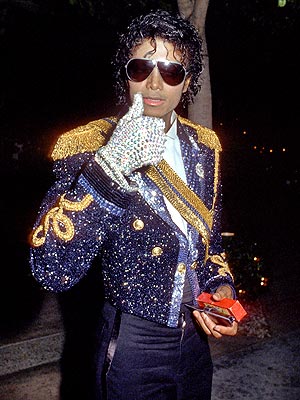 and I failed to realize that trivializing his death wasn't just trivializing people's grief, it was trivializing the racial and cultural experience in this country. I want to truly apologize for that. A death that is not traumatic is nonetheless a death, and grief is grief. I have been struggling for several weeks to figure out how best to bring this up, and today seems like the right day.
I say that because I was born and raised in a staunch liberal household in Massachusetts. Senator Edward Kennedy was an icon of my childhood. In 1980, I was old enough to be active in politics, and I supported Kennedy. My older brother worked in his Boston office one summer. He was what I understood a great politician was supposed to be. I was absolutely stunned, when I went away to college, to learn that Kennedy was not as revered elsewhere and that people used him as the joking example of liberalism gone too far. I never did.
Senator Kennedy wasn't perfect, by any means. I also grew up in a milieu where "Chappaquiddick" held the same sort of ominous tone as "Watergate." I was very confused when we spent summers on Martha's Vineyard and a youth swim meet was held in Chappaquiddick -- why would you hold it someplace bad? I knew that Kennedy was a drinker and that he had been kicked out of Harvard for cheating. Later on, I was appalled by his architecture of the No Child Left Behind Act, which in my mind was the worst law ever to come out of pure intentions.
Ted Kennedy also exemplified being able to go on with life despite traumatic loss, which he certainly suffered all too often, and despite the guilt of having caused traumatic death. Some would say that he never felt appropriately guilty about the death of Mary Jo Kopechne. That isn't for me to judge. But he certainly showed that that awful night was not the sum total of who he was, and he did not let it end his hopes for doing good in his life.
Anais Nin once said, "We don't see things as they are, we see them as we are." As a white liberal from Massachusetts, I cried when I heard that Kennedy had died. As African-American males growing up in the 80's, several of my friends cried for Michael Jackson. Neither are traumatic, both are sad. I should know better than to judge others' outpouring of emotion just because I don't see things the same way. I am imperfect, just like Kennedy and Jackson were. I hope that I can show that isn't the full measure of who I am, either.
The work goes on.
The cause endures.
The Hope still lives,
and the dream will never die.
Tuesday, August 18, 2009
The Trouble With "Closure"

The District Attorney in Westchester County has concluded the investigation into the crash that killed 8 people on the Taconic State Parkway in July. The crash was caused when a woman who was reportedly drunk and under the influence of marijuana drove her van with five children in the wrong direction on the Parkway and hit an SUV, killing three people in the SUV, four of the children and herself. The D.A. has announced that there will be no criminal prosecution in this case.
There has been a lot of backlash surrounding the lab reports that say the driver had a blood alcohol level of 0.19 (legally drunk is 0.08) and had chemicals from marijuana in her system. Her husband has said:
She did not drink. She was not an alcoholic. Something medical had to have happened. I never saw her drunk since the day I met her.He insists that he does not believe alcohol caused the crash that killed his wife and one of his two children, despite both the toxicology reports and the fact that a vodka bottle was found in the van.
Michael Bastardi, Jr., the son and brother of two of the men killed in the SUV, on the other hand, has this to say about the husband and his family:
I am appalled that they won’t face the facts that she was drunk and killed seven innocent lives and ruined the lives of so many people.The Bastardi family is planning a lawsuit.
So what is going on here? Is the husband in denial? Is Bastardi taking this tragedy out on the husband? Yes, and yes. Occam's Razor tells us that when you have two competing theories that have the same results, the less complicated one is true. In that case, the driver was almost certainly drunk. The husband is in denial.
So technically Bastardi is right, the husband "won't face the facts." But the word "won't" tends to imply "could if he really wanted to," and my guess is that he actually really can't right now. The facts are not just that his wife and daughter are dead. The facts are not just that his wife is at fault, or that 6 other people died too, or that everyone is angry at his wife, including him. Throw in there that his wife drank incredibly heavily and he didn't know it. I don't know if she did this a lot or this was a rarity, but it seems clear that her husband was clueless.
On the other side, the Bastardis are angry at the husband. They look at this situation and say that it is perfectly obvious that the wife was to blame, and since she's dead and her husband is defending her, he is a very convenient and obvious target for their natural rage. In tragedy, our minds go to blame. In this one, it doesn't have far to go.
The fact is also that both of these families are traumatized. They are trying to process a traumatic event of monstrous proportions. They won't be successful at doing that until all the investigating and suing and everything else is done, because all of that is retraumatizing. I'm not saying the Bastardis shouldn't sue -- I have no idea. I'm just saying that lawsuits tend to prolong the healing process.
At the same time, I cringe when I hear people say that families in a traumatic situation need to find "closure." That word implies that when all of this is over, this tragedy will be in a box and they can close the lid and move on. The fact is, while they are doing the hard work of processing what has happened, that box doesn't get closed and left behind. The work they are doing now is building a box into which this will fit, and then finding a space for it in their minds. That means moving some other stuff around, and their minds will never be quite the same. They may be healthy. They may be happy. But this will always be a part of them.
At some point, the husband is going to find a place for his wife's substance use/abuse in that box. At some point, Michael Bastardi, Jr. will find a place for anger and blame. Maybe they will "get over" their denial and anger. Maybe today's decision not to charge anyone will help, maybe a lawsuit will, maybe both will hurt. But there will be no closure. The only way to close the box is to bring the dead back to life and make this never have happened. Short of that, for both families, the lid will stay open.
Monday, August 17, 2009
"You Didn't Do the Best You Could"

I don't know about you, but I don't find John Yettaw to be a particularly sympathetic figure. Yettaw is the American who swam, uninvited, across a lake in Burma (Myanmar) to the compound of opposition leader and Nobel Peace Prize winner Aung San Suu Kyi last May. Both of them were placed on trial by the military government, along with two of Suu Kyi's employees. All were convicted, and Suu Kyi was sentenced to an additional 18 months of house arrest. Yettaw was sentenced to a total of seven years detention, including four hard labor. This weekend, Virginia Senator Jim Webb went to Burma and negotiated his release.
I say that I don't find Yettaw sympathetic because he single-handedly managed to get a world heroine put in even longer detention -- she's been under some form of arrest for 14 of the last 20 years. There are those who say he is part of a plot and that the timing was no accident. Under this theory, he did what he did when he did it specifically to get Suu Kyi into more trouble. There are those who think he is crazy. One thing that may point to this is that he testified at his trial that God wanted him to go to Burma because he had a dream that terrorists were going to attack Suu Kyi. Whether you think he's crazy, stupid or evil, I think we can all agree that he did something that caused a big problem.
On the other hand, one can imagine that being arrested and detained in a country known for human rights abuses and then sentenced to hard labor there could be traumatic. As such, Yettaw, depending on how he is feeling about the whole thing and what he experienced in prison, is a prime candidate for some crisis intervention. Would you want to be working with him? Few would.
But the fact is, we deal with less dramatic situations like this every day. Sometimes, something goes horribly wrong and it really is somebody's fault, even though they didn't mean to cause damage. Perhaps the most common instance is traffic accidents -- a driver runs a red light or a stop sign or is speeding, an accident occurs and someone dies. This is traumatic for the driver, but the blame falls squarely on him or her as well.
Folks just starting out in crisis intervention are very inclined to try to "rescue" the people they work with from their feelings. When someone says, "it's my fault this happened" or "I could have stopped it" we want to run in and say, "You did the best you could." This is almost always a huge mistake. We can rarely know whether someone truly did the best they could, and sometimes, as in Yettaw's case, we truly know they messed up.
The point of crisis intervention isn't to rescue people. People do not get over the guilt of what they have done by someone telling them not to feel guilty, any more than people stop panicking when we tell them not to panic. People who have made a mistake with horrible consequences do not need to be told they didn't make a mistake, they need to be helped to live with what happened. Somehow, some way, they need to make it a part of their "new normal." I don't know how John Yettaw will frame this experience for himself and learn to live with the havoc he has caused for himself, for Suu Kyi and for Burma, but I do know that under no circumstances should anyone say, "You did the best you could."
Monday, August 10, 2009
What Makes an Incident a "Bad One"

I know it when I see it.
Supreme Court Justice Potter Stewart famously used that line to try to define hard-core pornography. That's how it feels sometimes trying to define a critical incident. That's particularly true when you're dealing with first responders -- cops, EMS, firefighters -- who see this stuff every day and can't possibly be traumatized by all of it. What makes one incident particularly bad?
I know it when I see it.
Yesterday, California Highway Patrol attempted to stop a car on a traffic violation in Dinuba, California. The car wouldn't stop and the police chased it for about four miles. Then the car ran a stop sign and hit a pickup truck carrying 5 children. As of this writing, 8 people -- 5 children and all 3 adults from the car -- are dead. Four of the children, ages 1,3,4 and 7 were ejected from the truck and died at the scene.
I know it when I see it.
There are certain rules of thumb about critical incidents. There are certain types of things that are likely to impact a first responder -- line-of-duty-death or serious injury, officer-involved shooting, trauma involving children, and multiple casualties all raise red flags. And yes, this was a multiple casualty incident involving children. But that's not what makes me, and probably you, say that this is a "bad one."
You just know it when you see it.
This one would probably be a big one even without the police chase. An accident involving multiple dead children offends our sense of how the world should be and, if we are parents or have children close to us, makes us feel uneasy about their safety. I don't know about you, but one of my first reactions was also to question how five children could possibly be riding safely in a pickup truck, and whether the fact that they were ejected means they weren't wearing seat belts or were riding in the back. Someone has to be to blame. Then you add in the car running a stop sign, and you have someone else to blame. It makes me angry -- it probably makes you angry too.
And then you add the police chase, which means there were officers on the scene who are now asking themselves what they could have done to stop that car or whether they should have given up the chase, and who witnessed the accident and were first on the scene to see the carnage. The Fresno Bee already indicates some people are blaming them for the crash. So now there's going to be an investigation, on top of the guilt. And that's in addition to being mad at the driver and mad that those children weren't safe and afraid for their own children.
I know it when I see it. It looks like that.
Sunday, July 26, 2009
Corellian Death Rays and Trauma Involving Children
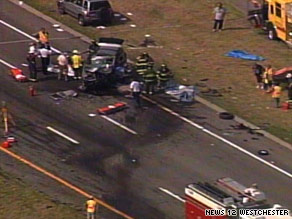 Eight people were killed in a three car accident about 20 miles North of New York City today. Unless you know the people involved, you probably read that and were not particularly affected by it. But it's all in the description. Do you feel differently about this one? Four children, as well as four adults, were killed in a three car accident in New York State today.
Conventional wisdom tells us that traumatic incidents involving children are harder than those that only involve adults. We all know that instinctively, but why is it true? It all comes down to the ever-present worldview. Most of us hold a set of beliefs on a gut level that are something like these:
- Children do not die
- Parents do not outlive children
- Bad things do not happen to good people
- Children are inherently good
- Parents have the obligation to keep children safe, and we can accomplish that goal
- Short lives are a waste
But with the possible exception of "children are inherently good" (and we can argue about whether short lives are a waste -- I really do not believe they are), none of these things are actually true. And in fact we know they are not true. So why are they so important to us that we lead our lives relying on them being true?
I find myself reminded of the scene in the movie Men in Black where Tommy Lee Jones' character says,
There's always an alien battle cruiser, or a Corellian death ray, or an intergalactic plague intended to wipe out life on this miserable little planet. The only way these people can get on with their happy lives is that they do not know about it!In other words, as you've heard me say before, we base our lives off of what is likely, not what is possible. We choose to ignore what we know to be true -- that tragedy is possible -- because if we lived in the shadow of tragedy all the time we would not be able to live at all. We choose not to know what we know. Until we read headlines like the one today, and we remember.
Subscribe to:
Posts (Atom)
Meet the Quarterback

- Naomi Zikmund-Fisher
- is a clinical social worker, former school Principal and a Crisis Consultant for schools and community organizations. You can learn more about her at www.SchoolCrisisConsultant.com

Subscribe


 Posts
All Comments
Posts
All Comments