Showing posts with label grief. Show all posts
Showing posts with label grief. Show all posts
Friday, September 9, 2011
Turn Into the Wind: Dealing With the 9-11 Anniversary and its Hype

All week I've been writing about how American society matches the symptom profile for Post Traumatic Stress Disorder. This morning, I took the first of those pieces to my writer's group, a small circle of women writers who share and respond to each other's work every Friday mornings. I knew it was not my best work, and I wanted feedback.
As usual, the group was very helpful, but one of their reactions caught me by surprise. Members felt that my writing was distressing (not in terms of quality, but in terms of topic), and that I needed to give information on how to deal with that distress. So I'm taking a detour from the exploration of PTSD in a post 9-11 society to help all you Quarterbackers out there as we head into the 10th anniversary of the attacks.
Perhaps the most important thing you should know is that, if you're feeling blah this week, or sad, or anxious, or irritable, or having trouble sleeping, or anything else that makes you feel "off," even if you do not consciously connect those feelings to this anniversary, you're normal. Anniversaries are very powerful, and quite often people who don't even realize that it is an anniversary have negative reactions nonetheless. This isn't helped by the terrorism alert for New York and Washington. What might be somewhat distressing anyway only feels magnified given the time of year.
You also aren't crazy if you are sick and tired of the anniversary coverage (although chances are you aren't reading this, so I may be wasting my breath). The extra coverage is draining because it prevents us from getting away from the intense memories and the feelings they evoke.
Whichever of these two groups you most identify with, you're normal. Don't waste one minute worrying that your reaction is too much or not enough or inappropriate, any more than you would criticize yourself for feeling pain when you stub your toe. You couldn't control those feelings if you wanted to, so don't bother trying.
But what can you do? If the coverage or the date or the blogging about our messed-up society is bothering you, what is the solution? You may not like the answer, because here's what it isn't. Turning off the TV, avoiding reading my blog, doing something completely non-9-11 related on Sunday and generally trying to get your mind off it may feel good for the moment, but it is a quick fix for a longer term problem. That's because problem isn't the reminders of the attack, it's how upsetting they are to you. Avoiding the reminders won't solve the underlying issue, it will just push it back underground.
What I suggest is completely counter-intuitive. When you find yourself having negative feelings -- sadness, fear, hurt, anger, guilt, shame or whatever -- don't try to turn away from them. Turn towards them. Identify what you are feeling and what caused it. Label them consciously. Don't try to explain it rationally, because emotions are not rational -- they're, well, emotional. Whatever you're feeling just is, so you might as well feel it.
The reason this is a good idea is that, when you turn and face your negative emotions, they stop feeling so overwhelming. Feelings, by themselves, do not hurt us. What we tell ourselves about those feelings and the events that trigger them can. No one likes to feel sad or afraid, but you can tolerate it. Your negative emotion loses its power when you acknowledge it and face it head on.
Does this mean you should glue yourself to the TV and watch as much coverage as you can this weekend? No. Just as avoiding reminders isn't healthy, seeking them out to excess isn't, either. Watch, read and hear what interests and moves you or is meaningful to you. Consider for yourself what type of commemoration, if any, you believe is appropriate for you to participate in. Just monitor yourself and be careful when you find yourself saying things like, "I can't watch that," "I want to get my mind off it," or "I won't be able to handle that." Those are signs you're avoiding, and you're not turning into the wind.
For me, this Sunday is about reclaiming September 11th as a day of grief and fear -- yes, I'm reclaiming fear -- and as a day of unity, service and collective support. I am allowing myself to feel the sadness and, as hard as it is, some of the horror of that day. And I'm patting myself on the back for doing it, because it isn't easy. I hope you'll join me.


Wednesday, September 7, 2011
Our Numbed Society: America's PTSD Part 2

Yesterday I shared the idea that America, as a society, is manifesting symptoms of PTSD. There are three sets of these symptoms, and today we'll be looking at symptoms of numbing. People with PTSD go to great lengths to avoid and/or numb themselves to feelings and experiences related to the trauma.
Specifically, to be diagnosed with PTSD, there must be at least three of the following symptoms present:
Efforts to avoid thoughts, feelings, or conversations associated with the trauma. Traumatized people often come across as angry. It's not that they don't have a right to be angry at the people who traumatized them. But they're often just angry all the time at everyone. Anger is a very effective defense mechanism against other, more uncomfortable feelings.
If there's one thing Americans are, it's angry. You need look no further than Capitol Hill. We don't just disagree, we think the other side is a threat and evil. We are locked and loaded. And we're rude.
So, what feelings are we avoiding? Fear. If you think back to how you felt on September 11, you weren't mad. You were horrified, and you were scared. Pretty quickly, you were sad. If someone had asked you if you were mad at the people who did this you would have said yes, but anger was not the primary emotion.
The thing is that fear doesn't feel good. It feels weak. So does sadness. Anger feels strong. So we stick with anger -- at each other, at other countries, at whomever. Do you remember that feeling of togetherness we all had right after the attacks? Have you wondered why we can't seem to get it back? Because we came together in fear and in grief, and as much as we might like togetherness, we don't want to go back and feel those things again.
Efforts to avoid activities, places, or people that arouse recollections of the trauma. There was a contingent of people who got mad at President Obama for visiting Ground Zero after bin Laden was killed. They said he was politicizing September 11th (and I would argue that ship sailed a long time ago, but let's put that aside). But Obama didn't go there to give a speech or do a victory lap. He went to lay a wreath. He went to acknowledge grief. That's a no-no.
Inability to recall an important aspect of the trauma. There are certainly things about 9-11 that none of us will ever forget, but here's a test question: Following the September 11th attacks, what was the stated motivation of Al Qaeda for attacking the U.S.? If you said something like, "They hate us for our freedoms," you're not alone -- that is our dominant societal narrative. It was started by President Bush the same week as the attacks. And, if I may be so bold, it's wrong. At the time of the attacks, Al Qaeda wanted the U.S. to withdraw its troops from bases in Saudi Arabia, which it considers sacred ground. We forgot the motivation for the attack almost as soon as it happened.
Markedly diminished interest or participation in significant activities. This is a tough one. "Significant activities" for individuals are easier to define. However, I'm struggling to remember the last time it seemed like everyone was having a joint experience -- like the last episode of M*A*S*H, or even the Superbowl. Is it me, or is it just harder for us to all decide that something, other than a disaster or trauma, is important these days?
Feeling of detachment or estrangement from others. We know who our allies are in official terms. But what foreign country do we as Americans truly respect as partners these days? I can think of no one. We have become a very lonely country in a lot of significant ways. You can blame politics or policies for this, but it's also the manifestation of a gut feeling that no one really understands us.
Restricted range of affect (e.g., unable to have loving feelings). As discussed above, our primary societal emotion is anger. We don't feel joint happiness or pride anymore. We don't "put aside politics" for any common purpose. We want Congress to compromise, as long as they don't compromise on the things we want. We have lost the ability to have mixed emotions, and changing one's mind about something is weak. This is what a restricted range of emotions looks like -- anger and black and white thinking with no nuance.
Sense of foreshortened future. There is a conventional wisdom in America that the United States is no longer a superpower, or that we won't be one for much longer. Polls show we believe America is headed in the wrong direction. Every new law or policy (passed or just proposed) on both sides of the aisle is met with doomsday scenarios about how it will mean the end of America as we know it. It's one thing to say you don't like an idea, and quite another to think we can't survive it. We don't, as a country, feel very confident about our future.
Tomorrow I'll look at the third cluster of symptoms -- hyper-arousal. Later in the week, we'll examine why 9-11 impacted us this way when other things didn't, and at what kind of "treatment" we might recommend for our traumatized society.

Thursday, May 27, 2010
In Memoriam: Gary Logan

I took my first Critical Incident Stress Management
 training class in 2003. It was offered through my school district and taught by two social workers from the county department of Community Mental Health. One of them was Gary Logan. Gary was, among other things, the coordinator of the county community CISM team, called the Traumatic Events Response Network (TERN). At the end of the class, he solicited volunteers who wanted to join the team. I signed up.
I'm not sure that Gary knew what to do with me at first. There are two categories of CISM responders: mental health professionals and peers (some would argue that there's also a third -- clergy). TERN, at that point, was entirely made up of mental health professionals because there was no one population it served. Where a team assisting police officers would have cops on it as peers, a team assisting all kinds of people doesn't know what kind of peers it needs. For the first few years, I was only tapped to respond when there was a crisis involving children or schools.
Gary and I consulted and worked with each other more frequently when he came to assist our district team -- which needed lots of school personnel as peers -- with crises in our schools. He was very interesting to watch and work with. He had a calm about him in everything he did, and it put people at ease. I learned from him how to explain complex psychological processes in language people could understand, how to grasp themes from what people were saying, and how to firmly state what you think is the right thing to do and accept that sometimes those in charge are not going to listen to you. I never saw him sweat.
A few years ago, when I decided to pursue a Certificate of Specialized Training in schools and children crisis response, I asked Gary to please include me on more critical incident stress debriefings, and he did. He started assigning me to respond as a peer outside of schools -- in community settings, businesses, and even responding to a group of mental health professionals from his agency following the murder of a client. When I floated the idea of becoming a CISM instructor, Gary wrote my recommendation and told me he thought I'd be great.
Over the last couple of years, Gary has invited me to substitute for him as the coordinator on call for the county team and even allowed me to coordinate a couple of responses myself, something I do as a peer in a school setting all the time but a rarity out in the "real world." He has expressed faith in me at every turn, strongly encouraging me to take on whatever I could, expand my consulting and, most recently, start considering earning a mental health degree myself. His confidence in me has been astounding, and it has increased my confidence in myself.
Over the years I have needed assistance more than once with crises in which I was affected myself. Gary was always my first call. Watching him from the "other side" of a response was amazing, and his support was so helpful to all of us. Whether I was responding or being responded too, Gary always reminded me to take good care of myself, and knew that I wasn't always so good at it without his reminders.
Gary retired when his department was cut at the end of last year. He continued to coordinate TERN as a contractor. Yesterday, he died suddenly during treatment for heart disease. He was 63. I doubt there will ever be anyone with as much faith in my crisis response skills as Gary. I also doubt there will be anybody I so readily call on in my own time of need. In fact, this morning, after I heard that he had died, I found myself wishing more than anything that I could talk it over with my friend and mentor, Gary Logan.
Tuesday, October 20, 2009
Murder at UConn: What If It's Not a One Time Thing?

University of Connecticut football player Jasper Howard got the game ball in the win over Louisville on Saturday. The next morning, he was dead, stabbed to death outside a college dance in the wee hours of Sunday morning. This case has all the criteria to catch the public's attention and traumatize a lot of people. Howard was young. His death was sudden. He was an expectant father. It's football season, and he was a college football star. He died on a college campus.
The memorials for Howard are underway. The team will wear his initials on their helmets when they play West Virginia this Saturday, and the campus is observing a "day of silence" for Howard today. The University Black Students Association is asking everyone to wear dark clothes in his memory as part of that observance. A candlelight vigil will be held tomorrow.
Properly honoring the memory of students who die suddenly is a tricky situation for schools and colleges. Obviously, educational institutions want to be respectful of students who are mourning and send a clear signal that they care about their own. In cases of violence, like this one, they are also trying to send the message that violence will not be tolerated on their campuses, and to give the community an outlet for their grief and a chance to come together rather than retaliate (if there is someone to retaliate at).
All of this, however, is predicated on the idea that such incidents are so rare that the observances are one-time events. If this is only going to happen at UConn once, then pulling out all the stops in honor of Howard's memory is more than appropriate. The problem, however, is that large campuses usually experience traumatic deaths more than once. Even though such an event is rare, someone else at a university as big as UConn either has been or will be murdered, be killed in a car accident, or die suddenly by some other means.
So, what is the UConn community willing to do in memory of these other students? Does it intend to hold vigils and proclaim days of silence for every student who dies? Every student who dies suddenly? Every student who is murdered? What are the criteria they are going to use to decide who gets a community-wide observance and who does not? And what will they say to the family and friends of the person who dies next week or next year and who want to know why their loved one is not as important as Howard?
When I talk to school administrators about appropriate ways to memorialize a student who died, I always advise them to consider whether what they do for that student is something they are willing to do for any student under the same circumstances. You cannot do something big for a popular student and ignore one who was less popular -- that is likely to be a disaster for everyone involved. You also have to be careful what you commit to. There are schools where they have commited to plant a tree in memory of every student or faculty member who dies, and the result is a "grove of death" which in some places is an attractive nuisance and in other places is a large area of campus where no one wants to set foot. If the death is a suicide, you have the additional concern that you don't want to make such a big deal out of honoring someone that others get the idea that suicide is a good way to get attention.
This is tricky, and I don't in any way mean any disrespect to the UConn community or Jasper Howard's family. They need to do what is right for them to process, heal and grieve. I just hope they are thinking this all the way through.
Thursday, October 8, 2009
Cause of Death Matters

Elizabeth Barrow was 100 years old and lived in a nursing home in Dartmouth, Massachusetts. She was in pretty good health, but it was hardly a surprise that she died last month. Hundred year old people die. What was a shock was how she died. She was strangled in her bed and a plastic bag was placed over her head and tied in place with a shoelace. When her family first learned of her death, they assumed that the bag had been placed there by someone trying to cover her body up, and that she had died of natural causes. The medical examiner suspected she might have killed herself. Now that it is clear that the cause of death was strangulation, a criminal investigation has been undertaken.
I don't think I've ever read about a situation that more clearly demonstrated the difference between trauma and grief. Obviously, Ms. Barrow's family was saddened by her death. She was a fixture in the family and they will miss her. But they were not shocked by her death initially. There was nothing particularly unexpected about a 100 year old person dying. As best as I can tell from various interviews that her son has given, the family experienced her death as a loss but also took time to celebrate her life, as we so often do when someone very old dies.
When the autopsy results ruled her death a homicide, the family was thrown out of the natural grieving process and straight into trauma reactions. Trauma also challenges what we think we know about life and death. In this case, that challenge was very literal -- the family thought they understood how Ms. Barrow had died, and then, all of a sudden, they didn't. It didn't help matters that the news that her death had been ruled a homicide was released to the press before the family, so the family learned of it from reporters. Several articles covering this story have used the word "reeling" to describe the family's reaction.
The reaction of the nursing home, while not terribly well worded, also hints at the way the cause of death in this case has thrown everyone for a loop. A statement released yesterday said,
We prepare for these eventualities as persons caring for the elderly who die of natural causes. This situation is especially tragic because the exact chain of events may never be known.And that is the heart of the matter. Yes, a death is a death. But a traumatic death offends our sensibilities, and we want to understand how it could happen. I hope the Barrow family gets their answers.
Tuesday, September 8, 2009
Asa Hill's Legacy

Last Thursday, a seven year-old boy from Buffalo named Asa Hill was critically injured in a car accident. He died on Friday night, and was buried yesterday. Asa's parents have been a couple since high school but were not married. Asa often asked them to get married, and they always told him they would, but it just hadn't happened. Yesterday, at the end of Asa's funeral, his parents finally tied the knot.
This is one of those stories that leaves me speechless. It is fascinating and horrible and touching and sad all at the same time. I don't know what useful box to put my reactions into. And of course, it's not about me, or you, or anyone else, it's about Asa's family. They have to make the choices that are right for them, and it is none of my business to tell them what they should or shouldn't do, let alone second guess their choices after the fact. But it is interesting to think about the pros and cons of Asa's parents' choice to get married when and how they did.
On the plus side, we have the fact that Asa clearly wanted this. Families in mourning often talk about what the deceased would have wanted. In this instance, there wasn't much question that Asa wanted his parents to get married. They may well come to view their marriage as a gift he left behind when he died, and to the extent that they frame it that way that is all for the good. Their decision to marry now also reinforces their commitment to support each other in what has to be the darkest time of their relationship.
On the minus side, it is a frequent mantra of early crisis intervention that you should not make important decisions immediately following a trauma. Action feels better than inaction following a critical incident, and people are prone to do fairly rash things -- buy a house, quit their job, drop out of school, move out of town, etc. -- because at the time it feels like that will help. When the dust settles, often they regret those decisions. I don't know whether Asa's parents really had intended to get married and figured they'd do it now, or made the decision now. If it's the latter, that could be problematic. In a similar vein, it's possible that his parents will not see their marriage as a blessing bestowed by their son, but as a tangible reminder of his death. If so, that can certainly cause difficulty for them down the road.
At least anecdotally, the number of couples who split up following the death of a child is pretty high. Asa's parents' decision to get married under these circumstances could be a move against that trend, or it could make them more likely to be part of that statistic. Time will tell.
In keeping with my personal religious tradition, I hope that Asa's memory is a blessing to his parents and that they know no further sorrow. I also wish them 120 years of happiness in their lives together.
Wednesday, August 26, 2009
When Your Hero Dies

At the end of June, I blogged about the death of Michael Jackson and how it wasn't a crisis. About three seconds after I posted it, I got my first inkling that I had perhaps not taken the correct tone in my post. It's not that Jackson's death, for most of us, was truly traumatic, but my tone trivialized what he meant to so many people. Over the summer that point has been driven home to me over and over.
What I now understand is that, as a white woman with no particular love of pop music, I had no particular attachment to Michael Jackson,
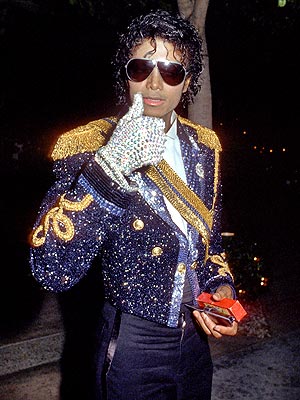 and I failed to realize that trivializing his death wasn't just trivializing people's grief, it was trivializing the racial and cultural experience in this country. I want to truly apologize for that. A death that is not traumatic is nonetheless a death, and grief is grief. I have been struggling for several weeks to figure out how best to bring this up, and today seems like the right day.
I say that because I was born and raised in a staunch liberal household in Massachusetts. Senator Edward Kennedy was an icon of my childhood. In 1980, I was old enough to be active in politics, and I supported Kennedy. My older brother worked in his Boston office one summer. He was what I understood a great politician was supposed to be. I was absolutely stunned, when I went away to college, to learn that Kennedy was not as revered elsewhere and that people used him as the joking example of liberalism gone too far. I never did.
Senator Kennedy wasn't perfect, by any means. I also grew up in a milieu where "Chappaquiddick" held the same sort of ominous tone as "Watergate." I was very confused when we spent summers on Martha's Vineyard and a youth swim meet was held in Chappaquiddick -- why would you hold it someplace bad? I knew that Kennedy was a drinker and that he had been kicked out of Harvard for cheating. Later on, I was appalled by his architecture of the No Child Left Behind Act, which in my mind was the worst law ever to come out of pure intentions.
Ted Kennedy also exemplified being able to go on with life despite traumatic loss, which he certainly suffered all too often, and despite the guilt of having caused traumatic death. Some would say that he never felt appropriately guilty about the death of Mary Jo Kopechne. That isn't for me to judge. But he certainly showed that that awful night was not the sum total of who he was, and he did not let it end his hopes for doing good in his life.
Anais Nin once said, "We don't see things as they are, we see them as we are." As a white liberal from Massachusetts, I cried when I heard that Kennedy had died. As African-American males growing up in the 80's, several of my friends cried for Michael Jackson. Neither are traumatic, both are sad. I should know better than to judge others' outpouring of emotion just because I don't see things the same way. I am imperfect, just like Kennedy and Jackson were. I hope that I can show that isn't the full measure of who I am, either.
The work goes on.
The cause endures.
The Hope still lives,
and the dream will never die.
Tuesday, August 11, 2009
Grief, Trauma and Traumatic Grief

I was recently asked to assist at a school where a student had died after a lengthy illness. The usual characters had assembled -- the Principal, the counselors, the social worker, the district communications person, and me on behalf of the crisis team. As we started to think about what needed to be done, one of the others at the table said,
Let's not have a secular response to a spiritual event.What a great way to put it. This child's death was very sad. Staff and students were grieving, and grieving hard. But they were, indeed, grieving. They were not traumatized. They didn't need intervention, they needed support. My colleague wasn't advocating prayer in public schools, he was advocating recognition that this event was fundamentally different than death from a car accident or a suicide.
I often run into trouble explaining this difference to people. Saying that a death isn't a critical incident, isn't a crisis or isn't a traumatic event is sometimes heard as saying that the event isn't hard or horrible, and that's not what I mean at all. It's just that grief and trauma are different.
If you look up the two words in the New Oxford American Dictionary, you find the following:
Grief: Deep sorrow, especially that caused by someone's death.
Trauma: Emotional shock following a stressful event or a physical injury, which may be associated with physical shock and sometimes leads to long-term neurosis.
The difference between trauma and grief does not have to do with how serious a situation it is, or even with how upset you are. Trauma, however, involves shock, and grief does not. You can see this when you talk to people who have experienced the traumatic death of a loved one. While they may feel sad, that sadness is not usually the primary emotion. Instead, they are shocked, angry, scared or in a state of disbelief.
You can see a difference in the signs and signals of distress that people exhibit with grief and with trauma as well. While those who are traumatized may cry, those who are grieving don't usually experience the numbness and physical ailments that come with trauma.
Traumatic incidents do, of course, very often cause grief. The death of a loved one in a car accident is still a death. What we find, however, is that the trauma gets in the way of the grief. Until people have processed the trauma and its effects, they can't really face and process their grief. The biggest mistake people make in dealing with trauma is trying to talk immediately about the loss and grief and skipping over talking about how it happened and all the reactions surrounding that. When someone dies, we think we're supposed to feel sad and talk about the person who died. We don't allow ourselves or others the room and time to deal with our own reactions to how it happened and to the shock.
On the flip side, it's easy for those of us trained in trauma intervention to treat everything like a trauma, even when it's not. Once an organization has a CISM team, they often want to do CISM for everything. But the C and the I in CISM stand for Critical Incident, and while those trained in CISM may have some good people skills, the techniques of CISM are not designed for uncomplicated, non-traumatic grief.
I don't know if I'd say that trauma is secular and grief is spiritual, but I see what my colleague is getting at. And if it helps us remember to use the right tools at the right time, I'm all for saying that we shouldn't use a secular response for a spiritual event.
Subscribe to:
Posts (Atom)
Meet the Quarterback

- Naomi Zikmund-Fisher
- is a clinical social worker, former school Principal and a Crisis Consultant for schools and community organizations. You can learn more about her at www.SchoolCrisisConsultant.com

Subscribe


 Posts
All Comments
Posts
All Comments