Showing posts with label Barack Obama. Show all posts
Showing posts with label Barack Obama. Show all posts
Thursday, September 8, 2011
America's PTSD Part 3: Society on Edge


We're continuing to look at the ways American society is manifesting behaviors indicative of PTSD in the wake of the 9-11 attacks. Today's topic is the third cluster of symptoms, "Hyper-Arousal." People with PTSD are, in many ways, in a permanent state of fight or flight. They are overly alert and on guard. So are we.
People with PTSD have at least two of the following symptoms:
Difficulty falling or staying asleep. It's somewhat difficult to judge how much of America's current sleep deprivation has happened since 9-11. It is certainly well documented that on average we don't get enough sleep. What's more, we don't value sleep as a society. Few people work in places where the boss will tell you not to come in if you're tired. In fact, we don't consider exhaustion do be a legitimate reason to take a sick day -- that's faking. More and more, our institutions function on the assumption that we are awake at all hours. Congress works into the wee hours of the morning. The funniest television is on past 11. The announcement of the death of Osama bin Laden was made late at night even though it had happened hours before -- couldn't it have waited until the morning? We assume no one is sleeping, and we may be right.
Irritability or outbursts of anger. I talked at some length about how angry we are as a society in yesterday's post. Everything is a place to draw the line, make a stand and stand our ground. You're either with us or against us, with us or with the terrorists. Comparisons between politicians, political parties, grassroots organizations and the Nazis are so common we're not even surprised anymore when someone makes them.
Difficulty concentrating. Let's face it. The American public has the attention span of a flea, with apologies to all the hardworking fleas out there. The "news cycle" is getting shorter and shorter and it is easier and easier to push a big story out of it. We can't stick with a substantive news story for more than a day. A mass shooting or a celebrity wedding, sure, but not hunger, poverty, public policy or the wars. We're on to the next.
Hyper-vigilance. Consider this. The risk of a terrorist attack on American soil was no different on September 12, 2001 than it was on September 10, 2001. Does that even seem possible to you? It barely does to me. What changed on September 11 was not the risk, but our knowledge of the risk. And since then, we're constantly looking for the next one.
You can make a reasonable argument that we should be more vigilant than we were before. We were naive, and now we know. We're smarter than we were. The thing is, we're not only vigilant in smart ways. We are constantly trying to prevent whatever plot was the last one, successful or not. We take off our shoes, put up with backscatter screening and don't carry liquids on planes because those steps might have prevented a previous attempt, not because we have any reason to think anyone's going to try them in the future.
We profile Arabs and Muslims horrifically. A report that came out in the last couple of days indicates that the Mall of America has been reporting people, two thirds of them non-white, for such suspicious and sinister behavior as forgetting their cell phone at the food court or pacing outside the bathroom while they wait for a companion. This isn't just a lesson learned, it's hyper-arousal.
What's more, we seem to also be defending against entirely imagined threats. The fact, for example, that Sarah Palin said that Paul Revere was telling the British they weren't going to be taking away our arms was not just wrong, it was weird. There's a segment of society that has been obsessed with the idea that the government, or more specifically the Obama administration, is trying to take their firearms. We're more than two years into Obama's term, and not one gun control measure has been proposed. We're afraid of being unable to defend ourselves and sure that that's what "they" want, but it's not based in reality.
Exaggerated startle response. Last year, a major international terrorism scare was triggered by someone shipping watches that were taped together. A plane was grounded because a man was putting on tefillin, the leather boxes with straps that Orthodox Jewish men wear when they pray. We're a little bit jumpy.
A couple of years ago, I was flying from Washington, DC to Detroit with my family. There are four of us, so it often winds up that the two kids sit with one parent and the other sits alone. On this occasion, I was alone. The man sitting next to me put his bags in the overhead compartment and sat down. I wasn't paying much attention. Then he spoke to me, in good but accented English: "My name is Ahmed. I am a dentist from Toledo. You are safe." How jumpy must the average member of the traveling public be around Arab men on planes that Ahmed felt he needed to say that before I even registered him at all?
So, we've established that we're all acting in very PTSD-congruent ways. But why did 9-11 do this to us in a way that the Kennedy assassination, the Oklahoma City bombing or the Challenger disaster did not? I'll be looking at that tomorrow.


Wednesday, September 7, 2011
Our Numbed Society: America's PTSD Part 2

Yesterday I shared the idea that America, as a society, is manifesting symptoms of PTSD. There are three sets of these symptoms, and today we'll be looking at symptoms of numbing. People with PTSD go to great lengths to avoid and/or numb themselves to feelings and experiences related to the trauma.
Specifically, to be diagnosed with PTSD, there must be at least three of the following symptoms present:
Efforts to avoid thoughts, feelings, or conversations associated with the trauma. Traumatized people often come across as angry. It's not that they don't have a right to be angry at the people who traumatized them. But they're often just angry all the time at everyone. Anger is a very effective defense mechanism against other, more uncomfortable feelings.
If there's one thing Americans are, it's angry. You need look no further than Capitol Hill. We don't just disagree, we think the other side is a threat and evil. We are locked and loaded. And we're rude.
So, what feelings are we avoiding? Fear. If you think back to how you felt on September 11, you weren't mad. You were horrified, and you were scared. Pretty quickly, you were sad. If someone had asked you if you were mad at the people who did this you would have said yes, but anger was not the primary emotion.
The thing is that fear doesn't feel good. It feels weak. So does sadness. Anger feels strong. So we stick with anger -- at each other, at other countries, at whomever. Do you remember that feeling of togetherness we all had right after the attacks? Have you wondered why we can't seem to get it back? Because we came together in fear and in grief, and as much as we might like togetherness, we don't want to go back and feel those things again.
Efforts to avoid activities, places, or people that arouse recollections of the trauma. There was a contingent of people who got mad at President Obama for visiting Ground Zero after bin Laden was killed. They said he was politicizing September 11th (and I would argue that ship sailed a long time ago, but let's put that aside). But Obama didn't go there to give a speech or do a victory lap. He went to lay a wreath. He went to acknowledge grief. That's a no-no.
Inability to recall an important aspect of the trauma. There are certainly things about 9-11 that none of us will ever forget, but here's a test question: Following the September 11th attacks, what was the stated motivation of Al Qaeda for attacking the U.S.? If you said something like, "They hate us for our freedoms," you're not alone -- that is our dominant societal narrative. It was started by President Bush the same week as the attacks. And, if I may be so bold, it's wrong. At the time of the attacks, Al Qaeda wanted the U.S. to withdraw its troops from bases in Saudi Arabia, which it considers sacred ground. We forgot the motivation for the attack almost as soon as it happened.
Markedly diminished interest or participation in significant activities. This is a tough one. "Significant activities" for individuals are easier to define. However, I'm struggling to remember the last time it seemed like everyone was having a joint experience -- like the last episode of M*A*S*H, or even the Superbowl. Is it me, or is it just harder for us to all decide that something, other than a disaster or trauma, is important these days?
Feeling of detachment or estrangement from others. We know who our allies are in official terms. But what foreign country do we as Americans truly respect as partners these days? I can think of no one. We have become a very lonely country in a lot of significant ways. You can blame politics or policies for this, but it's also the manifestation of a gut feeling that no one really understands us.
Restricted range of affect (e.g., unable to have loving feelings). As discussed above, our primary societal emotion is anger. We don't feel joint happiness or pride anymore. We don't "put aside politics" for any common purpose. We want Congress to compromise, as long as they don't compromise on the things we want. We have lost the ability to have mixed emotions, and changing one's mind about something is weak. This is what a restricted range of emotions looks like -- anger and black and white thinking with no nuance.
Sense of foreshortened future. There is a conventional wisdom in America that the United States is no longer a superpower, or that we won't be one for much longer. Polls show we believe America is headed in the wrong direction. Every new law or policy (passed or just proposed) on both sides of the aisle is met with doomsday scenarios about how it will mean the end of America as we know it. It's one thing to say you don't like an idea, and quite another to think we can't survive it. We don't, as a country, feel very confident about our future.
Tomorrow I'll look at the third cluster of symptoms -- hyper-arousal. Later in the week, we'll examine why 9-11 impacted us this way when other things didn't, and at what kind of "treatment" we might recommend for our traumatized society.

Wednesday, July 6, 2011
Policy Change: President to Send Condolences Following Suicides
President Obama announced today that he would change the long-standing practice, in existence at least since the Clinton administration, that the President does not send a letter of condolence to families of servicemen and women who die by suicide, even in a combat zone. Obama will begin to send such letters, just as he does to families of military members who are killed in action. Obama said he was making the change to emphasize that people who need mental health care in the military are not weak and should not be stigmatized.
I first wrote about this issue in November, 2009, when the drive to change the policy was relatively new. Since then, I have begun working with veterans with PTSD directly, and have a lot more first-hand knowledge of what the state of mental health care and stigma is in our armed forces. When I went back to read my thinking from 18 months ago, however, I found that it really hasn't changed much. There were pros and cons then, and there are pros and cons now. So I'm reprinting my original post, below.
I want to make it absolutely clear that I fundamentally believe that deaths by suicide are, without question, service-related and/or combat-related deaths. My ambivalence about this policy comes not out of any desire to stigmatize these families or lessen the importance of the sacrifice, but rather out of my number one priority, which is to prevent as many of these deaths as we can.
**********************************
Wednesday, November 25, 2009
Should the President Send Condolences When a Soldier Kills Himself?
 If your loved one dies while serving in the United States Military, whether they are killed in action or by accident, you will receive a letter of condolence from the President. Presidents have been doing this since Abraham Lincoln. If your loved one serves in the military and kills themselves, however, you will get many of the same things that other families get, but you will not receive a letter from the Commander in Chief. That has been true at least since the Clinton administration.
There is a push on from some military suicide survivors to change that policy. They argue that their loved ones died in service of their country, certainly as much as someone who was killed in an accident. The injuries they suffered were not visible, but they were certainly service related. Their families deserve the same consideration from the President as anyone else's, and to do so would go a long way towards reducing the shame that has for so long been associated with death by suicide, particularly in the military.
This is one of those issues which, spun the way these families and the press coverage are spinning it, seems pretty clear cut. Of course being a suicide survivor should not have stigma associated with it. These families are grieving just as much as any other, and deserve all the support we can give them.
There is a problem, however. One of the rules of thumb in responding to a suicide and memorializing people who die by suicide is that you in no way want to glorify the act of killing yourself. When you have grand ceremonies to honor their memory, you run the risk that someone else who is considering suicide will, consciously or unconsciously, view killing themselves as a means to get that kind of attention for themselves and their families. This is probably more of an issue with teenagers, who aren't fully able to appreciate the consequences of any action because their brains are not yet fully developed, but it remains an issue for others, too.
I don't know that I have a good answer for this. On the one hand, families who are survivors of military suicides should not be treated with any kind of stigma. They deserve our honor and support in a very, very difficult and complicated time. On the other hand, there is an argument to be made that even what is already done for these families -- receiving a folded flag, a 21 gun salute at the funeral -- let alone a letter from the President might look pretty appealing to a soldier considering suicide. They might think that in death they can bring honor to their family that they feel they could not bring in life.
Taking away the stigma associated with suicide in the military may well save lives by making soldiers more willing to seek help. The question is, by honoring grieving families properly, how many lives will we lose?

Wednesday, May 4, 2011
Should the Bin Laden Pictures Have Been Released?

Today, the White House announced that President Obama has decided not to release photographs of Osama bin Laden's dead body. As reported in the press, there was some disagreement over whether releasing them would be a good idea. One view was that it would convince people that he is actually dead. The other was that it would "inflame" his followers, in part because it might be seen as an act of disrespect.
I actually don't have any opinion about whether either of these arguments is true. I was interested, however, that, at least publicly, a third issue was not being discussed. These pictures are described as "gruesome." What effect would seeing them have on your average person on the street?
I myself don't really need to see "gruesome" images. Just as I felt triggered by listening to audio of people screaming on 9-11, I find certain kinds of images very disturbing. Over the years, for example, I have studiously avoided the video of people jumping out of the twin towers. I don't need to see it to understand what happened, but seeing it is too vivid for me. It takes me from the reasonable point of needing to understand others' trauma to being traumatized myself.
Now, it's perfectly reasonable to say that we don't censor the press to protect Naomi Zikmund-Fisher from objectionable images. If I don't want to look, I won't -- just as is the case with the 9-11 videos. This relies, however, on media outlets handling the images in a manner that acknowledges that not everyone wants to see them, or wants their children to see them.
I vividly remember the day more than 4 years ago when I hooked up my laptop to a projector to show a website to some kids, opened my browser (which had CNN as its startup page) and was confronted by -- and confronted my students with -- a picture of the Virginia Tech shooter
 aiming a firearm at the camera. I had some explaining to do to some parents, and I wished CNN
 had made it just a tiny bit harder to see those pictures.
This is a free society, and we don't censor our press. If my sensibilities, or even the sensibilities of a lot of people, were the sole issue, the pictures of bin Laden should have been released. The President has decided not to, and I know that a lot more went into that decision than whether they would be traumatizing to the average American. This is a good occasion to remember, however, that sensory input -- sights, sounds, smells, tastes and feelings -- can trigger very strong emotional reactions, much more intense than just hearing about a traumatic event. While we shouldn't prohibit them, we should be careful about exposing people to them by accident.

Tuesday, May 3, 2011
Bin Laden Coverage: Protecting Our Kids and the Kid Inside All of Us

Yesterday, I shared with you my thoughts about explaining Osama bin Laden to children. I was apparently not the only person worrying about this. Time
 ran a piece which began,
 President Obama certainly wasn't taking the sensibilities of West Coast children into consideration when he made his stunner of a speech Sunday night.Parents in the Pacific time zone found themselves scrambling to explain the news in real time, and some of them were pretty unhappy about it.
While I certainly understand the problems of trying to explain this stuff to kids -- that's why I wrote yesterday's piece in the first place -- I will admit to feeling a little frustrated with those who would make this complaint. If there was one thing we all should have learned from 9-11, it is that live television is unpredictable. Anything can happen at any time. Part of being a parent is recognizing this and using it to make decisions about whether your children can watch TV, and whether you will choose to watch things live. Part of being a parent is also realizing that kids will inevitably ask about things we'd just as soon they not know about, and we have to answer the questions when they come.
In addition, speaking as someone from the east coast, Obama's speech didn't start until way past my bedtime. If he had waited until every kid in the country was asleep, he wouldn't catch a whole lot of adults, either. News happens when it happens. If you don't want your kids to see it, don't turn on the news.
That having been said, I have been somewhat appalled by what some media outlets have chosen to run in their coverage of bin Laden's death. Yesterday afternoon I was listening to "Here and Now," a public radio show from WBUR in Boston. They had the usual talking heads discussing the implications of bin Laden's death, which was all well and good. At the very end, the host said that his death also brought us "back in time" to 9-11. They then proceeded, with explanation of what each clip was, to play the audio of the second plane hitting the World Trade Center (complete with screaming), audio of someone who died in the towers on the phone, and audio of a very frightened voicemail message left by someone who died.
I cried. Then I got mad. Don't get me wrong, I certainly understand that this weekend's events bring back memories of 9-11, and to some extent they will trigger any unresolved trauma we all have. But wasn't the memory enough? Did we really need the extra boost of some vivid sensory input? Did we need to invade the privacy of dead people just one more time? Were they afraid we wouldn't remember unless they retraumatized us? And if you're worried about the sensibilities of children, would you want your kids hearing that with no warning at all?
9-11 is unique in our collective experience because it was a trauma for almost everyone in the country. That means that, in planning what to broadcast, you have to treat everyone in the audience as a trauma victim. You wouldn't force the victim of a shooting, for example, to listen to the audio of the incident without a good reason. We all deserve a little less sensationalism and a little more respect for how raw this still feels.
* The artwork on this post, like yesterday's, comes from the FEMA website and was created by a 5th grader at Chagrin Falls Intermediate School for the 1st anniversary of 9-11.

Saturday, July 31, 2010
The Courage of Lisa Marie Iyotte
On Thursday, President Obama signed the Tribal Law and Order Act of 2010. Now, this is not a political blog and I generally try to keep direct discussion of politics and politicians out of it, but something happened at the signing ceremony that I think is really important.
President Obama was to be introduced by Lisa Marie Iyotte, a member of the White Clay People and, like one third of Native American women, a survivor of rape. I encourage you to watch the beginning of the video of the ceremony for yourself:
It's hard to watch this video and not be moved. Scratch that -- it's hard to watch this video.
What I want to point out is that the rape that Ms. Iyotte talks about happened more than 16 years ago. She clearly has found a way to deal with it, and now works as an advocate for other women. At the same time, she is unable even to stand up and introduce herself, knowing that she is going to tell the story. Of course, Ms. Iyotte was nervous. You would be too if you were introducing the President, regardless of your politics. This was also an emotional day, for something she had worked long and hard for was finally coming to fruition. Even acknowledging all of that, however, I doubt it accounts for her tears.
This was a triggering event. Even if you've done a pretty decent job of processing a traumatic experience, there will still be times when thinking about it, or about something similar to it, upsets you. To his credit, President Obama both tried to be comforting and continued to listen. He could just as easily have told her not to continue, or otherwise taken the attention off of the power of the moment. Survivors of trauma need to be heard, even through the tears, and he is to be commended for modeling that.
The courage of Lisa Marie Iyotte is not only exemplified by the fact that she is a survivor, that she has used this experience to help others, or that she volunteered to tell her story. Her courage is also exemplified by the fact that she started to cry, and stood there, and told her story anyway. That is how we know that this trauma has not defeated her -- she wouldn't let it.
President Obama was to be introduced by Lisa Marie Iyotte, a member of the White Clay People
and, like one third of Native American women, a survivor of rape. I encourage you to watch the beginning of the video of the ceremony for yourself:It's hard to watch this video and not be moved. Scratch that -- it's hard to watch this video.
What I want to point out is that the rape that Ms. Iyotte talks about happened more than 16 years ago. She clearly has found a way to deal with it, and now works as an advocate for other women. At the same time, she is unable even to stand up and introduce herself, knowing that she is going to tell the story. Of course, Ms. Iyotte was nervous. You would be too if you were introducing the President, regardless of your politics. This was also an emotional day, for something she had worked long and hard for was finally coming to fruition. Even acknowledging all of that, however, I doubt it accounts for her tears.
This was a triggering event. Even if you've done a pretty decent job of processing a traumatic experience, there will still be times when thinking about it, or about something similar to it, upsets you. To his credit, President Obama both tried to be comforting and continued to listen. He could just as easily have told her not to continue, or otherwise taken the attention off of the power of the moment. Survivors of trauma need to be heard, even through the tears, and he is to be commended for modeling that.
The courage of Lisa Marie Iyotte is not only exemplified by the fact that she is a survivor, that she has used this experience to help others, or that she volunteered to tell her story. Her courage is also exemplified by the fact that she started to cry, and stood there, and told her story anyway. That is how we know that this trauma has not defeated her -- she wouldn't let it.
Monday, May 3, 2010
The Big Story of the Weekend (no, not that one)
This weekend someone packed a bunch of explosive and flammable material into an SUV and parked it in Times Square in New York. The investigation of this is the number one most popular story on Google News today, and I am not going to blog about it. President Obama gave the commencement speech at the University of Michigan here in Ann Arbor, and I'm not blogging about that either. Thousands of gallons of oil are threatening the Gulf Coast, and I probably will blog about that tomorrow. Massachusetts is still without drinking water, and I blogged about that yesterday. You probably knew about all of these things (perhaps not the U of M
 story, but you would if you lived here).
Early this morning, Detroit police officers responding to shots fired in a vacant apartment were ambushed. Four were wounded, one was killed. Officer Brian Huff became the first line of duty death in the Detroit Police Department
 since 2004. The national press barely covered it. The Ann Arbor press, 40 minutes from Detroit, didn't cover it at all. Neither did the Michigan-wide public radio affiliate.
Certainly a lot more people are affected by the Massachusetts water situation and the oil spill in the Gulf. The President speaking in town is pretty rare. The bomb in Times Square affected a lot of people directly, and scares a lot of people vicariously. All of these things are important.
In a typical year, there are less than 70 police officers nationwide that are killed by suspects. Michigan has had two this year, but had none last year. This isn't terribly common. It may not affect as many people as some of the other stories, but those it does impact are affected much more severely. Frequent Quarterbackers may recall that there is a whole Critical Incident Stress Management course just on responding to the 5 most serious types of incidents. Not only is death in the line of duty one of those, but there is actually an additional course just on that.
So why did Officer Huff's death and his colleagues' shootings get so little attention? I think there are two reasons. First, there was a lot of news affecting a lot of people this weekend, which meant that this story had to more actively compete for coverage. Second, Detroit has a lousy reputation for high crime. In other words, people think that this sort of thing is about par for the course in Detroit. This is especially ironic since, although Detroit's crime rate is high, its rate of line of duty deaths for police officers isn't. By any objective standard, this ought to be a big story. We just don't make those judgments by objective standards.
There is no community in this country for which a police officer shot in the line of duty feels normal. The Detroit press is covering this story closely. It's the rest of us, outside (but not all that far outside) of Detroit that are turning a blind eye. We think "those people" in "that city" expect this sort of thing. Unfortunately, we think wrong.
Sunday, April 18, 2010
The State Funeral Without the State

Polish President Lech Kaczynski and his wife Maria were buried today in Krakow, just over a week after the plane on which they were traveling went down in the fog in Russia. Usually, when a head of state dies, other world leaders, or at least their designees, attend the funeral. Not this time. Many leaders were unable to attend due to the difficulties with air travel in Europe caused by the recent eruption of Eyjafjallajokull, a volcano
 in Iceland which has sent ash into the skies over the continent and halted air travel in countries to the north. Leaders of the United States, France and Germany were among those who canceled their plans to fly to Poland to pay tribute to the Kaczynskis.
One of the feelings that people often report following a traumatic incident is a sense of disbelief that the world is continuing about its business when something so awful has happened. When you are feeling completely stopped in your tracks, it's easy to expect, on some level, that everyone else will be, too. This feeling is only stronger when an event has affected a lot of people, or even a whole country, as it has in this case. I remember distinctly the feeling that, after 9-11, it was fitting that there be no air travel. It wasn't just about security, it was that no one should move when the world had gone so crazy.
In that sense, you might think that the Icelandic volcano and its attendant flight disruptions would feel "right" to the people of Poland
 . After their "stop the world" moment -- the death of so many government officials on one plane -- the world had to come, at least somewhat, to a stop. Something apocalyptic in their lives was paired with something apocalyptic in nature. It seems fitting.
The problem is that when something big happens and we feel like the world should stop, we most commonly feel like the world should stop and pay attention to what has happened. This is what happened after 9-11, when in fact people weren't flying because of what had happened, and when the whole world did seem focuses, if only for a brief time, on what was happening to us in the United States. The week of the attacks, at the changing of the guard at Buckingham Palace in London, the band played "The Star Spangled Banner." It seemed to align. But that is not what happened this week. The natural world did something big, yes, but that something not only had nothing to do with Poland's tragedy, it actually prevented the rest of the world from focusing fully on Poland's mourning.
The fact of the matter is that the world does not stop turning when there is a critical incident. As much as it may pain us, most people keep on living their lives even when we feel like we can't. Friends may help and support us, but they cannot feel what we are feeling. And nature may seem to echo our anguish, but, in the end, a volcano can't empathize with us, either.
Note: In my lifetime, I think the most salient example of nature mirroring current events happened in October, 2004. For the first time in 86 years, the Boston Red Sox
 won the World Series, and there was a lunar eclipse the same night.
Tuesday, March 9, 2010
Bachelor Number 1
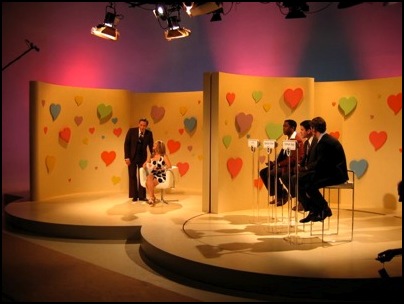
Back in 1978, a woman named Cheryl Bradshaw was on the TV game show "The Dating Game." For those of you who are younger than I, this show entailed a "bachelorette" interviewing three eligible bachelors whom she could not see. At the end, she picked one to go out with. Cheryl Bradshaw picked bachelor number 1, although reports indicate she didn't go out with him. It turns out that he already had a felony conviction for raping an 8 year-old girl (something, one presumes, that Bradshaw didn't think to ask about on the show). The year after his appearance, he embarked on a career as a serial killer, murdering four women and a girl. The closing arguments in the penalty phase of his trial were today.
The "Dating Game" angle to this story came to light because one of the other bachelors came forward to share his recollections of bachelor number 1. He refers to him as "creepy" and says there was something about him, even then, that made him want to get away. It's hard to know how much of that reaction was real 32 years ago and how much is a projection based on current knowledge. It's also hard to know whether the other bachelor is motivated purely by what he perceives as newsworthy information or by self-promotion.
The person I'd really like to hear from, however, is Cheryl Bradshaw. News reports indicate that she refused to go out with the bachelor she picked, and I'm guessing she's pretty glad about that now. She had a brush with death 32 years ago without knowing it.
We all make choices every day that affect the outcome of our lives. It's not at all unusual to look back at past romantic interests and wonder what might have been different had you made a different choice. I have a cousin who, in her college days, turned down a fellow student named Barry Obama for a date. Imagine the possibilities.
In fact, it's impossible to know what might have been. Had my cousin made a different choice, she might be first lady today. She might also have gone out with him once and decided he wasn't for her. Or he could have, with a different choice of mate, gone in a totally different direction with his career, never entering politics at all.
The same uncertainty exists for Bradshaw. If she had gone out with bachelor number 1, she might be dead. She might have entered a life of crime herself. She might have left it at one date and it would have made no difference. He might have mended his ways. We will never know, and there isn't a whole lot of point in speculating.
I can only imagine, however, that learning what this man went on to do has given her a little bit of pause, and I think we can all forgive her for thinking about what might have been, no matter how pointless it may be. Her connection to this man has to at least give her a passing shiver.
Wednesday, November 25, 2009
Should the President Send Condolences When a Soldier Kills Himself?
If your loved one dies while serving in the United States Military, whether they are killed in action or by accident, you will receive a letter of condolence from the President. Presidents have been doing this since Abraham Lincoln. If your loved one serves in the military and kills themselves, however, you will get many of the same things that other families get, but you will not receive a letter from the Commander in Chief. That has been true at least since the Clinton administration.
There is a push on from some military suicide survivors to change that policy. They argue that their loved ones died in service of their country, certainly as much as someone who was killed in an accident. The injuries they suffered were not visible, but they were certainly service related. Their families deserve the same consideration from the President as anyone else's, and to do so would go a long way towards reducing the shame that has for so long been associated with death by suicide, particularly in the military.
This is one of those issues which, spun the way these families and the press coverage are spinning it, seems pretty clear cut. Of course being a suicide survivor should not have stigma associated with it. These families are grieving just as much as any other, and deserve all the support we can give them.
There is a problem, however. One of the rules of thumb in responding to a suicide and memorializing people who die by suicide is that you in no way want to glorify the act of killing yourself. When you have grand ceremonies to honor their memory, you run the risk that someone else who is considering suicide will, consciously or unconsciously, view killing themselves as a means to get that kind of attention for themselves and their families. This is probably more of an issue with teenagers, who aren't fully able to appreciate the consequences of any action because their brains are not yet fully developed, but it remains an issue for others, too.
I don't know that I have a good answer for this. On the one hand, families who are survivors of military suicides should not be treated with any kind of stigma. They deserve our honor and support in a very, very difficult and complicated time. On the other hand, there is an argument to be made that even what is already done for these families -- receiving a folded flag, a 21 gun salute at the funeral -- let alone a letter from the President might look pretty appealing to a soldier considering suicide. They might think that in death they can bring honor to their family that they feel they could not bring in life.
Taking away the stigma associated with suicide in the military may well save lives by making soldiers more willing to seek help. The question is, by honoring grieving families properly, how many lives will we lose?
Sunday, September 20, 2009
Is it Ever OK to Lie to Prevent Panic?

On CNN this morning, President Obama talked about his family's plans for H1N1 prevention. He said that the "Obama Family Plan" is to
call up my Secretary of Health and Human Services, Kathleen Sebelius, and my Centers for Disease Control Director, and whatever they tell me to do I will do.He continued on to say that he intended to be vaccinated, but that he understood that he was not in a high risk category:
We want to get vaccinated. We think it's the right thing to do. We will stand in line like everybody else. And when folks say it's our turn, that's when we'll get it.He said he expected that his daughters would receive the vaccine first, and "I suspect that I may come fairly far down the line."
On the face of it, this is a fairly masterful piece of crisis communication. Through his example, Obama conveyed three important messages:
- Follow the current recommendations of HHS and the CDC, whatever they are,
- Get vaccinated and,
- You may have to wait for a vaccine, and it's important to let those more high risk than you go first.
There is one thing, however, that truly bothers me about this response, and that is that it is almost certainly not true. I completely believe that Obama is going to follow the HHS and CDC recommendations and that he intends for his family and him to be vaccinated. What I don't believe for an instant is that he is going to wait for the vaccine.
For the record, I am not arguing with whomever is going to make the decision if they think the President should get it early. While he is at relatively low risk of dying from H1N1, his death is a very high risk event for everyone else. If he gets the vaccine first, it's fine with me.
So the question is, how do I feel -- how do you feel -- about him lying about it. One major rule of crisis communication is that you don't lie, even if you think people shouldn't know about something. That's because when your lie is found out, no one will listen to you on anything else. On the other hand, it's a lot more difficult to convey that people should wait their turn for the vaccine when your turn is on a completely different system than everyone else's.
In July, President Obama was asked if he would like to be covered by his proposed health insurance plan, and he said,
You know, I would be happy to abide by the same benefit package. I will just be honest with you. I'm the president of the United States, so I've got a doctor following me every minute which is why I say this is not about me. I've got the best health care in the world. I'm trying to make sure that everybody has good health care, and they don't right now.This is the sort of answer I would have preferred him to give to the H1N1 question. He could have said,
We will go with the recommendations of the CDC and HHS. That most likely means that we will be vaccinated. And because I'm the President, the secret service may well have their own ideas of when I should be vaccinated. But if they tell me to wait, I will wait, because I know that people in my age group are fairly low risk.You can argue that technically he didn't lie -- he said he would follow the recommendations and get vaccinated "when it's our turn." I think that would have more credibility if he acknowledged that his turn is likely before almost anyone else's.
Subscribe to:
Posts (Atom)
Meet the Quarterback

- Naomi Zikmund-Fisher
- is a clinical social worker, former school Principal and a Crisis Consultant for schools and community organizations. You can learn more about her at www.SchoolCrisisConsultant.com

Subscribe


 Posts
All Comments
Posts
All Comments