Showing posts with label sexual assault. Show all posts
Showing posts with label sexual assault. Show all posts
Friday, December 16, 2011
What Breaking the Silence Really Means


Just over a month ago, I was blogging, as was pretty much every other blogger out there, about the Penn State child sex abuse scandal. I wrote about how hard it is to know what you don't want to know and see what you don't want to see. I wrote about breaking the silence and creating a world where things like this didn't happen and children knew they'd be believed and supported if they did.
Today brings us a story that I would like to offer as exhibit A in my argument that this is a cultural phenomenon and that we as a society need to create a cultural context that does not allow it. At Rosemount High School in Minnesota they held a "pepfest" last week. During this, and organized by school officials, Captains of various teams were blindfolded and told they were going to get a kiss from "someone very special" and they had to guess who. Then each of their opposite-sex parents came out and started to kiss them.
Now, apparently this is a not uncommon prank, and generally mom comes out and gives sonny boy a peck on the cheek, and he thinks it's some girl, and he's embarrassed in front of his schoolmates. We can argue about whether that's a good idea, but it's not inherently evil. But that's not what happened here. In a video that has gone viral, we see the parents lock lips in passionate, make-out kisses. One parent rolls with their child on the floor. A mom can clearly be seen placing her son's hand on her rear end.
The most common reaction I've seen to this is something along the lines of "What the heck were they thinking?!?!" and I certainly echo that sentiment. But I want to put something of a closer focus on what is wrong here.
This "prank" involves parents doing something with their children that, if we saw them do in any other context at all, we would not only think was inappropriate, we would feel obligated to intervene. If one of these children told us that their parent had done this to them in any other context, those of us in education or human services would be obligated, by law, to report it to child protection authorities. If a teacher did this, they'd be fired.
Consider this. Statistics tell us that at least 5% of the boys and 15% of the girls attending this assembly have been or are being sexually molested. Some of them are being molested by a parent. They already feel like they can't tell, like no one will believe them, like no one will protect them. Then they go to pepfest, and see this, arranged by adults, condoned by adults and performed by adults. Can you imagine any stronger message that no one is going to help them or care what they're going through? And God forbid that one of the Captains is being molested at home. Now they got to have it happen in front of the whole school.
As long as we think that adults sexualizing teenagers is OK, or even funny, we are not going to be effective at protecting them from sexual predators. Saying that pedophelia is bad is not the same as stopping it. Child sexual abuse is about failure to respect boundaries between adults and children. We have to show our kids and our adults that we will enforce those boundaries every day in every way, period. If it's going to stop, it stops not just when a rape is in progress. It stops at pepfest, too.


Friday, November 11, 2011
We Are Penn State

By now, you probably know what happened. At least eight young boys were allegedly sexually assaulted and/or raped in State College, Pennsylvania over the course of 15 years. The alleged perpetrator was an assistant coach for the Penn State football team, which, let's face it, is the only reason those of us outside of the area even know about it.
If the allegations aren't enough to outrage you, throw in the fact that two administrators were also arrested for allegedly covering it up and lying about it to the grand jury. They never even bothered to find out the name of the kid they knew had been assaulted. Joe Paterno, the head football coach, has lost his job for knowing about it, reporting it, but never questioning why nothing was done. The President of the college is out, too, for knowing something was up and not bothering to find out what.
If you have a strong stomach, you might want to read the grand jury report in its entirety (linked here). It gives you an understanding that "eight boys were molested" fails to capture. Two different people actually witnessed boys being raped and reported it, and nothing was done. The question in my mind, and probably a lot of yours, is not just how you can witness that and not stop it, but how you can sit back, knowing you've reported this, and, when nothing ever happens about it just keep it to yourself.
We're glued to this story because it's Penn State football. We're also glued to it because we want so badly to know that this couldn't happen if we were around. If we had seen it, if we had known, we would have stopped it. If it were our coworker, we would have stood up. If it had been our kid . . . it couldn't be our kid.
But let's look at the statistics. Estimates are that between 5% and 15% of men and between 15% and 25% of women were sexually abused as children. If you think about your circle of friends and acquaintances, however, it's unlikely you can think of that many who you know are survivors. That's because this is a crime of shame. Sexual assault -- on adults as well as on children -- is a crime that leaves the person who has been assaulted believing that there is something wrong with them. It is a crime of humiliation and degradation. So people don't tell.
We like to think, however, that telling is enough, and that's part of why the Penn State situation is so disturbing. If the secrecy is what let's this crime go on, then someone knowing about it should make it stop.
And yet, it can be a fine line. There are people who are creepy and inappropriate, who may well be abusers, but we don't have proof, or they're not abusers yet. And you can't ruin someone's life for being creepy. Being creepy is not a crime. Those cases, I know from personal experience, are agonizing.
In this case, though, it wasn't a fine line at all. People saw it happen. But the fact of the matter is, this situation -- that someone knew and nothing was done -- is far from an isolated incident.
I work with a lot of sexual abuse survivors. Whether by temperament or by training, I can listen to their stories with empathy without usually being traumatized myself. It doesn't generally get to me. But what gets to me, what I struggle with, is their stories about what happened when they tried to tell:
My mother told me to tell my father, but he was asleep so that was it.Time after time after time, people tell me that their safety was sacrificed for family cohesion, reputation, the safety of others or simply someone else would not have to deal with the unthinkable.
My grandmother asked me what I did to make it happen?
My dad said I must have wanted it.
My pastor said I was going to hell for talking about sex.
My mom slapped my face and told me never to lie again.
My mother let him do it to me so he wouldn't go after my little brother and sister.
My mother put me in foster care because she didn't want to leave him.
And is what happened at Penn State so different? People knew but did not want to know. They played a gigantic round of the game "telephone," downplaying a little more as the report went on, to the point that they convinced themselves not to do anything. They sacrificed the safety of young boys for the reputation of the University, its athletic program and its coaches.
We, all of us, need to know that not only can this happen in our neighborhoods, it is happening in each of our neighborhoods, and we can stop it. We need to believe that no reputation or family togetherness or peace of mind is more important than the life of a child. Let us all look back on this incident, on this week, and say that this was the time the silence and complicity ended, not just at Penn State, but everywhere.
Friday, August 5, 2011
Serial Rapist in Ann Arbor: This Time It's Personal
 Between July 15 and 26, six women walking alone at night in Ann Arbor were sexually assaulted. Two were raped, including one in the elevator of a parking garage. Police have released two composite sketches, which I've posted here, of the suspect(s). They are pretty sure they're looking for no more than two people, but they may be looking for one.
I have written in this space before about the low crime rate in Ann Arbor and environs. People around here do not expect this kind of thing to happen. This is a pretty safe town.
Over the weekend, the local media ran a story about crime in Ann Arbor in light of the recent attacks. It turns out the number of major crimes in all categories is actually down in Ann Arbor this year. That's right. Rape is down. Last year, there were 30 rapes reported between January 1 and July 30. This year there have been 23.
There are two aspects of this statistic that catch most of us by surprise, whether they should or not. The first, of course, is that rape is down at a time when women are very concerned for their safety. The second is that there have 23 rapes this year, 21 of which did not make the news. Why? Because the vast majority of rapes, like the vast majority of other crimes, happen between people who know each other. They are not the stranger in the dark alley, they are the friend or acquaintance in the living room, or the ex-boyfriend, or the estranged husband, or the current boyfriend or husband.
Someone really has been lurking in dark alleys in Ann Arbor, and that really is bad, don't get me wrong. Right now, the risk of being raped at random is elevated. But the reason it's news is because it's a stranger in a dark alley. When this guy is caught, it will barely put a dent in the sexual assault rate in this town. We'll still be a town where 21 rapes occur, instead of 23.
And yet that other town, the one with 21 attacks, felt so much safer. By about the third attack, I was sitting down with my teenage daughter and talking frankly about the attacks and about her safety. I told her that we generally trust her common sense not to do something obviously dangerous, and we didn't let her walk around downtown alone at night anyway. But until this guy is caught, I told her, she needed to regard some things that common sense might say was safe as not being safe, including getting into an elevator with one other person at any time of day downtown.
Last Friday afternoon, I drove to an appointment downtown in the mid-afternoon. I drive to this area often and feel quite secure. But on Friday, I noticed myself having feeling very anxious about where I was going to park. Even as I got more nervous as I approached my destination, I was also aware that this made no sense. I always find parking. If there's nothing on the street, there's something in the structure half a block away. That's when it hit me. I wasn't nervous about finding a spot. I was afraid to park in the structure.
As soon as I realized this, I got mad. Mad that someone out there is singlehandedly holding me and every other woman in this community hostage. Mad that men in our society are so much less likely to be sexually assaulted, certainly by a stranger. Mad at a society that fails to see this as an issue that is, at its core, about sexism.
A week later, this guy has still not been caught. I'm still mad. I hope, however, that when he is caught I still remember to feel mad on behalf of those other 21 women, and that I'm not just relieved that I can go back to believing that this is something that happens to other people.
Note: I make it a usual practice never to post the picture of the perpetrator of a crime so as not to give them any "glory." However, since this one is still out there, and somebody must know who he is, I have posted the composite sketches above. Please, if you recognize him, call the AAPD at 734-794-6939.
Saturday, July 31, 2010
The Courage of Lisa Marie Iyotte
On Thursday, President Obama signed the Tribal Law and Order Act of 2010. Now, this is not a political blog and I generally try to keep direct discussion of politics and politicians out of it, but something happened at the signing ceremony that I think is really important.
President Obama was to be introduced by Lisa Marie Iyotte, a member of the White Clay People and, like one third of Native American women, a survivor of rape. I encourage you to watch the beginning of the video of the ceremony for yourself:
It's hard to watch this video and not be moved. Scratch that -- it's hard to watch this video.
What I want to point out is that the rape that Ms. Iyotte talks about happened more than 16 years ago. She clearly has found a way to deal with it, and now works as an advocate for other women. At the same time, she is unable even to stand up and introduce herself, knowing that she is going to tell the story. Of course, Ms. Iyotte was nervous. You would be too if you were introducing the President, regardless of your politics. This was also an emotional day, for something she had worked long and hard for was finally coming to fruition. Even acknowledging all of that, however, I doubt it accounts for her tears.
This was a triggering event. Even if you've done a pretty decent job of processing a traumatic experience, there will still be times when thinking about it, or about something similar to it, upsets you. To his credit, President Obama both tried to be comforting and continued to listen. He could just as easily have told her not to continue, or otherwise taken the attention off of the power of the moment. Survivors of trauma need to be heard, even through the tears, and he is to be commended for modeling that.
The courage of Lisa Marie Iyotte is not only exemplified by the fact that she is a survivor, that she has used this experience to help others, or that she volunteered to tell her story. Her courage is also exemplified by the fact that she started to cry, and stood there, and told her story anyway. That is how we know that this trauma has not defeated her -- she wouldn't let it.
President Obama was to be introduced by Lisa Marie Iyotte, a member of the White Clay People
and, like one third of Native American women, a survivor of rape. I encourage you to watch the beginning of the video of the ceremony for yourself:It's hard to watch this video and not be moved. Scratch that -- it's hard to watch this video.
What I want to point out is that the rape that Ms. Iyotte talks about happened more than 16 years ago. She clearly has found a way to deal with it, and now works as an advocate for other women. At the same time, she is unable even to stand up and introduce herself, knowing that she is going to tell the story. Of course, Ms. Iyotte was nervous. You would be too if you were introducing the President, regardless of your politics. This was also an emotional day, for something she had worked long and hard for was finally coming to fruition. Even acknowledging all of that, however, I doubt it accounts for her tears.
This was a triggering event. Even if you've done a pretty decent job of processing a traumatic experience, there will still be times when thinking about it, or about something similar to it, upsets you. To his credit, President Obama both tried to be comforting and continued to listen. He could just as easily have told her not to continue, or otherwise taken the attention off of the power of the moment. Survivors of trauma need to be heard, even through the tears, and he is to be commended for modeling that.
The courage of Lisa Marie Iyotte is not only exemplified by the fact that she is a survivor, that she has used this experience to help others, or that she volunteered to tell her story. Her courage is also exemplified by the fact that she started to cry, and stood there, and told her story anyway. That is how we know that this trauma has not defeated her -- she wouldn't let it.
Saturday, May 29, 2010
Chicago Gynecologist Charged With Rape: The Second Trauma of Not Being Believed

In August, 2002, a Chicago woman who was 8 months pregnant reported that her gynecologist had raped her. Forensic evidence, including a rape kit, was gathered, but no comparison sample was ever taken from the doctor. This wasn't the first allegation of sexual assault against this doctor nor, as it turns out, would it be the last. His license was suspended for several months last year after four women made allegations. On Thursday, the doctor was arrested in the 2002 case, almost 8 years after it happened, but less than two weeks after his DNA was finally tested against the rape kit.
Now, a few disclaimers. I don't know the alleged victim or the alleged perpetrator in this case, and obviously I don't know what happened that day in 2002. Everyone is presumed innocent until proven guilty, and that holds for this case as much as for any. However, for the sake of argument, I'm going to presume that this crime occurred exactly as described and the doctor is guilty. Again, I don't know if that's true, but let's imagine it is.
When most people hear the word "rape
 " they imagine someone jumping out of the bushes or a dark alley and accosting a woman. They imagine a weapon of some kind. They imagine that the perpetrator and the victim don't know each other. In fact, however, the rapist and victim are strangers to each other in only about 1 in 4 rapes.
Rape, regardless of the circumstance or relationship, is traumatic. Rape violates the victim's sense that the world is a safe place and that they are in control of and can protect their own bodies. Rape by someone you know and trust adds the extra violation of the victim's belief that they can judge character and that they are loved and cared for by those closest to them. In this instance, there is the additional factor that the victim was pregnant. While violence against pregnant women
 is certainly a known phenomenon, most of us hold the belief that pregnant women are sacrosanct, particularly towards the end of the pregnancy. Here, a woman was raped while pregnant, not just by someone she knew but by someone she trusted to help her pregnancy be safe. Obviously, that trust was violated in the worst way.
People who have experienced or been exposed to trauma often experience a sense of unreality, both during and after the incident. It's very common to hear people say, "This can't be happening" or "It isn't true." What they are actually saying, though, is that the fact that it is true is too much for them to bear. They can't process it. The only thing that helps that is time spent living with the notion that it did happen, and opportunities to process what that means for them. But in this case, as in too many cases of sexual assault, the people who were supposed to help this woman either didn't believe her or didn't care enough to follow up, or maybe they had some other motive.
Whether the victim was actually told this didn't happen, she certainly got the message that it didn't matter. That is an especially difficult message to receive, because it directly interferes with processing the original incident and coming to terms with it. People already worry that they are crazy for how upset they are and how a critical incident affects them. If they're told it didn't happen, while they still know it did they have entered another phase of the incident and their own disbelief -- not only was this woman raped, and she felt it couldn't be happening, she wasn't believed, which again must have felt unreal. If she was told it didn't matter, that just reinforced how crazy she was already feeling.
Reading about this case, I was reminded of an exam I had during my own pregnancy with my son. My doctor, who is male, and his physician's assistant, who is female, entered the room. I made some wise-crack about the PA being my bodyguard, and my doctor said very seriously, "She's not here to protect you, she's here to protect me." In fact, she was there to protect us both, and to attest that nothing inappropriate happened during the exam. I can only vaguely imagine what it would be like to be assaulted under those circumstances. I can't begin to fathom what it would do to me, after that, to not be believed.
Photo copyright istockphoto/jenjen42
Monday, May 24, 2010
Verdict in Newark Schoolyard Murders

The first of six defendants was convicted today in the murder of three young adults in Newark, New Jersey
 three years ago and the attempted murder of a fourth. The dead, Iofemi Hightower, 20; Terrance Aeriel, 18; and Dashon Harvey, 20; and the survivor, Natasha Aeriel, 19, were all students or soon-to-be-students at Delaware State University, were hanging out on a Newark school playground when they were attacked with guns and machetes. At least one of the female victims was sexually assaulted.
These murders are widely referred to as the "Newark Schoolyard Murders." They got a fair amount of attention when they happened, and the Associated Press says they
jolted New Jersey's largest city into trying to fix its crime problem.I find this an interesting phenomenon. Clearly this is not the only homicide Newark has ever seen. There were 106 homicides in Newark the year that these killings took place. What made these stand out?
While there is plenty that is fairly typical about these murders, they also have particular aspects that propel them to the top of the front page. First of all, while people in Newark might have come to expect homicides by the time these occurred in August of 2007, there were some caveats. Generally speaking, there was one victim at a time, killed by one or two perpetrators. There was gang violence, but it usually killed other gang members. The number of murders involving unknown assailants and random violence was still a tiny percentage. In this instance, the murders happened in a low crime part of town, relatively speaking, and the victims were college students, not gang bangers. The motive appears to have been initiating a new gang member, with robbery as an afterthought. In short, these murders violated all of the basic worldviews that allow people to think of violence as something that happens to other people. If these kids could be killed, anyone could.
I think that the factor that most tipped the scales in favor of massive publicity, however, was that the killings took place in a schoolyard. When you read the term "schoolyard murders," your first thought is probably about school children being killed, perhaps by other students. We as a society are obsessed with school violence
 despite lots of evidence that school is one of the safest places for children in this country. Sending our kids to school takes a leap of faith, because we as parents can't watch over them, so murders in schools are a big deal. In this instance, even though it was nighttime, summer, and neither the victims nor the killers were students at the school, the simple use of the term "schoolyard murders" triggers a visceral response, and we want to learn more.
Certainly these young people did not deserve to die like this. No one does. And to the extent that this event was a catalyst for change, that's all to the good. It's important to remember, though, that 103 other people were murdered in Newark that year. Not all of them were minding their own business, not all were college students, not all happened to have been killed on a school playground. All 106 murder victims were human beings who had people who cared about them. As the coverage of this and the remaining trials hits the news, let's take a moment to remember them, too.
Friday, May 14, 2010
High School Imposter Guerdwich Montimer: Does Being a Victim Require Knowing That You Are One?

Before this week, Jerry Joseph had a pretty good life. He was a 16-year-old basketball star at Permian High School in Odessa, Texas -- the high school where Friday Night Lights
 takes place. This week, however, he was arrested three separate times. It turns out that Jerry Joseph is actually Guerdwich Montimer*, and he is 22 years old. He was arrested first on a misdemeanor charge of failing to identify himself to a police officer, next for falsifying his birth certificate, and today for sexual assault. It turns out that last summer Montimer had sex with his high school girlfriend, who was 15 at the time and thought he was too.
Most people understand that sexual assault of any kind is traumatic to the victim. We as a society have come a very long way since the not-so-distant past where "date rape" was not recognized as being "real" rape, for example. We understand that rape and other forms of sexual assault do not have to be a stranger dragging someone into the bushes, but can involve alcohol or drugs, underage victims, and/or romantic partners or spouses.
This case raises an interesting issue, however. Montimer's girlfriend consented to the sex at the time (although in Texas you can't legally consent to sex if you're under 17). Chances are she did not feel traumatized at the time, and probably didn't between then and this week, either. Because of her age she may well have experienced long-term effects of this experience, but in the immediate she was probably OK. This week, however, she is definitely not OK.
So what changed? The only difference between then and now is that then she thought the boy was her age, and now she knows he wasn't. Why should that make such a difference? What happened hasn't changed -- only what she knows about what happened.
It does make a difference. We experience our lives not just based on the straightforward facts of what happens as we perceive them in real time, but also through our understanding of what those events mean. We are constantly interpreting the world and processing what impact events have on our identities, our sense of self worth or safety, and about a zillion other things.
The physical facts of what happened to the girlfriend haven't changed, but her understanding of what that means have changed radically. She now knows that she was manipulated by a significantly older person -- an adult -- who got her to consent by lying. She knows she would not have consented if she had known. She knows that, while she wasn't aware at the time of the inherent power differential that was caused by him being an adult, he was, and he used it to his advantage. Using a power differential to get sex is a crime, and that's why he was arrested.
This constitutes sexual assault just as having sex with someone who is too drunk to know what is going on is sexual assault. If they wouldn't consent if they had all the facts (and could process them lucidly), the sex is not consensual. When they "come to," either by sobering up or by finding out you lied, they are going to be traumatized, and the person who got them drunk or lied to them or manipulated them in any way will be looking at jail time.
* As you know, I don't usually identify perpetrators by name. In this instance, it was relatively difficult to tell the story in an understandable way without doing so, so I've made an exception.
photo copyright istockphoto/Stockphoto4u
Tuesday, March 9, 2010
Bachelor Number 1

Back in 1978, a woman named Cheryl Bradshaw was on the TV game show "The Dating Game." For those of you who are younger than I, this show entailed a "bachelorette" interviewing three eligible bachelors whom she could not see. At the end, she picked one to go out with. Cheryl Bradshaw picked bachelor number 1, although reports indicate she didn't go out with him. It turns out that he already had a felony conviction for raping an 8 year-old girl (something, one presumes, that Bradshaw didn't think to ask about on the show). The year after his appearance, he embarked on a career as a serial killer, murdering four women and a girl. The closing arguments in the penalty phase of his trial were today.
The "Dating Game" angle to this story came to light because one of the other bachelors came forward to share his recollections of bachelor number 1. He refers to him as "creepy" and says there was something about him, even then, that made him want to get away. It's hard to know how much of that reaction was real 32 years ago and how much is a projection based on current knowledge. It's also hard to know whether the other bachelor is motivated purely by what he perceives as newsworthy information or by self-promotion.
The person I'd really like to hear from, however, is Cheryl Bradshaw. News reports indicate that she refused to go out with the bachelor she picked, and I'm guessing she's pretty glad about that now. She had a brush with death 32 years ago without knowing it.
We all make choices every day that affect the outcome of our lives. It's not at all unusual to look back at past romantic interests and wonder what might have been different had you made a different choice. I have a cousin who, in her college days, turned down a fellow student named Barry Obama for a date. Imagine the possibilities.
In fact, it's impossible to know what might have been. Had my cousin made a different choice, she might be first lady today. She might also have gone out with him once and decided he wasn't for her. Or he could have, with a different choice of mate, gone in a totally different direction with his career, never entering politics at all.
The same uncertainty exists for Bradshaw. If she had gone out with bachelor number 1, she might be dead. She might have entered a life of crime herself. She might have left it at one date and it would have made no difference. He might have mended his ways. We will never know, and there isn't a whole lot of point in speculating.
I can only imagine, however, that learning what this man went on to do has given her a little bit of pause, and I think we can all forgive her for thinking about what might have been, no matter how pointless it may be. Her connection to this man has to at least give her a passing shiver.
Tuesday, March 2, 2010
The End of the Search for Chelsea King

Chelsea King will not be coming home from the jog she went on after school last Thursday. Her body was found today in a shallow grave in Rancho Bernardo Community Park in San Diego where she went for her run. A registered sex offender is under arrest, charged with her murder and linked to an assault on another jogger in the same park in December.
When things like this happen, you often hear people remark, "I just can't imagine what her parents must be going through." This is undoubtedly the case. Unless you've experienced something similar, it is unlikely that anything in your life is even vaguely related to the emotions that this family is experiencing right now. When we try to imagine what it would be like, we put ourselves directly into the worst of it -- knowing that your daughter has been raped and murdered. But of course the family does not receive the news this way, and that is part of why we really can't imagine what it's like.
When Chelsea was later than usual coming home from her run, I imagine there was some stretch of time when no one noticed. A minute or two late wouldn't get anyone's attention. As time went on, and her family noticed she was late, the decision that something might be wrong probably came on gradually. After all, if three minutes late isn't a big deal, is four? What about five? When do you decide it's a big deal? Not worrying turns to worrying slowly, and there is an in-between time when folks are both worried and telling themselves they shouldn't be.
This same pattern repeats itself over and over. There's worrying while knowing it's most likely she's fine, followed by knowing that she probably isn't fine (and the in-between time in the middle of those). The hope that she's just injured somewhere fades into the fear that she's not, which fades into the knowledge that there's been an arrest but she might be alive, which fades into the realization that she probably isn't, which fades into the certainty.
One of the most common things people say after the traumatic death of a loved one is, "this doesn't feel real" or "this can't be true." Part of this is because the sudden death of someone we care about is not on our mental menu for things that can happen on a normal day, so it seems like it can't possibly happen. The other part, however, is that, at least in situations like this one, there have been so many transitions in the understanding of what is going on. It's hardly surprising that, when it's over, it still feels like it's in that in-between place.
Chelsea King is not coming home. Her parents know that now. One can hardly blame them, however, if they have fleeting moments when their minds refuse to accept delivery on that particularly gruesome message.
Wednesday, November 18, 2009
Missouri Incest Case Raises Questions for All of Us

In the last week, six members of a single family in Independence, Missouri have been arrested on charges based on absolutely horrifying allegations of child molestation, incest, and abuse. The allegations come from adult children in the family, and involves years and years of abuse, child pregnancy, forced abortion, and possibly murder. The accused are a father, his four sons, and his brother. I would describe my own reaction to this case as revulsion.
As with the Shaniya Davis case, these allegations turn our ideas of how parents and families are supposed to work on their heads. We don't fear for our own safety or the safety of our children, so much as we are repulsed by what a parent whose job it is to protect a child is accused of doing to that child. Our reaction is not to the bogey-man who endangers our kids, but more to a sense that the world has gone crazy.
This case adds another layer, however, that has taken me a week of reading the coverage to put my finger on. Whenever someone does something horrible to someone else, we have to face the notion that there are people out there who do awful things. But in this case, there wasn't just one bad guy, there were, allegedly, six. While we can imagine that there are six people with these disgusting proclivities out there in the world, furthermore, these six are related to each other. That means that they did not form a group around their criminal activity, but entered into that activity as a group.
The natural conclusion is that people can be taught to behave this way. The two oldest accused were brothers, and either were taught this by someone else or learned it together. The four sons, it would seem, learned it from their father and uncle. These actions, which we all perceive instinctively as evil, were not mutations that happened in a single person. They were passed from one person to another. And if that is possible, then, on a gut level, we must realize that all of us have the capacity, under the right circumstances, to do that kind of evil.
This case doesn't make us fear for our children. It doesn't make us fear for our safety. What is, perhaps, the most revolting thing about this case is the possibilities it points to in ourselves.
Monday, November 16, 2009
The Unthinkable: Shaniya Davis' Body Found

The body of 5 year-old Shaniya Davis was found in Fayetteville, North Carolina this afternoon. She had been missing since Tuesday, when her mother reported she disappeared from their home. Since then, a man has been arrested for kidnapping and Shaniya's mother has been arrested for human trafficking and felony child abuse involving prostitution. In other words, her mother is accused of selling her into the sex trade.
Usually when I blog about a situation in the news that gives you a kick in the gut, the reason has to do with our own safety. We lead our lives believing the world is safe, and when something shakes that belief it upsets us. When someone is killed in a mass shooting or a plane crash, it damages our understanding of how the world works as a generally safe place. We know it could have been us, and we feel scared, or we blame, or we push it away. These are all healthy defense mechanisms.
This case is different. Almost no one will learn of little Shaniya Davis and think that it could have been them. Very few of us will worry for the safety of our own children based on what happened to her. We feel no personal connection for her particular circumstances. We don't say, "There but for the grace of God."
But make no mistake about it -- this case very much disturbs a deeply held worldview most of us share. That belief is that everyone understands that children are special and deserve our protection. We know there are people who beat their children. We even reckon, when we have to, with the notion that people sometimes kill their own children. But the idea that someone would sell their own child for sex at the age of 5 goes beyond that. It represents not just anger and disdain for human life. It represents a complete and total disregard for the value of that little girl's life by her own mother. And we don't believe that mothers are supposed to act that way.
Shaniya Davis' murder may not leave us feeling scared, but it does leave us shaken. It overwhelms our ability to understand. We have no convenient space in our minds under which to file this incident. No schema we have allows us to process it. That's what makes it traumatic -- for her father, who allowed her to go live with her mother; for the searchers who found her body; and for all of us who think of parenthood as a sacred trust. This isn't how the world is supposed to work.
Wednesday, November 4, 2009
Why Can't We Blame Those Who Most Deserve It?
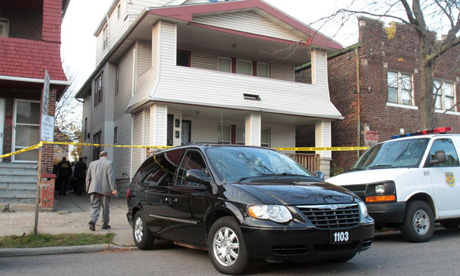
Two high profile cases are in the news today. The first is the kidnapping of Jaycee Lee Dugard, the 11 year old who was kidnapped, raped, and held in a California backyard for 18 years. The second is the discovery of at least 11 women's bodies at a house in Cleveland. If I asked you who is to blame for Dugard's kidnapping, you would probably say her kidnappers are. If I asked you who was to blame for the murders in Cleveland, you would probably pin them on the serial killer. Yet today's coverage points the finger squarely at law enforcement in both cases.
A report from the California Inspector General, which was issued today, says that parole officers had numerous opportunities to discover Dugard during the 10 years they were in charge of supervising her alleged captor. They failed to follow their own procedures in some cases, and in others failed to have decent procedures in the first place. In the Cleveland case, neighbors are coming forward to say that they reported assaults by the alleged perpetrator on their street, and the police did not take them seriously. They also say that there was an odor -- presumably of decomposing bodies -- coming from the property, which was reported but never addressed. At least today, it seems like the answer to whose fault these crimes were is not the perpetrators at all, but law enforcement officials.
So what's going on here? Why have we shifted from outrage at the people who did these things to outrage at the people who didn't catch them? I think what we're seeing is the evolution of people's world view as they try to cope with the horrible things that have occurred.
When the Dugard case first broke, for example, comments on blogs and news sites said things like, "I hope you rot in h*** you sick b*****d." This represented people confronting the idea that there are people out there who do evil things, and we don't know who they are. We heard about the case and conceived of the suspect as sick, twisted, mentally ill, or just plain evil. That scared us, because it seemed so random. If this man could be like this, couldn't anyone? If his neighbors didn't know, do we know about our neighbors?
If there are this sort of person, and/or the alleged murderer in Cleveland, in the world, and if we cannot know who they are, then the world is random. We don't like random. So, as we process these traumatic events, we must move on to the question of how this could have been prevented. If we can't know who is evil, we must rely on those whose job it is to know for us -- the police, the corrections department, etc. We may come to accept that evil people exist, but we don't want to accept that the police can't protect us from them. So now it is their fault.
It's not that there is no logic to investigating what went wrong in these cases. Obviously, we would like to prevent these things from happening again. But in our rush to investigate and prevent, we shouldn't take our eye off the fact that the people most to blame for these crimes are the people who commited them. No one else should suffer solely because we can't accept the randomness of what they did.
Saturday, October 31, 2009
What Should Really Scare Us This Halloween?

About 94% of kids will be out trick or treating tonight. Most of them, particularly the little ones, will be with a parent or other adult. Most of them will be told not to eat their candy until they get home, where an adult will look it over or at least tell them not to eat anything that looks suspicious. We, as a society, believe Halloween to be fun but also risky, and we take numerous precautions to avoid those risks.
But what are those risks? Let's start with the treats. 40 years ago, it wasn't uncommon for people to make popcorn balls or give out apples on Halloween. Over time, we came to understand that eating unwrapped food was dangerous, because the distributor might lace it with poison, put a needle or a razor blade in it, or otherwise try to hurt the kids coming by for treats. Now, I know of no one who would let their child eat an apple from their treat bag. So what do you imagine is the average number of treat tampering cases per year in this country? Is it more or less than it used to be? How often does someone tamper with candy and then distribute it on Halloween?
Never. According to research, there has never, ever been a case of someone poisoning or lacing or putting something in the treats they give out to children. There have been cases of poisoned candy, to be sure, but they have mostly turned out to be an adult's attempt to harm a specific child and blame it on a stranger. Back in the '70s, there were some highly publicized cases. One turned out to be a parent poisoning his own child for life insurance money, and another that was blamed on heroine in candy was actually a child getting a hold of a relative's stash. The candy kids get from the neighbors is safe.
The next thing we think we know about risks on Halloween is that you should go with an adult. Strangers are dangerous, and if you shouldn't talk to strangers then you shouldn't talk to strangers, period. What might surprise you, however, is that there is no increase in sex crimes against children on Halloween, either. All sorts of law enforcement efforts go into making sure that registered sex offenders don't answer their doorbells for the little ghosts and goblins, but it really doesn't make a difference. Children are at risk from predators every day, and Halloween is no exception, but it is not the bonanza for pedophiles we think it is.
So what really is the biggest risk to kids on Halloween? What makes it more risky than the day before or the day after for our kids? You probably can figure it out if you think about it. Halloween is the one time all year when children are walking around in the dark. The number of children who are killed being hit by a car on Halloween is more than double the number for any typical night, simply because there are more children out there. In fact, if you account for the massive increase of children walking outside between 4 and 10 PM on Halloween night, the rate of childhood pedestrian death per pedestrian may actually be lower. Oh, and when I say "doubled," it goes from one child per night to 2.2 on Halloween -- in the whole country.
Despite all of this, we all pay a lot of attention to safety on Halloween. I think that has nothing whatsoever to do with the odds of something happening to our kids. It has to do with our image of ourselves as protectors of them. We see ourselves as being able to keep our children safe, and we are pretty good at that. On Halloween, we afford them a teeny bit of independence. We let them ring doorbells they would never ring any other day, and talk to people they would never talk to. We loosen the apron strings just a little bit, and compensate by creating a lot of rules and procedures to make sure they're still OK when we do.
To be sure, there's nothing wrong with being careful on Halloween. There's no harm in trying to keep our little ones safe, and avoiding unnecessary dangers. It just probably would make the evening a little more fun for the whole family if we all kept in mind that the biggest chance we take with our kids on Halloween probably has more to do with tooth decay and childhood obesity than with the evening itself.
Thanks to Quarterbacker Alan over at Poor Mojo Newswire for the article about candy tampering.
Tuesday, October 27, 2009
The Richmond High Homecoming Attack

Saturday night was the annual homecoming dance at Richmond High School in Richmond, California. A 15 year-old girl walked out of the dance and was invited or lured or brought to a secluded area to drink with a group of other people. When she was quite intoxicated, she was attacked and gang raped in an assault that lasted more than two hours. Not only were people present who watched and did nothing, but reportedly people went back into the dance and talked about the attack and others came out to watch. Only after it was over and some of the witnesses were overheard talking about it were emergency personnel called. The victim was found unconscious and admitted to the hospital in critical condition. She is still hospitalized in stable condition.
This is the point in this blog where I usually talk about what a crisis response team ought to be doing for this community. But I have to admit that my first reaction to this story was complete and utter revulsion, to the point that I had to stop reading the coverage to pull myself together. I'm used to helping people who witness violence. But in this instance, the witnesses were accomplices. At first blush, it seems like there isn't anyone (other than, of course, the victim) to help.
In fact, however, that isn't true. There have to be lots of girls at Richmond High School looking over their shoulders this week, wondering how close they have come to being victimized themselves. School can't seem all that safe to them anymore. I'm sure their parents are beside themselves as well, wondering about their daughters' safety and the choices they make that influence that safety. There are boys who are being painted with the same brush as the witnesses and the attackers, and are looking at friends they thought they knew in a whole new light. Administrators are asking themselves what they could have done differently, and teachers who thought they knew their students aren't so sure anymore.
There is plenty of work to do, and that's not even counting the very specialized assistance that the victim will need once her physical wounds have healed. Two suspects have been arrested and a third is being questioned. One of them isn't even a student at the school. I doubt the victim will ever be able to return to Richmond High School. I doubt Richmond High School will ever be the same.
Subscribe to:
Posts (Atom)
Meet the Quarterback

- Naomi Zikmund-Fisher
- is a clinical social worker, former school Principal and a Crisis Consultant for schools and community organizations. You can learn more about her at www.SchoolCrisisConsultant.com

Subscribe


 Posts
All Comments
Posts
All Comments