Showing posts with label distancing. Show all posts
Showing posts with label distancing. Show all posts
Saturday, June 19, 2010
Family Shot in San Bernardino Restaurant


A man biked to a Del Taco
 restaurant in San Bernardino, California this afternoon armed with two handguns. He walked inside, walked over to a table and opened fire on a family of four. He then shot himself in the head. The father of the family died at the scene, and an 8-year-old boy died shortly after arriving at the hospital. A 5-year-old boy and his 29-year-old mother are in critical condition, as is the 56-year-old shooter (there are conflicting reports, with some indicating that he has also died). Reports indicate he is the woman's stepfather.
This story is horrific, of course. In the next day or two we'll be hearing more about the relationships among the shooter and the victims and about what his motive may have been.
In this lull while we wait for more information, it's interesting to contemplate why we think that more information will be helpful. If we think about it for any length of time, it's obvious that, at least for most of us, there is no motive strong enough to justify this kind of premeditated violence, particularly against children. No matter what we find out, this story is not going to stop being horrific, so why do we care? Most would chalk it up to macabre fascination with other people's tragedies, but I think there is more than that.
We generally think of family members as "safe." They are not the people who, when we see them walking towards us on the street late at night, cause us to cross the street. We may or may not like our families, but most of us are not afraid of them. At the same time, we also know that there are people who, with good reason, are afraid of members of their family. Abusive spouses and parents, disturbed children and other violent relatives are out there, and their families, quite reasonably, fear them.
For those of us who aren't afraid of any of our relatives, it's hard to fathom that someone close to us could try to kill us in broad daylight in public. This incident must be different in some way, and we want to know how. This is not just because of morbid curiosity. We are looking for evidence that, while we don't fear our families, this family had a reason to fear the mother's stepfather. If we can figure out the motive, we can reassure ourselves of two things: First, that the same motive doesn't exist in our own families, and second that this was that "other" kind of family -- one of the ones where people knew they should be afraid.
Why do we need that reassurance? Because the alternative makes us want to hide under our beds and never come out. The alternative is that any family, anywhere, any time can go from peaceful to violent. The alternative is that the people we consider "safe" are not safe, in which case we are not safe, even if we think we are. No one can live a normal life believing that violence could erupt without warning at any moment. We all know, somewhere in the back of our minds, that random violence does occur, but for the most part we live life as though it doesn't, and we don't want evidence to the contrary, thank you very much.
I don't know anything about this family -- not even their names. In the days ahead we'll find out whether this attack was at all predictable. Whether it was or not, however, will not change the fact that half of this family is dead, and the other half will have to live with that loss and this traumatic experience for the rest of their lives.

Monday, June 14, 2010
New Study from NYU Gives Insight Into Trauma, IQ, Racism and Distancing

This week, the Proceedings of the National Academy of Sciences
 has a study from New York University
 about the affect of traumatic exposure on children's IQs. Specifically, researchers looked at the IQ scores of children in Chicago who lived in a neighborhood where a murder had taken place, whether or not they had witnessed it, and compared them to children in the same neighborhood who were not tested close to the time of a murder. They found that, for 7-9 days following the murder, children's IQs dipped about one half of a standard deviation, or 7-8 points. Given the disparity in crime rates and demographics in American neighborhoods, the researchers surmise that this effect might account for half of the noted gap between the average IQ scores of African American students and their White counterparts.
For people who work with children, and for people who work with people exposed to trauma, this finding is not particularly shocking. Anyone who has experienced a homicide in their neighborhood can tell you that they feel distracted and not 100% functional for a week or a week and a half afterwards. Educators have long noticed the dip in academic performance for children who are experiencing stress at home. The notion that this can be measured scientifically is not much of a stretch.
Apparently, for some people, however, it is. The Reuters story on this new study is followed by a number of comments, some of which are really disturbing. One commenter writes:
Nobody wants to live in a neighborhood with a high homicide rate. If you do not live in such a neighborhood now, you also would like some reassurance that you are not at risk of winding up in one so you can feel secure and not spend a lot of time and stress worrying about it. If you acknowledge that it is some combination of luck, inherited privilege and societal discrimination that has some people living in those neighborhoods and you not living there, then that opens up the possibility that your luck might change. You might someday live there, and might someday be in danger. But if your living situation is caused by something inate -- say, inborn intelligence -- then you are not at risk. You don't have to worry about living in such a neighborhood because only dumb people live there, and you are not dumb.
The fact that I can explain why someone would think this way, and how it relates to an understandable wish to distance ourselves from violence, should not be misconstrued to mean that I agree with the commenter or approve of what they wrote. I think this comment is truly repulsive. We all have a natural urge to distance ourselves from certain types of things. In this instance, if it's all the same to you, I'll distance myself from this commenter and their way of thinking.
image copyright istockphoto/akajeff
Thursday, May 20, 2010
Jacksonville, Florida Mosque Bombing and the Othering of American Muslims

Last Monday, a pipe bomb combined with gasoline exploded in back of the Islamic Center of Northeast Florida in Jacksonville. Sixty people were worshiping inside at the time. No one was injured, although the building suffered minor damage and filled with smoke for a short time. A $20,000 reward has been offered for information leading to the arrest and conviction of the bomber, who was captured on surveillance camera. He appears to be a middle aged white male.
The national media has not picked up the story of the Jacksonville mosque bombing to any great extent. If you do a Google News search for "Jacksonville Mosque" you will turn up numerous stories from the Florida press, as well as an assortment of national blogs discussing the fact that the national media has ignored this story, but not much else. Most of these national blogs note the implied prejudice of major news outlets failing to pick up what certainly appears to be an attempted terrorist attack that could have killed 60 people, but whose victims are Muslim.
I don't disagree with these bloggers. However, I think even they are guilty of what scholars sometimes call "othering
 ." They are outraged at the act itself, and at the media for failing to cover it. But they don't go as far as to express empathy with the community that was attacked. They are reacting to the politics, but not to the impact of the attack itself. Someone has attacked those "other" people, and we (presumably "typical") people are outraged by the attack and outraged at the media. But we aren't caring for the victims.
For the religiously affiliated among you, try to imagine how you might feel if your church or synagogue were attacked. How safe would you feel at the next service? How confident would you feel parking in the parking lot? How much sleep would you lose? How much grief might you feel for actual damage done? And how much anticipatory grief might you feel at the thought of damage that might yet be done?
Now imagine that the bulk of those who support your congregation expressed that support by insisting that the news cover the incident. Surely you'd appreciate that. There's nothing wrong with taking a firm stand that such attacks are unacceptable regardless of who the victims are, and that media should report them without bias. But wouldn't you want some of those same folks to stop by your church or synagogue or your house? Wouldn't you want them to try to understand your fear and how very personally you took this attack? Wouldn't you want people to stand up, not just for you, but also with you?
I have nothing against the bloggers who have pointed out the media's bias. It needs to be done. But it is only the first step. I challenge my blogging brethren not just to cover the politics of this attack and its coverage, but to really try to understand how it feels to be a victim of it, and bring that experience to their readers. Until we are able, as a blogosphere, to see victims of anti-Islamic violence as "us" rather than "them," it will continue to be easy for people to turn that othering to violence.
Thursday, February 18, 2010
The Austin Plane Crash

A man with years of tax troubles and disputes with the IRS crashed a small plane into the building that houses the IRS office in Austin, Texas this morning. Two people were injured and one is unaccounted for. It's not clear from the current coverage what happened to the pilot, although it seems likely that he is dead. Before crashing the plane, he had set fire to his home and left a six page letter/blog on the Internet explaining his actions.
Authorities have announced that this appears to be an isolated incident and that there is no ongoing threat. The Department of Homeland Security released a statement that said,
We do not yet know the cause of the plane crash. At this time, we have no reason to believe there is a nexus to terrorist activity. We continue to gather more information, and are aware there is additional information about the pilot's history.Press coverage has also emphasized the description of this as a suicide, and most outlets are referring to his writing as a suicide note and using words like "rambling" and "incoherent" to describe it.
I find this spin absolutely fascinating. Towards the end of his letter, the pilot wrote,
It has always been a myth that people have stopped dying for their freedom in this country. . . . I also know that by not adding my body to the count, I insure nothing will change. . . . I can only hope that the numbers quickly get too big to be white washed and ignored.If you read his writing all the way through (you can download it here), you will disagree with his conclusions but you will not find it hard to understand at all. It is not incoherent. He is very clear that he is angry at the government, why he is angry at the government, and that he is about to do this to draw attention to his grievances, cause other people to pay attention to his thinking and inspire others to also kill themselves in similar attacks.
Let's suppose you didn't know anything about this story. Suppose someone told you that a man, angry at the United States government and believing that its citizens should rise up against it, killed himself by flying an airplane into a building housing a government office. He left behind writing detailing his belief that the government is corrupt and encouraging others to similarly die for the cause of freedom. What is your mental image? Mine is not of a computer engineer. It's of a terrorist.
So why does DHS say this isn't terrorism? And why is the media reporting it as an incoherent suicide? Why does it seem so important to portray this person as crazy, while others, such as the Fort Hood shooter, are terrorists?
The practical difference is that this man has no links to any organized group that anyone can tell. When DHS says this isn't terrorism, they really mean this isn't organized terrorism, and they are right. There is also, frankly, and element of religious and/or racial profiling. Terrorists are Muslim and come from the Middle East, southern Asia or Northern Africa. Americans can't be terrorists.
The other reason it's important to us to maintain this distinction, however, is that it makes us feel safe. We have an image of terrorists that is truly frightening and represents an ongoing danger. The thing that keeps us from being scared out of our minds is that, for the most part, we believe them to be "over there" and not here. Those who may be here fit a certain profile and hence are easy to catch.
This pilot, on the other hand, isn't "over there." If he's a terrorist, then there's a much greater risk of terrorism than we would like to think about. There is no way to keep them out, because they're already in, and there is no way to figure out who they are. So we tell ourselves that this guy was crazy and suicidal. We know such people exist, and even that there is some danger from them, but they don't represent anything near the threat that terrorists do. They are isolated incidents.
A certain amount of psychological self-preservation is a reasonable thing. We do all sorts of things to prevent ourselves from being paralyzed by fear, and that is what allows us to function. Sometimes, however, it pays to take a step back and ask whether we are protecting ourselves from fear or simply being oblivious to the truth.
Tuesday, December 15, 2009
Taking it Personally: Guilty Verdict in the Seattle Jewish Federation Shooting
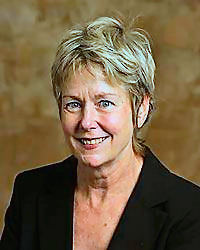
On July 28, 2006, a man took held a teenage girl at gunpoint, forced his way into the Seattle Jewish Federation offices and started shooting. One woman was killed and five others were injured. The gunman, who had a history of mental illness, told a dispatcher he was tired of Jews, Israel and American foreign policy, and he was hoping to get on CNN. Today, a jury rejected his insanity defense and found him guilty at his second trial (the first one ended in a hung jury).
This was not the first shooting at a place associated with Judaism in the United States, and it was not the last. Over the last 15 years or so, security has been increasing steadily at synagogues, community centers and museums. Here in Ann Arbor, you have to show picture ID to get into the Jewish Community Center. Many synagogues have police presence during holiday services.
All of us who frequent Jewish community buildings know why the extra security is there. At the same time, we don't spend a whole lot of time thinking about it. We tell ourselves that it's to guard against something that, realistically, isn't going to happen anyway. We know there are those "out there" who, because of ignorance or illness, think that shooting at Jews is a good thing to do. We just don't think they are anywhere near us.
I remember distinctly how I felt when I heard about the shooting in Seattle. My family lived in Seattle for four months about ten years ago, and we've visited several times, so I felt some connection. More than that, however, I remember imagining very vividly what the scene must have looked like. I placed the shooting in my mind at building that looked just like the local JCC. I could very much picture what happened and where it happened, even though I'd never been there and the building in Seattle probably looks nothing like this.
This is what having a personal connection to a traumatic event does to us. While everyone who heard about this event knew it was terrible, those of us with ties to the Jewish community had much easier access to the details of what made it awful. Anyone can, if they try, put themselves in a traumatic scene in their mind's eye. We just got there much more easily.
I was therefore somewhat surprised when I read about the verdict in this case. I wasn't surprised that the jury found the gunman guilty, although I don't have enough of the details to have an opinion about whether he was legally insane or not. What surprised me was that, before I read about the verdict, I had totally forgotten about this incident. Part of what allows me to go to my Temple on a regular basis is the ability to not vividly imagine an actual shooting when I do, and so my mind has given itself permission to file this away until needed.
Nevertheless, when I heard about the verdict, I immediately saw that same scene that I had imagined 3 years ago in my mind. For me, that is what represents the trauma of this shooting. Oddly, I have a vivid visual memory of something that I never saw. In a few days or weeks, the Seattle shooting will be filed away again. Soon enough, I and many other people, will convince ourselves that we are guarding against something that, realistically, isn't going to happen anyway. Until the next time.
Note: The picture above is of Pam Waechter, the director of the Seattle Jewish Federation's annual campaign, who was killed in the shooting. Ms. Waechter was a Jew by choice, having been raised Lutheran. As Richard Silverstein wrote at the time,
It is terribly ironic that a woman who elects to convert to Judaism in order to share the joy and fate of the Jewish people should pay the ultimate price for that commitment.May her memory be a blessing.
Sunday, October 25, 2009
The Puerto Rican Earthshattering Kaboom
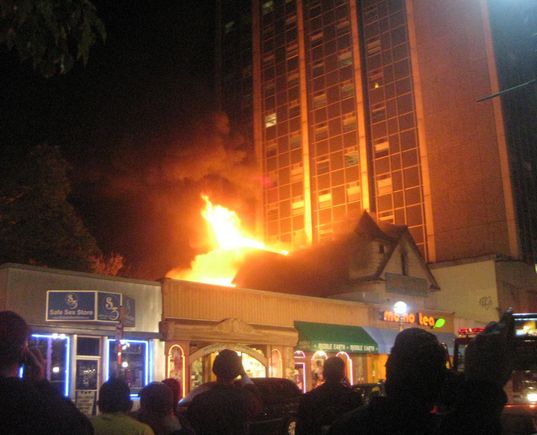
Last night, I asked a friend, "Did you hear about the explosion in Puerto Rico?" He hadn't. About 1500 people near San Juan have been displaced by an explosion at a Caribbean Oil storage facility in the wee hours of Friday morning. The explosion registered 2.8 on the Richter scale, which isn't much for an earthquake but is one heck of an explosion. Yesterday brought fears of increased casualties as the wind brought the cloud of smoke over San Juan, but so far no major injuries have been reported and the wind has shifted in the other direction, although the fire is still burning out of control, almost 60 hours after it started.
This morning, that same friend asked me, "Did you hear the news?" He wasn't talking about the fire in Puerto Ri
The fact that the Caribbean Oil fire hasn't gotten all that much coverage in the mainland US should not be surprising. As I've often said, we pay attention to things that are horrible, unexpected, and happen in places and to people we identify with. It will give you some idea how much we in the United States identify with Puerto Rico that CNN.com has been running its coverage in its "World" section, not in its "U.S." section. As they say in the musical "West Side Story,"
Nobody knows in AmericaThe Washington Post has this story in the Nation Digest, so at least they've located it properly. It's the third story in the digest. Balloon Boy is number one.
Puerto Rico's in America
Both of these fires are exciting. To the people who are right there, they are also probably traumatic. One man in Puerto Rico was quoted as saying,
I didn't expect to see a mushroom cloud from my houseFor most of us, though, these stories are attention grabbing if we live nearby or know the area, and mildly interesting otherwise. That's because we know that fires happen, we hope they don't happen to us, and no one was seriously injured in either blaze. We love stories like this. We can sit back and watch, admire the power of fire to destroy and its beauty in the night sky, and not really worry about it. We are voyeurs at heart, and in these cases, we can do it with impunity.
Wednesday, October 14, 2009
Odd Odds

Those who read the Quarterback regularly know that we tend to be more traumatized by events that we perceive to be rare. If our worldview suggests that something doesn't happen, it jars us when it does. The trouble with this, however, is that we are actually pretty bad at judging how rare things are. Even for those who, like me, make it their business to go digging up probabilities and statistics on various heinous situations, it's sometimes hard to find the data you need.
So I was very pleased to hear on NPR today about the launch of the website BookOfOdds.com. This site is extraordinarily simple. Put in the key word you are interested in, and it gives you a bunch of odds statements involving that key word. For example, if you type in "Naomi," you will discover that the chances of a female born in 1970 being named Naomi is 1 in 3,300. You can then put in the number 3,300 and discover that the odds of me being named Naomi are identical to the odds that an employed person over 16 living in South Dakota is an anesthesiologist. And while those particular statistics may not be very meaningful to you, you can imagine there are others that are.
For example, if you type in "New Hampshire" and "murder," you will discover that the odds of any given person in New Hampshire being murdered in the next year are 1 in 101,200, but the odds of someone living in Washington, D.C. being murdered in the next year are 1 in 3,182. So when I said last week that the murder of Kimberly Cates in Mont Vernon, NH was more shocking because of where it happened, I wasn't just blowing smoke.
If you explore those numbers more carefully, you will discover that the odds of being murdered in New Hampshire are slightly lower than the odds of any given person in the United States having to visit the Emergency Room in a given year because of an accident involving a drinking straw. Meanwhile, the odds of being murdered in Washington, D.C. are about the same as the chances that a woman my age is named Kimberlee. They're also about the same as the odds of someone in Boise, Idaho being a victim of a robbery. Now we can start to see why trauma affects different communities differently. It's not that the incident is less awful to those close to it, it's that it's more shocking to those further out.
This data is also useful in helping us put our fears in some perspective. For example, this summer plane, train and subway crashes were getting a lot of press. It turns out that the chances of dying in a transportation accident -- including a car crash -- in the next year are 1 in 6,212. That's pretty close to the chances of being diagnosed with end stage renal disease. And while both of those things are horrible, we don't live in fear of end stage renal disease. Maybe we should. Or maybe it would help us all to get a little more familiar with some hard numbers.
Monday, October 12, 2009
We Have Met the Enemy, and He is Us

After a while, writing a blog like this, there are certain things you find yourself talking about over and over again. In the blogosphere, those simply become "tags" for your writing. But some themes are more than tags -- I'm talking about the posts your write where you have to go back and look to make sure you hadn't actually written that post before, because it all sounds too familiar. That's how I'm feeling, today, about the issues of distancing and blame.
It seem like coverage of trauma in the news separates itself, rather neatly, into two categories: stories that are tragic but point out the various reasons this tragedy could have been avoided, and stories that express shock that such a thing could happen. These are two sides of the same coin. Saying an incident was avoidable implies that we will be able to avoid it happening to us. Expressing shock implies that it is anomalous -- that things like this are not "supposed" to happen to people like us, and therefore won't in the future. From these stories, we get a very interesting picture of what a victim of trauma or a perpetrator of crime is and is not "supposed" to be like. If you pay attention to the news, particularly the coverage of traumatic incidents, you will find the following:
- Victims of trauma -- those who die in traumatic incidents -- are supposed to be poor, not white, and live in cities. They are supposed to be stupid and preferably morally questionable. They tolerate domestic violence and marry entirely the wrong people. They don't have the sense to ask for help when they need it. If they are children, then the adults in their lives fit this description.
- Perpetrators of trauma -- those who cause death by crime or even by negligence -- are supposed to be poor, not white and live in cities as well. They are supposed to not have jobs and to drop out of school. They are supposed to be male. They are supposed to have a history of drug use and have been abused as children. They are supposed to care about nothing but the almighty dollar, and view women as inherently subservient.
There are many problems with this way of thinking, of course. The virtual codification of racism, classism and sexism they demonstrate is at best disheartening. Because they sort tragedies into categories, they help us deny the humanity of those affected by trauma. They make it easy to blame.
Fundamentally, they also do a tremendous disservice to our preparedness for trauma. Part of how we become resistant to traumatic stress and resilient following an incident is by having a realistic expectation of what might happen to us and how we will feel afterwards. While it is not healthy to live in fear of rare events, it is also not healthy to believe they are significantly rarer than they are. Perhaps if we were not so busy convincing ourselves that trauma happens somewhere else to someone else, we might be able to face what our actual risks are and prepare to cope with them.
Subscribe to:
Posts (Atom)
Meet the Quarterback

- Naomi Zikmund-Fisher
- is a clinical social worker, former school Principal and a Crisis Consultant for schools and community organizations. You can learn more about her at www.SchoolCrisisConsultant.com

Subscribe


 Posts
All Comments