Showing posts with label Lakewood police shooting. Show all posts
Showing posts with label Lakewood police shooting. Show all posts
Tuesday, December 22, 2009
Washington Deputies Critically Wounded in Shootout, and it's Deja Vu All Over Again

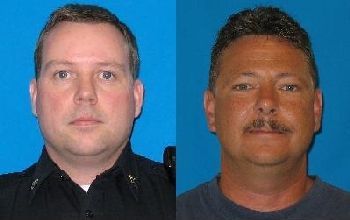
Last night, two Sheriff's Deputies in Pierce County, Washington responded to a call about a drunken man who was refusing to leave his brother's house, where his daughter was staying. The man cooperated with the deputies and was apparently getting ready to go with them when he began firing a gun he was concealing under some clothes he was holding. In the ensuing shootout, both deputies were wounded and the suspect was killed. The brother and daughter pulled at least one of the deputies to safety and began first aid, and the daughter ran to the neighbors to call 911. Sgt. Nick Hauser is in serious condition. Deputy Kent Mundell is in critical condition with what are described as "life threatening injuries."
If you're not from the area, you may not know where Pierce County is, so I'll help you out. It's south of Seattle, and includes the town of Parkland. Parkland is the next town over from Lakewood, Washington, whose police department lost four officers in an ambush at a Parkland coffee shop late last month. The first responders to those shootings were deputies from the Pierce County Sherriff's Department.
Not surprisingly, the call last night for two deputies down seemed a little surreal to a lot of the deputies in Pierce County. Police personnel being shot, particularly being ambushed, is just not that common. To have it happen twice in a month is unheard of. The AP quotes the Sheriff's Department spokesperson as saying,
I think some people, when the call went out, didn't believe it was real.In the light of day, this morning, the same spokesperson told the Seattle Times,
It's pretty sad how well and good we are about this, with the cooperation between agencies and taking care of families.I think we can all understand that this is not the sort of thing you want to be skilled at, because it is not the sort of thing you want to need to be skilled at.
If you work in Pierce County law enforcement, or even in the Seattle area (since a Seattle officer was ambushed on Halloween as well), you have to feel a little like you're walking around with a great big target on your head. One officer commented that they are trained to keep themselves safe during raids on drug houses and things like that. They aren't used to people shooting at them out of nowhere. But now, that's exactly what's happened, three times in a row.
The shooting of a police officer, particularly if he or she dies, is the worst call any officer can go out on. It's hard to be professional when your buddy has been killed. It's nearly impossible when you realize how easily it could have been you, or could be you in the future. These deputies didn't do anything wrong. They didn't make any rookie mistakes. They just had the bad luck to be where some crazy guy wanted to shoot cops. That could have been anyone in the department. Each and every deputy is going to have to make his or her peace with that.
There are still several deputies who are out on leave following the Lakewood shootings last month. That wasn't even their own department, and those deputies are too traumatized to work. Now it's happened again, and it is their department. How do they process this and tell themselves this is still really unusual? Or do they have to readjust to the new normal, one where folks in Pierce County have gotten the idea to shoot at police if they can? Either way, you have to imagine it's going to be a long way back.

Wednesday, December 16, 2009
The Proper Place for Blame: Operational Review Scheduled for the Lakewood Shootings

Governor Christine Gregoire of Washington is convening a meeting on December 30 of a number of law enforcement agencies, judges, prosecutors, and other relevant groups to examine "lessons learned" in the shootings of four Lakewood police officers last month. This is what is often referred to as an "Operational Review." After something significant happens, it always pays to go back and figure out what could have been done differently. In this case, the focus will be not on the response once the shooting started, but rather the procedures that allowed the shooter to be out on the street in the first place. Governor Gregoire has asked for recommendations about changes to state laws and the state Constitution to prevent something like this from happening again.
Immediately following a traumatic incident, people often want to have this conversation. We saw that following the Lakewood shootings when the media pounced on the fact that the shooter had been granted clemency by then Arkansas Governor Mike Huckabee. I had my head handed to me by friends in the Seattle area when I suggested, in this space, that such blame was not productive. I should have been more specific that I did not believe it was productive at that time. There is a time and place for an operational review, and December 30, more than a month after the shootings, is certainly reasonable.
If you look at the "popular topics" listing on the sidebar of this blog, you will see that one of the most frequent tags is "blame." I write about blame more than I write about Critical Incident Stress Management, which is the area of expertise that even allows me to write in the first place. Blame comes up so frequently in traumatic incidents because it is one of the first responses most of us have when we are exposed to trauma.
Blame is our response for two reasons. First, from an evolutionary standpoint, if we are a wild animal and we can tell that the actions of another wild animal caused us to get attacked by a tiger, it is a good idea to identify that and either change that other animal's behavior or disassociate ourselves from them. Second, assigning blame insulates us from perhaps the most traumatic idea at all, which is that trauma can strike at random. The same evolutionary instinct that tells us to dissociate from the animal who caused the problem tells us that if we can assign blame we can control danger.
The reason that blame immediately following a trauma is not very productive is not that there isn't blame to be assigned, but rather that it interferes with us processing what has happened. We can spend as much time as we want pointing fingers, but it will not change the outcome at all. If our energies are devoted to finding fault, they are not devoted to coming to some basic understanding of what happened and how we are going to live with what happened moving forward. We can vilify Mike Huckabee all we want, but those four officers are still dead, and we need to learn to live with that.
At some distance from the incident itself, we can begin to review what happened with a different eye. The purpose of an operational review is not to vilify someone, but rather to truly figure out how to do things differently. There is a big difference between saying, "This is all Mike Huckabee's fault" and saying, "the system, as exemplified by Mike Huckabee, has flaws that allow this to happen. How can we fix that?" Only when we take this problem-solving stance can we actually begin to do what we instinctively want to do, which is to prevent as much trauma as possible.
There is always at least one pitfall associated with everything we do after a traumatic incident, however, and I hope that the Governor and the agencies he has asked to participate do not fall into it. The pitfall is that sometimes, when we review what happened, we realize that we can, indeed, completely eliminate a threat, but that the way to do so is so draconian that it has all kinds of other consequences. In this case, for example, you could eliminate the threat of any violent criminal ever doing violence again by locking all of them away on their first offense, or even by imposing the death penalty for all violent crimes. While that would prevent all future offenses, it would also throw away everyone who has ever been violent, even those who are not likely to offend again. As the Governor convenes this review, let's hope that common sense is used to plug the holes and fix the flaws in the system, but that the proverbial baby is not thrown out with the proverbial bathwater.
Sunday, December 13, 2009
Reclaiming the Coffee Shop where the Lakewood Shootings Took Place

Forza Coffee in Parkland, Washington reopened yesterday. At 8:14 AM, they relit their "Open" sign, two weeks to the minute after a gunman shot and killed four police officers from the neighboring Lakewood Police Department inside the coffee shop. The line was out the door. They served 1100 cups of coffee.
This reminded me of something in my own life. Several years ago, when I lived in Pittsburgh, a man drove through the southern suburbs seeking out people of color, immigrants and Jews and shooting at them. Several people died. A synagogue was shot at and swastikas drawn on the walls. That night, I went to that synagogue for services. I had never been there before, and I haven't been back. But that night, the place was packed.
When we intentionally visit someplace where a crime has occurred, we are accomplishing several things. We are making a statement that we will not be intimidated -- this was certainly true in the case of the synagogue. We are supporting an establishment that has experienced a trauma, just as we might if something terrible happened to a neighbor or friend. We are offering moral support.
We are also reclaiming the space from the trauma that occurred there. Very often, people who experience trauma avoid the place where it happened, sometimes for a very long time. The place brings back vivid and unpleasant memories, so they simply choose not to expose themselves to it. Going back represents a graduation of sorts. It means that while we remember what happened there, we are not afraid of the space anymore. By having something positive occur there, such as an outpouring of customers or worshippers, we are building a new, positive association to go alongside the negative one that will always be there.
That Forza branch will probably do a brisk business for a long time now. It is a memorial to those who died, a place for the living to remember, and a symbol of the community coming together. No one's going to want it to go out of business for a long, long time.
Tuesday, December 1, 2009
The Washington Shootings: Moving On or Just Moving?

Early this morning, Seattle Police shot and killed the alleged gunman in the murders of four Lakewood, Washington police officers. Whatever motivated this man to do what he did, he will never hurt another person again. So ends the story.
The story doesn't really end there, however, because there is plenty of traumatic stress for those involved and plenty of follow-up news coverage for the rest of us. The long process of coming to terms with what happened is just beginning for those who witnessed the shootings and the families and fellow officers of the victims.
As this story has unfolded, a lot of anger has bubbled to the surface. It seems that this anger is pointed, broadly, in two directions.
The first is at the gunman. This makes sense -- he is the one ultimately responsible for his own actions. It comes as no surprise to those of us who watch police dramas on TV that the suspect did not come out of his confrontation with police alive. That is not to say in any way that his shooting was not appropriate, but rather that, when hunting for a cop killer, the preservation of his life is not the highest priority on everyone's mind. Generally, they come quietly or they come dead.
The second place that anger is directed is at Mike Huckabee, or more broadly at the criminal justice system. Huckabee, when he was governor of Arkansas, granted clemency to the alleged killer. This was one of what appear to be a large number of opportunities that were missed, both before the Arkansas clemency and after, to keep this man away from the public.
We all know that Mike Huckabee, or this or that prosecutor, or this or that judge, did not pull the trigger in these shootings. By being angry and blaming them, however, we are reassuring ourselves that this could have been prevented. We need to do that, because the alternative is too scary to fathom -- that there are people out there who just want to kill other people, we don't know who they are, and they can't be stopped. By blaming these officials, we tell ourselves that if only everyone did their jobs we would be safe. I have no idea whether any one or all of these people should have done anything differently, given the information they had at the time. I do know that even if they had, they would not have stopped every violent sociopath out there.
If you want to understand the primal fear we are shunting to the side, try talking to the young child of a police officer this week. They will tell you they don't want their mom or dad going out for coffee. The bogeyman is real. The one in Washington may be gone, but we don't want to reckon with the idea that there may actually be other ones hiding in the closet.
Monday, November 30, 2009
What if You Survived the Lakewood Police Shootings?

By now you've probably heard about the murder of four uniformed Lakewood, Washington police officers in a coffee shop yesterday morning. There seems to be no doubt that the victims were targeted because they were police officers. Police have a suspect and have been trying to find him in a series of very visible but unsuccessful attempts today.
A lot has been, will be, and should be written about these courageous men and women and their surviving families, including nine children. The spontaneous outpouring of grief and support is amazing. The owner of the coffee shop chain where the shootings occurred is an ex-cop himself, and he said yesterday that since his employees were unhurt he was mostly concerned for the families. Who can blame him?
But the fact of the matter is that there were a handful of other people in the coffee shop when the shootings occurred yesterday -- both staff and patrons. Police have said that it took some time to get full statements from them because it was so hard for them to describe what they saw right away. Who can blame them, either?
It is not uncommon for survivors of shootings, particularly shootings in which multiple people are killed, to feel survivor's guilt. They wonder why they lived when others died. They feel that if only they had done more, they might have saved others. Most often, they find some solace in the knowledge that everyone there was a target, and had they done anything different they might well be among the dead.
This situation is a little different. The other patrons were not, in fact, targets themselves. It seems pretty clear that the gunman was looking to shoot cops. It is not as simple as realizing that they had to save themselves. But in fact, they did have to save themselves. While they may not have been targets to begin with, had they confronted the gunman they undoubtedly would have become targets.
When all is said and done, however, four police officers are dead in a highly publicized and sensational shooting that is making the national news, and the only people in any kind of position to stop it, one might argue, were the staff and other patrons. While we all know that we don't blame them and we don't think they could have stopped this, that probably isn't how they are feeling. That kind of guilt can lead to isolating oneself, and that's a very bad thing to do after a traumatic incident.
Add to this the wrinkle that the gunman is still out there. The survivors have to be concerned, at least on a gut level, for their own safety. They are witnesses, and he clearly doesn't care much about human life. It has to be hard to get up and go out in public under these circumstances.
Most police departments have supports in place for families of officers killed in the line of duty and also for other officers and their families who understandably have renewed fears for other officers' safety. Fewer communities are really set up to support the civilian survivors of an incident like this. This is a time when a community-based CISM team is critical. I hope there is one out there, or that someone asks for one on those people's behalf. They need our support, too.
Update: The suspect in these murders was shot and killed by police on December 1. Hopefully, that will alleviate some small amount of the stress the survivors are experiencing.
Subscribe to:
Posts (Atom)
Meet the Quarterback

- Naomi Zikmund-Fisher
- is a clinical social worker, former school Principal and a Crisis Consultant for schools and community organizations. You can learn more about her at www.SchoolCrisisConsultant.com

Subscribe


 Posts
All Comments
Posts
All Comments