Showing posts with label officer involved shooting. Show all posts
Showing posts with label officer involved shooting. Show all posts
Saturday, July 17, 2010
Another Death at an Oakland BART Station


A man was shot and killed this morning by Bay Area Rapid Transit (BART
 ) and Oakland police officers near the Fruitvale BART station in Oakland, California. If this rings a bell with you, you're not crazy -- just over a week ago a former BART officer was found guilty of manslaughter in the shooting death of a man at the Fruitvale station on New Years Day, 2009. That conviction -- or more specifically the conviction on manslaughter rather than murder -- spurred protests and looting in Oakland.
On the one hand, these two shootings have nothing to do with each other. The officers involved are different. The people shot are different. The circumstances of the shootings are different. The only connection is one of coincidence -- both of these incidents happened near the same station.
On the other hand, in terms of impact these two shootings have everything to do with each other. The coincidence of location means that today's shooting immediately brings to mind the earlier incident and the recent trial. An officer involved shooting in Oakland, California does not merit national headlines as a general rule. It is the similarities between the two cases, as superficial as they may be, that get CNN
 involved.
There is no reason, at least from the initial media reports, to believe that there was anything suspect about the circumstances surrounding today's shooting. The same could not be said about the shooting in 2009. But our minds have a funny way of categorizing things. The 2009 shooting is filed in our memories under any number of categories you might expect -- police shootings
 , police brutality, riots, protests -- but also under some that aren't nearly as helpful, such as: Fruitvale, BART and Oakland Police. Today's shooting may only share those last three labels with the one in 2009, but because we are opening the "file drawer" where both reside, both come out and their import can become confused.
 The general public, furthermore, are not the only ones making these connections. While no police officer wants to shoot and kill a suspect under any circumstances, there is, perhaps, no worse nightmare for an officer in Oakland, California than to shoot and kill a suspect near the Fruitvale BART station, especially this week. Whatever emotions or reactions a shooting would cause to begin with are compounded because the officers' minds immediately and involuntarily make the connection. The natural questions (whether acknowledged or not) an officer might ask of himself about whether a shooting was necessary or justified are complicated by the fact that, because of the links between the two cases, on some level our minds do not believe a shooting at the Fruitvale station can ever be justified no matter the circumstances. Add to that the fact that the officers involved know that the public is making those same connections, and it makes a stressful situation that much worse.
There are plenty of investigations going on about today's shooting, as there should be. Hopefully, in time, we will know for sure whether it could have been avoided or not. It might help keep tensions in the community down and police officer's mental health in tact if we all took a deep breath and reminded ourselves that whether this was a justified shooting or not has nothing, no matter what our minds tell us, to do with the fact that it happened near Fruitvale. Coincidences are complicated, but sometimes they really are just coincidences.

Monday, May 17, 2010
Police Kill Aiyana Jones, 7: Is This What We Expect From Detroit?
Aiyana Jones was asleep on the sofa of her Detroit home early Sunday morning when police executed a warrant and came looking for her aunt's fiance, who was wanted for a murder earlier in the weekend. Accounts differ about what, exactly, happened when officers entered the home. Everyone agrees that, within seconds, Aiyana Jones was dead, shot by a police bullet. She was 7 years old.
You might imagine that there's a fair amount of crime and trauma discussed in my family. My tween daughter has heard it all -- probably much more than she should. As a result, some things that would horrify other kids don't really faze her. She knows that bad stuff happens, and she also knows, for the most part, that it doesn't happen to her. My husband and I try, when we can, to make sure that we are the ones to tell her scary news so we have the opportunity to put it in some context, be reassuring, and answer any questions. That's not always possible, of course, because sometimes we're getting the news at the same time she is.
That's what happened this morning. News of Aiyana's death came on the radio, and my daughter and I heard it at exactly the same time. My first thought was, "Ugh, that's going to be messy." Then I looked over at my daughter, whose mouth was hanging open. She finally said, "That's -- that's -- that's so sad!!"
Instantly, I knew that her reaction was the right one, not mine. Yes, this is going to be messy. No matter whose version of events you believe -- did the grandmother tussle with a police officer whose gun went off? Did police fire from outside the house? Was the girl burned by a flash grenade before she was shot? Had neighbors warned officers that there were children in the house? -- this is not a good situation. Police, in the course of their jobs, killed a little girl. That has the potential to ignite huge problems between police and residents and certainly will trigger a big investigation, as it should.
But whether it's messy or not is really not the main issue. A little girl died. Her father and grandmother have just lost an important member of their family, a child. Whatever anyone inside the house did or did not do, they didn't intend for this to happen. No parent tucks their child in at night and contemplates the possibility they won't be alive in the morning, at least not due to this kind of incident.
Why did my daughter and I have such radically different reactions? To some extent, it has to do with age and experience. I look at things from a crisis point of view, and she looks from a human point of view. Still, you'd think I would have keyed into the trauma the family experienced a little better than I did. I've also heard stories like this before, while she hasn't. Thankfully they aren't common, but they do happen and probably don't shock me the way they shock my daughter.
If I'm honest, though, I have to say that, because of my age and experience and the society in which we live, I have an expectation that "things like this" happen in Detroit. I would be shocked if it happened in Ann Arbor, but not in Detroit. My daughter, either because her mother does a better job of teaching compassion than of living it or because she just hasn't been steeped in the negative expectations of Detroit and its citizens the way I have, knows that a child is a child, no matter where you live. It's one of those moments in parenting when you realize your kid embodies your values better than you do. I'm very proud. I'm also a little ashamed.
Tuesday, December 22, 2009
Washington Deputies Critically Wounded in Shootout, and it's Deja Vu All Over Again
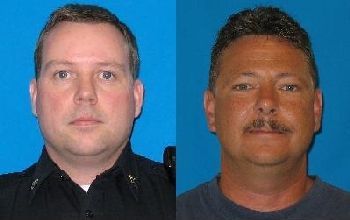
Last night, two Sheriff's Deputies in Pierce County, Washington responded to a call about a drunken man who was refusing to leave his brother's house, where his daughter was staying. The man cooperated with the deputies and was apparently getting ready to go with them when he began firing a gun he was concealing under some clothes he was holding. In the ensuing shootout, both deputies were wounded and the suspect was killed. The brother and daughter pulled at least one of the deputies to safety and began first aid, and the daughter ran to the neighbors to call 911. Sgt. Nick Hauser is in serious condition. Deputy Kent Mundell is in critical condition with what are described as "life threatening injuries."
If you're not from the area, you may not know where Pierce County is, so I'll help you out. It's south of Seattle, and includes the town of Parkland. Parkland is the next town over from Lakewood, Washington, whose police department lost four officers in an ambush at a Parkland coffee shop late last month. The first responders to those shootings were deputies from the Pierce County Sherriff's Department.
Not surprisingly, the call last night for two deputies down seemed a little surreal to a lot of the deputies in Pierce County. Police personnel being shot, particularly being ambushed, is just not that common. To have it happen twice in a month is unheard of. The AP quotes the Sheriff's Department spokesperson as saying,
I think some people, when the call went out, didn't believe it was real.In the light of day, this morning, the same spokesperson told the Seattle Times,
It's pretty sad how well and good we are about this, with the cooperation between agencies and taking care of families.I think we can all understand that this is not the sort of thing you want to be skilled at, because it is not the sort of thing you want to need to be skilled at.
If you work in Pierce County law enforcement, or even in the Seattle area (since a Seattle officer was ambushed on Halloween as well), you have to feel a little like you're walking around with a great big target on your head. One officer commented that they are trained to keep themselves safe during raids on drug houses and things like that. They aren't used to people shooting at them out of nowhere. But now, that's exactly what's happened, three times in a row.
The shooting of a police officer, particularly if he or she dies, is the worst call any officer can go out on. It's hard to be professional when your buddy has been killed. It's nearly impossible when you realize how easily it could have been you, or could be you in the future. These deputies didn't do anything wrong. They didn't make any rookie mistakes. They just had the bad luck to be where some crazy guy wanted to shoot cops. That could have been anyone in the department. Each and every deputy is going to have to make his or her peace with that.
There are still several deputies who are out on leave following the Lakewood shootings last month. That wasn't even their own department, and those deputies are too traumatized to work. Now it's happened again, and it is their department. How do they process this and tell themselves this is still really unusual? Or do they have to readjust to the new normal, one where folks in Pierce County have gotten the idea to shoot at police if they can? Either way, you have to imagine it's going to be a long way back.
Thursday, December 10, 2009
Officer-Involved Shooting in Times Square: Merry Christmas!

This morning at about 11:20 AM, a plainclothes New York City police officer recognized a suspect in Times Square. The man was a scam artist -- he apparently approached people, asked their names, wrote it on a CD and then demanded $10 for the "personalized" CD. So the officer approached the suspect, who began running away. The officer chased him.
So far, this was only a mildly exciting day in New York City. Mildy exciting, that is, until the suspect started shooting at the police officer. The officer returned fire, shooting and killing the suspect right in front of the Marriott Marquis hotel. The gunfire broke a window at the box office for "White Christmas."
If you've been to Times Square, you can imagine what it looks like this time of year at 11:30 in the morning. Tourists are looking around. Businesspeople are heading for an early lunch. Holiday shoppers are doing their thing. It's crowded.
None of these people would be the slightest bit phased to see a scene like the one that played out today on Law & Order. In fact, a number of people apparently asked if it was a TV show or a movie being filmed. But seeing it live is a little bit different. The New York Times quoted a tourist from New Orleans who was staying at a nearby hotel as saying,
I’d never heard a gunshot before, but I knew it was a gunshot. Pow-pow-pow-pow — just like that. Then I heard a guy yell. Then sirens. I froze. My hair stood on end.
The fact of the matter is, we like crime stories and cop shows because they tie the horrible into a neat package. They have a beginning, middle and end. Everything is over in an hour, and we can experience what we are afraid of while knowing we're safe. We do not expect, even in Times Square, to see a police officer shoot a suspect right in front of us. The officer does not expect to be shot at when he rousts a suspect for a relatively minor offense, either. And as much as this might make for a good story about some people's trip to New York, it probably is going to make a lot of people -- both natives and tourists, just a little more skittish and aware of their surroundings for the next few days.
Tuesday, December 1, 2009
The Washington Shootings: Moving On or Just Moving?

Early this morning, Seattle Police shot and killed the alleged gunman in the murders of four Lakewood, Washington police officers. Whatever motivated this man to do what he did, he will never hurt another person again. So ends the story.
The story doesn't really end there, however, because there is plenty of traumatic stress for those involved and plenty of follow-up news coverage for the rest of us. The long process of coming to terms with what happened is just beginning for those who witnessed the shootings and the families and fellow officers of the victims.
As this story has unfolded, a lot of anger has bubbled to the surface. It seems that this anger is pointed, broadly, in two directions.
The first is at the gunman. This makes sense -- he is the one ultimately responsible for his own actions. It comes as no surprise to those of us who watch police dramas on TV that the suspect did not come out of his confrontation with police alive. That is not to say in any way that his shooting was not appropriate, but rather that, when hunting for a cop killer, the preservation of his life is not the highest priority on everyone's mind. Generally, they come quietly or they come dead.
The second place that anger is directed is at Mike Huckabee, or more broadly at the criminal justice system. Huckabee, when he was governor of Arkansas, granted clemency to the alleged killer. This was one of what appear to be a large number of opportunities that were missed, both before the Arkansas clemency and after, to keep this man away from the public.
We all know that Mike Huckabee, or this or that prosecutor, or this or that judge, did not pull the trigger in these shootings. By being angry and blaming them, however, we are reassuring ourselves that this could have been prevented. We need to do that, because the alternative is too scary to fathom -- that there are people out there who just want to kill other people, we don't know who they are, and they can't be stopped. By blaming these officials, we tell ourselves that if only everyone did their jobs we would be safe. I have no idea whether any one or all of these people should have done anything differently, given the information they had at the time. I do know that even if they had, they would not have stopped every violent sociopath out there.
If you want to understand the primal fear we are shunting to the side, try talking to the young child of a police officer this week. They will tell you they don't want their mom or dad going out for coffee. The bogeyman is real. The one in Washington may be gone, but we don't want to reckon with the idea that there may actually be other ones hiding in the closet.
Friday, October 16, 2009
Carolina Forest High School: Not By the Book

There was a school shooting in Myrtle Beach, South Carolina this morning, and a 16 year old boy is dead. That, by itself, is very upsetting, certainly to the people who were there, but also to society as a whole, as we reflect on what our world has come to that someone can be shot in school. And that's where it gets, well, weird.
The details are still dribbling in, but as best as we can tell, Trevor Varinecz, a junior at Carolina Forest High School, asked to see the school resource officer -- a police officer stationed at the school -- at about 8:25 this morning. The door to the room where the two met was closed, so no one knows for sure just yet, but it appears that Varinecz stabbed Officer Marcus Rhodes and Rhodes shot Varinecz in self-defense. Rhodes is in the hospital. Needless to say, if there is such a thing as a "typical school shooting," this is not it.
When you train as an early crisis responder, you learn that there are certain patterns that different types of incidents fall into. While each incident is different, there are predictable themes that come up. Suicides cause one set of reactions, natural disasters another, domestic violence yet another. You can expect different things from those who have been involved in car accidents than from those who witnessed a mass shooting. No two incidents have exactly the same reactions, but you can prepare. From time to time, as a responder, you work on an incident and come out saying, "that was page 73 of the textbook." Sometimes it is that cut and dried.
A good Critical Incident Stress Management Team knows what to expect from an officer involved shooting. They know what to expect when an officer is injured. They know the patterns when a child dies, and those from violence in a school. They even know that sometimes two types of incidents combine into one event.
All that having been said, I don't think there is a team in the country that feels truly prepared for what happened at Carolina Forest High School today. There is no page in the textbook for the injury of an officer at a school in an incident resulting in an officer involved shooting of a child. As a school CISM Team Leader myself, I look at this incident and have to take a few moments just to swear under my breath before I can even consider where I would start.
This is just one more reminder that emergency preparedness isn't just about practicing for every awful event you can imagine. It's also about developing a tool kit of skills and the creativity and flexibility to use them in new ways, when those things that you can't possibly imagine in a million years happen on your watch.
Wednesday, September 16, 2009
Driving a Desk

Before last June, there hadn't been an officer-involved shooting in Miami Beach, FL since 2003. In a single week in June, there were two. But that's not what makes this situation noteworthy. What's noteworthy is that the same police officer, Officer Adam Tavss, was involved in both shootings, which occurred just 4 days apart. Tavss was taken off the street for 72 hours following the first shooting. The families of both of the dead men are asking the Justice Department to investigate the situation, and why Tavss was allowed back on the street so quickly.
It might be a good idea, then, to review the thinking behind taking an officer off the street when there has been an officer-involved shooting. After all, if we don't understand why someone is taken off the street, it's hard to assess when they should go back. There are a number of reasons.
- Avoiding Lawsuits: There is a general understanding that if a police officer who has just shot someone shoots someone else, the department is opening itself up to legal scrutiny. That is exactly what happened in this case. Pragmatically, departments like to play it safe.
- The Officer Isn't Safe: Officers involved in a shooting, or any other traumatic incident, may experience memory loss, slow cognitive processing, depression and impaired decision making, just to name a few reactions. The person most at risk from this is the officer him or herself, since thinking slowly can be deadly on the street.
- Make Sure the Officer Isn't Trigger Happy: It is possible, although unlikely, that the officer really has impaired judgement to begin with, and that the first shooting was completely unjustified. The last thing you want is to put him back on the street and let him do it again.
- The Officer Might Scare Too Easily: If the officer is traumatized by the first shooting, which probably occurred because his life was in danger, he may be at a heightened state of alert and more likely to perceive that his life is in danger than someone who hasn't been through that. This may cause him to make the decision to use lethal force at a time when someone else would not.
Officer Tavss is under investigation, as is the department. A thorough investigation is always warranted when someone is killed, and it's worth asking whether Officer Tavss was ready to go back on the street when he did. But it bears remembering that keeping officers off the street after a shooting isn't just to prevent additional shootings, it's to protect the officer himself. It's always possible that the second incident was just a horrible coincidence, and still a justified shooting.
Thursday, August 13, 2009
Friendly Fire

It reads like the "before the opening credits" section of a Law & Order episode. On May 28, New York City Police Officer Omar Edwards finished his shift and came out to find someone breaking into his car. He wrestled with the suspect, who got away, and then chased him with his gun in hand. Officer Andrew Dunton, who was working in plain clothes, drove by with two other officers and saw an armed man chasing another man down the street. He got out of the car, crouched down behind the door and told Edwards to stop and drop his weapon. Edwards turned towards Dunton with his gun still in his hand and Dunton opened fire, killing Edwards. When responding officers removed Edwards shirt, they found a Police Academy t-shirt, and then found his badge in his pocket. Roll opening credits.
The thing is, this story is true, and today a grand jury in New York declined to indict Officer Dunton, who has been on administrative leave since the shooting. You probably didn't even need to look at the picture with this post to predict that Edwards is African-American and Dunton is White. I don't know what happened that night, and I didn't hear what the grand jury heard, but I have to imagine this outcome will not be without controversy.
Death of a police officer in the line of duty is a "big one" in Critical Incident Stress Management, as are most officer-involved shootings. While Edwards wasn't technically killed in the line of duty, I think for CISM purposes that is a distinction without a difference. The fact that he was killed by "friendly fire" is not going to make this situation any smaller.
One of the reasons CISM works is that groups that work together in the same job with the same experience support each other really well. But it is extremely important that groups for CISM interventions be homogeneous in terms not only of their exposure to the event but their cohesion before the event. You absolutely cannot intervene with a group if there are factions within it or blame and anger at each other. The CISM response to this incident would have to very carefully sort through who goes with whom, looking not only at who was where when it happened and who works with whom, but who is blaming whom.
In the CISM Planning 5 T's of target, timing, trauma, theme and team (or more rightly the 6 T's, including technique), sorting out the targets will in some sense be by theme, and you're going to need a big and trusted team to intervene appropriately. What a mess.
Subscribe to:
Posts (Atom)
Meet the Quarterback

- Naomi Zikmund-Fisher
- is a clinical social worker, former school Principal and a Crisis Consultant for schools and community organizations. You can learn more about her at www.SchoolCrisisConsultant.com

Subscribe


 Posts
All Comments
Posts
All Comments