Thursday, August 6, 2009
Sharing Our Trauma: The Pittsburgh Gym Shootings


As you all know, on Tuesday night a man walked into a fitness class at a gym outside Pittsburgh, turned off the lights, took out a gun and opened fire, killing three women and injuring many more before killing himself. I posted about this a few hours later from my perspective as a former Pittsburgher with friends in the 'Burgh.
As is often the case in highly publicized mass shootings, there's a lot of "woulda shoulda coulda" in this situation. The shooter had been planning this a long time, had done several "dry runs" of one kind or another, and had a blog that was pretty explicit about what he intended to do. It's hard to wrap our head around the notion that no one saw this coming. And would you want to be the gym employee who showed him, when he asked, how to turn out the lights? It's awful.
Because I came to this story from the perspective of a former Pittsburgher, I was somewhat surprised at how much of an impression this story made on the rest of the country. I had taken "ownership" of this incident from the perspective of my own history, but many more people identified with being in a fitness class. The most chilling thing I heard was a discussion on NPR's "Talk of the Nation." The host, Neal Conan, remarked that many women heard the news and said, "That could have been me." Rene Balcer, head writer for NBC's "Law & Order" commented,
But it's interesting, the reaction that could be me, because there are probably a lot of people who might be thinking of that gunman and saying that could have been me. . . Because, you know, one of the things that one of my detectives has said is, you know, bad men do what good men dream.I don't know if I agree with Mr. Balcer on this one. It certainly doesn't resonate with me personally, but perhaps I'm simply not of the right background. Maybe women in this instance identify with the victims and men may identify with the shooter (and maybe not -- male readers, what do you think?)
But all of this got me to thinking. Incidents like this are a nationally shared experience. We aren't all traumatized as the people who were there are, but on a national level we have heard the same horrifying news and identified in a personal way with it. Perhaps the greatest example of this, of course, was 9-11, when the whole country suffered secondary trauma en masse.
When we do Critical Incident Stress Debriefings (CISD) with those involved in traumatic incidents, one of the most powerful and beneficial things that happens is that participants realize they can support each other. This small, homogeneous group has gone through a common experience, but often they have kept to themselves in trying to process it. CISD helps them realize that they went through it together and they can be together in dealing with it too. Because different people tend to struggle with different aspects of an incident, they can offer each other perspective from someone who has truly "been there."
Wouldn't it be nice if our society supported us in being able to do that with these shared traumas? What if the conversation could get past, "Wow, that was freaky" and into, "I'm having trouble with this, are you?" What if being freaked out wasn't just something to say, it was something to get help from friends and colleagues about. We don't really like to talk about our feelings in this society. It's seen as a sign of weakness and instability. And as a result, we deprive ourselves of the best coping resource there is out there -- each other.

Wednesday, August 5, 2009
Quick -- How Lethal is H1N1?
 Headlines based on an update yesterday from the World Health Organization include "Global Swine Flu Deaths Top 1,100" (CNN), "WHO Says Swine Flu Death Surge to 1,154" (New York Times), and "Swine Flu Death Toll Climbs to 1,154" (Wall Street Journal). So, this is a quiz, how does the mortality rate of H1N1 compare to seasonal flu? How does it compare to the death rate of the 1918 flu pandemic? Don't feel bad if you don't know. No one seems to be bothering to tell you.
At this point, most of us have heard the statistic that 36,000 Americans die every year from seasonal flu. What we don't have is some point of comparison to how many people actually get seasonal flu. So I did some digging. And I came up fairly empty. The best information I came up with was from the CDC, which says that between 5% and 20% of the U.S. population gets the flu each year. That comes out to a mortality rate of somewhere between .06% and .2%. The new numbers from the WHO come out to a mortality rate of .7%, which is anywhere from 3 to 12 times more lethal than a typical seasonal flu is in the United States.
The problem, of course, is that we don't have accurate figures on how many people have had H1N1 so far, or on how many people get seasonal flu each year. That's because most people don't get tested. Think about it. Have you ever had the flu? Did you get tested?
By the way, if you're wondering about the "Spanish Flu" of 1918, it had a mortality rate estimated between 10% and 20%, which I think we can all agree is much worse than anything we're talking about here.
So H1N1 may well be worse than seasonal flu, and that is definitely worth reporting. It would just be nice if the media bothered to report it in some context where the numbers actually mean something. Reporting a raw death toll tells you that 1,154 people have died. And I am sorry to hear that. But it doesn't tell you anything about how dangerous this virus is, and I'm guessing that's what most people want to know. Worse yet, unless you think carefully about it, it's easy to think that you know how dangerous H1N1 is just based on the death toll, and that's what leads people to react based on gut instinct rather than facts. And that's the last thing we need.
(Related Quarterbacking here)
Tuesday, August 4, 2009
Sometimes "Close to Home" Isn't Close . . . Or Home
 I was perusing the headlines from CNN before heading off to bed tonight when I saw one that read "5 Die in Gym Shooting Near Pittsburgh." This caught my attention because I lived in Pittsburgh for 9 years and still have dear friends there. I clicked through to the story for more details and found that the shooting was near Bridgeville, where I once worked when I was an itinerant teacher, but where I have no friends now, at a gym that doesn't ring a particular bell for me.
You might think I'd move on to the next story, or at least breathe a sigh of relief. And I guess I was a little relieved to realize that whatever awful thing may have happened didn't happen to anyone I know. I moved out of Pittsburgh more than 7 years ago, so letting this go should have been pretty easy. But the initial "Oh my God" reaction -- both cognitive and the physical "punch to the stomach" feeling -- remained, and I started looking for more information from the Pittsburgh media websites. The most complete and seemingly accurate coverage is from the Pittsburgh Post Gazette.
As I clicked around the web, I started to ask myself what I was looking for? True, I am just a news junkie, and nothing excites a news junkie like breaking news. But I think there are two other things going on. The first is that I was looking for additional confirmation that this didn't have any connection to me. One story wasn't enough. I needed to know it, and know it again. The second is that in the split second after I read that first headline, this story became mine even though it didn't have to be. I connected with it. And now, the fact that I don't know the victims or the perpetrator doesn't matter, because I've connected with the fact that someone knows them, and someone got that punch to the stomach and found out it was someone they know.
So what do you call this phenomenon? Secondary trauma is when you are traumatized by hearing about someone else's trauma. Perhaps it's that on a small scale. Countertransference is the over-identification, positively or negatively, with the people you're helping, but I'm not helping these people. I guess I would just say that this one hit a little too close to home, even though it's hundreds of miles away from my home. Sometimes your mind just works that way.
Monday, August 3, 2009
H1N1: Sound the Alarm! Or not . . .
(Note: This is the latest in a series of posts about H1N1. You might be interested in the previous ones.)
 This weekend the New York Times ran a series of four op-ed pieces about Influenza A H1N1 "swine" flu. They asked four people with expertise in four different areas to comment on what needs to be done to get ready for what the Times calls "Swine Flu, Round 2." The articles covered schools, airlines, emergency rooms, and vaccine safety. (A big Quarterback shout out to my mother, hereinafter referred to as the "Quarterback Mum," who drew these articles to my attention)
Now, far be it from me to criticize others for sticking their nose into H1N1 preparedness issues. People who live in glass houses shouldn't throw stones. But at the same time I would be remiss if I didn't give their Monday morning crisis quarterbacking some MMCQuarterbacking of its own.
I would say the Times commentaries are two for two. Let's start with the good ones:
Arthur Allen's piece, "Prepare for a Vaccine Controversy," does quite a good job at looking at the other side of the coin that I talked about last week with regards to H1N1 vaccination. While I looked at the controversy that was likely to occur because people who wanted vaccine couldn't get it, Allen points out that there are likely to be those who the government thinks should get it but don't want to, and those who do get it who then get sick or die, either from the vaccine itself or by coincidence. He urges the government to get out in front of this and talk about vaccine safety, the importance of vaccination, and how to tell a dangerous vaccine from the random chance that something bad will happen to you whether you get the vaccine or not. All good points, well stated, and, if his advice is followed, likely not only to get people vaccinated but also to keep their panic level down.
Eric Toner wrote, "E.R.'s May be the First Victims" about the overload on emergency rooms that occurred during the initial outbreak and what could be done about it if there's another big one. He suggests such steps as educating people better about when to stay home vs. when to go to the ER, setting up flu clinics and adding staff at Emergency Rooms. Frankly, he sounds a lot like what I had to say on the subject so it's hard to find fault.
Then we come to two articles that made me scratch my head:
The first is entitled "Fly the Germ-Free Skies" by an emergency physician named Marc Gendreau. Gendreau's basic argument is that airlines should do more to stop the spread of disease on airplanes. I don't actually disagree with that, but his breathless and alarmist tone is really counterproductive. As one example of many, Dr. Gendreau notes that
Keep in mind, thus far what is atypical about this virus is that it is new and it infected people in the spring and summer. Yes, it could come back around in a particularly virulent form during flu season. But we don't know that it will. What is causing everyone to worry is some combination of that possibility and the fact that initial reports out of Mexico City suggested that this virus was much more deadly than it appears to be now. Would Gendreau be "horrified" that people aren't sanitizing their hands on the way to Disney World during a typical flu season? I have no problem with a general campaign by airlines and airports to get people washing and sanitizing more often, but a little reminder to panic at the same time is not what we need.
Which brings us around to Dr. James C. King, Jr., a pediatrician who wrote "The ABC's of H1N1." King has a lengthy litany of things he believes schools and health departments should be doing, or preparing to do, during the coming flu season. He suggests that schools tell people to keep their kids home for 7 days if they are sick. He proposes schools have hand sanitizer dispensers installed. He thinks schools and health departments should work together to monitor flu activity and make sure preventative steps are taken. All of these things are good ideas. In fact, they are so good that schools started doing them in April at the latest -- some of them have been standard practice in many jurisdictions for years.
While there's no harm in making sure we school folk are doing what we're supposed to do, by putting these out as novel ideas it reinforces the notion among parents and the rest of the public that school don't know what they're doing. If April and May are any indication, the more measured and scientifically informed the steps that schools take, the more parents seem to believe we are not doing anything. What is needed is a unified message that schools are taking their lead from public health, period. King's article implies that cooperating with health departments is at best the exception, not the rule.
The kicker, to me, is that in the middle of his article, King throws out this gem:
My bottom line is this. Recommendations for what to do about flu when it happens should be based on what we know to be true. Preparations for worst case scenarios can take into account what might be. And responsible commentary needs to look at what is already being done. Words, particularly words in the newspaper of record, have power. I am very much opposed to covering up what needs to be shared with the public. But we need to anticipate the reactions people will have to what we say. While "don't panic" is insufficient, "go ahead and panic, we are unprepared" is irresponsible.
This weekend the New York Times ran a series of four op-ed pieces about Influenza A H1N1 "swine" flu. They asked four people with expertise in four different areas to comment on what needs to be done to get ready for what the Times calls "Swine Flu, Round 2." The articles covered schools, airlines, emergency rooms, and vaccine safety. (A big Quarterback shout out to my mother, hereinafter referred to as the "Quarterback Mum," who drew these articles to my attention)Now, far be it from me to criticize others for sticking their nose into H1N1 preparedness issues. People who live in glass houses shouldn't throw stones. But at the same time I would be remiss if I didn't give their Monday morning crisis quarterbacking some MMCQuarterbacking of its own.
I would say the Times commentaries are two for two. Let's start with the good ones:
Arthur Allen's piece, "Prepare for a Vaccine Controversy," does quite a good job at looking at the other side of the coin that I talked about last week with regards to H1N1 vaccination. While I looked at the controversy that was likely to occur because people who wanted vaccine couldn't get it, Allen points out that there are likely to be those who the government thinks should get it but don't want to, and those who do get it who then get sick or die, either from the vaccine itself or by coincidence. He urges the government to get out in front of this and talk about vaccine safety, the importance of vaccination, and how to tell a dangerous vaccine from the random chance that something bad will happen to you whether you get the vaccine or not. All good points, well stated, and, if his advice is followed, likely not only to get people vaccinated but also to keep their panic level down.
Eric Toner wrote, "E.R.'s May be the First Victims" about the overload on emergency rooms that occurred during the initial outbreak and what could be done about it if there's another big one. He suggests such steps as educating people better about when to stay home vs. when to go to the ER, setting up flu clinics and adding staff at Emergency Rooms. Frankly, he sounds a lot like what I had to say on the subject so it's hard to find fault.
Then we come to two articles that made me scratch my head:
The first is entitled "Fly the Germ-Free Skies" by an emergency physician named Marc Gendreau. Gendreau's basic argument is that airlines should do more to stop the spread of disease on airplanes. I don't actually disagree with that, but his breathless and alarmist tone is really counterproductive. As one example of many, Dr. Gendreau notes that
on a recent full flight from Boston to Orlando, Fla., I was horrified to see that most of my fellow passengers failed to periodically wash or sanitize their hands.Really? Horrified? On what planet does Dr. Gendreau live where people are constantly sanitizing their hands in the course of daily life? This wasn't in a hospital, it was on a plane. And there's a big difference between saying, "people should probably wash their hands" and being "horrified" that they don't.
Keep in mind, thus far what is atypical about this virus is that it is new and it infected people in the spring and summer. Yes, it could come back around in a particularly virulent form during flu season. But we don't know that it will. What is causing everyone to worry is some combination of that possibility and the fact that initial reports out of Mexico City suggested that this virus was much more deadly than it appears to be now. Would Gendreau be "horrified" that people aren't sanitizing their hands on the way to Disney World during a typical flu season? I have no problem with a general campaign by airlines and airports to get people washing and sanitizing more often, but a little reminder to panic at the same time is not what we need.
Which brings us around to Dr. James C. King, Jr., a pediatrician who wrote "The ABC's of H1N1." King has a lengthy litany of things he believes schools and health departments should be doing, or preparing to do, during the coming flu season. He suggests that schools tell people to keep their kids home for 7 days if they are sick. He proposes schools have hand sanitizer dispensers installed. He thinks schools and health departments should work together to monitor flu activity and make sure preventative steps are taken. All of these things are good ideas. In fact, they are so good that schools started doing them in April at the latest -- some of them have been standard practice in many jurisdictions for years.
While there's no harm in making sure we school folk are doing what we're supposed to do, by putting these out as novel ideas it reinforces the notion among parents and the rest of the public that school don't know what they're doing. If April and May are any indication, the more measured and scientifically informed the steps that schools take, the more parents seem to believe we are not doing anything. What is needed is a unified message that schools are taking their lead from public health, period. King's article implies that cooperating with health departments is at best the exception, not the rule.
The kicker, to me, is that in the middle of his article, King throws out this gem:
In cases of a widespread outbreak — if, for instance, there are confirmed cases of H1N1 flu in half the regions of a state — it may be wise to close schools for a few weeks until most of the children have recovered.The problem is that this is not the current recommendation from the CDC, which now encourages schools to treat H1N1 the same as it would ordinary seasonal flu. Can you imagine if schools shut down anytime half the regions in the state have confirmed cases of seasonal flu? We might as well just plan to close for the winter. And again, the last thing we need is panicked parents saying, "Why aren't you closed? The New York Times thinks you should be."
My bottom line is this. Recommendations for what to do about flu when it happens should be based on what we know to be true. Preparations for worst case scenarios can take into account what might be. And responsible commentary needs to look at what is already being done. Words, particularly words in the newspaper of record, have power. I am very much opposed to covering up what needs to be shared with the public. But we need to anticipate the reactions people will have to what we say. While "don't panic" is insufficient, "go ahead and panic, we are unprepared" is irresponsible.
Sunday, August 2, 2009
Rest in Peace, Captain Speicher
 The remains of Navy pilot Michael Scott Speicher were found in Iraq last week and positively identified in the last day or two. Until then, he was the only service person still Missing in Action from the first gulf war in 1991.
I try not to euphemise, and I particularly dislike the term "loss of a loved one" when we mean "death of a loved one" (although you will catch me using it from time to time, purely out of habit). But for families of those who are MIA, they truly are dealing with a "loss" in the literal sense. Frequent Quarterbackers already know how messy recovering from traumatic loss is when remains are missing. This situation was apparently no different -- for 18 years there have been rumors that Captain Speicher was alive, or that he survived his initial crash and then died some years later. He was classified as killed in action in 1991 and reclassifed as missing in action in 2002. That can't have been easy for his family.
So now his body is coming home, to a gravestone that is already standing at Arlington National Cemetery, and I would imagine that on some level that is a good thing for his family. I would also imagine that it is a complicated thing, because while they now have certainty they also don't have hope. And to whatever extent, over the last 18 years, they had brought closure to his loss or death -- however they chose to frame it -- it's being reopened now and will need to be reprocessed, at least a little. I also would guess that they feel some pressure from those around them to feel something clean and easily described, whether that is relief or grief or something else. And whatever they are feeling, it is probably not that simple.
In the musical Miss Saigon they say, "War isn't over when it ends." This situation is testament to that. While Captain Speicher may have disappeared 18 years ago, the discovery of his remains may create a critical incident in and of itself. I hope his family is getting some good support.
I also want to mention something that really touched me about this story. Apparently Captain Speicher's body was found by local Bedouins shortly after he was shot down and buried in the desert. On the one hand, some might argue that this kept the United States military from finding him. On the other hand, in most cultures of the Middle East, particularly those with nomadic origins, burying the dead is considered a selfless act of service to the dead and should be accomplished quickly. These Iraqis treated Captain Speicher with all the care they would have wanted for their own family. With all the anti-Arab sentiment in this country right now, that might be a lesson for all of us to learn.
Saturday, August 1, 2009
Update: Suspect in Provost Murder Completes Suicide
 The suspect in the murder of Seaman August Provost III completed a suicide in his cell at Camp Pendleton yesterday. He had been charged on July 23 (and I apologize for not bringing that to you -- I was on an Amtrak train with no internet access).
For those of you just joining this story (feel free to read the previous Quarterbacking on this topic), Provost was standing sentry at Camp Pendleton in the wee hours of June 30 when he was shot and his body set on fire. His family suspected a hate crime, since Provost was either bisexual or homosexual, depending on which article you read, and he had complained to them of being harassed both because of his sexual orientation and because of his race. The Navy said there was no evidence of a hate crime. They also failed to tell his family how he died -- they heard about it on the news.
The official story is that the suspect went on a really bad trip from hallucinogens sometime in May, and it was all downhill from there. He broke into a sailor's home and stole a gun and an xbox, and was pulled over in mid-June for driving while intoxicated. Provost allegedly confronted him as he was trying to set fire to a Navy landing craft, although there was no apparent motive for him wanting to set that fire. The Navy has said it was "part of a crime spree."
And now the suspect is dead. You might think that Provost's family would be glad he was dead -- an eye for an eye, a tooth for a tooth. But victims and their families rarely feel that way. They may well want to see the perpetrator put to death, but death without a conviction is symbolically difficult, because it means he will never officially have been punished for what he did. In this instance, the family also will not have the opportunity to find out whether there was a race- or sexuality-based motive. From their point of view, the truth died with the suspect. And I'm sure there are conspiracty theorists out there who find the suicide of the suspect just a little too convenient for the Navy.
I am not one of them. I believe that most people have a conscience, and that living with that conscience when the drugs or the alcohol or the rage wears off is pretty difficult. I have no difficulty believing that this suspect felt he couldn't live with himself. Now his family, as well as the Provost family, are left with the aftermath.
(Two notes on usage: I use the term "completed the act of suicide" or "completed a suicide" because it most accurately describes what happened. If you think about it, "completed" is the natural extension of "attempted," which we commonly use to describe someone who tried to kill him or herself and did not die. The more common "committed suicide" is somewhat euphemistic, and I try whenever possible to use plain language, particularly when dealing with issues around death. I also try to avoid the terms "successful" or "unsuccessful," because they imply that suicide is a goal to be attained, and I never say "took his own life" because, again, that is euphemistic -- where did he take it?
You may also have noticed that I never name suspects or perpetrators in this blog. This represents my value that those who kill others should not in any way be made the center of the story, particularly in a blog about trauma.)
Friday, July 31, 2009
The Texas Fertilizer Fire
 About 10 minutes west of my house, there is a billboard on the highway, courtesy of the Department of Homeland Security. It has a stylized map on it with an arrow pointing to part of it, and it says, "You are here. Where is your family?" It then directs you to the government preparedness website. My family has a little silly ritual we follow every time we pass that billboard. We drive by, I point to the billboard without speaking, and my 11 year-old daughter sighs and says, "Aunt Shirley's house."
When I tell friends and family this, some of them are somewhat disapproving. They are concerned that by having this conversation with our kids, we are scaring them unnecessarily. They also think that the emphasis on constant vigilance is a little overblown. I do see their points, but at least on that first item -- not scaring the children -- they have it exactly backwards.
It is in fact because of my daughter that we've had many of these conversations. Her temperament has always been such that she confronts things she is afraid of head on and wants to know exactly what "the plan" is if these things should happen. She is the one who insists on having fire drills at home. She has talked through every permutation of stranger danger that there is. She knows that we have a will and have provided for her and her brother if we should die. She likes to know the plan. And while she may be more inclined in that direction than average, kids in general do like to know the plan. Every school in this country is required to practice for a fire, and few argue that we are causing kids to be unnecessarily afraid of fire. In fact, I would argue that we are giving kids a feeling of power over something frightening. We can't make the possibility go away, but we can make them feel like they could handle it if it came along.
I am the first to say that we have been emergencied to death in this country since 9-11. I think we have been encouraged to experience fear for its own sake, and it hasn't helped anyone. However, there is some point to being prepared for bad things happening. There is a level of readiness short of stockpiling a year's worth of food and water and some firearms and ammunition for the coming apocalypse, where we simply ask ourselves what we would do in various circumstances.
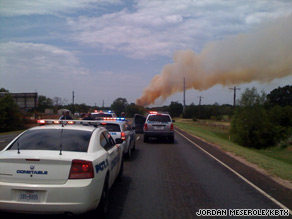 I bring this up because the town of Bryan, Texas is very much in need of a plan tonight. There is a major fertilizer fire at the El Dorado Chemical Company and 70,000 people have been told to evacuate. This is absolutely not the sort of thing that most of us are prepared for. If we live in a hurricane-prone area, we usually have a plan for that. If we live near a fault line, we have a plan for earthquakes. If we live in tornado alley, we know what to do when the sirens sound. But very few of us have looked at a map of, say, a five mile radius around our homes and figured out what hazards there are in the factories and businesses near us. Even fewer have considered what is being transported by rail and truck right past our doors.
 However, the lesson of this is not, as you might imagine, that we should all start making a list of things that could go wrong and what we would do about them. The lesson is that we can't possibly anticipate everything that might happen. Therefore, we need to have a generic, all-threat plan. In my family, we don't know what on earth could cause us to have to rendez vous outside of our town, but we know we'll meet at Aunt Shirley's.
Here's the kicker, though. The purpose of having such a plan actually has very little to do with our physical safety. I have no doubt that in an emergency I could grab my kids and find somewhere to go, even if we didn't have a plan. The point of having a plan is to reduce the traumatic stress we experience in the event of an emergency. We will be scared, no doubt. We will be worried about each other until we meet. We will worry about our posessions and our friends. But we will not worry about whether we are doing the right thing, or about generating ideas for what to do, because we have a plan. Just like children, we need to feel power over that which we cannot control, so we've built a little bit of that into our lives ahead of time. We can't prevent traumatic events from occurring, but we can feel a sense of agency when they do, and hopefully that will give us a little bit of leg up when it comes time to recover.
(Check out these additional tips for talking to children about traumatic events)
Thursday, July 30, 2009
Vaccine Priorities are Out
 The Advisory Committee on Immunization Practices (ACIP) met today and issued guidelines on who should get the vaccine for H1N1 "swine" flu first. As you know, I have strong opinions about how these guidelines, or any guidelines, are going to affect people and how they will be received. So, now that they're out, let's see how we're doing at mitigating the impact up front.
I give Day 1 of this process a C-, max. Don't get me wrong -- I don't have any problem with what appear to be the new guidelines. What I have a problem with is that I can find well over 800 articles about them by googling "H1N1 vaccine guidelines," but the guidelines themselves are nowhere to be found.
All 800 articles have roughly the same information: the first wave of vaccinations will go to pregnant women, children and young adults 6 months to 24 years, healthcare workers, adult caregivers of infants and adults under 65 with other medical conditions. If there isn't enough vaccine to accomplish this (since this is about half the U.S. population) they will further pare it down. This information was apparently delivered in a press conference this afternoon. As far as I can find, no press release was distributed, and there is nothing on the CDC website, the government flu website or the ACIP website (in fact, the postings to the ACIP website seem to be running at least a month out of date). You can get the transcript from the Federal News Service -- if you happen to already have a subscription.
In short, the government is relying solely on the press to get the word out. This is pretty much what they did in April and May, and I refer you to my post on the 2009 Flu Pandemic to see how that can go really wrong. You need only look at some of the headlines to see why relying solely on the press is a bad idea. Most news outlets have fairly low key headlines running, like CNN.com, whose headline reads "Federal Panel Issues H1N1 Vaccine Guidelines." On the other hand, we have ABC News, which is running the sensationalist tagline, "Who Gets Swine Flu Vaccine Before You Do?" The government is managing the facts, but not how those facts are presented.
It's probably true that they can't control how the story gets spun. But what they could do, which they aren't, is put out the guidelines in writing on the web so that people who want more information can get it, and so news organizations can link to it. They also could, in the same document, discuss not only why they are making these recommendations, but why those who aren't going to get the vaccine in the first wave should still feel calm. Some detailed, scientific reassurance is in order to frame this as a way of keeping everyone as safe as possible -- after all, an effective vaccination program actually provides some protection for those who have not been immunized, since they are less likely to be exposed.
Once again, the powers that be are failing to understand a basic principle of crisis communication, which is that they not only have to get the information out there, but they also need to anticipate what other information will be out there and where it will come from, as well as how people will react to it. Yes, it's complicated to put out something in writing at the same time as a press conference that is based on a decision that has just been made. But it's not impossible. And they need to get better at it, because with this particular flu, people want their information to be accurate and timely, and timeliness is measured in minutes, not days. And frankly, they really don't have that much time to start getting this right.
(Don't miss the previous Quarterbacking on H1N1)
Wednesday, July 29, 2009
Trauma Witness and Witness for the Prosecution
 The preliminary hearing for the man accused of murdering Dr. George Tiller was held today. He was bound over for trial, to no one's surprise. The CNN coverage of the hearing quotes extensively from the testimony of two ushers who were at the Wichita, KS church where Tiller was also ushering when he was shot on May 31. Some language from their testimony stood out to me.
Gary Haup, who was standing with Tiller when he was shot, described what happened and then said that what he heard was a "pop."
Keith Martin, another usher, said that he heard a loud noise and saw Tiller on the floor. He said he recognized the man who shot him, but couldn't remember when. He also said that the man
had a horrible smell about him. ... It wasn't just somebody at the gym smell. It was something more, an ammonia-type smell.He testified that the shooter threatened him as he chased him, and that he could see "straight down the barrel" of the man's gun.
These statements caught my eye because they are really vivid. Haup didn't hear "something" he heard a pop. The suspect didn't smell "bad" he had a very specific, unusual odor. And he didn't just see the gun, he "stared right down the barrel."
There are two things going on here. The first is that the prosecutor has almost certainly told these men to be as specific as possible with as much detail as they can remember. That's good prep work with witnesses.
The second thing that is going on here is that these witnesses are remembering vivid detail. That is what happens during traumatic events. When our bodies experience the "fight or flight" response with which we are all familiar, our brains flood with a neurotransmitter responsible for memory. All of our sensory exposure from that instant on is much more likely to be held in memory. We don't just remember what happened, we remember the sensory details. If you've ever been driving along and suddenly had to slam on the brakes because the car in front of you stopped short, you've seen this in action. You can't remember one thing from the second before it happened, but you can remember every little detail right afterward.
From an evolutionary standpoint, this makes sense. Natural selection favored those animals who could react quickly when faced with a threat -- that's how the fight or flight response evolved in the first place. But it also favored those animals who could identify a threat quickly. In order to do that, they had to learn from their experiences what was dangerous and what wasn't, and how best to react. And in order to do that, they had to keep track of everything they saw, smelled, tasted, felt or heard when something bad happened. That way, when it happened again, they could run even sooner.
The bad news for modern humans is that having heightened senses to perceive danger is not actually all that useful in today's society. Unless you are being shot at with some frequency, remembering what a shooter smells like, for example, is not actually going to help you survive. But it is going to set you up for some troublesome associations, without you necessarily knowing it. The next time Mr. Martin smells someone with that odd ammonia odor, his body is going to shift directly into danger mode, even though he will probably not be in danger.
If this has ever happened to you -- being thrown into overdrive by a smell or a sound that you subconsciously associate with a dangerous or stressful situation -- you probably know that it can make you feel completely insane. The good news, however, is that a) it's typical and b) it usually goes away in a few months. You will still have associations with that sensory experience, but they won't be so complete and alarming.
The good news is also that, if you have to, you'll be one heck of a detailed court witness.
(For additional Quarterbacking on Dr. Tiller's Murder, see The Tiller Family's Critical Incident)
Monday, July 27, 2009
The Ethics of Flu and the Trauma of Ethics
 Shortly after 9-11, as the anthrax attacks were starting to unfold, I remember a friend of mine telling me that she had called her doctor to make sure that her smallpox vaccination was up to date and arrange to get a booster. She was quite surprised to learn that not only was such a booster not recommended for her, it wasn't available. There literally was no vaccine out there in the world. When the WHO declared that smallpox had been eradicated back in the 1980's, they stopped manufacturing the vaccine for general use.
 This was surprising to most affluent Americans, because we are generally used to being able to get whatever health care we are willing to pay for. The notion that a technology exists and we can't have it -- not just that our doctors don't want us to have it but that we can't have it -- goes against the way we believe the health care system works. Unlike some aspects of our world view, such as the ones I discussed yesterday involving trauma with children, a lot of people actually believed this one, from our heads to our hearts to our guts, to be true. We really thought we could have any health care that existed. We were wrong.
I suspect we are up against that issue once again, because the medical research community is coming out with a vaccine for H1N1, probably in early October, and there is a good likelihood that there will be more people who want it right away than the initial supply. Over time, the supply will probably increase and everyone can have it, but in the meantime, someone is going to have to decide who gets it. Or, more to the point, somebody is going to have to decide who doesn't. Of course, this isn't news to the powers that be, who issued guidelines and recommendations on this before H1N1 had come on the scene (although it is notable that the United States government flu website still refers to a pandemic declaration as a hypothetical event, despite the fact that it was issued in June).
We've dealt with a shortage of flu vaccine before. In 2004 there was a production quality problem that limited the supply of seasonal flu vaccine, and for several months you could only get a vaccine in the U.S. if you were "high risk." I remember this distinctly because I was pregnant, and hence I could get the vaccine and my daughter could not. But this time will be different, because not everyone wants the seasonal vaccine, and an awful lot more people are going to want this one. An awful lot of people who don't know that "no" is even a possibility are going to be told no.
But it gets worse, because another thing that has kept us relatively calm about H1N1 is that we know that science has advanced in its treatment of respiratory illness. We comfort ourselves that if the 1918 flu pandemic repeats itself, we have ventilators to keep people alive. We also know that health care is more advanced in the U.S. than in most parts of Mexico, so we believe we'll be more "OK" than they were this spring.
There's only one problem. If a pandemic like 1918 comes around again, there very well may not be enough ventilators to help everyone who needs one. The recommendation is that, in a severe and deadly epidemic, ventilators be used only for people who are most likely to survive. Let me put it another way. In the event of a "Spanish Flu"-like epidemic, you could be critically ill and they would not attempt to save you, because giving you treatment would take it away from someone else with a better chance.
I first heard about this charming nugget of information during a training with the public health community in November, before "swine flu" was even in our lexicon. This was the same one, you may recall, at which it was stated that people would not overwhelm ER's because they would be told not to go to the ER. And we all know how well that worked this spring. At any rate, the plan I heard was for only those who were likely to survive to even get to the hospital. Those too sick to have a good chance would be left at the triage center, where they would die. Oh, and I wasn't supposed to tell anyone.
Well, the cat's out of the bag, because the Canadian national newspaper, the Globe and Mail, reported this morning that New York's pandemic working group is recommending removing or withdrawing ventilators by those likely to die during a serious pandemic. So now I can rant publicly.
Don't get me wrong. I get it. I get that we can all only get all the medical care in the world if we have available all the medical care in the world, and that given limited resources we should give them to the people most likely to benefit from them. I also get that that is a complex and difficult line to draw, and that's why we have medical ethicists out there working on this stuff. I am also glad I am not them.
But let's get down to brass tacks. If this pandemic gets bad, particularly in terms of the virulence of the virus, implementing "the plan" is going to be hard. People are going to go to the hospital when we ask them not to. People who are low on the priority list are not going to like that they can't get vaccine. And people are going to get really, really upset when their loved ones are not allowed a ventilator or some other piece of intervention. That is a given. What are we going to do about it?
If there's a plan out there, I haven't seen it. I know in my county that they are including mental health in the planning. They are also aware that the likelihood is that about 80% of us won't be able to respond because of our own illness or illness in our family. If you read the federal guidelines, it looks like perhaps we are in the second tier of vaccination priority, but no mention is made of volunteers, which accounts for an awful lot of us. I fear that once again we are in danger of underestimating the panic and even the rage that is going to occur. All I can say is, I'm ready to be part of the solution and I promise not to be part of the problem. I hope there are a lot of like-minded folks out there.
(For related Quarterbacking, see Getting It Right the Second Time, Flu Preparedness: Body AND Mind, and The 2009 Flu Pandemic)
Sunday, July 26, 2009
Corellian Death Rays and Trauma Involving Children
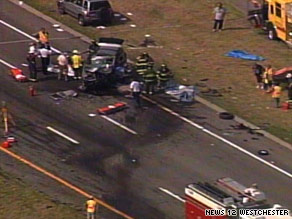 Eight people were killed in a three car accident about 20 miles North of New York City today. Unless you know the people involved, you probably read that and were not particularly affected by it. But it's all in the description. Do you feel differently about this one? Four children, as well as four adults, were killed in a three car accident in New York State today.
Conventional wisdom tells us that traumatic incidents involving children are harder than those that only involve adults. We all know that instinctively, but why is it true? It all comes down to the ever-present worldview. Most of us hold a set of beliefs on a gut level that are something like these:
- Children do not die
- Parents do not outlive children
- Bad things do not happen to good people
- Children are inherently good
- Parents have the obligation to keep children safe, and we can accomplish that goal
- Short lives are a waste
But with the possible exception of "children are inherently good" (and we can argue about whether short lives are a waste -- I really do not believe they are), none of these things are actually true. And in fact we know they are not true. So why are they so important to us that we lead our lives relying on them being true?
I find myself reminded of the scene in the movie Men in Black where Tommy Lee Jones' character says,
There's always an alien battle cruiser, or a Corellian death ray, or an intergalactic plague intended to wipe out life on this miserable little planet. The only way these people can get on with their happy lives is that they do not know about it!In other words, as you've heard me say before, we base our lives off of what is likely, not what is possible. We choose to ignore what we know to be true -- that tragedy is possible -- because if we lived in the shadow of tragedy all the time we would not be able to live at all. We choose not to know what we know. Until we read headlines like the one today, and we remember.
Saturday, July 25, 2009
The Culture of Different Professions
 I spent the last 48 hours on an Amtrak train from Chicago to Seattle, courtesy of my 11 year-old daughter, the travel agent. It was spectacular and I highly recommend it, particularly if you have an 11 year old who loves scenery and a 4 year old who loves vehicles of all kinds. This trip should explain my failure to post for a few days.
I spent much of the trip editing Powerpoint slides for the Group Crisis Intervention class I'm teaching for the Ann Arbor Public Schools in August. The International Critical Incident Stress Foundation (ICISF) provides a standard set of over 200 slides, and the approved instructor has the opportunity to edit and rearrange them as long as the content of the class remains the same. In this instance, I was tailoring the presentation for an audience comprised of school personnel.
I came upon the standard slide about the use of peers in CISM, and found myself very disquieted. The slide explains, quite rightly, that using peers -- people in the same profession or of the same background as those receiving the intervention -- is essential when therecipient group is specially trained or educated, the group possesses a unique culture, group members perceive themselves as unique, little understood or misunderstood, or the group extends minimal trust to those outside the group. Then, in the notes accompanying the slide, it says that businesses and schools may not need peers.
Now, I can't speak to businesses because I don't work in a business. I work in a school, and I have my entire adult life. I have never encountered a school or school district that did not fit the above criteria. We may not look like cops. We may not act like firefighters. But we educators have our own culture, are constantly feeling dumped on and distrustful of "top down" initiatives and the community.
I have had the privilege of doing CISM response in many schools as a peer. The need for a peer becomes evident in the first 5 minutes, as the school team starts talking about the pressures of AYP, NCLB and Ed Yes* that form the backdrop for whatever has happened. The CISM mental health professional's eyes glaze over while we talk, and I know that I've formed an instant bond with those with whom we are intervening. I also know that when I sit down with the Principal, who sometimes doesn't feel comfortable receiving support in a group with his or her staff, they almost always say, "I'm fine, I'm just worried about my teachers." And 90% of the time, when I respond, "I know you are, but I also know how hard it is to be in charge of everyone else's needs but your own," they start to talk, and they are not fine. They just think they have to be, and only another Principal has the credibility to understand how hard it is to admit that they're not.
So, at the risk of annoying others who teach this class, I decline to tell those I train that they may not need a peer. In my humble opinion, a peer is something you always want. You may be able to function without one, but you won't be as effective. That's my 2 cents.
*In case you're wondering, those stand for Adequate Yearly Progress, which is a measure mandated by the No Child Left Behind act, and Education Yes is the Michigan State reporting system for this.
Wednesday, July 22, 2009
Critical Incident, or Just a Crisis?
 As you may know, I have Google Analytics installed both on this blog and on the website for my consulting services. This service tracks statistics about visits to the sites, and enables me to generate nifty reports about all sorts of things, such as what browser my readers are using and what state they are in. This morning, I noticed that a visitor to my consulting site from Australia had found my page after googling, "what is the difference between a critical incident and a crisis?" I thought that was a pretty good question, and one that is not, in fact, addressed on my consulting site, so I'm going to try to address it here. Maybe my Aussie fan will google his/her question again and find an answer this time.
When people talk about Critical Incident Stress Management, they often use "critical incident" and "crisis" interchangeably. You will note that I am not the Monday Morning Critical Incident Quarterback, for example, although CISM is what I do and what, for the most part, I write about. But they aren't really 100% the same. Let's look at some definitions.
The New Oxford American Dictionary defines "crisis" as "a time of intense difficulty, trouble, or danger."
The term "Critical Incident" is a term of art, and like all good terms of art it is used by two totally different groups to mean two very different things. One way it is used is in the phrase "Critical Incident Technique." According to Wikipedia, in this context a critical incident is "one that makes a significant contribution - either positively or negatively - to an activity or phenomenon." The Critical Incident Technique seeks to study these incidents and how people respond to them to learn how better to respond to future instances.
In the phrase "Critical Incident Stress Management," on the other hand, a critical incident is defined as one which, because of how intense, violent, sudden or frightening it is, has the potential to overwhelm people's usual methods of coping. Critical Incident Stress Management, then, is a technique to help manage the stress that can be, but is not always, caused by critical incidents.
So what's the difference between a crisis and a critical incident? From a CISM perspective, all critical incidents are crises, but not all crises are critical incidents. The current economic crisis, for example, is a crisis for our country, but only a critical incident for some of us. A shortage of Big Macs is a crisis for McDonalds, but probably not a critical incident, at least not for most people. On the other hand, 9-11 was a crisis for the country and a critical incident for large number of people around the country.
So, Aussie person, that's the difference. I hope it helps you and some other readers as well.
Tuesday, July 21, 2009
The Line of Duty
 Detective Mark DiNardo died this morning at 9:35 AM. He was a 10 year veteran of the Jersey City Police Department in New Jersey, and tomorrow would have been his 38th birthday. He leaves behind a wife and three small children. He was promoted to Detective just this past week, but he didn't know it. He was in a coma on life support after he and four of his colleagues were shot while trying to arrest a robbery suspect on Thursday.
There are five types of critical incidents that require a CISM team with special expertise. In fact, there's a whole extra class on them. Death in the line of duty is one of them. Death of a colleague is always hard. Traumatic death of a colleague is worse. But death of a colleague in the line of duty introduces a whole new layer of complexity, both for the surviving colleagues and for the team supporting them.
I started to write this post about what was different about line of duty deaths, but as I reflect upon it, they aren't really different, they are just the usual traumatic themes only moreso. Here are some issues that come up:
- Survivor's Guilt: If I had been [fill in name of circumstance] it would have been me. If I hadn't stopped to tie my shoe. If I had gone in first. If I hadn't called off sick. It should have been me, because my wound was worse, he was a better cop, etc.
- Self-Blame: My job is to protect and serve, but I could do neither for my colleague. If we can't do it for each other, what makes us think we can do it for anyone else?
- Familiarity: I see death and destruction every day. Usually bad guys do it to each other. But this was one of us.
- Anger at the Brass: If we weren't working long hours, if we were properly equipped, if they hadn't let this guy out on bail this wouldn't have happened.
- Identification: What will happen to my wife or husband if this happens to me?
- Self-Doubt: Now I go out on the street and everything makes me jump. What if I can't do my job?
- Keeping it In: If I talk about how this has affected me, they will take me off the street. Besides, cops don't cry.
- Suicide Risk: I can't handle this, and I have a lethal suicide method on my hip all day every day.
In many departments CISM has become required for certain kinds of incidents, usually officer involved shootings and line of duty deaths. There are problems with this -- requirements build resentment, and some people really will do better on their own. But by making it part of what is expected, departments create a way for officers to get the help they need without losing face, and without specifically deciding they need it.
My thoughts are with the men and women of the Jersey City Police Department tonight. Good luck on the journey ahead.
Monday, July 20, 2009
Getting it Right the Second Time
 The New York Times is reporting today about efforts in New York City to better manage another outbreak of H1N1 "swine" flu. Not surprisingly, ER's were pretty flooded by the "worried well" in April and May, so they are trying to beef up their triage system outside of the hospitals. They are also instituting new communications plans.
This is all welcome news to me and my readers. I have posted twice about the need for better communication and attention to the panic side of the pandemic (see Flu Preparedness: Body AND Mind and The 2009 Flu Pandemic). It looks like New York is thinking in the right directions, and that's all good.
What is surprising, however, is the numbers being cited. Conventional wisdom, based on biological terror attacks such as the Aum Shinrikyo sarin gas attack in the Tokyo Subway System, holds that anywhere from 80-95% (with 80% being the most commonly cited number) of people seeking medical attention in a public health emergency are either the "worried well" or at best do not need to be hospitalized. However, based on the Times' numbers, on the worst days of the outbreak in May, 40-50 people were hospitalized while an average of more than 1,400 people were seen in the Emergency Room for "flu like symptoms." That means that the "worried well" and the not very sick accounted for about 96.5% of those going to the ER.
For those of us who have prepped for disaster with the so-called "80-20 rule" (80% of people will be worried well, while 20% will be actually ill), this is a sobering statistic. What it means is that we have vastly underprepared for people's level of panic about this disease, and the triage plans that even the most prepared jurisdictions have might not be enough.
Unless, of course, we get better at communicating and more directive about who should do what. Telling people that the symptoms include "fever," for example, is not going to be enough. Public Health authorities are going to need to say,
If you do not have a fever higher than X [and I leave it to them to determine what X is] you do not have the flu. Do not come to the triage center.Note how I phrased this. It will not be enough to say not to come to the triage center. They need to say why. Doing so will increase credibility and make people listen more. It won't be perfect, but it might tamp things down to that 80-20 ratio. Because if it's going to be 96-4 and we have a major outbreak, our health system is in deep trouble.
Sunday, July 19, 2009
Harry Potter and the Half Blood Prince: A Picture is More Traumatizing Than a Thousand Words

Spoiler Alert: If you haven't read the 6th Harry Potter book or seen the movie and you are planning to, don't read this. It gives away the ending.
This week I took my 11 year old daughter to see "Harry Potter and the Half-Blood Prince," better known in my house as "the 6th movie." To say that she is a Harry Potter fan would be to greatly underestimate her complete immersion in the books and the previous 5 movies. She was an early reader, and I read her the first book in early 1st grade. She read the rest of them herself, including finishing the final book in less than two days (after, of course, staying up with me until midnight and dressing in character to pick up our two copies at the bookstore the day it came out). She has probably read the 6th book the equivalent of 50 times, when you include all the going back and rereading favorite parts in addition to reading the whole thing. She has never been the slightest bit scared of anything she read.
So on Wednesday when we went to the movie on opening day, I was rather surprised by the sounds I heard coming from the chair next to me. She was scared. Not terrified to the point of needing to leave, but really scared. She was whimpering, curling her legs up in her chair, and shaking during the scary parts. But she loved it, and as I write this she's off with her father seeing it again.
Why was the movie so very much more terrifying to her (and to me, by the way) than the book? It's not like she didn't know what was going to happen or how it would end. She's certainly old enough to know that it's fiction. Why was her reaction so extremely different between the movie and the book, or even between this movie and the previous five movies?
I think there are two things going on here. The first has to do with the means of receiving the story. When you read a book with no pictures, it is up to you to "see" the story for yourself. Some people do much more of this than others when they read, but all of us do it to some extent. We imagine what the scene looks like as it is described. Our brains are really pretty good at preventing us from "seeing" things as being particularly frightening. We have an internal censor that just blips past the scariest images. We know they happen in the book, but we don't experience them as intensely because our brains won't let us. When we see a movie, however, we don't have the luxury of toning down the frightening parts. Someone else, not our own brains, has made the images, and they're not adjustable based on how scared we are. In a film, we have the sensory experience of whatever is frightening to us, not just the imagining of it.
The sensory exposure issue ought to be the same for all the movies, however. The scariest parts to every movie are scarier than the scariest parts of the corresponding book. Was this book really that much more scary than the first five? Yes, but not for the reasons you might think. To a true Harry Potter lover, Dumbledore is very real. Yes, my daughter knows he's fictional, but he is a very beloved character. She was genuinely sad when he died in the book. Watching the movie, anticipating that he was going to die, elicited an emotional reaction that didn't exist in any of the previous movies. She was not as attached to Sirius Black, who dies at the end of the fifth book/movie, or Cedric Diggory in the 4th, and all the other ones she knew that "everything comes out all right in the end." That isn't true in this movie. Everything is not all right in the end. It was scary, and in the end it was going to still be scary and sad. Knowing that removed one of her best tools for consoling herself.
I'm not sorry I took her to see this movie. She isn't having nightmares about it or otherwise dwelling upon it and, as I mentioned, she wanted to see it again. I suspect the second time will be a little easier, because she'll have seen it all before. But it does serve as a reminder to all of us that there are things that are better read about or listened to than seen, and when in doubt we should probably be protecting all of us, not just our children, from unnecessary sensory exposure to violence and tragedy.
This week I took my 11 year old daughter to see "Harry Potter and the Half-Blood Prince," better known in my house as "the 6th movie." To say that she is a Harry Potter fan would be to greatly underestimate her complete immersion in the books and the previous 5 movies. She was an early reader, and I read her the first book in early 1st grade. She read the rest of them herself, including finishing the final book in less than two days (after, of course, staying up with me until midnight and dressing in character to pick up our two copies at the bookstore the day it came out). She has probably read the 6th book the equivalent of 50 times, when you include all the going back and rereading favorite parts in addition to reading the whole thing. She has never been the slightest bit scared of anything she read.
So on Wednesday when we went to the movie on opening day, I was rather surprised by the sounds I heard coming from the chair next to me. She was scared. Not terrified to the point of needing to leave, but really scared. She was whimpering, curling her legs up in her chair, and shaking during the scary parts. But she loved it, and as I write this she's off with her father seeing it again.
Why was the movie so very much more terrifying to her (and to me, by the way) than the book? It's not like she didn't know what was going to happen or how it would end. She's certainly old enough to know that it's fiction. Why was her reaction so extremely different between the movie and the book, or even between this movie and the previous five movies?
I think there are two things going on here. The first has to do with the means of receiving the story. When you read a book with no pictures, it is up to you to "see" the story for yourself. Some people do much more of this than others when they read, but all of us do it to some extent. We imagine what the scene looks like as it is described. Our brains are really pretty good at preventing us from "seeing" things as being particularly frightening. We have an internal censor that just blips past the scariest images. We know they happen in the book, but we don't experience them as intensely because our brains won't let us. When we see a movie, however, we don't have the luxury of toning down the frightening parts. Someone else, not our own brains, has made the images, and they're not adjustable based on how scared we are. In a film, we have the sensory experience of whatever is frightening to us, not just the imagining of it.
The sensory exposure issue ought to be the same for all the movies, however. The scariest parts to every movie are scarier than the scariest parts of the corresponding book. Was this book really that much more scary than the first five? Yes, but not for the reasons you might think. To a true Harry Potter lover, Dumbledore is very real. Yes, my daughter knows he's fictional, but he is a very beloved character. She was genuinely sad when he died in the book. Watching the movie, anticipating that he was going to die, elicited an emotional reaction that didn't exist in any of the previous movies. She was not as attached to Sirius Black, who dies at the end of the fifth book/movie, or Cedric Diggory in the 4th, and all the other ones she knew that "everything comes out all right in the end." That isn't true in this movie. Everything is not all right in the end. It was scary, and in the end it was going to still be scary and sad. Knowing that removed one of her best tools for consoling herself.
I'm not sorry I took her to see this movie. She isn't having nightmares about it or otherwise dwelling upon it and, as I mentioned, she wanted to see it again. I suspect the second time will be a little easier, because she'll have seen it all before. But it does serve as a reminder to all of us that there are things that are better read about or listened to than seen, and when in doubt we should probably be protecting all of us, not just our children, from unnecessary sensory exposure to violence and tragedy.
Saturday, July 18, 2009
And That's the Way it Is: Walter Cronkite (1916-2009)

As I'm sure you know, Walter Cronkite died last night at the age of 92. No, that isn't a crisis. The death of a beloved celebrity is not a critical incident, as I've expounded upon before, and I certainly don't want to be accused of a double standard. Cronkite's death was not even unexpected -- people who are 92 die. This is a grief event, not a traumatic one.
But I'd like to take this opportunity to talk about Cronkite, not just because he was an American icon and a big part of my childhood (as was Michael Jackson, by the way), but because he was a pretty good crisis communicator.If you've never seen the footage of Cronkite announcing the death of President John F. Kennedy, I encourage you to do so now. I will date myself and say that I was not alive when Cronkite did this broadcast, so I can't claim it holds sentimental value for me, but I found it quite touching.
From a crisis communication standpoint, Cronkite does a lot of things right in this clip. He acknowledges the rumors that are out there, and he labels them rumors. He tells us that it is hard to get good information. When new information seems to come in that is simply the same rumors, he tells us that. And when confirmation finally comes that the President has died, he tells us in a very straightforward manner, and shows his emotions in a reasonable way. He then begins to move on to the next piece of information we are almost certainly wanting -- where is the Vice President? Except perhaps for the last few seconds, he engages in absolutely no speculation. He does not talk about "what if" scenarios. He sticks to the facts and he is clearly sharing them in real time.
If you've ever been watching TV as major news breaks, you know that Cronkite's style is pretty different from what we can expect on news today. Perhaps the most egregious example I can recall is when TWA Flight 800 exploded over Long Island and Dan Rather in less than an hour had declared that it was quite obviously a bomb. I have no interest in getting into the debate about what brought down Flight 800, but it was not "obviously" anything. News organizations like to "scoop" each other, and guessing right in a crisis has great rewards. Nobody thinks about what happens if you guess wrong.
Can you imagine if any of the myriad news stations were covering the JFK assassination now? Certainly we'd have various experts talking about gunshot wounds and the types of surgeries people have for them. We'd be shown old file footage of the President, the car he was riding in, that street corner in Dallas, and various kinds of rifles. The crawl underneath would tell us every minute detail of everything that anyone was saying about the situation, and the caption under the reporters would read "Breaking News: President Possibly Dead." Oh, and the anchor wouldn't be taking off and putting on his glasses, and you certainly wouldn't hear someone talking to him on camera.
Walter Cronkite reaped the benefit of being straightforward and honest, sticking to known facts and not holding back on them, and managing rumors when he was named the "Most Trusted Man in America" in repeated polls. He was a good example for all of us.
And that's the way it is . . .
But I'd like to take this opportunity to talk about Cronkite, not just because he was an American icon and a big part of my childhood (as was Michael Jackson, by the way), but because he was a pretty good crisis communicator.If you've never seen the footage of Cronkite announcing the death of President John F. Kennedy, I encourage you to do so now. I will date myself and say that I was not alive when Cronkite did this broadcast, so I can't claim it holds sentimental value for me, but I found it quite touching.
From a crisis communication standpoint, Cronkite does a lot of things right in this clip. He acknowledges the rumors that are out there, and he labels them rumors. He tells us that it is hard to get good information. When new information seems to come in that is simply the same rumors, he tells us that. And when confirmation finally comes that the President has died, he tells us in a very straightforward manner, and shows his emotions in a reasonable way. He then begins to move on to the next piece of information we are almost certainly wanting -- where is the Vice President? Except perhaps for the last few seconds, he engages in absolutely no speculation. He does not talk about "what if" scenarios. He sticks to the facts and he is clearly sharing them in real time.
If you've ever been watching TV as major news breaks, you know that Cronkite's style is pretty different from what we can expect on news today. Perhaps the most egregious example I can recall is when TWA Flight 800 exploded over Long Island and Dan Rather in less than an hour had declared that it was quite obviously a bomb. I have no interest in getting into the debate about what brought down Flight 800, but it was not "obviously" anything. News organizations like to "scoop" each other, and guessing right in a crisis has great rewards. Nobody thinks about what happens if you guess wrong.
Can you imagine if any of the myriad news stations were covering the JFK assassination now? Certainly we'd have various experts talking about gunshot wounds and the types of surgeries people have for them. We'd be shown old file footage of the President, the car he was riding in, that street corner in Dallas, and various kinds of rifles. The crawl underneath would tell us every minute detail of everything that anyone was saying about the situation, and the caption under the reporters would read "Breaking News: President Possibly Dead." Oh, and the anchor wouldn't be taking off and putting on his glasses, and you certainly wouldn't hear someone talking to him on camera.
Walter Cronkite reaped the benefit of being straightforward and honest, sticking to known facts and not holding back on them, and managing rumors when he was named the "Most Trusted Man in America" in repeated polls. He was a good example for all of us.
And that's the way it is . . .
Friday, July 17, 2009
Why Us?: The Jakarta Hotel Bombings
 I had some insomnia last night, and happened to be online at 4 AM. It's a good thing, because otherwise I might well have missed the news that two suicide bombings in Jakarta, Indonesia had targeted the Ritz-Carlton and Marriott hotels. At that hour, the death toll was listed as eight and rose to nine while I was reading, but now is being reported as six. By the time I woke up after finally falling back to sleep, the story was no longer the top one. Now, at 3:30 PM, it isn't even in the list of top stories at CNN.com.
 This story raises two interesting questions. First, why did terrorists target these particular hotels? And second, why did we lose interest so quickly?
It seems obvious, but the goal of terrorism is to induce terror. The Broadway show Wicked has the wonderful line, "As terrifying as terror is . . . " The entire point is to make people afraid of what will come next, to make them look over their shoulders and alter their routine, and to ultimately make them decide that they would rather give in to some set of demands than continue to live in a constant state of fear.
In order for this to be successful, the terror has to be induced in those who are in a position to give in to the demands. There is no sense, for example, in making me scared in an attempt to get your mother in Cleveland to let you stay out past curfew, particularly if I don't know you or your mother. On the other hand, there may be some purpose in making me scared in an attempt to get me to let my own children stay out past curfew, or even to pressure my best friend into letting her kids stay out.
The answer as to why these hotels were targeted lies in the particular aims of the terrorists. Since no information is available as yet, at least in the mainstream media, about who is responsible, we can only surmise that either the perpetrators have a beef with western countries, most likely the United States (these were American-owned hotels where westerners stay) or believe that those countries are in a position to pressure others to do what they want. If their issue were more localized, we could expect they would be bombing marketplaces or other venues where Indonesians congregate. Clearly, the aim here was not to scare Indonesians. It was to scare us.
So why did we lose interest? Sometimes stories are pushed off the front page by more pressing stories, but today there is no single "big story" on major media websites. Quite frankly, we lost interest because we were not terrified enough, and we were not terrified enough because these bombings were not events we could personally identify with.
At 4 AM these bombings were big news because they were new and it was not clear they were over. Someone was trying to kill westerners and damage western property, and westerners, through their proxies in the media, were scared. But by 3:30 PM it was clear that while Americans had been wounded, none had been killed. No more explosions had occurred. And honestly, the vast majority of Americans feel absolutely no connection to Indonesia. Probably relatively few can even locate it on a map, and we have some vague idea that Indonesia is a place where bombings just happen. Our reaction would be vastly different if the exact same scale of attack occurred on U.S. soil. If the headlines at 4 AM could be translated as, "Someone is trying to kill us!," the coverage now boils down to, "They didn't kill us, and besides, it wasn't really us."
I'm sure that if you are in the habit of traveling to Indonesia, and certainly if you tend to stay at those hotels, this is still a big story. That's because, for that subset of the American population, the personal connection is much stronger. For the rest of us, we go back to judging what is likely vs. what is possible and decide that this really doesn't have much to do with us. For all our protestations that we care about all human life and suffering, we care about it a lot more when we can connect it to ourselves.
Wednesday, July 15, 2009
Put On Your Own Mask First
 I recently exchanged emails with the coordinator of our county CISM team. I had been approached to assist an acquaintance who recently was in a serious car accident, and I was checking in with him before doing so. Think of it as analogous to a police officer being asked to investigate a crime -- you wouldn't just go off and do that without notifying your commanding officer, no matter how wonderful you think you are. The following is a piece of the reply I received:
I think that one of the areas leaders in CISM can have a positive impact on others is encouraging and role modeling good self care. From what I’ve observed, you may have some growing to do in this one area.He then proceeded to caution me about the risks of responding to incidents that affect me or with which I might particularly identify.
I thought that was one of the most carefully and diplomatically worded pieces of constructive criticism I have ever received. Someone a little less tactful, such as, say, me, might well have written, "When will you ever learn? You really stink at knowing when you are too close to a situation." I appreciated the skillful word-craft.
So, in the interest of having a positive impact on my readers, here are some thoughts on self-care. My coordinator might add that you should do as I say, not as I sometimes do!
As my regular readers know, secondary trauma is a big risk for those who work in trauma response. I often describe it like this: Trauma is a steaming pile of manure (OK, I don't use the word manure, but this is a family friendly blog). When you help someone who has been traumatized, you help them shovel their manure. But there's only so much manure you can shovel without getting some on you. At some point, you have to stop and take a shower.
Now that you all have that lovely visual image . . .
It's true, though. Other's trauma traumatizes us. Every single CISM team member should be taking good care of their body, mind and spirit after every single response. There is no such thing as, "I don't need to, I'm fine." There is only, "I need to" and "I really need to." What that self-care looks like is highly individualized, but it closely mirrors what we advise for the traumatized people themselves: get exercise; eat healthy food; access your support network of friends, family and faith; do more of whatever you do to decompress (because ironically the more stress we are under the less we feel like doing the things we know help us); steer clear of alcohol and drugs; give yourself time.
I have never been bad at doing those things. What I'm really bad at is recognizing when I need to step back altogether. Because I am passionate about this work, I have strong opinions about how it is done. It's hard to care that much and then say that I myself will not be doing it. I once likened it to watching someone else parent your child -- it's hard not to be involved. But I also know, even if I need to be reminded, that when an event impacts me or my school community or the people I love significantly, I just can't be part of the response.
When airlines do the demonstration of oxygen masks before takeoff, they remind you to put on your own mask first and then help others. The same goes for crisis response. We're no good to anybody until we're good to ourselves, and sometimes that means referring incidents to someone else.
There, does it seem like I've done some growing in this one area?
Tuesday, July 14, 2009
You Can't Contain the Facts: The Murder of August Provost, Part 2
To refresh your memory, Provost was murdered while standing sentry. He was shot three times, bound, gagged, and set on fire. He was African-American and, depending on which report your read, either gay or bisexual. He complained of being harassed by fellow service members, and his family believes his murder was a hate crime. The Navy, on the other hand, has said there is no evidence of a hate crime and referred to this murder as a "random act of violence."
The way the Navy has chosen to deal with this situation is unfortunate, and is probably making things worse for both themselves and the family. It turns out that when the Navy notified Seaman Provost's family of his death, they told them he was found unconscious on sentry duty and later died. They failed to mention that he was murdered, let alone share the details. Provost's mother found out he had been shot and burned from the television coverage.
This violates some very, very basic principles of how institutions should behave in a crisis. I wish I could say it was unusual, but unfortunately it is all too common. Institutions -- whether it's a school, the military, a business or the government -- like to clamp down on information. We have this naive notion that all that will become public is what we say, so we don't say much.
But facts exist whether we talk about them or not, and they have a way of making it into the public arena. Instead of asking, "What facts do we want people to have?" institutions should be asking, "If we don't share this fact, how will it look when it does become public." It's almost always better for people to hear bad news immediately, directly and completely.
The two rules I always share with staff in my school and other schools about sharing bad news with children are very simple:
- Tell the truth, the whole truth, and nothing but the truth (which also means no guessing) and
- Make sure that every known fact they will hear comes from you, and that no rumors do.
The minute you violate either of those rules, no matter how well-meaning you are, you lose all trust and credibility, and the same rules go for adults. As soon as it is known that you withheld information, gave inaccurate information or left facts to be revealed by the media or the rumor mill, no one will trust what you say and you will be completely ineffective in being supportive following the incident. People naturally want to blame others following an incident, and you will be the target whether you deserve it or not.
I wonder how this situation would have played out if the Navy had told the family how Seaman Provost died, had acknowledged the possibility of a hate crime even if they didn't think it was one, and had been honest with the Congressman on the base that day. I have to imagine that there would be a whole lot fewer conspiracy theories floating around.
Subscribe to:
Posts (Atom)
Meet the Quarterback

- Naomi Zikmund-Fisher
- is a clinical social worker, former school Principal and a Crisis Consultant for schools and community organizations. You can learn more about her at www.SchoolCrisisConsultant.com

Subscribe


 Posts
All Comments
Posts
All Comments